

Feel free to use or edit a copy
includes Teacher and Student dashboards
Measure skillsfrom any curriculum
Tag the questions with any skills you have. Your dashboard will track each student's mastery of each skill.
- edit the questions
- save a copy for later
- start a class game
- automatically assign follow-up activities based on students’ scores
- assign as homework
- share a link with colleagues
- print as a bubble sheet
- Q 1/10Score 0What is labelled C?29LarynxTongueTracheaPharynx
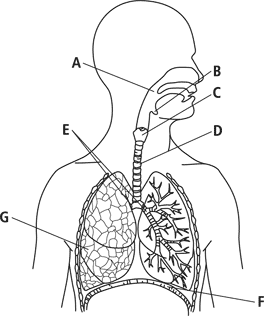


- Q1What is labelled C?LarynxTongueTracheaPharynx60s
- Q2What is labelled D?BronchiBronchiolesAlveoliTrachea60s
- Q3What is labelled E?Left and right BronchiPulmonary veinsBronchiolesAlveoli60s
- Q4What is labelled F? Responsible for moving the lungs up and downAbsBronchiolesDiaphragmLung60s
- Q5In this clip, how does the diaphragm help to breathe in?The diaphragm relaxes and moves upwardThe diaphram relxes and moves downward.The diaphragm contracts and moves downwardThe diaphragm contracts and moves upward60s
- Q6In this clip, how does the diaphragm help to breathe out?The diaphragm contracts and moves downwardThe diaphragm relaxes and moves downwardThe diaphragm contracts and moves upwardThe diaphragm relaxes and moves upward60s
- Q7Where does gas exchange take place?AlveoliLungsDiaphragmBronchioles60s
- Q8
During gas exchange, which blood vessels uptake oxygen?
Capillaries
Alveoli
Lungs
Arteries
30s - Q9
When does oxygen uptake occur?
During inspiration
During expiration
30s - Q10
What is an important role of gas exchange (oxygen uptake)
Oxygen is exchanged into the capillaries and taken to the heart as deoxygenated blood. It is then pumped to the rest of the body.
Oxygen is exchanged into the capillaries and taken to the heart as oxygenated blood. It is then pumped to the rest of the body.
Carbon dioxide is exchanged into the capillaries and taken to the heart as oxygenated blood. It is then pumped to the rest of the body.
Oxygen is exchanged into the capillaries and taken to the lungs as oxygenated blood. It is then pumped to the rest of the body.
60s


