Loading...

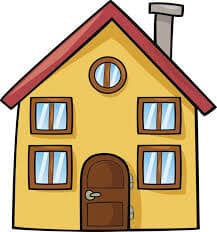
ROOMS OF A HOUSE (choose)
Quiz by Elisabet Poncela
Customize this quiz to suit your class
Instantly translate to 100+ languages
Tag the questions with any skills you have. Your dashboard will track each student's mastery of each skill.
Give this quiz to my class
DORMITORIO
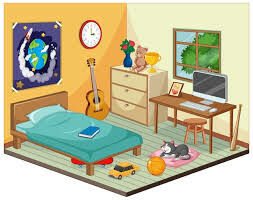
BEDROOM
BAÑO
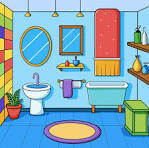
BATHROOM
DORMITORIO
BAÑO
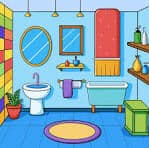
SALÓN

COMEDOR

GARAJE
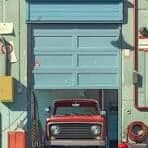
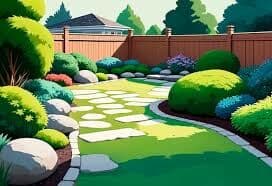
JARDÍN
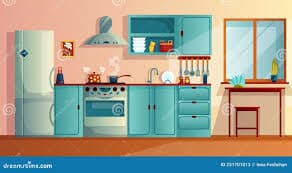
COCINA
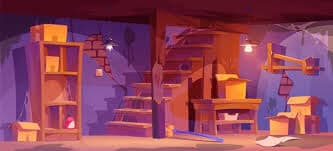
SÓTANO
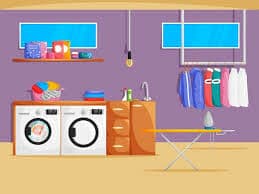
CUARTO DE LAVADO
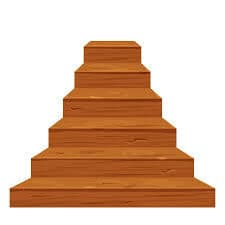
ESCALERAS
 *BRITISH EDUCATION SCHOOL* *Grade 9 - English Language - Literature* *Chapter 5: The Young Tulip-grower - "The Black Tulip"* * *Section A: Reading Comprehension [12 Marks]* Answer in complete sentences. 2 marks each. 1. Describe Cornelius’s feelings and exact words when he looked at the 3 bulbs. What do they show about his character? 2. Why did Cornelius choose to save the bulbs before reading Craeke’s letter? What does this tell us about his priorities? 3. Explain how Cornelius hid the bulbs from the soldiers. Why was this action risky? 4. Why was Isaac Boxtel watching Cornelius’s house? Was he happy or sad about Cornelius’s arrest? Give evidence. 5. What important information did Isaac learn from Cornelius’s notebook? How did this change his plan? 6. Compare Cornelius and Isaac. Who loves the tulips more? Give one reason for each character. *Section B: Vocabulary in Context [8 Marks]* Choose the best meaning of the underlined word. 1 mark each. 1. Cornelius was *surprised* when Craeke ran in. a) happy b) shocked c) angry d) sleepy 2. He picked up the bulbs *carefully*. a) quickly b) with attention c) loudly d) angrily 3. The judge said Cornelius had papers of a *traitor*. a) hero b) friend c) person who betrays his country d) servant 4. The house was *empty* when Isaac entered. a) full of people b) with no one inside c) very big d) very clean 5. Cornelius thanked God the bulbs were not *damaged*. a) broken b) painted c) lost d) old 6. Isaac looked through his *telescope*. a) book b) tool for seeing far c) gun d) letter 7. Cornelius was not *frightened* of the soldiers. a) afraid b) excited c) hungry d) tired 8. Isaac was *jealous* of Cornelius. a) loved him b) wanted what he had c) helped him d) ignored him *Section C: Grammar - Past Continuous vs Past Simple [6 Marks]* Fill in with correct verb form. 1 mark each. 1. While Cornelius ............at the bulbs, Craeke ran into the room. 2. The servant .........that soldiers were coming to arrest him. 3. Isaac ............Cornelius’s house with his telescope all day. 4. When the judge arrived, Cornelius ....... the bulbs in his pocket. 5. The soldiers .........into the room while Cornelius was talking. 6. Isaac .......... the notebook after he searched all the drawers.[look][say][watch][put][run][find] *D* Who Said, write the speaker 1. "Next year, these bulbs will be black tulips. I am the happiest man!" 2. "Please, read this letter immediately, sir!" 3. "You must give that package to me. It is not yours!" 4. "Good! The soldiers will take Cornelius to The Hague. Then they will kill him." 5. "I cannot wait! He has come from The Hague." 6. "None of these was a black tulip!" *E* write your own answer according to your understanding to the current chapter. 1. If you were Cornelius, would you save the bulbs or read the letter first? Give 2 reasons for your choice. [2 marks] 2. Do you think Isaac is a villain or just ambitious? Explain your opinion with evidence from the chapter. [2 marks] *F* Complete the quotes from the chapter. 1. "I must put these bulbs safely in a ........... 2. "The bulbs are not ............I thank God for that." 3. "Last January, Cornelius De Witt left a package of papers in this ............ 4. "Today I have three small tulip from one large bulb. These bulbs will have flowers in the spring ..................A Choose the correct answer. 1 When his grandma died, he came ….. some of her money and property. A into C across B up D round 2 We should try to ….. the amount of rubbish in our area. A increase C provide B improve D reduce 3 I avoid driving to work because there are always ….. jams in the centre. A transport C power B traffic D station 4 By the end of the year, there will be more ….. farms in our city. A solar C floating B vertical D electric 5 Who is going to ….. our new piano? A deal C deliver B produce D construct 6 She doesn’t like being ….. in the house; she wants people around her. A healthy C lonely B crowded D alone 7 Why don’t you come ….. for dinner tonight? A up C over B into D back 8 Mr Jones has found the cure for a serious ….. . A disease C crime B pollution D poverty 9 Scientists are hopeful ….. the future of energy sources. A for C about B in D with 10 Do you think ….. tube trains will ever be used? A drone C charging B front D vacuum Grammar B Choose the correct answer. 1 I’ll still ….. two hours from now. A have gardened C garden B have gardening D be gardening 2 ….. you ….. your homework by 7 o’clock? A Will ... finish C Will … have finished B Will … be finishing D Won’t … finish 3 By 2100, experts ….. new energy sources. A will have discovered C will be discovering B will be discovered D will discover 4 The film will have started before we ….. there. A will have got C get B will get D will be getting 5 This time tomorrow, Sheila ….. a job interview. A will have C will be having B is having D will have had 6 David ..... back from work by dinner time. A will be coming C will have come B will come D won’t be coming 7 I can’t believe that in a few hours, we ….. our first live concert. A are performing C will have performed B will be performing D will perform 8 ….. next Friday, I will be flying to Glasgow. A This time C By B At D Until 9 Jake ….. by the end of September. A will retire C will have retired B is retiring D will be retiring 10 ….. the time Mum gets home, I will have tidied my room. A Before C Until B At D By Everyday English C Choose the correct answer. 1 A: How did you find that job? B: a I’ll be working in the local library. b I’ll be there from June 15th. c There was an advert online. 2 A: I can’t wait! B: a Sounds like fun. b I’ll work in my uncle’s restaurant. c I’ll stay there for two weeks. 3 A: Do you have any plans for the summer? B: a Really? b What about you? c Haven’t I told you? 4 A: What will your duties be? B: a I’ll be flying to London to see my uncle. b I’ll be helping customers. c I’ll have earned enough money to buy a new smartphone. 5 A: How long will you stay there? B: a Until the end of July. b Well, this time next week, I’ll be relaxing. c And what are your plans? SPANISH STUDENTS 10/22/25 In the sentence 'The author chose to juxtapose the wealthy neighborhood with the impoverished area to highlight social inequality,' what does 'juxtapose' most likely mean based on context clues? * 1 point to separate completely to describe in detail to criticize harshly to place side by side for comparison When reading 'This paradox confused everyone: the more he tried to save time, the less time he seemed to have,' what can you infer about a paradox? * 1 point a mathematical equation a simple solution a type of poem a contradictory statement that reveals truth The passage states: 'The author's use of symbolism was evident when the broken mirror represented the character's shattered dreams.' Based on this context, symbolism involves: * 1 point using objects to represent deeper meanings creating rhyming patterns writing in chronological order using literal descriptions only In the text 'Please elaborate on your answer by providing specific examples and detailed explanations,' the word 'elaborate' suggests the need to: * 1 point use simpler words change the topic add more detail make it shorter The critic wrote: 'The actor's performance captured every nuance of emotion, from subtle sadness to barely contained rage.' What does 'nuance' refer to in this context? * 1 point subtle variations in meaning simple emotions loud expressions obvious differences When the text says 'The implication of her silence was clear to everyone in the room, though she never spoke a word,' what does 'implication' mean? * 1 point a command given a direct statement a question asked a conclusion drawn indirectly The scientist stated: 'Based on our limited observations, our hypothesis suggests that plants grow faster with classical music.' What is a hypothesis? * 1 point a type of experiment a proven fact a final conclusion a possible explanation needing more evidence In 'Three witnesses were able to corroborate the defendant's alibi, strengthening his case significantly,' the word 'corroborate' most likely means: * 1 point to question or doubt to confirm or support to change the story to ignore completely The passage reads: 'The student needed to justify her controversial thesis with solid evidence and logical reasoning.' What does 'justify' mean here? * 1 point to make it longer to make excuses for to avoid explaining to prove something is reasonable When the text states 'The researcher was able to synthesize information from five different studies to create a comprehensive theory,' what does 'synthesize' involve? * 1 point copying one source exactly combining multiple sources to create something new rejecting all previous research focusing on only one idea When a reader encounters 'The symbolism in the novel was complex, with the recurring image of doors representing new opportunities throughout the story,' they should: * 1 point memorize all symbols skip symbolic passages look for deeper representational meanings focus only on the literal meaning If a teacher says 'Your essay needs more elaboration - expand on your main points with examples and analysis,' what critical thinking skill is being requested? * 1 point developing ideas with supporting details summarizing briefly using fewer examples changing the topic entirely In the passage 'The dark clouds gathering on the horizon seemed to foreshadow the troubles that would soon befall the village,' what literary technique is being demonstrated? * 1 point The author is using environmental details to hint at future plot developments The author is focusing on realistic weather descriptions The author is using weather to predict actual meteorological events The author is describing a coincidental weather pattern When analyzing 'Sarah knew the antagonist in her favorite novel wasn't just evil—he represented the fear of change that many people experience,' what deeper understanding about antagonists is revealed? * 1 point Antagonists are always completely evil characters Antagonists can represent abstract concepts or human struggles Antagonists must be human characters Antagonists only exist to create action scenes In the sentence 'The protagonist's journey wasn't just about reaching the destination—it was about discovering who she truly was,' what does this suggest about effective protagonists? * 1 point Protagonists must always succeed in their missions Protagonists should remain unchanged throughout the story Protagonists undergo both external and internal development Protagonists should focus only on external goals When the text states 'The word 'home' carried different connotations for each character—warmth and safety for some, confinement and obligation for others,' what critical reading skill is being highlighted? * 1 point Memorizing dictionary definitions Understanding that words have only one correct meaning Identifying grammatical structures Recognizing that word meanings can vary based on personal experience In 'While the denotation of 'snake' is simply a reptile, the author's use of it to describe the character suggests something far more sinister,' what analytical skill is required? * 1 point Understanding reptile biology Memorizing animal classifications Distinguishing between literal and figurative meanings Identifying sentence structure When examining 'The author's tone shifted from hopeful in the opening chapters to increasingly cynical as the story progressed,' what does this reveal about sophisticated writing? * 1 point Tone is unimportant in storytelling Tone changes reflect the author's developing attitude toward the subject Only the ending tone matters Authors should maintain the same tone throughout In analyzing 'The theme of the novel wasn't stated directly but emerged through the characters' repeated struggles with moral choices,' what does this demonstrate about themes? * 1 point Themes develop through patterns in the narrative Themes are only found in the conclusion Themes should always be explicitly stated Themes must be simple moral lessons When the passage reads 'From the character's nervous glances and hesitant speech, readers can infer that she's hiding something important,' what critical thinking process is being described? * 1 point Following explicit plot statements Memorizing character descriptions Making random guesses about character motivations Using textual evidence to draw logical conclusions In 'The ending was deliberately ambiguous, allowing readers to decide whether the character's actions were heroic or selfish,' what does this suggest about sophisticated literature? * 1 point Good stories always have clear, definitive endings Unclear endings indicate poor writing Ambiguity can enhance reader engagement and interpretation Authors should avoid confusing readers When analyzing 'The controversial decision to ban the book sparked debates about censorship versus protecting young readers,' what critical thinking skill is most important? * 1 point Choosing one side immediately Examining multiple perspectives before forming an opinion Avoiding difficult topics entirely Following popular opinion In 'Each character's perspective on the same event revealed how personal experiences shape our understanding of truth,' what deeper concept is being explored? * 1 point All perspectives are equally valid Perspective is unimportant in understanding events There is only one correct way to view any situation Personal background influences how we interpret events When the text states 'The community proved resilient, rebuilding not just their homes but their hope after the disaster,' what does this reveal about the concept of resilience? * 1 point Resilience encompasses both practical and emotional recovery Resilience is an innate trait that cannot be developed Resilience means avoiding all difficulties Resilience only involves physical recovery In analyzing 'The author's portrayal of the character's empathy—her ability to understand her enemy's pain even while fighting him—added complexity to the conflict,' what does this suggest about empathy? * 1 point Empathy means agreeing with everyone Empathy makes people weak in conflicts Empathy should be avoided in difficult situations Empathy can coexist with opposition and create moral complexity When examining 'The character's integrity was tested when telling the truth would hurt people she loved,' what does this reveal about integrity? * 1 point Integrity means always following rules regardless of consequences Integrity means never causing any harm to others Integrity is only important in public situations Integrity involves making difficult moral choices even when costly In 'The student learned to advocate for her ideas by presenting evidence rather than just stating opinions,' what critical skill is being developed? * 1 point Supporting positions with logical reasoning and evidence Avoiding controversial topics entirely Learning to argue loudly and persistently Always agreeing with authority figures If you rewrote a scene from 'The Birchbark House' from Omakayas's grandmother's first-person perspective instead of Omakayas's, how would this most likely change the reader's understanding? * 1 point Nothing would change since they're both female characters The language would become more formal and difficult The story would become less interesting because adults are boring Readers would gain wisdom from experience but lose the innocence of childhood discovery In a plot diagram, the rising action serves which critical purpose beyond simply building toward the climax? * 1 point To provide background information about the setting To confuse readers so the ending is surprising To develop character relationships and establish stakes that make the climax meaningful To make the story longer and more detailed When analyzing the falling action in 'The Birchbark House,' which element would be most important to consider when writing an alternate version? * 1 point Whether the consequences of the climax align with the new direction you want the story to take Making sure it's shorter than the rising action Including a moral lesson for readers How quickly the conflicts get resolved In the exposition of a story, conflict serves which essential function that many readers don't realize? * 1 point To immediately grab attention with action scenes To provide comic relief before serious events To show off the author's writing skills To establish what the characters characterization/personality, which determines what they' must learn to overcome as they face more problemsRooms of a houseWhat is the page mainly about? (Answer: C — Homes meet a basic need) A) House colors B) Old buildings C) Homes meet a basic need ✓ D) Travel What basic need do homes give? (Answer: B — Shelter) A) Food B) Shelter ✓ C) Clothes D) Money What does “basic need” mean here? (Answer: C — Something people must have to live) A) Something nice to have B) A school rule C) Something people must have to live ✓ D) A weekend plan Homes keep people ______ and ______. What are the two words from the page? (Answer: B — dry / safe) A) rich / tall B) dry / safe ✓ C) loud / fast D) clean / funny What else are homes for, according to the text? (Answer: B — Eating, sleeping, and being with family and friends) A) Shopping B) Eating, sleeping, and being with family and friends ✓ C) Driving D) Fighting What does the heading “Meeting our needs” tell you? (Answer: B — explains how homes fit the local climate) A) A joke is coming B) This part explains how homes fit the local climate ✓ C) It is a story D) It lists prices What does “climate” mean on this page? (Answer: C — the usual weather of a place) A) Yesterday’s forecast B) A big storm C) The usual weather of a place ✓ D) Room temperature Which roof is best for cold, snowy places? (Answer: D — Slanted) A) Flat B) Dome C) Glass D) Slanted ✓ Why is a slanted roof helpful in snowy places? (Answer: B — snow slides off more easily) A) It is cheaper B) Snow slides off more easily ✓ C) Birds like it D) It is quieter Why do many houses in hot places have many windows? (Answer: B — to let air move through and keep people cool) A) To block all light B) To let air move through and keep people cool ✓ C) To make walls heavy D) To reduce street noise Which detail best supports “climate changes home design”? (Answer: C — Hot → many windows; Snowy → slanted roofs) A) People like blue walls B) Kitchens are big C) Hot → many windows; Snowy → slanted roofs ✓ D) Cities are crowded What does the caption about a traditional Japanese house show? (Answer: C — People sit on mats on the floor to eat) A) People eat outdoors B) Families don’t eat together C) People sit on mats on the floor to eat ✓ D) People stand to eat Which sentence is LEAST connected to the main idea of the page? (Answer: D — Blue walls are relaxing) A) Homes protect people from weather B) Roofs can change with climate C) Windows help rooms stay cool D) Blue walls are relaxing ✓ Which text structure organizes the right paragraph? (Answer: C — Cause–effect) A) Timeline B) Problem–solution C) Cause–effect ✓ D) Description only What is the author’s purpose? (Answer: B — to explain how homes meet a human need) A) To sell houses B) To explain how homes meet a human need ✓ C) To tell a funny story D) To give building laws What can you guess about a flat roof in a snowy place? (Answer: B — snow can pile up and be unsafe) A) Best choice B) Snow can pile up and be unsafe ✓ C) Always cheaper D) Warmer in summer Which page feature helps you find ideas quickly? (Answer: C — Headings and photo captions) A) Rhyme B) Dialogue C) Headings and photo captions ✓ D) Footnotes Which sentence is the best summary of the page? (Answer: C — Homes give shelter; designs change with climate) A) Houses are beautiful in winter B) People prefer bright colors C) Homes give shelter; designs change with climate (slanted roofs, many windows) ✓ D) Windows are the most important part True/False or Short Answer (5) True/False: All homes have the same purpose, even if they look different. (Answer: True) True/False: In hot places, houses usually have fewer windows to keep heat in. (Answer: False — hot places → many windows for airflow/cooling) Short Answer (1–3 words): Homes provide shelter to keep people _____ and _____. (Answer: dry; safe) Short Answer (one example): Write one climate → design pair from the page. (Answer: cold/snowy → slanted roof OR hot → many windows) True/False: The photo shows people in Japan eating on mats on the floor. (Answer: True)Create MCQ quiz using these questions: Text: Happiness and the Home Q1. What is the main idea of the text? A. A home is more than a building and plays an important role in happiness B. Modern apartments are better than traditional homes C. Houses look similar around the world Q2. Which sentence best paraphrases the idea of “home” in the text? A. Home includes feelings, people, and meaning, not just a place B. Home is mainly a house people live in C. Home only refers to where families sleep Q3. Which detail best supports the idea that home shapes identity? A. Personal identity begins in the family home B. Apartments are similar in many countries C. Homes can be expensive to build Q4. Why does the author include examples from different cultures? A. To show that ideas of home are shaped by environment and culture B. To compare rich and poor countries C. To explain which homes are the most modern Q5. Which sentence is the best short summary of Paragraph B? A. Geography and climate influence how homes are built and understood B. People prefer traditional houses to modern ones C. Homes must always be made from natural materials Q6. What idea links the examples of Mongolia, Greece, and other cultures? A. Homes reflect local needs and cultural values B. All homes are temporary C. Climate is the same everywhere Q7. Why is the kitchen often described as important in the text? A. It represents comfort, togetherness, and daily family life B. It is the largest room in the house C. It is where modern technology is used Q8. Which sentence best summarises Paragraph C? A. Shared spaces connected to warmth and food are central to the idea of home B. Fire is no longer important in modern homes C. Kitchens are replacing living rooms Q9. How does Paragraph D expand the idea of “home”? A. It shows that home can also be personal and virtual B. It explains how homes are decorated C. It repeats ideas from earlier paragraphs Q10. Which option best synthesises the text into one overall idea? A. Home is a physical, emotional, and cultural space that supports well-being B. Home design is more important than family life C. Modern living has replaced traditional ideas of homeThings to do in Tokyo by Haruki A. My favorite tea house The tea house is in a beautiful garden. We don’t wear shoes in the tea house. We leave our shoes outside. We sit on the floor. It’s a custom in Japan. We can see how they make the tea. Their green tea is the best. B. A cool ice cream store I love this ice cream store. The ice cream looks like animals. They have rabbits, chickens, dogs and bears. I always order the rabbit ice cream. You can pick anything you want. C. A baseball game Baseball is a popular sport in Japan. The games are fun. People sing songs when their team hits the ball. They wear shirts and hats from their favorite team. I have a hat from a team called the Lions. My sister has hats from every baseball team in Japan. D. A ninja village The ninja village is great. You wear ninja clothes and climb walls like a ninja. There’s also a ninja house. It’s fun to walk in the house and find special rooms. I think ninjas are exciting. They are strong. They aren’t afraid of anything. We need to ride a train to the ninja village. It isn’t in Tokyo. But the train is fun too.Why the Sun and Moon Live in the Sky This play is based on an African folktale that tells how the moon and sun ended up in the sky. Characters: Narrator Sun Moon, Sun's Wife Water Narrator: Long ago, Sun, Moon, and Water lived together on Earth. (Sun and Moon are eating breakfast at home.) Sun: I will visit my good friend Water today. Moon: That sounds enjoyable, but why doesn't Water ever visit us? Do you feel ashamed or embarrassed to invite Water here? Sun: No, I am proud of our house. I will invite Water today! (Sun visits Water at the beach.) Sun: Water, why don't you ever visit us? Water: Your house can't hold me and my family. Sun: That's nonsense! Moon and I will enlarge our house, so there will be plenty of room for everyone! Water: Then I will visit you. Sun: Wonderful! Please holler loudly, so I hear you when you arrive. Now I must dash home quickly to start the work. (Sun rushes home.) Narrator: Sun and Moon raced to make their home larger. They added rooms and raised the roof higher. The new house was completely different and had no similarities to their old home. They felt it was a victory, or a win, for now their friend could visit. Water: Sun and Moon, I have arrived! Sun: Isn't this the largest home you've seen? Moon: Sun, it's not polite to brag, so please don't boast to our guest. Water, come inside. Narrator: Water splashed through the door carrying colorful fish, frogs, and crabs. As the water began to rise, Sun and Moon climbed onto furniture. Then they scrambled onto the roof. Sun: Moon, I'm not sure about the wisdom of inviting Water. Perhaps this wasn't a smart idea! Moon: No, Sun, it was the right thing to do but we must fly to safety! Narrator: Sun and Moon flew to the sky, where they remain today and still shine down on Water.