Loading...

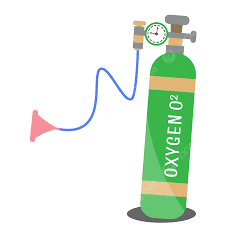
Safe Oxygen Handling
Quiz by Heather Rabben
Customize this quiz to suit your class
Instantly translate to 100+ languages
Tag the questions with any skills you have. Your dashboard will track each student's mastery of each skill.
Give this quiz to my class
The policy that discusses oxygen tank safety is called,
Medical Tank Safety
Oxygen Safety
Oxygen Tank Storage
Medical Gas Storage
The policy that discusses oxygen tank safety is called,
There are three racks for storage of oxygen tanks.
If a patient is unable to send their personal O2 tank home, the tank is to be stored in
The PSI cutoff for determining whether an O2 tank is "full" or "empty" is 500
It is okay to leave an unsecured O2 tank standing up if you are close by
 Anthropocentrism views nature as having intrinsic value regardless of whether it serves human needs. Commercial aquaculture accounts for 75% of local water pollution in the Taal Lake ecosystem. Biocentrism asserts that all living organisms, including humans and endemic species like the Tawilis, possess equal intrinsic rights to safe waters. Household greywater, agricultural run-offs, and community solid waste combined make up 75% of local pollution in Talisay. Massive amounts of nitrogen and phosphorus released into the water column trigger rapid algal growth that leads to catastrophic fish kills. Prudence (Katalinuhan) is defined as reacting impulsively to immediate needs without considering long-term consequences. Ecocentrism views the entire ecological system as an interconnected whole where maintaining overall balance is necessary for survival. Frugality (Katipiran) encourages individuals to prioritize status and luxury spending over utility and necessity. Unconsumed commercial fish feed sinks to the bottom and decays, contributing significantly to oxygen depletion in the lake. Understanding that plastic thrown into drainage creeks today will clog lake resources tomorrow is an application of prudence. In the "Cosmos in Our Bakuran" framework, physical clutter in one's immediate surroundings reflects an internal state of harmony. Practicing frugality helps protect local waterways by reducing unnecessary purchases and minimizing household waste generation. The Tawilis is an introduced species brought to Taal Lake specifically to consume excess aquaculture feeds. Foresight is the key aspect of prudence that involves evaluating how current actions affect future conditions. Both commercial aquaculture and domestic greywater contribute to nutrient pollution in aquatic ecosystems.Q1. Tick the properties of water. a. Water is transparent and colourless. b. Water has no smell or taste. c. One litre of water has a mass of one kilogram. d. Water supports life. e. Water has no weight. Q2. List the properties of air. --------------------------------------------------------------------- --------------------------------------------------------------------- ---------------------------------------------------------------------- ----------------------------------------------------------------------- Q3. "Which gases are the most abundant in air?" The most common gas ----------------------------------------- The second most common gas ----------------------------- 8 | Page AZ-Y5-Science- Second Mid-Term Revision2024/2025 Q4. Look at the pie chart of the components of the air and identify P, Q and R. Nitrogen 71% Oxygen 21% Other gases 1% P ------------------------------- Q ------------------------------- R -------------------------------- Q5. Identify the gas for each of these descriptions. Use the name of each gas twice. Oxygen-nitrogen-carbon dioxide. a. The gas we need to breathe. --------------------------------- b. The most common gas in the air. ---------------------------- c. The gas that gives drinks their fizz. ---------------------------- d. The gas that supports burning. -------------------------------- e. A gas used to make fertilizer. ---------------------------------- f. A gas used in fire extinguishers. ------------------------------- 9 | Page AZ-Y5-Science- Second Mid-Term Revision2024/2025 Q6. Draw and label the stages of the water cycle. Use arrows to show how water moves through the cycle." 10 | Page AZ-Y5-Science- Second Mid-Term Revision2024/2025 Q7. The diagram shows how gases in the upper atmosphere trap heat. a. What does the diagram refer to? _____________________________________________________________ b. Give two reasons why the amount of greenhouse gases in the atmosphere is increasing. _____________________________________________________________ _____________________________________________________________ c. If more heat is trapped, how will the earth's temperature change? 1. It will rise. 2. It will fall. d. "Which of the following is a greenhouse gas?" 1. Argon 2. Nitrogen 3. Carbon dioxide 11 | Page AZ-Y5-Science- Second Mid-Term Revision2024/2025 Q8. Write (T) for True or (F) for False. 1. Global warming leads to rising sea levels and more droughts. ( ) 2. Water exists in only one state: liquid. ( ) 3. It is not safe to drink untreated water from lakes and rivers. ( ) 4. Air pollution does not affect the environment. ( ) 5. Nitrogen is the most common gas in the atmosphere. ( ) Q9. Fill in the blanks: a. Air is a mixture of gases, and the most abundant gas in the air is __________. b. The water cycle includes four stages: __________, __________, __________, and __________. c. __________ is a gas used in the production of fertilizers. d. __________ is a harmful gas that contributes to global warming by trapping heat in the atmosphere. Q10. Answer the following questions: 1. What are the four main stages of the water cycle? -------------------------------------------------------------------------------- 2. Name one way to help reduce air pollution. ----------------------------------------------------------------------------------- 12 | Page AZ-Y5-Science- Second Mid-Term Revision2024/2025 3. State one use of oxygen gas. ------------------------------------------------------------------------------------ 4. What is one consequence of global warming? ------------------------------------------------- 1 .Sand soil • Has course/ large particles • they are larger than those of clay • Loses water quickly • Has less organic matter • Has good aeration • Allows good root penetration • Leaching of nutrients is more in sand soil. • Does not stick when wet 2. Clay soil • Has very fine particles which are closely packed • The soil is sticky when wet and can be moulded into any shape • It holds more water than sand and loam • It has poor drainage • It cracks when dry • It has poor aeration • It does not allow good root penetration 2 .Loam soil • Is a mixture of sand and clay particles • It half clay half sand • It can be easily moulded into a shape but easily crumbles • Holds water for a longer time than sand • It sticks on the hands when wet • It has good drainage • It has good aeration • It allows good root penetration • Loam is the best soil Soil Fertility • When soil has enough plant nutrients it is fertile • Soil fertility is the presence of nutrients in the soil • A farmer can add nutrients to the soil to make it fertile • This is done by applying fertilizers and compost. • A fertiliser is a substance that is added to the soil to increase fertility • Nutrients found in the soil include Nitrogen, Phosphorus and Potassium ( NPK ) • They are called major nutrients or macro nutrients because they are needed in large quantities Minor nutrients • Minor nutrients are needed in smaller quantities • Minor nutrients are also called micro nutrients or trace elements • Examples of minor nutrients are boron, iron, zinc, manganese, magnesium and molybdenum Soil erosion • Is the washing away of top soil by agents such as Water Wind Animals Humans 1. Water: • Water washes away soil when it rains. • Loose soil is washed away into dams and rivers. • Steep slopes also lead to soil erosion. • Ploughing 2 . Wind • The blowing away of soil by wind causes soil erosion. • When people cut down trees wind erosion easily takes place. • Type of soil also leads to wind erosion. Which soil type is easily eroded by wind? 3 . Animals • Animal cause soil erosion by overgrazing. • Overgrazing is when animals eat plant or vegetation leaving the ground surface bare. • Animals walking on the same pathway for a long time make the soil loose. • Animals that live underground also burrow loosening the soil. • This makes soil break easily and get washed away. WATER WATER CONSERVATION Water • Water is important in agriculture • It is used to: Clean farm tools Mould bricks Wash milking equipment Cool machines Provide homes(habitat) for fish Give animals drinking and bathing water Sources of Water Natural sources 1. Natural rains: • rain water from the clouds is a primary source of water. • It is used to water crops such as maize, millet, sorghum and so on during the rainy season. • Rain water that collects into the rivers and dams is used by animals and people for drinking. 2 . Rivers : • Rivers are some of the major sources of water for different activities such as fishing, boat cruising and irrigation. 3 . Streams : • A stream is a small river. • Streams supply water for irrigating garden crops especially in rural areas. • They are also a source of water for animals to drink and bath. Sources of Water 4 . Springs : • Springs are usually found on hilly areas. • They result from pressure of underground streams. • The pressure forces water underground to form a channel to the surface of the soil and flow above the ground. Sources of Water Man made sources Man discovered that water for agriculture was not enough during the rain and cool dry seasons. They decided to make structures which would harvest or collect and store water for future use. 1.Protected well: • Wells are dug in the ground by hand. • They are often lined with bricks and concrete so that they do not cave in. • Protected wells are covered, therefore are safe to drink from. 2 . borehole : • They are deep holes made by drilling machines. • Drilling can be done up to 70 metres deep. • Water is pumped using an electric pump or hand pump. Sources of Water 3 . Dams : • A dam is a large wall or barrier built to hold water to save it for future use. 4 . Weir : • A weir is made by construction a cement brick wall or concrete wall across a river to trap water and eroded soil. • water flows over the wall when the river is inflood. 5 .Water tank : • Is a temporary manmade water source. • Water from a water tank is usually harvested from roof tops or it works along a borehole or protected well as temporary storage. • Water is pumped from the borehole or protected well into the water tank. 6 . reservoir : • A large natural or manmade lake used as a source of water. PLANTS Uses of plants • Fibre for making clothes • Oil for cooking, making paint and chemicals • Sugar for tea • Wood for timber • Refreshing drinks and alcohol • Food for people and animals • Protect the soil from erosion • Plants supply us with fresh oxygen for breathing. • Some plant parts are used as medicine.Safe InternetSafe vs Unsafe (OT edition)Safe system of workSafe Place for toddlersSafe and dangerous food.