Loading...


Science 7_First Quarter
Quiz by Jamayma
Customize this quiz to suit your class
Instantly translate to 100+ languages
Tag the questions with any skills you have. Your dashboard will track each student's mastery of each skill.
Give this quiz to my class
Why do scientists use models?
They can be used to test ideas and make predictions.
They are exact representations of reality.
They only exist in computer simulations.
They are always simple and easy to understand.
What can be a limitation of scientific model?
They cannot perfectly capture all the complexities of a system.
They are never updated or improved.
They are all based on real-world data.
They are only used in physics, not other sciences.
Why do scientists use models?
What can be a limitation of scientific model?
As seen in the model, what resembles the Plum Pudding Model of the atom?

Ernest Rutherford: Planetary Model of the atom :: J. J. Thompson: ________________________
What is the characteristic of solid particles as seen in its particle model?
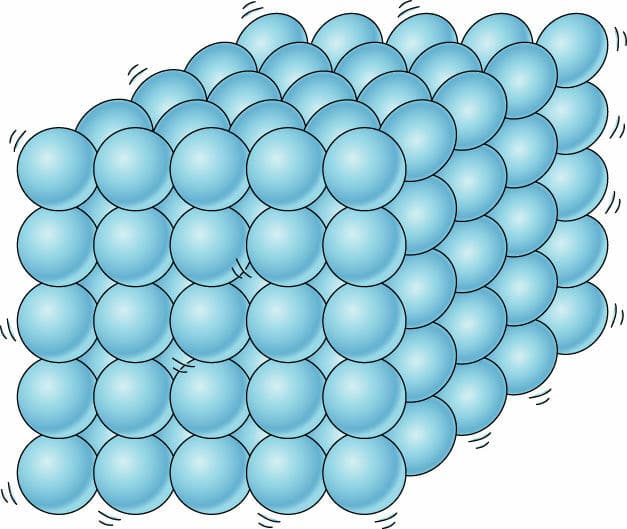
What can you say about the particles of liquid in contrast with a solid?
What happens to the particles of a material being heated?
What can be seen in the physical model of the Bohr model of the atom?
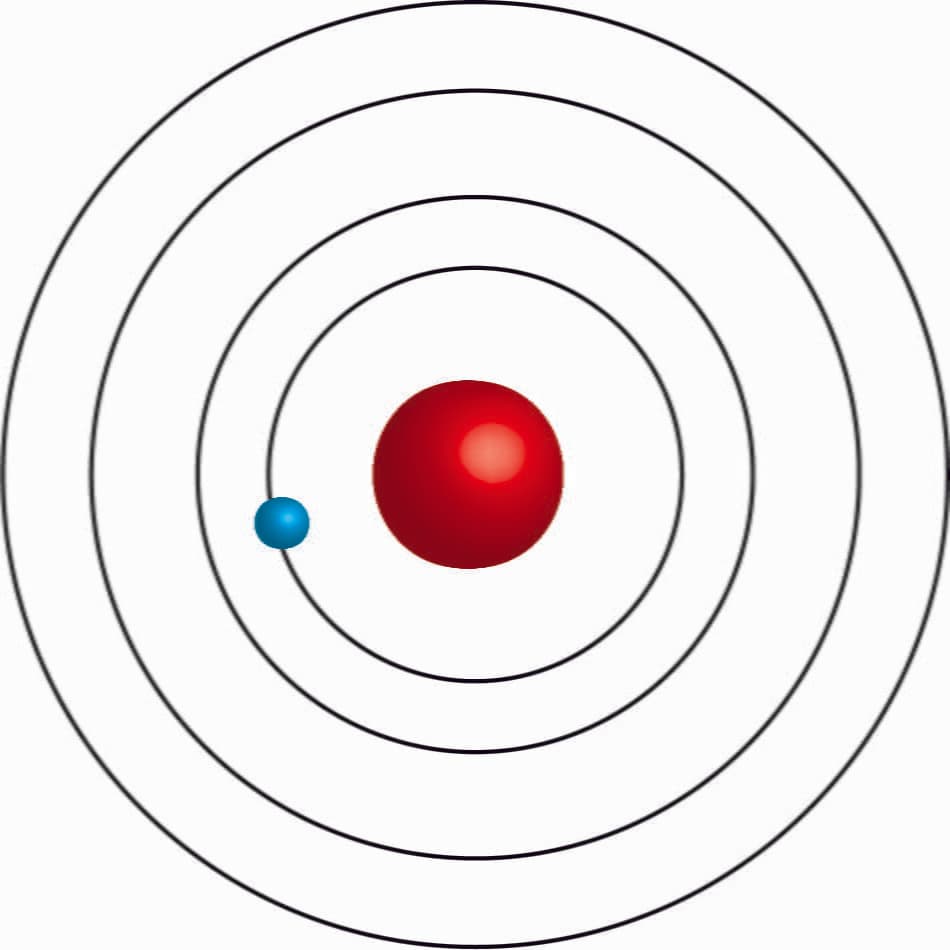
Which of the following CAN NOT be a specific model for the atom?
An unknown white substance is heated and produced white smoke and black solid. What do you think is this substance?
 7 Kenji SCIENCE First Quarter Recording the Smart WayQuarter III : First Summative Test in Science 7Quarter II: First Summative Test in Enhanced Science 7Science 7 First Monthly Test Bell Ringer Quiz 5 (Unit2 Week4) – TEKS 7.7D: Seatbelts, Tables, and Walls: First-Law Cases1.Linguistics is the science that studies language. 2.Linguist:Someone who studies linguistics. 3.The Subfields of Linguistics Phonetics deals with the sounds of language. Phonology deals with how the sounds are organized. Morphology deals with how sounds are put together to form words. Syntax deals with how sentences are formed. Semantics deals with the meaning of words, sentences, and texts. Pragmatics deals with how sentences and texts are used in the world (i.e., in context) Text Linguistics deals with units larger than sentences, such as paragraphs and texts. 4.Prescriptive: This approach consists basically of stating what is considered right and wrong in language. 5.Descriptive: This approach, on the other hand, consists of describing the facts. Descriptive linguistics is dedicated to describing the rules of the language, and the language is seen as essentially rule governed. 6.Language is rule-governed, creative, universal, innate, and learned, all at the same time. 7.Linguists understand language as a system of arbitrary vocal signs. 8.Linguistic signs: involve sequences of sounds which represent concrete objects and events as well as abstractions.Signs may be related to the things they represent in a number of ways. 9.Iconic: which resemble the things they represent (as do, for example, photographs, diagrams, star charts, or chemical models). 10.Indexical: which point to or have a necessary connection with the things they represent (as do, for example, smoke to fire, a weathercock to the direction of the wind, a symptom to an illness, a smile to happiness, or a frown to anger). 11.Describe the characteristics of human language: Creative: (The structural elements of human language can be combined to produce new utterances, which neither the speaker nor his hearers may ever have made or heard before.) Rule-governed: (Language is made of rules.) Universal: (There are some aspects that are present in all languages of the world.) Innate:(all humans possess an innate capacity for language, activated in infancy by minimal environmental stimuli. Chomsky) Uniquely human: (Language is what sets us apart from other species. It is what makes us human.) Learned:(Children acquire language from their natural setting.) 12.Differentiate between iconic, indexical and symbolic signs. A. iconic, which resemble the things they represent (as do, for example, photographs, diagrams, star charts, or chemical models) B. indexical, which point to or have a necessary connection with the things they represent (as do, for example, smoke to fire, a weathercock to the direction of the wind, a symptom to an illness, a smile to happiness, or a frown to anger). c. symbolic, which are only conventionally related to the thing they represent (as do, for example, a flag to a nation, a rose to love, a wedding ring to marriage). 12. Distinguish between different senses of the grammar word. The prescriptivist´s grammar (Grammar is a set of rules that label the different utterances as either right or wrong.) The descriptivist´s grammar (Grammar is a set of rules that govern the langauge spoken by people. ) The linguist´s grammar (Grammar is the subconscious knowledge of the set of rules that enables speakers to use the language) The speaker´s grammar (Grammar is the intrinsic linguistic knowledge within a native speaker) 13.Describe common fallacies about language and grammar: ►One type of grammar is simpler than another. ►Changes in grammar involve deterioration in a language ►Grammars should be logical and analogical (that is, regular) ►People must be taught the grammatical rules of their language. ►Only some languages have grammar. ►Grammars differ from each other in unpredictable ways. 14.Generality: All Languages Have a Grammar 15. Equality: All Grammars Are Equal 16.Changeability: Grammars Change Over Time 17. Universality: Grammars Are Alike in Basic Ways 18.Tacitness: Grammatical Knowledge Is Subconscious 19.Linguistics is defined as the study of language systems. It is the scientific study of language. 20.Historical approach:It is the study of language change. 21.Linguistic Competence: is the unconscious knowledge speakers of a language have about the system that enables them to create and understand novel utterances. 22.Performance: is the use of it. Performance is “the actual use of language in concrete situations.” 23.I-Language (internal language): which is the intrinsic linguistic knowledge within a native speaker. 24.E-Language (external language): which is the observable language—the output from a speaker. 25.Parole ('speech') refers to the concrete instances of the use of langue, including texts which provide the ordinary research material for linguistics. 26.Langue: 27.Language: is a system of communication that is non-stereotyped and non-finite; it is unlimited in its scope. 28.Grammar: to refer to a subconscious linguistic system of a particular type. Grammar makes possible the production and comprehension of a potentially unlimited number of utterances. 29.Communication and animals: Selecting a mode of communication (speech,writing, gesture). Delivering the symbols through a medium, a physical basis for communication, light, air, or ink. Decoding of the symbols to obtain the information. 30.SIGNS: Communication relies on using something to stand for something else. Words are an obvious example of this: You do not have to have a car, a sandwich, or your cousin present in order to talk about them—the words car, sandwich, and cousin stand for them instead. This same phenomenon is found in animal communication as well. 31.The signifier: A signifier is that part of a sign that stimulates at least one sense organ of the receiver of a message.A signifier can also be a picture, a photograph, a sign language gesture, or one of the many other words for tree in different languages. 32.The signified: The signified component of the sign refers to both the real world object it represents and its conceptual content. The first of these is the real world content of the sign, its extension or referent within a system of signs such as English, avian communication, or sign language. 33.Iconic signs or icons: always bear some resemblance to their referent. A photograph is an iconic sign; so too is a stylized silhouette of a female or a male on a restroom door. 34.Some iconic tokens: a. open-mouth threat by a Japanese macaque; b. park recreation signs; c. onomatopoeic words in English. 35.An indexical sign, or index, fulfils its function by pointing out its referent, typically by being a partial or representative sample of it. Indexes are not arbitrary, since their presence has in some sense been caused by their referent. For this reason it is sometimes said that there is a causal link between an indexical sign and its referent.The track of an animal, for example, points to the existence of the animal by representing a part of it. The presence of smoke is an index of fire. 36.Symbolic signs: bear an arbitrary relationship to their referents and in this way are distinct from both icons and indexes. Human language is highly symbolic in that the vast majority of its signs bear no inherent resemblance or causal connection to their referents, as the following words show. 37.Mixed signs Signs: are not always exclusively of one type or another. Symptomatic signs, for example, may have iconic properties, as when a dog opens its mouth in a threat to bite. Symbolic signs such as traffic lights are symptomatic in that they reflect the internal state of the mechanism that causes them to change color. 38.Signals: All signs can act as signals when they trigger a specific action on the part of the receiver, as do traffic lights, words in human language such as the race starter's "Go!", or the warning calls of birds. 39.SIGN STRUCTURE: No matter what their type, signs show different kinds of structure. A basic distinction is made between graded and discrete sign structure. 40.Graded signs convey their meaning by changes in degree. A good example of a gradation in communication is voice volume. The more you want to be heard, the louder you speak along an increasing scale of loudness. There are no steps or jumps from one level to the next that can be associated with a specific change in meaning. 41.Discrete signs are distinguished from each other by categorical (stepwise) differences. There is no gradual transition from one sign to the next. The words of human language are good examples of discrete signs. 42.A VIEW OF ANIMAL COMMUNICATION ►Largely iconic ►Largely symptomatic ►Little arbitrary ►Not deliberate ►Not conscious ►Not symbolic ►Stimulus boundMemory Adventure: From Learning to Forgetting Imagine Alex is preparing for a school science fair. Storing Memories (2.5) Alex studies a science experiment. The semantic memory (facts and knowledge, like “water boils at 100°C”) is stored in the brain, while episodic memory (personal experiences, like “I mixed vinegar and baking soda yesterday”) records the event. The hippocampus (the brain’s “save button”) helps transfer these memories into long-term memory. During sleep, memory consolidation (making memories stable and long-lasting) happens, and Alex vividly remembers the fun surprise when the mixture fizzes—a flashbulb memory (emotionally strong, vivid memory). Alex also learns the skill of carefully pouring liquids, a procedural memory stored in the basal ganglia, and how to react when the mixture splashes, a conditioned response stored in the cerebellum. Emotions make the memory even stronger, thanks to the amygdala. Retrieving Memories (2.6) The next day, Alex goes to the science fair. Seeing the experiment table triggers priming (unconscious memory activation—seeing the table makes Alex remember steps). Being in the same classroom helps context-dependent memory (better recall in the same place as learning). Alex is also in the same excited mood as while practicing, so mood-congruent memory helps remember details of the experiment. When listing the steps, Alex remembers the first step clearly and the last step best, thanks to the serial position effect. Using strategies like quizzing himself earlier (testing effect) and spacing study sessions (spacing effect) improves retrieval. Forgetting & Memory Errors (2.7) During the fair, Alex tries to remember an old trick learned last year, but some details are fuzzy. This is retroactive interference (new memories block old ones). At the same time, old steps from last year sometimes confuse him, an example of proactive interference (old memories block new info). Alex’s friend jokingly says he added glitter to the experiment last week. Alex later misremembers seeing glitter—this is the misinformation effect. He even forgets where he first learned the correct steps, a case of source amnesia, and feels a strange sense of déjà vu when looking at a similar experiment table. Unfortunately, Alex’s cousin has anterograde amnesia (cannot form new memories) and can only remember things from before last year, while his neighbor has retrograde amnesia (loses past memories) and cannot recall last week’s fair prep. Luckily, Alex’s strong study habits, sleep, and emotional engagement helped protect his memories from being forgotten too quickly.Question 1 Category: Current Events Question: What was the primary demand of the Kenyan Gen Z protesters featured in the BBC documentary Unmasked: The Truth Behind the Gen Z Protests? Options: A) Free education B) Repeal of the Finance Bill 2024 C) Climate change action D) New elections Correct Answer: B) Repeal of the Finance Bill 2024 Explanation: The BBC documentary highlights that Kenyan youth protested to demand the repeal of the Finance Bill 2024, which proposed tax hikes raising $2.7 billion. Question 2 Category: Science Question: Which gas, discovered on the sun before Earth, is the second most abundant element in the universe? Options: A) Hydrogen B) Oxygen C) Helium D) Nitrogen Correct Answer: C) Helium Explanation: Helium was first detected in the sun’s spectrum in 1868 and is the second most abundant element after hydrogen in the universe. Question 3 Category: Current Events Question: Which Kenyan city was the epicenter of the Gen Z protests covered in the BBC documentary Unmasked: The Truth Behind the Gen Z Protests? Options: A) Mombasa B) Nairobi C) Kisumu D) Eldoret Correct Answer: B) Nairobi Explanation: Nairobi, Kenya’s capital, was the main hub for the #OccupyParliament protests, with significant events like the Parliament breach occurring there, as shown in the documentary. Question 4 Category: History Question: Which empire, known for its vast trade networks, was centered in modern-day Turkey and lasted until the early 20th century? Options: A) Roman Empire B) Ottoman Empire C) Mongol Empire D) Byzantine Empire Correct Answer: B) Ottoman Empire Explanation: The Ottoman Empire, spanning over 600 years until 1922, was a major trade and cultural power centered in modern-day Turkey. Question 5 Category: Current Events Question: According to the BBC documentary, what technology helped document evidence of police brutality during the Kenyan Gen Z protests? Options: A) Drones B) Smartphone videos C) Facial recognition software D) Satellite tracking Correct Answer: B) Smartphone videos Explanation: The documentary used smartphone videos from protesters and bystanders, analyzed via open-source data, to document police brutality during the 2024 protests. Question 6 Category: Geography Question: What is the smallest country in the world by land area? Options: A) Monaco B) Vatican City C) San Marino D) Liechtenstein Correct Answer: B) Vatican City Explanation: Vatican City, with an area of about 44 hectares, is the smallest sovereign state in the world by land area. Question 7 Category: Current Events Question: What hashtag became synonymous with the Kenyan Gen Z protests, as featured in the BBC documentary Unmasked: The Truth Behind the Gen Z Protests? Options: A) #KenyaRising B) #OccupyParliament C) #TaxRevolt D) #GenZFight Correct Answer: B) #OccupyParliament Explanation: The #OccupyParliament hashtag was widely used by protesters to rally against the Finance Bill 2024, as documented by the BBC. Question 8 Category: Entertainment Question: Which actor starred as the lead in the 2023 film Barbie and also played a role in La La Land? Options: A) Emma Stone B) Margot Robbie C) Zendaya D) Saoirse Ronan Correct Answer: B) Margot Robbie Explanation: Margot Robbie starred as Barbie in the 2023 film and played a supporting role in La La Land (2016). Question 9 Category: Sports Question: Which sport is played at the Wimbledon Championships? Options: A) Cricket B) Rugby C) Tennis D) Golf Correct Answer: C) Tennis Explanation: Wimbledon, held annually in London, is the oldest and one of the most prestigious tennis tournaments in the world. Question 10 Category: Technology Question: In web development, what does the acronym “CSS” stand for? Options: A) Computer Style System B) Cascading Style Sheets C) Creative Script Syntax D) Centralized Style Standard Correct Answer: B) Cascading Style Sheets Explanation: CSS (Cascading Style Sheets) is used to style and format the appearance of web pages written in HTML.