Loading...


Science for Fun!
Quiz by อารีรัตน์ ขาลไธสง
Customize this quiz to suit your class
Instantly translate to 100+ languages
Tag the questions with any skills you have. Your dashboard will track each student's mastery of each skill.
Give this quiz to my class
What is it?
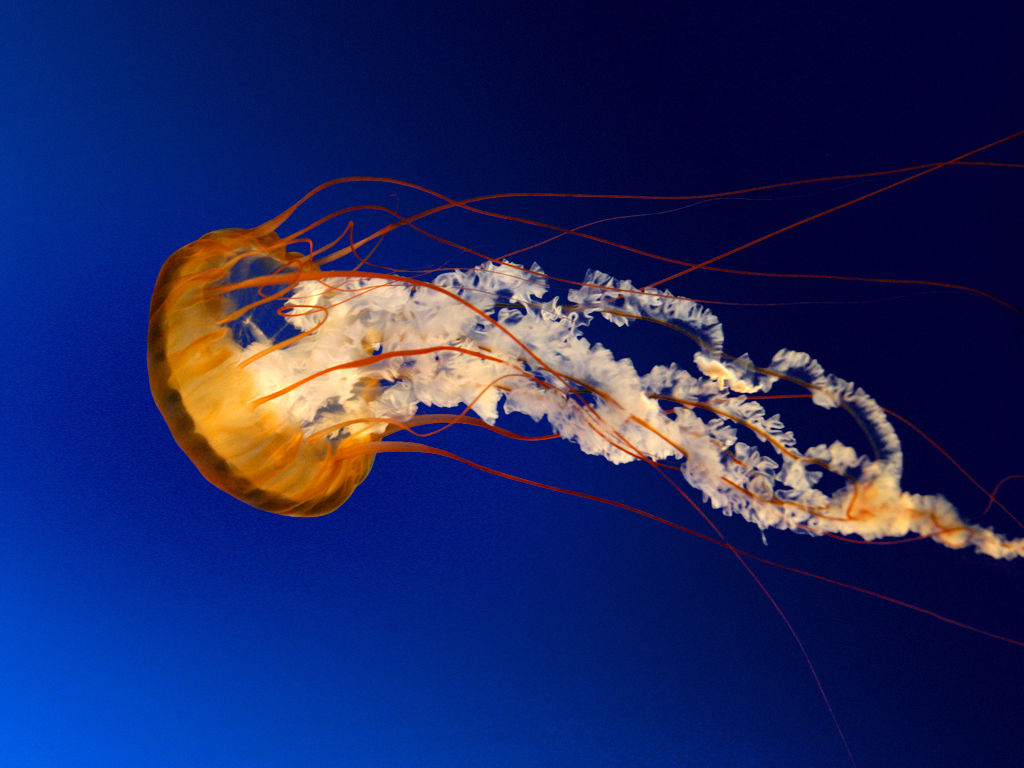
Jellyfish
dolphin
whale
Starfish
What is it?
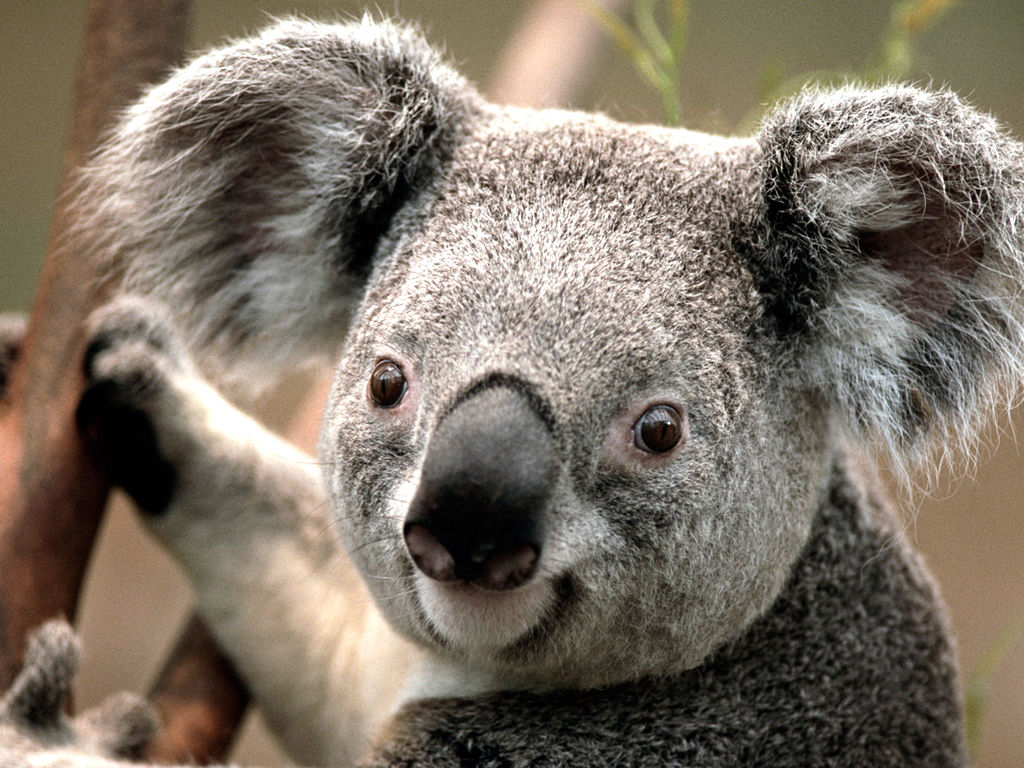
dolphin
Jellyfish
Koala
Starfish
What is it?
What is it?
What is it?

 8th science just for funScience Fun for 6th Graders! Just for Fun! No real Math or Science or any of thatModel Rockets Liftoff! Three... two... one... liftoff! A model rocket shoots into the sky. The rocket can fly up to 1,500 feet (457 m) high! Watching these small rockets fly can be fun and exciting. Model rockets aren't just for fun, though. They also teach us about science and space. The History of Rockets. People in China invented rockets about eight hundred years ago. They filled tubes with gunpowder and shot them at their enemies. Later, scientists built rockets that could go into space. Starting in the 1950s, people began building model rockets for fun. Parts of a Model Rocket. A model rocket kit comes with all the parts a rocket needs. A model rocket's body is a long tube made of cardboard or plastic. The nose cone fits into the top of the tube. The size and shape of a rocket's body and nose cone can change how it flies. Fins help the rocket fly straight. The engine burns fuel to push the rocket into the air. A parachute helps the rocket fall safely back to Earth. People like to make their rockets look great. Many people paint their rockets with different colors and designs. Every rocket is one of a kind! At the Launchpad. The only place to launch a rocket is in an open space. The launch area needs to be far away from people and buildings. A large field or a playground is a good spot. First, set up the launchpad. Place the rocket over the guide wire on the pad. The guide wire keeps the rocket pointing straight up. A girl connects the wire that will allow the controller to start the rocket engine. when it lifts off. Connect the launch controller to the rocket engine. Then step back and press the button on the controller to start the engine. Whoosh! The rocket flies up and away. Clubs and Competitions. People who fly model rockets often join model rocket clubs. Schools or hobby groups can have information about model rocket clubs. A science center or museum might have a model rocket club, too. Many people enter model rocket competitions. They set off rockets and see which one flies the highest and the fastest. Model rocket competitions are held all over the world. In the United States, students between twelve and eighteen can enter the Team America Rocketry Challenge. Every spring, one hundred teams compete to become the best in the country. The winners go on to compete against other teams from around the world. Model rockets are a fun way to learn about science. Who knows how high a model rocket can take your imagination?Alright, Isti — here’s a longer and more detailed English version of the Isaac Newton text, still written at a level that’s accessible for Grade 4 students, but rich enough in information to meet PISA literacy expectations and EF A2-level vocabulary. I’ve kept sentences short, clear, and with explanations for new concepts so it’s easier for young learners to follow, while still including both famous facts and lesser-known stories. ⸻ Isaac Newton: The Man Who Changed the Way We See the World A Boy from a Small Village Isaac Newton was born on January 4, 1643, in Woolsthorpe, a small village in England. His life was not easy. His father died before he was born. When he was just a few months old, his mother remarried and left him to live with his grandmother. Isaac missed his parents, but he kept himself busy by making things and exploring the world around him. As a child, Isaac liked to build models and machines. He made a small windmill that could turn with the wind. He built a water clock that told the time by dripping water into a container. He even made a sundial — a clock that tells the time by using the shadow of the sun. 💡 Did you know? The sundial marks that Isaac carved as a boy can still be seen today on the wall of his old house. ⸻ School and Curiosity When Newton first went to school, he was not the top student. At first, he did not pay much attention in class. But one day, another boy teased him for not being smart. Newton decided to study hard to prove him wrong. Soon, he became the best in his class. Isaac loved asking questions. He wanted to know how and why things happened. He enjoyed watching the stars at night and thinking about how the world worked. ⸻ The Falling Apple and Gravity One of the most famous stories about Newton is the falling apple. One afternoon, Isaac sat in his mother’s garden and saw an apple drop from a tree. This made him think: “Why does the apple fall straight down? Why doesn’t it fly up into the sky?” From this question, Newton began to think about gravity — an invisible force that pulls objects toward each other. Gravity is what keeps our feet on the ground. It’s also what keeps the Moon moving around the Earth and the planets moving around the Sun. 💡 Fun fact: The apple did not hit Newton’s head. That’s just a story people made up later to make the tale more exciting. ⸻ Newton’s Three Laws of Motion Newton studied movement and wrote three important rules: 1. Objects stay still or keep moving unless something makes them change. • Example: A ball will not roll unless you push it. 2. The bigger the push, the bigger the movement. • Example: If you kick a ball harder, it will go faster and farther. 3. Every action has an equal and opposite reaction. • Example: When you jump off a boat, the boat moves backward as you move forward. These three laws are still used today to understand how cars, rockets, and even roller coasters work. ⸻ Discoveries in Light and Color Newton also studied light. He found that white light is not just one color — it is made of many colors. He used a glass prism to split sunlight into a rainbow. This helped scientists understand how colors work. ⸻ Inventions and New Ideas Newton made a special telescope that used mirrors instead of lenses. This type of telescope made images of planets and stars much clearer. It is still called the Newtonian telescope today. He also worked in mathematics and helped create a new type of math called calculus, which is used to study changes and movement. ⸻ Strange Experiments Newton was so curious that he sometimes tested ideas on himself. Once, he put a thin needle, called a bodkin, beside his eye to see how it would change his vision. It was very dangerous, but luckily he did not go blind. 💡 Did you know? Newton also studied alchemy — an old kind of science where people tried to turn metal into gold. He never succeeded, but it showed how wide his interests were. ⸻ Later Life and Work At the age of 27, Newton became a professor at Cambridge University. He later worked for the Royal Mint, making sure coins were made safely and stopping people from making fake money. He was very strict, and some criminals were sent to prison because of his work. Newton never married. He spent most of his life reading, writing, and doing experiments. ⸻ The End of His Life Isaac Newton died in 1727 at the age of 84. He was buried in Westminster Abbey, a famous place in London where great people of Britain are honored. His work changed the world forever. Even today, scientists, engineers, and students still use Newton’s laws and ideas. 💬 Newton once said: “If I have seen further, it is by standing on the shoulders of giants.” This means we can make new discoveries by learning from the work of others who came before us. give 10 questions to each passage with PISA literacy standard for kid 10 years, 1. Nikola Tesla: The Man Who Dreamed of Lightning Born: July 10, 1856 Died: January 7, 1943 When Nikola Tesla was a boy in Croatia, he saw a flash of lightning and asked his mother, “Can we catch the light?” That question never left him. As he grew older, Tesla became a brilliant inventor, especially fascinated by electricity. He believed in a future where energy could be sent wirelessly through the air—like music through the radio! Tesla invented the alternating current (AC) system, which became the foundation of modern electricity. At the time, Thomas Edison promoted direct current (DC), and the two men had a fierce competition. Many laughed at Tesla's bold ideas, but he never gave up. He dreamed of wireless communication, flying machines, and even free energy for everyone. Though he died alone and poor, today the world honors his vision. Think About It: Why do you think people didn’t believe Tesla at first? What can we learn from Tesla’s courage to dream big? 2. Charles Darwin: The Man Who Studied the World’s Weirdest Creatures Born: February 12, 1809 Died: April 19, 1882 When young Charles Darwin got on a ship called HMS Beagle, he didn’t know he would change science forever. He sailed around the world for five years, collecting plants, animals, and fossils. On the Galápagos Islands, he noticed something curious: finches had different beaks depending on their island. Why? Darwin’s observations led him to write the theory of evolution by natural selection. It explained how animals adapt and survive. But his ideas shocked many people because they seemed to challenge religious beliefs. Despite the controversy, Darwin continued his work. His book On the Origin of Species changed how we see life on Earth. Think About It: Should scientists share their ideas even if they go against what others believe? How did traveling help Darwin make new discoveries? 3. Marie Curie: The Woman Who Glowed in the Dark Born: November 7, 1867 Died: July 4, 1934 Marie Curie was born in Poland at a time when girls were not allowed to study science. But that didn’t stop her. She moved to France, worked day and night, and discovered radioactivity, a powerful energy hidden inside atoms. She and her husband, Pierre Curie, found two new elements: polonium and radium. She became the first woman to win a Nobel Prize, and the only person to win in two different sciences: physics and chemistry. Even when Pierre died in an accident, Marie continued their work. Her discoveries helped doctors treat cancer—but working with radioactive materials also harmed her health. She died from radiation exposure, but her legacy lives on. Think About It: What challenges did Marie Curie face as a woman in science? Why is it important to balance discovery with safety? 4. Galileo Galilei: The Star Watcher Who Defied the Church Born: February 15, 1564 Died: January 8, 1642 Galileo loved looking at the stars. He built one of the first powerful telescopes and made stunning discoveries: mountains on the Moon, moons around Jupiter, and that the Earth orbits the Sun—not the other way around. This idea, called heliocentrism, went against the teachings of the Church. He was put on trial and forced to say he was wrong. But he wasn’t. He spent his last years under house arrest, quietly writing. Today, Galileo is called the father of modern science for daring to question what others blindly believed. Think About It: Why do you think Galileo was punished for telling the truth? Should science always follow evidence, even if it goes against powerful beliefs? 5. Isaac Newton: The Man Who Asked “Why?” When an Apple Fell Born: January 4, 1643 Died: March 31, 1727 One day, an apple fell from a tree, and Isaac Newton began to wonder: Why did it fall down, not sideways or up? This simple question led to his theory of gravity. Newton also invented calculus, described the laws of motion, and changed physics forever. But Newton wasn’t just a genius—he was curious, quiet, and often worked alone. He believed everything in nature followed rules, and it was our job to discover them. Thanks to him, we understand how planets move, how rockets launch, and why you fall when you trip. Think About It: How did Newton’s curiosity lead to great discoveries? Do you think working alone helped or hurt Newton? 6. Ada Lovelace: The First Computer Programmer Before Computers Existed Born: December 10, 1815 Died: November 27, 1852 Ada Lovelace was the daughter of the famous poet Lord Byron, but she didn’t love poetry—she loved numbers! At a time when girls were expected to sew, Ada studied mathematics. She met Charles Babbage, who designed an early computer called the Analytical Engine. Ada imagined the machine could do more than just math—it could create music, art, and even write! She wrote what is now considered the first computer program, long before real computers were built. Think About It: How did Ada imagine something that didn’t exist yet? Why do we call her a pioneer in technology? 7. Albert Einstein: The Man Who Brought Time and Space Together Born: March 14, 1879 Died: April 18, 1955 Albert Einstein wasn’t always a good student. In fact, his teachers thought he was slow. But Einstein thought deeply. He asked big questions like, “What if you could ride a beam of light?” His theories of relativity changed how we see space, time, and gravity. He also warned the world about the dangers of nuclear weapons, even though his ideas helped create them. Einstein believed science should help people, not harm them. With his messy hair, kind smile, and brilliant mind, he remains a symbol of genius. Think About It: Can someone be bad in school but still be brilliant? Should scientists be responsible for how their inventions are used? 8. Pythagoras: The Musician Who Loved Math Born: Around 570 BC Died: Around 495 BC Long ago in ancient Greece, Pythagoras believed the universe followed numbers. He discovered the Pythagorean Theorem, a rule about triangles that helps us build houses, design computers, and navigate space. He also believed that music had math inside it—that certain notes made perfect harmony because of mathematical ratios. Pythagoras started a secret school and taught his students to search for truth through numbers, shapes, and sound. Think About It: Why do you think Pythagoras saw math in everything? How does music relate to math? 9. Rosalind Franklin: The Woman Behind the DNA Discovery Born: July 25, 1920 Died: April 16, 1958 Rosalind Franklin loved looking closely at things. She used a special machine called X-ray crystallography to photograph molecules. One of her greatest photos, called Photo 51, showed the shape of DNA, the molecule that carries life’s instructions. But her work was taken without credit. Two men, Watson and Crick, used her photo to build their famous model of DNA and won the Nobel Prize. Rosalind died young and never knew how important her work became. Think About It: Why is it important to give credit in science? What can we learn from Rosalind’s quiet strength? 10. Carl Linnaeus: The Man Who Gave Names to Everything Born: May 23, 1707 Died: January 10, 1778 Have you ever wondered why a tiger is called Panthera tigris? That’s thanks to Carl Linnaeus, a Swedish scientist who created a way to name and organize every living thing. His system is still used today in biology. Linnaeus loved nature and spent his life collecting plants, animals, and even rocks. He believed that by organizing life, we could better understand it. Thanks to him, we now have a global “dictionary of nature.” Think About It: Why is it important to name and organize living things? How does order help us understand the world?Memory Adventure: From Learning to Forgetting Imagine Alex is preparing for a school science fair. Storing Memories (2.5) Alex studies a science experiment. The semantic memory (facts and knowledge, like “water boils at 100°C”) is stored in the brain, while episodic memory (personal experiences, like “I mixed vinegar and baking soda yesterday”) records the event. The hippocampus (the brain’s “save button”) helps transfer these memories into long-term memory. During sleep, memory consolidation (making memories stable and long-lasting) happens, and Alex vividly remembers the fun surprise when the mixture fizzes—a flashbulb memory (emotionally strong, vivid memory). Alex also learns the skill of carefully pouring liquids, a procedural memory stored in the basal ganglia, and how to react when the mixture splashes, a conditioned response stored in the cerebellum. Emotions make the memory even stronger, thanks to the amygdala. Retrieving Memories (2.6) The next day, Alex goes to the science fair. Seeing the experiment table triggers priming (unconscious memory activation—seeing the table makes Alex remember steps). Being in the same classroom helps context-dependent memory (better recall in the same place as learning). Alex is also in the same excited mood as while practicing, so mood-congruent memory helps remember details of the experiment. When listing the steps, Alex remembers the first step clearly and the last step best, thanks to the serial position effect. Using strategies like quizzing himself earlier (testing effect) and spacing study sessions (spacing effect) improves retrieval. Forgetting & Memory Errors (2.7) During the fair, Alex tries to remember an old trick learned last year, but some details are fuzzy. This is retroactive interference (new memories block old ones). At the same time, old steps from last year sometimes confuse him, an example of proactive interference (old memories block new info). Alex’s friend jokingly says he added glitter to the experiment last week. Alex later misremembers seeing glitter—this is the misinformation effect. He even forgets where he first learned the correct steps, a case of source amnesia, and feels a strange sense of déjà vu when looking at a similar experiment table. Unfortunately, Alex’s cousin has anterograde amnesia (cannot form new memories) and can only remember things from before last year, while his neighbor has retrograde amnesia (loses past memories) and cannot recall last week’s fair prep. Luckily, Alex’s strong study habits, sleep, and emotional engagement helped protect his memories from being forgotten too quickly.El almuerzo lunch la clase the class la clase de ____ the class of ____ el arte art el español Spanish las ciencias (naturales) science las ciencias sociales social studies la educación física physical education el inglés English las matemáticas mathematics la tecnología technology/computers el horario schedule en la . . . hora in the . . . hour (class period) la tarea the homework enseñar to teach estudiar to study hablar to talk primer/o/a first segundo/a second tercer/o/a third cuarto/a fourth quinto/a fifth sexto/a sixth séptimo/a seventh octavo/a eighth noveno/a ninth décimo/a tenth yo hablo I speak tú hablas you speak él/ella/Usted habla he/she/it speaks nosotros hablamos we speak vosotros habláis you guys speak ellos/ellas/Ustedes hablan they speak / you guys speak nosotros we yo I nosotras we (the girls) tú you vosotros you all usted (Ud.) you vosotras you girls ustedes (Uds.) you all (formal) él he ellos they ella she ellas they (the girls) la calculadora calculator la carpeta de argollas three-ring binder el diccionario dictionary (yo) necesito I need (tú) necesitas you need aburrido/a boring difícil difficult divertido/a amusing, fun fácil easy favorito/a favorite interesante interesting práctico/a practical más . . . que more . . . than a ver . . . Let's see ¿Quién? Who? para for mucho a lot (yo) tengo I have (tú) tienes you haveLesson 2: USES OF SOIL PRETEST Color the pictures that show how we can use soil. SOMETHING TO READ Soil is very useful to us. We can use it in many ways. Let us find out the different uses of soil one by one. Uses of soil a. Sand is used in making our houses. It is also used in making hollow blocks. OBJECTIVES: - Enumerates things that we can with soil - Demonstrates ways for making play things out of soil SCIENCE 2 – MODULE 7 SEIBO COLLEGE 9 b. Soil is made up of minerals, nutrients, water and air that support growing plants. It also keeps the plant’s roots on the ground. c. Animals like earthworm and ants lives in the soil. They create tunnels in it to allow air and water to pass through it. d. Clay soil is used in making pots and vases. We can play with it. We can make different objects that we can use to play with. e. When we are at the shore of the beach, we can play with sand and build sand castles. SOMETHING TO DO ACTIVITY 1 Creating Things I Like Objective: In this activity, children will learn that they can create things out of clay. What you need: SCIENCE 2 – MODULE 7 SEIBO COLLEGE 10 2 bars of clay (any color) 1 pc. 1/8 illustration board or any hard board What to do: 1. Using the bars of clay, create things that you like then place them on the illustration board. 2. Show your work to your facilitator. Observation: 1. Is it easy for you to create things that you like out of clay? __________________________________________________ 2. What is the texture of the clay? ________________________ 3. Did you have fun dong this activity? _____________________ Conclusion: I therefore conclude that _