Loading...


Science study guide
Quiz by Emily Lucco
Tag the questions with any skills you have. Your dashboard will track each student's mastery of each skill.
What is number 1
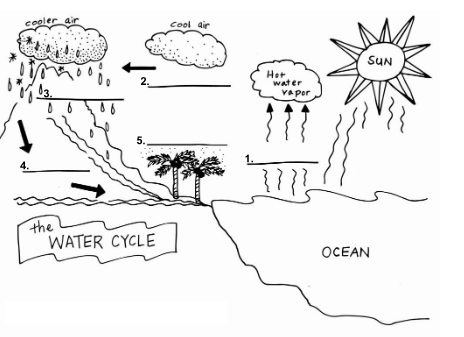
Evaporation
Condensation
Run off
Ocean
What is number 2
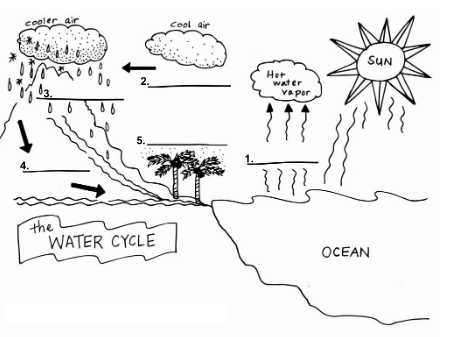
Evaporation
Vapor
Perspiration
Cloud
Condensation
What is number 1
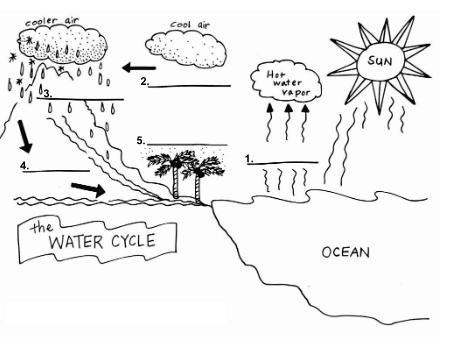
What is number 2

What is number 3
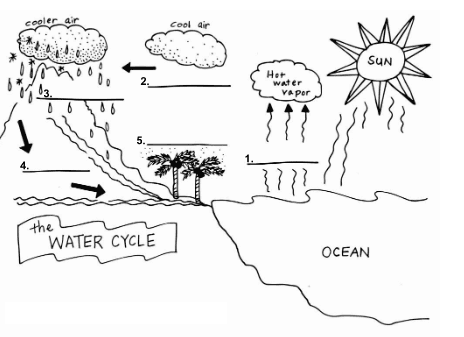
What is number 4
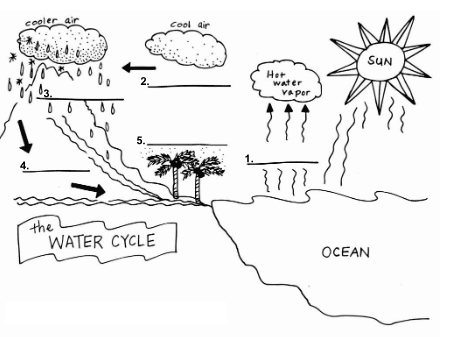
What is number 5

Why is water unique compared to other compounds in terms of the states of matter?
When water freezes, it becomes (more or less) ___________ dense so it floats in liquid.

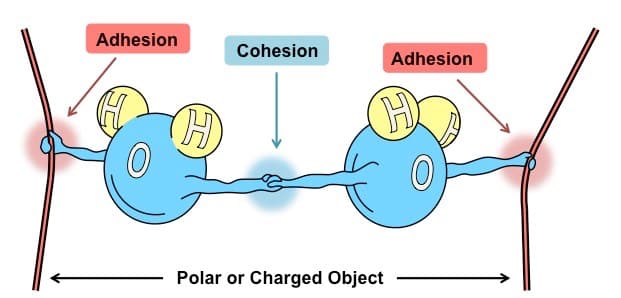
What is the difference between adhesion and cohesion?
This is a very great photo to understand cohesion and adhesion
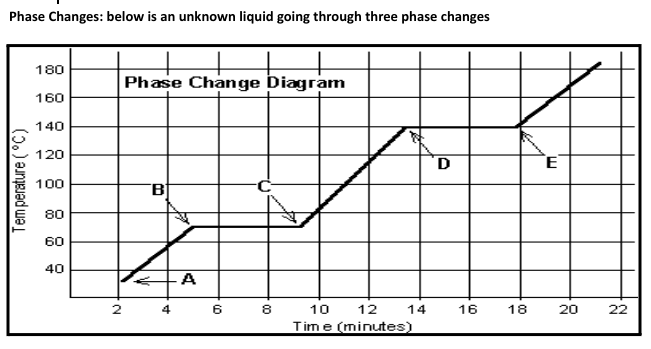
What state of matter is letter A?

What phase change is occurring between B-C?
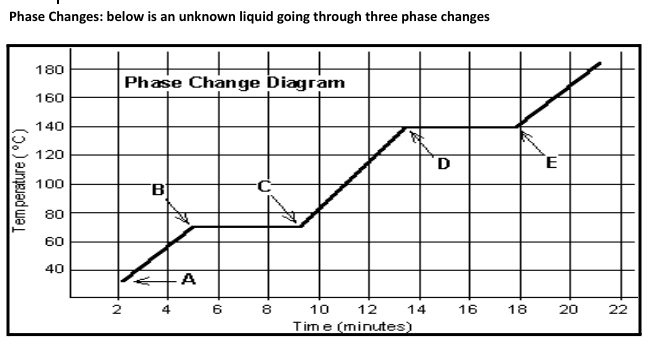
What state of matter is it from C-D?
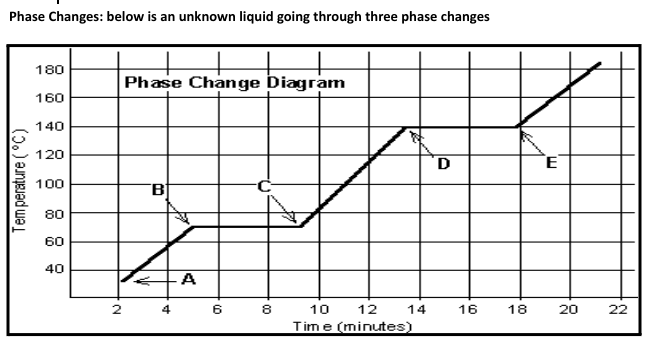
What phase change is happening from D-E?

What state of matter is it at point E and beyond?

How long did it melt for approximately?

How long was it a liquid for approximately?
What is a watershed? What separates watersheds?
If pollution occurs at point A, will it fall into the river and the watershed the river is located in? Why or why not?

Humidity is the measure of __________________ present in the air. Water is added to the air through a process in the water cycle called _____________________.
___________________ ___________________ is the amount of water in the air compared to the amount of water the air could possibly hold.

Describe evaporation
Describe condensation
Describe precipitation
Describe run off
Describe transpiration
Draw water’s polar bond:

What is the difference between adhesion and cohesion? How do those affect surface tension? Adhesion
What is the difference between adhesion and cohesion? How do those affect surface tension? Cohesion
Point Source Pollution:
Non-Point Source Pollution:
Point Source Pollution Examples:
Non-Point Source Pollution Examples:
What happens to air pressure as altitude or elevation increases? Why?
Air that is ______ will have a lower density due to the _______ movement of air molecules
Air that is ______ will have a higher density due to the _______ movement of air molecules
If the air is holding half the water it could hold, its Relative Humidity is...
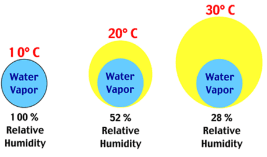
If the air is [...], it is holding all of the water that it can hold (100% humidity)

What weather conditions/quality would you expect in city A?

What weather conditions/quality would you expect in city A? Why does that happen?
What direction does this one spin (city A)? (In Northern Hemisphere)
What weather conditions/quality would you expect in city B?
What weather conditions/quality would you expect in city B? Why does that happen?
What direction does this one spin (city B)? (In Northern Hemisphere)
What will the weather be like in 2-3 days in City B, and why?
Description #1

Description #2
Description #3
Description #4
Description #5
Description #6
Add or Remove CO2 to air? #1
Add or Remove CO2 to air? #2
Add or Remove CO2 to air? #3
Add or Remove CO2 to air? #4
Add or Remove CO2 to air? #5
Add or Remove CO2 to air? #6
Add or Remove CO2 to air? #7
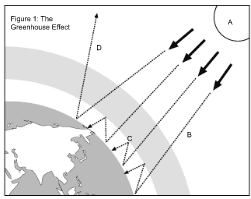
Describe what is happening to the sun’s incoming solar radiation as it reaches earth’s surface. Mention what is making it be absorbed and trapped on the surface, and what is reflecting it back to space.
What are the five main greenhouse gasses?

Which greenhouse gasses are most abundant?
What does the global warming potential mean?
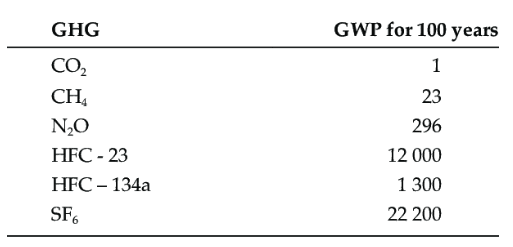
How does CO2 compare to the others?
True or False: Earth would be habitable without the greenhouse effect?
Would earth be habitable without the greenhouse effect?
How have humans enhanced (increased) the greenhouse effect? What are the effects of enhancing the greenhouse effect?
As latitude increases (you move farther away from the equator), the average annual temperature

As latitude increases (you move farther away from the equator), the average annual temperature decreases. This is because the sun’s rays are (more or less) direct the farther you go from the equator.

Water tends to (hold or release) temperature meaning there is less of a difference in high and low temperatures
During the summer, locations near the shore tend to be (warmer or cooler) than those further inland, while in the winter locations near the shore tend to be (warmer or cooler) than those further inland.
Windward sides are (rainy/less rainy) and (windy/ less windy)

Leeward sides are (rainy/less rainy) and (windy/ less windy)

Which side of the mountain will be warmer? Explain.
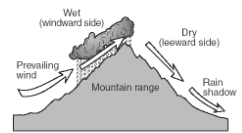
The air is (more / less) dense as you increase in elevation, leaving fewer molecules to absorb solar radiant energy
As elevation increases, temperature (increases/decreases)
Warm currents create ______ climates
Cool currents create ______ climates
Warmer winds = ______ climate
Cooler Winds = ______ climate
A more vegetated climate will have (warmer or colder) _______ climate because of the low albedo of the plants that absorb the sunlight, and a (more or less)________ moist climate because of the transpiration the plants perform.
Is the climatograph showing data for a city in the northern or southern hemisphere?

How do you know the climatograph is showing data for a city in the northern hemisphere?
Which month had the lowest temperature?
Which had the highest precipitation?
(True or false) Is this city's climate tropical, temperate, or polar? -> Temperate: highest is about 75 and lowest around 25-ish Fahrenheit
(True or false) Is this city's climate tropical, temperate, or polar? -> Polar: highest is about 75 and lowest around 25-ish Fahrenheit
(True or false) Is this city's climate tropical, temperate, Tropical: highest is about 75 and lowest around 25-ish Fahrenheit
Climate deniers will show graphs with evidence that the amount of CO2 has been just as high, or higher in ppm, in the past. What was the reason for this occurrence in times when humans didn’t exist?
(True or False) What are other reasons earth goes through changes in climate, whether it being warmer or colder than what we are currently experiencing? What are these cycles called? -> Milankovitch Cycles: Eccentricity- shape of orbit changes from less elliptical to more elliptical over 100,000 year cycle. Obliquity- the angle changes, the more extreme the angle, the more extreme the temperature changes. Precession- the orientation of earth’s axis changes from Polaris to Vega
(True or False) What are other reasons earth goes through changes in climate, whether it being warmer or colder than what we are currently experiencing? What are these cycles called? -> Milankovitch Cycles: Eccentricity- shape of orbit changes from less elliptical to more elliptical over 100,000 year cycle. Obliquity- the angle changes, the more extreme the angle, the more extreme the temperature changes. Precession- the orientation of earth’s axis changes from Vega to Polaris
Energy Efficiency: The ratio of the amount of _____ energy produced versus the amount of energy put into the process.
Most of the time when energy is lost in a transformation - it is lost as _____. This is either a product of the reaction itself, or due to ____of moving parts.
Energy Efficiency = [(Total Useful (Output)l Energy)/(Total Input Energy)] x 100
Energy Efficiency = [(Total Useful (Output)l Energy)/(Total Input Energy)] x 10
Energy Efficiency = [(Total Useful (Input)l Energy)/(Total Output Energy)] x 100
Input: 115J
Output: 98J
What is the efficiency?
Input: 375J
Output: 285J
What is the efficiency?
Solve the following word problem. First, extract the useful information: 950J of energy was extracted from some gasoline when it was combusted in an engine. The vehicle then produced 600J of mechanical energy. How much energy was lost as heat? What is the energy efficiency of this reaction?
List the 6 types of energy that exist in alphabetical order.
Identify one type of energy at each part of the production of electricity from fossil fuels. (1 to 4 = left to right)
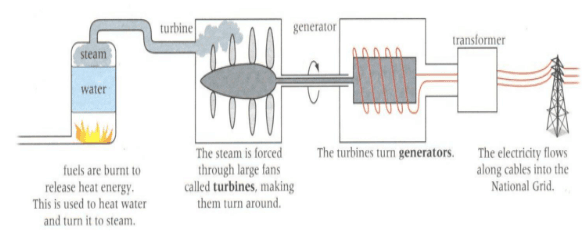
Distinguish between renewable and nonrenewable resources.
What is the greatest concern in using non-renewable fossil fuels to generate nearly 90% of the United States’ electricity? Name several reasons.
What is uranium used for? (N______ P____)
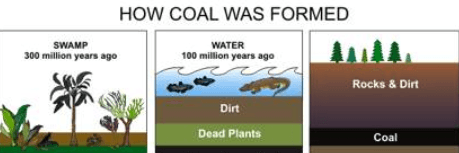
What is coal?
What is oil?
What is natural gas?
How is coal, oil, and natural gas similar, but different to nuclear power?
How do we extract petroleum and natural gas?

How do we extract coal?
Annotate each type of renewable energy

Annotate each type of renewable energy
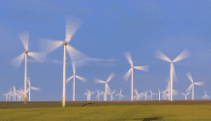
Annotate each type of renewable energy
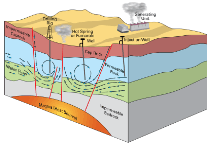
Annotate each type of renewable energy

Annotate each type of renewable energy
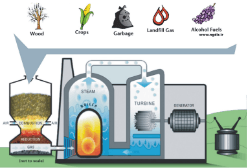
Annotate each type of renewable energy

What are 2 main pros and cons to each type of renewable energy? Running water pushes a turbine, which generates electricity

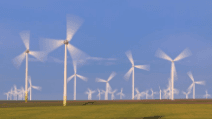
What are 2 main pros and cons to each type of renewable energy? Wind blows by a turbine, which spins, and is attached to the motor
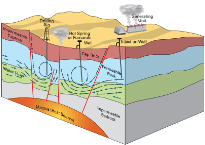
What are 2 main pros and cons to each type of renewable energy? The heat from the mantle is used to heat water, which creates steam to spin the turbine & generate electricity
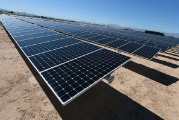
What are 2 main pros and cons to each type of renewable energy? UV Rays hit a solar panel, this converts it to DC current, which is then transformed to AC current and becomes electricity
What are 2 main pros and cons to each type of renewable energy? Biomass is used to burn, which then heats water to create steam and spin the turbine

What are 2 main pros and cons to each type of renewable energy? Waves/ Tides push the turbine to spin, which generates electricity

A major problem with everyone moving to the suburbs is that everyone still works in the ____. This creates a need for everyone to own a ___, and ____ long distances to work.
Why did urban sprawl happen in many cities during the 20th century?
List some reasons why urban sprawl is bad:
What is the “Heat Island Effect” and what might potentially cause it?
Elaborate on each smart growth city component-improvement: Transportation/ Roads:
Elaborate on each smart growth city component-improvement: Nature:
Elaborate on each smart growth city component-improvement: Building Design:
Elaborate on each smart growth city component-improvement: Housing:
Elaborate on each smart growth city component-improvement: Sense of community:
For the following phrases, put a “U” for an urbanized city, and an “S” for a Smart Growth City - Everyone drives their own car to work
For the following phrases, put a “U” for an urbanized city, and an “S” for a Smart Growth City - Mixed housing options (apartments, condos, houses)
For the following phrases, put a “U” for an urbanized city, and an “S” for a Smart Growth City - Single-use zoning
For the following phrases, put a “U” for an urbanized city, and an “S” for a Smart Growth City - Grid-like streets
For the following phrases, put a “U” for an urbanized city, and an “S” for a Smart Growth City - Using public transportation or biking
For the following phrases, put a “U” for an urbanized city, and an “S” for a Smart Growth City - Having a grocery store within a 10 minute walk of your home
For the following phrases, put a “U” for an urbanized city, and an “S” for a Smart Growth City - Many parking lots
For the following phrases, put a “U” for an urbanized city, and an “S” for a Smart Growth City - Incorporating green spaces within developed land
For the following phrases, put a “U” for an urbanized city, and an “S” for a Smart Growth City - Living close to where you work
