Loading...


Science Term 4
Quiz by Cheryl Anne Villapando
Customize this quiz to suit your class
Instantly translate to 100+ languages
Tag the questions with any skills you have. Your dashboard will track each student's mastery of each skill.
Give this quiz to my class
I. Directions: Identify the kind of weather each picture shows.

cloudy day
stormy day
I. Directions: Identify the kind of weather each picture shows.
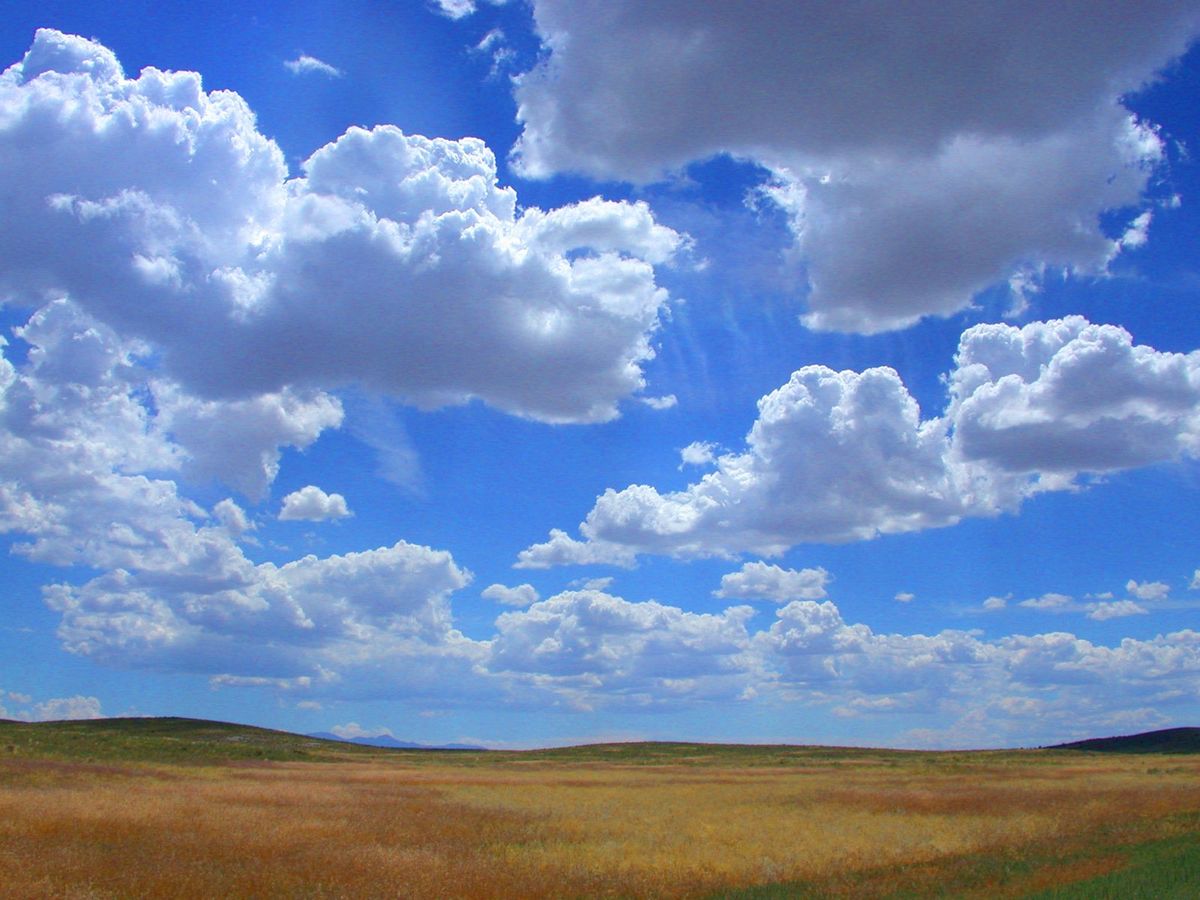
stormy day
cloudy day
I. Directions: Identify the kind of weather each picture shows.

I. Directions: Identify the kind of weather each picture shows.

I. Directions: Identify the kind of weather each picture shows.

I. Directions: Identify the kind of weather each picture shows.

I. Directions: Identify the kind of weather each picture shows.

II. Direction: Choose TRUE if you agree with the sentence; choose FALSE if not.
Prolonged heavy rains may bring floods and destroy homes.
II. Direction: Choose TRUE if you agree with the sentence; choose FALSE if not.
Plane flights may bedelayed due to heavy rains.
II. Direction: Choose TRUE if you agree with the sentence; choose FALSE if not.
Weather changes fromday to day and within the day.
II. Direction: Choose TRUE if you agree with the sentence; choose FALSE if not.
Rain washes away dust in the air.
II. Direction: Choose TRUE if you agree with the sentence; choose FALSE if not.
The sun's heat warms the air, land, and water.
II. Direction: Choose TRUE if you agree with the sentence; choose FALSE if not.
When the weather is hot, people eat more.
II. Direction: Choose TRUE if you agree with the sentence; choose FALSE if not.
Other sources of heat are burning wood, light bulbs, stoves and other electrical appliances.
II. Direction: Choose TRUE if you agree with the sentence; choose FALSE if not.
Animals depend on the sun's heat to keep their body warm.
II. Direction: Choose TRUE if you agree with the sentence; choose FALSE if not.
Plants do not need the heat of the sun in order to live and grow
II. Direction: Choose TRUE if you agree with the sentence; choose FALSE if not.
We can survive without the sun's heat
III. Directions: Complete these sentences by choosing the best answer.
A very rainy weather can force people to leave their ____________________ .
III. Directions: Complete these sentences by choosing the best answer.
A very rainy weather can cause ____________________ .
III. Directions: Complete these sentences by choosing the best answer.
Sunny weather can cause plants to ____________________ if there's not enough water in the soil .
III. Directions: Complete these sentences by choosing the best answer.
Sunny weather can make some flowers ____________________.
III. Directions: Complete these sentences by choosing the best answer.
Sunny weather can lower ____________________ production in cows.
III. Directions: Complete these sentences by choosing the best answer.
_________ _________ is used as a basis to tell the position of an object.
III. Directions: Complete these sentences by choosing the best answer.
_________ is the measure of the space between two objects.
III. Directions: Complete these sentences by choosing the best answer.
In measuring space between objects, we use a __________.
III. Directions: Complete these sentences by choosing the best answer.
The heat from the Sun keeps the Earth and living things on it ________.
III. Directions: Complete these sentences by choosing the best answer.
The _______ is the main source of heat on earth.
III. Directions: Complete these sentences by choosing the best answer.
____________ is a measure of how hot or cold an object is.
IV. Directions: Tell the position of the elf in the following drawings below.

IV. Directions: Tell the position of the elf in the following drawings below.

IV. Directions: Tell the position of the elf in the following drawings below.
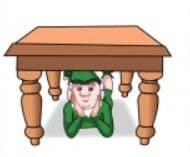
IV. Directions: Tell the position of the elf in the following drawings below.

IV. Directions: Tell the position of the elf in the following drawings below.

IV. Directions: Tell the position of the elf in the following drawings below.

IV: Directions: Identify if the picture shows a Natural or Artificial source of light.
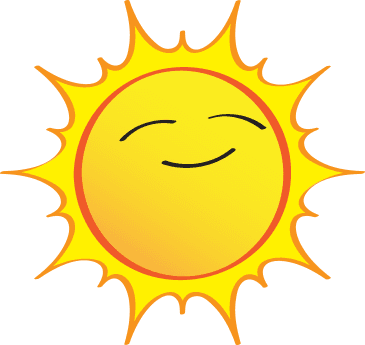
IV: Directions: Identify if the picture shows a Natural or Artificial source of light.

IV: Directions: Identify if the picture shows a Natural or Artificial source of light.

IV: Directions: Identify if the picture shows a Natural or Artificial source of light.

IV: Directions: Identify if the picture shows a Natural or Artificial source of light.
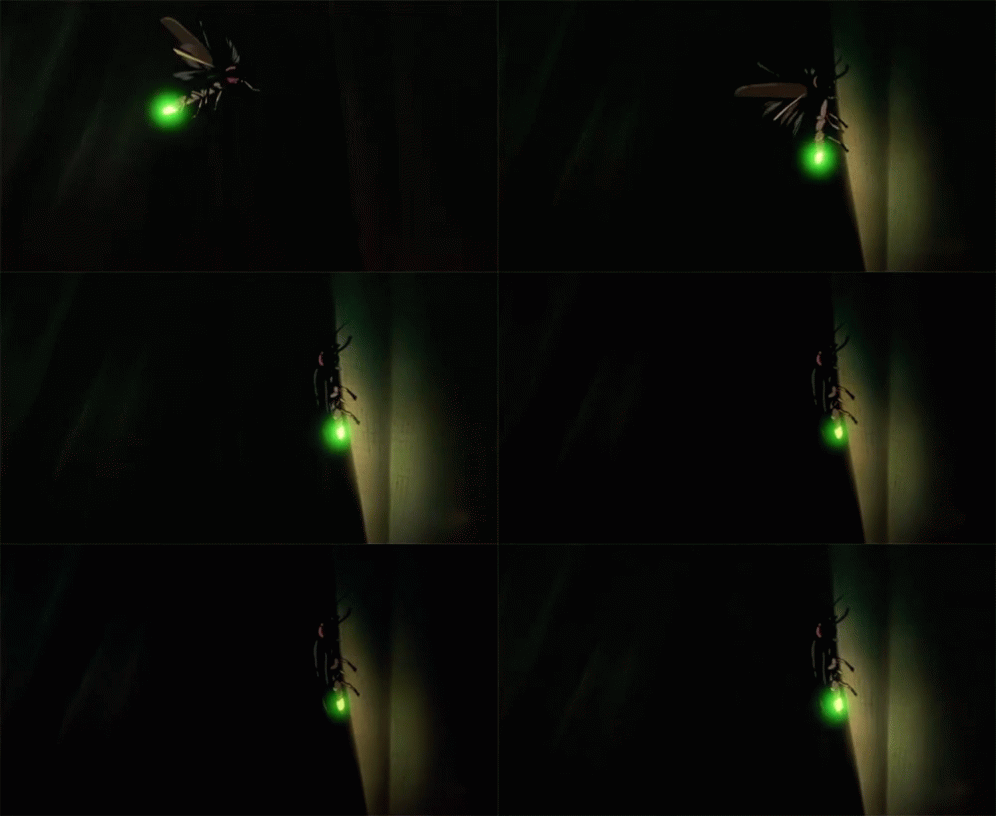
IV: Directions: Identify if the picture shows a Natural or Artificial source of light.

IV: Directions: Identify if the picture shows a Natural or Artificial source of light.
 Term 4 Science Quiz 2019Revision 4 grade 6 Science Term 2QUIZ 1 TERM 1 SCIENCE 4Q1. Tick the properties of water. a. Water is transparent and colourless. b. Water has no smell or taste. c. One litre of water has a mass of one kilogram. d. Water supports life. e. Water has no weight. Q2. List the properties of air. --------------------------------------------------------------------- --------------------------------------------------------------------- ---------------------------------------------------------------------- ----------------------------------------------------------------------- Q3. "Which gases are the most abundant in air?" The most common gas ----------------------------------------- The second most common gas ----------------------------- 8 | Page AZ-Y5-Science- Second Mid-Term Revision2024/2025 Q4. Look at the pie chart of the components of the air and identify P, Q and R. Nitrogen 71% Oxygen 21% Other gases 1% P ------------------------------- Q ------------------------------- R -------------------------------- Q5. Identify the gas for each of these descriptions. Use the name of each gas twice. Oxygen-nitrogen-carbon dioxide. a. The gas we need to breathe. --------------------------------- b. The most common gas in the air. ---------------------------- c. The gas that gives drinks their fizz. ---------------------------- d. The gas that supports burning. -------------------------------- e. A gas used to make fertilizer. ---------------------------------- f. A gas used in fire extinguishers. ------------------------------- 9 | Page AZ-Y5-Science- Second Mid-Term Revision2024/2025 Q6. Draw and label the stages of the water cycle. Use arrows to show how water moves through the cycle." 10 | Page AZ-Y5-Science- Second Mid-Term Revision2024/2025 Q7. The diagram shows how gases in the upper atmosphere trap heat. a. What does the diagram refer to? _____________________________________________________________ b. Give two reasons why the amount of greenhouse gases in the atmosphere is increasing. _____________________________________________________________ _____________________________________________________________ c. If more heat is trapped, how will the earth's temperature change? 1. It will rise. 2. It will fall. d. "Which of the following is a greenhouse gas?" 1. Argon 2. Nitrogen 3. Carbon dioxide 11 | Page AZ-Y5-Science- Second Mid-Term Revision2024/2025 Q8. Write (T) for True or (F) for False. 1. Global warming leads to rising sea levels and more droughts. ( ) 2. Water exists in only one state: liquid. ( ) 3. It is not safe to drink untreated water from lakes and rivers. ( ) 4. Air pollution does not affect the environment. ( ) 5. Nitrogen is the most common gas in the atmosphere. ( ) Q9. Fill in the blanks: a. Air is a mixture of gases, and the most abundant gas in the air is __________. b. The water cycle includes four stages: __________, __________, __________, and __________. c. __________ is a gas used in the production of fertilizers. d. __________ is a harmful gas that contributes to global warming by trapping heat in the atmosphere. Q10. Answer the following questions: 1. What are the four main stages of the water cycle? -------------------------------------------------------------------------------- 2. Name one way to help reduce air pollution. ----------------------------------------------------------------------------------- 12 | Page AZ-Y5-Science- Second Mid-Term Revision2024/2025 3. State one use of oxygen gas. ------------------------------------------------------------------------------------ 4. What is one consequence of global warming? -------------------------------------------------Make mcq quiz with 4 option in which one is correct -'10 Basis of Material Science • .....;;;";;;"~~;;,,;;,,,,;.;.,,;;,,,;,,;.;,.,------------ 6. Temporary materials: Some materials are meant to be placed in the oral cavity for a short period of time for different reasons. • Temporary crowns: While a permanent crown is prepared in the dental laboratory, the patient must wait for few days before it can be fabricated and cemented into place. Does patient experience any problems during this time period? If the tooth is vital (the pulp is alive), the patient is likely to experience pain and sensitivity while eating and drinking, also it looks unesthetic. What can be done to solve this problem? A temporary crown is placed before the patient leaves the clinic. It is constructed and luted in the same appointment in which the crown preparation is done. Temporary crowns are not very strong or esthetic but they serve adequately till the permanent crown is ready to be cemented. • Temporary restorations: Sometimes it is difficult to decide immediately the best line of treatment for a particular tooth. The exact condition of the pulp may not be obvious to the dentist from the patient's symptoms. A dentist removes all or part of the decay and then places a temporary restoration to have time to observe the behaviour of the pulp or to give the pilip time to heal before deciding the further treatment required. Classification based on Location of Fabrication 4,9 Materials can be classified based on the location of fabrication into: • Direct restorative materials. • Indirect restorative materials Direct restorative materials: They include those materials which are used to restore cavity preparations directly in the oral cavity (Box 1.5). Box 1.5: Examples of direct restorative materials Amalgam, composites, glass ionomer and other materials, which set by chemical reactions in the mouth. Indirect restorative materials: It includes those restorations which must be fabricated outside the mouth, indirectly on a cast/ model/ die, because their processing condition would harm oral tissues. Materials used in the construction of such prosthesis are called indirect restorative materials (Box 1.6). Box 1.6: Examples of indirect restorative materials Gold inlays, crowns of metal, ceramic and polymers, which are processed at elevated temperatures. Some indirect composite restorations can be processed under specific wavelength of light, e.g. Ceramage. Classification based on Longevity of Use 1. Permanent restorations: These restorations are not planned to be replaced for a particular time period. Though they are referred to as permanent, actually they are not, e.g. fillings, crowns, bridges and dentures do not last forever (Fig. 1.5). 2. Temporary restorations: These restorations are planned to be replaced in a short period of time, such as few days to weeks. For ~ Permanent C/) c c -.2 0 c- :;::; Cll co Interim ~ Q; 0 .8ll::1iJ C/) o~ Cll a:: c:=:J Temporary Time period Fig. 1.5: Diagram depicting the time period of use of a restoration. (Arrow in permanent restoration depicts that such restorations are not planned to be replaced for a long period of time.) Introducton to Dental Materials Dental materials Box 1.7: Characteristics of metals 1. High thermal and electrical conductivity 2. Ductility (pure metals are very soft and they can be bent without breaking) 3. Opacity (they do not transmit light) 4. Luster (they have a surface that strongly reflects light and appears bright and shiny) 5. They tend to dissolve to some extent in water or other aqueous solutions, producing cations. 6. All metals are white (actually gray) except for gold, which is yellow, and copper, which is reddish. 7. All metals are solid at room temperature except mercury, which is liquid at room temperature and is used with silver alloys as amalgam. 8. All metals have high melting temperatures because of high strength of the metallic bond that holds the atoms together. 3. Polymers 4. Composites Composites are mixtures of two or more of the first three classes in which the different components remain distinct from one another in the final structure. A common example is composite resin. Fig. 1.7a: Three-dimensional structure of iron (metal) Metals Metals are the oldest of the three classes of materials that have been used as dental materials. Metals are characterized by metallic bonds (Box 1.7) which will be discussed in the next chapter. Metals solidify with their atoms in a regular or crystalline arrangement (see Chapter 2), often in the form of a cube (Fig. 1.7a). example, temporary fillings done in a tooth during root canal treatment, which have to be replaced within 2-4 days during subsequent visits. They are used to protect the tooth and provide function till the final restoration is done. 3. Interim restoration: At times, dental treatment requires "long-term" definite temporary restorations or "interim" restorations. For examle, a 7-year-old child, met with trauma and fractured one of his central incisors. A large composite build- up may serve his immediate requirement until the root formation is completed and a permanent crown is placed. 5 Classification based on the Chemical Nature of the Material These are the atoms that make up a material and the way they are bonded together determine the properties of that materiaLS Weak bonds make for weak materials and vice versa (Table 1.4). Materials can be classified into different categories based on their primary atomic bonds (Fig. 1.6): 1. Metals 2. Ceramics Fig. 1.6: Classification of dental materials based on chemical nature 12 Basis of Material Science Box 1.9: Benefits of ceramics in dentistry 1. Many ceramic oxides are used as pigmenting agents. These oxides produce good range of colors. Due to this characteristic, we are able to match almost any tooth color with good esthetic results. 2. They are inert, i.e. not chemically reactive. This quality provides ceramics with good bio- compatibility. 3. Ceramic materials are translucent, like natural teeth. This translucency gives the ceramic crown a more natural appearance than any other dental material. Fig. 1.7b: Internal arrangement of tetrahedral structure of ceramic (silica) four large oxygen atoms surround smaller silicon atom Ceramics A ceramic is a compound formed by the union of a metallic and a non-metallic element (Box 1.8). Most of these materials are oxides, formed by the union of oxygen with metals such as silicon, aluminum, calcium and magnesium (Fig.1.7b). Ceramics may be simple or complex. Examples of simple ceramics are alumina and silica. Examples of complex ceramics are feldspar (potassium aluminum silicate) and kaolin (hydrated aluminum silicate). Ceramics may be crystalline or non- crystalline (i.e. amorphous). Porcelain is a specific type of ceramic used extensively in dentistry (Box 1.9). Box 1.8: Characteristics of ceramics 1. High melting points. 2. Brittleness, which means they cannot be bent or deformed (no sliding) to any extent without actually cracking and breaking. 3. They are poor conductor of heat and electricity. 4. They are chemically inert. 5. They have excellent esthetic result in terms of matching natural teeth. Fig. 1.8: Stucture of synthetic polymer Polymers They are the latest addition (early to mid- 1900s) to dental materials. Most of the polymers are nowadays synthesized by humans. Polymers are giant, long-chain organic molecules (Fig. 1.8). Polymers are characterized by covalent bonds within each molecule, giving them tremendous strength in a single direction. Try to break a nylon rope by pulling it! They are poor conductors of heat and electri- city. Most polymers have a structure containing thousands of carbon atoms linked together like beads on a string. Others, such as silicone polymers are formed with silicon-oxygen bonds. Introducton to Dental Materials Table 1.4: Characteristics of different materials 13 Characteristics Bond Properties Crystal structure Metals Metallic bonding High strength and hardness, high electrical and thermal conductivity BCC, FCC, or HCP unit cells Ceramics Ionic or covalent bonding, or both High hardness and stiffness, electrically insulating, refractory, and chemically inert Crystalline or amorphous Polymers Covalent bonding Low sensitivity, high electrical resistivity, and low thermal conductivity, strength and stiffness vary widely Amorphous and crystalline Composites Composites are combinations of any of the basic ceramic, metallic and polymeric materials (Box 1.10). Each material that makes up composites is called a phase. Their properties tend to be somewhere between those of their basic constituents and are used to enhance their performance, longevity and handling chracterstics. Box 1.10: Types of composites in dentistry 1. Ceramic - metallic composite: Tungsten carbide bur. 2. Metal - polymer composite: Die materials in dental laboratory. 3. Ceramic - polymer composite: Enamel, dentin, bone and restorative composites. A composite is a kind of "combination" of materials, which compliment each other. The properties lacking in one material are compensated by those of the other material. For example, restorative composite has two phases, namely resin and fillers. Teeth and bones are examples of natural composites. Enamel is a composite of hydroxyapatite (which is a ceramic material) and protein (which is a polymer). EVALUATION OF DENTAL MATERIALS Most manufacturers of dental materials maintain a quality assurance programme (As per international standard like ADA specifications) and materials are thoroughly tested before being released into the market for dental practitioner (Fig. 1.9). Laboratory Evaluations Most ADA/ ANSI specifications involve laboratory tests. The tests performed as per these specifications are useful but they all are performed in vitro, (carried out in the laboratory away from the clinical conditions) which have a lot of limitations in clinical practice.lO Clinical Notes 1. For example, most of the direct restorative materials are tested for their compressive strength but ultimately the material is subjected to a combination of compressive, tensile and shear stresses, which may decide the final success or failure of the material under masticatory load. 2. Similarly upper dentures mostly fracture along the midline because of bending. Hence a bending or transverse strength ~B-a-s-is-o-f-M-a-t-e-ria-I-S~c-ie-n-c-e-------------- ---------. test is far more meaningful for denture base materials than a compression test. Clinical Trials The majority of new materials are subjected to extensive clinical trials normally in co-operation with a dental college or hospital departments prior to their release. CONCLUSION As the number of available materials is going up, it is important that the dentist remains more aware about new products so that their judgement about the selection of material remains successful. Materials which have not been thoroughly evaluated should be avoided, specially with clinical dentistry falling under Consumer Protection Act (CPA). I Research and development I iI Manufacturer/analysis Ideal requirements for clinical use: Thermal, optical, mechanical, chemical, biological Available materials and their properties are evaluated Launch of new I product Choice and selection of material by the dentist Critical assessment based on clinical performance I I H feedback to I“There’s No Such Thing as Sound Science” by By Christie Aschwanden was a lead science writer for FiveThirtyEight. FiveThirtyEight, Science, Dec. 6, 2017 Science is being turned against itself. For decades, its twin ideals of transparency and rigor have been weaponized by those who disagree with results produced by the scientific method. Under the Trump administration, that fight has ramped up again. In a move ostensibly meant to reduce conflicts of interest, Environmental Protection Agency Administrator Scott Pruitt has removed a number of scientists from advisory panels and replaced some of them with representatives from industries that the agency regulates. Like many in the Trump administration, Pruitt has also cast doubt on the reliability of climate science. For instance, in an interview with CNBC, Pruitt said that “measuring with precision human activity on the climate is something very challenging to do.” Similarly, Trump’s pick to head NASA, an agency that oversees a large portion the nation’s climate research, has insisted that research into human influence on climate lacks certainty, and he falsely claimed that “global temperatures stopped rising 10 years ago.” Kathleen Hartnett White, Trump’s nominee to head the White House Council on Environmental Quality, said in a Senate hearing last month that she thinks we “need to have more precise explanations of the human role and the natural role” in climate change. The same entreaties crop up again and again: We need to root out conflicts. We need more precise evidence. What makes these arguments so powerful is that they sound quite similar to the points raised by proponents of a very different call for change that’s coming from within science. This other movement strives to produce more robust, reproducible findings. Despite having dissimilar goals, the two forces espouse principles that look surprisingly alike: Science needs to be transparent. Results and methods should be openly shared so that outside researchers can independently reproduce and validate them. The methods used to collect and analyze data should be rigorous and clear, and conclusions must be supported by evidence. These are the arguments underlying an “open science” reform movement that was created, in part, as a response to a “reproducibility crisis” that has struck some fields of science.1 But they’re also used as talking points by politicians who are working to make it more difficult for the EPA and other federal agencies to use science in their regulatory decision-making, under the guise of basing policy on “sound science.” Science’s virtues are being wielded against it. What distinguishes the two calls for transparency is intent: Whereas the “open science” movement aims to make science more reliable, reproducible and robust, proponents of “sound science” have historically worked to amplify uncertainty, create doubt and undermine scientific discoveries that threaten their interests. “Our criticisms are founded in a confidence in science,” said Steven Goodman, co-director of the Meta-Research Innovation Center at Stanford and a proponent of open science. “That’s a fundamental difference — we’re critiquing science to make it better. Others are critiquing it to devalue the approach itself.” Calls to base public policy on “sound science” seem unassailable if you don’t know the term’s history. The phrase was adopted by the tobacco industry in the 1990s to counteract mounting evidence linking secondhand smoke to cancer. A 1992 Environmental Protection Agency report identified secondhand smoke as a human carcinogen, and Philip Morris responded by launching an initiative to promote what it called “sound science.” In an internal memo, Philip Morris vice president of corporate affairs Ellen Merlo wrote that the program was designed to “discredit the EPA report,” “prevent states and cities, as well as businesses from passing smoking bans” and “proactively” pass legislation to help their cause. The sound science tactic exploits a fundamental feature of the scientific process: Science does not produce absolute certainty. Contrary to how it’s sometimes represented to the public, science is not a magic wand that turns everything it touches to truth. Instead, it’s a process of uncertainty reduction, much like a game of 20 Questions. Any given study can rarely answer more than one question at a time, and each study usually raises a bunch of new questions in the process of answering old ones. “Science is a process rather than an answer,” said psychologist Alison Ledgerwood of the University of California, Davis. Every answer is provisional and subject to change in the face of new evidence. It’s not entirely correct to say that “this study proves this fact,” Ledgerwood said. “We should be talking instead about how science increases or decreases our confidence in something.” The tobacco industry’s brilliant tactic was to turn this baked-in uncertainty against the scientific enterprise itself. While insisting that they merely wanted to ensure that public policy was based on sound science, tobacco companies defined the term in a way that ensured that no science could ever be sound enough. The only sound science was certain science, which is an impossible standard to achieve. “Doubt is our product,” wrote one employee of the Brown & Williamson tobacco company in a 1969 internal memo. The note went on to say that doubt “is the best means of competing with the ‘body of fact’” and “establishing a controversy.” These strategies for undermining inconvenient science were so effective that they’ve served as a sort of playbook for industry interests ever since, said Stanford University science historian Robert Proctor. The sound science push is no longer just Philip Morris sowing doubt about the links between cigarettes and cancer. It’s also a 1998 action plan by the American Petroleum Institute, Chevron and Exxon Mobil to “install uncertainty” about the link between greenhouse gas emissions and climate change. It’s industry-funded groups’ late-1990s effort to question the science the EPA was using to set fine-particle-pollution air-quality standards that the industry didn’t want. And then there was the more recent effort by Dow Chemical to insist on more scientific certainty before banning a pesticide that the EPA’s scientists had deemed risky to children. Now comes a move by the Trump administration’s EPA to repeal a 2015 rule on wetlands protection by disregarding particular studies. (To name just a few examples.) Doubt merchants aren’t pushing for knowledge, they’re practicing what Proctor has dubbed “agnogenesis” — the intentional manufacture of ignorance. This ignorance isn’t simply the absence of knowing something; it’s a lack of comprehension deliberately created by agents who don’t want you to know, Proctor said.2 In the hands of doubt-makers, transparency becomes a rhetorical move. “It’s really difficult as a scientist or policy maker to make a stand against transparency and openness, because well, who would be against it?” said Karen Levy, researcher on information science at Cornell University. But at the same time, “you can couch everything in the language of transparency and it becomes a powerful weapon.” For instance, when the EPA was preparing to set new limits on particulate pollution in the 1990s, industry groups pushed back against the research and demanded access to primary data (including records that researchers had promised participants would remain confidential) and a reanalysis of the evidence. Their calls succeeded and a new analysis was performed. The reanalysis essentially confirmed the original conclusions, but the process of conducting it delayed the implementation of regulations and cost researchers time and money. Delay is a time-tested strategy. “Gridlock is the greatest friend a global warming skeptic has,” said Marc Morano, a prominent critic of global warming research and the executive director of ClimateDepot.com, in the documentary “Merchants of Doubt” (based on the book by the same name). Morano’s site is a project of the Committee for a Constructive Tomorrow, which has received funding from the oil and gas industry. “We’re the negative force. We’re just trying to stop stuff.” Some of these ploys are getting a fresh boost from Congress. The Data Quality Act (also known as the Information Quality Act) was reportedly written by an industry lobbyist and quietly passed as part of an appropriations bill in 2000. The rule mandates that federal agencies ensure the “quality, objectivity, utility, and integrity of information” that they disseminate, though it does little to define what these terms mean. The law also provides a mechanism for citizens and groups to challenge information that they deem inaccurate, including science that they disagree with. “It was passed in this very quiet way with no explicit debate about it — that should tell you a lot about the real goals,” Levy said. But what’s most telling about the Data Quality Act is how it’s been used, Levy said. A 2004 Washington Post analysis found that in the 20 months following its implementation, the act was repeatedly used by industry groups to push back against proposed regulations and bog down the decision-making process. Instead of deploying transparency as a fundamental principle that applies to all science, these interests have used transparency as a weapon to attack very particular findings that they would like to eradicate. Now Congress is considering another way to legislate how science is used. The Honest Act, a bill sponsored by Rep. Lamar Smith of Texas,3 is another example of what Levy calls a “Trojan horse” law that uses the language of transparency as a cover to achieve other political goals. Smith’s legislation would severely limit the kind of evidence the EPA could use for decision-making. Only studies whose raw data and computer codes were publicly available would be allowed for consideration. That might sound perfectly reasonable, and in many cases it is, Goodman said. But sometimes there are good reasons why researchers can’t conform to these rules, like when the data contains confidential or sensitive medical information.4 Critics, which include more than a dozen scientific organizations, argue that, in practice, the rules would prevent many studies from being considered in EPA reviews.5 It might seem like an easy task to sort good science from bad, but in reality it’s not so simple. “There’s a misplaced idea that we can definitively distinguish the good from the not-good science, but it’s all a matter of degree,” said Brian Nosek, executive director of the Center for Open Science. “There is no perfect study.” Requiring regulators to wait until they have (nonexistent) perfect evidence is essentially “a way of saying, ‘We don’t want to use evidence for our decision-making,’” Nosek said. Most scientific controversies aren’t about science at all, and once the sides are drawn, more data is unlikely to bring opponents into agreement. Michael Carolan, who researches the sociology of technology and scientific knowledge at Colorado State University, wrote in a 2008 paper about why objective knowledge is not enough to resolve environmental controversies. “While these controversies may appear on the surface to rest on disputed questions of fact, beneath often reside differing positions of value; values that can give shape to differing understandings of what ‘the facts’ are.” What’s needed in these cases isn’t more or better science, but mechanisms to bring those hidden values to the forefront of the discussion so that they can be debated transparently. “As long as we continue down this unabashedly naive road about what science is, and what it is capable of doing, we will continue to fail to reach any sort of meaningful consensus on these matters,” Carolan writes. The dispute over tobacco was never about the science of cigarettes’ link to cancer. It was about whether companies have the right to sell dangerous products and, if so, what obligations they have to the consumers who purchased them. Similarly, the debate over climate change isn’t about whether our planet is heating, but about how much responsibility each country and person bears for stopping it. While researching her book “Merchants of Doubt,” science historian Naomi Oreskes found that some of the same people who were defending the tobacco industry as scientific experts were also receiving industry money to deny the role of human activity in global warming. What these issues had in common, she realized, was that they all involved the need for government action. “None of this is about the science. All of this is a political debate about the role of government,” she said in the documentary. These controversies are really about values, not scientific facts, and acknowledging that would allow us to have more truthful and productive debates. What would that look like in practice? Instead of cherry-picking evidence to support a particular view (and insisting that the science points to a desired action), the various sides could lay out the values they are using to assess the evidence. For instance, in Europe, many decisions are guided by the precautionary principle — a system that values caution in the face of uncertainty and says that when the risks are unclear, it should be up to industries to show that their products and processes are not harmful, rather than requiring the government to prove that they are harmful before they can be regulated. By contrast, U.S. agencies tend to wait for strong evidence of harm before issuing regulations. Both approaches have critics, but the difference between them comes down to priorities: Is it better to exercise caution at the risk of burdening companies and perhaps the economy, or is it more important to avoid potential economic downsides even if it means that sometimes a harmful product or industrial process goes unregulated? In other words, under what circumstances do we agree to act on a risk? How certain do we need to be that the risk is real, and how many people would need to be at risk, and how costly is it to reduce that risk? Those are moral questions, not scientific ones, and openly discussing and identifying these kinds of judgment calls would lead to a more honest debate. Science matters, and we need to do it as rigorously as possible. But science can’t tell us how risky is too risky to allow products like cigarettes or potentially harmful pesticides to be sold — those are value judgements that only humans can make.Of the 7 billion people on Earth roughly 0:02 6 billion own a cell phone which is 0:05 pretty shocking given that only 4 and2 0:07 billion have access to a working toilet 0:09 so how are these popular gadgets 0:11 changing your body and brain If you're 0:13 looking down at your phone right now 0:15 your spine angle is equivalent to that 0:17 of an 8-year-old child sitting on your 0:19 neck which is fairly significant 0:21 considering people spend an average of 0:23 4.7 hours a day looking at their phone 0:26 this combined with the length of time 0:28 spent in front of computers has led to 0:30 an increase in the prevalence of myopia 0:32 or nearsightedness in North America in 0:34 the 1970s about one quar of the 0:36 population had myopia where today nearly 0:39 half do and in some parts of Asia 80 to 0:41 90% of the population is now nearsighted 0:44 and it can be hard to put your phone 0:46 down take for example the game Candy 0:48 Crush as you play the game you achieve 0:50 small goals causing your brain to be 0:52 rewarded with little bursts of dopamine 0:54 and eventually you're rewarded in the 0:56 game with new content this novelty also 0:58 gives little bursts of dopamine and 1:00 together create what is known as a 1:01 compulsion Loop which just happens to be 1:04 the same Loop responsible for the 1:05 behaviors associated with nicotine or 1:07 cocaine our brains are hardwired to make 1:10 us novelty seeking and this is why apps 1:12 on our phones are designed to constantly 1:14 provide us with new content making them 1:16 hard to put down as a result 93% of 1:19 young people aged 18 to 29 report using 1:21 their smartphone as a tool to avoid 1:23 boredom as opposed to other activities 1:26 like reading a book or engaging with 1:27 people around them this has created a 1:29 new term nomophobia the fear or anxiety 1:32 of being without your phone we also see 1:35 a change in brain patterns Alpha rhythms 1:37 are commonly associated with wakeful 1:39 relaxation like when your mind wanders 1:41 off whereas gamma waves are associated 1:44 with conscious attentiveness and 1:46 experiments have shown that when a cell 1:47 phone is transmitting say during a phone 1:49 call the power of these Alpha Waves is 1:52 significantly boosted meaning phone 1:54 Transmissions can literally change the 1:56 way your brain functions your smartphone 1:58 can also disrupt your sleep the screen 2:00 emits a blue light which has been shown 2:02 to alter our circadian rhythms 2:03 diminishing the time spent in deep Sleep 2:06 which is linked to the development of 2:07 diabetes cancer and obesity Studies have 2:10 shown that people who read on their 2:11 smartphone at night have a harder time 2:13 falling asleep and produce less 2:15 melatonin a hormone responsible for the 2:17 regulation of sleep wake Cycles Harvard 2:20 medical school advises the last 2 to 3 2:22 hours before bed be technology free so 2:24 pick up a book before bed instead of 2:26 course smartphones also completely 2:28 change our ability to access information 2:30 most notably in poor and minority 2:32 populations 7% of Americans are entirely 2:35 dependent on smartphones for their 2:37 access to the internet a 2014 study 2:40 found that the majority of smartphone 2:41 owners use their phone for online 2:43 banking to look up medical information 2:45 and searching for jobs so while phones 2:47 are in no way exclusively bad and have 2:50 been part of a positive change in the 2:51 world there's no denying that they are 2:53 changing us but many successful people 2:56 have now decided to take smartphone 2:58 vacations in order to increase 3:00 productivity in our new ASAP thought 3:01 video we break down the top six reasons 3:04 you should take a smartphone vacation 3:06 and how it could benefit your life right 3:08 now and subscribe for more weekly 3:09 science videosCan you make a multiple choice of test questions regarding this information given which is Curriculum from Different Points of View There are many definitions of curriculum. Because of this, the concept of curriculum is sometimes characterized as fragmentary, elusive and confusing. However, the numerous definitions indicate dynamism that connotes diverse interpretations of what curriculum is all about. The definitions are influenced by models of thought, pedagogies, political as well as cultural experiences. Let us study some of these definitions. 1. Traditional Points of View of Curriculum In early years of the 20th century, the traditional concepts held of the “curriculum is that it is a body of subjects or subject matter prepaid by the teachers for the student’s to learn”. It was synonymous to the “course of study” and “syllabus” Robert M. Hutchins views curriculum as “permanent studies” where the rules of grammar, reading, rhetoric and logic and mathematics for basic education are emphasized. Basic education should emphasize the 3 Rs and college education should be grounded on liberal education. On the other, Arthur Bestor as an essentialist, believes that the mission of the school should be intellectual training, hence curriculum should focus on the fundamental intellectual disciplines of grammar, literature and writing. It should also include mathematics, science, history and foreign language. The definition leads us to the view of Joseph Schwab that discipline is the sole source of curriculum. Thus in our education system, curriculum is divided into chunks of knowledge we call subject areas in basic education such as English, Mathematics, Science, Social Studies and others. In college, discipline may include humanities, sciences, language and many more. To Phoenix, curriculum should consist entirely of knowledge which comes from various disciplines. Academic discipline became the view of what curriculum is after the cold war and the race to space. Joseph Schwab, a leading curriculum theorist coined the term discipline as a ruling doctrine for curriculum development. Curriculum should consist only of knowledge which comes from disciplines which is the sole source. Thus curriculum can be viewed as a field of study. It is made up of its foundations (philosophical, historical, psychological and social foundations); domains of knowledge as well as its research theories and principles. Curriculum is taken as scholarly and theoretical. It is concerned with broad historical, philosophical and social issues and academics. Most of the traditional ideas view curriculum as written documents or a plan of action in accomplishing goals. 2. Progressive Points of View of Curriculum On the other hand, to a progressivist, a listing of school subjects, syllabi, course of study, and a list of courses or specific discipline do not make a curriculum. These can only be called curriculum if the written materials are actualized by the learner. Broadly speaking, curriculum is defined as the total learning experiences of the individual. This definition is anchored on John Dewey’s definition of experience and education. He believed that reflective thinking is a means that unifies curricular elements. Thought is not derived from action but tested by application. Caswell and Campbell viewed curriculum as “all experiences children have under the guidance of teachers”. This definition is shared by Smith, Stanley and Shores when they defined “curriculum as a sequence of potential experiences set up in the schools for the purpose of disciplining children and youth in group ways of thinking and acting”. Marsh and Willis on the other hand view curriculum as all the “experiences in the classroom which are planned and enacted by the teacher, and also learned by the students”. Points of View on Curriculum Development From the various definitions and concepts presented, it is clear that curriculum is a dynamic process. Development connotes changes which are systematic. A change for the better means any alteration, modification or improvement of existing condition. To produce positive changes, development should be purposeful, planned and progressive. This is how curriculum evolves. Let us look at the two models of curriculum development and concepts of Ralph Tyler and Hilda Taba. Ralph Tyler Model: Four Basic Principles. This is also popularly known as Tyler’s Rationale. He posited four fundamental questions or principles in examining any curriculum in schools. These four fundamental principles are as follows: 1. What educational purposes should the school seek to attain? 2. What educational experiences can be provided that are likely to attain these purposes? 3. How can these educational experiences be effectively organized? 4. How can we determine whether these purposes are being attained or not? In summary, Tyler’s Model show that in curriculum development, the following considerations should be made: (1) Purpose of the school, (2) Educational experiences related to the purposes, (3) Organization of the experiences, and (4) Evaluation of the experiences. On the other hand, Hilda Taba improved on Tyler’s Rationale by making a linear model. She believed that teachers who teach or implement the curriculum should participate in developing it. Her advocacy was commonly called the grassroots approach. She presented seven major steps to her model where teachers could have a major input. These steps are as follows: 1. Diagnosis of learner’s needs and expectations of the larger society. 2. Formulation of learning objectives. 3. Selection of learning content. 4. Organization of learning content. 5. Selection of learning experiences. 6. Organization of learning activities. 7. Determination of what to evaluate and the means of doing it. Thus as you look into curriculum models, the three interacting processes in curriculum development are planning, implementing and evaluating. Types of Curriculum Operating in Schools From the various concepts given, Allan Glatthorn(2000) describes seven types of curriculum operating in the schools. These are (1) Recommended curriculum- proposed by scholars and professional organizations. (2) Written Curriculum- appears in school, district, division or country documents. (3) Taught Curriculum- what teacher’s implement or deliver in the classrooms and schools. (4) Supported Curriculum- resources-textbooks, computers, audio- visual materials which support and help in the implementation of the curriculum. (5) Assessed Curriculum- that which is tested and evaluated. (6) Learned Curriculum- which the students actually learn and what is measured and (7) Hidden Curriculum- the unintended curriculum. 1. Recommended Curriculum- Most of the school curricula are recommended. The curriculum may come from a national agency like the Department of Education, Commission on Higher Education (CHED), Department of Science and Technology (DOST) or any professional organization who has stake in education. For example the Philippine Association for Teacher Education (PAFTE) or the Biology Teacher Association (BIOTA) may recommend a curriculum to be implemented in the elementary or secondary education. 2. Written Curriculum- This includes documents, course of study or syllabi handed down to the schools, districts, division, departments or colleges for implementation. Most of the written curricula are made by curriculum experts with participation of teachers. These were pilot-tested or tried out in sample schools or population. Example of this is the Basic Education Curriculum (BEC). Another example is the written lesson plan of each classroom teacher made up of objectives and planned activities of the teacher. 3. Taught Curriculum- The different planned activities which are put into action in the classroom compose the taught curriculum. These are varied activities that are implemented in order to arrive at the objectives or purposes of the written curriculum. These are used by the learners with the guidance of teachers. Taught curriculum varies according to the learning styles of students and the teaching styles of teachers. 4. Supported Curriculum- In order to have a successful teaching, other than the teacher, there must be materials which should support or help in the implementation of a written curriculum. These refer to the support curriculum that includes material resources such as textbooks, computers, audio-visual materials, laboratory equipment, playgrounds, zoos and other facilities. Support curriculum should enable each learner to achieve real and lifelong learning. 5. Assessed Curriculum- This refers to a tested or evaluated curriculum. At the duration and end of the teaching episodes, series of evaluations are being done by the teachers to determine the extent of teaching or to tell if the students are progressing. This refers to the assessed curriculum. Assessment tools like pencil-and-paper tests, authentic instruments like portfolio are being utilized. 6. Learned Curriculum- This refers the learning outcomes achieved by the students. Learning outcomes are indicated by the results of the tests and changes in behavior which can either be cognitive, affective or psychomotor. 7. Hidden Curriculum- This is the unintended curriculum which is not deliberately planned but may modify behavior or influenced learning outcomes. There are lots of hidden curricula that transpire in the schools. Peer influence, school environment, physical condition, teacher-learner interaction, mood of the teachers and many other factors made up the hidden curriculum.