Loading...


SCIENCE10
Quiz by MERCY PAGLINAWAN
Tag the questions with any skills you have. Your dashboard will track each student's mastery of each skill.
Converging tectonic plates are associated with specific geological features and phenomena such as earthquakes, volcanoes, and mountain ranges. Understanding these associations helps in predicting the landscape and geological activity of a region. If you visit a region in the Pacific known to be along converging tectonic plates, which of the following would you NOT expect to see?
The movement of tectonic plates on Earth's surface is driven by various forces and mechanisms occurring within the Earth's interior. Understanding these forces is key to comprehending geological phenomena such as earthquakes, volcanic activity, and mountain formation. Which of the following causes tectonic plates to move on the surface of the Earth?
The continental drift theory suggests that continents were once connected and have since moved apart. Scientists have collected various types of evidence to support this theory.
What evidence do scientists use to support the theory of continental drift?
Medical imaging techniques are used to examine various parts of the body for diagnostic purposes. Understanding the appropriate use of these techniques is important in medical science. Which of the following imaging methods is commonly used for chest and dental scans?
Generators are devices that covert mechanical into electrical energy, playing a crucial role in providing electricity for comprehending how electricity is generated and utilized.
Which of the following statements is true about a generator? A generator converts electrical energy into mechanical energy.
Scientists have gathered various forms of evidence to estimate the age of the Earth. Fossils and the history of organisms provide important clues about how long life has existed on the planet.
Which of the following pieces of evidence suggests that Earth is hundreds of millions of years old based on the organisms that lived on it?
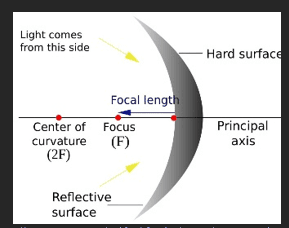
Concave mirrors can form both real and virtual images depending on the position of the object relative to the mirror. Understanding these principles is important for optics and image formation. Where should an object be placed in front of a concave mirror to form a virtual and magnified image?
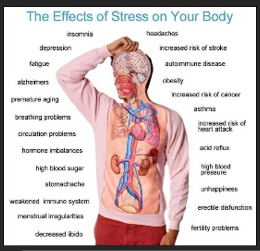
In stressful situations, the human body responds through various physiological changes, such as increased heart rate, body temperature, and perspiration. Understanding the body systems responsible for these changes is key to comprehending how the body manages stress.
Increased perspiration, a higher body temperature, and a rapidly beating heart are all possible responses to a stressful situation. These body responses are most likely a direct result of the interaction of the ______.
Optical instruments play an important role in magnifying objects that are difficult to see with the naked eye. Understanding how these instruments work helps in recognizing their practical uses. Which optical instrument uses two convex lenses to make a smaller object appear larger?