Loading...

SD PROFED Maam Gelyn Part I
Quiz by Salindunong RTC
Tag the questions with any skills you have. Your dashboard will track each student's mastery of each skill.
With R.A. 9155, to which body were all the functions, programs, and activities of the Department of Education related to Sports competition transferred?
Parenting style influences children’s development. Read the following parent’s remarks for their children then, answer the question.
Parent C – Tells her child: “You should do it my way or else. There is no discussion.”
Parent D – Tells her husband: “It is 10:00 PM, do you know where your child is?”
Parent E – Tells her child: “You know, you should have not done that. Let’s talk about it so you can handle the situation better next time.”
Parent F – Tells her child: “You may do what you want. We will always be here for you, no matter what you do.”
Which Parenting style is Authoritarian?
Two identical beakers A and B are presented to the child. Teacher Sonny pours the liquid from B to C which is taller and thinner than A and B but has equal capacity with B. The teacher asks if the beakers A and C have the same amount of liquid. The child says “NO” and points to C as the beaker that has more liquid. In which cognitive developmental stage is the child?
In Piaget’s principles of cognitive learning, what is centration that likely causes mistakes in the learning process?
In Piaget’s formal operational stage in cognitive development, which of the ff. is not among the caharacteristics of the child’s thinking ability?
In Piaget’s concrete - operational stage in cognitive development, which refers to the ability to order or arrange things logically on dimensions such as weight, volume, or size?
You arrange the rows of blocks in such a way that a row of 5 blocks is longer than a row of 7 blocks. If you ask which row has more, Grade 1 pupils will say that it is the row that makes the longer line. Based on Piaget’s cognitive development theory, what problem is illustrated?
Cristina’s family had a family picture when she was not yet born. Unable to see herself in the family picture, she cried despite her mother’s explanation that she was not yet born when the family picture was taken. What does Cristina’s behavior show?
In Piaget’s cognitive concepts, what is the term of achieving proper balance to avoid discrepancy in perception and understanding?
When small children call all animals “dogs”, what process is illustrated, based on Piaget’s cognitive development theory?
The final stage of Piaget's theory involves an increase in logic, the ability to use deductive reasoning, and an understanding of abstract ideas. (hyphothetical, abstract thinking, analogical reasoning).
To determine her students’ level of moral development, Teacher Evangeline presents to her class a morally ambiguous situation and asks them what they would do in such a situation. On whose theory is Teacher Evangeline’s technique based?
In this level, primarily 9 years and younger, the child displays little structured morality, but moral behavior & belief reflects adult rules in their lives.
Sassi, a Grade I pupil is asked, “Why do you pray everyday?” Sassi answered, “Mommy said so.” Based on Kohlberg’s theory, in which moral development stage is Sassi?
Which is the ideal stage of moral development? Stage of _____.
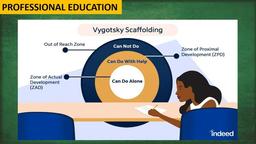
To help a student learn to the optimum, Vygotsky advises us to bridge the student’s present skill level and the desired skill level by ______.
“Do not cheat. Cheating does not pay. If you do, you cheat yourself” says the voiceless voice from within you. In the context of Freud’s theory, which is/are at work?
Mary stole some makeup off the shelf at the department store. In the context of Freud’s theory, which is/are at work?
Why is babyhood referred to as a “critical period” in personality development? Because:
During this stage, one's ability to cope with demands is challenged: competence or inferiority are the most likely outcomes.
According to Erikson's stages of psychosocial development, what is the primary psychosocial conflict during adolescence (12-18 years) It comes with a question ‘’Who Am I?
’Can I do things for myself or must I always rely on others to help me’’ This question is from someone in what stage of psychosocial development?
Am I successful or worthless?" This question is from someone in what stage of psychosocial development?
"Shall I share my life with another person or live alone?" This question is from someone in what stage of psychosocial development?
What Philosophy is close to teacher Jean who allows her students to learn at their own pace?
