Loading...

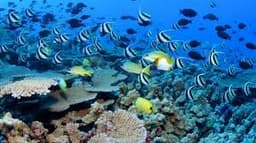
Sea life
Quiz by Mikaya
Customize this quiz to suit your class
Instantly translate to 100+ languages
Tag the questions with any skills you have. Your dashboard will track each student's mastery of each skill.
Give this quiz to my class
 Ideas for more sustainable cities In 2020. over 56% of the world s population lived in urbon arcos. Cities are becoming more and more popular. But why isn't rural life as attractive as city life? The main reasons include work. lifestyle education and Sea th in cities there ore more fun things to see and do, like art galleries, concert hails and sports stadiums, There are a so better hospitals, transport na anueners However, as cities become more overcrowded, they get more polluted. For this reason, urban residents want to make their cities more sustainable. But how? Here are five ways: 1 New York's Central Pork is an island of green in a forest of skyscrapers. City parks like these provide people with a peaceful ploce to connect with nature. and o quiet area for exercise. 2 The moming and evering tush hours lare the busest times in the city. When people commute* to and from work or school, they need frequent, fast public transport, like trams and underground troins. Transport should also be as cheap as possible - and accessible to those with less mobility, like older people or wheelchair users. 3 Cities need pleasant places for people to meet and so shopping. So they should have more pedestr on zones, like in Copenhagen, Denmark, Copenhagen has the world's longest pedestrion street. It's almost 3.2 km long! Pedeston aones encourage ' people to go shopping on foot, instead of driving to shopping malls. 4 1 kes are often the quickest and most susta nable. way to get around, but mony city streets are frenetic and dangerous. Sa susto nable cities have cycle paths, as well as public bikes ond e scooters. They alto have hybrid buses and lots of car charging points. 55 Cities need to encourage residents to care about the environment, with fun ecological exhibitions" and events. The Supertree Gardens in Singapore are amazing, ver fal botanic gardens. They are 50 metres high and the /se solor energy. Eco-festivols - lIke Terroformo in Milan, Italy, and the Secret Solstice in Reykjavik, Iceland - use solar and geothermol energy. They're some of the most sustoinable festiois in the wortdMake a multiple choice quiz for my year 8 science students based on the science in this transcript from a video: 3°C 0:04 It can be the difference between snow and sleet 0:08 Wearing a jacket or not 0:11 In your day-to-day life, it may not seem significant 0:15 But 3°C of global warming would be catastrophic 0:20 Heatwaves, droughts, extreme precipitation, even fire 0:25 3°C of warming is really disastrous 0:28 The scary thing is, the world is well on its way there 0:32 Since the industrial revolution, the Earth has warmed between 1.1°C and 1.3°C 0:40 This is a problem that babies you pass in the street will have to live with 0:46 Children born today... 0:47 ...are up to seven times more likely to face extreme weather than their grandparents 0:52 If global temperatures do rise by 3°C... 0:55 ...what would their world look like? Climate change is already having devastating effects 1:03 Rising sea levels 1:05 Desertification 1:07 Hollywood has always enjoyed imagining the end of the world 1:11 While blockbusters like this are clearly fiction... 1:14 ...this film will show the scenario we all face... 1:17 ...unless more drastic measures are taken to stop burning fossil fuels 1:30 In some parts of the world the effects of inaction are already clear 1:35 The slums of Bangladesh’s capital are filling up with climate migrants 1:41 Minara comes from Bhola District, an area in southern Bangladesh 1:46 There, like many other parts of the country... 1:49 ...rivers swollen by heavier rain and melting Himalayan glaciers... 1:53 ...are washing away people’s homes 1:56 Many, like her, have lost everything 2:00 Our home in Bhola had endless amounts of land 2:03 There was lots of space for farming, we had a spacious house 2:08 There were different types of fruits, vegetation and trees growing at home 2:12 We used to eat the fruit from our own trees 2:18 I can’t eat them now because they don't exist anymore 2:21 Since the river flooded for the third time, I had to flee to Dhaka 2:26 Life was much better back home 2:29 It was unbearable to live through, truly intolerable 2:33 We didn’t have the time to save anything at all 2:38 1.1°C to 1.3°C of global warming has already transformed Minara’s life 2:45 It’s one of the reasons why so many migrants like her... 2:47 ...are moving to the city each year... 2:50 ...nearly 400,000 according to the last estimate 2:53 And climate models show there could be much worse to come How climate modelling works 3:02 Climate scientist Joeri Rogelj... 3:04 ...has spent the last ten years modelling future climate scenarios... 3:08 ...for the United Nations 3:10 The models we use to carry out this exercise... 3:13 ...really represent the state of the art... 3:15 ...of our current knowledge of climate change and where we are heading 3:19 Joeri’s projections use data collected by hundreds of scientists around the world 3:26 Here this is the 3°C level... 3:28 ...and so there is at least a one-in-four chance that under current policies... 3:32 ...we would hit 3°C by the end of the century 3:36 This is just one of the scenarios Joeri looks at 3:40 Another one imagines that all policy promises are kept 3:44 The most optimistic assumes that all promises have been kept... 3:47 ...and net-zero targets are met 3:50 Where our best estimate ends up around 2°C at the end of the century... 3:54 ...there is still a one-in-20 chance that we end up with 3°C instead 3:59 One would not be entering a plane if there is a one-in-20 chance... 4:03 ...that the plane will crash Nowhere is safe from global warming 4:07 A rise of 3°C would affect everyone 4:10 Even wealthy cities in rich countries wouldn’t be immune to the consequences 4:15 European capitals like Paris and Berlin... 4:18 ...would bake under more extreme heatwaves 4:22 Frequent storm-surges in New York could turn parts of the city desolate 4:27 In many ways, cities magnify, intensify climate events 4:33 Cities are hotter than the places around them... 4:36 ...they tend to be more vulnerable to flooding 4:39 And you can get a really bad event in a city in a way that you can’t in the countryside 4:46 And because of their denser populations... 4:49 ...disasters in a city affect far more people 4:52 Some cities might be badly prepared for the changes coming 4:56 But they have the means to adapt 4:59 Cities tend to be wealthier than surrounding places 5:03 They have a lot of amenities 5:05 A city that has taken seriously the risks of a 3°C world... 5:08 …wouldn’t necessarily be a worse place to be in a 3°C world 5:12 But a city that hasn’t prepared for these sort of eventualities... 5:16 ...that might be a really nasty place The impact of prolonged droughts 5:20 So far, many developed cities have got off lightly... 5:24 ...but some rural parts of the world are suffering disproportionately 5:29 Smallholders—small-scale farmers—are particularly vulnerable to climate change 5:35 And there are over 600 million around the world 5:38 Smallholders with farms under two hectares... 5:40 ...produce around a third of the global food supply 5:46 Central America’s “Dry Corridor”... 5:48 ...supports a mix of smallholdings and medium-sized farms 5:53 Sandwiched between the Pacific Ocean and the Caribbean Sea... 5:56 ...the area is prone to droughts 6:08 Israel Ramírez Rivera is a smallholder in Guatemala 6:12 Here, climate change is making the dry seasons longer, and more severe 6:18 This is the biggest ear of maize that this plot could deliver 6:23 He depends on his crops of corn and beans 6:26 But they’re getting harder to grow 6:30 The surrounding mountains... 6:32 ...used to provide us with native food... 6:38 ...and now that isn’t an option anymore... 6:41 ...due to climate change and its effects 6:46 Nearly two-thirds of the smallholders in the Dry Corridor now live in poverty 6:52 The impact of all of this for us... 6:59 ...malnutrition among children 7:03 We’ve lost a few 7:07 For my crops especially, the midsummer heat is harder than before 7:16 The plant dries up and can’t provide us... 7:19 ...with the necessary food provision 7:24 Severe droughts in Central America... 7:26 ...are now four times more likely than they were last century 7:30 Many families from here have gone to the States 7:37 The economic despair and debts... 7:44 ...have pushed many people from this community to do this journey 7:53 Migration from Guatemala to the United States has quadrupled since 1990 7:59 Not all of this has been due to climate change 8:02 But longer droughts would force even more to move 8:05 In a 3°C world, annual rainfall in this region... 8:09 ...could drop by up to 14% 8:12 At 3°C, over a quarter of the world’s population... 8:16 ...could endure extreme droughts for at least a month of the year 8:19 Northern Africa could see droughts that last for years at a time Rising sea levels, storm surges and flooding 8:24 But for some, too much water will be the problem 8:29 10% of the world’s population lives on a coastline... 8:32 ...that’s less than 10 metres above sea level 8:35 For these coastal inhabitants, a 3°C world would spell disaster 8:40 By 2100, global sea levels could have climbed by half a metre from 2005 levels 8:46 Low-lying cities like Lagos would be especially vulnerable... 8:49 ...with up to up to a third of the population displaced 8:54 And in Fiji, rising waters are already upending lives 9:04 You can see the graveyard there, it’s all under water now... 9:08 ...due to this rising sea level and climate change 9:15 The village of Togoru in Fiji is being swallowed by the sea 9:19 Barney Dunn, the village headman, has seen over half the village disappear 9:24 Relatives’ houses have been abandoned, and family graves are now under water 9:29 We have been asked by the government to relocate... 9:32 ...but no one wants to relocate... 9:34 ...because we have our great-great-grandparents down there in the sea 9:39 This is the place we’ve been brought up in 9:41 ...it’s not easy to leave 9:44 Past attempts to build a seawall haven’t worked 9:48 But Barney sees building a new one as the village’s only hope 9:52 If they do that, maybe we can save whatever is left 9:56 But if we don’t have the seawall, then it will be keep eroding and time will come... 10:01 ...maybe in ten,15 years, Togoru will be all eroded 10:05 Rising seas also mean storms cause more floods 10:11 And many more countries could suffer 10:14 The Philippines and Myanmar are just two countries... 10:17 ...that will also see an increase in storm surges in a 3°C world 10:21 To escape, many will move… 10:24 …often, to urban areas Extreme heat and wet-bulb temperatures 10:27 Half the world’s population already lives in cities... 10:31 ...almost a third in slums 10:36 For them, a 3°C world could be deadly 10:40 Minara has moved to Dhaka to escape the impact of climate change 10:44 But life could get even worse for her 10:47 I’m struggling a lot nowadays 10:49 The heat during the day is unbearable 10:52 Even late at night it doesn’t cool down 10:57 The heat is getting more intense every day 10:59 I mean, it’s going to get much worse 11:03 I can barely survive it now, how will I live through it in the future? 11:08 Dhaka is getting hotter 11:11 In the last 20 years the average daytime temperature... 11:13 ...has crept up by nearly half a degree 11:17 Days that approach 40°C are now being reported 11:20 And high so-called wet-bulb temperatures are on the rise 11:26 A wet-bulb temperature is a measure of heat and humidity 11:30 Humans cool themselves by sweating… 11:32 But in these conditions, when relative humidity is near 100%... 11:36 ...sweat doesn’t evaporate well 11:38 So people can’t cool down… 11:41 ...even if given unlimited shade and water 11:45 At a high wet-bulb temperature, the body can’t lose heat... 11:49 ...and so it gets hotter and hotter... 11:51 ...and the body is designed to work at a given temperature 11:53 And if it gets too hot inside, you will die 11:58 The human limit for wet-bulb temperatures is 35°C... 12:02 ...around skin temperature 12:04 Dhaka will have a much higher chance... 12:05 ...of reaching dangerous wet-bulb temperatures... 12:07 ...if global warming reaches 3°C 12:12 You can’t really adapt to that 12:14 You have to get out. If the temperature is so high that you can’t work... 12:20 ...can’t do hard manual labour outside for significant parts of the year... 12:25 ...then many places will become functionally no longer part of the economy 12:33 Jacobabad in Pakistan, and Ras al Khaimah, in the United Arab Emirates... 12:37 ...have already recorded deadly wet-bulb temperatures 12:40 More of the tropics and the Persian Gulf... 12:43 ...as well as parts of Mexico and the south-eastern United States... 12:47 ...could all get to this threshold by the end of the century 12:50 Climate modelling might show us the weather Increased migration and conflict 12:52 But it doesn’t show us its other effects on society 12:56 Established migration patterns could change 12:59 Climate disasters may exacerbate reasons people cross borders 13:03 Within countries, more people will move to cities 13:07 In a 3°C world, tens of millions of people a year... 13:10 ...could be displaced by disasters made worse by climate change 13:15 When people are displaced by climate... 13:18 …they may well go to cities... 13:19 ...because cities are the places that attract people from the countryside already 13:25 A lot of people who can get to the developed world... 13:28 ...not least because the developed world tends to be less hot, will give that a go 13:35 As migration around the world increases... 13:38 ...there could be more competition for fewer resources 13:42 Water—already a highly contested resource—will be a focal point 13:47 Turkey’s new Ilisu dam has reduced the flow of water into Iraq 13:53 China lays claim to rivers vital to India and Pakistan 13:57 The prospect of a water-conflict makes people very uneasy 14:03 How national tensions would exacerbate those sorts of reactions... 14:08 ...in a 3°C world... 14:09 ...is the sort of thing that no one should really want to find out 14:14 I think you’d have to be incredibly sanguine... 14:16 ...not to think that the sort of climate extremes that we talk about... 14:19 ...in a 3°C world wouldn’t lead some places... 14:22 ...to the brink of societal collapse 14:25 Those lucky enough to escape unrest... Adaptation and mitigation are crucial 14:28 ...would still have to adapt to a radically different world 14:32 People can adapt to climate change in all sorts of ways, one of the most obvious ones... 14:37 ...is air conditioning 14:39 But other ways to adapt at a local or regional level... 14:42 ...I mean, one of the most obvious is diversifying agriculture 14:47 There are physical things you can do, like seawalls 14:52 The fact that people can adapt and that adaptation will reduce suffering... 14:57 ...doesn’t mean that it will eliminate suffering 15:00 Suffering is built into this whole process of heating up the planet 15:06 Adaptation will only get the world so far 15:09 The best way to deal with a 3°C world... 15:12 ...is not to go to a 3°C world 15:14 And that’s why increasing efforts on mitigation are important 15:17 It’s why working towards negative emissions... 15:20 ...that could bring down the temperature after it peaks are important 15:25 Once you get to a 3°C world, you are in real bad global trouble 15:33 The scale of change needed... 15:35 ...and the slow progress of governments so far... 15:38 ...means 3°C of warming is uncomfortably likely unless more is done 15:44 Despite existing pledges, greenhouse-gas emissions... 15:48 ...are still set to rise by 16% from 2010 levels by 2030 15:54 The need to act has never been clearer 15:57 There’s still time to reduce emissions, so that a 3°C world remains fiction... 16:02 ...rather than becoming fact• Supranational Cooperation – Countries working together beyond borders • Centripetal Forces – Forces that unite people • Centrifugal Forces – Forces that divide countries • Crude Oil – Unrefined petroleum extracted from the earth • Nonrenewable Resource – A resource that cannot be replaced in a human lifetime • Oil Reserves – Quantities of oil that can be extracted profitably • Renewable Resource – A resource that replenishes naturally • Acid Rain – Rain formed from sulfur dioxide and nitrogen oxides mixing with water • Monsoon – A seasonal wind pattern that affects rainfall and drought • Primate City – A dominant city with twice the population of the next largest • Transboundary Pollution – Pollution that spreads across national borders • Population Density – Number of people per square unit of area • Elevation – Height above sea levelSoils Southeast Asia, on balance, has a higher proportion of relatively fertile soils than most tropical regions, and soil erosion is less severe than elsewhere. Much of the region, however, is covered by tropical soils that generally are quite poor in nutrients. Often the profusion of plant life is more related to heat and moisture than to soil quality, even though these climatic conditions intensify both chemical weathering and the rate of bacterial action that usually improve soil fertility. Once the vegetation cover is removed, the supply of humus quickly disappears. In addition, the often heavy rainfall leaches the soils of their soluble nutrients, hastens erosion, and damages the soil texture. The leaching process in part results in laterites of reddish clay that contain hydroxides of iron and alumina. Laterite soils are common in parts of Myanmar, Thailand, and Vietnam and also occur in the islands of the Sunda Shelf, notably Borneo. The most fertile soils occur in regions of volcanic activity, where the ejecta is chemically alkaline or neutral. Such soils are found in parts of Sumatra and much of Java in Indonesia. The alluvial soils of the river valleys also are highly fertile and are intensively cultivated. Climate All of Southeast Asia falls within the warm, humid tropics, and its climate generally can be characterized as monsoonal (i.e., marked by wet and dry periods). Changing seasons are more associated with rainfall than with temperature variations. There is, however, a high degree of climatic complexity within the region. Temperatures Regional temperatures at or near sea level remain fairly constant throughout the year, although monthly averages tend to vary more with increasing latitude. Thus, with the exception of northern Vietnam, annual average temperatures are close to 80 °F (27 °C). Increasing elevation acts to decrease average temperatures, and such locations as the Cameron Highlands in peninsular Malaysia and Baguio in the Philippines have become popular tourist destinations in part because of their relatively cooler climates. Proximity to the sea also tends to moderate temperatures. Precipitation Much of Southeast Asia receives more than 60 inches (1,500 millimeters) of rainfall annually, and many areas commonly receive double and even triple that amount. The rainfall pattern is distinctly affected by two prevailing air currents: the northeast (or dry) monsoon and the southwest (or wet) monsoon. The northeast monsoon occurs roughly from November to March and brings relatively dry, cool air and little precipitation to the mainland. As the southwestward-flowing air passes over the warmer sea, it gradually warms and gathers moisture. Precipitation is especially heavy where the airstream is forced to rise over mountains or encounters a landmass. The east coast of peninsular Malaysia, the Philippines, and parts of eastern Indonesia receive the heaviest rains during this period. The southwest monsoon prevails from May to September, when the air current reverses and the dominant flow is to the northeast. The mainland receives the bulk of its rainfall during this period. Over much of the southern Malay Peninsula and insular Southeast Asia there is little or no prolonged dry season. This is especially marked in much of the equatorial region and along the east coast of the Philippines. While the dry and wet monsoons are important in explaining rainfall patterns, so too are such factors as relief, land and sea breezes, convectional overturning and cyclonic disturbances. These factors often are combined with monsoonal effects to produce highly variable rainfall patterns over relatively short distances. While many of the cyclonic disturbances produce only moderate rainfall, others mature into tropical storms—called cyclones in the Indian Ocean and typhoons in the Pacific—that bring heavy rains and destruction to the areas over which they pass. The Philippines are particularly affected by these storms. Plant life Tropical forests in Southeast Asia Tropical forests in Southeast Asia The seasonal nature and pattern of Southeast Asia’s rainfall, as well as the region’s physiography, have strongly affected the development of natural vegetation. The hot, humid climate and enormous variety of habitats have given rise to an abundance and diversity of vegetative forms unlike that in any other area of the world. Much of the natural vegetation has been modified by human action, although large areas of relatively untouched land still can be found. The vegetation can be grouped into two broad categories: the tropical-evergreen forests of the equatorial lowlands and the open type of tropical-deciduous, or “monsoon,” forests in areas of seasonal drought. The evergreen forests are characterized by multiple stories of vegetation, consisting of a variety of trees and plants. Although a large diversity of tree species is found in these forests, members of the Dipterocarpaceae family account for roughly half of the varieties. Deciduous forests are found in eastern Indonesia and those parts of the mainland where annual rainfall does not exceed 80 inches. Just as in the equatorial forest, a wide variety of species is normally the rule. Certain species, such as teak, have become highly valued commercially. Teak is found in parts of Indonesia, Myanmar, Thailand, and Laos. In addition to these two basic types of vegetation, other regional patterns reflect topography. Especially noteworthy are coastal and highland plant communities. Mangrove belts, of which there are more than 30 varieties, occur where silt is deposited in coastal areas. Upland forests dominated by maples, oaks, and magnolias are found especially on mainland mountain slopes. Human activity has been rapidly altering the stands of virgin forest in Southeast Asia. Most deforestation results from removal for fuelwood and clearing for agriculture and grazing. Although only a relatively small portion of the total land area has been permanently cleared for cultivation—e.g., in Java (Indonesia) and western Luzon (the Philippines)—in some areas shifting cultivation has brought about the replacement of virgin forest with secondary growth. In addition, nearly all countries have commercial logging industries; notable are those in Indonesia, Malaysia, Thailand, and Myanmar. A growing problem has been illegal logging. Thus, timber harvesting has come to contribute significantly to deforestation. Programs in social forestry and reforestation have yet to halt the rapid denuding of the landscape. Animal life Southeast Asia is situated where two major divisions of the world’s fauna meet. The region itself constitutes the eastern half of what is called the Oriental, or Indian, zoogeographic region (part of the much larger realm of Megagaea). Bordering along the south and east is the Australian zoogeographic region, and the eastern portion of insular Southeast Asia—Celebes (Sulawesi), the Moluccas, and the Lesser Sunda Islands—constitutes a transition zone between these two faunal regions. a classroom in Brazil More From Britannica education: Southeast Asia Southeast Asia is notable, therefore, for a considerable diversity of wildlife throughout the region. These differences are especially striking between the species of the eastern and western fringes as well as between those of the archipelagic south and the mainland north. The differences stem largely from the isolation, over varying lengths of geologic time, of species following their migration from the Asian continent. In addition, the tropical rain forests in many parts of the region, with their great diversity of vegetation, have made possible the development of complex communities of animals that fill specialized ecological niches. Especially numerous are arboreal and flying creatures. orangutans orangutansOrangutans (Pongo pygmaeus) in Sumatra, Indonesia. The distinction between the two faunal regions is best depicted by their mammal populations. In general, Australia is inhabited largely by marsupials (pouched mammals) and monotremes (egg-laying mammals), while Southeast Asia contains placental mammals and such hybrid species as the bandicoot of eastern Indonesia. Small mammals such as monkeys and shrews are the most numerous, while in many areas the larger mammals have been pushed into more remote areas and national preserves. Bears, gibbons, elephants, deer, civets, and pigs are found in both mainland and insular Southeast Asia, as are diminishing numbers of tigers. The Malayan tapir, a relative of the rhinoceros, is native to the Malay Peninsula and Sumatra, while the tarsier is found in the Philippines and parts of Indonesia. A number of rare endemic species are found in Indonesia and East (insular) Malaysia, including the Sumatran and Javan rhinoceros, the orangutan, the anoa (a dwarf buffalo), the babirusa (a wild swine), and the palm civet. As the pace of development accelerates and populations continue to expand in Southeast Asia, concern has increased regarding the impact of human activity on the region’s environment. A significant portion of Southeast Asia, however, has not changed greatly and remains an unaltered home to wildlife. The nations of the region, with only few exceptions, have become aware of the need to maintain forest cover not only to prevent soil erosion but to preserve the diversity of flora and fauna. Indonesia, for example, has created an extensive system of national parks and preserves for this purpose. Even so, such species as the Javan rhinoceros face extinction, with only a handful of the animals remaining in western JavaThere are two numbers you need to know about climate change. The first is 51 billion. The other is zero. Fifty-one billion is how many tons of greenhouse gases the world typically adds to the atmosphere every year. This is where we are today. Zero is what we need to aim for. To stop the warming and avoid the worst effects of climate change, humans need to stop adding greenhouse gases to the atmosphere. This sounds difficult, because it will be. Every country will need to change its ways. Virtually every activity in modern life – growing things, making things, getting around from place to place – involves releasing greenhouse gases, and as time goes on, more people will be living this modern lifestyle. That’s good, because it means their lives are getting better. Yet if nothing else changes, the world will keep producing greenhouse gases, climate change will keep getting worse, and the impact on humans will be catastrophic. But “if nothing else changes” is a big If. I believe that things can change. We already have some of the tools we need, and as for those we don’t yet have, we can not only invent, but also deploy them, and, if we act fast enough, avoid a climate catastrophe. Two decades ago, I would never have predicted that one day I would be talking in public about climate change. My background is in software, not climate science. Things changed for me when I met with two former Microsoft colleagues who were starting non-profits focused on energy and climate. They brought along two climate experts who were well versed in the issues, and the four of them showed me the data connecting greenhouse gas emissions to climate change. I kept learning everything I could about climate and energy, agriculture, oceans, sea levels, glaciers, power lines, and more. One thing that became clear to me was that our current sources of renewable energy – wind and solar, mostly – could make a big dent in the problem, but we weren’t doing enough to deploy them. It also became clear why, on their own, they aren’t enough to get us all the way to zero. The wind doesn’t always blow and the sun doesn’t always shine. Within a few years, I had become convinced of three things: 1. To avoid a climate disaster, we have to get to zero. 2. We need to deploy the tools we already have, like solar and wind, faster and smarter. 3. We need to create breakthrough technologies that can take us the rest of the way.Amazing Antarctica The Seventh Continent. Give a globe a spin. On it you can easily find six continents. Now look at the bottom of the globe. There you will find continent number seven: Antarctica. People did not find Antarctica until about two hundred years ago. Since then, we have learned a lot about this amazing place. Antarctica is the coldest continent. It is also the continent with the strongest winds. Less rain and snow fall in Antarctica than in any other continent. Freezing Antarctica Water covers most of Earth. Almost all of it is salt water. Most of the fresh water on Earth is frozen in the ice in Antarctica. Snow does not melt during the cold summers there. The ice builds up over many years. Life on and Around Antarctica The freezing weather in Antarctica makes it a dangerous place to live. Most plants and animals can be found near the coasts or in the sea. There are no trees, but there are other plants, such as moss. Penguins and seals are some of the larger animals in the icy waters of Antarctica. A Playground for Scientists People have taken steps to make sure that scientists can study in Antarctica. Many countries send scientists to study in Antarctica. Some work there all year, even during the cold winter. Others work only in summer. Many kinds of scientists come to Antarctica. They study animals, ice, and many other things. Many kinds of scientists come to Antarctica. They study animals, ice, and many other things. Thousands of visitors also come to learn about Antarctica each year. Conclusion. People do not know a lot about Antarctica. The cold, ice, wind, and rough seas make it a difficult place to visit. However, people around the world know how important it is to protect and study Antarctica.Q1. Tick the properties of water. a. Water is transparent and colourless. b. Water has no smell or taste. c. One litre of water has a mass of one kilogram. d. Water supports life. e. Water has no weight. Q2. List the properties of air. --------------------------------------------------------------------- --------------------------------------------------------------------- ---------------------------------------------------------------------- ----------------------------------------------------------------------- Q3. "Which gases are the most abundant in air?" The most common gas ----------------------------------------- The second most common gas ----------------------------- 8 | Page AZ-Y5-Science- Second Mid-Term Revision2024/2025 Q4. Look at the pie chart of the components of the air and identify P, Q and R. Nitrogen 71% Oxygen 21% Other gases 1% P ------------------------------- Q ------------------------------- R -------------------------------- Q5. Identify the gas for each of these descriptions. Use the name of each gas twice. Oxygen-nitrogen-carbon dioxide. a. The gas we need to breathe. --------------------------------- b. The most common gas in the air. ---------------------------- c. The gas that gives drinks their fizz. ---------------------------- d. The gas that supports burning. -------------------------------- e. A gas used to make fertilizer. ---------------------------------- f. A gas used in fire extinguishers. ------------------------------- 9 | Page AZ-Y5-Science- Second Mid-Term Revision2024/2025 Q6. Draw and label the stages of the water cycle. Use arrows to show how water moves through the cycle." 10 | Page AZ-Y5-Science- Second Mid-Term Revision2024/2025 Q7. The diagram shows how gases in the upper atmosphere trap heat. a. What does the diagram refer to? _____________________________________________________________ b. Give two reasons why the amount of greenhouse gases in the atmosphere is increasing. _____________________________________________________________ _____________________________________________________________ c. If more heat is trapped, how will the earth's temperature change? 1. It will rise. 2. It will fall. d. "Which of the following is a greenhouse gas?" 1. Argon 2. Nitrogen 3. Carbon dioxide 11 | Page AZ-Y5-Science- Second Mid-Term Revision2024/2025 Q8. Write (T) for True or (F) for False. 1. Global warming leads to rising sea levels and more droughts. ( ) 2. Water exists in only one state: liquid. ( ) 3. It is not safe to drink untreated water from lakes and rivers. ( ) 4. Air pollution does not affect the environment. ( ) 5. Nitrogen is the most common gas in the atmosphere. ( ) Q9. Fill in the blanks: a. Air is a mixture of gases, and the most abundant gas in the air is __________. b. The water cycle includes four stages: __________, __________, __________, and __________. c. __________ is a gas used in the production of fertilizers. d. __________ is a harmful gas that contributes to global warming by trapping heat in the atmosphere. Q10. Answer the following questions: 1. What are the four main stages of the water cycle? -------------------------------------------------------------------------------- 2. Name one way to help reduce air pollution. ----------------------------------------------------------------------------------- 12 | Page AZ-Y5-Science- Second Mid-Term Revision2024/2025 3. State one use of oxygen gas. ------------------------------------------------------------------------------------ 4. What is one consequence of global warming? -------------------------------------------------A. Hiking in Finland I've just come back from Finland. My friends from university invited me to join them on an eight-day hike. The walk is called the Bear Trail and it is in the Oulanka National Park in north-eastern Finland. It's a beautiful walk through forests and across rivers and lakes. We stayed at campsites and carried clothes, food and tents on our backs. I'm not the fittest person in the world but I was able to finish. I loved the incredibly clear air, the beautiful views and the sounds of nature. In my opinion, it is perfect for anyone who wants to start long distance walking as it is almost completely flat and well-signposted. Just try not to fill your backpack up with things which you won't need. B. Camino di Santiago It was the walk of a lifetime. Eight hundred kilometres from the south of France, over the Pyrenees mountains and across northern Spain to Santiago de Compostela. It all started so well. The path up to the Pyrenees was magical and it was good to meet other people doing the same walk. Everyone was enthusiastic about the walk ahead. But in Spain, the route often followed roads. It was noisy and monotonous, with unchanging views for hours and hours. More and more people joined the walk. They were generally friendly but it wasn't the experience I expected. I'd like to go back to the Pyrenees and hike there again but I'll stop there next time. C. The GR20, Corsica Corsica is a magnificent island with some wonderfully picturesque walks along the coast and inland. But for walkers, it is famous for the GR20, Europe's most difficult long distance walk. It goes from north to south and up and down from two hundred metres to over 2,200 metres above sea level. The frighteningly steep and rocky paths are beautiful but very demanding. Our guides will help you to complete the whole 180 km in fifteen days. The price includes transport, accommodation in tents and food. You should be in good health with experience of mountain walking and a good head for heights. No climbing experience is necessary.