Tag the questions with any skills you have. Your dashboard will track each student's mastery of each skill.
Give this quiz to my class
Q 1/184
Score 0
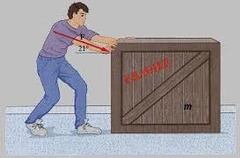
a push or pull on an object
30
Applied forces
Q 2/184
Score 0
A unit of measure that equals the force required to accelerate 1 kilogram of mass at 1 meter per second per second
30
Newton
184 questions
Q.
a push or pull on an object
1
30 sec
Q.
A unit of measure that equals the force required to accelerate 1 kilogram of mass at 1 meter per second per second
2
30 sec
Q.
A force that opposes motion between two surfaces that are in contact
3
30 sec
Q.
Friction that acts on objects that are not moving
4
30 sec
Q.
friction that occurs when one solid surface slides over another
5
30 sec
Q.
friction that occurs when an object rolls over a surface
6
30 sec
Q.
friction that occurs as an object moves through a fluid (liquid or gas)
7
30 sec
Q.
Fluid friction acting on an object moving through the air
8
30 sec
Q.
the constant velocity of a falling object when the force of air resistance is equal in magnitude and opposite in direction to the force of gravity
9
30 sec
Q.
A force of attraction between objects that is due to their masses.
10
30 sec
Q.
the curved path that an object follows when thrown, launched, or otherwise projected near the surface of Earth
11
30 sec
Q.
The combination of all forces acting on an object
12
30 sec
Q.
two or more forces whose effects cancel each other out (equal to zero) and result in no motion of an object
13
30 sec
Q.
Forces that produce a nonzero net force, which changes an object's motion
14
30 sec
Q.
Resistance of an object to a change in its motion
15
30 sec
Q.
an object in motion will remain in motion unless acted upon by another force
16
30 sec
Q.
the acceleration of an object depends on the mass of the object and the amount of force applied
17
30 sec
Q.
for every action there is an equal and opposite reaction
18
30 sec
Q.
A measure of the force of gravity on an object
19
30 sec
Q.
A measure of the amount of matter in an object (SI units are kg)
20
30 sec
Q.
Change in velocity divided by the time it takes for the change to occur
21
30 sec
Q.
the initial push or pull of one object on another object
22
30 sec
Q.
the force that is equal in strength and opposite in direction to the action force
23
30 sec
Q.
The product of an object's mass and velocity
24
30 sec
Q.
Momentum of a system remains constant when there are no net external forces acting on it.
25
30 sec
Q.
F=m*a
26
30 sec
Q.
W = m*g
27
30 sec
Q.
p = m*v
28
30 sec
Q.
Place or object used for comparison to determine if an object is in motion.
29
30 sec
Q.
Ration of the distance an object travels to a the amount of time it moves
30
30 sec
Q.
S = d/t
31
30 sec
Q.
Speed in a direction (vector)
32
30 sec
Q.
V = d/t direction
33
30 sec
Q.
Quantity that has magnitude (amount) and direction
34
30 sec
Q.
Motion of an object with respect to a particular frame of reference
35
30 sec
Q.
Change in an object's velocity over time
36
30 sec
Q.
Rate at which an object is moving at a given moment in time
37
30 sec
Q.
Total distance divided by total time for the entire duration of a trip.
38
30 sec
Q.
Speed that does not change. Straight lines on a speed-time graph (in any orientation).
39
30 sec
Q.
Change in velocity divided by change in time
40
30 sec
Q.
Graph with distance on the vertical axis and time on the horizontal axis. It displays motion of an object over time.
41
30 sec
Q.
A straight line on a speed vs. time graph means that the speed changes by the same amount over each time interval.
42
30 sec
Q.
The length of a path traveled between two points with no direction
43
30 sec
Q.
Distance and direction of an object's change in position in a straight line from the starting point to the ending point (as the crow flies)
44
30 sec
Q.
The motion of a falling object toward Earth when the only force acting on it is gravity
45
30 sec
Q.
9.8 m/s^2 (down)
46
30 sec
Q.
Graph with speed or velocity on the vertical axis and time on the horizontal axis. It displays acceleration of an object over time.
47
30 sec
Q.
Quantity that has magnitude (amount)
48
30 sec
Q.
The constant velocity of a falling object when the force of air resistance equals the force of gravity
49
30 sec
Q.
unbalanced electricity in an object leaving it either positively or negatively charged
50
30 sec
Q.
the repulsion (push) or attraction (pull) between electric charges
51
30 sec
Q.
the area around a charged particle/object that exerts a force on other charged particles/objects
52
30 sec
Q.
the buildup of electric charges on an object
53
30 sec
Q.
states that charge can be transferred from one object to another but cannot be created or destroyed
54
30 sec
Q.
transferring a charge to an object without touching
55
30 sec
Q.
the continuous flow of electric charges through a material
56
30 sec
Q.
current in which electrons always flow in the same direction
57
30 sec
Q.
a flow of electric charge that regularly reverses its direction
58
30 sec
Q.
a material in which charges can move freely
59
30 sec
Q.
a material in which charges cannot move freely
60
30 sec
Q.
a material's opposition to the flow of electric current
61
30 sec
Q.
a material that has almost zero resistance when it is cooled to low temperatures
62
30 sec
Q.
also known as voltage; the difference in electrical charge between two points in a circuit; measured in volts
63
30 sec
Q.
also known as potential difference; the rate at which energy is drawn from a source that produces a flow of electricity in a circuit; measured in volts
64
30 sec
Q.
a device that converts chemical energy to electrical energy; also known as a cell
65
30 sec
Q.
V=IR
66
30 sec
Q.
increasing the current when resistance (Ω) is lowered
67
30 sec
Q.
V, volts (V)
68
30 sec
Q.
R, ohms (Ω)
69
30 sec
Q.
I, Amp (A)
70
30 sec
Q.
an electrical device that provides a path for electrical current to flow
71
30 sec
Q.
a circuit in which the objects are connected in a single path; when one bulb is removed, none of the bulbs will glow
72
30 sec
Q.
circuit in which electric current can follow more than one path; when one bulb is removed, the other bulbs will continue to glow
73
30 sec
Q.
electrical device that can interrupt the flow of electrical current by melting a filament when it is overloaded
74
30 sec
Q.
a device located in an electrical panel that trips like a switch and opens the circuit when overloaded
75
30 sec
Q.
fastening electrical equipment to earth so extra charge can be spread out
76
30 sec
Q.
ground fault circuit interrupter prevents current from escaping and creating electric shock - can be tested and reset with separate buttons
77
30 sec
Q.
the ability to do work or cause a change
78
30 sec
Q.
energy of motion
79
30 sec
Q.
energy stored due to an object's position or arrangement
80
30 sec
Q.
potential energy that depends upon an object's height
81
30 sec
Q.
The energy of stretched or compressed objects
82
30 sec
Q.
sum of kinetic and potential energy associated with the motion or position of an object
83
30 sec
Q.
the internal energy in substances due to the vibration and movement of the atoms and molecules withing a substance
84
30 sec
Q.
energy stored in chemical bonds
85
30 sec
Q.
energy made available by the flow of electric charge through a conductor
86
30 sec
Q.
energy that travels through space in the form of waves - includes light and other forms of radiation
87
30 sec
Q.
the potential energy stored in the nucleus of an atom
88
30 sec
Q.
a change from one form of energy into another
89
30 sec
Q.
motion of particles - higher the temperature, the greater the atomic or molecular motion and collisions.
90
30 sec
Q.
from one phase of matter to another based on motion of particles and temperature.
91
30 sec
Q.
definite shape, definite volume, low KE
92
30 sec
Q.
indefinite shape, definite volume, medium KE
93
30 sec
Q.
indefinite shape, indefinite volume, high KE
94
30 sec
Q.
solid to liquid, particles move faster so energy must be absorbed = endothermic change
95
30 sec
Q.
liquid to gas, particles move faster so energy must be absorbed = endothermic change
96
30 sec
Q.
gas to solid, particles move slower so energy must be released = exothermic change
97
30 sec
Q.
liquid to solid, particles move slower so energy must be released = exothermic change
98
30 sec
Q.
solid to gas, particles move faster so energy must be absorbed = endothermic change
99
30 sec
Q.
gas to liquid, particles move slower so energy must be released = exothermic change
100
30 sec
Q.
temperature at which liquid goes to gas
101
30 sec
Q.
temperature at which solid goes to liquid
102
30 sec
Q.
unit for energy
103
30 sec
Q.
unit for mass
104
30 sec
Q.
unit for velocity or speed
105
30 sec
Q.
acceleration due to gravity
106
30 sec
Q.
dividing/splitting a nucleus into more than one
107
30 sec
Q.
fusing/combining more than one nuclei into one nucleus
108
30 sec
Q.
particles take in energy to change states of matter
109
30 sec
Q.
particles release energy to change states of matter
110
30 sec
Q.
energy sources that can be quickly replaced: wind, geothermal, solar, water, biomass
111
30 sec
Q.
energy sources that will take thousands to millions of years to be replaced: coal, oil, natural gas, nuclear
112
30 sec
Q.
A wave created when a source of energy causes vibrations to travel through a medium. (Transverse, Longitudinal, Surface)
113
30 sec
Q.
The material through which a wave travels.
114
30 sec
Q.
The highest point of the wave, above the rest position.
115
30 sec
Q.
The lowest point of the wave, below the rest position.
116
30 sec
Q.
A mechanical wave that carries energy through a medium and causes the medium to vibrate at right angles (perpendicular) to the direction in which the waves travel. Examples: wave machine and some slinky waves
117
30 sec
Q.
An area where the particles in a medium are spaced close together.
118
30 sec
Q.
An area where the particles in a medium are spread out.
119
30 sec
Q.
A mechanical wave that carries energy which the vibration of the medium is parallel to the direction the wave energy travels. Also called a compressional wave. Example: sound and some slinky waves
120
30 sec
Q.
A mechanical wave that carries energy and travels along a surface separating two media with a circular pattern. Example: water waves
121
30 sec
Q.
The time required for one cycle, a complete motion to its starting point.
122
30 sec
Q.
The number of complete cycles in a given time (seconds). How often a wave passes a given point. Electromagnetic waves with higher frequency = more energy.
123
30 sec
Q.
Units of frequency, cycles per second.
124
30 sec
Q.
The distance between a point on one wave and the same point on the next cycle of the wave. (crest to crest, trough to trough, compression to compression, rarefaction to rarefaction)
125
30 sec
Q.
The maximum displacement of the medium from its rest position. Mechanical waves with higher amplitude = more energy.
126
30 sec
Q.
When a wave bounces off a surface that it can't pass through. If reflecting off a denser medium the wave will invert.
127
30 sec
Q.
The bending of a wave as it moves around an obstacle or passes through a narrow opening.
128
30 sec
Q.
The bending of a wave as it enters a new medium at an angle.
129
30 sec
Q.
When two or more waves overlap or combine together.
130
30 sec
Q.
When two or more waves combine to produce a wave with a larger displacement. (crest + crest or trough + trough)
131
30 sec
Q.
When two or more waves combine to produce a wave with a smaller displacement. (crest + trough)
132
30 sec
Q.
A wave that appears to stay in one place.
133
30 sec
Q.
A point on a standing wave that doesn't have a displacement (no amplitude) from the rest position.
134
30 sec
Q.
A point where a crest or trough occurs midway between two nodes. Greatest displacement.
135
30 sec
Q.
A type of mechanical longitudinal wave- compressions and rarefactions travel through a medium so that we can hear them.
136
30 sec
Q.
The rate at which a waves energy flows through a given area. Will change depending on how close you are to the source.
137
30 sec
Q.
A subjective physical response to the intensity of sound, modified by physical factors.
138
30 sec
Q.
The frequency of a sound as you perceive it.
139
30 sec
Q.
The response of a standing wave to another wave of the same frequency. Used to amplify sound waves and make a sound louder.
140
30 sec
Q.
A change in sound frequency caused by motion of the sound source, motion of the listener, or both.
141
30 sec
Q.
A technique for determining the distance to an object underwater.
142
30 sec
Q.
Transverse waves that consist of changing electric and magnetic fields - do not require a medium.
143
30 sec
Q.
Unit that compares the intensity of different sounds.
144
30 sec
Q.
Region of space that exerts electric forces on charged particles.
145
30 sec
Q.
Region of space that exerts magnetic forces on charged particles because of vibrations.
146
30 sec
Q.
The speed at which all electromagnetic waves travel in a vacuum = 3.00 x 10 to the 8th power m/s (8.5 minutes for light to travel from the sun to earth)
Electromagnetic waves with the largest wavelengths and lowest energy. Used for radios and televisions.
150
30 sec
Q.
Electromagnetic waves used for warming up food, cell phones, radar, and GPS.
151
30 sec
Q.
Electromagnetic waves with wavelengths less (infra-) than that of the color red. Also known as heat. Used for cooking, night vision, and in remote controls.
152
30 sec
Q.
Electromagnetic waves your eyes can see in the forms of colors.
153
30 sec
Q.
Electromagnetic waves with wavelengths greater than that of the color violet. Used by plants in photosynthesis, can cause sunburns and skin cancer, for humans to produce vitamin D, and is emitted by black lights
154
30 sec
Q.
Electromagnetic waves that are powerful enough to be able to go through soft tissue. Used in dentistry and medical fields.
155
30 sec
Q.
Electromagnetic waves with the highest frequency and shortest wavelength. Used in cancer radiation. Created after nuclear chemical reactions.
156
30 sec
Q.
Doppler effect with light - shows an object is moving closer to you with wavelengths that are squished together
157
30 sec
Q.
Doppler effect with light - shows an object is moving away from you with wavelengths that are stretched out
158
30 sec
Q.
Red, orange, yellow, green, blue, indigo violet
159
30 sec
Q.
Visible light with the longest wavelength and smallest frequency.
160
30 sec
Q.
Visible light with the shortest wavelength and the highest frequency.
161
30 sec
Q.
Angle of wave traveling to a flat surface before being reflected.
162
30 sec
Q.
Angle of wave traveling away from a flat surface that it has reflected off of.
163
30 sec
Q.
Perpendicular line to the flat object reflecting a wave.
164
30 sec
Q.
Sound waves above what the average human hearing range (>20,000 Hz)
165
30 sec
Q.
Sound waves below what the average human hearing range (<20 Hz)
166
30 sec
Q.
increase wavelength, decrease frequency = decrease the wavelength, increase the frequency
167
30 sec
Q.
the higher the amplitude, the more energy in a mechanical wave
168
30 sec
Q.
the higher the frequency, the more energy in an electromagnetic wave
169
30 sec
Q.
the greater the wavelength, the more diffraction
170
30 sec
Q.
gathers sound waves to send them into the ear
171
30 sec
Q.
receives and amplifies sound wave vibrations
172
30 sec
Q.
nerve endings sense sound waves and sends them to the brain for translation
173
30 sec
Q.
medium that allows for mechanical waves to travel fastest
174
30 sec
Q.
medium where mechanical waves travel slowest
175
30 sec
Q.
the less elastic, the faster the wave will travel
176
30 sec
Q.
the higher the frequency, the higher the pitch
177
30 sec
Q.
Changing from one state of matter to another based on changes of energy in a substance - a physical change