Loading...

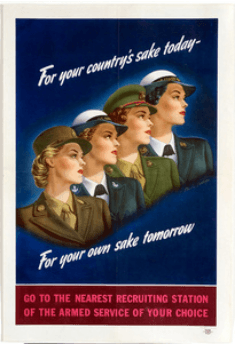
SERVING WITH THE WOMEN'S ARMY CORPS
Quiz by Barnes, Kerinna M
Customize this quiz to suit your class
Instantly translate to 100+ languages
Tag the questions with any skills you have. Your dashboard will track each student's mastery of each skill.
Give this quiz to my class
Hungunin explains that women were needed in the armed forces to…
What type of training did Wilma receive?
Hungunin explains that gunners were…
Which statement best identifies the central idea of the interview.
Which detail from the text supports the central idea that Hugunin enlisted in the army to seek adventure and support her country?
How does paragraph 23 contribute to the development of ideas in the text?
Which section from paragraph 23 best supports the idea that "Wilma had a desire to support the war in its active areas?"
 Broken windows are covered. Floorboards are patched and doors screwed back on. The road that was ruined by German tanks is shovelled and raked smooth. Boot-shaped bruises turn yellow then fade and disappear. Flowers grow and spread across the ugly German footprints stomped into garden beds. The village looks pretty once more. School stops for the summer and everyone is put to work on the kolkhoz, the village farm. Women and big boys begin harvesting the barley crops in the outer fields. The biggest girls milk the cows, morning and night, and keep the barns clean. Old Nikolay mends ploughs, horse harnesses, pitchforks and scythes in his workshop. Anna Pushinka teaches Yelena and her friends how to get the honey from the beehives that are scattered through the orchards. I am in charge of collecting eggs. My friends Olga and Nina help. Olga and Nina are five, a year younger than me. They are twins and look exactly alike, except Nina’s nose is a little bit crooked from when she fell out of bed and squashed it sideways on the floor. The hens, ducks and geese wander free in the summer, so collecting eggs is like a treasure hunt and takes hours. Catching the hens for their daily hugs takes even longer, but I think it’s important because hugs make everyone happy and happy hens lay bigger eggs. Olga says I’m the best hen-hugger in all of Russia. Nina says I’ll be the best cow-hugger, too, when my arms grow longer. But good hugs have nothing to do with the size of your arms. It’s all to do with the size of your heart. When we are done with the hens, Olga, Nina and I can spend the rest of the day doing whatever we like. We climb the apricot trees, chase squirrels, lie in the meadow marvelling at how hot Ushanka’s black fur becomes in the sunshine, make daisy chains and race little boats of bark in the stream. I teach Olga and Nina the alphabet and we use charcoal to write our letters and our names all over the village – on doors and walls and the freshly cut ends of firewood. In between, I practise my knots. In case the German princemonsters return. I slip into Old Nikolay’s workshop and tie knots in the harnesses hanging on the walls. I wander into gardens where the washing is hung out to dry and tie knots in the laces on pants and smocks. I creep up behind Anna Pushinka and tie knots in her apron strings. I find baling twine in the hay shed and tie my own ankles together. I do such a good job of these last knots that I can’t get them undone. I have to jump all the way to Olga and Nina’s house and ask them to cut me free with their mama’s knife. At the end of each day, Ushanka and I run out into the distant barley fields to meet Mama. This is my favourite part of the day, because Mama always shouts, ‘Little Rabbit!’ and smothers my head with kisses. And as we walk home, we sing. Everyone – women, big boys and me. I love to sing. Almost as much as I love to be kissed by Mama. Sometimes one of the boys, Mikhail, has his balalaika with him. He takes the instrument out from beneath the sheaves of barley piled high on the wagon and plays music. We sing about forests and orchards and people who find their true love. As we walk home, arm in arm, my heart fills with happiness and my belly swells with pride that I am allowed to sing along with the big boys. And I can almost forget about the German prince-monsters and their lies about Russia and their big ugly boots. Almost. But today, when Mikhail reaches for his balalaika, I see other things hiding beneath the barley sheaves. Three of the mamas rush forward and cover them up, but it’s too late. I know they are there. I’ve already seen them. Rifles. Lots of rifles. Mikhail hugs his balalaika to his chest and blushes. ‘So play!’ cries Mama, her voice oddly loud and high. ‘Let’s play Sasha’s favourite song, “The Little Birch Tree”.’ So Mikhail plays and everyone sings about the lovely birch tree with its curly leaves and the branches that will be turned into silver flutes. They sing too quickly, too loudly, and as they sing and walk, they cast nervous sideways glances at me. ‘It’s alright,’ I say, when the song comes to an end. ‘I didn’t see the rifles.’ Mama nods and smiles, and I know it was the right thing to say. But I did see the rifles. And I think about Yelena wanting to get lots of guns and dynamite for the Partisans so they can shoot the Germans and blow them into thousands of tiny pieces, and Mama looking as though she agreed, and I know this is what the mamas and the big boys are doing. As well as harvesting, they are helping the Partisans. Three days later, I wake before dawn and I am all alone. Yelena is always here beside me when I wake. But not this morning. I climb down from our bed above the stove. Mama is filling a cloth sack with bread. She ties it closed with a piece of string and hands it to Yelena. ‘Stay out of sight,’ says Mama. ‘And don’t return until after dark.’ ‘Where’s she going?’ I ask. ‘Nowhere,’ snaps Mama. ‘Then why does she need all that bread?’ I ask. ‘There’s nothing left for us.’ Mama baked four loaves last night and she has stuffed them all into the sack. Yelena opens her mouth, but before she can speak, Mama shoves her out the door and sends her on the way to nowhere. Mama turns and stares at me, her blue, blue cornflower eyes wide with worry. ‘I know,’ I say, flopping down on the bench. ‘I didn’t see any bread.’ Mama sits beside me and takes my hand. ‘And . . .?’ she prods, obviously waiting for more. I puzzle for a while, then say, ‘And I don’t have a sister called Yelena.’ Mama laughs, softly and with a little bit of sadness around the edges. ‘Sweet Little Rabbit! You do have a sister called Yelena.’ ‘I do?’ I ask, now confused. ‘I haven’t seen the rifles or the bread, but I have seen Yelena?’ ‘Yes.’ Mama smiles and the magic makes me smile, too. And I am glad that Yelena is real because I love her very much. ‘Yelena is real,’ Mama explains, ‘but she does not carry sacks of bread into the forest for the Partisans.’ ‘Of course not!’ I shout, slapping my forehead. ‘Because there is no bread!’ Mama laughs loudly now, with not a hint of sadness. She hugs me, pressing me against her warm, loving heart, covering my head with kisses. ‘Clever Little Rabbit,’ she murmurs, and then, in barely a whisper, ‘Your papa would be so proud.’ When I wake the next morning, Yelena is sleeping beside me, her mouth open, her braided hair unravelling. Mama is serving kasha to a strange woman seated at our table. I crawl down from above the stove and slide along the bench beside her. I stare at her pants, her tunic, the rope she is using as a belt and her big boots. She’s dressed like a man! And there’s a rifle leaning against the wall near the door. ‘Hello,’ I say. ‘I’m Sasha.’ The woman doesn’t reply. She just shovels down her kasha. I line my four wooden bears along the table in front of her bowl and say, ‘These are my bears: Big Bear, Medium Bear, Little Bear and Even Littler Bear.’ ‘Hello, Sasha. Hello, bears.’ She smiles but she doesn’t tell me her name. ‘Why are you dressed like a man?’ I ask, tugging at the sleeve of her tunic. ‘Because men’s clothes make it easier to run and climb and crawl and shoot,’ she says. ‘You’re a Partisan!’ I gasp. ‘But she’s not real,’ says Mama, placing a bowl of kasha before me. ‘Is the kasha real?’ I ask. Mama laughs. ‘Yes, Little Rabbit.’ I’m glad the food is real, because I’m hungry. But I’m disappointed that the woman is not real. I was going to ask if I could use her rope-belt to tie her ankles together. For practice. But if she’s not real, then the rope and her ankles aren’t either. The woman finishes her kasha, hangs her rifle over her shoulder, kisses Mama on the cheek then slips out the door. I run to the window to watch her leave, but by the time I get there, she’s gone. Vanished. ‘Because she’s not real,’ I whisper. A week later, Mama and I are working in the garden. We sing as we weed between the flowers and pluck caterpillars from the vegetables. Anna Pushinka is picking strawberries in her garden and wanders over. ‘Taste these,’ she says, holding out the basket. Mama reaches in and takes out a fat strawberry and a tiny piece of folded paper. The strawberry goes into her mouth, the paper into her pocket. ‘What’s on the paper?’ I ask. ‘Paper?’ Anna Pushinka replies with a wave of her hand. ‘Goodness, Sasha! Who has money for paper? These are lean times. We must choose between paper for writing and noodles for our soup. And I always choose noodles.’ She chuckles and I know the paper is yet another thing that is not real. That night, Mama slips the paper to Yelena, but she drops it on the floor. I pick it up for her, and I see that there are tiny words and numbers written all over it. I wish I could read better. I’m desperate to know what it says. Or rather, what it doesn’t say, because it’s not real. Later, when Mama has tucked us into our bed above the stove and Ushanka has wrapped herself around the top of my head, I ask Yelena, ‘What’s on the paper?’ ‘What paper?’ says Yelena. ‘The paper that isn’t real,’ I reply. Yelena stares at me, nibbling her lip, then whispers, ‘A message for the Partisans. Stuff about where the Germans have their headquarters and when their trains are travelling and where they store their ammunition.’ ‘Why?’ ‘So the Partisans can blow them up.’ Yelena grabs my arm. ‘But don’t tell anyone. It’s a secret.’ ‘What’s a secret?’ I ask. ‘The message.’ ‘What message?’ I say, my eyes wide. Yelena laughs. ‘Good boy, Sasha.’ My belly swells with pride. I know how to play this game. ‘How are your knots coming along?’ asks Yelena. ‘Good! Yesterday, I crept into the dairy and tied knots in the apron strings of all the girls who were milking and only one of them noticed. Today, I tied Olga’s ankles together with Mama’s embroidery thread and just now, while you were taking a bath, I tied the sleeves of your blouse together in an enormous knot.’ Yelena rolls her eyes, then says, ‘I’ll see if I can find you some rope for practising.’ ‘Practising what?’ I ask. ‘Your knots,’ she says. ‘What knots?’ Yelena, my big sister who is twelve and always serious tOn 8 August 1967, five leaders – the Foreign Ministers of Indonesia, Malaysia, the Philippines, Singapore and Thailand – sat down together in the main hall of the Department of Foreign Affairs building in Bangkok, Thailand and signed a document. By virtue of that document, the Association of Southeast Asian Nations (ASEAN) was born. The five Foreign Ministers who signed it – Adam Malik of Indonesia, Narciso R. Ramos of the Philippines, Tun Abdul Razak of Malaysia, S. Rajaratnam of Singapore, and Thanat Khoman of Thailand – would subsequently be hailed as the Founding Fathers of probably the most successful inter-governmental organization in the developing world today. And the document that they signed would be known as the ASEAN Declaration. It was a short, simply-worded document containing just five articles. It declared the establishment of an Association for Regional Cooperation among the Countries of Southeast Asia to be known as the Association of Southeast Asian Nations (ASEAN) and spelled out the aims and purposes of that Association. These aims and purposes were about cooperation in the economic, social, cultural, technical, educational and other fields, and in the promotion of regional peace and stability through abiding respect for justice and the rule of law and adherence to the principles of the United Nations Charter. It stipulated that the Association would be open for participation by all States in the Southeast Asian region subscribing to its aims, principles and purposes. It proclaimed ASEAN as representing “the collective will of the nations of Southeast Asia to bind themselves together in friendship and cooperation and, through joint efforts and sacrifices, secure for their peoples and for posterity the blessings of peace, freedom and prosperity.” It was while Thailand was brokering reconciliation among Indonesia, the Philippines and Malaysia over certain disputes that it dawned on the four countries that the moment for regional cooperation had come or the future of the region would remain uncertain. Recalls one of the two surviving protagonists of that historic process, Thanat Khoman of Thailand: “At the banquet marking the reconciliation between the three disputants, I broached the idea of forming another organization for regional cooperation with Adam Malik. Malik agreed without hesitation but asked for time to talk with his government and also to normalize relations with Malaysia now that the confrontation was over. Meanwhile, the Thai Foreign Office prepared a draft charter of the new institution. Within a few months, everything was ready. I therefore invited the two former members of the Association for Southeast Asia (ASA), Malaysia and the Philippines, and Indonesia, a key member, to a meeting in Bangkok. In addition, Singapore sent S. Rajaratnam, then Foreign Minister, to see me about joining the new set-up. Although the new organization was planned to comprise only the ASA members plus Indonesia, Singapore’s request was favorably considered.” And so in early August 1967, the five Foreign Ministers spent four days in the relative isolation of a beach resort in Bang Saen, a coastal town less than a hundred kilometers southeast of Bangkok. There they negotiated over that document in a decidedly informal manner which they would later delight in describing as “sports-shirt diplomacy.” Yet it was by no means an easy process: each man brought into the deliberations a historical and political perspective that had no resemblance to that of any of the others. But with goodwill and good humor, as often as they huddled at the negotiating table, they finessed their way through their differences as they lined up their shots on the golf course and traded wisecracks on one another’s game, a style of deliberation which would eventually become the ASEAN ministerial tradition. Now, with the rigors of negotiations and the informalities of Bang Saen behind them, with their signatures neatly attached to the ASEAN Declaration, also known as the Bangkok Declaration, it was time for some formalities. The first to speak was the Philippine Secretary of Foreign Affairs, Narciso Ramos, a one-time journalist and long-time legislator who had given up a chance to be Speaker of the Philippine Congress to serve as one of his country’s first diplomats. He was then 66 years old and his only son, the future President Fidel V. Ramos, was serving with the Philippine Civic Action Group in embattled Vietnam. He recalled the tediousness of the negotiations that preceded the signing of the Declaration that “truly taxed the goodwill, the imagination, the patience and understanding of the five participating Ministers.” That ASEAN was established at all in spite of these difficulties, he said, meant that its foundations had been solidly laid. And he impressed it on the audience of diplomats, officials and media people who had witnessed the signing ceremony that a great sense of urgency had prompted the Ministers to go through all that trouble. He spoke darkly of the forces that were arrayed against the survival of the countries of Southeast Asia in those uncertain and critical times. “The fragmented economies of Southeast Asia,” he said, “(with) each country pursuing its own limited objectives and dissipating its meager resources in the overlapping or even conflicting endeavors of sister states carry the seeds of weakness in their incapacity for growth and their self-perpetuating dependence on the advanced, industrial nations. ASEAN, therefore, could marshal the still untapped potentials of this rich region through more substantial united actionDNA polymerase III A prokaryotic enzyme with 5’ to 3’ Polymerase activity. The Hydrolysis of pyrophosphate
(PPi) drives the energy required to create the covalent
phosphodiester bond.A prokaryotic enzyme with 5’ to 3’ Polymerase activity.DNA polymerase is a multisubunit enzyme where the subunits of the enzyme form a ring that encircles and
moves along the template strand of the DNA, thus serving
as a sliding DNA clamp. Therefore the enzyme cannot
diffuse away from its task.DNA polymerase III has proofreading capabilities and therefore the error rate of RNA transcription
is 1 in 10 million bases (1X10⁷).To ensure DNA replication fidelity, DNA polymerase III can edit its mistakes. DNA polymerase III has 3’ to 5’ Exonuclease activity.The 5’ to 3’ polymerase
activity then replaces it with the correct nucleotide.Describe the structure and powers of the executive branch of the U.S. government. Executive Structure: Chief Executive: President -- needs a majority (270 votes) of the electoral vote to win -- if no majority -- goes to House of Reps (each state’s reps collectively get one vote for President: V.P. decided by Senate (each Senator getting one vote); 4 year term; can only be re-elected once (22nd Amendment); must be at least 35 years old and a natural-born citizen of the United States and resident for 14 years President’s Cabinet -- his formal advisors made up of the heads of executive departments (over a dozen departments today) (i.e. State Department (Secretary of State), Justice Department (Attorney General), Department of Defense (Secretary of Defense), Department of Health and Human Services, Department of Education, Department of the Interior, Department of Labor, Department of Commerce, Department of Agriculture, Department of Homeland Security, Department of Energy, Department of Transportation, Department of Housing and Urban Development) Executive Powers: Enforces the laws Can issue executive orders Can veto proposed legislation Acts as commander in chief of military With the consent of the Senate -- makes treaties with other nations Nominates ambassadors and Supreme Court justices, court of appeals judges, and district court judges (confirmed by the United States Senate) Can grant pardons to people convicted of violating federal (national) laws How can a U.S. President be removed? If commits certain crimes related to their duties -- House of Representatives can vote to impeach the president (to impeach = to formally accuse the president of the crimes specified in the Constitution) -- only three so far -- Donald Trump (2020), Bill Clinton (1998), and Andrew Johnson (1868); Nixon resigned before could be impeached (1974) If the House of Reps votes to impeach, the Senate puts the president on trial, with the senators serving as the jury. -- If found guilty, the president is removed.Meaning of Tray Clothes These are materials used to cover food placed inside a tray before serving them. They are used to serve sick people. The following are the steps in making tray clothes: 1. Use paper pattern according to measurement of your choice to cut out the materials. The materials may be cut in rectangular, triangular or circular shape. 2. Cut out the shape with a hem of ½ an inch to tack round it. 3. Cut out the paper shape from the clothing material. 4. Run stitches to hold down the hems. 5. Finish the edges with lace or bias binding. 6. Trim your article. HANDKERCHIEF Handkerchief is used for the following purposes: 1. To wipe away sweat from the face. 2. To cover one’s mouth when sneezing or coughing. 3. To blow out phlegm from the nose. The following are the methods for making handkerchief: 1. Use paper pattern to cut materials into 16inches by 16inches 2. Turn a hem of 1/2inch and tack it round in circumstance. 3. Run stitches to hold down the hem. 4. Iron the article to smoothen the edges.1. Eat slowly, chew your food well. It takes twenty (20) minutes before your stomach sends a clear message to your brain that you're full. Take your time and savor the flavor of your meal. 2. Eat well When your body doesn't receive the required nutrients, your metabolism slows down. Metabolism is the rate at which you burn calories while resting. So, if you don't eat enough, fewer calories will be burnt and there will be less fat loss. You should eat small meals at regular intervals to keep your energy levels high. 3. Eat less red meat Red meats are high in saturated fat and should be avoided by people with high cholesterol. Chicken and fish are the best meats to consume. These meats can be baked, grilled or roasted. 4. Eat more fiber foods Add fiber to your diet, this adds bulk to your food and prevents constipation. Whole grain foods like oatmeal, bran, wheat germ and brown rice, fruits, especially with skins, prunes, etc, are all Seven (7) healthy eating habits for your guidelines: How you eat your food is as important as what you eat. So, the next time you sit down to eat, enjoy your meal by keeping these pointers in mind. Home Economics and Livelihood Education 7 Seibo College 157 good sources of fiber. Fiber helps in binding cholesterol, which results to less production of bad cholesterol. 5. Have calcium-rich foods Aside fro milk other sources of calcium and protein are red kidney beans, mustard greens, etc. Proteins can be found in meats, sprouts, soya, etc. 6. Eat foods that contain iron These include liver, fruits like watermelon, vegetables like spinach, beans, beets and broccoli, whole grains, dried fruits, especially prunes, sunflower seeds, etc. 7. Relish the flavors You may have heard some of these before. But the best good food habit, which we all seem to overlook, is to actually taste and enjoy the flavor of the food with your emotions instead of just your tongue. How can we prevent malnutrition? Following are the checklists of steps to prevent malnutrition. Nutrition campaign on the importance of food nutrients. Proper selection, preparation and serving of well-balanced meals. Vegetable gardening in schools and at home. Intensive program from the government especially for the less privileged members of the community.A ______________ is the smallest military unit, typically consisting of 3-5 soldiers and working closely within a tactical operation. A ______________ consists of 8-12 soldiers and is led by a squad leader. A ______________, typically consisting of 30-50 soldiers, is commanded by a lieutenant and subdivided into smaller squads. The ______________ is a company-level unit of about 100-200 soldiers, typically commanded by a captain. A ______________ is made up of several companies, usually commanded by a lieutenant colonel, and consists of 300-1,000 soldiers. A ______________ typically consists of 3-5 battalions, is commanded by a colonel, and can operate independently in large-scale operations. A ______________ is made up of several brigades and is commanded by a major general, usually numbering 10,000-20,000 soldiers. A ______________ is a larger military formation made up of multiple divisions, commanded by a lieutenant general. The term ______________ refers to units designed for direct engagement with enemy forces, such as infantry, armor, and artillery. ______________ is a branch specializing in close-combat tactics and foot soldiers, serving as the backbone of ground forces. ______________ units provide long-range firepower to support ground forces, using cannons, howitzers, and rocket systems. ______________ are specialized units equipped with tanks and other armored vehicles for breakthrough and exploitation missions. The ______________ is responsible for building infrastructure like bridges, roads, and fortifications in combat and non-combat settings. The ______________ provides protection against nuclear, biological, and chemical weapons on the battlefield. ______________ are elite units trained for unconventional warfare, counter-terrorism, and specialized missions. ______________ are responsible for maintaining law and order within military ranks and ensuring security in both combat zones and bases. ______________ provide medical care to soldiers, ensuring health and emergency treatment in battlefield conditions.Sanitation must always be observed to promote hygiene and to prevent diseases. Sanitation and safety measures at home must never be taken for granted. All responsible members of the family should see to it that everything at home is in proper order to avoid accident. Children are usually careless and playful, they must be well taken cared off and not left alone for themselves, otherwise something wrong might happen. My dear learners keep focus, learn more! How can accidents be avoided at home? a. Multiple octopus connection can cause power overload. This can cause fire, hence it is better to install an extra outlets than to have your house burned. b. Unplug electrical appliances after use to avoid overheat appliances causing fire. c. Electrical cord should be placed away from children’s reach. d. Sharp objects should be placed in secure places where children will not reach , thus causing accidents. e. Separate shelves must be provided for poisonous substances and another one for food supplies and medicines. Following are guidelines to be observed to avoid accidents at home. Home Economics and Livelihood Education 7 Seibo College 128 f. Never touch electrical switches with wet hands. Be sure to dry your hands before plugging or unplugging appliances. In addition to that, there are accidents usually occurs in the kitchen. Since the kitchen is considered the busiest part of the house it is best to follow safety measures to avoid accidents. . 1. When preparing and cooking food never leave the fruit and vegetable peelings on the floor. Someone might step on it and fall. 2. When someone accidentally spilled liquid on the floor, wipe it immediately. 3. Use a tray when carrying or serving hot liquids to protect yourself from spills. 4. When lighting the gas stove, be sure to light the match first before turning the gas on. Always turn-off the gas stove after use. 5. Throw sand or a damp rag in case your stove catches fire. 6. Use dry pot holders to hold hot utensils. 7. Hold the kettle and its cover with dry pot holders when draining. 8. To avoid touching handles of hot utensils while cooking, turn them inward. Listed below are the health and safety practices while working in the kitchen Home Economics and Livelihood Education 7 Seibo College 129 9. Avoid carrying hot pots filled with hot liquids across the kitchen to avoid getting burned. 10. Be sure to wash your hands before and after cooking. 11. Use appropriate cooking wear like apron and hairnet. 12. Provide for a covered garbage can for trash and rubbish. 13. Use a dish cloth for wiping dry the different kitchen wares. 14. Remove accessories like bracelets, wrist watch, and ring while working in the kitchen. 15. Clean the kitchen before and after cooking. Why is it important to follow health and safety practices at home? Knowing safety tips at home prevents common injuries like burns, cuts, poisoning, choking and falls. Observing health practices at home prevents illness, spread of diseases or even death. Safety measures at home prevent accidents from happening thus save time, money and energy. Following safety measures at home ensures a healthy and peaceful life. Did you understand the lesson? If you did, observe and practice them at home for your own good and your love ones.
Broken windows are covered. Floorboards are patched and doors screwed back on. The road that was ruined by German tanks is shovelled and raked smooth. Boot-shaped bruises turn yellow then fade and disappear. Flowers grow and spread across the ugly German footprints stomped into garden beds. The village looks pretty once more. School stops for the summer and everyone is put to work on the kolkhoz, the village farm. Women and big boys begin harvesting the barley crops in the outer fields. The biggest girls milk the cows, morning and night, and keep the barns clean. Old Nikolay mends ploughs, horse harnesses, pitchforks and scythes in his workshop. Anna Pushinka teaches Yelena and her friends how to get the honey from the beehives that are scattered through the orchards. I am in charge of collecting eggs. My friends Olga and Nina help. Olga and Nina are five, a year younger than me. They are twins and look exactly alike, except Nina’s nose is a little bit crooked from when she fell out of bed and squashed it sideways on the floor. The hens, ducks and geese wander free in the summer, so collecting eggs is like a treasure hunt and takes hours. Catching the hens for their daily hugs takes even longer, but I think it’s important because hugs make everyone happy and happy hens lay bigger eggs. Olga says I’m the best hen-hugger in all of Russia. Nina says I’ll be the best cow-hugger, too, when my arms grow longer. But good hugs have nothing to do with the size of your arms. It’s all to do with the size of your heart. When we are done with the hens, Olga, Nina and I can spend the rest of the day doing whatever we like. We climb the apricot trees, chase squirrels, lie in the meadow marvelling at how hot Ushanka’s black fur becomes in the sunshine, make daisy chains and race little boats of bark in the stream. I teach Olga and Nina the alphabet and we use charcoal to write our letters and our names all over the village – on doors and walls and the freshly cut ends of firewood. In between, I practise my knots. In case the German princemonsters return. I slip into Old Nikolay’s workshop and tie knots in the harnesses hanging on the walls. I wander into gardens where the washing is hung out to dry and tie knots in the laces on pants and smocks. I creep up behind Anna Pushinka and tie knots in her apron strings. I find baling twine in the hay shed and tie my own ankles together. I do such a good job of these last knots that I can’t get them undone. I have to jump all the way to Olga and Nina’s house and ask them to cut me free with their mama’s knife. At the end of each day, Ushanka and I run out into the distant barley fields to meet Mama. This is my favourite part of the day, because Mama always shouts, ‘Little Rabbit!’ and smothers my head with kisses. And as we walk home, we sing. Everyone – women, big boys and me. I love to sing. Almost as much as I love to be kissed by Mama. Sometimes one of the boys, Mikhail, has his balalaika with him. He takes the instrument out from beneath the sheaves of barley piled high on the wagon and plays music. We sing about forests and orchards and people who find their true love. As we walk home, arm in arm, my heart fills with happiness and my belly swells with pride that I am allowed to sing along with the big boys. And I can almost forget about the German prince-monsters and their lies about Russia and their big ugly boots. Almost. But today, when Mikhail reaches for his balalaika, I see other things hiding beneath the barley sheaves. Three of the mamas rush forward and cover them up, but it’s too late. I know they are there. I’ve already seen them. Rifles. Lots of rifles. Mikhail hugs his balalaika to his chest and blushes. ‘So play!’ cries Mama, her voice oddly loud and high. ‘Let’s play Sasha’s favourite song, “The Little Birch Tree”.’ So Mikhail plays and everyone sings about the lovely birch tree with its curly leaves and the branches that will be turned into silver flutes. They sing too quickly, too loudly, and as they sing and walk, they cast nervous sideways glances at me. ‘It’s alright,’ I say, when the song comes to an end. ‘I didn’t see the rifles.’ Mama nods and smiles, and I know it was the right thing to say. But I did see the rifles. And I think about Yelena wanting to get lots of guns and dynamite for the Partisans so they can shoot the Germans and blow them into thousands of tiny pieces, and Mama looking as though she agreed, and I know this is what the mamas and the big boys are doing. As well as harvesting, they are helping the Partisans. Three days later, I wake before dawn and I am all alone. Yelena is always here beside me when I wake. But not this morning. I climb down from our bed above the stove. Mama is filling a cloth sack with bread. She ties it closed with a piece of string and hands it to Yelena. ‘Stay out of sight,’ says Mama. ‘And don’t return until after dark.’ ‘Where’s she going?’ I ask. ‘Nowhere,’ snaps Mama. ‘Then why does she need all that bread?’ I ask. ‘There’s nothing left for us.’ Mama baked four loaves last night and she has stuffed them all into the sack. Yelena opens her mouth, but before she can speak, Mama shoves her out the door and sends her on the way to nowhere. Mama turns and stares at me, her blue, blue cornflower eyes wide with worry. ‘I know,’ I say, flopping down on the bench. ‘I didn’t see any bread.’ Mama sits beside me and takes my hand. ‘And . . .?’ she prods, obviously waiting for more. I puzzle for a while, then say, ‘And I don’t have a sister called Yelena.’ Mama laughs, softly and with a little bit of sadness around the edges. ‘Sweet Little Rabbit! You do have a sister called Yelena.’ ‘I do?’ I ask, now confused. ‘I haven’t seen the rifles or the bread, but I have seen Yelena?’ ‘Yes.’ Mama smiles and the magic makes me smile, too. And I am glad that Yelena is real because I love her very much. ‘Yelena is real,’ Mama explains, ‘but she does not carry sacks of bread into the forest for the Partisans.’ ‘Of course not!’ I shout, slapping my forehead. ‘Because there is no bread!’ Mama laughs loudly now, with not a hint of sadness. She hugs me, pressing me against her warm, loving heart, covering my head with kisses. ‘Clever Little Rabbit,’ she murmurs, and then, in barely a whisper, ‘Your papa would be so proud.’ When I wake the next morning, Yelena is sleeping beside me, her mouth open, her braided hair unravelling. Mama is serving kasha to a strange woman seated at our table. I crawl down from above the stove and slide along the bench beside her. I stare at her pants, her tunic, the rope she is using as a belt and her big boots. She’s dressed like a man! And there’s a rifle leaning against the wall near the door. ‘Hello,’ I say. ‘I’m Sasha.’ The woman doesn’t reply. She just shovels down her kasha. I line my four wooden bears along the table in front of her bowl and say, ‘These are my bears: Big Bear, Medium Bear, Little Bear and Even Littler Bear.’ ‘Hello, Sasha. Hello, bears.’ She smiles but she doesn’t tell me her name. ‘Why are you dressed like a man?’ I ask, tugging at the sleeve of her tunic. ‘Because men’s clothes make it easier to run and climb and crawl and shoot,’ she says. ‘You’re a Partisan!’ I gasp. ‘But she’s not real,’ says Mama, placing a bowl of kasha before me. ‘Is the kasha real?’ I ask. Mama laughs. ‘Yes, Little Rabbit.’ I’m glad the food is real, because I’m hungry. But I’m disappointed that the woman is not real. I was going to ask if I could use her rope-belt to tie her ankles together. For practice. But if she’s not real, then the rope and her ankles aren’t either. The woman finishes her kasha, hangs her rifle over her shoulder, kisses Mama on the cheek then slips out the door. I run to the window to watch her leave, but by the time I get there, she’s gone. Vanished. ‘Because she’s not real,’ I whisper. A week later, Mama and I are working in the garden. We sing as we weed between the flowers and pluck caterpillars from the vegetables. Anna Pushinka is picking strawberries in her garden and wanders over. ‘Taste these,’ she says, holding out the basket. Mama reaches in and takes out a fat strawberry and a tiny piece of folded paper. The strawberry goes into her mouth, the paper into her pocket. ‘What’s on the paper?’ I ask. ‘Paper?’ Anna Pushinka replies with a wave of her hand. ‘Goodness, Sasha! Who has money for paper? These are lean times. We must choose between paper for writing and noodles for our soup. And I always choose noodles.’ She chuckles and I know the paper is yet another thing that is not real. That night, Mama slips the paper to Yelena, but she drops it on the floor. I pick it up for her, and I see that there are tiny words and numbers written all over it. I wish I could read better. I’m desperate to know what it says. Or rather, what it doesn’t say, because it’s not real. Later, when Mama has tucked us into our bed above the stove and Ushanka has wrapped herself around the top of my head, I ask Yelena, ‘What’s on the paper?’ ‘What paper?’ says Yelena. ‘The paper that isn’t real,’ I reply. Yelena stares at me, nibbling her lip, then whispers, ‘A message for the Partisans. Stuff about where the Germans have their headquarters and when their trains are travelling and where they store their ammunition.’ ‘Why?’ ‘So the Partisans can blow them up.’ Yelena grabs my arm. ‘But don’t tell anyone. It’s a secret.’ ‘What’s a secret?’ I ask. ‘The message.’ ‘What message?’ I say, my eyes wide. Yelena laughs. ‘Good boy, Sasha.’ My belly swells with pride. I know how to play this game. ‘How are your knots coming along?’ asks Yelena. ‘Good! Yesterday, I crept into the dairy and tied knots in the apron strings of all the girls who were milking and only one of them noticed. Today, I tied Olga’s ankles together with Mama’s embroidery thread and just now, while you were taking a bath, I tied the sleeves of your blouse together in an enormous knot.’ Yelena rolls her eyes, then says, ‘I’ll see if I can find you some rope for practising.’ ‘Practising what?’ I ask. ‘Your knots,’ she says. ‘What knots?’ Yelena, my big sister who is twelve and always serious tOn 8 August 1967, five leaders – the Foreign Ministers of Indonesia, Malaysia, the Philippines, Singapore and Thailand – sat down together in the main hall of the Department of Foreign Affairs building in Bangkok, Thailand and signed a document. By virtue of that document, the Association of Southeast Asian Nations (ASEAN) was born. The five Foreign Ministers who signed it – Adam Malik of Indonesia, Narciso R. Ramos of the Philippines, Tun Abdul Razak of Malaysia, S. Rajaratnam of Singapore, and Thanat Khoman of Thailand – would subsequently be hailed as the Founding Fathers of probably the most successful inter-governmental organization in the developing world today. And the document that they signed would be known as the ASEAN Declaration. It was a short, simply-worded document containing just five articles. It declared the establishment of an Association for Regional Cooperation among the Countries of Southeast Asia to be known as the Association of Southeast Asian Nations (ASEAN) and spelled out the aims and purposes of that Association. These aims and purposes were about cooperation in the economic, social, cultural, technical, educational and other fields, and in the promotion of regional peace and stability through abiding respect for justice and the rule of law and adherence to the principles of the United Nations Charter. It stipulated that the Association would be open for participation by all States in the Southeast Asian region subscribing to its aims, principles and purposes. It proclaimed ASEAN as representing “the collective will of the nations of Southeast Asia to bind themselves together in friendship and cooperation and, through joint efforts and sacrifices, secure for their peoples and for posterity the blessings of peace, freedom and prosperity.” It was while Thailand was brokering reconciliation among Indonesia, the Philippines and Malaysia over certain disputes that it dawned on the four countries that the moment for regional cooperation had come or the future of the region would remain uncertain. Recalls one of the two surviving protagonists of that historic process, Thanat Khoman of Thailand: “At the banquet marking the reconciliation between the three disputants, I broached the idea of forming another organization for regional cooperation with Adam Malik. Malik agreed without hesitation but asked for time to talk with his government and also to normalize relations with Malaysia now that the confrontation was over. Meanwhile, the Thai Foreign Office prepared a draft charter of the new institution. Within a few months, everything was ready. I therefore invited the two former members of the Association for Southeast Asia (ASA), Malaysia and the Philippines, and Indonesia, a key member, to a meeting in Bangkok. In addition, Singapore sent S. Rajaratnam, then Foreign Minister, to see me about joining the new set-up. Although the new organization was planned to comprise only the ASA members plus Indonesia, Singapore’s request was favorably considered.” And so in early August 1967, the five Foreign Ministers spent four days in the relative isolation of a beach resort in Bang Saen, a coastal town less than a hundred kilometers southeast of Bangkok. There they negotiated over that document in a decidedly informal manner which they would later delight in describing as “sports-shirt diplomacy.” Yet it was by no means an easy process: each man brought into the deliberations a historical and political perspective that had no resemblance to that of any of the others. But with goodwill and good humor, as often as they huddled at the negotiating table, they finessed their way through their differences as they lined up their shots on the golf course and traded wisecracks on one another’s game, a style of deliberation which would eventually become the ASEAN ministerial tradition. Now, with the rigors of negotiations and the informalities of Bang Saen behind them, with their signatures neatly attached to the ASEAN Declaration, also known as the Bangkok Declaration, it was time for some formalities. The first to speak was the Philippine Secretary of Foreign Affairs, Narciso Ramos, a one-time journalist and long-time legislator who had given up a chance to be Speaker of the Philippine Congress to serve as one of his country’s first diplomats. He was then 66 years old and his only son, the future President Fidel V. Ramos, was serving with the Philippine Civic Action Group in embattled Vietnam. He recalled the tediousness of the negotiations that preceded the signing of the Declaration that “truly taxed the goodwill, the imagination, the patience and understanding of the five participating Ministers.” That ASEAN was established at all in spite of these difficulties, he said, meant that its foundations had been solidly laid. And he impressed it on the audience of diplomats, officials and media people who had witnessed the signing ceremony that a great sense of urgency had prompted the Ministers to go through all that trouble. He spoke darkly of the forces that were arrayed against the survival of the countries of Southeast Asia in those uncertain and critical times. “The fragmented economies of Southeast Asia,” he said, “(with) each country pursuing its own limited objectives and dissipating its meager resources in the overlapping or even conflicting endeavors of sister states carry the seeds of weakness in their incapacity for growth and their self-perpetuating dependence on the advanced, industrial nations. ASEAN, therefore, could marshal the still untapped potentials of this rich region through more substantial united actionDNA polymerase III A prokaryotic enzyme with 5’ to 3’ Polymerase activity. The Hydrolysis of pyrophosphate
(PPi) drives the energy required to create the covalent
phosphodiester bond.A prokaryotic enzyme with 5’ to 3’ Polymerase activity.DNA polymerase is a multisubunit enzyme where the subunits of the enzyme form a ring that encircles and
moves along the template strand of the DNA, thus serving
as a sliding DNA clamp. Therefore the enzyme cannot
diffuse away from its task.DNA polymerase III has proofreading capabilities and therefore the error rate of RNA transcription
is 1 in 10 million bases (1X10⁷).To ensure DNA replication fidelity, DNA polymerase III can edit its mistakes. DNA polymerase III has 3’ to 5’ Exonuclease activity.The 5’ to 3’ polymerase
activity then replaces it with the correct nucleotide.Describe the structure and powers of the executive branch of the U.S. government. Executive Structure: Chief Executive: President -- needs a majority (270 votes) of the electoral vote to win -- if no majority -- goes to House of Reps (each state’s reps collectively get one vote for President: V.P. decided by Senate (each Senator getting one vote); 4 year term; can only be re-elected once (22nd Amendment); must be at least 35 years old and a natural-born citizen of the United States and resident for 14 years President’s Cabinet -- his formal advisors made up of the heads of executive departments (over a dozen departments today) (i.e. State Department (Secretary of State), Justice Department (Attorney General), Department of Defense (Secretary of Defense), Department of Health and Human Services, Department of Education, Department of the Interior, Department of Labor, Department of Commerce, Department of Agriculture, Department of Homeland Security, Department of Energy, Department of Transportation, Department of Housing and Urban Development) Executive Powers: Enforces the laws Can issue executive orders Can veto proposed legislation Acts as commander in chief of military With the consent of the Senate -- makes treaties with other nations Nominates ambassadors and Supreme Court justices, court of appeals judges, and district court judges (confirmed by the United States Senate) Can grant pardons to people convicted of violating federal (national) laws How can a U.S. President be removed? If commits certain crimes related to their duties -- House of Representatives can vote to impeach the president (to impeach = to formally accuse the president of the crimes specified in the Constitution) -- only three so far -- Donald Trump (2020), Bill Clinton (1998), and Andrew Johnson (1868); Nixon resigned before could be impeached (1974) If the House of Reps votes to impeach, the Senate puts the president on trial, with the senators serving as the jury. -- If found guilty, the president is removed.Meaning of Tray Clothes These are materials used to cover food placed inside a tray before serving them. They are used to serve sick people. The following are the steps in making tray clothes: 1. Use paper pattern according to measurement of your choice to cut out the materials. The materials may be cut in rectangular, triangular or circular shape. 2. Cut out the shape with a hem of ½ an inch to tack round it. 3. Cut out the paper shape from the clothing material. 4. Run stitches to hold down the hems. 5. Finish the edges with lace or bias binding. 6. Trim your article. HANDKERCHIEF Handkerchief is used for the following purposes: 1. To wipe away sweat from the face. 2. To cover one’s mouth when sneezing or coughing. 3. To blow out phlegm from the nose. The following are the methods for making handkerchief: 1. Use paper pattern to cut materials into 16inches by 16inches 2. Turn a hem of 1/2inch and tack it round in circumstance. 3. Run stitches to hold down the hem. 4. Iron the article to smoothen the edges.1. Eat slowly, chew your food well. It takes twenty (20) minutes before your stomach sends a clear message to your brain that you're full. Take your time and savor the flavor of your meal. 2. Eat well When your body doesn't receive the required nutrients, your metabolism slows down. Metabolism is the rate at which you burn calories while resting. So, if you don't eat enough, fewer calories will be burnt and there will be less fat loss. You should eat small meals at regular intervals to keep your energy levels high. 3. Eat less red meat Red meats are high in saturated fat and should be avoided by people with high cholesterol. Chicken and fish are the best meats to consume. These meats can be baked, grilled or roasted. 4. Eat more fiber foods Add fiber to your diet, this adds bulk to your food and prevents constipation. Whole grain foods like oatmeal, bran, wheat germ and brown rice, fruits, especially with skins, prunes, etc, are all Seven (7) healthy eating habits for your guidelines: How you eat your food is as important as what you eat. So, the next time you sit down to eat, enjoy your meal by keeping these pointers in mind. Home Economics and Livelihood Education 7 Seibo College 157 good sources of fiber. Fiber helps in binding cholesterol, which results to less production of bad cholesterol. 5. Have calcium-rich foods Aside fro milk other sources of calcium and protein are red kidney beans, mustard greens, etc. Proteins can be found in meats, sprouts, soya, etc. 6. Eat foods that contain iron These include liver, fruits like watermelon, vegetables like spinach, beans, beets and broccoli, whole grains, dried fruits, especially prunes, sunflower seeds, etc. 7. Relish the flavors You may have heard some of these before. But the best good food habit, which we all seem to overlook, is to actually taste and enjoy the flavor of the food with your emotions instead of just your tongue. How can we prevent malnutrition? Following are the checklists of steps to prevent malnutrition. Nutrition campaign on the importance of food nutrients. Proper selection, preparation and serving of well-balanced meals. Vegetable gardening in schools and at home. Intensive program from the government especially for the less privileged members of the community.A ______________ is the smallest military unit, typically consisting of 3-5 soldiers and working closely within a tactical operation. A ______________ consists of 8-12 soldiers and is led by a squad leader. A ______________, typically consisting of 30-50 soldiers, is commanded by a lieutenant and subdivided into smaller squads. The ______________ is a company-level unit of about 100-200 soldiers, typically commanded by a captain. A ______________ is made up of several companies, usually commanded by a lieutenant colonel, and consists of 300-1,000 soldiers. A ______________ typically consists of 3-5 battalions, is commanded by a colonel, and can operate independently in large-scale operations. A ______________ is made up of several brigades and is commanded by a major general, usually numbering 10,000-20,000 soldiers. A ______________ is a larger military formation made up of multiple divisions, commanded by a lieutenant general. The term ______________ refers to units designed for direct engagement with enemy forces, such as infantry, armor, and artillery. ______________ is a branch specializing in close-combat tactics and foot soldiers, serving as the backbone of ground forces. ______________ units provide long-range firepower to support ground forces, using cannons, howitzers, and rocket systems. ______________ are specialized units equipped with tanks and other armored vehicles for breakthrough and exploitation missions. The ______________ is responsible for building infrastructure like bridges, roads, and fortifications in combat and non-combat settings. The ______________ provides protection against nuclear, biological, and chemical weapons on the battlefield. ______________ are elite units trained for unconventional warfare, counter-terrorism, and specialized missions. ______________ are responsible for maintaining law and order within military ranks and ensuring security in both combat zones and bases. ______________ provide medical care to soldiers, ensuring health and emergency treatment in battlefield conditions.Sanitation must always be observed to promote hygiene and to prevent diseases. Sanitation and safety measures at home must never be taken for granted. All responsible members of the family should see to it that everything at home is in proper order to avoid accident. Children are usually careless and playful, they must be well taken cared off and not left alone for themselves, otherwise something wrong might happen. My dear learners keep focus, learn more! How can accidents be avoided at home? a. Multiple octopus connection can cause power overload. This can cause fire, hence it is better to install an extra outlets than to have your house burned. b. Unplug electrical appliances after use to avoid overheat appliances causing fire. c. Electrical cord should be placed away from children’s reach. d. Sharp objects should be placed in secure places where children will not reach , thus causing accidents. e. Separate shelves must be provided for poisonous substances and another one for food supplies and medicines. Following are guidelines to be observed to avoid accidents at home. Home Economics and Livelihood Education 7 Seibo College 128 f. Never touch electrical switches with wet hands. Be sure to dry your hands before plugging or unplugging appliances. In addition to that, there are accidents usually occurs in the kitchen. Since the kitchen is considered the busiest part of the house it is best to follow safety measures to avoid accidents. . 1. When preparing and cooking food never leave the fruit and vegetable peelings on the floor. Someone might step on it and fall. 2. When someone accidentally spilled liquid on the floor, wipe it immediately. 3. Use a tray when carrying or serving hot liquids to protect yourself from spills. 4. When lighting the gas stove, be sure to light the match first before turning the gas on. Always turn-off the gas stove after use. 5. Throw sand or a damp rag in case your stove catches fire. 6. Use dry pot holders to hold hot utensils. 7. Hold the kettle and its cover with dry pot holders when draining. 8. To avoid touching handles of hot utensils while cooking, turn them inward. Listed below are the health and safety practices while working in the kitchen Home Economics and Livelihood Education 7 Seibo College 129 9. Avoid carrying hot pots filled with hot liquids across the kitchen to avoid getting burned. 10. Be sure to wash your hands before and after cooking. 11. Use appropriate cooking wear like apron and hairnet. 12. Provide for a covered garbage can for trash and rubbish. 13. Use a dish cloth for wiping dry the different kitchen wares. 14. Remove accessories like bracelets, wrist watch, and ring while working in the kitchen. 15. Clean the kitchen before and after cooking. Why is it important to follow health and safety practices at home? Knowing safety tips at home prevents common injuries like burns, cuts, poisoning, choking and falls. Observing health practices at home prevents illness, spread of diseases or even death. Safety measures at home prevent accidents from happening thus save time, money and energy. Following safety measures at home ensures a healthy and peaceful life. Did you understand the lesson? If you did, observe and practice them at home for your own good and your love ones.