Loading...

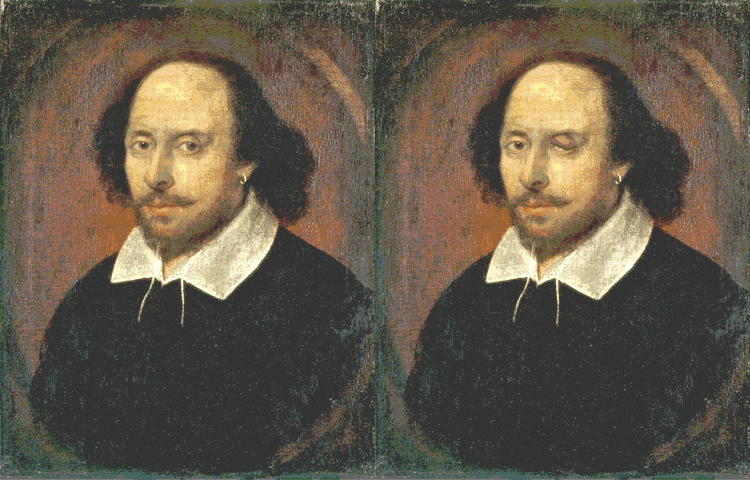
Shakespeare's Works and Plays (Scrambled quiz)
Quiz by Criscille A.
Customize this quiz to suit your class
Instantly translate to 100+ languages
Tag the questions with any skills you have. Your dashboard will track each student's mastery of each skill.
Give this quiz to my class
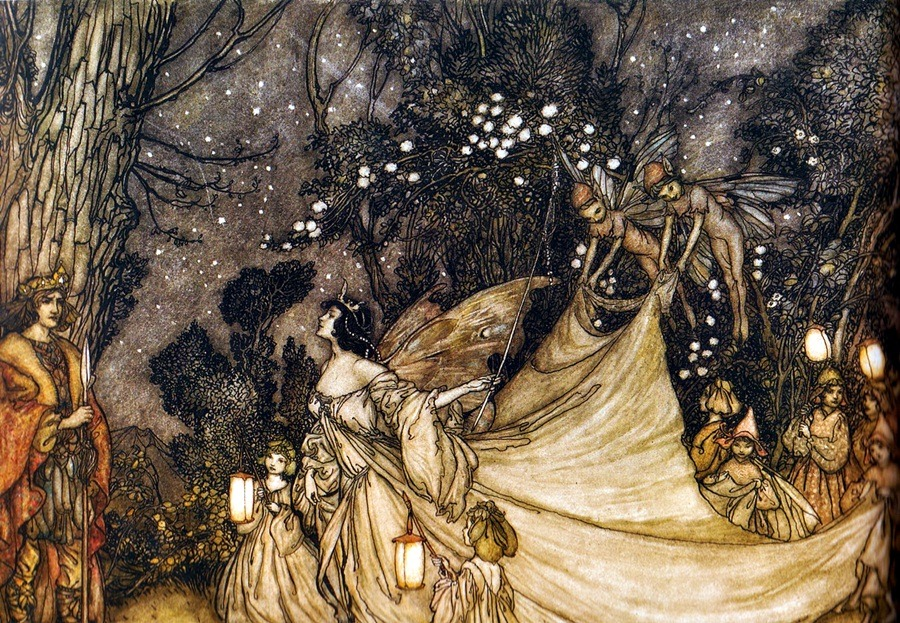
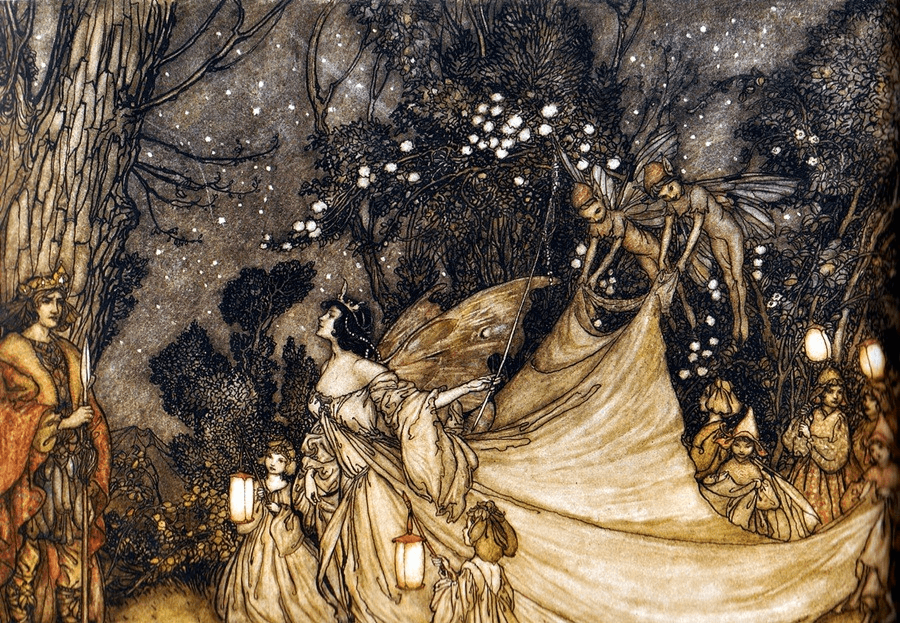
Who is the King of the Fairies in A Midsummer Night's Dream?
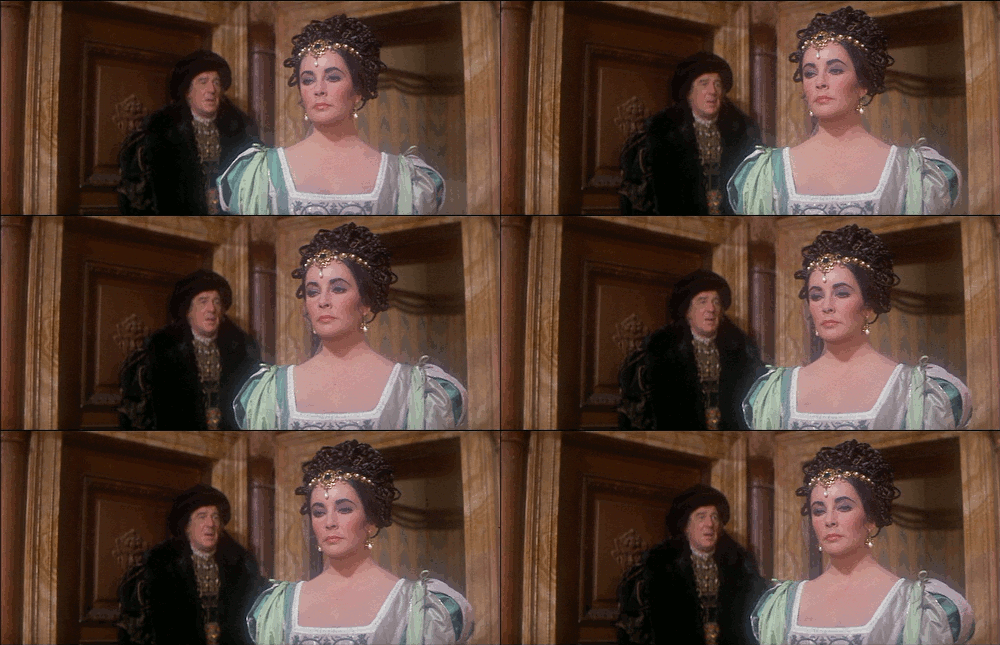
Who is the "shrew" in The Taming of the Shrew?
Who is the King of the Fairies in A Midsummer Night's Dream?
Who is the "shrew" in The Taming of the Shrew?

Who is the character that asks, "What's in a name?"

Which of Shakespeare's plays is based on Cinthio's Un Capitano Moro?
Which of Shakespeare's plays is rumored to be cursed?

What was Shakespeare's last play?
 What is the National Youth Theatre? The National Youth Theatre (NYT) is an organization for young people who are interested in the theatre. The organization is in London. It started in 1956. It gives young people the chance to do something exciting in their school holidays and to make great new friends from all over the UK. How did the National Youth Theatre start? A man called Michael Croft started the organization. Michael Croft worked at a boys' school and he organized a lot of school plays. When he left the school, a lot of the students asked him to help them to perform plays in the school holidays. Michael decided to start the National Youth Theatre so that other children in the UK could have fun in their school holidays, too. The National Youth Theatre's first play was Shakespeare's Henry V. In those days, it was very unusual for young actors to perform Shakespeare's plays. Lots of people were interested in the idea, so there were large audiences at the performances. Soon, lots of people knew about the National Youth Theatre and the organization grew very quickly. Young people from all over the country wanted to join. The National Youth Theatre was a big success because it gave young people the chance to show their thoughts and feelings through acting. It also helped young people to learn to work as a team, to feel confident and to communicate well with other people. Who can join the National Youth Theatre? All young British people, from the age of thirteen to twenty-one, can join the National Youth Theatre. About 4,500 young people apply to join the organization every year. A lot of famous British people started their careers in the National Youth Theatre. What can you learn at the National Youth Theatre? The National Youth Theatre teaches young people how to act. But the organization is not just for people who want to be famous actors. You can also learn to write and direct plays, work stage lights, build sets and design costumes. You can meet some of the best writers, directors and designers in the UK. The National Youth Theatre offers lessons in lots of different subjects every summer, so young people can learn new things and have fun in their school holidays. You can find out what you are good at and learn a lot of great skills to help you in the future.Create multiple choice questions using the following information: In November, Mrs. Baker has Holling read The Tempest. Despite his preconceptions, Holling is captivated by all the "good stuff" in the play, especially the cussing, which he decides to learn by heart. He figures that Mrs. Baker could not have read the play herself; if she had, she certainly would not have let him have it. Holling is amazed when he discovers that his teacher not only has read the play, but she knows the bad parts as well. Mrs. Baker gives Holling a one-hundred-and-fifty question test on The Tempest, and assigns him to read the play again, telling him "there is a lot more to (it) than a list of colorful curses." The deadline set by Holling's classmates for him to bring them cream puffs arrives, but although Holling's father's company has won the Baker's Sporting Emporium contract, he refuses to extend an advance on his son's allowance. Desperate, Holling goes to Goldman's Best Bakery, offering to work for the money he lacks to buy the cream puffs. Coincidentally, Mr. Goldman, who is active in Long Island's Shakespeare Company, needs a boy to perform in their upcoming Extravaganza, and because of his work with Mrs. Baker, Holling fits the bill. Mr. Goldman gives Holling the required number of cream puffs in exchange, but sadly, while the students are at recess, Caliban and Sycorax, the escaped rats who inhabit the classroom walls and ceiling, come out and decimate the treats. Somehow, the disaster is blamed on Holling; he must clean up the mess, and his classmates decree that he still owes them cream puffs. The next Wednesday, Holling brings five cream puffs to school, which is all he can afford. In addition to facing his classmates' ire, he has to deal with the fact that, in the Shakespeare Company Holiday Extravaganza, he must play the part of Ariel, who is a fairy, and wear yellow tights with white feathers on an unmentionable part of his anatomy; "not a good thing for a boy from Camillo Junior High." To Holling's surprise, just when things are at their darkest, Mrs. Baker comes through for him, bringing cream puffs for the students on his behalf. That afternoon, Mrs. Baker and Holling discuss The Tempest, and whether or not Caliban, the "monster," deserves a happy ending. Holling argues that, as the antagonist, he does not, but Mrs. Baker muses whether Shakespeare might have shown, even in a monster, the capacity of humankind to use defeat to grow. Mrs. Bigio stumbles into the classroom at this point, emitting sounds of indescribable sadness; she has just learned that her husband has been killed in a futile reconnaissance mission in Vietnam. Two nights after his funeral, the Catholic Relief Agency, which houses Vietnamese refugees, including Holling's classmate Mai Thi, is the target of a hate crime. Holling reflects that Shakespeare, with his happy endings for nearly everyone in The Tempest, is wrong. He says, "sometimes, there isn't a Prospero to make everything fine...and...the quality of mercy is strained." In December, Camillo Junior High is awash in "signs of the season." Mrs. Baker, however, does not share the holiday spirit, but Holling is too absorbed with his problems with the Shakespeare Holiday Extravaganza to wonder why. As always, Holling seeks help from his family, but to no avail; his mother comments insipidly that his embarrassing costume is cute, his father tells him to wear it to please Mr. Goldman, who might one day need an architect, and his sister warns him that if news of his role gets to the high school, no one better find out they are related. The only thing that prevents December from being a total disaster is Mrs. Baker's announcement that Mickey Mantle will be signing autographs at the Baker Sporting Emporium. Unfortunately, Mrs. Baker also tells the class about Holling and the Shakespeare Extravaganza, and encourages the students to attend both events. Holling's classmates are intensely curious about his role as Ariel, whom he euphemistically describes as "a warrior." Mr. Goldman tells Mrs. Baker that Holling needs "some practice on interpretation", and she practices with him, playing the part of Prospero. Mrs. Baker is a terrific reader, and when she and Holling rehearse the part where Prospero releases Ariel from bondage, Holling is inspired, realizing what it means to be free "to create his own happy ending." On the night of the performance, Mrs. Baker, Mrs. Bigio, Danny Hupfer and his parents, Meryl Lee, and Mai Thi are in the audience to support Holling, unlike his own parents, who do not want to miss the Bing Crosby Christmas Special on television. Holling executes his part with such passion that his classmates are moved to tears, and do not even notice what he is wearing. When the show is over, Holling, finding the dressing room locked, rushes outside, still in costume, where his father is supposed to be waiting to take him to Baker's Sporting Emporium to see Mickey Mantle. Typically, his father is not there, and Holling, frantic, flags down a bus and begs the driver to take him to the Emporium. The driver takes pity on him and complies, getting him to the Emporium just in time, but when Holling approaches Mickey Mantle for an autograph, the famous player looks derisively at his costume and snaps rudely, "I don't sign baseballs for kids in yellow tights." Danny Hupfer witnesses this snub, and loyally returns his own autographed baseball to Mickey Mantle, saying, "I guess I don't need this after all." Holling and Danny leave together in silence, smarting because "when gods die, they die hard." During the days remaining until holiday break, Mrs. Bigio is especially cantankerous; her cafeteria cooking is unappetizing at best, and her comments to the students are impatient and unkind. Holling, remembering Mrs. Bigio's sadness when she received the news of her husband's death, does not complain, but he is bewildered at the sheer desolation he witnesses when Mrs. Bigio bitterly tells Mai Thi that she "shouldn't even be here...a queen in a refugee home while American boys are sitting in swamps on Christmas Day." After school on the last day before break, Mrs. Baker gives Holling, Danny Hupfer, and Doug Swieteck each a new baseball and mitt, and sends them to the gym, where, to their delight, they meet Joe Pepitone and Horace Clark in their Yankee uniforms, and receive tickets to Opening Day at the Stadium. Mrs. Baker's family knows what happened with Mickey Mantle, and wants to make it up to the boys. The next day, President Johnson declares a Christmas ceasefire in Vietnam, and the holiday season begins in earnest.Sure! Here's a solid list of **AP English Literature vocabulary**—terms that often come up in class, essays, and the AP exam. I'll break it down into categories to make it easier to study. --- ### 📚 **Literary Devices & Techniques** 1. **Alliteration** – Repetition of initial consonant sounds 2. **Allusion** – A reference to another text, event, or figure 3. **Anaphora** – Repetition of a word or phrase at the beginning of successive clauses 4. **Antithesis** – Contrast of ideas in a balanced or parallel construction 5. **Apostrophe** – Addressing someone absent, dead, or nonhuman as if present and able to respond 6. **Assonance** – Repetition of vowel sounds within nearby words 7. **Asyndeton** – Omission of conjunctions between parts of a sentence 8. **Consonance** – Repetition of consonant sounds, often at the end of words 9. **Diction** – Word choice (formal, informal, colloquial, etc.) 10. **Enjambment** – Continuation of a sentence without pause beyond the end of a line in poetry --- ### 🧠 **Figurative Language** 1. **Hyperbole** – Extreme exaggeration 2. **Imagery** – Descriptive language that appeals to the senses 3. **Irony** - *Verbal*: Saying the opposite of what’s meant - *Situational*: When the outcome is the opposite of what's expected - *Dramatic*: Audience knows something characters don’t 4. **Metaphor** – A direct comparison without using "like" or "as" 5. **Metonymy** – Substituting the name of one thing with something closely related (e.g. "The crown" for royalty) 6. **Synecdoche** – A part representing the whole (e.g. "All hands on deck") 7. **Personification** – Giving human traits to nonhuman things 8. **Simile** – A comparison using "like" or "as" 9. **Symbol** – An object, character, or color that represents something beyond itself --- ### ✍️ **Poetic & Rhetorical Terms** 1. **Caesura** – A pause in a line of poetry, often marked by punctuation 2. **Couplet** – Two lines of poetry that usually rhyme 3. **Iambic Pentameter** – A line with five iambs (unstressed-stressed syllables) 4. **Blank Verse** – Unrhymed iambic pentameter 5. **Free Verse** – Poetry with no fixed meter or rhyme 6. **Elegy** – A mournful poem, often for the dead 7. **Ode** – A lyric poem expressing emotion, often in honor of something 8. **Sonnet** – A 14-line poem with a specific rhyme scheme (Shakespearean or Petrarchan) --- ### 📖 **Narrative & Structure Terms** 1. **Tone** – The author's attitude toward the subject 2. **Mood** – The feeling or atmosphere the reader experiences 3. **Theme** – The central idea or message in a work 4. **Motif** – A recurring element that has symbolic significance 5. **Foil** – A character who contrasts with another character to highlight traits 6. **Foreshadowing** – Clues or hints about what will happen later 7. **Juxtaposition** – Placing two elements side by side to present a contrast 8. **Point of View** – Perspective from which the story is told (1st, 2nd, 3rd person) 9. **Stream of Consciousness** – Narrative style that mimics thoughts and feelings 10. **Frame Narrative** – A story within a story --- Want me to make flashcards, a quiz, or a PDF study guide with these? Or need help using them in a literary analysis essay?Shakespeare - Words from soliloquyShakespeare's language: the witchesSHAKESPEARE'S SECRET QUIZShakespeare's Twelfth Night Shakespeare's plays