Loading...


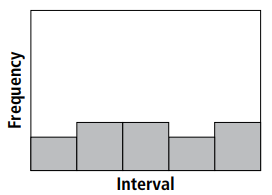
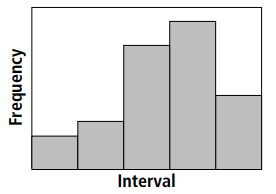
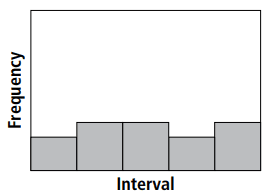
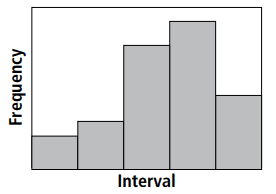
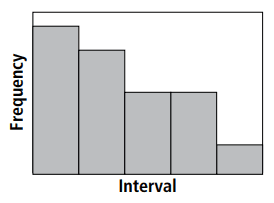
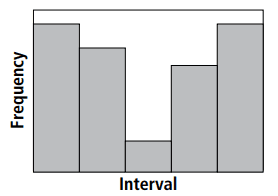
Shape of a Histogram
Quiz by Travis Tilley
Customize this quiz to suit your class
Instantly translate to 100+ languages
Tag the questions with any skills you have. Your dashboard will track each student's mastery of each skill.
Give this quiz to my class
The cytoskeleton is a network of thin tubes and filaments that crisscrosses the cytosol. The tubes and filaments give shape to the cell from the inside in the same way that tent poles support the shape of a tent. The cytoskeleton also acts as a system of internal tracks, shown in Figure 4-18, on which items move around inside the cell. The cytoskeleton’s functions are based on several struc- tural elements. Three of these are microtubules, microfilaments, and intermediate filaments, shown and described in Table 4-2. Microtubules Microtubules are hollow tubes made of a protein called tubulin. Each tubulin molecule consists of two slightly different subunits. Microtubules radiate outward from a central point called the centrosome near the nucleus. Microtubules hold organelles in place, maintain a cell’s shape, and act as tracks that guide organelles and molecules as they move within the cell. Microfilaments Finer than microtubules, microfilaments are long threads of the beadlike protein actin and are linked end to end and wrapped around each other like two strands of a rope. Microfilaments con- tribute to cell movement, including the crawling of white blood cells and the contraction of muscle cells. Intermediate Filaments Intermediate filaments are rods that anchor the nucleus and some other organelles to their places in the cell. They maintain the inter- nal shape of the nucleus. Hair-follicle cells produce large quantities of intermediate filament proteins. These proteins make up most of the hair shaft. 84 CHAPTER 4 TABLE 4-2 The Structure of the Cytoskeleton Property Microtubules Microfilaments Intermediate filaments Structure hollow tubes made of two strands of intertwined protein fibers coiled into coiled protein protein cables Protein subunits tubulin, with two subunits: å actin one of several types of and ∫ tubulin fibrous proteins Main function maintenance of cell shape; cell maintenance and changing of maintenance of cell shape; motility (in cilia and flagella); cell shape; muscle contraction; anchor nucleus and other chromosome movement; movement of cytoplasm; cell organelles; maintenance of organelle movement motility; cell division shape of nucleus Shape Microtubules provide a path for organelles and molecules as they move throughout the cell. FIGURE 4-18 Microtubules Nucleus Endoplasmic reticulum Mitochondrion Ribosomes Copyright © by Holt, Rinehart and Winston. All rights reserved. Copyright © by Holt, Rinehart and Winston. All rights reserved. CELL STRUCTURE AND FUNCTION 85 1. Explain how the fluid mosaic model describes the plasma membrane. 2. List three cellular functions that occur in the nucleus. 3. Describe the organelles that are found in a eukaryotic cell. 4. Identify two characteristics that make mitochon- dria different from other organelles. 5. Contrast three types of cytoskeletal fibers. CRITICAL THINKING 6. Relating Concepts If a cell has a high energy requirement, would you expect the cell to have many mitochondria or few mitochondria? Why? 7. Analyzing Information How do scientists think that mitochondria originated? Why? 8. Analyzing Statements It is not completely accurate to say that organelles are floating freely in the cytosol. Why not? SECTION 3 REVIEW During cell division, centrioles organize microtubules that pull the chromosomes (orange) apart. The centrioles are at the center of rays of microtubules, which have been stained green with a fluorescent dye. FIGURE 4-20 Cilia and Flagella Cilia (SIL-ee-uh) and flagella (fluh-JEL-uh) are hairlike structures that extend from the surface of the cell, where they assist in movement. Cilia are short and are present in large numbers on certain cells, whereas flagella are longer and are far less numerous on the cells where they occur. Cilia and flagella have a membrane on their outer surface and an internal structure of nine pairs of micro- tubules around two central tubules, as Figure 4-19 shows. Cilia on cells in the inner ear vibrate and help detect sound. Cilia cover the surfaces of many protists and “row” the protists through water like thousands of oars. On other protists, cilia sweep water and food particles into a mouthlike opening. Many kinds of protists use flagella to propel themselves, as do human sperm cells. Centrioles Centrioles consist of two short cylinders of microtubules at right angles to each other and are situated in the cytoplasm near the nuclear envelope. Centrioles occur in animal cells, where they organize the microtubules of the cytoskeleton during cell division, as shown in Figure 4-20. Plant cells lack centrioles. Basal bodies have the same structure that centrioles do. Basal bodies are found at the base of cilia and flagella and appear to organize the devel- opment of cilia and flagella.Cells of different organisms and even cells within the same organism are very diverse in terms of shape, size, and internal organization. One theme that occurs again and again throughout biology is that form follows function. In other words, a cell’s function influences its physical features. Cell Shape The diversity in cell shapes reflects the different functions of cells. Compare the cell shapes shown in Figure 4-4. The long extensions that reach out in various directions from the nerve cell shown in Figure 4-4a allow the cell to send and receive nerve impulses. The flat, platelike shape of skin cells in Figure 4-4b suits their function of covering and protecting the surface of the body. As shown below, a cell’s shape can be simple or complex depending on the function of the cell. Each cell has a shape that has evolved to allow the cell to perform its function effectively. SECTION 2 OBJECTIVES ● Explain the relationship between cell shape and cell function. ● Identify the factor that limits cell size. ● Describe the three basic parts of a cell. ● Compare prokaryotic cells and eukaryotic cells. ● Analyze the relationship among cells, tissues, organs, organ systems, and organisms. VOCABULARY plasma membrane cytoplasm cytosol nucleus prokaryote eukaryote organelle tissue organ organ system Cells have various shapes. (a) Nerve cells have long extensions. (b) Skin cells are flat and platelike. (c) Egg cells are spherical. (d) Some bacteria are rod shaped. (e) Some plant cells are rectangular. FIGURE 4-4 (a) Nerve cell (b) Skin cells (c) Egg cell (d) Bacterial cells (e) Plant cells Copyright © by Holt, Rinehart and Winston. All rights reserved. 1. All cubes have volume and surface area. The total surface area is equal to the sum of the areas of each of the six sides (area = length X width). 2. If you split the first cube into eight smaller cubes, you get 48 sides. The volume remains constant, but the total surface area doubles. 3. If you split each of the eight cubes into eight smaller cubes, you have 64 cubes that together contain the same volume as the first cube. The total surface area, however, has doubled again. CELL STRUCTURE AND FUNCTION 73 Cell Size Cells differ not only in their shape but also in their size. A few types of cells are large enough to be seen by the unaided human eye. For example, the nerve cells that extend from a giraffe’s spinal cord to its foot can be 2 m (about 6 1/2 ft) long. A human egg cell is about the size of the period at the end of this sentence. Most cells, how- ever, are only 10 to 50 μm in diameter, or about 1/500 the size of the period at the end of this sentence. The size of a cell is limited by the relationship of the cell’s outer surface area to its volume, or its surface area–to-volume ratio. As a cell grows, its volume increases much faster than its surface area does, as shown in Figure 4-5. This trend is important because the materials needed by a cell (such as nutrients and oxygen) and the wastes produced by a cell (such as carbon dioxide) must pass into and out of the cell through its surface. If a cell were to become very large, the volume would increase much more than the surface area. Therefore, the surface area would not allow materials to enter or leave the cell quickly enough to meet the cell’s needs. As a result, most cells are microscopic in size. Comparing Surface Cells Materials microscope, prepared slides of plant (dicot) stem and ani- mal (human) skin, pencil, paper Procedure Examine slides by using medium magnification (100). Observe and draw the sur- face cells of the plant stem and the animal skin. Analysis How do the surface cells of each organism differ from the cells beneath the surface cells? What is the function of the surface cells? Explain how surface cells are suited to their function based on their shape. Quick Lab Small cells can exchange substances more readily than large cells because small objects have a higher surface area–to-volume ratio. FIGURE 4-5 mb06se_csfs02.qxd 5/18/07 10:54 AM Page 73 74 CHAPTER 4 BASIC PARTS OF A CELL Despite the diversity among cells, three basic features are common to all cell types. All cells have an outer boundary, an interior sub- stance, and a control region. Plasma Membrane The cell’s outer boundary, called the plasma membrane (or the cell membrane), covers a cell’s surface and acts as a barrier between the inside and the outside of a cell. All materials enter or exit through the plasma membrane. The surface of a plasma mem- brane is shown in Figure 4-6a. Cytoplasm The region of the cell that is within the plasma membrane and that includes the fluid, the cytoskeleton, and all of the organelles except the nucleus is called the cytoplasm. The part of the cytoplasm that includes molecules and small particles, such as ribosomes, but not membrane-bound organelles is the cytosol. About 20 percent of the cytosol is made up of protein. Control Center Cells carry coded information in the form of DNA for regulating their functions and reproducing themselves. The DNA in some types of cells floats freely inside the cell. Other cells have a mem- brane-bound organelle that contains a cell’s DNA. This membrane- bound structure is called the nucleus. Most of the functions of a eukaryotic cell are controlled by the cell’s nucleus. The nucleus is often the most prominent structure within a eukaryotic cell. It maintains its shape with the help of a protein skeleton called the nuclear matrix. The nucleus of a typical animal cell is shown inCohesion and Adhesion Water molecules stick to each other as a result of hydrogen bond- ing. An attractive force that holds molecules of a single substance together is known as cohesion. Cohesion due to hydrogen bonding between water molecules contributes to the upward movement of water from plant roots to their leaves. Related to cohesion is the surface tension of water. The cohe- sive forces in water resulting from hydrogen bonds cause the mol- ecules at the surface of water to be pulled downward into the liquid. As a result, water acts as if it has a thin “skin” on its sur- face. You can observe water’s surface tension by slightly overfill- ing a drinking glass with water. The water will appear to bulge above the rim of the glass. Surface tension also enables small crea- tures such as spiders and water-striders to run on water without breaking the surface. Adhesion is the attractive force between two particles of differ- ent substances, such as water molecules and glass molecules. A related property is capillarity (KAP-uh-LER-i-tee), which is the attrac- tion between molecules that results in the rise of the surface of a liquid when in contact with a solid. Together, the forces of adhe- sion, cohesion, and capillarity help water rise through narrow tubes against the force of gravity. Figure 2-11 shows cohesion and adhesion in the water-conducting tubes in the stem of a flower. Temperature Moderation Water has a high heat capacity, which means that water can absorb or release relatively large amounts of energy in the form of heat with only a slight change in temperature. This property of water is related to hydrogen bonding. Energy must be absorbed to break hydrogen bonds, and energy is released as heat when hydrogen bonds form. The energy that water initially absorbs breaks hydro- gen bonds between molecules. Only after these hydrogen bonds are broken does the energy begin to increase the motion of the water molecules, which raises the temperature of the water. When the temperature of water drops, hydrogen bonds reform, which releases a large amount of energy in the form of heat. Therefore, during a hot summer day, water can absorb a large quantity of energy from the sun and can cool the air without a large increase in the water’s temperature. At night, the gradually cooling water warms the air. In this way, the Earth’s oceans stabilize global temperatures enough to allow life to exist. Water’s high heat capac- ity also allows organisms to keep cells at an even temperature despite temperature changes in the environment. As a liquid evaporates, the surface of the liquid that remains behind cools down. A relatively large amount of energy is absorbed by water during evaporation, which significantly cools the surface of the remaining liquid. Evaporative cooling prevents organisms that live on land from overheating. For example, the evaporation of sweat from a person’s skin releases body heat and prevents over- heating on a hot day or during strenuous activity. Adhesion Cohesion Hydrogen bonds Cohesion, adhesion, and capillarity contribute to the upward movement of water from the roots of plants. FIGURE 2–11 www.scilinks.org Topic: Hydrogen Bonding Keyword: HM60777 mb06se_cols03.qxd 5/18/07 10:47 AM Page 41 42 CHAPTER 2 Density of Ice Unlike most solids, which are denser than their liquids, solid water is less dense than liquid water. This property is due to the shape of the water molecule and hydrogen bonding. The angle between the hydrogen atoms is quite wide. So, when water forms solid ice, the angles in the molecules cause ice crystals to have large amounts of open space, as shown in Figure 2-12. This open space lattice structure causes ice to have a low density. Because ice floats on water, bodies of water such as ponds and lakes freeze from the top down and not the bottom up. Ice insulates the water below from the cold air, which allows fish and other aquatic crea- tures to survive under the icy surface.Using active voice of the verbs with this stimulus Bees Collecting Nectar Bees make honey to survive. It is their only essential food. If there are 60,000 bees in a hive about one third of them will be involved in gathering nectar which is then made into honey by the house bees. A small number of bees work as foragers or searchers. They find a source of nectar, then return to the hive to tell the other bees where it is. Foragers let the other bees know where the source of the nectar is by performing a dance which gives information about the direction and the distance the bees will need to fly. During this dance the bee shakes her abdomen from side to side while running in circles in the shape of a figure 8. The dance follows the pattern shown on the following diagram. MAKING HONEY When the bees arrive at the hive carrying nectar, they give this to the house bees. The house bees move the nectar around with their mandibles, exposing it to the warm dry air of the hive. When it is first gathered the nectar contains sugar and minerals mixed with about 80% water. After ten to twenty minutes, when much of the excess water has evaporated, the house bees put the nectar in a cell in the honeycomb where evaporation continues. After three days, the honey in the cells contains about 20% water. At this stage, the bees cover the cells with lids which they make out of beeswax. At any one time the bees in a hive usually gather nectar from the same type of blossom and from the same area. Some of the main sources of nectar are fruit trees, clover and flowering trees. Source: “Hum Sweet Hum”, National Foundation for Educational Research, 1993. GLOSSARY house bee a worker bee which works inside the hive. Mandible mouth-partFigure 18-11 represents the amount of energy stored as organic material in each trophic level in an ecosystem. The pyramid shape of the diagram indicates the low percentage of energy transfer from one level to the next. On average, 10 percent of the total energy consumed in one trophic level is incor- porated into the organisms in the next. Why is the percentage of energy transfer so low? One reason is that some of the organisms in a trophic level escape being eaten. They eventually die and become food for decomposers, but the energy contained in their bodies does not pass to a higher trophic level. Even when an organism is eaten, some of the molecules in its body will be in a form that the consumer cannot break down and use. For example, a cougar cannot extract energy from the antlers, hooves, and hair of a deer. Also, the energy used by prey for cellu- lar respiration cannot be used by predators to synthesize new bio- mass. Finally, no transformation or transfer of energy is 100 percent efficient. Every time energy is transformed, such as during the reactions of metabolism, some energy is lost as heat. Limitations of Trophic Levels The low rate of energy transfer between trophic levels explains why ecosystems rarely contain more than a few trophic levels. Because only about 10 percent of the energy available at one trophic level is transferred to the next trophic level, there is not enough energy in the top trophic level to support more levels. Organisms at the lowest trophic level are usually much more abundant than organisms at the highest level. In Africa, for exam- ple, you will see about 1,000 zebras, gazelles, and other herbivores for every lion or leopard you see, and there are far more grasses and shrubs than there are herbivores. Higher trophic levels con- tain less energy, so, they can support fewer individuals.A population is a group of organisms that belong to the same species and live in a particular place at the same time. All of the bass living in a pond during a certain period of time make up a pop- ulation because they are isolated in the pond and do not interact with bass living in other ponds. The boundaries of a population may be imposed by a feature of the environment, such as a lake shore, or they can be arbitrarily chosen to simplify a study of the population. The humans shown in Figure 19-1 are part of the pop- ulation of a city. The properties of populations differ from those of individuals. An individual may be born, it may reproduce, or it may die. A population study focuses on a population as a whole—how many individuals are born, how many die, and so on. Population Size A population’s size is the number of individuals that the population contains. Size is a fundamental and important population property but can be difficult to measure directly. If a population is small and composed of immobile organisms, such as plants, its size can be determined simply by counting individuals. Often, though, individ- uals are too abundant, too widespread, or too mobile to be counted easily, and scientists must estimate the number of individuals in the population. Suppose that a scientist wants to know how many oak trees live in a 10 km2 patch of forest. Instead of searching the entire patch of forest and counting all the oak trees, the scientist could count the trees in a smaller section of the forest, such as a 1 km2 area. The scientist could then use this value to estimate the population of the larger area. SECTION 1 OBJECTIVES ● Describe the main properties that scientists measure when they study populations. ● Compare the three general patterns of population dispersion. ● Identify the measurements used to describe changing populations. ● Compare the three general types of survivorship curves. VOCABULARY population population density dispersion birth rate death rate life expectancy age structure survivorship curve FIGURE 19-1 A population can be widely distributed, as Earth’s human population is, or confined to a small area, as species of fish in a lake are. Copyright © by Holt, Rinehart and Winston. All rights reserved. 382 CHAPTER 19 If the small patch contains 25 oaks, an area 10 times larger would likely contain 10 times as many oak trees. A similar kind of sampling technique might be used to estimate the size of the pop- ulation shown in Figure 19-2. To use this kind of estimate, the sci- entist must assume that the distribution of individuals in the entire population is the same as that in the sampled group. Estimates of population size are based on many such assumptions, so all esti- mates have the potential for error. Population Density Population density measures how crowded a population is. This measurement is always expressed as the number of individuals per unit of area or volume. For example, the population density of humans in the United States is about 30 people per square kilome- ter. Table 19-1 shows the population sizes and densities of humans in several countries in 2003. These estimates are calculated for the total land area. Some areas of a country may be sparsely popu- lated, while other areas are very densely populated. Dispersion A third population property is dispersion (di-SPUHR-zhuhn). Dispersion is the spatial distribution of individuals within the popu- lation. In a clumped distribution, individuals are clustered together. In a uniform distribution, individuals are separated by a fairly con- sistent distance. In a random distribution, each individual’s location is independent of the locations of other individuals in the popula- tion. Figure 19-3 illustrates the three possible patterns of dispersion. Clumped distributions often occur when resources such as food or living space are clumped. Clumped distributions may also occur because of a species’ social behavior, such as when animals gather into herds or flocks. Uniform distributions may result from social behavior in which individuals within the same habitat stay as far away from each other as possible. For example, a bird may locate its nest so as to maximize the distance from the nests of other birds. These migrating wildebeests in East Africa are too numerous and mobile to be counted. Scientists must use sampling methods at several locations to monitor changes in the population size of the animals. FIGURE 19-2 TABLE 19-1 Population Size and Density of Some Countries Population size Population density Country (in millions) (in individuals/km2) China 1,289 135 India 1,069 325 United States 292 30 Russia 146 8 Japan 128 337 Mexico 105 54 Kenya 32 54 Australia 20 3 dispersion from the Latin dis-, meaning “out,” and spargere, meaning “to scatter” Word Roots and Origins Copyright © by Holt, Rinehart and Winston. All rights reserved. POPULATIONS 383 The social interactions of birds called gannets, which are shown in Figure 19-3b, result in a uniform distribution. Each gannet chooses a small nesting area on the coast and defends it from other gannets. In this way, each gannet tries to maximize its distance from all of its neighbors, which causes a uniform distribution of individuals. Few populations are truly randomly dispersed. Rather, they show degrees of clumping or uniformity. The dispersion pattern of a population sometimes depends on the scale at which the popu- lation is observed. The gannets shown in Figure 19-3b are uni- formly distributed on a scale of a few meters. However, if the entire island on which the gannets live is observed, the distribution appears clumped because the birds live only near the shore. POPULATION DYNAMICS All populations are dynamic—they change in size and composition over time. To understand these changes, scientists must know more than the population’s size, density, and dispersion. One important measure is the birth rate, the number of births occur- ring in a period of time. In the United States, for example, there are about 4 million births per year. A second important measure is the death rate, or mortality rate, which is the number of deaths in aUnderstanding Quantum Theory of Electrons in Atoms The goal of this section is to understand the electron orbitals (location of electrons in atoms), their different energies, and other properties. The use of quantum theory provides the best understanding to these topics. This knowledge is a precursor to chemical bonding. As was described previously, electrons in atoms can exist only on discrete energy levels but not between them. It is said that the energy of an electron in an atom is quantized, that is, it can be equal only to certain specific values and can jump from one energy level to another but not transition smoothly or stay between these levels. The energy levels are labeled with an n value, where n = 1, 2, 3, …. Generally speaking, the energy of an electron in an atom is greater for greater values of n. This number, n, is referred to as the principal quantum number. The principal quantum number defines the location of the energy level. It is essentially the same concept as the n in the Bohr atom description. Another name for the principal quantum number is the shell number. The shells of an atom can be thought of concentric circles radiating out from the nucleus. The electrons that belong to a specific shell are most likely to be found within the corresponding circular area. The further we proceed from the nucleus, the higher the shell number, and so the higher the energy level (Figure 9.4.1). The positively charged protons in the nucleus stabilize the electronic orbitals by electrostatic attraction between the positive charges of the protons and the negative charges of the electrons. So the further away the electron is from the nucleus, the greater the energy it has. This quantum mechanical model for where electrons reside in an atom can be used to look at electronic transitions, the events when an electron moves from one energy level to another. If the transition is to a higher energy level, energy is absorbed, and the energy change has a positive value. To obtain the amount of energy necessary for the transition to a higher energy level, a photon is absorbed by the atom. A transition to a lower energy level involves a release of energy, and the energy change is negative. This process is accompanied by emission of a photon by the atom. The following equation summarizes these relationships and is based on the hydrogen atom: The values nf and ni are the final and initial energy states of the electron. The principal quantum number is one of three quantum numbers used to characterize an orbital. An atomic orbital, which is distinct from an orbit, is a general region in an atom within which an electron is most probable to reside. The quantum mechanical model specifies the probability of finding an electron in the three-dimensional space around the nucleus and is based on solutions of the Schrödinger equation. In addition, the principal quantum number defines the energy of an electron in a hydrogen or hydrogen-like atom or an ion (an atom or an ion with only one electron) and the general region in which discrete energy levels of electrons in a multi-electron atoms and ions are located. Another quantum number is l, the angular momentum quantum number. It is an integer that defines the shape of the orbital, and takes on the values, l = 0, 1, 2, …, n – 1. This means that an orbital with n = 1 can have only one value of l, l = 0, whereas n = 2 permits l = 0 and l = 1, and so on. The principal quantum number defines the general size and energy of the orbital. The l value specifies the shape of the orbital. Orbitals with the same value of l form a subshell. In addition, the greater the angular momentum quantum number, the greater is the angular momentum of an electron at this orbital. Orbitals with l = 0 are called s orbitals (or the s subshells). The value l = 1 corresponds to the p orbitals. For a given n, p orbitals constitute a p subshell (e.g., 3p if n = 3). The orbitals with l = 2 are called the d orbitals, followed by the f-, g-, and h-orbitals for l = 3, 4, 5, and there are higher values we will not consider. There are certain distances from the nucleus at which the probability density of finding an electron located at a particular orbital is zero. In other words, the value of the wavefunction ψ is zero at this distance for this orbital. Such a value of radius r is called a radial node. The number of radial nodes in an orbital is n – l – 1. Consider the examples in Figure 9.4.2. The orbitals depicted are of the s type, thus l = 0 for all of them. It can be seen from the graphs of the probability densities that there are 1 – 0 – 1 = 0 places where the density is zero (nodes) for 1s (n = 1), 2 – 0 – 1 = 1 node for 2s, and 3 – 0 – 1 = 2 nodes for the 3s orbitals. The s subshell electron density distribution is spherical and the p subshell has a dumbbell shape. The d and f orbitals are more complex. These shapes represent the three-dimensional regions within which the electron is likely to be found. Principal quantum number (n) & Orbital angular momentum (l): The Orbital Subshell: https://youtu.be/ms7WR149fAY If an electron has an angular momentum (l ≠ 0), then this vector can point in different directions. In addition, the z component of the angular momentum can have more than one value. This means that if a magnetic field is applied in the z direction, orbitals with different values of the z component of the angular momentum will have different energies resulting from interacting with the field. The magnetic quantum number, called ml, specifies the z component of the angular momentum for a particular orbital. For example, for an s orbital, l = 0, and the only value of ml is zero. For p orbitals, l = 1, and ml can be equal to –1, 0, or +1. Generally speaking, ml can be equal to –l, –(l – 1), …, –1, 0, +1, …, (l – 1), l. The total number of possible orbitals with the same value of l (a subshell) is 2l + 1. Thus, there is one s-orbital for ml = 0, there are three p-orbitals for ml = 1, five d-orbitals for ml = 2, seven f-orbitals for ml = 3, and so forth. The principal quantum number defines the general value of the electronic energy. The angular momentum quantum number determines the shape of the orbital. And the magnetic quantum number specifies orientation of the orbital in space, as can be seen in Figure 9.4.3. Figure 9.4.4 illustrates the energy levels for various orbitals. The number before the orbital name (such as 2s, 3p, and so forth) stands for the principal quantum number, n. The letter in the orbital name defines the subshell with a specific angular momentum quantum number l = 0 for s orbitals, 1 for p orbitals, 2 for d orbitals. Finally, there are more than one possible orbitals for l ≥ 1, each corresponding to a specific value of ml. In the case of a hydrogen atom or a one-electron ion (such as He+, Li2+, and so on), energies of all the orbitals with the same n are the same. This is called a degeneracy, and the energy levels for the same principal quantum number, n, are called degenerate energy levels. However, in atoms with more than one electron, this degeneracy is eliminated by the electron–electron interactions, and orbitals that belong to different subshells have different energies. Orbitals within the same subshell (for example ns, np, nd, nf, such as 2p, 3s) are still degenerate and have the same energy. While the three quantum numbers discussed in the previous paragraphs work well for describing electron orbitals, some experiments showed that they were not sufficient to explain all observed results. It was demonstrated in the 1920s that when hydrogen-line spectra are examined at extremely high resolution, some lines are actually not single peaks but, rather, pairs of closely spaced lines. This is the so-called fine structure of the spectrum, and it implies that there are additional small differences in energies of electrons even when they are located in the same orbital. These observations led Samuel Goudsmit and George Uhlenbeck to propose that electrons have a fourth quantum number. They called this the spin quantum number, or ms. The other three quantum numbers, n, l, and ml, are properties of specific atomic orbitals that also define in what part of the space an electron is most likely to be located. Orbitals are a result of solving the Schrödinger equation for electrons in atoms. The electron spin is a different kind of property. It is a completely quantum phenomenon with no analogues in the classical realm. In addition, it cannot be derived from solving the Schrödinger equation and is not related to the normal spatial coordinates (such as the Cartesian x, y, and z). Electron spin describes an intrinsic electron “rotation” or “spinning.” Each electron acts as a tiny magnet or a tiny rotating object with an angular momentum, even though this rotation cannot be observed in terms of the spatial coordinates. The magnitude of the overall electron spin can only have one value, and an electron can only “spin” in one of two quantized states. One is termed the α state, with the z component of the spin being in the positive direction of the z axis. This corresponds to the spin quantum number ms=12. The other is called the β state, with the z component of the spin being negative and ms=−12. Any electron, regardless of the atomic orbital it is located in, can only have one of those two values of the spin quantum number. The energies of electrons having ms=−12 and ms=12 are different if an external magnetic field is applied. Figure 9.4.5 illustrates this phenomenon. An electron acts like a tiny magnet. Its moment is directed up (in the positive direction of the z axis) for the 12 spin quantum number and down (in the negative z direction) for the spin quantum number of −12. A magnet has a lower energy if its magnetic moment is aligned with the external magnetic field (the left electron) and a higher energy for the magnetic moment being opposite to the applied field. This is why an electron with ms=12 has a slightly lower energy in an external field in the positive z direction, and an electron with ms=−12 has a slightly higher energy in the same field. This is true even for an electron occupying the same orbital in an atom. A spectral line corresponding to a transition for electrons from the same orbital but with different spin quantum numbers has two possible values of energy; thus, the line in the spectrum will show a fine structure splitting. The Pauli Exclusion Principle An electron in an atom is completely described by four quantum numbers: n, l, ml, and ms. The first three quantum numbers define the orbital and the fourth quantum number describes the intrinsic electron property called spin. An Austrian physicist Wolfgang Pauli formulated a general principle that gives the last piece of information that we need to understand the general behavior of electrons in atoms. The Pauli exclusion principle can be formulated as follows: No two electrons in the same atom can have exactly the same set of all the four quantum numbers. What this means is that electrons can share the same orbital (the same set of the quantum numbers n, l, and ml), but only if their spin quantum numbers ms have different values. Since the spin quantum number can only have two values (±12), no more than two electrons can occupy the same orbital (and if two electrons are located in the same orbital, they must have opposite spins). Therefore, any atomic orbital can be populated by only zero, one, or two electrons. The properties and meaning of the quantum numbers of electrons in atoms are brieflyModel Rockets Liftoff! Three... two... one... liftoff! A model rocket shoots into the sky. The rocket can fly up to 1,500 feet (457 m) high! Watching these small rockets fly can be fun and exciting. Model rockets aren't just for fun, though. They also teach us about science and space. The History of Rockets. People in China invented rockets about eight hundred years ago. They filled tubes with gunpowder and shot them at their enemies. Later, scientists built rockets that could go into space. Starting in the 1950s, people began building model rockets for fun. Parts of a Model Rocket. A model rocket kit comes with all the parts a rocket needs. A model rocket's body is a long tube made of cardboard or plastic. The nose cone fits into the top of the tube. The size and shape of a rocket's body and nose cone can change how it flies. Fins help the rocket fly straight. The engine burns fuel to push the rocket into the air. A parachute helps the rocket fall safely back to Earth. People like to make their rockets look great. Many people paint their rockets with different colors and designs. Every rocket is one of a kind! At the Launchpad. The only place to launch a rocket is in an open space. The launch area needs to be far away from people and buildings. A large field or a playground is a good spot. First, set up the launchpad. Place the rocket over the guide wire on the pad. The guide wire keeps the rocket pointing straight up. A girl connects the wire that will allow the controller to start the rocket engine. when it lifts off. Connect the launch controller to the rocket engine. Then step back and press the button on the controller to start the engine. Whoosh! The rocket flies up and away. Clubs and Competitions. People who fly model rockets often join model rocket clubs. Schools or hobby groups can have information about model rocket clubs. A science center or museum might have a model rocket club, too. Many people enter model rocket competitions. They set off rockets and see which one flies the highest and the fastest. Model rocket competitions are held all over the world. In the United States, students between twelve and eighteen can enter the Team America Rocketry Challenge. Every spring, one hundred teams compete to become the best in the country. The winners go on to compete against other teams from around the world. Model rockets are a fun way to learn about science. Who knows how high a model rocket can take your imagination?CARBOHYDRATES Carbohydrates are organic compounds composed of carbon, hydrogen, and oxygen in a ratio of about one carbon atom to two hydrogen atoms to one oxygen atom. The number of carbon atoms in a carbohydrate varies. Some carbohydrates serve as a source of energy. Other carbohydrates are used as structural materials. Carbohydrates can exist as monosaccharides, disaccharides, or polysaccharides. Monosaccharides A monomer of a carbohydrate is called a monosaccharide (MAHN-oh-SAK-uh-RIED). A monosaccharide—or simple sugar— contains carbon, hydrogen, and oxygen in a ratio of 1:2:1. The gen- eral formula for a monosaccharide is written as (CH2O)n, where n is any whole number from 3 to 8. For example, a six-carbon mono- saccharide, (CH2O)6, would have the formula C6H12O6. The most common monosaccharides are glucose, fructose, and galactose, as shown in Figure 3-6. Glucose is a main source of energy for cells. Fructose is found in fruits and is the sweetest of the monosaccharides. Galactose is found in milk. Notice in Figure 3-6 that glucose, fructose, and galactose have the same molecular formula, C6H12O6, but differing structures. The different structures determine the slightly different properties of the three compounds. Compounds like these sugars, with a single chemical formula but different structural forms, are called isomers (IE-soh-muhrz). SECTION 2 OBJECTIVES ● Distinguish between monosaccharides, disaccharides, and polysaccharides. ● Explain the relationship between amino acids and protein structure. ● Describe the induced fit model of enzyme action. ● Compare the structure and function of each of the different types of lipids. ● Compare the nucleic acids DNA and RNA. VOCABULARY carbohydrate monosaccharide disaccharide polysaccharide protein amino acid peptide bond polypeptide enzyme substrate active site lipid fatty acid phospholipid wax steroid nucleic acid deoxyribonucleic acid (DNA) ribonucleic acid (RNA) nucleotide C HO H C H OH C OH H C CH2OH H C H OH O Glucose C OH C O H OH C OH H CH2OH C H CH2OH Fructose C H HO C OH H C OH H C CH2OH H C H OH O Galactose Glucose, fructose, and galactose have the same chemical formula, but their structural differences result in different properties among the three compounds. FIGURE 3-6 Copyright © by Holt, Rinehart and Winston. All rights reserved. 56 CHAPTER 3 Disaccharides and Polysaccharides In living things, two monosaccharides can combine in a condensa- tion reaction to form a double sugar, or disaccharide (die-SAK-e-RIED). For example in Figure 3-4, the monosaccharides fructose and glu- cose can combine to form the disaccharide sucrose. A polysaccharide is a complex molecule composed of three or more monosaccharides. Animals store glucose in the form of the polysaccharide glycogen. Glycogen consists of hundreds of glucose molecules strung together in a highly branched chain. Much of the glucose that comes from food is ultimately stored in your liver and muscles as glycogen and is ready to be used for quick energy. Plants store glucose molecules in the form of the polysaccha- ride starch. Starch molecules have two basic forms—highly branched chains that are similar to glycogen and long, coiled, unbranched chains. Plants also make a large polysaccharide called cellulose. Cellulose, which gives strength and rigidity to plant cells, makes up about 50 percent of wood. In a single cellu- lose molecule, thousands of glucose monomers are linked in long, straight chains. These chains tend to form hydrogen bonds with each other. The resulting structure is strong and can be broken down by hydrolysis only under certain conditions. PROTEINS Proteins are organic compounds composed mainly of carbon, hydrogen, oxygen, and nitrogen. Like most of the other biological macromolecules, proteins are formed from the linkage of monomers called amino acids. Hair and horns, as shown in Figure 3-7a, are made mostly of proteins, as are skin, muscles and many biological catalysts (enzymes). Amino Acids There are 20 different amino acids, and all share a basic structure. As Figure 3-7b shows, each amino acid contains a central carbon atom covalently bonded to four other atoms or functional groups. A single hydrogen atom, highlighted in blue in the illustration, bonds at one site. A carboxyl group, —COOH, highlighted in green, bonds at a second site. An amino group, —NH2, highlighted in yel- low, bonds at a third site. A side chain called the R group, high- lighted in red, bonds at the fourth site. The main difference among the different amino acids is in their R groups. The R group can be complex or it can be simple, such as the CH3 group shown in the amino acid alanine in Figure 3-7b. The differences among the amino acid R groups gives different proteins very different shapes. The different shapes allow pro- teins to carry out many different activities in living things. Amino acids are commonly shown in a simplified way such as balls, as shown in Figure 3-7c. (a) Many structures, such as hair and horns are made of proteins. (b) Proteins are made up of amino acids. Amino acids differ only in the type of R group (shown in red) they carry. Polar R groups can dissolve in water, but nonpolar R groups cannot. (c) Amino acids have complex structures, so, in this and other textbooks, they are often simplified into balls. FIGURE 3-7 (b) Alanine (an amino acid) (c) Simplified version of amino acid CH3 H N OH C C H O H (a) Copyright © by Holt, Rinehart and Winston. All rights reserved. BIOCHEMISTRY 57 H H N C C OH H O H CH3 H2O Glycine Alanine H N OH C C H O H H H N C C H O H CH3 N OH C C H O H (a) (b) (a) The peptide bond (shaded blue) that binds amino acids together to form a polypeptide results from a condensation reaction that produces water. (b) Poly- peptides are commonly shown as a string of balls in this textbook and elsewhere. Each ball represents an amino acid. FIGURE 3-8 Substrate Products Enzyme 1 2 3 In the induced fit model of enzyme action, the enzyme can attach only to a substrate (reactant) with a specific shape. The enzyme then changes and reduces the activation energy of the reaction so reactants can become products. The enzyme is unchanged and is available to be used again. 3 2 1 FIGURE 3-9 Dipeptides and Polypeptides Figure 3-8a shows how two amino acids bond to form a dipeptide (die-PEP-TIED). In this condensation reaction, the two amino acids form a covalent bond, called a peptide bond (shaded in blue in Figure 3-8a) and release a water molecule. Amino acids often form very long chains called polypeptides (PAHL-i-PEP-TIEDZ). Proteins are composed of one or more polypep- tides. Some proteins are very large molecules, containing hun- dreds of amino acids. Often, these long proteins are bent and folded upon themselves as a result of interactions—such as hydrogen bonding—between individual amino acids. Protein shape can also be influenced by conditions such as temperature and the type of solvent in which a protein is dissolved. For exam- ple, cooking an egg changes the shape of proteins in the egg white. The firm, opaque result is very different from the initial clear, runny material. Enzymes Enzymes—RNA or protein molecules that act as biological catalysts—are essential for the functioning of any cell. Many enzymes are proteins. Figure 3-9 shows an induced fit model of enzyme action. Enzyme reactions depend on a physical fit between the enzyme molecule and its specific substrate, the reactant being catalyzed. Notice that the enzyme has folds, or an active site, with a shape that allows the substrate to fit into the active site. An enzyme acts only on a specific substrate because only that substrate fits into its active site. The linkage of the enzyme and substrate causes a slight change in the enzyme’s shape. The change in the enzyme’s shape weakens some chemical bonds in the substrate, which is one way that enzymes reduce activation energy, the energy needed to start the reaction. After the reaction, the enzyme releases the products. Like any catalyst, the enzyme itself is unchanged, so it can be used many times. An enzyme may not work if its environment is changed. For example, change in temperature or pH can cause a change in the shape of the enzyme or the substrate. If such a change happens, the reaction that the enzyme would have catalyzed cannot occur.