Loading...


Shops & places in a town
Quiz by Kristina Bliūdžiuvienė
Customize this quiz to suit your class
Instantly translate to 100+ languages
Tag the questions with any skills you have. Your dashboard will track each student's mastery of each skill.
Give this quiz to my class
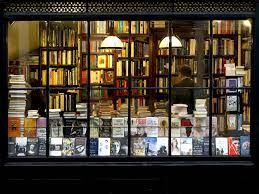







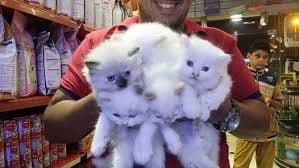


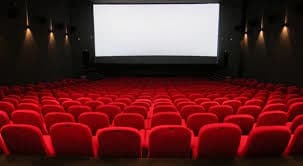


 Owls, such as the young snowy owls on the previous page, have for centuries been symbols of both wisdom and mystery. To many cultures their piercing eyes have conveyed a look of intelligence. Their silent flight through darkened landscapes in search of prey has projected an air of power or wonder. For this chapter and this book, owls are an engaging example of a living organism from the world of biology—the study of life. BIOLOGY AND YOU Living in a small town, in the country, or at the edge of the suburbs, one may be lucky enough to hear an owl's hooting. This experience can lead to questions about where the bird lives, what it hunts, and how it finds its prey on dark, moonless nights. Biology, or the study of life, offers an organized and scientific framework for posing and answering such questions about the natural world. Biologists study questions about how living things work, how they interact with the environment, and how they change over time. Biologists study many different kinds of living things ranging from tiny organisms, such as bacteria, to very large organisms, such as elephants. Each day, biologists investigate subjects that affect you and the way you live. For example, biologists determine which foods are healthy. As shown in Figure 1-1, everyone is affected by this impor- tant topic. Biologists also study how much a person should exer- cise and how one can avoid getting sick. Biologists also study what CHARACTERISTICS OF LIFE The world is filled with familiar objects, such as tables, rocks, plants, pets, and automobiles. Which of these objects are living or were once living? What are the criteria for assigning something to the living world or the nonliving world? Biologists have established that living things share seven characteristics of life. These characteristics are organization and the presence of one or more cells, response to a stimulus (plural, stimuli), homeostasis, metabolism, growth and development, reproduction, and change through time. Organization and Cells Organization is the high degree of order within an organism’s internal and external parts and in its interactions with the living world. For example, compare an owl to a rock. The rock has a spe- cific shape, but that shape is usually irregular. Furthermore, differ- ent rocks, even rocks of the same type, are likely to have different shapes and sizes. In contrast, the owl is an amazingly organized individual, as shown in Figure 1-2. Owls of the same species have the same body parts arranged in nearly the same way and interact with the environment in the same way. Copyright © by Holt, Rinehart and Winston. All rights reserved. ORGANISM (Barn Owl) ORGAN (Owl’s Ear) TISSUE (Nervous Tissue Within the Ear) CELL (Nerve Cell) your air, land, and fAll living organisms, whether made up of one cell or many cells, have some degree of organization. A cell is the smallest unit that can perform all life’s processes. Some organisms, such as bacteria, are made up of one cell and are called unicellular (YOON-uh-SEL-yoo-luhr) organisms. Other organisms, such as humans or trees, are made up of multiple cells and are called multicellular (MUHL-ti-SEL-yoo-luhr) organisms. Complex multicellular organisms have the level of orga- nization shown in Figure 1-2. In the highest level, the organism is made up of organ systems, or groups of specialized parts that carry out a certain function in the organism. For example, an owl’s ner- vous system is made up of a brain, sense organs, nerve cells, and other parts that sense and respond to the owl’s surroundings. Organ systems are made up of organs. Organs are structures that carry out specialized jobs within an organ system. An owl’s ear is an organ that allows the owl to hear. All organs are made up of tissues. Tissues are groups of cells that have similar abilities and that allow the organ to function. For example, nervous tissue in the ear allows the ear to detect sound. Tissues are made up of cells. A cell must be covered by a membrane, contain all genetic information necessary for replication, and be able to carry out all cell functions. Within each cell are organelles. Organelles are tiny structures that carry out functions necessary for the cell to stay alive. Organelles contain biological molecules, the chemical compounds that provide physical structure and that bring about movement, energy use, and other cellular functions. All biological molecules are made up of atoms. Atoms are the simplest particle of an ele- ment that retains all the properties of a certain element. Response to Stimuli Another characteristic of life is that an organism can respond to a stimulus—a physical or chemical change in the internal or external environment. For example, an owl dilates its pupils to keep the level of light entering the eye constant. Organisms must be able to respond and react to changes in their environment to stay alive. ORGANELLE (Mitochondrion) BIOLOGICAL MOLECULE (Phospholipid) ATOM (Oxygen) cell from the Latin, cella meaning “small room,” or “hut” Word Roots and Origins www.scilinks.org Topic: Characteristics of Life Keyword: HM60257 mb06se_bios01.qxd 5/18/07 10:37 AM Page 7 8 CHAPTER 1 Homeostasis All living things, from single cells to entire organisms, have mecha- nisms that allow them to maintain stable internal conditions. Without these mechanisms, organisms can die. For example, a cell’s water content is closely controlled by the taking in or releas- ing of water. A cell that takes in too much water will rupture and die. A cell that doesn’t get enough water will also shrivel and die. Homeostasis (HOH-mee-OH-STAY-sis) is the maintenance of a stable level of internal conditions even though environmental conditions are constantly changing. Organisms have regulatory systems that maintain internal conditions, such as temperature, water content, and uptake of nutrients by the cell. In fact, multi- cellular organisms usually have more than one way of maintain- ing important aspects of their internal environment. For example, an owl’s temperature is maintained at about 40°C (104°F). To keep a constant temperature, an owl’s cells burn fuel to produce body heat. In addition, an owl’s feathers can fluff up in cold weather. In this way, they trap an insulating layer of air next to the bird’s body to maintain its body temperature. Metabolism Living organisms use energy to power all the life processes, such as repair, movement, and growth. This energy use depends on metabolism (muh-TAB-uh-LIZ-uhm). Metabolism is the sum of all the chemical reactions that take in and transform energy and materials from the environment. For example, plants, algae, and some bacteria use the sun’s energy to generate sugar molecules during a process called photosynthesis. Some organisms depend on obtaining food energy from other organisms. For instance, an owl’s metabolism allows the owl to extract and modify the chemi- cals trapped in its nightly prey and use them as energy to fuel activities and growth. Growth and Development All living things grow and increase in size. Some nonliving things, such as crystals or icicles, grow by accumulating more of the same material of which they are made. In contrast, the growth of living things results from the division and enlargement of cells. Cell division is the formation of two new cells from an existing cell, as shown in Figure 1-3. In unicellular organisms, the primary change that occurs following cell division is cell enlargement. In multi- cellular life, however, organisms mature through cell division, cell enlargement, and development. Development is the process by which an organism becomes a mature adult. Development involves cell division and cell differen- tiation, or specialization. As a result of development, an adult organism is composed of many cells specialized for different func- tions, such as carrying oxygen in the blood or hearing. In fact, the human body is composed of trillions of specialized cells, all of which originated from a single cell, the fertilized egg. This unicellular organism, Escherichia coli, inhabits the human intestines. E. coli reproduces by means of cell division, during which the original cell splits into two identical offspring cells. FIGURE 1-3 Observing Homeostasis Materials 500 mL beakers (3), wax pen, tap water, thermometer, ice, hot water, goldfish, small dip net, watch or clock with a second hand Procedure 1. Use a wax pen to label three 500 mL beakers as follows: 27°C (80°F), 20°C (68°F), 10°C (50°F). Put 250 mL of tap water in each beaker. Use hot water or ice to adjust the tem- perature of the water in each beaker to match the temperature on the label. 2. Put the goldfish in the beaker of 27°C water. Record the number of times the gills move in 1 minute. 3. Move the goldfish to the beaker of 20°C water. Repeat observations. Move the goldfish to the beaker of 10°C. Repeat observations. Analysis What happens to the rate at which gills move when the temp- erature changes? Why? How do gills help fish maintain homeostasis? Quick Lab mb06se_bios01.qxd 5/18/07 10:37 AM Page 8 THE SCIENCE OF LIFE 9 Reproduction All organisms produce new organisms like themselves in a process called reproduction. Reproduction, unlike other characteristics, is not essential to the survival of an individual organism. However, because no organism lives forever, reproduction is essential for the continuation of a species. Glass frogs, as shown in Figure 1-4, lay many eggs in their lifetime. However, only a few of the frogs’ off- spring reach adulthood and successfully reproduce. During reproduction, organisms transmit hereditary informa- tion to their offspring. Hereditary information is encoded in a large molecule called deoxyribonucleic acid, or DNA. A short segment of DNA that contains the instructions for a single trait of an organism is called a gene. DNA is like a large library. It contains all the books—genes—that the cell will ever need for making all the struc- tures and chemicals necessary for life. Hereditary information is transferred to offspring during two kinds of reproduction. In sexual reproduction, hereditary information recombines from two organisms of the same species. The resulting offspring are similar but not identical to their parents. For example, a male frog’s sperm can fertilize a female’s egg and form a single fer- tilized egg cell. The fertilized egg then develops into a new frog. In asexual reproduction, hereditary information from different organisms is not combined; thus the original organism and the new organism are genetically the same. A bacterium, for example, reproduces asexually when it splits into two identical cells. Change Through Time Although individual organisms experience many changes during their lifetime, their basic genetic characteristics do not change. However, populations of living organisms evolve or change through time. The ability of populations of organisms to change over time is important for survival in a changing world. This factor is also impor- tant in explaining the diversity of life-forms we see on Earth today. 1. How does biology affect a person’s daily life? 2. How does biology affect society? 3. Name the characteristics shared by living things. 4. Summarize the hierarchy of organization found in complex multicellular organisms. 5. What are the different functions of homeostasis and metabolism in living organisms? 6. How does the growth among living and nonliv- ing things differ? 7. Why is reproduction an important characteristic of life? CRITICAL THINKING 8. Applying Information Crystals of salt grow and are highly organized. Why don’t biologists con- sider them to be alive? 9. Analyzing Models When a scientist designs a space probe to detect life on a distant planet, what kinds of things should it measure? 10. Making Comparisons Both cells and organisms share the characteristics of life. How are cells and organismsood supply will be like in the near future.EVOLUTION OF LIFE Individual organisms change during their lifetime, but their basic genetic characteristics do not change. However, populations of liv- ing organisms do change through time, or evolve. Evolution, or descent with modification, is the process in which the inherited characteristics within populations change over generations, such that genetically distinct populations and new species can develop. Evolution as a theme in biology helps us understand how the various branches of the “tree of life” came into existence and have changed over time. It also explains how organisms alive today are related to those that lived in the past. Finally, it helps us understand the mechanisms that underlie the way organisms look and behave. Natural Selection The ability of populations of organisms to change over time is important for survival in a changing world. According to the theory of evolution by natural selection, organisms that have certain favorable traits are better able to survive and reproduce success- fully than organisms that lack these traits. One product of natural selection is the adaptation of organisms to their environment. Adaptations are traits that improve an indi- vidual’s ability to survive and reproduce. For example, rabbits with white fur and short ears in a snowy place, such as the one in Figure 1-7a, may avoid predators and frostbitten ears more often than those with dark fur and long ears. Thus, the next generation of rabbits will have a greater percentage of animals carrying the genes for white fur and short ears. In contrast, the brown, long- eared rabbit, as shown in Figure 1-7b, would survive and reproduce more successfully in a hot desert environment. The survival and reproductive success of organisms with favor- able traits cause a change in populations of organisms over gener- ations. This descent with modification is an important factor in explaining the diversity of organisms we see on Earth today. 1. Name three unifying themes found in biology. 2. How is the unity and diversity in the living world represented? 3. Identify the three domains and the kingdoms found in each domain. 4. How are organisms interdependent? 5. Describe why evolution is important in explain- ing the diversity of life. 6. Distinguish between evolution and natural selection. CRITICAL THINKING 7. Applying Information Assign the various top- pings you put on pizza to the appropriate domains and kingdoms of life. 8. Analyzing Graphics According to the “tree” in Figure 1-5, which of these pairs are more closely related: Archaea:Bacteria or Archaea:Eukarya? 9. Making Hypotheses Fossil evidence shows that bats descended from shrewlike organisms that could not fly. Write a hypothesis for how natural selection might have led to flying bats. SECTION 2 REVIEW (a) This short-eared arctic hare, Lepus arcticus, is hidden from predators and protected from frostbite in a snowy environment. (b) The mottled brown coats of desert rabbits blend in with the dirt and dry grasses, and their long ears help them radiate excess heat and thus avoid overheating. FIGURE 1-7 (a) (b) Copyright © by Holt, Rinehart and Winston. All rights reserved. THE SCIENCE OF LIFE 13 TH E STUDY OF BIOLOGY Curiosity leads us to ask questions about life. Science provides a way of answering such questions about the natural world. Science is a systematic method that involves forming and testing hypotheses. More importantly, science relies on evidence, not beliefs, for drawing conclusions. SCIENCE AS A PROCESS Science is characterized by an organized approach, called the scientific method, to learn how the natural world works. The methods of science are based on two important principles. The first principle is that events in the natural world have natural causes. For example, the ancient Greeks believed that lightning and thunder occurred because a supernatural god Zeus hurled thunderbolts from the heavens. By contrast, a scientist considers lightning and thunder to result from electric charges in the atmos- phere. When trying to solve a puzzle from nature, all scientists, such as the one in Figure 1-8, accept that there is a natural cause to solve that puzzle. A second principle of science is uniformity. Uniformity is the idea that the fundamental laws of nature operate the same way at all places and at all times. For example, scientists assume that the law of gravity works the same way on Mars as it does on Earth. Steps of the Scientific Method Although there is no single method for doing science, scientific studies involve a series of common steps. 1. The process of science begins with an observation. An observation is the act of perceiving a natural occurrence that causes someone to pose a question. 2. One tries to answer the question by forming hypotheses (singular, hypothesis). A hypothesis is a proposed explanation for the way a particular aspect of the natural world functions. 3. A prediction is a statement that forecasts what would happen in a test situation if the hypothesis were true. A prediction is recorded for each hypothesis. 4. An experiment is used to test a hypothesis and its predictions. 5. Once the experiment has been concluded, the data are analyzed and used to draw conclusions. 6. After the data have been analyzed, the data and conclusions are communicated to scientific peers and to the public. This way oth- ers can verify, reject, or modify the researcher’s conclusions. SECTION 3 OBJECTIVES ● Outline the main steps in the scientific method. ● Summarize how observations are used to form hypotheses. ● List the elements of a controlled experiment. ● Describe how scientists use data to draw conclusions. ● Compare a scientific hypothesis and a scientific theory. ● State how communication in science helps prevent dishonesty and bias. VOCABULARY scientific method observation hypothesis prediction experiment control group experimental group independent variable dependent variable theory peer review All researchers, such as the one releasing an owl above, use the scientific method to answer the questions they have about nature. FIGURE 1-8 Copyright © by Holt, Rinehart and Winston. All rights reserved. 14 CHAPTER 1 OBSERVING AND ASKING QUESTIONS The scientific method generally begins with an unexplained observa- tion about nature. For example, people have noticed for thousands of years that owls can catch prey in near total darkness. As shown in steps and of Figure 1-9, an observation may then raise ques- tions. The owl observation raises the question: How does an owl detect prey in the dark? FORMING A HYPOTHESIS After stating a question, a biologist lists possible answers to a sci- entific question—hypotheses. Good hypotheses answer a question and are testable in the natural world. For example, as shown in step Figure 1-9, there are several possible hypotheses for the question of how owls hunt at night: (a) owls hunt by keen vision in the dark; (b) owls hunt by superb hearing; or (c) owls hunt by detecting the prey’s body heat. Predicting To test a hypothesis, scientists make a prediction that logically fol- lows from the hypothesis. A prediction is what is expected to hap- pen if each hypothesis were true. For example, if hypothesis (a) is true, (owls hunt by keen night vision) then one can predict that the owl will pounce only on the mouse in either a light or a dark room. If hypothesis (b) is true (owls hunt by hearing), then one can pre- dict that in a lighted room, the owl will pounce closer to the mouse’s head. But, in a dark room, the owl should pounce closer to a rustling leaf attached to the mouse. Finally, if hypothesis (c) is true (owls hunt by sensing body heat), then an owl would strike only the prey no matter the room conditions, because owls hunt by detecting the prey’s body heat. 3 1 2 Copyright © by Holt, Rinehart and Winston. All rights reserved. A scientific study includes observations, questions, hypotheses, predictions, experiments, data analysis, and conclu- sions. A biologist can use the scientific method to set up an experiment to learn how an owl captures prey at night. FIGURE 1-9 1 OBSERVATION Owls capture prey on dark nights. 2 QUESTION How do owls detect prey on dark nights? 3 HYPOTHESES a) Owls hunt in the dark by vision. b) Owls hunt in the dark by hearing. c) Owls hunt in the dark by sensing body heat. THE SCIENCE OF LIFE 15 Notice that these predictions make it difficult to distinguish be- tween the vision and body heat hypotheses. The reason is that both hypotheses predict that the owl could grab the mouse in a dark room. Also, these three hypotheses do not eliminate all other factors that could influence how the owl finds its prey. However, testing predictions can allow one to begin rejecting hypotheses and thus to get closer to determining the answer(s) to a question. DESIGNING AN EXPERIMENT Biologists often test hypotheses by setting up an experiment. Step in Figure 1-9 outlines an experiment to test the hypotheses about how an owl hunts at night. First, experimenters set up a room with an owl perch high on one side and a small trap door on the other side for releasing mice. Then, they tied a leaf to each mouse’s tail with a string and released each mouse into the room. Next, each mouse ran silently across the room, but the leaf trailed behind, making a rustling noise. During half of the trials, the lights were on. During the other half, the room was dark. Technicians videotaped all the action in the chamber with an infrared light, which owls cannot see. The researchers then viewed the videos and measured the position of the owl’s strike relative to each mouse’s head. Performing the Experiment Many scientists use a controlled experiment to test their hypotheses. A controlled experiment compares an experimental group and a control group and only has one variable. The control group pro- vides a normal standard against which the biologist can compare results of the experimental group. The experimental group is iden- tical to the control group except for one factor, the independent variable. The experimenter manipulates the independent variable, sometimes called the manipulated variable. 4 4 EXPERIMENT 5 DATA COLLECTION AND ANALYSIS Measure and compare the distance from the owl’s strike to the mouse and to the leaf in light and dark. 6 CONCLUSION Data supported the hearing hypothesis: Owls hunt in the dark by hearing. prey Test predictions of the three hypotheses. Control: In the light Experimental: In the dark 1 2 3 4 5 6 7 8 9 10 11 Predicting Results Materials 2 Petri dishes with agar, cellophane tape, wax pen Procedure 1. Open one of the Petri dishes, and streak your finger across the surface of the agar. 2. Replace the lid, and seal it with the tape. Label this Petri dish with your name and a number 1. 3. Seal the second Petri dish with- out removing the lid. Label this Petri dish with your name and the number 2. 4. Write a prediction about what will happen in each dish. Store your dishes as your teacher directs. Record your observations. Follow your teacher’s directions for disposal of your dishes. Analysis Was your prediction accurate? What evidence can you cite to support your prediction? If you did not obtain the results you predicted, would you change your testing method or your prediction? Explain. Evaluate the importance of obtaining a result that does not support your prediction. Quick Lab mb06se_bios03.qxd 5/18/07 10:40 AM Page 15 16 CHAPTER 1 The independent variable in the owl experiment is the presence or absence of light. In the owl experiment, the control group hunts in the light, and the experimental group hunts in the dark. In addi- tion to varying the independent variable, a scientist observes or measures another factor called the dependent variable, or respond- ing variable, because it is affected by the independent variable. In the owl experiment, the dependent variable is distance from the owl’s strike to the mouse’s head. Testing the Experiment Some controlled experiments are conducted “blind.” In other words, the biologist who scores the results is unaware of whether a given subject is part of the experimental or control group. This factor helps eliminate experimenter bias. Experiments should also be repeated, because living systems are variable. Moreover, scien- tists must collect enough data to find meaningful results. COLLECTING AND ANALYZING DATA Most experiments measure a variable—the dependent variable. This measurement provides quantitative data, data measured in numbers. For example, in the experiment above, scientists mea- sured the distance of an owl’s strike from the prey’s head in cen- timeters, as shown in step of Figure 1-9. An event’s duration in milliseconds is also an example of quantitative data. Biologists usually score the results of an experiment by using one of their senses. They might see or hear the results of an experiment. Scientists also extend their senses with a micro- scope for tiny objects or a microphone for soft sounds. In the owl experiment, biologists extended their vision with infrared cameras. Analyzing and Comparing Data After collecting data from a field study or an experiment and then organizing it, biologists then analyze the data. In analyzing data, the goal is to determine whether the data are reliable, and whether they support or fail to support the predictions of the hypothesis. To do so, scientists may use statistics to help determine relation- ships between the variables involved. They can then compare their data with other data that were obtained in other similar studies. It is also important at this time to determine possible sources of error in the experiment just per- formed. Scientists usually display their data in tables or graphs when analyzing it. For the owl study, biologists could have made a bar graph such as the one in Figure 1-10, which shows the average distance from the owl’s strike relative to the mouse’s head or the leaf in the light and in the dark. 5 5 0 10 15 20 25 In the light In the dark Average distance from strike (cm) Distance Between Owl Strike and a Mouse or From a Leaf Attached to Mouse 30 Mouse Leaf Mouse Leaf The data below are hypothetical results that might occur from the described owl experiment.The independent variable is the darkness of the room, and the dependent variable is how far the owl struck from the mouse’s head.The data show that the owl strikes more accurately at the mouse in the light but strikes more accurately at the leaf in the dark. FIGURE 1-10 Copyright © by Holt, Rinehart and Winston. All rights reserved. THE SCIENCE OF LIFE 17 DRAWING CONCLUSIONS Biologists analyze their tables, graphs, and charts to draw conclu- sions about whether or not a hypothesis is supported, as shown in step of Figure 1-9. The hypothetical owl data show that in the light, owls struck with greater accuracy at the mouse than at the leaf, but in the dark, owls struck with greater accuracy at the leaf than the mouse. Thus, the findings support the hearing hypothe- sis, but not the vision hypothesis. An experiment can only disprove, not prove, a hypothesis. For example, one cannot conclude from the results that the hearing hypothesis is proven to be true. Perhaps the owl uses an unknown smell to strike at the mouse. One can only reject the vision hypothe- sis because it did not predict the results of the experiment correctly. Acceptance of a hypothesis is always tentative in science. The scientific community revises its understanding of phenomena, based on new data. Having ruled out one hypothesis, a biologist will devise more tests to try to rule out any remaining hypotheses. Making Inferences Scientists often draw inferences from data gathered during a field study or experiment. An inference (IN-fuhr-uhns) is a conclusion made on the basis of facts and previous knowledge rather than on direct observations. Unlike a hypothesis, an inference is not directly testable. In the owl study, it is inferred that the owl detects prey from a distance rather than by direct touch. Applying Results and Building Models As shown in Figure 1-11, scientists often apply their findings to solve practical problems. They also build models to represent or describe things. For example in 1953, James Watson and Francis Crick used cardboard balls and wire bars to build physical models of atoms in an attempt to understand the structure of DNA. Mathematical models are sets of equations that describe how dif- ferent measurable items interact in a system. The experimenter can adjust variables to better model the real-world data. CONSTRUCTING A THEORY When a set of related hypotheses is confirmed to be true many times, and it can explain a great amount of data, scientists often reclassify it as a theory. Some examples include the quantum the- ory, the cell theory, or the theory of evolution. People commonly use the word “theory” in a different way than scientists use the word. People may say “It’s just a theory” suggesting that an idea is untested, but scientists view a theory as a highly tested, generally accepted principle that explains a vast number of observations and experimental data. 6 Copyright © by Holt, Rinehart and Winston. All rights reserved. Biologists often apply their knowledge of the natural world to practical problems. Studies on the owl’s keen ability to locate sounds in space despite background noise are helping biotechnologists and bioengineers develop better solutions for people with impaired hearing, such as the people shown in this picture. FIGURE 1-11 18 CHAPTER 1 COMMUNICATING IDEAS An essential aspect of scientific research is scientists working together. Scientists often work together in research teams or sim- ply share research results with other scientists. This is done by publishing findings in scientific journals or presenting them at sci- entific meetings, as shown in Figure 1-12. Sharing information allows others working independently to verify findings or to con- tinue work on established results. For example, Roger Payne pub- lished the results of his owl experiments in a journal in 1971. Then, other biologists could repeat it for verification or use it to study the mechanisms introduced by the paper. With the growing impor- tance of science in solving societal issues, it is becoming increas- ingly vital for scientists to be able to communicate with the public at large. Publishing a Paper Scientists submit research papers to scientific journals for publica- tion. A typical research paper has four sections. First, the Introduction poses the problem and hypotheses to be investigated. Next, the Materials and Methods describe how researchers proceeded with the experiment. Third, the Results state the findings the experiment presented, and finally, the Discussion gives the significance of the experiment and future directions the scientists will take. Job Description Forensic biolo- gists are scientists who study biological materials to investigate potential crimes and other legal issues against humans and animals. Forensic scientists have knowledge in areas of biology, such as DNA and blood pattern analysis, and work in private sector and public laboratories. Focus On a Forensic Biologist As a law enforcement forensic specialist for the Texas Parks and Wildlife Department, Beverly Villarreal assists the game warden in investigations of fish and wildlife violations, such as illegal hunting and fishing. Villarreal analyzes blood and tissue samples to identify species of animals such as fish, birds, and reptiles. Her work helps game wardens as they enforce state laws regarding hunting and fishing. Most people think of forensic scientists as the glamorous crime investigators on TV, but according to Villarreal real forensic scientists “spend a great deal of time at a lab bench running analysis after analysis.” Many of the methods used in animal forensics, such as DNA sequenc- ing, are also used in human forensics. Education and Skills • High school—three years of science courses and four years of math courses. • College—bachelor of science in biol- ogy, including course work in zoology and genetics, plus experience in per- forming DNA analyses. • Skills—patience, attention to detail, and ability to use fine tools. Careers in BIOLOGY Forensic Biologist For more about careers, visit go.hrw.com and type in the keyword HM6 Careers. www.scilinks.org Topic: Scientific Investigations Keyword: HM61358 mb06se_bios03.qxd 5/18/07 10:40 AM Page 18 THE SCIENCE OF LIFE 19 1. What two principles make the scientific method a unique process? 2. Define the roles of observations and hypotheses in science. 3. Summarize the parts of a controlled experiment. 4. Summarize how we make conclusions about the results of an experiment. 5. Why is the phrase, “it’s just a theory” misleading? 6. Give another example of a conflict of interest. CRITICAL THINKING 7. Making Hypotheses On a nocturnal owl’s skull, one ear points up, and the other ear points down. Suggest a hypothesis for this observation. 8. Designing Experiments Design an experiment to establish if owls hunt by keen sight or hunt by heat seeking. 9. Calculating Information What was the average distance between the owl’s strike and the mouse if the recorded differences in this experiment were 25, 22, 19, 19, and 15? SECTION 3 REVIEW After scientists submit their papers to a scientific journal, the editors of that journal will send the paper out for peer review. In a peer review, scientists who are experts in the field anonymously read and critique that research paper. They determine if a paper pro- vides enough information so that the experiment can be duplicated and if the author used good experimental controls and reached an accurate conclusion. They also check if the paper is written clearly enough for broad understanding. Careful analysis of each other’s research by fellow scientists is essential to making scientific progress and preventing scientific dishonesty. HONESTY AND BIAS The scientific community depends on both honesty and good sci- ence. While designing new studies, experimenters must be very careful to prevent previous ideas and biases from tainting both the experimental process and the conclusions. Scientists have to keep in mind that they are always trying to disprove their favorite ideas. Scientists repeat experiments to verify previous findings. This allows for science to have a method for self-correction and it also keeps researchers honest and credible to their peers in the field. Conflict of Interest For most scientists, maintaining a good reputation for collecting and presenting valid data is more important than temporary prestige or income. So, scientists try to avoid any potential conflicts of interest. For example, a scientist who owns a biotechnology company and manufactures a drug would not be the best researcher to critically test that drug’s safety and effectiveness. To avoid this potential con- flict of interest, the scientist allows an unaffected party, such as a research group, to test the drug’s effectiveness. The threat of a potential scandal based on misleading data or conclusions is a pow- erful force in science that helps keep scientists honest and fair. Scientists present their experiments in various forms. The scientists above are presenting their work in the form of a poster at a scientific meeting. FIGURE 1-12 Copyright © by Holt, Rinehart and Winston. All rights reserved. The Internet can provide a wealth of scientific information for a report, but the information may not always be credible or accurate. You can use the methods above to check the accuracy and credibility of your sources. SCIENCE TECHNOLOGY SOCIETY SCIENCE ON THE INTERNET: A New Information Age I n the past, students research- ing a science topic would typ- ically begin their research by visiting a library to use printed reference materials, such as encyclopedias. Today, most stu- dents research topics by using a computer and searching for information on the Internet. The Internet can provide students with a wealth of infor- mation. But which Web sites have accurate information, and which Web sites do not? Checking Web Addresses Students should use the Web address, or URL, to establish the Web site’s credibility. Usually, the domain name can suggest who has published the Web site. Web sites can be pub- lished by governmental agen- cies (ends in “dot gov” or .gov), by educational institutions (ends in “dot edu” or .edu), by organizations (ends in “dot org” or .org), or by commercial businesses (ends in “dot com” or .com). Government Web sites are usually reliable. Examples of credible governmental Web sites are the National Institutes of Health (NIH) and the Food and Drug Administration (FDA). University and medical school sites are also reliable sources of information. Many organiza- tions that research and teach the public about specific diseases and conditions can also provide reliable information. Examples of such organizations are the American Cancer Society and the American Heart Association. Evaluating Web Sites The credibility of the author of the Web site should also be checked. Make sure the author is not trying to sell anything and is established in his or her field. For example, a health Web site’s author should be a med- ical professional. It is also important to check the date that the information was posted on the Web to ensure that the information is current. Also, the Web site should provide ref- erences from valid sources, such as scientific journals or govern- ment publications. Finally, the student should always double-check informa- tion between several reliable Web sites. If two or three reliable sites provide the same informa- tion, the student can feel confi- dent in using that information. Web Sites for Students The Internet Connect boxes in this textbook have all been reviewed by professionals at the National Science Teachers Association (NSTA). Students can trust that these sites are reliable sources for science- or health-related topics. REVIEW 1. Which types of Web addresses are the most reliable? 2. List four important features to evaluate when using a Web site for research. 3. Supporting Reasoned Opinions Why do you think a Web site that is advertising a product may not offer accurate information? REVIEW 20 www.scilinks.org Topic: Using the Internet Keyword: HM61589 mb06se_biosts.qxd 5/18/07 10:42 AM Page 20 TOOLS AND TECHNIQUES With proper equipment and good methods, biologists can see, manipulate, and understand the natural world in new ways. Microscopes are one of many useful tools used to unlock nature’s biological secrets. MICROSCOPES AS TOOLS Tools are objects used to improve the performance of a task. Microscopes are tools that extend human vision by making enlarged images of objects. Biologists use microscopes to study organisms, cells, cell parts, and molecules. Microscopes reveal details that otherwise might be difficult or impossible to see. Light Microscopes To see small organisms and cells, biologists typically use a light microscope, such as the one shown in Figure 1-13. A compound light microscope is a microscope that shines light through a spec- imen and has two lenses to magnify an image. To use this micro- scope, one first mounts the specimen to be viewed on a glass slide. The specimen must be thin enough for light to pass through it. For tiny pond organisms, such as the single-celled paramecium, light passing through the organism is not a problem. For thick objects, such as plant stems, biologists must cut thin slices for viewing. There are four major parts of a compound light microscope. For further description of the parts of a micro- scope, see the Appendix. 1. Eyepiece The eyepiece (ocular (AHK-yoo-luhr) lens) magnifies the image, usually 10 times. 2. Objective Lens Light passes through the specimen and then through the objective lens, which is located directly above the specimen. The objective lens enlarges the image of the specimen. Scientists sometimes use stains to make the image easier to see. 3. Stage The stage is a platform that supports a slide holding the specimen. The slide is placed over the opening in the stage of the microscope. 4. Light Source The light source is a light bulb that provides light for viewing the image. It can be either light reflected with a mirror or an incandescent light from a small lamp. SECTION 4 OBJECTIVES ● List the function of each of the major parts of a compound light microscope. ● Compare two kinds of electron microscopes. ● Describe the importance of having the SI system of measurement. ● State some examples of good laboratory practice. VOCABULARY compound light microscope eyepiece (ocular lens) objective lens stage light source magnification nosepiece resolution scanning electron microscope transmission electron microscope metric system base unit Compound light microscopes open the human eye to an interesting world including tiny pond organisms, healthy and diseased cells, and the functioning of cell parts. FIGURE 1-13 Objective lens Eyepiece (ocular lens) Stage Light THE SCIENCE OF LIFE 21 Copyright © by Holt, Rinehart and Winston. All rights reserved. 22 CHAPTER 1 Magnification and Resolution Microscopes vary in powers of magnification and resolution. Magnification is the increase of an object’s apparent size. Revolving the nosepiece, the structure that holds the set of objective lens, rotates these lenses into place above the specimen. In a typical com- pound light microscope, the most powerful objective lens produces an image up to 100 times (100) the specimen’s actual size. The degree of enlargement is called the power of magnification of the lens. The standard ocular lens magnifies a specimen 10 times (10). To compute the power of magnification of a microscope, the power of magnification of the strongest objective lens (in this case, 100) is multiplied by the power of magnification of the ocular lens (10). The result is a total power of magnification of 1000. Resolution (REZ-uh-LOO-shuhn) is the power to show details clearly in an image. The physical properties of light limit the ability of light microscopes to resolve images, as shown in Figure 1-14a. At pow- ers of magnification beyond about 2,000, the image of the speci- men becomes fuzzy. For this reason, scientists use other microscopes to view very small cellsTobruk, a small town on the Libyan coast, was central to much of the fighting that took place in the Western Desert during the Second World War. It had originally been developed by the Italians during their colonisation of eastern Libya during the early decades of the 20th century. With a sheltered deep water harbour it became a key naval outpost. It was fortified during the 1930s with both coastal defence batteries and a 50 kilometre-long perimeter of reinforced concrete platoon posts, and other supporting infrastructure such as gun positions, headquarters bunkers, underground supply dumps, and observation towers. When British and Commonwealth forces advanced out of Egypt and into Libya in January 1941, Tobruk was their second objective. The Italian defence perimeter was attacked by the 6th Australian Division on the morning of 22 January and the town fell the next morning. The operation resulted in approximately 27,000 Italian prisoners and the capture of over 200 artillery pieces, but cost 49 Australian lives. The 6th Division's advance pressed on beyond Tobruk and eventually they were withdrawn from Libya to be deployed to Greece.The 9th Australian Division was moved in to Libya in February 1941 to garrison the territory captured by the 6th. By this time, however, German troops had arrived in Libya to reinforce their Italian allies and they launched an offensive that the British Commonwealth forces were ill-disposed to hold back. A retreat towards Egypt commenced. The 9th Division was ordered to fall back upon Tobruk, hold it in order deny its port facilities to the Germans, and delay their advance so as to provide time for defences on the Egyptian frontier to be prepared. Tobruk and the 9th Division were subsequently encircled, beginning what became known as "the siege of Tobruk". Reinforced by the 18th Brigade of the 7th Australian Division and other British and Commonwealth troops, and resupplied by the sea, the 9th Division held Tobruk from April to September 1941. During this period it repelled two major German attacks. In September and October the 9th Division, its condition steadily declining, was relieved by the British 70th Division, which continued to defend Tobruk until the siege was finally lifted by Operation Crusader in December. The defence of Tobruk resulted in 749 Australian deaths, and another 604 became prisoners of war. Tobruk was the scene of further heavy fighting in June 1942 when the fortunes of war again saw a British Commonwealth force seeking to deny the port to the enemy. The Axis forces, however, were in no mood for another siege and launched a massive attack to capture it on 20 June. It remained in their hands until their final retreat from Libya in November 1942.John Hurst Edmondson (1914-1941), soldier, was born on 8 October 1914 at Wagga Wagga, New South Wales, only child of native-born parents Joseph William Edmondson, farmer, and his wife Maude Elizabeth, née Hurst. The family moved to a farm near Liverpool when Jack was a child. Educated at Hurlstone Agricultural High School, he worked with his father and became a champion rifle-shooter. He was a council-member of the Liverpool Agricultural Society and acted as a steward at its shows. Having served (from March 1939) in the 4th Battalion, Militia, he enlisted in the Australian Imperial Force on 20 May 1940 and was posted to the 2nd/17th Battalion. Later that month he was promoted acting corporal (substantive in November). Well built and about 5 ft 9 ins (175 cm) tall, Edmondson settled easily into army life and was known as a quiet but efficient soldier. His battalion embarked for the Middle East in October and trained in Palestine. In March 1941 the 2nd/17th moved with other components of the 9th Division to Libya and reached Marsa Brega before an Axis counter-attack forced them to retreat to Tobruk. The siege of the fortress began on 11 April. Two days later the Germans probed the perimeter, targeting a section of the line west of the El Adem Road near Post R33. This strong-point was garrisoned by the 2nd/17th's No.16 Platoon in which Edmondson was a section leader. The enemy intended to clear the post as a bridgehead for an armoured assault on Tobruk.Under cover of darkness thirty Germans infiltrated the barbed wire defences, bringing machine-guns, mortars and two light field-guns. Lieutenant Austin Mackell, commanding No.16 Platoon, led Edmondson's five-man section in an attempt to repel the intruders. Armed with rifles, fixed bayonets and grenades, the party of seven tried to outflank the Germans, but were spotted by the enemy who turned their machine-guns on them. Unknown to his mates, Edmondson was severely wounded in the neck and stomach. Covering fire from R33 ceased at the pre-arranged time of 11.45 p.m. and Mackell ordered his men to charge. Despite his wounds, Edmondson accounted for several enemy soldiers and saved Mackell's life. When the remaining Germans fled, the Australians returned to their lines. Although Edmondson was treated for his wounds, he died before dawn on 14 April 1941. The Germans' armoured attack that morning was thwarted, partly due to the earlier disruption of their plans. Edmondson was buried in Tobruk war cemetery. He had not married. His Victoria Cross, gazetted on 4 July, was the first awarded to a member of Australia's armed forces in World War II. In April 1960 Mrs Edmondson gave her son's medals to the Australian War Memorial, Canberra, where they are displayed alongside his portrait (1958) by Joshua Smith. At Liverpool a public clock commemorates Edmondson, as do the clubrooms used by the sub-branch of the Returned Services League of Australia.Perhaps my nerves will be more under control when I am by myself. There were no entries in the diary until Friday April 18 when she wrote: Fighting terrific in Greece and North Africa…. I dread the casualty list also the heaviest air raid over London to date. Account …. of heavy fighting and much use of bayonet at Tobruk. Also gives an account of a charge in which a Lieutenant and a Corporal took prominent parts on Easter Sunday night. Of course, no names. When I read it …. I was sure the Corporal was Jack…. It said no casualties but …. I know … that all is not well with Jack. ….. (and) Stuffy ….has not come home yet. On Wednesday April 23 she received a letter from Jack dated March 30 and for the first time he said the conditions were bad. The food short, water one bottle for 48 hours. It worried me terribly so I posted a parcel (of) milk tablets, chocolate milk, biscuits (and) cigarettes.Tuesday April 15 I was feeling afraid of something while I was working and packing the cake (and) had a couple of brandys to (keep going).April 26 Received the following telegram in the mail, the bus man brought it in. “It is with deep regret that I have to inform you that Corporal John Hurst Edmondson was killed in action on the 14th April and desire to convey the profound sympathy of the Ministry for the Army and the Military Board.”Her final entryHi, I'm John Green, this is Crash Course U.S. History, and today, we're going to talk about slavery, which is not funny. 0:06 Yeah, so we put a lei on the eagle to try and cheer you up, but let's face it, this is going to be depressing. 0:10 With slavery, every time you think, like, "Aw, it couldn't have been that bad," it turns out to have been much worse. 0:14 Mr. Green, Mr. Green! But what about – 0:15 Yeah, Me from the Past, I'm going to stop you right there, because you're going to embarrass yourself. Slavery was hugely important to America. 0:20 I mean, it led to a civil war and it also lasted what, at least in U.S. history, counts as a long-ass time, from 1619 to 1865. 0:29 And yes, I know there's a 1200-year-old church in your neighborhood in Denmark, but we're not talking about Denmark! 0:35 But slavery is most important because we still struggle with its legacy. 0:38 So, yes, today's episode will probably not be funny, but it will be important. 0:42 [Theme Music] North & South economic ties 0:51 So the slave-based economy in the South is sometimes characterized as having been separate from the Market Revolution, but that's not really the case. 0:57 Without southern cotton, the North wouldn't have been able to industrialize, at least not as quickly, because cotton textiles were one of the first industrially products. 1:04 And the most important commodity in world trade by the nineteenth century, and 3/4 of the world's cotton came from the American South. 1:11 And speaking of cotton, why has no one mentioned to me that my collar has been half popped this entire episode, like I'm trying to recreate the Flying Nun's hat. 1:18 And although there were increasingly fewer slaves in the North as northern states outlawed slavery, cotton shipments overseas made northern merchants rich. 1:26 Northern bankers financed the purchase of land for plantations. 1:29 Northern insurance companies insured slaves who were, after all, considered property, and very valuable property. 1:35 And in addition to turning cotton into cloth for sale overseas, northern manufacturers sold cloth back to the South, where it was used to clothe the very slaves who had cultivated it. 1:45 But certainly the most prominent effects of the slave-based economy were seen in the South. Slave-based agriculture in the South 1:49 The profitability of slaved-based agriculture, especially King Cotton, meant that the South would remain largely agricultural and rural. 1:56 Slave states were home to a few cities, like St. Louis and Baltimore, but with the exception of New Orleans, 2:00 almost all southern urbanization took place in the upper South, further away from the large cotton plantations. 2:06 And slave-based agriculture was so profitable that it siphoned money away from other economic endeavors. 2:11 Like, there was very little industry in the South. 2:13 It produced only 10% of the nation's manufactured goods. 2:16 And, as most of the capital was being plowed into the purchase of slaves, there was very little room for technological innovation, like, for instance, railroads. 2:23 This lack of industry and railroads would eventually make the South suck at the Civil War, thankfully. 2:27 In short, slavery dominated the South, shaping it both economically and culturally, and slavery wasn't a minor aspect of American society. Popular attitudes concerning slavery 2:35 By 1860, there were four million slaves in the U.S., and in the South, they made up one third of the total population. 2:42 Although in the popular imagination, most plantations were these sprawling affairs with hundreds of slaves, 2:47 in reality, the majority of slaveholders owned five or fewer slaves. 2:51 And, of course, most white people in the South owned no slaves at all, though, if they could afford to, they would sometimes rent slaves to help with their work. 2:57 These were the so-called yeoman farmers who lived self-sufficiently, raised their own food, and purchased very little in the Market Economy. 3:04 They worked the poorest land and, as a result, were mostly pretty poor themselves. 3:08 But even they largely supported slavery, partly, perhaps, for aspirational reasons, and partly because the racism inherent to the system gave even the poorest whites legal and social status. 3:18 And southern intellectuals worked hard to encourage these ideas of white solidarity and to make the case for slavery. 3:23 Many of the founders, a bunch of whom you'll remember, held slaves, saw slavery as a necessary evil. 3:29 Jefferson once wrote, quote, "As it is, we have the wolf by the ear, and we can neither hold him, nor safely let him go. 3:37 Justice is on one scale, and self-preservation in the other." 3:41 The belief that justice and self-preservation couldn't sit on the same side of the scale was really opposed to the American idea, 3:47 and, in the end, it would make the Civil War inevitable. 3:50 But as slavery became more entrenched in these ideas of liberty and political equality were embraced by more people, 3:55 some southerners began to make the case that slavery wasn't just a necessary evil. 3:59 They argued, for instance, that slaves benefited from slavery. 4:03 Because, you know, because their masters fed them and clothed them and took care of them in their old age. 4:07 You still hear this argument today, astonishingly. 4:09 In fact, you'll probably see asshats in the comments saying that in the comments. 4:12 I will remind you, it's not cursing if you are referring to an actual ass. 4:15 This paternalism allowed masters to see themselves as benevolent and to contrast their family-oriented slavery with the cold, mercenary Capitalism of the free-labor North. 4:26 So yeah, in the face of rising criticism of slavery, some southerners began to argue that the institution was actually good for the social order. 4:33 One of the best-known proponents of this view was John C. Calhoun, who, in 1837, said this in a speech on the Senate floor: 4:40 "I hold that, in the present state of civilization, 4:43 where two races of different origin and distinguished by color and other physical differences as well as intellectual, are brought together, 4:51 the relation now existing in the slave-holding states between the two is, instead of an evil, a good. A positive good." 4:59 Now, of course, John C. Calhoun was a fringe politician, and nobody took his views particularly seriously. 5:04 Stan: Well, he was Secretary of State from 1844 to 1845. 5:07 John: Well, I mean, who really cares about the Secretary of State, Stan? 5:10 Danica: Eh, he was also Secretary of War from 1817 to 1825. 5:13 John: All right, but we don't even have a Secretary of War anymore, so... 5:16 Meredith: And he was Vice President from 1825 to 1832. 5:19 John: Oh my god, were we insane?! 5:21 We were, of course, but we justified the insanity with Biblical passages and with the examples of the Greeks and Romans, 5:28 and with outright racism, arguing that black people were inherently inferior to whites. 5:33 And that not to keep them in slavery would upset the natural order of things. 5:37 A worldview popularized millennia ago by my nemesis, Aristotle. God, I hate Aristotle. 5:42 You know what defenders of Aristotle always say? 5:44 "He was the first person to identify dolphins." 5:47 Well, ok, dolphin identifier. 5:50 Yes, that is what he should be remembered for, but he's a terrible philosopher! Lives & experiences of enslaved people 5:53 Here's the truth about slavery: 5:55 It was coerced labor that relied upon intimidation and brutality and dehumanization. 6:00 And this wasn't just a cultural system, it was a legal one. 6:03 I mean, Louisiana law proclaimed that a slave "owes his master... a respect without bounds, and an absolute obedience." 6:09 The signal feature of slaves' lives was work. 6:12 I mean, conditions and tasks varied, but all slaves labored, usually from sunup to sundown, and almost always without any pay. 6:20 Most slaves worked in agriculture on plantations, and conditions were different, depending on which crops are grown. 6:25 Like, slaves on the rice plantations of South Carolina had terrible working conditions, 6:29 but they labored under the task system, which meant that once they had completed their allotted daily work, they would have time to do other things. 6:36 But lest you imagine this is like how we have work and leisure time, bear in mind that they were owned and treated as property. 6:42 On cotton plantations, most slaves worked in gangs, usually under the control of an overseer, or another slave who was called a "driver." 6:49 This was back-breaking work done in the southern sun and humidity, and so it's not surprising that whippings – or the threat of them – were often necessary to get slaves to work. 6:58 It's easy enough to talk about the brutality of slave discipline, but it can be difficult to internalize it. 7:03 Like, you look at these pictures, but because you've seen them over and over again, they don't have the power they once might have. 7:09 The pictures can tell a story about cruelty, but they don't necessarily communicate how arbitrary it all was. 7:14 As, for example, in this story, told by a woman who was a slave as a young girl: 7:18 "[The] overseer... went to my father one morning and said, "Bob, I'm gonna whip you this morning." 7:22 Daddy said, "I ain't done nothing," and he said, "I know it, I'm going to whip you to keep you from doing nothing," 7:28 and he hit him with that cowhide – you know it would cut the blood out of you with every lick if they hit you hard." 7:33 That brutality – the whippings, the brandings, the rape – was real, and it was intentional, because, in order for slavery to function, slaves had to be dehumanized. 7:43 This enabled slaveholders to rationalize what they were doing, and it was hoped to reduce slaves to the animal property that is implied by the term "chattel slavery." 7:51 So the idea was that slaveholders wouldn't think of their slaves as human, and slaves wouldn't think of themselves as human. 7:57 But it didn't work. Let's go to the Thought Bubble. 7:59 Slaves' resistance to their dehumanization took many forms, but the primary way was by forming families. Family, love, & religion of enslaved people 8:05 Family was a refuge for slaves and a source of dignity that masters recognized and sought to stifle. 8:10 A paternalistic slave owner named Bennet H. Barrow wrote in his rules for the Highland Plantation: 8:15 "No rule that I have stated is of more importance than that relating to Negroes marrying outside of the plantation... It creates a feeling of independence." 8:23 Most slaves did marry, usually for life, and, when possible, slaves grew up in two-parent households. 8:28 Single-parent households were common, though, as a result of one parent being sold. 8:32 In the upper South, where the economy was shifting from tobacco to different, less labor-intensive cash crops, the sale of slaves was common. 8:40 Perhaps one-third of slave marriages in states like Virginia were broken up by sale. 8:45 Religion was also an important part of life in slavery. 8:47 While masters wanted their slaves to learn the parts of the Bible that talked about being happy in bondage, 8:52 slave worship tended to focus on the stories of Exodus, where Moses brought the slaves out of bondage, 8:57 or Biblical heroes, who overcame great odds, like Daniel and David. 9:01 And, although most slaves were forbidden to learn to read and write, many did anyway. And some became preachers. 9:07 Slave preachers were often very charismatic leaders, and they roused the suspicion of slave owners, and not without reason. 9:13 Two of the most important slave uprisings in the South were led by preachers. 9:16 Thanks, Thought Bubble. 9:17 Oh, it's time for the Mystery Document? Mystery Document 9:19 We're doing two set pieces in a row? All right. [buzzing noise] [music] 9:24 The rules here are simple. 9:26 I wanted to re-shoot that, but Stan said no. 9:29 I guess the author of the Mystery Document. 9:30 If I am wrong, I get shocked with the shock pen. 9:33 "Since I have been in the Queen's dominions I have been well contented, yes well contented for sure, man is as God intended he should be. 9:40 That is, all are born free and equal. 9:43 This is a wholesome law, not like the southern laws which puts man made in the image of God on level with brutes. 9:49 O, what will become of the people, and where will they stand in the day of judgment. 9:53 Would that the 5th verse of the 3rd chapter of Malachi were written as with a bar of iron, 9:59 and the point of a diamond upon every oppressor's heart that they might repent of this evil, and let the oppressed go free..." 10:06 All right, it's definitely a preacher, because only preachers have read Malachi. 10:10 Probably African American, probably not someone from the South. 10:13 I'm going to guess that it is Richard Allen, the founder of the African Methodist Episcopal Church? 10:18 [buzzing noise] DAAAH, DANG IT! 10:19 It's Joseph Taper, and Stan just pointed out to me that I should have known it was Joseph Taper because it starts out, 10:24 "Since I have been in the Queen's dominions..." 10:27 He was in Canada. He escaped slavery to Canada. The Queen's dominions! 10:31 All right, Canadians, I blame you for this, although, thank you for abolishing slavery decades before we did. 10:36 [electric sounds] AHHH! How people resisted & escaped slavery 10:37 So, the Mystery Document shows one of the primary ways that slaves resisted their oppression: by running away. 10:42 Although some slaves like Joseph Taper escaped for good by running away to northern free states, 10:47 or even to Canada, where they wouldn't have to worry about fugitive slave laws, even more slaves ran away temporarily, hiding out in the woods or the swamps, and eventually returning. 10:55 No one knows exactly how many slaves escaped to freedom, but the best estimate is that a thousand or so a year made the journey northward. 11:01 Most fugitive slaves were young men, but the most famous runaway has been hanging out behind me all day long: Harriet Tubman. 11:07 Harriet Tubman escaped to Philadelphia at the age of 29, and over the course of her life, she made about 20 trips back to Maryland to help friends and relatives make the journey north on the Underground Railroad. 11:17 But a more dramatic form of resistance to slavery was actual, armed rebellion, which was attempted. 11:22 Now, individuals sometimes took matters into their own hands and beat or even killed their white overseers or masters. 11:27 Like Bob, the guy who received the arbitrary beating, responded to it by killing his overseer with a hoe. 11:33 But that said, large-scale slave uprisings were relatively rare. 11:36 The four most famous ones all took place in a 35-year period at the beginning of the 19th century. Slave rebellions 11:41 Gabriel's Rebellion in 1800 – which we've talked about before – was discovered before he was able to carry out his plot. 11:45 Then, in 1811, a group of slaves upriver from New Orleans seized cane, knives, and guns, and marched on the city before militia stopped them. 11:52 And in 1822, Denmark Vesey, a former slave who had purchased his freedom, may have organized a plot to destroy Charleston, South Carolina. 11:59 I say "may have" because the evidence against him is disputed and comes from a trial that was not fair. 12:05 But regardless, the end result of that trial was that he was executed, as were 34 slaves. Nat Turner's Rebellion 12:09 But the most successful slave rebellion, at least in the sense that they actually killed some people, was Nat Turner's in August 1831. 12:15 Turner was a preacher, and with a group of about 80 slaves, he marched from farm to farm in South Hampton County, Virginia, 12:21 killing the inhabitants, most of whom were women and children, because the men were attending a religious revival meeting in North Carolina. 12:27 Turner and 17 other rebels were captured and executed, but not before they struck terror into the hearts of whites all across the American South. 12:34 Virginia's response was to make slavery worse, passing even harsher laws that forbade slaves from preaching, and prohibited teaching them to read. 12:42 Other slave states followed Virginia's lead and, by the 1830s, slavery had grown, if anything, more harsh. 12:47 So, this shows that large-scaled armed resistance was – Django Unchained aside – not just suicidal, but also a threat to loved ones and, really, to all slaves. How enslaved people resisted their oppression & why it matters 12:55 But, it is hugely important to emphasize that slaves did resist their oppression. 12:59 Sometimes this meant taking up arms, but usually it meant more subtle forms of resistance, 13:03 like intentional work slowdowns or sabotaging equipment, or pretending not to understand instructions. 13:08 And, most importantly, in the face of systematic legal and cultural degradation, they re-affirmed their humanity through family and through faith. 13:16 Why is this so important? 13:17 Because too often in America, we still talk about slaves as if they failed to rise up, 13:21 when, in fact, rising up would not have made life better for them or for their families. 13:26 The truth is, sometimes carving out an identity as a human being in a social order that is constantly seeking to dehumanize you, is the most powerful form of resistance. 13:34 Refusing to become the chattel that their masters believed them to be is what made slavery untenable and the Civil War inevitable, so make no mistake, slaves fought back. 13:45 And in the end, they won. I'll see you next week. Credits 13:48 Crash Course is produced and directed by Stan Muller. 13:50 The script supervisor is Meredith Danko. 13:52 Our associate producer is Danica Johnson. 13:54 The show is written by my high school history teacher Raoul Meyer and myself. 13:57 And our graphics team is Thought Cafe. 13:58 Every week, there's a new caption to the Libertage, but today's episode was so sad that we couldn't fit a Libertage in... 14:04 UNTIL NOW! [Libertage Rock Music] 14:08 Suggest Libertage caption in comments, where you can also ask questions about today's video that will be answered by our team of historians. 14:13 Thanks for watching Crash Course, and as we say in my home town, don't forget to be abolitionist.Commas Directions: Correct the sentences by adding commas where needed. 1. After the sound of the bell we realized it was a false alarm. 2. Mr. Yoshino the head of the department resigned yesterday. 3. The gentleman with the black umbrella who is an ambassador to the United States said hello to us as we were entering the hotel. 4. Even though we won the game the players unfortunately did not play their best. 5. Heather walked quickly up to the door and knocked hoping that someone would answer. Author’s Purpose 6. An author writes a story about a boy who saves his town from a flood by using his quick thinking. The author includes exciting descriptions of the boy's bravery. What is the author’s most likely purpose for writing this story? A. To inform readers about the dangers of floods B. To entertain readers with a heroic tale C. To explain how to prevent floods D. To persuade readers to prepare for emergencies 7. Which of the following is an example of an author writing to persuade? A. A science textbook chapter explaining the water cycle B. A commercial encouraging people to adopt shelter pets C. A short story about a girl who finds a magical necklace D. A recipe for making chocolate chip cookies 8. Read the following sentence: "Studies show that students who read for 20 minutes a day score higher on tests. Reading is one of the best habits you can develop for success in school and life." What is the author’s purpose in this passage? A. To entertain readers with a fun story B. To persuade readers to read more often C. To inform readers about how books are written D. To explain how to find books to read 9. An author writes a how-to guide titled 10 Easy Steps to Plant a Garden. What is the author’s primary purpose? A. To persuade readers to grow their own vegetables B. To inform readers how to plant a garden C. To entertain readers with funny garden tips 10. Read the excerpt: "Long ago, in a village surrounded by mountains, the people discovered a secret about their water well. Every full moon, the well water turned to gold for just one night. But no one knew why. This mystery brought travelers from far and wide, hoping to uncover the truth." What is the author’s purpose in this excerpt? A. To persuade readers to visit the village B. To inform readers about a historical event C. To entertain readers with a mysterious tale D. To explain the science behind the water Main Idea When I stepped out into the bright sunlight from the darkness of the movie house, I had only two things on my mind: Paul Newman and a ride home. I was wishing I looked like Paul Newman--- he looks tough and I don't--- but I guess my own looks aren't so bad. I have light-brown, almost-red hair and greenish-gray eyes. I wish they were more gray because I hate most guys that have green eyes, but I have to be content with what I have. My hair is longer than a lot of boys wear theirs, squared off in back and long at the front and sides, but I am a greaser and most of my neighborhood rarely bothers to get a haircut. Besides, I look better with long hair. 11. What is the main idea? The narrator likes movies. The narrator wishes he was Paul Newman. The narrator is content with his appearance. The narrator looks better with long hair. 12. The narrator believes. . . looks are important. he should get a haircut. green eyes are bad. that he has red hair. Once there were four girls who shared a pair of pants. The girls were all different sizes and shapes, and yet the pants fit each of them. You may think this is a suburban myth. But I know it's true, because I am one of them, one of the sisters of the Traveling Pants. We discovered their magic last summer, purely by accident. The four of us were splitting up for the first time in our lives. Carmen had gotten them from a secondhand place without even bothering to try them on. She was going to throw them away, but by chance, Tibby spotted them. First Tibby tried them; then me, Lena; then Bridget; then Carmen. By the time Carmen pulled them on, we knew something extraordinary was happening. If the same pants fit and I mean really fit the four of us, they aren't ordinary. They don't belong completely to the world of things you can see and touch. My sister, Effie, claims I don't believe in magic, and maybe I didn't then. But after the first summer of the Traveling Pants, I do. 13. What is the main idea? Four friends were connected through a special pair of pants. A pair of pants called the Traveling Pants. Carmen finding a pair of pants from a second-hand shop. The girls believing in magic. 14. The narrator included that the pants fit all of them to emphasize how the girls become friends. the girls are different sizes. why the pants are special. where the pants came from. If you are interested in stories with happy endings, you would be better off reading some other book. In this book, not only is there no happy ending, there is no happy beginning and very few happy things in the middle. This is because not very many happy things happened in the lives of the three Baudelaire youngsters. Violet, Klaus, and Sunny Baudelaire were intelligent children, and they were charming, and resourceful, and had pleasant facial features, but they were extremely unlucky, and most everything that happened to them was rife with misfortune, misery, and despair. I'm sorry to tell you this, but that is how the story goes. 15. What is the main idea? description about the story to come. A warning about the story and its sad content. A declaration about the Baudelaire family. A beginning for the end of the story. 16. The narrator believes the reader does not like sad stories. likes stories with happy endings. can’t enjoy the story. will find the story unhappy. 17. Read the following sentence: Of course you can exaggerate your story, but what you say must be based on truth. Which word means the same as exaggerate? repeat reveal overstate increase 18. What is the meaning of the word inaugurated, used in the following sentence: Less than two months after Abraham Lincoln was inaugurated President in 1861, he encountered one of the most difficult tasks ever experienced by a United States leader: civil war. elected by a vote brought into office identified by name viewed as an authority 19. What does the phrase “practice your presentation so much that you could do it in your sleep” suggest in the following sentence: The best advice is to practice your presentation so much that you could do it in your sleep. get plenty of sleep the night before giving a presentation give their presentations in front of a small audience first take advice from their teachers on how to write a presentation memorize their presentations before they give them 20. Read the following sentence: The Phoenix Mars Lander is a NASA spacecraft that landed on the Red Planet in May 2009 to study the history of water and potential for life on the planet. What is another word for potential? existence situation possibility qualification Communication is the process of passing information, news, ideas or feelings from one person to another. For communication to take place, there must be a sender and a receiver of the message. System of communication is the different ways in which messages are sent and received. THE FOLLOWING ARE THE MAIN MEANS OF COMMUNICATION: 1.Traditional means: These are the means used to pass ideas or information in the past. The following are the various means used: Drumming, Message Carrier, Town Criers, Smoke Signal, Gun Shots, sending of symbolic items (such as a gun or bullets to announce war, Sponge and Soap to announce the safe delivery of a pregnant woman). 2. Modern means: These are the means used to pass ideas or information in the present day. The following are the various means used: Radio, Television, Telephone, Newspapers and Magazines, The Internet, Fax machine, Handsets, Telegram, Satellite, Road signs, Posters and billboards. DIFFERENCES BETWEEN TRADITIONAL AND MODERN MEANS OF COMMUNICATION. Traditional means Modern means 1.It makes use of local items such as drum, gong etc. It makes use of modern technology 2.Messages cannot travel very long distances. Messages can travel far and wide. 3. Delivery of message is slow. It may take days or weeks or months. Delivery of message is faster. Can reach the recipient within seconds. 4. It is cheaper It is very expensive. 5.It does not use electricity. It uses electricity. A recipient is the person or people receiving a message. While the sender is the person or people who sends the message.To the Lakota, and other indigenous people on North America's Great Plains, the bison was an essential part of their culture ( expressed in the quote on the previous page). The bison provided meat for nutrition, a hide for clothing and shelter, bones for tools, and fat for soap. The bison was also central to their religious beliefs. So, when European settlers hunted the bison nearly to extinction, Lakota culture suffered. Culture is central to a society and the identity of its people, as well as its continued existence. Therefore, geographers study culture as a way to understand similarities and differences among societies across the world, and in some cases, to help preserve these societies. Analyzing Culture All of a group's learned behaviors, actions, beliefs, and objects are a part of culture. It is a visible force seen in a group's actions, possessions, and influence on the landscape. For example, in a large city you can see people working in offices, factories, and stores, and living in high-rise apartments or suburban homes. You might observe them attending movies, concerts, or sporting events. Culture is also an invisible force guiding people through shared belief systems, customs, and traditions. Culture is learned, in that it develops through experiences, and not merely transmitted through genetics. For example, many people in the United States have developed a strong sense of competitiveness in school and business, and believe that hard work is a key to success. These types of elements, visible and invisible, are cultural traits. A series of interrelated traits make up a cultural complex, such as the process of steps and acceptable behaviors related to greeting a person in different cultures. A single cultural artifact, such as an automobile, may represent many different values, beliefs, behaviors and traditions and be representative of a cultural complex. Since culture is learned there are many ways that one generation passes its culture to the next. Children and adults learn traits three ways: • imitation, as when learning a language by repeating sounds or behaviors from a person or television • informal instruction, as when a parent reminds a child to say "please" • formal instruction, as when students learn history in school 132 HUMAN GEOGRAPHY: AP" EDITION CULTURAL COMPLEX OF THE AUTOMOBILE The automobile provides much more than just transportation, as it reflects many values that are central to American culture. Origins of Culture The area in which a unique culture or a specific trait develops is a culture hearth. Classical Greece was a culture hearth for democracy more than 2,000 years ago. New York City was a culture hearth for rap music in the 1970s. Geographers study how cultures develop in hearths and diffuse-or spread-to other places. Geographers also study taboos, behaviors heavily discouraged by a culture. For example, many cultures have taboos against eating certain foods, such as pork or insects. What is considered taboo changes over time. In the United States, marriages between Protestants and Catholics were once taboo, but they are not widely opposed now. Traditional, Folk, and Indigenous Cultures With the beginning of the Industrial Revolution in the late 18th century, modern transportation and communication connected people as never before and led to extensive cultural mixing, especially as cities have grown. The world prior to this time was very different; however, remnants of the past are still evident in our modern cultures. Traditional, folk, and indigenous cultures share some important characteristics and are often grouped together, but they do have some subtle differences. Traditional Culture Recently, the meanings of traditional, folk, and indigenous culture have begun to merge, causing geographers to debate when each should be used. Increasingly, the term traditional culture is used to encompass all three cultural designations. All three types share the function of passing down long-held beliefs, values, and practices and are generally resistant to rapid changes in their culture. Folk Culture The beliefs and practices of small, homogenous groups of people, often living in rural areas that are relatively isolated and slow to change, are known as folk cultures. Like all cultures, they demonstrate the diverse ways that people have adapted to a physical environment. For example, people around the world learned to make shelters out of available resources, whether 3.1: INTRODUCTION TO CULTURE 133 it was snow or mud bricks or wood. However, people used similar resources such as wood differently. In Scandinavia, people used trees to build cabins. In the American Midwest, people processed trees into boards, built a frame, and attached the boards to it. Many traits of folk culture continue today. Corn was first grown in Mexico around 10,000 years ago, and it is still grown there today. While many elements of folk culture exist side by side with modern culture, there are people whose societies have changed little, if at all, from long ago. These people practice traditional cultures, those which have not been affected by modern technology or influences. They often live in remote regions, such as some small tribes in the Amazon rainforest, and have scant knowledge of the outside world. As the lines continue blurring between cultural designations, the Amish of Pennsylvania are often referenced as both folk and traditional culture. Indigenous Culture When members of an ethnic group reside in their ancestral lands, and typically possess unique cultural traits, such as speaking their own exclusive language, they are considered an indigenous culture. Some indigenous peoples have been displaced from their native lands, but still practice their indigenous culture. Native Americans in the United States, such as the Navajo, have kept indigenous cultural practices. First Nations of Canada, such as the Inuit, have also retained their indigenous culture. Globalization and Popular Culture As a result of the Industrial Revolution, improvements in transportation and communication have shortened the time required for movement, trade, or other forms of interaction between two places. This development, known as space-time compression (see Topics 1.4 and 3.6), has accelerated culture change around the world. In 1817, a freight shipment from Cincinnati needed 52 days to reach New York City. By 1850, because of canals and railroads, it took half that long. And by 1852, it took only 7 days. Today, an airplane flight takes only a few hours, and digital information takes seconds or less. Similar change has occurred on the global scale. People travel freely across the world in a matter of hours, and communication has advanced to a point where people share information instantaneously across the globe. The increased global interaction has had a profound impact on cultures, from spreading English across the world to instant sharing of news, events and music. Globalization specifically refers to the increased integration of the world economy since the 1970s. The process of intensified interaction among peoples, governments, and companies of different countries around the globe has had profound impacts on culture. The culture of the United States is intertwined with globalization. Through the influence of its corporations, Hollywood movies, and government, the United States exerts widespread influence in other countries. But other countries also shape American culture. For example, in 2019, the National Basketball Association included players from 38 countries or territories. When cultural traits- such as clothing, music, movies, and types of 134 HUMAN GEOGRAPHY: AP. EDITION businesses-spread quickly over a large area and are adopted by various groups, they become part of popular culture. Elements of popular culture often begin in urban areas and diffuse quickly through globalization processes such as the media and Internet. These elements can quickly be adopted worldwide, making them part of global culture. People around the world follow European soccer, Indian Bollywood movies, and Japanese animation known as anime. With people in many nations wearing similar clothes, listening to similar music, and eating similar food, popular cultural traits often promote uniformity in beliefs, values, and the cultural landscape across many places The cultural landscape, also known as the built environment (see Topic 3.2), is the modification of the environment by a group and is a visible reflection of that group's cultural beliefs and values. Traditional Culture to Popular Culture Popular culture emphasizes trying what is new rather than preserving what is traditional. Many people, especially older generations or those who follow a folk culture, openly resist the adoption of popular cultural traits. They do this by preserving traditional languages, religions, values, and foods. While older generations often resist the adoption of popular culture, they seldom are successful in keeping their traditional cultures from changing, especially among the young people of their society. One clash between popular and traditional culture is occurring in Brazil. As the population expands to the interior of the rain forest, many indigenous cultures, like the Yanamamo tribe, have more contact with outside groups. Remaining isolated by the forest is becoming increasingly difficult as many young people from the indigenous cultures become exposed to popular culture and begin to integrate into the larger Brazilian society. As the young people leave their communities, they are more likely to accept popular culture at the expense of their indigenous cultural heritage, which threatens the very existence of their folk culture. Traditional culture typically exhibits horizontal diversity, meaning each traditional culture has its own customs and language that makes it distinct from other culture groups. Yet, people people within each group are usually homogeneous, or very similar to each other. By contrast, popular culture typically exhibits vertical diversity, meaning that modern urban societies are usually heterogeneous, or exhibiting differences, within the society and usually contain numerous multiethnic neighborhoods. However, on a global scale popular cultures are relatively similar with the same type of malls, shops, fast food, and clothing. Urban global culture centers are not identical, yet, global cities often do not have as much horizontal diversity across space as folk cultures. 3.1: INTRODUCTION TO CULTURE 135 COMPARING TRADITIONAL AND POPULAR CULTURE Trait Traditional Culture Popular or Global Culture Society • Rural and isolated location • Urban and connected location • Homogeneous and • Diverse and multiethnic indigenous population population • Most people speak an • Many people speak a global indigenous or ethnic local language such as English or language Arabic • Horizontal diversity • Vertical diversity Social • Emphasis on community and • Emphasis on individualism and Structure conformity making choices • Families live close to each • Dispersed families other • Weakly defined gender roles • Well-defined gender roles Diffusion • Relatively slow and limited • Relatively rapid and extensive • Primarily through relocation • Often hierarchical • Oral traditions and stories • Social media and mass media Buildings and • Materials produced locally, • Materials produced in distant Housing such as stone or grass factories, such as steel or glass • Built by community or owner • Built by a business • Similar style for community • Variety of architectural styles • Different between cultures • Similar between cities • Traditional architecture • Postmodern / contemporary architecture Food • Locally produced • Often imported • Choices limited by tradition • Wide range of choice • Prepared by the family or • Purchased in restaurants community Spatial Focus • Local and regional • National and global Artifacts, Mentifacts, and Sociofacts Whether a cultural attribute is considered traditional, folk, indigenous, or popular in nature, it is valuable to differentiate between elements of culture that can be seen and those that can not. There are artifacts that comprise the material culture, which consists of tangible things, or those that can be experienced by the senses. Art, clothing, food, music, sports, and housing types are all tangible elements of culture. Another element of the study of artifacts is understanding the techniques to use or build a specific artifact. Artifacts can be unique to a particular culture, or can be shared. For example, people of all cultures need to communicate through language, yet there are many groups that possess languages unique to their culture. The ability to read, write and understand the English language is an artifact of importance for much of popular global culture. 136 HUMAN GEOGRAPHY: AP" EDITION Mentifacts comprise a group's nonmaterial culture and consist ofintangible concepts, or those not having a physical presence. Beliefs, values, practices, and aesthetics (pleasing in appearance) determine what a cultural group views as acceptable and desirable. Mentifacts can also be unique or shared. People of many cultures possess an belief in one or many deities, and often the deities are unique to that culture. The belief in a god is a mentifact-the religious building or symbols are artifacts. Cultural groups also possess sociofacts, which are the ways people organize their society and relate to one another. Taken altogether, people tend to see the whole of their culture as greater than the sum of its individual parts. Sociofacts are embodied through families, governments, sports teams, religious organizations, education systems, and other social constructs. As with artifacts and mentifacts, sociofacts may also be unique or similar to other societies. Families are the foundations of most societies, yet what constitutes the structure of a family may vary widely between cultural groups. For example, Western cultures tend to view the nuclear family, consisting of the parents and their children as the basic family unit. By contrast, in many Western African cultures the norm is the extended family, consisting of several generations and other family members such as cousins living under one roof.MYTH The British helped the Jews displace the native Arab population of Palestine. FACT Herbert Samuel, a British Jew who served as the first High Commissioner of Palestine, placed restrictions on Jewish immigration “in the ‘interests of the present population’ and the ‘absorptive capacity’ of the country.”1 The influx of Jewish settlers was said to force the Arab fellahin (native peasants) from their land. This was when less than a million people lived in an area that now supports more than nine million. The British limited the absorptive capacity of Palestine when, in 1921, Colonial Secretary Winston Churchill severed nearly four-fifths of Palestine—some thirty-five thousand square miles—to create a new Arab entity, Transjordan. As a consolation prize for the Hejaz and Arabia (which are both now Saudi Arabia) going to the Saud family, Churchill rewarded Sharif Hussein’s son Abdullah for his contribution to the war against Turkey by installing him as Transjordan’s emir. The British went further and placed restrictions on Jewish land purchases in what remained of Palestine. By 1949, the British had allotted 87,500 acres of the 187,500 acres of cultivable land to Arabs and only 4,250 acres to Jews. This contradicted Article 6 of the Mandate which stated that “the Administration of Palestine…shall encourage, in cooperation with the Jewish Agency…close settlement by Jews on the land, including State lands and waste lands not acquired for public purposes.”2 Ultimately, the British admitted that the argument about the country’s absorptive capacity was specious. The Peel Commission said, “The heavy immigration in the years 1933–36 would seem to show that the Jews have been able to enlarge the absorptive capacity of the country for Jews.”3 MYTH The British allowed Jews to flood Palestine while Arab immigration was tightly controlled. FACT The British response to Jewish immigration set a precedent of appeasing the Arabs, which was followed for the duration of the Mandate. The British restricted Jewish immigration while allowing Arabs to enter the country freely. Apparently, London did not feel that a flood of Arab immigrants would affect the country’s “absorptive capacity.” During World War I, the Jewish population in Palestine declined because of the war, famine, disease, and expulsion by the Turks. In 1915, approximately 83,000 Jews lived in Palestine among 590,000 Muslim and Christian Arabs. According to the 1922 census, the Jewish population was 83,000, while the Arabs numbered 643,000.4 Thus, the Arab population grew exponentially while that of the Jews stagnated. In the mid-1920s, Jewish immigration to Palestine increased primarily because of anti-Jewish economic legislation in Poland and Washington’s imposition of restrictive quotas.5 The record number of immigrants in 1935 (see table) was a response to the growing persecution of Jews in Nazi Germany. The British administration considered this number too large, however, so the Jewish Agency was informed that less than one-third of the quota it asked for would be approved in 1936.6 The British gave in further to Arab demands by announcing in the 1939 White Paper that an independent Arab state would be created within ten years and that Jewish immigration was to be limited to 75,000 for the next five years, after which it was to cease altogether. It also forbade land sales to Jews in 95% of the territory of Palestine. The Arabs, nevertheless, rejected the proposal. Jewish Immigration to Palestine7 1919 1,806 1931 4,075 1920 8,223 1932 12,533 1921 8,294 1933 37,337 1922 8,685 1934 45,267 1923 8,175 1935 66,472 1924 13,892 1936 29,595 1925 34,386 1937 10,629 1926 13,855 1938 14,675 1927 3,034 1939 31,195 1928 2,178 1940 10,643 1929 5,249 1941 4,592 1930 4,944 By contrast, throughout the Mandatory period, Arab immigration was unrestricted. In 1930, the Hope Simpson Commission, sent from London to investigate the 1929 Arab riots, said the British practice of ignoring the uncontrolled illegal Arab immigration from Egypt, Transjordan, and Syria had the effect of displacing the prospective Jewish immigrants.8 The British governor of the Sinai from 1922 to 1936 observed, “This illegal immigration was not only going on from the Sinai, but also from Transjordan and Syria, and it is very difficult to make a case out for the misery of the Arabs if at the same time their compatriots from adjoining states could not be kept from going in to share that misery.”9 The Peel Commission reported in 1937 that the “shortfall of land is…due less to the amount of land acquired by Jews than to the increase in the Arab population.”10 MYTH The British changed their policy to allow Holocaust survivors to settle in Palestine. FACT The gates of Palestine remained closed for the duration of the war, stranding hundreds of thousands of Jews in Europe, many of whom became victims of Hitler’s “Final Solution.” After the war, the British refused to allow the survivors of the Nazi nightmare to find sanctuary in Palestine. On June 6, 1946, President Truman urged the British government to relieve the suffering of the Jews confined to displaced persons camps in Europe by immediately accepting 100,000 Jewish immigrants. Britain’s foreign minister Ernest Bevin replied sarcastically that the United States wanted displaced Jews to immigrate to Palestine “because they did not want too many of them in New York.”11 Some Jews reached Palestine, many smuggled in on dilapidated ships organized by the Haganah. Between August 1945 and the establishment of the State of Israel in May 1948, sixty-five “illegal” immigrant ships, carrying 69,878 people, arrived from European shores. In August 1946, however, the British began to intern those they caught in camps on Cyprus. Approximately 50,000 people were detained in the camps, and 28,000 remained imprisoned when Israel declared independence.12 MYTH As the Jewish population grew, the plight of the Palestinian Arabs worsened. FACT In July 1921, Hasan Shukri, the mayor of Haifa and president of the Muslim National Associations, sent a telegram to the British government in reaction to a delegation of Palestinians that went to London to try to stop the implementation of the Balfour Declaration. Shukri wrote: We are certain that without Jewish immigration and financial assistance there will be no future development of our country as may be judged from the fact that the towns inhabited in part by Jews such as Jerusalem, Jaffa, Haifa, and Tiberias are making steady progress while Nablus, Acre, and Nazareth where no Jews reside are steadily declining.13 The Jewish population increased by 470,000 between World War I and World War II, while the non-Jewish population rose by 588,000.14 The permanent Arab population increased by 120% between 1922 and 1947.15 This rapid growth of the Arab population was a result of several factors. One was immigration from neighboring states—constituting 37% of the total immigration to pre-state Israel—by Arabs who wanted to take advantage of the higher standard of living the Jews had made possible.16 The Arab population also grew because of the improved living conditions created by the Jews as they drained malarial swamps and brought improved sanitation and health care to the region. Thus, for example, the Muslim infant mortality rate fell from 201 per thousand in 1925 to 94 per thousand in 1945, and life expectancy rose from 37 years in 1926 to 49 in 1943.17 The Arab population increased the most in cities where large Jewish populations had created new economic opportunities. From 1922–1947, the non-Jewish population increased by 290% in Haifa, 131% in Jerusalem, and 158% in Jaffa. The growth in Arab towns was more modest: 42% in Nablus, 78% in Jenin, and 37% in Bethlehem.18 MYTH Jews stole Arab land. FACT Despite the growth in their population, the Arabs continued to assert they were being displaced. From the beginning of World War I, however, part of Palestine’s land was owned by absentee landlords who lived in Cairo, Damascus, and Beirut. About 80% of the Palestinian Arabs were debt-ridden peasants, semi-nomads, and Bedouins.19 Jews went out of their way to avoid purchasing land in areas where Arabs might be displaced. They sought land that was largely uncultivated, swampy, cheap, and—most important—without tenants. In 1920, Labor Zionist leader David Ben-Gurion expressed his concern about the Arab fellahin, whom he viewed as “the most important asset of the native population.” He insisted that “under no circumstances must we touch land belonging to fellahs or worked by them.” Instead, he advocated helping liberate them from their oppressors. “Only if a fellah leaves his place of settlement,” Ben-Gurion added, “should we offer to buy his land, at an appropriate price.”20 Jews only began to purchase cultivated land after buying all the uncultivated territory. Many Arabs were willing to sell because of the migration to coastal towns and because they needed money to invest in the citrus industry.21 When John Hope Simpson arrived in Palestine in May 1930, he observed, “They [the Jews] paid high prices for the land and, in addition, they paid to certain of the occupants of those lands a considerable amount of money which they were not legally bound to pay.”22 In 1931, Lewis French conducted a survey of landlessness for the British government and offered new plots to any Arabs who had been “dispossessed.” British officials received more than 3,000 applications, of which 80% were ruled invalid by the government’s legal adviser because the applicants were not landless Arabs. This left only about 600 landless Arabs, 100 of whom accepted the government land offer.23 In April 1936, a new outbreak of Arab attacks on Jews was instigated by local Palestinian leaders who were later joined by Arab volunteers led by a Syrian guerrilla named Fawzi al-Qawuqji, the commander of the Arab Liberation Army. By November, when the British finally sent a new commission headed by Lord Peel to investigate, 89 Jews had been killed and more than 300 wounded.24 The Peel Commission’s report found that Arab complaints about Jewish land acquisition were baseless. It pointed out that “much of the land now carrying orange groves was sand dunes or swamp and uncultivated when it was purchased…There was at the time of the earlier sales little evidence that the owners possessed either the resources or training needed to develop the land.”25 Moreover, the Commission found the shortage was “due less to the amount of land acquired by Jews than to the increase in the Arab population.” The report concluded that the presence of Jews in Palestine, along with the work of the British administration, had resulted in higher wages, an improved standard of living, and ample employment opportunities.26 It is made quite clear to all, both by the map drawn up by the Simpson Commission and by another compiled by the Peel Commission, that the Arabs are as prodigal in selling their land as they are in useless wailing and weeping (emphasis in the original). —Transjordan’s king Abdullah27 Even at the height of the Arab revolt in 1938 (which began in April 1936 with the murder of two Jews by Arabs and the subsequent murder of two Arab workers by members of the Jewish underground28), the British high commissioner to Palestine believed the Arab landowners were complaining about sales to Jews to drive up prices for lands they wished to sell. Many Arab landowners had been so terrorized by Arab rebels they decided to leave Palestine and sell their property to the Jews.29 The Jews paid exorbitant prices to wealthy landowners for small tracts of arid land. “In 1944, Jews paid between $1,000 and $1,100 per acre in Palestine, mostly for arid or semiarid land; in the same year, rich black soil in Iowa was selling for about $110 per acre.”30 By 1947, Jewish holdings in Palestine amounted to about 463,000 acres. Approximately 45,000 were acquired from the mandatory government, 30,000 were bought from various churches, and 387,500 were purchased from Arabs. Analyses of land purchases from 1880 to 1948 show that 73% of Jewish plots were purchased from large landowners, not poor fellahin.31 Many leaders of the Arab nationalist movement, including members of the Muslim Supreme Council, and the mayors of Gaza, Jerusalem, and s sold land to the Jews. As’ad el-Shuqeiri, a Muslim religious scholar and father of Palestine Liberation Organization chairman Ahmed Shuqeiri, took Jewish money for his land. Even King Abdullah leased land to the Jews.32 MYTH The British helped the Palestinians to live peacefully with the Jews. FACT In 1921, Haj Amin el-Husseini first began to organize fedayeen (“one who sacrifices himself”) to terrorize Jews. El-Husseini hoped to duplicate the success of Kemal Atatürk in Turkey by driving the Jews out of Palestine just as Kemal had driven the invading Greeks from his country.33 Arab radicals gained influence because the British administration was unwilling to take effective action against them until they began a revolt against British rule. Colonel Richard Meinertzhagen, former head of British military intelligence in Cairo, and later chief political officer for Palestine and Syria, wrote in his diary that British officials “incline towards the exclusion of Zionism in Palestine.” The British encouraged the Palestinians to attack the Jews. According to Meinertzhagen, Col. Bertie Harry Waters-Taylor (financial adviser to the military administration in Palestine 1919–23) met with el-Husseini in 1920, a few days before Easter, and told him that “he had a great opportunity at Easter to show the world…that Zionism was unpopular not only with the Palestine administration but in Whitehall.” He added that “if disturbances of sufficient violence occurred in Jerusalem at Easter, both General [Louis] Bols [chief administrator in Palestine, 1919–20] and General [Edmund] Allenby [commander of the Egyptian force, 1917–19, then high commissioner of Egypt] would advocate the abandonment of the Jewish Home. Waters-Taylor explained that freedom could only be attained through violence.”34 El-Husseini took the colonel’s advice and instigated a riot. The British withdrew their troops and the Jewish police from Jerusalem, allowing the Arab mob to attack Jews and loot their shops. Because of el-Husseini’s overt role in instigating the pogrom, the British decided to arrest him. He escaped, however, and was sentenced to ten years in absentia. A year later, some British Arabists convinced High Commissioner Herbert Samuel to pardon el-Husseini and to appoint him Mufti (a cleric in charge of Jerusalem’s Islamic holy places). By contrast, Vladimir Jabotinsky and several followers, who had formed a Jewish defense organization during the unrest, were sentenced to 15 years. They were released a few months later.35 Samuel met with el-Husseini on April 11, 1921, and was assured “that the influences of his family and himself would be devoted to tranquility.” Three weeks later, riots in Jaffa and elsewhere left forty-three Jews dead.36 El-Husseini consolidated his power and took control of all Muslim religious funds in Palestine. He used his authority to gain control over the mosques, the schools, and the courts. No Arab could reach an influential position without being loyal to the Mufti. His power was so absolute that “no Muslim in Palestine could be born or die without being beholden to Haj Amin.”37 The Mufti’s henchmen also ensured he would have no opposition by systematically killing Palestinians who discussed cooperation with the Jews from rival clans. As the spokesman for Palestinian Arabs, el-Husseini did not ask that Britain grant them independence. On the contrary, in a letter to Churchill in 1921, he demanded that Palestine be reunited with Syria and Transjordan.38 The Arabs found rioting an effective political tool because of the lax British response toward violence against Jews. In handling each riot, the British prevented Jews from protecting themselves but made little effort to prevent the Arabs from attacking them. After each outbreak, a British commission of inquiry would try to establish the cause of the violence. The conclusion was always the same: The Arabs feared being displaced by the Jews. To stop the rioting, the commissions would recommend that restrictions be placed on Jewish immigration. Thus, the Arabs learned they could always stop the influx of Jews by staging riots. This cycle began after a series of riots in May 1921. After failing to protect the Jewish community from Arab mobs, the British appointed the Haycraft Commission to investigate the cause of the violence. Although the panel concluded the Arabs had been the aggressors, it rationalized the cause of the attack: “The fundamental cause of the riots was a feeling among the Arabs of discontent with, and hostility to, the Jews, due to political and economic causes, and connected with Jewish immigration, and with their conception of Zionist policy.”39 One consequence of the violence was the institution of a temporary ban on Jewish immigration. The Arab fear of being “displaced” or “dominated” was an excuse for their attacks on Jewish settlers. Note, too, that these riots were not inspired by nationalistic fervor—nationalists would have rebelled against their British overlords—they were motivated by economics, the radical Islamic views of the Mufti, and misunderstanding. In 1929, Arab provocateurs convinced the masses that the Jews had designs on the Temple Mount (a tactic still used today to incite violence). A Jewish religious observance at the Western Wall, which forms a part of the Temple Mount, served as a pretext for rioting by Arabs against Jews, which spilled out of Jerusalem into other villages and towns, including Safed and Hebron. Again, the British administration made no effort to prevent the violence, and, after it began, the British did nothing to protect the Jewish population. After six days of mayhem, the British finally brought troops in to quell the disturbance. By this time, most of Hebron’s Jews had fled or been killed. In all, 133 Jews were killed and 399 wounded in the pogroms.40 After the riots, the British ordered an investigation, resulting in the Passfield White Paper. It said the “immigration, land purchase and settlement policies of the Zionist Organization were already or were likely to become, prejudicial to Arab interests. It understood the mandatory government’s obligation to the non-Jewish community to mean that Palestine’s resources must be primarily reserved for the growing Arab economy.”41 This meant it was necessary to restrict Jewish immigration and land purchases. MYTH The Mufti was not a Nazi collaborator. FACT In 1941, Haj Amin al-Husseini, the Mufti of Jerusalem, fled to Germany and met with Adolf Hitler, Heinrich Himmler, Joachim Von Ribbentrop, and other Nazi leaders. He wanted to persuade them to extend the Nazis’ anti-Jewish program to the Arab world. The Mufti sent Hitler fifteen drafts of declarations he wanted Germany and Italy to make concerning the Middle East. One called on the two countries to declare the illegality of the Jewish home in Palestine. He also asked the Axis powers to “accord to Palestine and to other Arab countries the right to solve the problem of the Jewish elements in Palestine and other Arab countries in accordance with the interest of the Arabs, and by the same method that the question is now being settled in the Axis countries.”42 In November 1941, the Mufti met with Hitler, who told him the Jews were his foremost enemy. The Nazi dictator rebuffed the Mufti’s requests for a declaration in support of the Arabs, however, telling him the time was not right. The Mufti offered Hitler his “thanks for the sympathy which he had always shown for the Arab and especially Palestinian cause, and to which he had given clear expression in his public speeches.” He added, “The Arabs were Germany’s natural friends because they had the same enemies as had Germany, namely…the Jews.” Hitler told the Mufti he opposed the creation of a Jewish state and that Germany’s objective was destroying the Jewish element in the Arab sphere.43 In 1945, Yugoslavia sought to indict the Mufti as a war criminal for his role in recruiting twenty thousand Muslim volunteers for the SS, who participated in the killing of Jews in Croatia and Hungary. He escaped French detention in 1946, however, and continued his fight against the Jews from Cairo and later Beirut where he died in 1974. MYTH The bombing of the King David Hotel was part of a deliberate terror campaign against civilians. FACT British troops seized the Jewish Agency compound on June 29, 1946, and confiscated large quantities of documents. At about the same time, more than 2,500 Jews from all over Palestine were arrested. A week later, news of a massacre of 40 Jews in a pogrom in Poland reminded the Jews of Palestine how Britain’s restrictive immigration policy had condemned thousands to death. In response to the British provocations, and a desire to demonstrate that the Jews’ spirit could not be broken, the United Resistance Movement planned to bomb the King David Hotel, which housed the British military command and the Criminal Investigation Division in addition to hotel guests. The Haganah pulled out of the plot and left it up to the Irgun. Irgun leader Menachem Begin stressed his desire to avoid civilian casualties and the plan was to warn the British so they would evacuate the building before it was blown up. Three telephone calls were placed on July 22, 1946, one to the hotel, another to the French Consulate, and a third to the Palestine Post warning that explosives in the King David Hotel would soon be detonated. The call to the hotel was received and ignored. Begin quotes one British official who supposedly refused to evacuate the building, saying, “We don’t take orders from the Jews.”44 As a result, when the bombs exploded, the casualty toll was high: 91 killed and 45 injured. Among the casualties were 15 Jews. Few people in the main part of the hotel were injured.45 For decades, the British denied they had been warned. In 1979, however, a member of the British Parliament provided the testimony of a British officer who heard other officers in the King David Hotel bar joking about a Zionist threat to the headquarters. The officer who overheard the conversation immediately left the hotel and survived.46 In contrast to Arab attacks against Jews, which Arab leaders hailed as heroic actions, the Jewish National Council denounced the bombing of the King David.47 1 Aharon Cohen, Israel and the Arab World, (NY: Funk and Wagnalls, 1970), p. 172The cytoskeleton is a network of thin tubes and filaments that crisscrosses the cytosol. The tubes and filaments give shape to the cell from the inside in the same way that tent poles support the shape of a tent. The cytoskeleton also acts as a system of internal tracks, shown in Figure 4-18, on which items move around inside the cell. The cytoskeleton’s functions are based on several struc- tural elements. Three of these are microtubules, microfilaments, and intermediate filaments, shown and described in Table 4-2. Microtubules Microtubules are hollow tubes made of a protein called tubulin. Each tubulin molecule consists of two slightly different subunits. Microtubules radiate outward from a central point called the centrosome near the nucleus. Microtubules hold organelles in place, maintain a cell’s shape, and act as tracks that guide organelles and molecules as they move within the cell. Microfilaments Finer than microtubules, microfilaments are long threads of the beadlike protein actin and are linked end to end and wrapped around each other like two strands of a rope. Microfilaments con- tribute to cell movement, including the crawling of white blood cells and the contraction of muscle cells. Intermediate Filaments Intermediate filaments are rods that anchor the nucleus and some other organelles to their places in the cell. They maintain the inter- nal shape of the nucleus. Hair-follicle cells produce large quantities of intermediate filament proteins. These proteins make up most of the hair shaft. 84 CHAPTER 4 TABLE 4-2 The Structure of the Cytoskeleton Property Microtubules Microfilaments Intermediate filaments Structure hollow tubes made of two strands of intertwined protein fibers coiled into coiled protein protein cables Protein subunits tubulin, with two subunits: å actin one of several types of and ∫ tubulin fibrous proteins Main function maintenance of cell shape; cell maintenance and changing of maintenance of cell shape; motility (in cilia and flagella); cell shape; muscle contraction; anchor nucleus and other chromosome movement; movement of cytoplasm; cell organelles; maintenance of organelle movement motility; cell division shape of nucleus Shape Microtubules provide a path for organelles and molecules as they move throughout the cell. FIGURE 4-18 Microtubules Nucleus Endoplasmic reticulum Mitochondrion Ribosomes Copyright © by Holt, Rinehart and Winston. All rights reserved. Copyright © by Holt, Rinehart and Winston. All rights reserved. CELL STRUCTURE AND FUNCTION 85 1. Explain how the fluid mosaic model describes the plasma membrane. 2. List three cellular functions that occur in the nucleus. 3. Describe the organelles that are found in a eukaryotic cell. 4. Identify two characteristics that make mitochon- dria different from other organelles. 5. Contrast three types of cytoskeletal fibers. CRITICAL THINKING 6. Relating Concepts If a cell has a high energy requirement, would you expect the cell to have many mitochondria or few mitochondria? Why? 7. Analyzing Information How do scientists think that mitochondria originated? Why? 8. Analyzing Statements It is not completely accurate to say that organelles are floating freely in the cytosol. Why not? SECTION 3 REVIEW During cell division, centrioles organize microtubules that pull the chromosomes (orange) apart. The centrioles are at the center of rays of microtubules, which have been stained green with a fluorescent dye. FIGURE 4-20 Cilia and Flagella Cilia (SIL-ee-uh) and flagella (fluh-JEL-uh) are hairlike structures that extend from the surface of the cell, where they assist in movement. Cilia are short and are present in large numbers on certain cells, whereas flagella are longer and are far less numerous on the cells where they occur. Cilia and flagella have a membrane on their outer surface and an internal structure of nine pairs of micro- tubules around two central tubules, as Figure 4-19 shows. Cilia on cells in the inner ear vibrate and help detect sound. Cilia cover the surfaces of many protists and “row” the protists through water like thousands of oars. On other protists, cilia sweep water and food particles into a mouthlike opening. Many kinds of protists use flagella to propel themselves, as do human sperm cells. Centrioles Centrioles consist of two short cylinders of microtubules at right angles to each other and are situated in the cytoplasm near the nuclear envelope. Centrioles occur in animal cells, where they organize the microtubules of the cytoskeleton during cell division, as shown in Figure 4-20. Plant cells lack centrioles. Basal bodies have the same structure that centrioles do. Basal bodies are found at the base of cilia and flagella and appear to organize the devel- opment of cilia and flagella.