Loading...


Sistem Organisasi Kehidupan (2)
Quiz by Nur Hidayati Puspita Sari
Customize this quiz to suit your class
Instantly translate to 100+ languages
Tag the questions with any skills you have. Your dashboard will track each student's mastery of each skill.
Give this quiz to my class
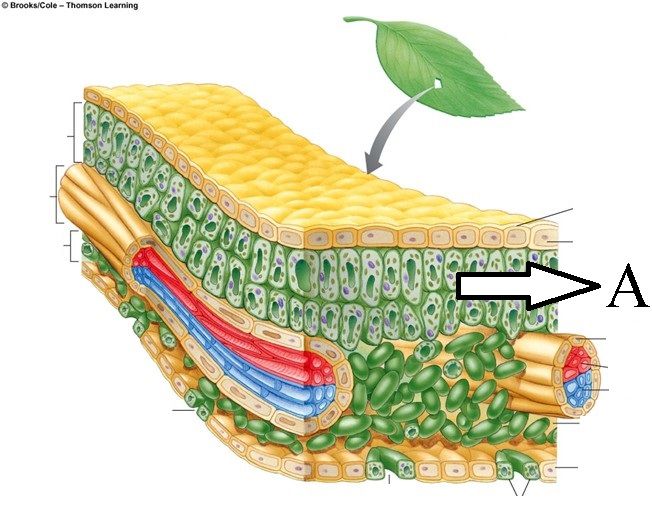


 Pengertian Sistem Organisasi Kehidupan - Starter QuizKUIS SISTEM ORGANISASI KEHIDUPANPengantar sistem organisasi kehidupan - Starter QuizTingkat Organisasi Kehidupan: Sel, Jaringan, Organ, Sistem Organ, dan Organisme - Starter QuizCells of different organisms and even cells within the same organism are very diverse in terms of shape, size, and internal organization. One theme that occurs again and again throughout biology is that form follows function. In other words, a cell’s function influences its physical features. Cell Shape The diversity in cell shapes reflects the different functions of cells. Compare the cell shapes shown in Figure 4-4. The long extensions that reach out in various directions from the nerve cell shown in Figure 4-4a allow the cell to send and receive nerve impulses. The flat, platelike shape of skin cells in Figure 4-4b suits their function of covering and protecting the surface of the body. As shown below, a cell’s shape can be simple or complex depending on the function of the cell. Each cell has a shape that has evolved to allow the cell to perform its function effectively. SECTION 2 OBJECTIVES ● Explain the relationship between cell shape and cell function. ● Identify the factor that limits cell size. ● Describe the three basic parts of a cell. ● Compare prokaryotic cells and eukaryotic cells. ● Analyze the relationship among cells, tissues, organs, organ systems, and organisms. VOCABULARY plasma membrane cytoplasm cytosol nucleus prokaryote eukaryote organelle tissue organ organ system Cells have various shapes. (a) Nerve cells have long extensions. (b) Skin cells are flat and platelike. (c) Egg cells are spherical. (d) Some bacteria are rod shaped. (e) Some plant cells are rectangular. FIGURE 4-4 (a) Nerve cell (b) Skin cells (c) Egg cell (d) Bacterial cells (e) Plant cells Copyright © by Holt, Rinehart and Winston. All rights reserved. 1. All cubes have volume and surface area. The total surface area is equal to the sum of the areas of each of the six sides (area = length X width). 2. If you split the first cube into eight smaller cubes, you get 48 sides. The volume remains constant, but the total surface area doubles. 3. If you split each of the eight cubes into eight smaller cubes, you have 64 cubes that together contain the same volume as the first cube. The total surface area, however, has doubled again. CELL STRUCTURE AND FUNCTION 73 Cell Size Cells differ not only in their shape but also in their size. A few types of cells are large enough to be seen by the unaided human eye. For example, the nerve cells that extend from a giraffe’s spinal cord to its foot can be 2 m (about 6 1/2 ft) long. A human egg cell is about the size of the period at the end of this sentence. Most cells, how- ever, are only 10 to 50 μm in diameter, or about 1/500 the size of the period at the end of this sentence. The size of a cell is limited by the relationship of the cell’s outer surface area to its volume, or its surface area–to-volume ratio. As a cell grows, its volume increases much faster than its surface area does, as shown in Figure 4-5. This trend is important because the materials needed by a cell (such as nutrients and oxygen) and the wastes produced by a cell (such as carbon dioxide) must pass into and out of the cell through its surface. If a cell were to become very large, the volume would increase much more than the surface area. Therefore, the surface area would not allow materials to enter or leave the cell quickly enough to meet the cell’s needs. As a result, most cells are microscopic in size. Comparing Surface Cells Materials microscope, prepared slides of plant (dicot) stem and ani- mal (human) skin, pencil, paper Procedure Examine slides by using medium magnification (100). Observe and draw the sur- face cells of the plant stem and the animal skin. Analysis How do the surface cells of each organism differ from the cells beneath the surface cells? What is the function of the surface cells? Explain how surface cells are suited to their function based on their shape. Quick Lab Small cells can exchange substances more readily than large cells because small objects have a higher surface area–to-volume ratio. FIGURE 4-5 mb06se_csfs02.qxd 5/18/07 10:54 AM Page 73 74 CHAPTER 4 BASIC PARTS OF A CELL Despite the diversity among cells, three basic features are common to all cell types. All cells have an outer boundary, an interior sub- stance, and a control region. Plasma Membrane The cell’s outer boundary, called the plasma membrane (or the cell membrane), covers a cell’s surface and acts as a barrier between the inside and the outside of a cell. All materials enter or exit through the plasma membrane. The surface of a plasma mem- brane is shown in Figure 4-6a. Cytoplasm The region of the cell that is within the plasma membrane and that includes the fluid, the cytoskeleton, and all of the organelles except the nucleus is called the cytoplasm. The part of the cytoplasm that includes molecules and small particles, such as ribosomes, but not membrane-bound organelles is the cytosol. About 20 percent of the cytosol is made up of protein. Control Center Cells carry coded information in the form of DNA for regulating their functions and reproducing themselves. The DNA in some types of cells floats freely inside the cell. Other cells have a mem- brane-bound organelle that contains a cell’s DNA. This membrane- bound structure is called the nucleus. Most of the functions of a eukaryotic cell are controlled by the cell’s nucleus. The nucleus is often the most prominent structure within a eukaryotic cell. It maintains its shape with the help of a protein skeleton called the nuclear matrix. The nucleus of a typical animal cell is shown inSCIENCE 5 QUARTER 2 Human Body Systems o The Digestive System: Understanding how the body processes food. o The Respiratory System: Exploring the mechanics of breathing and gas exchange. o The Reproductive System: Learning the structures and functions involved in human reproduction. • Biological Classification o Animal and Plant Groups: Classifying organisms based on shared characteristics. o Microorganisms: Studying microscopic life forms and their impact. • Reproduction and Life Cycles o Animal Reproduction: Comparing reproductive strategies across species. o Life Cycles: Exploring the developmental stages of mammals, birds, reptiles, and plants. • Adaptation o Plant and Animal Adaptations: Investigating how organisms change to survive in their specific environments.Bacterial Cell One of the very first organisms to evolve on earth was probably a unicellular organism, like modern bacteria. Ever since then, life has evolved into a multitude of life forms over many millennia. However, we can still trace our ancestry back to this single-celled organism. Bacteria Definition “Bacteria are unicellular organisms belonging to the prokaryotic group where the organisms lack a few organelles and a true nucleus”. Internal Structures • Cytoplasm: A gel-like substance that fills the cell, containing water, enzymes, nutrients, and waste, where metabolic activities occur. • Nucleoid: A region within the cytoplasm that houses the bacterial chromosome, a single, continuous circle of DNA. • Ribosomes: Responsible for synthesizing proteins within the cell. • Plasmids: Small, circular, extra-chromosomal DNA molecules that can provide advantageous traits, such as antibiotic resistance. • Mesosomes: (Optional, less prominent in some views) Folds in the plasma membrane that are believed to be involved in cell division and respiration. Outer Structures & Layers • Cell Wall: A rigid outer layer composed of peptidoglycan that provides structural support, maintains cell shape, and protects against osmotic lysis. Capsule: (Optional) A sticky outer layer of polysaccharide that can help the bacteria adhere to surfaces, protect against phagocytosis by the immune system, and serve as a food reserve. • Plasma Membrane: A selectively permeable barrier that regulates the passage of nutrients and waste products into and out of the cell. Appendages • Flagella: Long, whip-like structures that provide motility, allowing the bacterium to move through its environment. • Pili (and Fimbriae): Hair-like protein appendages. Pili are longer and involved in bacterial conjugation (transfer of genetic material), while the shorter, more numerous fimbriae primarily function in attachment to host cells or surfaces.Life Processes Identify and define the seven life processes (MRS GREN). Classification Group living organisms based on observed similarities and differences. Classify vertebrates into taxonomic groups based on visible physical characteristics. Construct a dichotomous key to classify vertebrates. Cells Compare the structure of generalised plant and animal cells, and selected microbes (e.g. bacteria, fungi and Amoeba) Distinguish among cell wall, cell membrane, nucleus, cytoplasm, temporary and permanent vacuoles, mitochondrion, chloroplast, endoplasmic reticulum and ribosomes. Relate the structure of organelles to their functions; Identify specialised cells such as blood cells, ciliated epithelial cells, nerve cells, root hair cells, sperm cells and egg cells. Explain the importance of cell specialisation in multicellular organisms; include hierarchy of cells, tissues, organs; organ systems and then organism Diffusion, Osmosis, Active transport and Osmoregulation Explain the processes of diffusion, osmosis and active transport. Identify everyday instances of these processes occurring. Discuss the importance of diffusion, osmosis and active transport in living systems. Nutrition in Plants Describe the process of photosynthesis in green plants; test for end products, starch or reducing sugar (glucose). Relate the structure of the leaf of a flowering plant to its function in photosynthesis; draw and label the external features and the internal structure (cross section) of a leaf as seen in cross section under the light microscope. Nutrition in Humans Discuss the importance of a balanced diet in humans. State components of a balanced diet (carbohydrates, fats, proteins, vitamins and minerals, water and roughage and their roles) along with the results of their deficiency or surplus. Suggest dietary recommendations for treating and preventing named deficiency and physiological diseases (such as those outlined in the manual and your notes). Perform tests to distinguish among food substances - Test for proteins (Biuret), fats (grease spot), starch (iodine), reducing sugars (Benedict’s solution). The Digestive System in Humans Relate the structures of the human alimentary canal to their functions; Draw and label simple diagrams of the alimentary canal and internal structure of a tooth required. Describe mastication and the role of teeth in the mechanical breakdown of food to be included. (Compare types of teeth in humans and compare types of teeth in herbivores and carnivores.) Explain the role and importance of enzymes role of digestive enzymes in the mouth, stomach and pancreatic enzymes in the small intestine. Discuss properties of enzymes. Deduce from tables and graphs the effects of temperature and pH on enzyme activity. Experimental Skills Follow all drawing rules as outlined in the drawing skills checklist posted in the classroom (including calculation of magnification).