Loading...


Skill Rubrics
Quiz by Emily Lopez
Customize this quiz to suit your class
Instantly translate to 100+ languages
Tag the questions with any skills you have. Your dashboard will track each student's mastery of each skill.
Give this quiz to my class
How full does the container have to be before disposing of it?
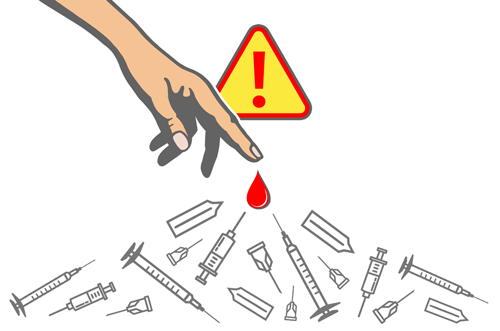
78%
75%
65%
90%
What should you NOT do when completing a task involving a sharp?
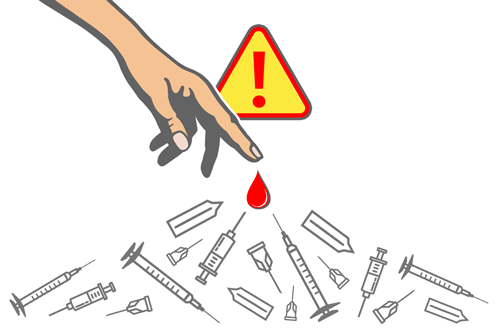
How full does the container have to be before disposing of it?
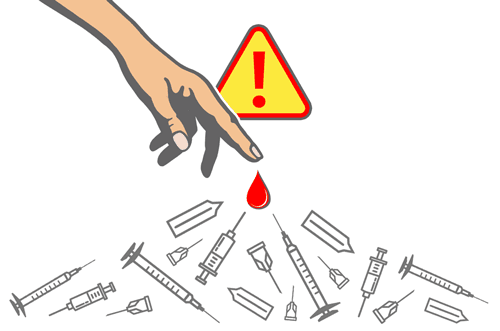
What should you NOT do when completing a task involving a sharp?
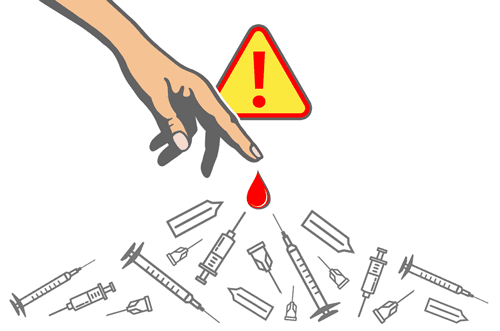
Wash your hands immediately after disposing of sharps
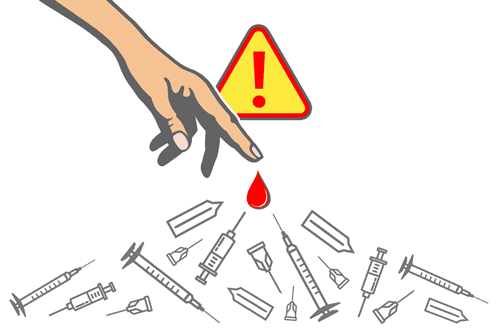
Student knew that he/she should ___ try to catch a sharp object if it was dropped.

You can place your hand in the sharps container.
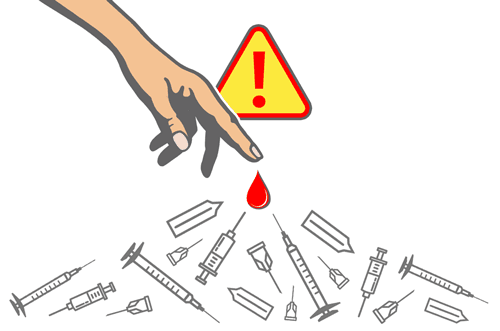
Student places the sharp, _______ first, into the container

What should students be in?

Scrubs are ____ fitting (not too tight to limit movement)

You can wear nail polish.

Students CAN'T have what?

Student has hair ______ to allow easy visibility

Student can't have facial/body piercings

How many pounds (lbs) is needed to ask for help?
1. Which factor is most crucial to verify first when selecting an ICT resource for instruction? A) Content alignment with the textbook B) Alignment with learning objectives C) The resource's popularity among peers D) Cost-effectiveness of the resource 2. When evaluating ICT resources, what is the purpose of checking cultural relevance? A) Ensuring it aligns with current trends B) Making sure it's accessible to all students C) Reflecting the diverse backgrounds of students D) Avoiding resources that are too complex 3. Which key aspect determines the accessibility of an ICT resource? A) How popular the resource is with students B) Its compatibility with existing technology C) Cost of using the resource D) Engagement levels it provides 4. In assessing content quality, why is accuracy important? A) To make resources easier to use B) To ensure alignment with curriculum standards C) To enhance visual appeal D) To provide a more engaging experience 5. Why is it essential for an ICT resource to offer interactivity? A) To improve download speeds B) To promote active learning and engagement C) To meet all technical requirements D) To minimize costs associated with the resource 6. What should be assessed regarding the usability of an ICT resource? A) How much it costs compared to other resources B) How easily students can navigate and use it C) How interactive it is D) Its level of engagement 7. Which of the following best describes the importance of feedback mechanisms in ICT resources? A) They reduce the need for grading B) They allow for automatic updates C) They provide immediate feedback to enhance learning D) They increase the cost-effectiveness of the resource 8. What is an advantage of resources that are scalable and flexible? A) They can adapt to different class sizes or teaching methods B) They are often free C) They do not require technical support D) They are easier to assess 9. Which tool would you use to gain structured feedback from students about an ICT resource? A) Rubrics B) Peer reviews C) Online review platforms D) Student feedback 10. When is a checklist most beneficial in evaluating an ICT resource? A) To provide structured guidelines for scoring B) For highlighting key features and requirements C) To measure student engagement D) To analyze technical support needs 11. Which of these tools helps teachers gather insights from colleagues on a resource's effectiveness? A) Online review platforms B) Student feedback C) Peer review D) Rubrics 12. In the planning stage, how can ICT benefit lesson development? A) By providing only audio resources B) By assisting in research for updated content C) By reducing the need for lesson objectives D) By limiting content access 13. During content delivery, how does ICT enhance the lesson experience? A) By allowing remote control of student devices B) By adding interactivity and visual elements C) By only focusing on text-based resources D) By limiting engagement 14. What is a key advantage of using ICT-based assessment tools? A) Reducing the need for reflection B) Tracking student progress and providing feedback C) Replacing lesson objectives D) Focusing solely on multiple-choice questions 15. Which ICT feature is most beneficial in the reflection stage of a lesson? A) Technical support options B) Feedback mechanisms for immediate assessment C) Tools for students to document learning, like online portfolios D) Interactive quizzes 16. How does ICT aid in skill development? A) By encouraging only memorization B) By fostering digital literacy and critical thinking C) By minimizing interactions with the teacher D) By restricting content variety 17. What does a cost-effective ICT resource entail? A) Being free of charge for all students B) Offering a good balance of educational value and cost C) Having the most features available D) Minimizing interactivity to reduce expenses 18. Why is teacher training crucial in ICT integration? A) To learn troubleshooting for technical issues B) To help only in the planning stage C) To reduce the need for ICT support D) To assess the cultural relevance of ICT tools 19. What challenge might schools face in accessing ICT resources? A) Lack of teacher motivation B) Availability of devices and internet connectivity C) High levels of student engagement D) Excessive interactivity 20. Why should teachers regularly evaluate the ICT resources they use? A) To determine if students enjoy using them B) To assess cost-effectiveness only C) To ensure resources remain effective and up-to-date D) To simplify lesson planningWhat is a rubric? A tool comprising a set of criteria (with possible levels of performance quality on the criteria) developed to assess learners’ work, from written to oral to visual. It is used tomeasureperformance,suchastheprocess of doing something (e.g.,playing a musical instrument, making a speech) or products of the learners’ work (e.g., concept map, laboratory report, bookshelf) (Brookhart, 2013). BENEFITS OF USING RUBRICS Support authentic assessment Reflects how well learners are able to apply knowledge inthe real-world context. Communicate expectations Gives learners an idea of what is expected of them. It is especially useful when the rubrics are communicated to the learners before they are assessed. Improve performance Explicit criteria and performance level descriptions allow learners to understand the desired performance. Learners are able to assess themselves by referring to the specific criteria and performance-level descriptions. Provide informative feedback Instructors are able to provide constructive feedback to learners on their weaknesses and strengths. Promote thinking andlearning 4 Provide informative feedback Instructors are able to provide constructive feedback to learners on their weaknesses and strengths. Learners are able to review and revise their work,thus reflecting on their learning experiences. Ensure fairness Learner performance assessed fairly given its objectivity. It helps avoid disputes between learners and instructors about the scores/grades achieved. TYPES OF RUBRIC ANALYTIC It consists of individual criterion with corresponding descriptor of performance. HOLISTIC It consists of performance descriptors that are placed together to refeclet to overalll performance. ANATOMY OF ANANALYTIC RUBRIC Rating scales with corresponding scores or weights The row represents the criteria for the desired performance, while the column represents the evaluation score. Under the rating scale (corresponding weights orscorescanbeassigned),theperformance descriptors are explicitly stated ANATOMYOF AHOLISTICRUBRIC Descriptions: It comprises the rating scale (corresponding weights or scores can be assigned) in the row while the combined desired performance descriptors are placed in the column. Description of the task The purpose of the assignment is to assess learner’s cognitive and analytic skills in applying knowledge gained and constructed throughout the course Diffusion of Innovation,bywatching the Surrogates movieand writing ananalytical review of the movie in the context of innovation diffusion.Iwant to provide learners with informative feedback on their cognitive and analytic skills such as the following: applying the concepts of innovation diffusion,making judgmentson the scenes related to innovation diffusion identified from the movie,selecting and critiquing theories of innovation diffusion and making connections between the theories,aswell asarguingand proposing necessary solutions to the problemss hown in the movie. ESTABLISHING ALTERNATIVEASSESSMENTINHIGHEREDUCATION VALIDITYAND RELIABILITYOF RUBRICS. Validity Measuring what is supossedto be measured. Reability Yielding consists results. Instruments that are used in the alternative assessment must be aligned to the learning outcomes and measure well what it intends to measure (valid) and produce consistent scores (reliable). The valid instrument will manifest the true ability (latent trait) of learners and permit appropriate inferences to be made about a specific group of people for specific purposes. TYPES OF VALIDITY FACE VALIDITY Simple form of validity thatapplies a superficial and subjective assessment whether the instrument measures what it is supposed to measure. CONTENT VALIDITY Refers to the extent to which the items on a measure assess the same content or how wellthe content material was sampled inthe measure. CONSTRUCT VALIDITY Refers to the extent to which the test may be said to measure a theoretical construct or trait. CONCURRENT VALIDITY Refers to the extent to which scores onanewmeasure are related to scores from a criterion measure administered at the same time. PREDICTIVE VALIDITY Refers to the uses of the scores from the new measure to predict performance on a criterion measure administered ata later time. STEPS TO CONSIDER WHEN ESTABLISHING CONTENT VALIDITY Calculate the level of expert agreeement for the content validity, get expert to verfy. Interview the expert ,make meta contentdata análisis from literatura. STEPS TO CONSIDER WHEN ESTABLISHING CONSTRUCCT VALIDITY Administer the instrument for alll learners, revise any item necccesay, run an apropriates statistical analiysis, administerthe instrument to learners as a pilot test . CONSTRUCTMAP Morepreciseconceptthan construct. Ranges from one extreme to another(fromhightolow,small tolarge,positivetonegative,or strongtoweak). Identifiesthepositionofthe respondentsinthisrange. Representativenessofsampling (questions and ability of respondents). EXAMPLEO FACONSTRUCTMAP:AFFECTIVE LEVELOF AFFECTIVE VARIABLES EXAMPLESOFITEMSIN MEASURINGTEAM WORKING SKILLS 5. Characterisation Learnersvolunteerstodothe groupworks. 4. Organisation Learners are willing to help others,althoughitisnottheir scopeoftask. 3. Valuing Learners respect other team members’opinionwhendoing thediscussion. 2. Responding Learnergivescooperationwhen neededingroupworks. 1. Receiving Learneracceptsthediversityof races and nationalities among groupmembers. EXAMPLEOFACONSTRUCTMAP:PSYCHOMOTOR LEVELOF PSYCHOMOTOR VARIABLES EXAMPLESOFITEMSIN MEASURING DIGITAL SKILLS 7.Origination Learnerscanmodifytheirowndevicesto performbetter. 6.Adaptation Learnerscansolveandtroubleshootthe problemwhileusingthecomputer. 5.ComplexOvertResponse Learnerscanusethecomputercompetently. 4.Mechanism Learners can use the computer independently,butstillmakeminorerrors. 3.GuidedResponses Learnerscanusethecomputer,butstill needguidance. 2.Set Learnersarereadytousethecomputer. 1.Perception Learnerscanobservehowtousecomputer. EXAMPLEOFACONSTRUCTMAP:COGNITIVE LEVELOF COGNITIV E VARIABLES EXAMPLESOFITEMS IN MEASURING THINKINGSKILLS 6. Creating Learners are able to suggest anewmodelorframeworkof learningdigitalcommunity. 5. Evaluating Learners are able to judge the impactofthescenariotowards educationperspective. 4. Analysing Learnerscandifferentiate the factsusingafew theories. 3. Applying Learnerscansolveproblems usingthefactsgiven. 2. Understanding Learnersareabletoexplainthe factsusingtheirownwords. 1. Remembering Learnersonlymemorisethe. Direction of Increasing “X” Learners Learners with high “X” Learners with mid range “X” Learners with low “X” Responses to Item Item response indicate highest level of X Item response indicate higher level of X Item response indicate lower level of X The construct map shows the lower ability students are in line with the lower level of items. This shows that when educators plan to develop an instrument, it Item response indicate lowest level of X Direction of Decreasing “X” is crucial to create an item difficulty thatrepresents learners’ ability. Learners’ ability Learners who engage in level characterisation Learners who engage in level organisation Learners who engage in level valuing Learners who engage in level responding Learners who engage in level receiving Direction of Decreasing“X” MEASURINGCONSTRUCTVALIDITY Unlike content validity, this construct validity can be analysed using statistical analysis. Use Exploratory FactorAnalysis [EFA], Confirmatory FactorAnalysis [CFA] or Unidimensionality to confirm all items are measuring the right construct and the raw variance explained for the latent variables is sufficient. Gap initem map also can show accuracy in construct validity. RELIABILITY The degree to which test scores are consistent over repeated administrations of the same/ equivalent test and therefore considered dependable and repeatable for an individual learner.A test thatproduces highly consistent and stable results (i.e. relative free from random error) is said to be highly reliable. TYPESOFRELIABILITY Test-retest demonstrates the stability of a measure over time 01 Internal consistency most of the items within a rating scale of a concept show consistency of scoring. Inter-rater the extent to which two or more independent raters are consistent in observing, recording and scoring data (should be 70% or higher agreement) 04 Intra-rater relies on one rater to rate an object or event twice (70% or higher of agreement) FACTORSAFFECTING VALIDITYANDHOWTO INCREASEVALIDITY? FACTORS AFFECTING VALIDITY HOWTO INCREASE VALIDITY? 1. Inaccuracy of items in measuringtheoutcomes 1. Vetting session to get reviewsfromtheexpert. 2. Pooritemsdevelopment 2. Followtheformatandtips indevelopinggooditems. 3. Unclearinstructions 3. Do pilot testing to measuretheusabilityof thetest. 4. Interveningevents 4. Controltheinternalthreats validityfactors. 5. Itemsdifficultyisnot suitableforthelearners 5. Create a construct map toensurethereisanitem thatrepresentslearners ability. FACTORS AFFECTING RELIABILIT Y HOWTOINCREASERELIABILITY? 1. TestLength 1. Thetestlengthshouldbeappropriate withtestdifficulty. 2. Test retest interval 2. Suggesteddurationisbetween3 weeksto2months. 3. Variability of scores 3. Doconstructmaptoensuretheitems aresuitablewithlearners’ability. 4. Guessing 4. Penalisetheguessinganswers.You alsocandetecteitherthelearnersare guessing or not using the statistical analysis named guessing analysis andpersonfitanalysis. 5. Inconsistency score from different raters 5. Appointtheratertomarkcertain questionsforalllearners(Thisalways happen when you have more than onesectionandhavemorethanone lecturer). CONCLUSION Coming back to the issue of validity and reliability in assessment, there is a need for educators to put an effort to ensurethattheitemsintheformofquestionsorinstructions arenotonlyclearbutalsoabletomeasurewhatitisintended tomeasurebasedontherelatedlearningoutcomes. Establishingvalidityandreliabilityofinstrumentscan provide educators with some indications of the quality of the measuring tools being used. Valid and reliable instruments enabletheeducatorstocontinuouslyusethemeasuringtools withoutreservation. Reliablenot valid Precisenot Accurate Reliableand valid Preciseand Accurate NotReliable butvalid NotPrecisebut Accurate NotReliable butNotvalid NotPrecisebut NotAccurate 94 We found you were making a quiz on the subject of "What is a rubric? A tool comprising a set of criteria (with possible levels of performance quality on the criteria) developed to assess learners’ work, from written to oral to visual. It is used tomeasureperformance,suchastheprocess of doing something (e.g.,playing a musical instrument, making a speech) or products of the learners’ work (e.g., concept map, laboratory report, bookshelf) (Brookhart, 2013). BENEFITS OF USING RUBRICS Support authentic assessment Reflects how well learners are able to apply knowledge inthe real-world context. Communicate expectations Gives learners an idea of what is expected of them. It is especially useful when the rubrics are communicated to the learners before they are assessed. Improve performance Explicit criteria and performance level descriptions allow learners to understand the desired performance. Learners are able to assess themselves by referring to the specific criteria and performance-level descriptions. Provide informative feedback Instructors are able to provide constructive feedback to learners on their weaknesses and strengths. Promote thinking andlearning 4 Provide informative feedback Instructors are able to provide constructive feedback to learners on their weaknesses and strengths. Learners are able to review and revise their work,thus reflecting on their learning experiences. Ensure fairness Learner performance assessed fairly given its objectivity. It helps avoid disputes between learners and instructors about the scores/grades achieved. TYPES OF RUBRIC ANALYTIC It consists of individual criterion with corresponding descriptor of performance. HOLISTIC It consists of performance descriptors that are placed together to refeclet to overalll performance. ANATOMY OF ANANALYTIC RUBRIC Rating scales with corresponding scores or weights The row represents the criteria for the desired performance, while the column represents the evaluation score. Under the rating scale (corresponding weights orscorescanbeassigned),theperformance descriptors are explicitly stated ANATOMYOF AHOLISTICRUBRIC Descriptions: It comprises the rating scale (corresponding weights or scores can be assigned) in the row while the combined desired performance descriptors are placed in the column. Description of the task The purpose of the assignment is to assess learner’s cognitive and analytic skills in applying knowledge gained and constructed throughout the course Diffusion of Innovation,bywatching the Surrogates movieand writing ananalytical review of the movie in the context of innovation diffusion.Iwant to provide learners with informative feedback on their cognitive and analytic skills such as the following: applying the concepts of innovation diffusion,making judgmentson the scenes related to innovation diffusion identified from the movie,selecting and critiquing theories of innovation diffusion and making connections between the theories,aswell asarguingand proposing necessary solutions to the problemss hown in the movie. ESTABLISHING ALTERNATIVEASSESSMENTINHIGHEREDUCATION VALIDITYAND RELIABILITYOF RUBRICS. Validity Measuring what is supossedto be measured. Reability Yielding consists results. Instruments that are used in the alternative assessment must be aligned to the learning outcomes and measure well what it intends to measure (valid) and produce consistent scores (reliable). The valid instrument will manifest the true ability (latent trait) of learners and permit appropriate inferences to be made about a specific group of people for specific purposes. TYPES OF VALIDITY FACE VALIDITY Simple form of validity thatapplies a superficial and subjective assessment whether the instrument measures what it is supposed to measure. CONTENT VALIDITY Refers to the extent to which the items on a measure assess the same content or how wellthe content material was sampled inthe measure. CONSTRUCT VALIDITY Refers to the extent to which the test may be said to measure a theoretical construct or trait. CONCURRENT VALIDITY Refers to the extent to which scores onanewmeasure are related to scores from a criterion measure administered at the same time. PREDICTIVE VALIDITY Refers to the uses of the scores from the new measure to predict performance on a criterion measure administered ata later time. STEPS TO CONSIDER WHEN ESTABLISHING CONTENT VALIDITY Calculate the level of expert agreeement for the content validity, get expert to verfy. Interview the expert ,make meta contentdata análisis from literatura. STEPS TO CONSIDER WHEN ESTABLISHING CONSTRUCCT VALIDITY Administer the instrument for alll learners, revise any item necccesay, run an apropriates statistical analiysis, administerthe instrument to learners as a pilot test . CONSTRUCTMAP Morepreciseconceptthan construct. Ranges from one extreme to another(fromhightolow,small tolarge,positivetonegative,or strongtoweak). Identifiesthepositionofthe respondentsinthisrange. Representativenessofsampling (questions and ability of respondents). EXAMPLEO FACONSTRUCTMAP:AFFECTIVE LEVELOF AFFECTIVE VARIABLES EXAMPLESOFITEMSIN MEASURINGTEAM WORKING SKILLS 5. Characterisation Learnersvolunteerstodothe groupworks. 4. Organisation Learners are willing to help others,althoughitisnottheir scopeoftask. 3. Valuing Learners respect other team members’opinionwhendoing thediscussion. 2. Responding Learnergivescooperationwhen neededingroupworks. 1. Receiving Learneracceptsthediversityof races and nationalities among groupmembers. EXAMPLEOFACONSTRUCTMAP:PSYCHOMOTOR LEVELOF PSYCHOMOTOR VARIABLES EXAMPLESOFITEMSIN MEASURING DIGITAL SKILLS 7.Origination Learnerscanmodifytheirowndevicesto performbetter. 6.Adaptation Learnerscansolveandtroubleshootthe problemwhileusingthecomputer. 5.ComplexOvertResponse Learnerscanusethecomputercompetently. 4.Mechanism Learners can use the computer independently,butstillmakeminorerrors. 3.GuidedResponses Learnerscanusethecomputer,butstill needguidance. 2.Set Learnersarereadytousethecomputer. 1.Perception Learnerscanobservehowtousecomputer. EXAMPLEOFACONSTRUCTMAP:COGNITIVE LEVELOF COGNITIV E VARIABLES EXAMPLESOFITEMS IN MEASURING THINKINGSKILLS 6. Creating Learners are able to suggest anewmodelorframeworkof learningdigitalcommunity. 5. Evaluating Learners are able to judge the impactofthescenariotowards educationperspective. 4. Analysing Learnerscandifferentiate the factsusingafew theories. 3. Applying Learnerscansolveproblems usingthefactsgiven. 2. Understanding Learnersareabletoexplainthe factsusingtheirownwords. 1. Remembering Learnersonlymemorisethe. Direction of Increasing “X” Learners Learners with high “X” Learners with mid range “X” Learners with low “X” Responses to Item Item response indicate highest level of X Item response indicate higher level of X Item response indicate lower level of X The construct map shows the lower ability students are in line with the lower level of items. This shows that when educators plan to develop an instrument, it Item response indicate lowest level of X Direction of Decreasing “X” is crucial to create an item difficulty thatrepresents learners’ ability. Learners’ ability Learners who engage in level characterisation Learners who engage in level organisation Learners who engage in level valuing Learners who engage in level responding Learners who engage in level receiving Direction of Decreasing“X” MEASURINGCONSTRUCTVALIDITY Unlike content validity, this construct validity can be analysed using statistical analysis. Use Exploratory FactorAnalysis [EFA], Confirmatory FactorAnalysis [CFA] or Unidimensionality to confirm all items are measuring the right construct and the raw variance explained for the latent variables is sufficient. Gap initem map also can show accuracy in construct validity. RELIABILITY The degree to which test scores are consistent over repeated administrations of the same/ equivalent test and therefore considered dependable and repeatable for an individual learner.A test thatproduces highly consistent and stable results (i.e. relative free from random error) is said to be highly reliable. TYPESOFRELIABILITY Test-retest demonstrates the stability of a measure over time 01 Internal consistency most of the items within a rating scale of a concept show consistency of scoring. Inter-rater the extent to which two or more independent raters are consistent in observing, recording and scoring data (should be 70% or higher agreement) 04 Intra-rater relies on one rater to rate an object or event twice (70% or higher of agreement) FACTORSAFFECTING VALIDITYANDHOWTO INCREASEVALIDITY? FACTORS AFFECTING VALIDITY HOWTO INCREASE VALIDITY? 1. Inaccuracy of items in measuringtheoutcomes 1. Vetting session to get reviewsfromtheexpert. 2. Pooritemsdevelopment 2. Followtheformatandtips indevelopinggooditems. 3. Unclearinstructions 3. Do pilot testing to measuretheusabilityof thetest. 4. Interveningevents 4. Controltheinternalthreats validityfactors. 5. Itemsdifficultyisnot suitableforthelearners 5. Create a construct map toensurethereisanitem thatrepresentslearners ability. FACTORS AFFECTING RELIABILIT Y HOWTOINCREASERELIABILITY? 1. TestLength 1. Thetestlengthshouldbeappropriate withtestdifficulty. 2. Test retest interval 2. Suggesteddurationisbetween3 weeksto2months. 3. Variability of scores 3. Doconstructmaptoensuretheitems aresuitablewithlearners’ability. 4. Guessing 4. Penalisetheguessinganswers.You alsocandetecteitherthelearnersare guessing or not using the statistical analysis named guessing analysis andpersonfitanalysis. 5. Inconsistency score from different raters 5. Appointtheratertomarkcertain questionsforalllearners(Thisalways happen when you have more than onesectionandhavemorethanone lecturer). CONCLUSION Coming back to the issue of validity and reliability in assessment, there is a need for educators to put an effort to ensurethattheitemsintheformofquestionsorinstructions arenotonlyclearbutalsoabletomeasurewhatitisintended tomeasurebasedontherelatedlearningoutcomes. Establishingvalidityandreliabilityofinstrumentscan provide educators with some indications of the quality of the measuring tools being used. Valid and reliable instruments enabletheeducatorstocontinuouslyusethemeasuringtools withoutreservation. Reliablenot valid Precisenot Accurate Reliableand valid Preciseand Accurate NotReliable butvalid NotPrecisebut Accurate NotReliable butNotvalid NotPrecisebut NotAccurate 94 ". Would you like to continue making it or start afresh?GUIDELINES ON THE ESTABLISHMENT AND IMPLEMENTATION OF THE RESULTS-BASED PERFORMANCE MANAGEMENT SYSTEM IN THE DEPARTMENT OF EDUCATION I. Rationale 1. The Civil Service Commission (CSC), through the issuance of Memorandum Circular (MC) No. 06, series of 2012, sets the guidelines on the establishment and implementation of the Strategic Performance Management System (SPMS) in all government agencies. The SPMS gives emphasis to the strategic alignment of the agency’s thrusts with the day-to-day operation of the units and individual personnel within the organization. It focuses on measures of performance vis-a-vis the targeted milestones, and provides a credible and verifiable basis for assessing the organizational outcomes and the collective performance of the government employees. 2. As a learner-centered institution, the Department of Education (DepEd) is committed to continuously improve itself to better serve the Filipino learners and the community. The adoption of the SPMS in DepEd strengthens the culture of performance and accountability in the agency, with the DepEd’s mandate, vision and mission at its core. 3. There is a need to concretize the linkage between the organizational thrusts and the performance management system. It is important to ensure organizational effectiveness and track individual improvement and efficiency by cascading the institutional accountabilities to the various levels, units and individual personnel, as anchored on the establishment of a rational and factual basis for performance targets and measures. Finally, it is necessary to link the SPMS with other systems relating to human resources and to ensure adherence to the principle of performance-based tenure and incentives. 4. In view of the above, this Order aims to adopt the SPMS as the Results-based Performance Management System (RPMS). II. Scope of Policy 5. This DepEd Order provides for the establishment and implementation of the RPMS in all DepEd schools and offices, covering all officials and employees, school-based and non school-based, in the Department holding regular plantilla positions. It stipulates the specific mechanisms, criteria and processes for the performance target setting, monitoring, evaluation and development planning. IV. Policy Statement 9. The DepEd hereby sets the guidelines on the establishment and implementation of the Results-based Performance Management System (RPMS) in the Department, stipulating the strategies, methods, tools and rewards for assessing the accomplishments vis-a-vis the commitments. This will be used for measuring and rewarding higher levels of performance of the various units and development planning of all personnel in all levels. 10. For non school-based personnel, the RPMS shall provide for an objective and verifiable basis for rating and ranking the performance of units and individual personnel in view of the granting of the Performance-Based Bonus (PBB) starting 2015. 11. For school-based personnel, the RPMS shall be used only as an appraisal tool, which shall be the basis for training and development. The granting of PBB shall be governed by the existing PBB guidelines. 12. The Department shall adopt the RPMS framework shown in Annex B. 13. The DepEd RPMS shall follow the four-stage performance management system cycle as prescribed by the CSC: i. Performance planning and commitment (Phase I); ii. Performance monitoring and coaching (Phase II); iii. Performance review and evaluation (Phase III); and iv. Performance rewarding and development planning (Phase IV). V. Performance Cycle/Process 14. The RPMS shall align the performance targets and accomplishments with the Department’s mandate, vision, mission and strategic goals. It shall ensure 100% results orientation vis-a-vis the planned targets. On the other hand, the ratee’s demonstration of the required competencies shall be monitored for developmental purposes only. 15. The RPMS cycle shall cover performance for one whole year. All school-based personnel shall follow a performance cycle starting in April of the current year and ending in March of the following year; while non school-based personnel shall follow a performance cycle starting in January and ending in December. Annexes C and D illustrate the performance cycles which shall apply to school-based and non school-based personnel, respectively. 16. The performance planning and commitment shall be done prior to the beginning of the performance cycle; while the performance monitoring and coaching shall take place immediately after Phase I, and continue throughout the performance cycle. The performance review and evaluation, as well as the performance rewarding and development planning shall be done at the end of the performance cycle. A. Phase I: Performance Planning and Commitment 17. The performance planning and commitment shall be done prior to the start of the performance cycle where the rater meets with the ratee to discuss and agree on the following: i. Office KRAs, Objectives and Performance Indicators as anchored to the overall organizational outcomes; and ii. Individual KRAs, Objectives and Performance Indicators as anchored to the Office KRAs and Objectives. 18. The Office Performance Commitment and Review Form (OPCRF) shall be accomplished by the head of office to reflect the Office KRAs, Objectives and Performance Indicators. The head of office, in coordination with the Planning Office, shall ensure alignment of the office plans and commitments to the overall organizational outcomes. The OPCRF shall be equivalent to the IPCRF of the head of office. A sample of the filled out OPCRF, including the instructions for accomplishing the form, is shown in Annex E. 19. The Individual Performance Commitment and Review Form (IPCRF) shall be accomplished by the individual personnel to reflect the agreed Individual KRAs, Objectives and Performance Indicators. A sample of the filled out IPCRF, including the instructions for accomplishing the form, is shown in Annex F. 20. Defining the Key Result Areas. The head of office, in coordination with the Planning Office, shall define the office KRAs as anchored on the overall organizational outcomes. The rater and the ratee shall discuss and agree on the break down of the office KRAs into individual KRAs. Three (3) to five (5) KRAs shall be defined for each office and individual employee. KRAs are broad categories of general outputs or outcomes. It is the mandate or function of the office and/or individual employee. The KRA is the reason why an office and/or job exist. It is an area where the office and/or individual employee are expected to focus on. 21. Setting the Objectives. The head of office shall set three (3) objectives per office KRA. The rater and the ratee shall discuss and agree on three (3) objectives per individual KRA. Objectives are specific tasks, which an office and/or employee need to do to achieve their specific KRAs. In objective setting, the SMART criteria, which stands for Specific, Measurable, Attainable, Relevant, Time Bound, shall be applied. The SMART criteria are illustrated in Annex G. 22. Setting the Timeline. The timeline shall define the target date for accomplishing each of the Objectives. The timeline for the office Objectives shall be set by the head of office in coordination with the Planning Office and School Planning Team; while the timeline for the individual Objectives shall be discussed and agreed by the rater and the ratee. 23. Assigning the Weight. Assigning of weights shall be done per KRA. Weights for each office KRA shall be assigned by the head of office in coordination with the Planning Office; while the weights for each of the individual KRAs shall be discussed and agreed upon by the rater and the ratee. 24. Identifying the Performance Indicators. Using a five (5)-point rating scale, the head of office shall identify a performance indicator for each of the office objectives, while the rater and the ratee shall identify and agree on the performance indicator for each of the individual objectives. Performance indicators are exact quantification of objectives expressed through rubrics. They are assessment tools, which gauge whether a performance is positive or negative. In identifying the performance indicator, the operational definition or meaning of each numerical rating shall be indicated under each relevant dimension (i.e., quality, efficiency, or timeliness) per performance target or success indicator. This shall ensure that the rating is objective, impartial and verifiable. Table 1 below discusses the performance measures by which the indicator must satisfy. Table 1. Performance Measures CATEGORY DEFINITION Effectiveness/Quality The extent to which actual performance compares with targeted performance. The degree to which objectives are achieved and the extent to which targeted problems are solved. In management, effectiveness relates to getting the right things done. Efficiency The extent to which time or resources is used for the intended task or purpose. Measures whether targets are accomplished with a minimum amount or quantity of waste, expense, or unnecessary effort. Timeliness Measures whether the deliverable was done on time based on the requirements of the rules and regulations, and/or clients/stakeholders. Time-related performance indicators evaluate such things as project completion deadlines, time management skills and other time-sensitive expectations. Some Performances are only rated on quality and efficiency, some on quality and timeliness, and others on efficiency only. You need not use all three (3) categories. 25. Demonstration of Competencies. During Phase I, the rater shall discuss with the ratee the competencies required of the individual personnel. Competencies are defined as the knowledge, skills and behavior that individuals demonstrate in achieving one’s results. Competencies shall uphold the DepEd’s core values. They represent the way individuals define and live the values. 26. DepEd shall adopt four classes of competencies as follows: i. Core behavioral competencies are competencies, which cut across the organization; ii. Leadership competencies are competencies intended for managerial positions; a. Third level officials b. Chiefs and Assistant Chiefs c. School Heads and Department Heads iii. Staff Core Skills are competencies intended for staff and teaching-related personnel; and iv. Teaching competencies are competencies intended for teachers. The DepEd-required competencies are illustrated in Annex I. 27. The ratee’s demonstration of the required competencies shall be monitored to effectively plan the interventions needed for behavioral and professional development. The assessment in the demonstration of competencies shall not be reflected in the final rating. 28. Reaching Agreement. Once the office and individual KRAs, Objectives and Performance Indicators are clearly defined, the rater and the ratee shall commit and reach an agreement by signing the OPCRF and IPCRF. The signed/approved OPCRF and IPCRF shall be the basis for monitoring and assessment, which shall take place in Phases II and III, respectively. B. Phase II: Performance Monitoring and Coaching 29. The performance monitoring and coaching shall commence after the rater and the ratee commit on the KRAs, Objectives and Performance Indicators, and sign the OPCRF and IPCRF. This shall be done throughout the year. 30. The two (2) main components of Phase II are the following: i. Performance monitoring; and ii. Coaching and feedback. 31. Performance monitoring shall provide key inputs and objective basis for rating. It shall facilitate feedback and provide evidence of performance. Performance monitoring shall be the responsibility of both the rater and the ratee who agree to track and record significant incidents through the use of the Performance Monitoring and Coaching Form (PMCF) shown in Annex J. Significant incidents are actual events and behaviors in which both positive and negative performances are observed and documented. 32. Coaching and feedback shall be a continuous process. Coaching and feedback shall be provided by the rater and/or shall be sought by the ratee to improve work performance and behavior. The rater, as the coach or mentor of the ratee, playing a critical role in the performance monitoring and coaching, shall provide an enabling environment and intervention to improve the office performance and to manage and develop individual potentials. 33. The PMCF shall capture the significant incidents. It shall provide a record of demonstrated behaviors, competencies and performance, and shall be an effective substitute in the absence of quantifiable data. The rater and the ratee shall sign each significant incident recorded in the PMCF to ensure that agreement has been reached. C. Phase III: Performance Review and Evaluation 34. The performance review and evaluation shall be done at the end of the performance cycle to assess the office and individual employee’s performance level based on the commitments and measures as contained in the signed OPCRF and IPCRF. 35. A mid-year review is prescribed to determine the progress in achieving the Objectives. In exceptional cases, and only if the situation warrants, a one-time recalibration of office and individual Objectives shall be allowed during the mid-year review. Exceptional cases shall include instances when high level decisions are taken into effect such as changes in strategic directions, and circumstances beyond the control of the ratee such as natural and/or man-made calamities, including typhoon, earthquake and other fortuitous events. During the mid-year review, the rater shall inform in writing the ratee of the status of performance, in case of an Unsatisfactory or Poor performance. Coaching, feedback and appropriate interventions shall be provided where necessary. 36. The RPMS shall put premium on KRAs towards the realization of organizational vision, mission, strategic priorities and the OPIF logframe. Hence, rating for planned and/or intervening tasks shall always be supported by reports, documents or any output as proofs of actual performance. In the absence of said bases or proofs, a particular task shall not be rated and shall be disregarded. 37. Office and Individual Performance Assessment. The head of office, in coordination with the Planning Office, shall assess the performance of the office vis-a-vis the committed targets at the beginning of the performance cycle. The rater and the ratee shall discuss and agree on the individual assessment based on the actual accomplishments of each of the KRAs and Objectives. The final rating shall be based solely on the accomplishment of the specific objectives as measured by the Performance Indicators. The OPCRF and IPCRF shall be accomplished and completed by the rater and the ratee to: i. Reflect actual accomplishments and results; ii. Rate each of the objectives; iii. Compute for the score per objective; iv. Determine the overall rating for accomplishments; v. Reach an agreement; and vi. Assess the competencies. 38. Initial self-rating shall be encouraged prior to the rater-ratee discussion. 39. Third Level Officials, as heads of offices, shall accomplish the OPCRF for submission to the Planning Office. The individual assessment of Third Level Officials shall be contained in the CESPES Forms for submission to the Career Executive Service Board (CESB). The BHROD and Personnel Division shall be furnished a copy of both forms. 40. Actual Results. The rater and the ratee shall discuss and agree on the actual accomplishments and results based on the performance commitments and measures made at the beginning of the rating period. They shall evaluate each objective whether it has been achieved or not. The significant incidents as reflected in the PMCF shall be considered for the actual results. 41. Rating the Objectives. Based on the actual accomplishments and results, each of the Objectives shall be rated using the rating scale specified below: Table 2. The RPMS Rating Scale NUMERICAL RATING ADJECTIVAL RATING DESCRIPTION OF MEANING OF RATING 5 Outstanding Performance represents an extraordinary level of achievement and commitment in terms of quality and time, technical skills and knowledge, ingenuity, creativity and initiative. Employees at this performance level should have demonstrated exceptional job mastery in all major areas of responsibility. Employee achievement and contributions to the organization are of marked excellence. 4 Very Satisfactory Performance exceeded expectations. All goals, objectives and targets were achieved above the established standards. 3 Satisfactory Performance met expectations in terms of quality of work, efficiency and timeliness. The most critical annual goals were met. 2 Unsatisfactory Performance failed to meet expectations, and/or one or more of the most critical goals were not met. 1 Poor Performance was consistently below expectations, and/or reasonable progress toward critical goals was not made. Significant improvement is needed in one or more important areas. The final assessment shall correspond to the adjectival description of Outstanding, Very Satisfactory, Satisfactory, Unsatisfactory or Poor. The range of adjectival rating is as per attached in Forms A, B, and C. 42. Process for Computing the Score per KRA. i. The rater and ratee shall ensure that each KRA has been assigned weight according to priority. ii. As an option, the rater and ratee may assign weights to objectives which shall be equal to the total weight assigned to a particular KRA. KRA 1 – Weight assigned is 40% Objective 1 is 20% Objective 2 is 10% Objective 3 is 10% iii. The score per KRA shall be computed using the following formula: 43. Plus Factor. The plus factor shall be considered as another KRA. These are value adding accomplishments, which are not covered within the regular duties and responsibilities. The weight on the plus factor shall not exceed the weight of the highest mandated KRA. For teachers, the plus factor shall be limited to work/activities, which contribute to the teaching-learning process. 44. Determining the Overall Rating for Accomplishments. The overall rating/assessment for the accomplishments shall fall within the following adjectival ratings and shall be in three (3) decimal points: Table 3. Adjectival Ratings RANGE ADJECTIVAL RATING 4.500-5.000 Outstanding 3.500-4.499 Very Satisfactory 2.500-3.499 Satisfactory 1.500-2.499 Unsatisfactory below 1.499 Poor 45. Reaching Agreement. Upon determining the overall rating for the actual accomplishments and results, the rater and the ratee shall reach an agreement by signing the OPCRF and IPCRF. The average rating of individual staff members should not go higher than the collective performance assessment of the office. 46. Assessing the Competencies. The rater shall discuss with the ratee the set of competencies observed during the performance cycle. The competencies shall not be reflected in the final rating. Competencies shall be monitored for developmental purposes. In evaluating the individual’s demonstration of competencies, the rating scale in Table 4 shall apply: Table 4. The DepEd Competencies Scale SCALE DEFINITION 5 Role model 4 Consistently demonstrates 3 Most of the time demonstrates 2 Sometimes demonstrates 1 Rarely demonstrates 5 (role model) – all competency indicators 4 (consistently demonstrates) – four competency indicators 3 (most of the time demonstrates) – three competency indicators 2 (sometimes demonstrates) – two competency indicators 1 (rarely demonstrates) – one competency indicator D. Phase IV: Performance Rewarding and Development Planning 47. The results of the performance review and evaluation shall be used in performance rewarding and development planning. This phase shall be done after Phase III. 48. The rater shall discuss and provide qualitative comments, observations and recommendations in the individual employee’s performance commitment, competency assessment and significant incidents which shall be used for training and professional development. These can be written under the strengths and development needs column of the Part IV-Development Plans of the IPCRF. 49. The rater and the ratee shall identify and discuss the individual’s strengths and development needs, and reflect them in the Part IV-Development Plans of the IPCRF. The competencies which the ratee demonstrated consistently and the areas, where the ratee meet or exceed expectations shall be referred to as the ratee’s strengths. The competencies, which the ratee rarely demonstrates and the areas where the ratee has room for improvement and has not met the expectations, shall be identified as the ratee’s development needs. Make a situational SOLO-based questions in the context of school leadershipSkillSkill and abilitySkill Review - MathSKILL#11