Loading...


Soil and Soil Conservation
Quiz by Alexander Shannon
Customize this quiz to suit your class
Instantly translate to 100+ languages
Tag the questions with any skills you have. Your dashboard will track each student's mastery of each skill.
Give this quiz to my class
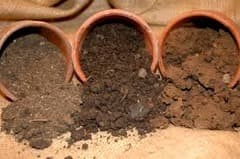
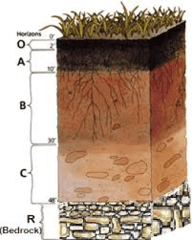
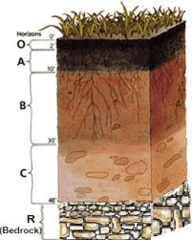
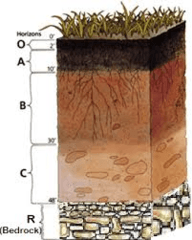
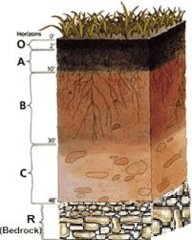
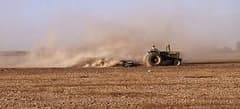
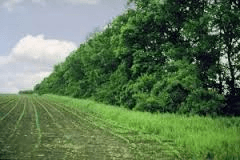 87-Assistant Engineer : Soil survey and soil conservation [85]TRACER IN SOIL SURVEY AND SOIL SURVEY AND SOIL CONSERVATION 133/201887:Assistant engineer in soil survey and soil conservation Title (Slide 0): "Digging Deeper: The Truth About Tillage" Subtitle: How turning the soil affects plants, microbes, and the planet Slide 1: What Is Tillage? Tilling the soil means digging, turning, and loosening it using tools or machines. It's a common farming practice to prepare the land before planting. Slide 2: Why Do Farmers Till? Tillage is usually done before planting to: • Soften and aerate the soil • Mix in nutrients • Remove weeds • Bury crop residues for decomposition and fertility Slide 3: Tools Used for Tillage Farmers use tools like: • Ploughs: Cut deep into the soil • Harrows: Break up clumps and smooth the surface Slide 4: Ploughs vs. Harrows • Ploughs: Used first, go deep, lift and flip soil • Harrows: Used after ploughs, work on the surface to break clumps and level the soil Slide 5: Types of Tillage Systems From most to least soil disturbance: • Conventional Tillage: Deep ploughing • Minimum Tillage: Light disturbance • Conservation Tillage: Only disturb seed zone, keep residues on top • Zero Tillage (No-Till): Plant directly into undisturbed soil Slide 6: Problem 1 – Soil Erosion Tillage removes protective cover, exposing soil to wind and rain. Result: topsoil—the most fertile layer—is easily washed or blown away. Slide 7: Problem 2 – Disruption of Soil Life Soil is a living ecosystem! • Worms, fungi, and bacteria help aerate soil and release nutrients • Tillage destroys their habitat, reducing fertility and soil health Slide 8: Problem 3 – Loss of Soil Structure Healthy soil has pores for air, water, and roots. Tillage breaks the sponge-like structure, and soil compacts over time—like flattening it into a pancake. Hard soil = poor plant growth. Slide 9: Problem 4 – Decreased Organic Matter Microbes "eat" organic matter through aerobic respiration (using O₂ and releasing CO₂). Tillage adds oxygen, microbes speed up, and burn through the soil’s “pantry” of organic matter—leaving it empty and poor. Slide 10: Problem 5 – Greenhouse Gas Emissions Faster decomposition = more CO₂ released. Tillage boosts microbial activity, which increases carbon dioxide emissions—contributing to climate change. ✅ Conclusion (Slide 11): 🌱 Tillage: A Double-Edged Tool Tillage can help prepare the soil and control weeds—but it comes at a cost. Over time, repeated tilling can strip away organic matter, destroy soil life, and release greenhouse gases. It's like spending all your savings for quick results—and being left with nothing for the future. The smarter path? Use reduced or no-till methods that protect soil health, keep carbon in the ground, and support long-term farming success. 1 .Sand soil • Has course/ large particles • they are larger than those of clay • Loses water quickly • Has less organic matter • Has good aeration • Allows good root penetration • Leaching of nutrients is more in sand soil. • Does not stick when wet 2. Clay soil • Has very fine particles which are closely packed • The soil is sticky when wet and can be moulded into any shape • It holds more water than sand and loam • It has poor drainage • It cracks when dry • It has poor aeration • It does not allow good root penetration 2 .Loam soil • Is a mixture of sand and clay particles • It half clay half sand • It can be easily moulded into a shape but easily crumbles • Holds water for a longer time than sand • It sticks on the hands when wet • It has good drainage • It has good aeration • It allows good root penetration • Loam is the best soil Soil Fertility • When soil has enough plant nutrients it is fertile • Soil fertility is the presence of nutrients in the soil • A farmer can add nutrients to the soil to make it fertile • This is done by applying fertilizers and compost. • A fertiliser is a substance that is added to the soil to increase fertility • Nutrients found in the soil include Nitrogen, Phosphorus and Potassium ( NPK ) • They are called major nutrients or macro nutrients because they are needed in large quantities Minor nutrients • Minor nutrients are needed in smaller quantities • Minor nutrients are also called micro nutrients or trace elements • Examples of minor nutrients are boron, iron, zinc, manganese, magnesium and molybdenum Soil erosion • Is the washing away of top soil by agents such as Water Wind Animals Humans 1. Water: • Water washes away soil when it rains. • Loose soil is washed away into dams and rivers. • Steep slopes also lead to soil erosion. • Ploughing 2 . Wind • The blowing away of soil by wind causes soil erosion. • When people cut down trees wind erosion easily takes place. • Type of soil also leads to wind erosion. Which soil type is easily eroded by wind? 3 . Animals • Animal cause soil erosion by overgrazing. • Overgrazing is when animals eat plant or vegetation leaving the ground surface bare. • Animals walking on the same pathway for a long time make the soil loose. • Animals that live underground also burrow loosening the soil. • This makes soil break easily and get washed away. WATER WATER CONSERVATION Water • Water is important in agriculture • It is used to: Clean farm tools Mould bricks Wash milking equipment Cool machines Provide homes(habitat) for fish Give animals drinking and bathing water Sources of Water Natural sources 1. Natural rains: • rain water from the clouds is a primary source of water. • It is used to water crops such as maize, millet, sorghum and so on during the rainy season. • Rain water that collects into the rivers and dams is used by animals and people for drinking. 2 . Rivers : • Rivers are some of the major sources of water for different activities such as fishing, boat cruising and irrigation. 3 . Streams : • A stream is a small river. • Streams supply water for irrigating garden crops especially in rural areas. • They are also a source of water for animals to drink and bath. Sources of Water 4 . Springs : • Springs are usually found on hilly areas. • They result from pressure of underground streams. • The pressure forces water underground to form a channel to the surface of the soil and flow above the ground. Sources of Water Man made sources Man discovered that water for agriculture was not enough during the rain and cool dry seasons. They decided to make structures which would harvest or collect and store water for future use. 1.Protected well: • Wells are dug in the ground by hand. • They are often lined with bricks and concrete so that they do not cave in. • Protected wells are covered, therefore are safe to drink from. 2 . borehole : • They are deep holes made by drilling machines. • Drilling can be done up to 70 metres deep. • Water is pumped using an electric pump or hand pump. Sources of Water 3 . Dams : • A dam is a large wall or barrier built to hold water to save it for future use. 4 . Weir : • A weir is made by construction a cement brick wall or concrete wall across a river to trap water and eroded soil. • water flows over the wall when the river is inflood. 5 .Water tank : • Is a temporary manmade water source. • Water from a water tank is usually harvested from roof tops or it works along a borehole or protected well as temporary storage. • Water is pumped from the borehole or protected well into the water tank. 6 . reservoir : • A large natural or manmade lake used as a source of water. PLANTS Uses of plants • Fibre for making clothes • Oil for cooking, making paint and chemicals • Sugar for tea • Wood for timber • Refreshing drinks and alcohol • Food for people and animals • Protect the soil from erosion • Plants supply us with fresh oxygen for breathing. • Some plant parts are used as medicine. Conservation means prevention of loss or damage to something. Conservation of natural resources means keeping or managing and preventing our natural resources from being wasted, damaged or going into extinction, that is disappearing. Natural resources are nature’s gifts to human beings. Therefore, we should keep and manage them well. WHY NATURAL RESOURCES SHOULD BE CONSERVED(MANAGED): The following are the reasons why natural resources should be conserved(managed): 1. To prevent waste of our resources. 2. To preserve them for future use, For examples Land, trees etc. 3. To generate more income and develop our economy. For example, Zoological gardens, mineral resources and tourist centres like Ikogosi warm and cold-water spring. 4. To prevent some rare birds and animals from going into extinction (stop existing). 5. To prevent erosion. This is because these trees help to hold the soil and prevent it from being washed away easily by erosion. HOW TO MANAGE (CONSERVE) OUR NATURAL RESOURCES. The following are ways to manage our natural resources: 1. Avoiding bush burning. 2. Tree planting should be encouraged. 3. Creation of more games reserves like Yankari Game Reserve. 4. Avoiding of oil spillage and dumping of wastes into drains. 5. Adding of manures and fertilizers to enrich our soil. Soil Formation and ConservationMake a test, with answers best on the following: Conduct an investigation to provide evidence that living things are made of cells; either one cell or many different numbers and types of cells. Supporting Content LS1.A: Structure and Function • All living things are made up of cells, which is the smallest unit that can be said to be alive. An organism may consist of one single cell (unicellular) or many different numbers and types of cells (multicellular). (MS-LS-1.1) Further Explanation: Emphasis is on developing evidence that living things are made of cells, distinguishing between living and non-living things, and understanding that living things may be made of one cell or many and varied cells. In multicellular organisms, the body is a system of multiple interacting subsystems. These subsystems are groups of cells that work together to form tissues and organs that are specialized for particular body functions. (MS-LS-1.3) Further Explanation: Emphasis is on the conceptual understanding that cells form tissues and tissues form organs specialized for particular body functions. Examples could include the interaction of subsystems within a system and the normal functioning of those systems. Organisms reproduce, either sexually or asexually, and transfer their genetic information to their offspring. (MS-LS-1.4) • Living things share certain characteristics. (These include response to environment, reproduction, energy use, growth and development, life cycles, made of cells, etc.) (MS-LS1.4) Further Explanation: Examples should include both biotic and abiotic items, and should be defended using accepted characteristics of life. Plants, algae (including phytoplankton), and many microorganisms use the energy from light to make sugars (food) from carbon dioxide from the atmosphere and water through the process of photosynthesis, which also releases oxygen. These sugars can be used immediately or stored for growth or later use. (MS-LS-1.5) Further Explanation: Emphasis is on tracing movement of matter and flow of energy. Supporting Content LS1.C: Organization for Matter and Energy Flow in Organisms • Within individual organisms, food moves through a series of chemical reactions (cellular respiration) in which it is broken down and rearranged to form new molecules, to support growth, or to release energy. (MS-LS-1.6) Further Explanation: Emphasis is on describing that molecules are broken apart and put back together and that in this process, energy is released and on understanding that the elements in the products are the same as the elements in the reactants. Organisms, and populations of organisms, are dependent on their environmental interactions both with other living things and with nonliving factors. (MS-LS-2.1) • In any ecosystem, organisms and populations with similar requirements for food, water, oxygen, or other resources may compete with each other for limited resources, access to which consequently constrains their growth and reproduction. (MS-LS-2.1) • Growth of organisms and population increases are limited by access to resources. (MS-LS-2.1) Further Explanation: Emphasis is on cause and effect relationships between resources and growth of individual organisms and the numbers of organisms in ecosystems during periods of abundant and scarce resources. Similarly, predatory interactions may reduce the number of organisms or eliminate whole populations of organisms. Mutually beneficial interactions, in contrast, may become so interdependent that each organism requires the other for survival. Although the species involved in these competitive, predatory, and mutually beneficial interactions vary across ecosystems, the patterns of interactions of organisms with their environments, both living and nonliving, are shared. (MS-LS-2.2) Further Explanation: Emphasis is on predicting consistent patterns of interactions in different ecosystems in terms of the relationships among and between organisms and abiotic components of ecosystems. Examples of types of interactions could include competitive, predatory, and mutually beneficial. Food webs are models that demonstrate how matter and energy is transferred between producers, consumers, and decomposers as the three groups interact within an ecosystem. Transfers of matter into and out of the physical environment occur at every level. Decomposers recycle nutrients from dead plant or animal matter back to the soil in terrestrial environments or to the water in aquatic environments. The atoms that make up the organisms in an ecosystem are cycled repeatedly between the living and nonliving parts of the ecosystem. (MS-LS-2.3) Further Explanation: Emphasis is on describing the conservation of matter and flow of energy into and out of various ecosystems, and on defining the boundaries of the system. Ecosystems are dynamic in nature; their characteristics can vary over time. Disruptions to any physical or biological component of an ecosystem can lead to shifts in all its populations. (MSLS-2.5) Further Explanation: Emphasis is on recognizing patterns in data and making warranted inferences about changes in populations, and on evaluating empirical evidence supporting arguments about changes to ecosystems. Biodiversity describes the variety of species found in Earth’s terrestrial and oceanic ecosystems. The completeness or integrity of an ecosystem’s biodiversity is often used as a measure of its health. (MS-LS-2.6) Supporting Content LS4.D: Biodiversity • Changes in biodiversity can influence humans’ resources, such as food, energy, and medicines, as well as ecosystem services that humans rely on—for example, water purification and recycling. (MS-LS-2.6) Supporting Content ETS1.B: Developing Possible Solutions • There are systematic processes for evaluating solutions with respect to how well they meet the criteria and constraints of a problem. (MS-LS-2.6) Further Explanation: Examples of ecosystem services could include water purification, nutrient recycling, and prevention of soil erosion. Examples of design solution constraints could include scientific, economic, and social considerations. Genes are located in the chromosomes of cells, with each chromosome pair containing two variants of each of many distinct genes. Each distinct gene chiefly controls the production of specific proteins, which in turn affects the traits of the individual. Structural changes to genes (mutations) can result in changes to proteins, which can affect the structures and functions of the organism and thereby change traits. (MS-LS-3.1) Supporting Content LS3.B: Variation of Traits • In addition to variations that arise from sexual reproduction, genetic information can be altered because of mutations. Though rare, mutations may result in significant changes to the structure and function of proteins. Changes can be beneficial, harmful, or neutral to the organism. (MS-LS-3.1) Further Explanation: Emphasis is on conceptual understanding that changes in genetic material may result in making different proteins. Organisms reproduce, either sexually or asexually, and transfer their genetic information to their offspring. (MS-LS-3.2) Supporting Content LS3.A: Inheritance of Traits • Variations of inherited traits between parent and offspring arise from genetic differences that result from the subset of chromosomes (and therefore genes) inherited. (MS-LS-3.2) Supporting Content LS3.B: Variation of Traits • In sexually reproducing organisms, each parent contributes half of the genes acquired (at random) by the offspring. Individuals have two of each chromosome and hence two alleles of each gene, one acquired from each parent. These versions may be identical or may differ from each other. (MS-LS-3.2) Further Explanation: Emphasis is on using models such as simple Punnett squares and pedigrees, diagrams, and simulations to describe the cause and effect relationship of gene transmission from parent(s) to offspring and resulting genetic variation. The collection of fossils and their placement in chronological order is known as the fossil record and documents the change of many life forms throughout the history of the Earth. Anatomical similarities and differences between various organisms living today and between living and once living organisms in the fossil record enable the classification of living things. (MS-LS-4.1, MS-LS-4.2) Further Explanation: Emphasis is on finding patterns of changes in the level of complexity of anatomical structures in organisms and the chronological order of fossil appearance in the rock layers. The collection of fossils and their placement in chronological order is known as the fossil record and documents the change of many life forms throughout the history of the Earth. Anatomical similarities and differences between various organisms living today and between living and once living organisms in the fossil record enable the classification of living things. (MS-LS-4.1, MS-LS-4.2) Further Explanation: Emphasis is on explanations of the relationships among organisms in terms of similarity or differences of the gross appearance of anatomical structures. Scientific genus and species level names indicate a degree of relationship. (MS-LS-4.3) Further Explanation: Emphasis is on inferring general patterns of relatedness among structures of different organisms by comparing diagrams, pictures, specimens, or fossils. Natural selection leads to the predominance of certain traits in a population, and the suppression of others. (MS-LS-4.4) Further Explanation: Emphasis is on using concepts of natural selection, including overproduction of offspring, passage of time, variation in a population, selection of favorable traits, and heritability of traits. In artificial selection, humans have the capacity to influence certain characteristics of organisms by selective breeding. One can choose desired parental traits determined by genes, which are then passed to offspring. (MS-LS-4.5) Further Explanation: Emphasis is on identifying and communicating information from reliable sources about the influence of humans on genetic outcomes in artificial selection (such as genetic modification, animal husbandry, gene therapy), and on the influence these technologies have on society as well as the technologies leading to these scientific discoveries. Adaptation by natural selection acting over generations is one important process by which species change over time in response to changes in environmental conditions. Traits that support successful survival and reproduction in the new environment become more common; those that do not become less common. Thus, the distribution of traits in a population changes. (MS-LS-4.6) Further Explanation: Emphasis is on using mathematical models, probability statements, and proportional reasoning to support explanations of trends in changes to populations over time. Examples could include Peppered Moth population changes before and after the industrial revolution.