Tag the questions with any skills you have. Your dashboard will track each student's mastery of each skill.
Give this quiz to my class
Q 1/30
Score 0
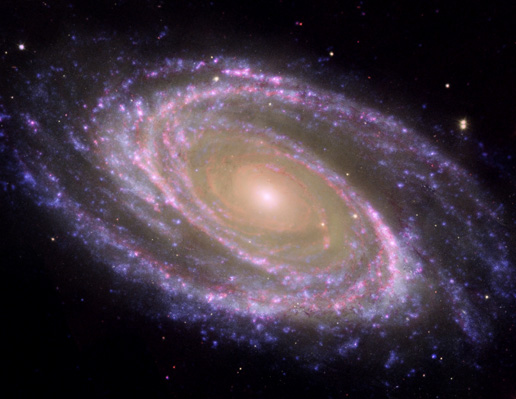
The following is a picture of what type of galaxy?
30
Spiral
Irregular
Elliptical
Q 2/30
Score 0
The sun accounts for _________% of the mass in our solar system.
30
90
99.85
50
30 questions
Q.
The following is a picture of what type of galaxy?
1
30 sec
Q.
The sun accounts for _________% of the mass in our solar system.
2
30 sec
Q.
Stars with more mass last longer than stars with less mass.
3
30 sec
Q.
What two elements make up the majority of stars?
4
30 sec
Q.
______________________ are spacecraft that carry scientific instruments to collect and transmit data. They do not carry human passengers. Each one has a specific mission.
5
30 sec
Q.
Large, hot stars tend to be _________________ than small, cooler stars.
6
30 sec
Q.
The following is a picture of what type of galaxy?
7
30 sec
Q.
________________________ is the term used to discuss all of space and everything in it.
8
30 sec
Q.
Select the list that has the planets ordered correctly from closest to farthest away from the sun.
9
30 sec
Q.
______________ and _____________ affect gravitational force.
10
30 sec
Q.
Electromagnetic radiation is energy transferred through space by electromagnetic waves.
11
30 sec
Q.
__________________________ are dark areas on the sun's surface where the plasma is cooler than other areas.
12
30 sec
Q.
American astronauts (Neil Armstrong, Buzz Aldrin, and Michael Collins), traveled to the moon aboard Apollo 11 in which year?
13
30 sec
Q.
The _________________________is used to show the pattern between absolute brightness and temperature of stars. The surface temperature is plotted on the x-axis. The absolute brightness is plotted on the y-axis.
14
30 sec
Q.
A ________________________ is how long it takes for a planet to spin on it's axis once.
15
30 sec
Q.
Stars that are ______________ in color have the highest temperature (30,000K-60,000K).
16
30 sec
Q.
The following image is an optical instrument that forms enlarged images of distance objects. It can detect electromagnetic radiation to collect data and produce images of objects in space. Some even have a spectrograph that determines the specific elements in stars.
17
30 sec
Q.
_____________________ is the distance between two corresponding parts of a wave (example: crest to crest).
18
30 sec
Q.
These orbit the sun and have enough gravity to be a sphere (like planets). They have not cleared the area of their orbit.
19
30 sec
Q.
A ____________________ is how much time/how long it takes for a planet to orbit the sun.
20
30 sec
Q.
An astronomical unit (AU) is equivalent to 150,000,000 kilometers.
21
30 sec
Q.
The outer layer of the sun's atmosphere is called the __________________________. It looks like a white halo and extends for millions of kilometers into space.
22
30 sec
Q.
A ___________________ is a large cloud of gas and dust in space. All stars start in one of these.
23
30 sec
Q.
The process where atoms combine to form heavier atoms is referred to as ___________________________.
24
30 sec
Q.
When a supergiant runs out of fuel and suddenly explodes, we call it a ____________________.
25
30 sec
Q.
Stars that appear _____________ in color are the coldest (less than 3,500K).
26
30 sec
Q.
Apparent brightness is a star's brightness as seen from earth. Absolute brightness is the brightness a star would have if it was a standard distance from earth.
27
30 sec
Q.
A ________________ is a group of stars, star systems, star clusters, dust and gas bound together by gravity.
28
30 sec
Q.
Light-years describes the distance light travels in one year (9.46 trillion kilometers).
29
30 sec
Q.
An ________________ is a planet outside of our own solar system.