Loading...

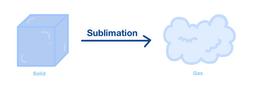
Solid to Gas o Sublimation
Quiz by Michelle R. Doromal
Customize this quiz to suit your class
Instantly translate to 100+ languages
Tag the questions with any skills you have. Your dashboard will track each student's mastery of each skill.
Give this quiz to my class
1. Unti unting naging ______________ ang mothball o naphthalene ball kaya ito ay lumiit.
gas
plasma
solid
liquid
2. Ang pagbabagong anyo ng ________ patungong _________ dahil sa init ay tinatawag na Sublimation.
Solid-Gas
Solid-Liquid
Liquid-Gas
Gas-Liquid
1. Unti unting naging ______________ ang mothball o naphthalene ball kaya ito ay lumiit.
2. Ang pagbabagong anyo ng ________ patungong _________ dahil sa init ay tinatawag na Sublimation.
3. Nakakaapekto ang _________ sa anyo ng mga bagay sa paligid.
4. Alin sa mga sumusunod na Solid ang maaaring magbago ng anyo patungo sa pagiging gas?
5. Ang proseso ng Sublimation ay nagsisimula sa anyong ____________.
 Science Exam Parts of the Atom: The atom consists of a nucleus at its center, containing protons (positively charged) and neutrons (neutral), while electrons (negatively charged) orbit in electron shells around the nucleus. Atomic Number: The atomic number of an element is the number of protons in its nucleus. It defines the element and determines its place on the periodic table. Properties of Metals: Metals have properties like conductivity, malleability (can be flattened into sheets), and ductility (can be drawn into wires). Elements, Compounds, and Mixtures: Elements consist of only one type of atom. Compounds are made of two or more different elements chemically bonded. Mixtures are combinations of substances that are physically mixed but not chemically bonded. Homogeneous and Heterogeneous Mixtures: Homogeneous mixtures have a uniform composition (e.g., saltwater), while heterogeneous mixtures have different phases (e.g., oil and water). Changes of State: Changes like melting, evaporation, and condensation are examples of physical changes of state. Chemical and Physical Properties: Chemical properties describe how a substance can change to form a new substance, while physical properties are characteristics like color, texture, and state (solid, liquid, gas). Physical and Chemical Change: A physical change involves the appearance or state of matter, but the substance remains the same. A chemical change involves the formation of new substances. Chemical Equations: Chemical reactions can be represented with chemical equations that show reactants (what you start with) and products (what is formed). Chemical Formulas: Chemical formulas represent the composition of compounds. For example, NaHCO3 is sodium bicarbonate, consisting of one sodium (Na), one hydrogen (H), one carbon (C), and three oxygen (O) atoms. Energy: Types of Energy: Energy can be kinetic (related to motion), potential (stored energy), thermal (heat energy), electrical, chemical, and more. Units of Energy: Common units of energy include joules (J) and calories (cal). Law of Conservation of Energy: Energy cannot be created or destroyed, only transferred or transformed from one form to another. Energy Transfer and Transformation: Energy moves from one object to another, changing forms along the way. Useful and Waste Energy: Useful energy is what can be harnessed and used for a specific purpose. Waste energy is energy that is not used and is often lost. Energy Flow Diagrams: These diagrams show how energy is transferred or transformed within a system. Energy Efficiency: Efficiency is a measure of how much useful energy is obtained from a system. It can be calculated using the equation: Efficiency = (Useful Energy Output / Total Energy Input) x 100%. Fossil Fuels and Renewable Energy: Fossil fuels, like coal, oil, and natural gas, are non-renewable sources of energy. Renewable energy sources include solar, wind, and hydroelectric power. Variables: Independent Variable: The variable that is manipulated or changed in an experiment. Dependent Variable: The variable that is measured or observed and is affected by changes in the independent variable. Controlled Variables: Factors that are kept constant to ensure a fair and accurate experiment.(5th) Science - Solid to Liquid/Liquid to Gas NEW-SC.8.P.8.1-1. Students will describe the motion of particles in solids, liquids, and/or gases. 2. Students will identify the molecular structure of a solid, liquid, and gas when given a picture. 3. Students distinguish the relationship between the motions of particles as a substance moves from a solid to a liquid to a gas and vice versa. 4. Students will identify the benefits and limitations of the use of scientific models. 5. Students will describe and/or analyze common methods and/or models used in different fields of study. 6. Students will identify the benefits and limitations of the use of scientific models. 7. Students will identify how technology is essential to science.Create a multiple choice quiz with the following information: Earth’s Sphere Everything on Earth can be placed into one of four major subsystems: land, water, living things, and air. These four subsystems are called "spheres." Specifically, they are the "geosphere" (land), "hydrosphere" (water), "biosphere" (living things), and "atmosphere" (air). Geosphere All the rock, soil and sediments that makeup Earth’s land. It comes from the word “Geo” which means “Earth.” Hydrosphere All the oceans, rivers, lakes and water on Earth. It comes from the word “Hydro” which means “water.” Atmosphere All the gasses surrounding the earth. It comes from the word “Atmos” which means “air.” Biosphere All the living things on Earth. It comes from the word “Bio” which means “life.” Interact act in such a way as to have an effect on another; Freshwater naturally occurring water that is not salty, and is suitable for consumption if clean or processed. Groundwater water held underground in the soil or in pores and crevices in rock Recycling To reuse something that would have otherwise been thrown out or to turn it into something usable again instead of sending it to a landfill. Erosion After pieces of the earth are broken down through weathering, those pieces are moved through Erosion. Erosion is the process of moving things from one place to another. Mushroom Rocks Naturally occurring rocks that look like a mushroom. They can be formed when sand gets carried by wind and hits the rock. This weathers the bottom of the rock more than the top. Dry Ice A solid form of carbon dioxide that is very cold and turns directly from a solid to a gas.Earth's Water Water Everywhere. Water fills oceans, lakes, and ponds. It flows in rivers, streams, and underground. It is even in the air. Some parts of Earth have snow and ice, which are frozen water. Water covers most of Earth's surface. Salt water in the oceans makes up much of Earth's water. Earth has much less fresh water. Many plants and animals need this fresh water to survive. Some of this fresh water is aboveground, while other fresh water is underneath Earth's surface. What are some ways you use Earth's water? Different Forms of Water. Liquid water is the most common state of Earth's water. It takes the shape of the container it is in. Liquid water is always moving even if you can't see it move. It flows in rivers and streams, and it crashes as ocean waves. Not all water is liquid. When liquid water gets very cold, it freezes to form ice. Ice is another state of water-solid water. Ice can float on liquid water. People form ice into different shapes. Artists even carve ice to make sculptures. Much of Earth's frozen water is at the North and South Poles, Earth's coldest areas. Some of Earth's water is in an invisible state as a gas called water vapor. While it's always invisible, water vapor is all around us. Changing Water. Earth's water is always changing from one state to another. When frozen water is heated, it melts and becomes liquid water. When liquid water is cooled, it freezes and becomes ice. Liquid water can become a gas, too. Have you ever seen a puddle of water dry up on a hot day? Energy from the Sun changed the liquid to a gas in a process called evaporation. Water evaporates from oceans, rivers, lakes, and puddles all over the world. When water vapor in the air cools down, it changes from a gas to a liquid. This process is called condensation. Clouds are made up of tiny drops of water formed by condensation. The tiny drops stick together, creating larger, heavier drops. Once they're large enough, they fall to the ground as rain or another type of precipitation. Water Is Important. Rain keeps plants alive and allows them to keep growing. People and other animals need water to survive. We also use it for other purposes, such as fighting fires. It is important to take care of Earth's water. Keeping waste and trash away from water keeps it from becoming dirty and unusable. Polluted water makes people, plants, and animals sick. Would you want to drink and play in polluted water? Based on the provided sources, here is a comprehensive extraction of the information regarding the water cycle, energy transfer, and Earth's wind systems, organized into key points: The Water Cycle and Its Reservoirs • Definition: The water cycle is the continuous movement of water among various reservoirs on Earth. • Water Reservoirs: These are storage locations for water and include: ◦ Oceans, seas, and lakes. ◦ Rivers, glaciers, soil, and rocks. ◦ The atmosphere and living organisms. • Total Volume: The total amount of water on Earth does not change, even when it changes state, because it is constantly being replaced or recycled through the cycle. Main Processes and Energy Transfer The movement of water through the cycle is driven by energy (thermal energy from the Sun) and force (gravity and wind). • Energy Gain (Absorption): ◦ Melting: Water changes from a solid state (ice) to a liquid state and gains energy. ◦ Evaporation: Liquid water changes into a gas state (water vapor) by gaining thermal energy. ◦ Transpiration: A specialized type of evaporation occurring in plants where water vapor is released through tiny holes in leaves called stomata. Approximately 10% of water vapor in the air comes from transpiration. • Energy Loss (Release): ◦ Condensation: Water vapor (gas) cools down and changes back into liquid water, releasing energy. ◦ Freezing: Liquid water changes into a solid state (ice) and loses energy. • Other Key Steps: ◦ Precipitation: Water falls back to Earth as rain, snow, sleet, or hail (snow pellets). ◦ Runoff: Water flows over Earth's surface into streams, rivers, and eventually larger bodies of water like oceans. ◦ Collection: Rainwater is collected in different water bodies to start the cycle again. Forces Driving Water Movement • Gravity: The main force that pulls water downward. It is responsible for: ◦ Bringing precipitation (rain and snow) from clouds to the surface. ◦ Moving ice in glaciers from higher to lower elevations. ◦ Causing liquid water to flow downhill into rivers and seas. ◦ Leakage: Pulling liquid water down into the ground to reach groundwater reservoirs. • Wind: Another force that affects water movement and transports water to different locations on Earth. Atmospheric Processes • Cloud Formation: Water vapor attaches to particles such as dust or smoke in the air and condenses into tiny droplets. When millions of these droplets join, they become heavy and fall as rain. • Convection: The transfer of heat in liquids and gases. ◦ Warm air/liquid: Becomes less dense, lighter, and rises upward. ◦ Cold air/liquid: Is more dense, heavier, and moves downward to replace the warm fluid. ◦ This process leads to convection currents, which help determine regional climates and drive wind and ocean currents. Solar Radiation and Climate The amount of solar energy reaching Earth differs from place to place, which affects the weather: • Hottest Regions (Equator): Sun rays fall perpendicular (vertical). Heat is concentrated on a small area, making the weather hot. • Moderate Regions: Sun rays fall semi-inclined. Heat is distributed over a larger area, making the weather warm. • Coolest Regions (Poles): Sun rays fall very slanted (inclined). Heat is spread over a very large area, making the weather very cold. Earth's Wind System • Wind Formation: Wind is generated when warm air (heated by the Sun) rises and is replaced by cooler air flowing from nearby areas. • Factors Affecting Wind: The amount of solar radiation and the rotation of Earth determine global wind directions. • Global Wind Cycle: Unequal heating between the equator and the poles generates a constant wind system. Warm air rises at the equator and moves toward the poles, while cold air from the poles moves toward the equator. • Importance: If there were no wind, the equator would become extremely hot, the poles would freeze solid, and many ecosystems would disappear. Practical Examples • Turkey’s Salt Lake: High evaporation in the summer can turn this large lake into a small puddle or dry it up completely. It is a critical site for flamingos, which migrate there to breed and feed on algae in the shallow, warm water.Colloids are one of the primary types of mixture. It is a type of mixture in which solid or liquid particles are dispersed uniformly throughout a gas, liquid or solid. Colloid particles maybe seen in a beam of light such as dust in air and a shaft of sunlight. Blood, whipped cream and fog are examples of colloids. To be classified as colloid, the substance in dispersed phase must be larger than the size of a molecule but smaller than what can be seen with the naked eye. The component typically present in a relatively small amount is called dispersed phase and the substance or solution throughout which particulate is dispersed is called the dispersion medium. Colloid creates a Tyndall effect, it is the effect of light scattering in colloidal dispersion, if no light is shown, then it is a true solution. This effect is used to determine whether a mixture is a true solution or a colloid. A colloid may be a mixture of one substance that may spread out evenly inside another substance. They may be in two different phases or states of matter. One substance can be the dispersion medium, such as water or gas. The other is kind of dispersed medium, sometimes called the 'internal phase'. This is never tiny solid particles. Otherwise, if the dispersion medium is a gas, then the internal phase may be either tiny particles or tiny droplets of a liquid.Classify matter based on measurable, testable, and observable physical properties, including mass, magnetism, physical state (solid, liquid, and gas), relative density (sinking and floating using water as a reference point), solubility in water, and the ability to conduct or insulate thermal energy or electric energy;