STAAR Science Grade 5 2018 - Past Paper
Quiz by Grade 5 Science - Texas Education Agency
Grade 5
Science (2017)
Texas Essential Knowledge and Skills (TEKS)
Feel free to use or edit a copy
includes Teacher and Student dashboards
Measures 16 skills from
With a free account, teachers can
- edit the questions
- save a copy for later
- start a class game
- automatically assign follow-up activities based on students’ scores
- assign as homework
- share a link with colleagues
- print as a bubble sheet
36 questions
Show answers
- Q1Which of these devices is the only one NOT designed to produce both sound and light energy?60s5.6a
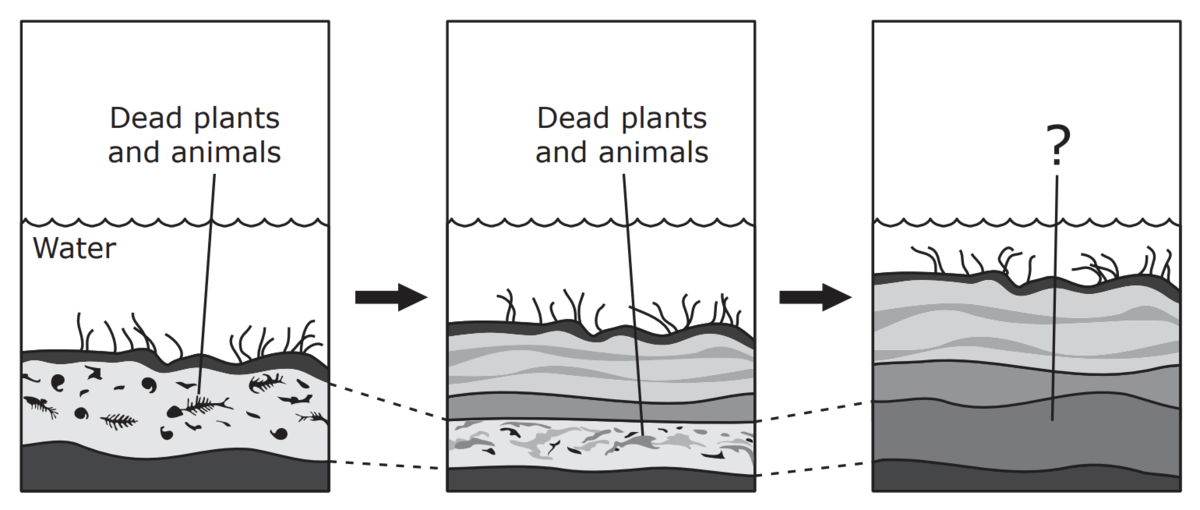
- Q2The diagram shows layers deposited under a body of water. This layering continued for millions of years. What most likely happened to the dead plants and animals?They became an underground aquifer.They became fossil fuels.They were washed away by water.They were eaten by scavengers.60s5.7a
- Q3After a trip to an aquarium, some students compared the tail fin of sharks with the tail fin of bony fish. The students made a chart listing characteristics of each type of tail fin. Based on this information, what is most likely an advantage of the bony fish tail fin over the shark tail fin?It is easier for a bony fish to change direction quickly since muscles control the movement of the tail fin.The bones in the tail fin help a bony fish sink to lower depths in the water when searching for food.The thin spines of the tail fin prevent a bony fish from being seen by larger predator fish.The flexible tail fin is fanned by the water, so a bony fish uses less energy to swim.60s5.10a
- Q4A student places 250 g samples of clay, sand, gravel, and silt in separate flower pots. The pots are set on a wire rack, and dishes are placed beneath the pots so that water can drip through holes and collect. The student then pours 100 mL of water over the sample in each pot. The student measures the time it takes for water to begin dripping from the bottom of each pot. What property of soils is the student most likely examining with this procedure?How much water is needed to dissolve different soilsThe differences in texture between wet and dry soilsHow well different soils retain waterThe amount of time it takes different soils to dry60s
- Q5The table lists some physical properties of two objects. Based on their properties, which of the objects is most likely a metal?Object 2, because all metals float in waterObject 1, because it is a solid that is less dense than waterObject 2, because metals conduct thermal energy and electricityObject 1, because it can be used to provide insulation for thermal energy60s5.5a
- Q6Which of these describes one or more living organisms that depend on another living organism to survive?Bacteria living in the mouth of a horseAn angelfish releasing carbon dioxide into pond waterIvy plants growing up a fence to obtain more sunlightMold living on a hard, rocky surface60s5.9a
- Q7The picture shows an athlete hitting a ball with a tennis racquet. What is the athlete demonstrating in the picture?Doing work by pulling the racquet and changing the ball’s position but not its motionChanging the position and motion of the ball without doing any workChanging the position but not the motion of the ballDoing work by pushing the ball and changing its motion and position60s
- Q8A partial wetland food web is shown. Which statement correctly describes the transfer of energy in a food chain in this wetland?Energy is transferred from marsh grasses to crickets to hawks to frogs.Energy is transferred from grasshoppers to crickets to frogs to hawks.Energy is transferred from hawks to shrews to grasshoppers to marsh grasses.Energy is transferred from cattails to crickets to shrews to hawks.60s5.9b
- Q9A group of students is performing an investigation to measure how much liquid water is produced from a 10 L sample of snow. What must occur in order for the students to perform this investigation?The investigation must be performed outside.The temperature of the sample must change.The sample must be kept in a freezer.The physical state of the sample must remain the same.60s
- Q10
A bright-red male cardinal comes to a school bird feeder every morning. Like other cardinals, this bird makes a sharp chirping sound as it hops around the bird feeder.
Which of these is a learned behavior of this bird?
Having red feathersMaking a chirping soundComing to the bird feeder each morningEating seeds during the day60s5.10b - Q11One type of fuel was used for thousands of years before other fuels were commonly used. Which fuel is an alternative resource that was most likely the first fuel used by humans?CoalNatural gasWoodPetroleum60s
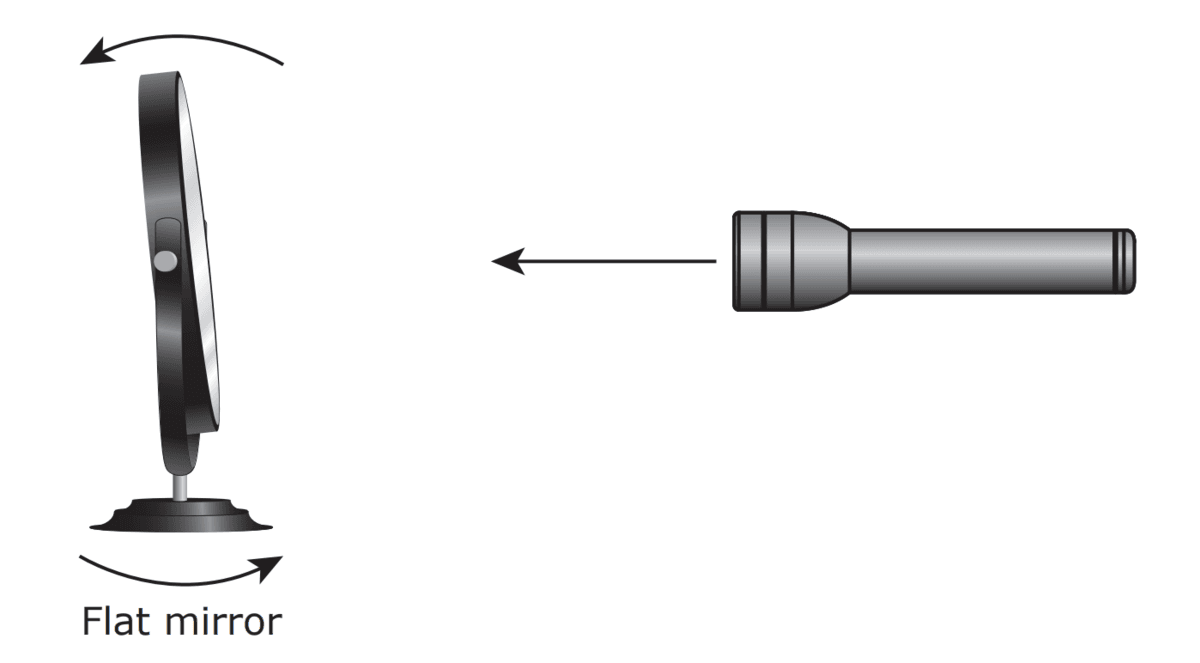
- Q12Some students are feeding a crab in an aquarium. They use tongs to place the food directly in front of the crab. The students look through the side of the aquarium. They notice that the image of the tongs appears to break as the tongs enter the water. Which property of light are the students observing in this situation?Light is absorbed by water and reflected off glass.Light is refracted as it moves from one medium to another medium.Light can be refracted and separated into different colors as it moves from air to a different medium.Light travels in a straight line and can be reflected off the surface of water.60s5.6c
- Q13Students on a field trip observed a valley and wondered how it was formed. The three major characteristics of the valley were recorded. This valley was most likely formed by —a flood with rapidly moving watervolcanic activitythe movement of a glaciera rapid series of earthquakes60s5.7b
- Q14The abalone is a type of sea snail. Adult abalones slowly crawl over rocks near the shore, while larvae float in the water. Which organisms have a life cycle that is most like that of abalones?SnakesHumansBirdsFrogs60s
- Q15This circuit has five light-emitting diode, or LED, lights. It also has one battery and one switch. Which LEDs produce light when the switch is in the position shown?LEDs 1, 3, and 4 onlyLEDs 1, 3, 4, and 5LEDs 3 and 4 onlyLEDs 1, 2, 3, and 460s5.6b