Loading...


Start of year math check in
Quiz by April Zwack
Customize this quiz to suit your class
Instantly translate to 100+ languages
Tag the questions with any skills you have. Your dashboard will track each student's mastery of each skill.
Give this quiz to my class
How many starfish are there? Is the number even or odd?

5; even
6; odd
5; odd
6; even
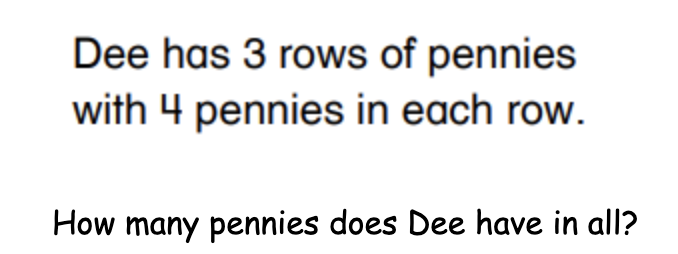
Dee has 3 rows of pennies with 4 pennies in each row. How many pennies does dee have in all?
12
7
10
9
How many starfish are there? Is the number even or odd?

Dee has 3 rows of pennies with 4 pennies in each row. How many pennies does dee have in all?

How many students chose fish as their favorite pet?

How many students chose a cat as their favorite pet?

What is NOT true about this shape?

How many more Hawks are there than eagles?
 Start Of Year Reading TestStart Of Year 3 Maths QuizY8 French - start of year quiz - verb conjugationsY8 French - start of year quiz - phonicsY8 French - start of year quiz - vocab1. What is the primary goal of the board regarding compensation for professional employees? A) To minimize costs B) To attract and retain committed personnel C) To follow state regulations only D) To offer the highest salaries in the district 2. How is the compensation of certificated personnel determined? A) Based solely on local market rates B) Based on the state salary schedule with local supplements C) Based on the number of students taught D) At the discretion of the principal 3. When must teachers receive written notification of their employment status for the following school year? A) After the school year ends B) On the last day of school C) On or before the date the district extends offers of teaching employment D) At the start of the school year 4. Who has the authority to establish the compensation for support staff? A) The school board B) The superintendent C) The principal D) The teachers’ union 5. How often are employees paid? A) Weekly B) Monthly C) Semi-monthly D) Annually 6. What happens if a regular payday falls on a company-observed holiday? A) Employees are paid the following week B) Employees are paid on the last business day preceding that date C) Employees receive double pay D) Payments are canceled 7. Which of the following is NOT a mandatory deduction from an employee’s compensation? A) Federal income taxes B) State income taxes C) Employee bonuses D) FICA taxes 8. How should an employee report an improper deduction from their pay? A) Ignore it B) Report it to human resources or their direct supervisor C) Discuss it with colleagues D) Write a letter to the school board 9. Which of the following statements is true regarding exempt employees’ salaries? A) Their salary can be reduced for any reason. B) They receive full salary regardless of the number of hours worked in a week. C) Their pay is based on the number of days they work. D) They are paid hourly. 10. Under what condition can the district reduce an exempt employee's salary? A) If the employee takes vacation days B) If the employee is absent for personal reasons for one or more full days C) For minor conduct infractions D) If the employee decides to leave earlyGUIDELINES ON THE ESTABLISHMENT AND IMPLEMENTATION OF THE RESULTS-BASED PERFORMANCE MANAGEMENT SYSTEM IN THE DEPARTMENT OF EDUCATION I. Rationale 1. The Civil Service Commission (CSC), through the issuance of Memorandum Circular (MC) No. 06, series of 2012, sets the guidelines on the establishment and implementation of the Strategic Performance Management System (SPMS) in all government agencies. The SPMS gives emphasis to the strategic alignment of the agency’s thrusts with the day-to-day operation of the units and individual personnel within the organization. It focuses on measures of performance vis-a-vis the targeted milestones, and provides a credible and verifiable basis for assessing the organizational outcomes and the collective performance of the government employees. 2. As a learner-centered institution, the Department of Education (DepEd) is committed to continuously improve itself to better serve the Filipino learners and the community. The adoption of the SPMS in DepEd strengthens the culture of performance and accountability in the agency, with the DepEd’s mandate, vision and mission at its core. 3. There is a need to concretize the linkage between the organizational thrusts and the performance management system. It is important to ensure organizational effectiveness and track individual improvement and efficiency by cascading the institutional accountabilities to the various levels, units and individual personnel, as anchored on the establishment of a rational and factual basis for performance targets and measures. Finally, it is necessary to link the SPMS with other systems relating to human resources and to ensure adherence to the principle of performance-based tenure and incentives. 4. In view of the above, this Order aims to adopt the SPMS as the Results-based Performance Management System (RPMS). II. Scope of Policy 5. This DepEd Order provides for the establishment and implementation of the RPMS in all DepEd schools and offices, covering all officials and employees, school-based and non school-based, in the Department holding regular plantilla positions. It stipulates the specific mechanisms, criteria and processes for the performance target setting, monitoring, evaluation and development planning. IV. Policy Statement 9. The DepEd hereby sets the guidelines on the establishment and implementation of the Results-based Performance Management System (RPMS) in the Department, stipulating the strategies, methods, tools and rewards for assessing the accomplishments vis-a-vis the commitments. This will be used for measuring and rewarding higher levels of performance of the various units and development planning of all personnel in all levels. 10. For non school-based personnel, the RPMS shall provide for an objective and verifiable basis for rating and ranking the performance of units and individual personnel in view of the granting of the Performance-Based Bonus (PBB) starting 2015. 11. For school-based personnel, the RPMS shall be used only as an appraisal tool, which shall be the basis for training and development. The granting of PBB shall be governed by the existing PBB guidelines. 12. The Department shall adopt the RPMS framework shown in Annex B. 13. The DepEd RPMS shall follow the four-stage performance management system cycle as prescribed by the CSC: i. Performance planning and commitment (Phase I); ii. Performance monitoring and coaching (Phase II); iii. Performance review and evaluation (Phase III); and iv. Performance rewarding and development planning (Phase IV). V. Performance Cycle/Process 14. The RPMS shall align the performance targets and accomplishments with the Department’s mandate, vision, mission and strategic goals. It shall ensure 100% results orientation vis-a-vis the planned targets. On the other hand, the ratee’s demonstration of the required competencies shall be monitored for developmental purposes only. 15. The RPMS cycle shall cover performance for one whole year. All school-based personnel shall follow a performance cycle starting in April of the current year and ending in March of the following year; while non school-based personnel shall follow a performance cycle starting in January and ending in December. Annexes C and D illustrate the performance cycles which shall apply to school-based and non school-based personnel, respectively. 16. The performance planning and commitment shall be done prior to the beginning of the performance cycle; while the performance monitoring and coaching shall take place immediately after Phase I, and continue throughout the performance cycle. The performance review and evaluation, as well as the performance rewarding and development planning shall be done at the end of the performance cycle. A. Phase I: Performance Planning and Commitment 17. The performance planning and commitment shall be done prior to the start of the performance cycle where the rater meets with the ratee to discuss and agree on the following: i. Office KRAs, Objectives and Performance Indicators as anchored to the overall organizational outcomes; and ii. Individual KRAs, Objectives and Performance Indicators as anchored to the Office KRAs and Objectives. 18. The Office Performance Commitment and Review Form (OPCRF) shall be accomplished by the head of office to reflect the Office KRAs, Objectives and Performance Indicators. The head of office, in coordination with the Planning Office, shall ensure alignment of the office plans and commitments to the overall organizational outcomes. The OPCRF shall be equivalent to the IPCRF of the head of office. A sample of the filled out OPCRF, including the instructions for accomplishing the form, is shown in Annex E. 19. The Individual Performance Commitment and Review Form (IPCRF) shall be accomplished by the individual personnel to reflect the agreed Individual KRAs, Objectives and Performance Indicators. A sample of the filled out IPCRF, including the instructions for accomplishing the form, is shown in Annex F. 20. Defining the Key Result Areas. The head of office, in coordination with the Planning Office, shall define the office KRAs as anchored on the overall organizational outcomes. The rater and the ratee shall discuss and agree on the break down of the office KRAs into individual KRAs. Three (3) to five (5) KRAs shall be defined for each office and individual employee. KRAs are broad categories of general outputs or outcomes. It is the mandate or function of the office and/or individual employee. The KRA is the reason why an office and/or job exist. It is an area where the office and/or individual employee are expected to focus on. 21. Setting the Objectives. The head of office shall set three (3) objectives per office KRA. The rater and the ratee shall discuss and agree on three (3) objectives per individual KRA. Objectives are specific tasks, which an office and/or employee need to do to achieve their specific KRAs. In objective setting, the SMART criteria, which stands for Specific, Measurable, Attainable, Relevant, Time Bound, shall be applied. The SMART criteria are illustrated in Annex G. 22. Setting the Timeline. The timeline shall define the target date for accomplishing each of the Objectives. The timeline for the office Objectives shall be set by the head of office in coordination with the Planning Office and School Planning Team; while the timeline for the individual Objectives shall be discussed and agreed by the rater and the ratee. 23. Assigning the Weight. Assigning of weights shall be done per KRA. Weights for each office KRA shall be assigned by the head of office in coordination with the Planning Office; while the weights for each of the individual KRAs shall be discussed and agreed upon by the rater and the ratee. 24. Identifying the Performance Indicators. Using a five (5)-point rating scale, the head of office shall identify a performance indicator for each of the office objectives, while the rater and the ratee shall identify and agree on the performance indicator for each of the individual objectives. Performance indicators are exact quantification of objectives expressed through rubrics. They are assessment tools, which gauge whether a performance is positive or negative. In identifying the performance indicator, the operational definition or meaning of each numerical rating shall be indicated under each relevant dimension (i.e., quality, efficiency, or timeliness) per performance target or success indicator. This shall ensure that the rating is objective, impartial and verifiable. Table 1 below discusses the performance measures by which the indicator must satisfy. Table 1. Performance Measures CATEGORY DEFINITION Effectiveness/Quality The extent to which actual performance compares with targeted performance. The degree to which objectives are achieved and the extent to which targeted problems are solved. In management, effectiveness relates to getting the right things done. Efficiency The extent to which time or resources is used for the intended task or purpose. Measures whether targets are accomplished with a minimum amount or quantity of waste, expense, or unnecessary effort. Timeliness Measures whether the deliverable was done on time based on the requirements of the rules and regulations, and/or clients/stakeholders. Time-related performance indicators evaluate such things as project completion deadlines, time management skills and other time-sensitive expectations. Some Performances are only rated on quality and efficiency, some on quality and timeliness, and others on efficiency only. You need not use all three (3) categories. 25. Demonstration of Competencies. During Phase I, the rater shall discuss with the ratee the competencies required of the individual personnel. Competencies are defined as the knowledge, skills and behavior that individuals demonstrate in achieving one’s results. Competencies shall uphold the DepEd’s core values. They represent the way individuals define and live the values. 26. DepEd shall adopt four classes of competencies as follows: i. Core behavioral competencies are competencies, which cut across the organization; ii. Leadership competencies are competencies intended for managerial positions; a. Third level officials b. Chiefs and Assistant Chiefs c. School Heads and Department Heads iii. Staff Core Skills are competencies intended for staff and teaching-related personnel; and iv. Teaching competencies are competencies intended for teachers. The DepEd-required competencies are illustrated in Annex I. 27. The ratee’s demonstration of the required competencies shall be monitored to effectively plan the interventions needed for behavioral and professional development. The assessment in the demonstration of competencies shall not be reflected in the final rating. 28. Reaching Agreement. Once the office and individual KRAs, Objectives and Performance Indicators are clearly defined, the rater and the ratee shall commit and reach an agreement by signing the OPCRF and IPCRF. The signed/approved OPCRF and IPCRF shall be the basis for monitoring and assessment, which shall take place in Phases II and III, respectively. B. Phase II: Performance Monitoring and Coaching 29. The performance monitoring and coaching shall commence after the rater and the ratee commit on the KRAs, Objectives and Performance Indicators, and sign the OPCRF and IPCRF. This shall be done throughout the year. 30. The two (2) main components of Phase II are the following: i. Performance monitoring; and ii. Coaching and feedback. 31. Performance monitoring shall provide key inputs and objective basis for rating. It shall facilitate feedback and provide evidence of performance. Performance monitoring shall be the responsibility of both the rater and the ratee who agree to track and record significant incidents through the use of the Performance Monitoring and Coaching Form (PMCF) shown in Annex J. Significant incidents are actual events and behaviors in which both positive and negative performances are observed and documented. 32. Coaching and feedback shall be a continuous process. Coaching and feedback shall be provided by the rater and/or shall be sought by the ratee to improve work performance and behavior. The rater, as the coach or mentor of the ratee, playing a critical role in the performance monitoring and coaching, shall provide an enabling environment and intervention to improve the office performance and to manage and develop individual potentials. 33. The PMCF shall capture the significant incidents. It shall provide a record of demonstrated behaviors, competencies and performance, and shall be an effective substitute in the absence of quantifiable data. The rater and the ratee shall sign each significant incident recorded in the PMCF to ensure that agreement has been reached. C. Phase III: Performance Review and Evaluation 34. The performance review and evaluation shall be done at the end of the performance cycle to assess the office and individual employee’s performance level based on the commitments and measures as contained in the signed OPCRF and IPCRF. 35. A mid-year review is prescribed to determine the progress in achieving the Objectives. In exceptional cases, and only if the situation warrants, a one-time recalibration of office and individual Objectives shall be allowed during the mid-year review. Exceptional cases shall include instances when high level decisions are taken into effect such as changes in strategic directions, and circumstances beyond the control of the ratee such as natural and/or man-made calamities, including typhoon, earthquake and other fortuitous events. During the mid-year review, the rater shall inform in writing the ratee of the status of performance, in case of an Unsatisfactory or Poor performance. Coaching, feedback and appropriate interventions shall be provided where necessary. 36. The RPMS shall put premium on KRAs towards the realization of organizational vision, mission, strategic priorities and the OPIF logframe. Hence, rating for planned and/or intervening tasks shall always be supported by reports, documents or any output as proofs of actual performance. In the absence of said bases or proofs, a particular task shall not be rated and shall be disregarded. 37. Office and Individual Performance Assessment. The head of office, in coordination with the Planning Office, shall assess the performance of the office vis-a-vis the committed targets at the beginning of the performance cycle. The rater and the ratee shall discuss and agree on the individual assessment based on the actual accomplishments of each of the KRAs and Objectives. The final rating shall be based solely on the accomplishment of the specific objectives as measured by the Performance Indicators. The OPCRF and IPCRF shall be accomplished and completed by the rater and the ratee to: i. Reflect actual accomplishments and results; ii. Rate each of the objectives; iii. Compute for the score per objective; iv. Determine the overall rating for accomplishments; v. Reach an agreement; and vi. Assess the competencies. 38. Initial self-rating shall be encouraged prior to the rater-ratee discussion. 39. Third Level Officials, as heads of offices, shall accomplish the OPCRF for submission to the Planning Office. The individual assessment of Third Level Officials shall be contained in the CESPES Forms for submission to the Career Executive Service Board (CESB). The BHROD and Personnel Division shall be furnished a copy of both forms. 40. Actual Results. The rater and the ratee shall discuss and agree on the actual accomplishments and results based on the performance commitments and measures made at the beginning of the rating period. They shall evaluate each objective whether it has been achieved or not. The significant incidents as reflected in the PMCF shall be considered for the actual results. 41. Rating the Objectives. Based on the actual accomplishments and results, each of the Objectives shall be rated using the rating scale specified below: Table 2. The RPMS Rating Scale NUMERICAL RATING ADJECTIVAL RATING DESCRIPTION OF MEANING OF RATING 5 Outstanding Performance represents an extraordinary level of achievement and commitment in terms of quality and time, technical skills and knowledge, ingenuity, creativity and initiative. Employees at this performance level should have demonstrated exceptional job mastery in all major areas of responsibility. Employee achievement and contributions to the organization are of marked excellence. 4 Very Satisfactory Performance exceeded expectations. All goals, objectives and targets were achieved above the established standards. 3 Satisfactory Performance met expectations in terms of quality of work, efficiency and timeliness. The most critical annual goals were met. 2 Unsatisfactory Performance failed to meet expectations, and/or one or more of the most critical goals were not met. 1 Poor Performance was consistently below expectations, and/or reasonable progress toward critical goals was not made. Significant improvement is needed in one or more important areas. The final assessment shall correspond to the adjectival description of Outstanding, Very Satisfactory, Satisfactory, Unsatisfactory or Poor. The range of adjectival rating is as per attached in Forms A, B, and C. 42. Process for Computing the Score per KRA. i. The rater and ratee shall ensure that each KRA has been assigned weight according to priority. ii. As an option, the rater and ratee may assign weights to objectives which shall be equal to the total weight assigned to a particular KRA. KRA 1 – Weight assigned is 40% Objective 1 is 20% Objective 2 is 10% Objective 3 is 10% iii. The score per KRA shall be computed using the following formula: 43. Plus Factor. The plus factor shall be considered as another KRA. These are value adding accomplishments, which are not covered within the regular duties and responsibilities. The weight on the plus factor shall not exceed the weight of the highest mandated KRA. For teachers, the plus factor shall be limited to work/activities, which contribute to the teaching-learning process. 44. Determining the Overall Rating for Accomplishments. The overall rating/assessment for the accomplishments shall fall within the following adjectival ratings and shall be in three (3) decimal points: Table 3. Adjectival Ratings RANGE ADJECTIVAL RATING 4.500-5.000 Outstanding 3.500-4.499 Very Satisfactory 2.500-3.499 Satisfactory 1.500-2.499 Unsatisfactory below 1.499 Poor 45. Reaching Agreement. Upon determining the overall rating for the actual accomplishments and results, the rater and the ratee shall reach an agreement by signing the OPCRF and IPCRF. The average rating of individual staff members should not go higher than the collective performance assessment of the office. 46. Assessing the Competencies. The rater shall discuss with the ratee the set of competencies observed during the performance cycle. The competencies shall not be reflected in the final rating. Competencies shall be monitored for developmental purposes. In evaluating the individual’s demonstration of competencies, the rating scale in Table 4 shall apply: Table 4. The DepEd Competencies Scale SCALE DEFINITION 5 Role model 4 Consistently demonstrates 3 Most of the time demonstrates 2 Sometimes demonstrates 1 Rarely demonstrates 5 (role model) – all competency indicators 4 (consistently demonstrates) – four competency indicators 3 (most of the time demonstrates) – three competency indicators 2 (sometimes demonstrates) – two competency indicators 1 (rarely demonstrates) – one competency indicator D. Phase IV: Performance Rewarding and Development Planning 47. The results of the performance review and evaluation shall be used in performance rewarding and development planning. This phase shall be done after Phase III. 48. The rater shall discuss and provide qualitative comments, observations and recommendations in the individual employee’s performance commitment, competency assessment and significant incidents which shall be used for training and professional development. These can be written under the strengths and development needs column of the Part IV-Development Plans of the IPCRF. 49. The rater and the ratee shall identify and discuss the individual’s strengths and development needs, and reflect them in the Part IV-Development Plans of the IPCRF. The competencies which the ratee demonstrated consistently and the areas, where the ratee meet or exceed expectations shall be referred to as the ratee’s strengths. The competencies, which the ratee rarely demonstrates and the areas where the ratee has room for improvement and has not met the expectations, shall be identified as the ratee’s development needs. Make a situational SOLO-based questions in the context of school leadershipThe Revolt of the Northern Earls (1569) Most people in the North remained loyal to the Catholic noble families who controlled the north and their Catholic faith. When Elizabeth came to power, she promoted ‘new men’ (Protestants) from the gentry and the powerful Catholic nobles lost their power and influence. This led them to organise the most serious rebellion of Elizabeth’s reign in 1569. Why did the Northern Earl’s revolt? The Earls had lost their power when Elizabeth became Queen (and wanted it back). They wanted Catholicism restored in England (and felt that ordinary Catholics would support it). Elizabeth was refusing to marry or to name an heir, causing uncertainty about England’s future. Mary Queen of Scots (if freed from prison) could replace Elizabeth and solve all these problems Who were the key players in the Revolt? Earl of Northumberland • A Catholic who had held an important position under Mary I. • He lost a lot of influence under Elizabeth (as she favoured Protestant gentry) • Elizabeth also took the rights to a valuable copper mine found on his lands Earl of Westmorland • From a rich Catholic family in the north Also the Duke of Norfolk’s brother in law Duke of Norfolk • England’s most senior Protestant noble, but he had very close links to old northern Catholic families, & was sympathetic to them & greedy for power. • He hated William Cecil & Robert Dudley, Earl of Leicester (Elizabeth’s favourite) who were Protestant and from the gentry • He planned to marry Mary QS, but later backed down and urged the earls to call off the rebellion. Mary also supported the plan to marry him What role did religion play? (7/10 – but only because it was linked to power) • Most northerners held onto their Catholic beliefs & although Elizabeth didn’t persecute them, they knew that she wanted their religion to gradually die out, so they supported the revolt. • In 1561 Elizabeth hired a strict Protestant as archbishop of Durham to promote Protestantism in the north, but he was unpopular & turned many northerners against the Protestant religion. What role did politics/power play? (9/10 – this was the most important cause of the revolt) • The Northern Earls lost a lot of their power/influence (even jobs/money under Elizabeth) • Northumberland was jealous of new Protestant families being given top jobs in the North • William Cecil & Robert Dudley were not from ancient noble families, but were very close to the Queen, so the northern Earls resented them getting top jobs in her Government • Elizabeth also confiscated large areas of land & the profits from their copper mines • It is possible, that had Elizabeth allowed the Catholic Northern Earls to keep their jobs, money and influence at court, they may have ‘tolerated’ her as a Protestant Queen (greedy/selfish). What role did Mary Queen of Scots and the Succession play? • Elizabeth was refusing to name an heir and it was becoming clear that she would not marry • If Mary Queen of Scots married the Duke of Norfolk, England would have an heir and England would be Catholic again. The country would be stable without people competing for power. • However, some of Elizabeth’s courtiers got worried that it might not work and that it might lead to charges of treason (punishable by death) • So by September 1569, Robert Dudley (Earl of Leicester) decided to tell Elizabeth about the plot. By this time it was much more serious than simply marrying Norfolk to Mary. • Mary QS had secretly asked Spain to send troops to help the rebellion & overthrow Elizabeth Plan for the Revolt of the Northern Earls (1569) • The Earls of Northumberland & Westmorland will raise rebel troops from their lands in the north and take control of Durham. • The rebels will then march south towards London to join with the Duke of Norfolk • 1000s of Spanish troops will land in England to support the rebel forces • The Duke of Norfolk & rebel forces will seize control of Government & overthrow Elizabeth • Mary Queen of Scots is to be freed, ready to marry the Duke of Norfolk Key Events of the Revolt • Once Elizabeth knew of the plot, Norfolk was arrested and sent to the Tower of London • The Northern Earls were worried they would be executed for their involvement and in a desperate attempt to avoid punishment, pushed ahead with the revolt • They raised an army of ordinary Catholics and took control of Durham cathedral • Catholic mass was celebrated across the north for 2 weeks. • They then headed south, to try and free Mary • Mary QSs was moved south to Coventry on the orders of Elizabeth, so she couldn’t escape • The rebellion failed as Spanish troops never arrived • Elizabeth’s friend (Earl of Sussex) had raised an army of 7,000 men to defend her throne. Results: • The rebellion was a serious threat to Elizabeth • She executed 450 rebels in the north • Northumberland was executed in 1572 & his head was put on a spike on the city gate • The Privy Council called for the Duke of Norfolk’s execution too, but Elizabeth released him. • Mary Queen of Scots was kept in prison for the next 14 years. • The failed plot also led the Pope to take action against Elizabeth • In 1570 he excommunicated Elizabeth from the Catholic Church • He also issued a Papal Bull (order) calling on all loyal Catholics to overthrow her hoping it would encourage another rebellion. • In 1571 Elizabeth called parliament to pass an Act making it treason to claim that she was not the rightful Queen and to bring in/print papal bulls in England. The Significance of the Revolt of the Northern Earls • It was the first and most serious rebellion by English Catholics against Elizabeth • Treason laws were made much harsher • It ended the influence of the powerful Catholic Earls in the North • It led to harsher treatment of Catholics, e.g. 1572 Elizabeth sent the Earl of Huntingdon (strict Protestant) to the north to carry out laws against Catholics (and suppress Catholicism). • Although Elizabeth’s brutal revenge on the rebels show how serious a threat it was, most Catholics in the north stayed loyal, but the Pope’s Papal Bull now put their loyalty in doubt There was little support for the revolt among the rest of the Catholic nobility and ordinary people. When faced with a choice between Elizabeth and their religion, most Catholics chose to support the Queen. 1569, was the last time English Catholics tried to remove Elizabeth by force. The future plots against her were always uncovered by Cecil & Walsingham, before they had a chance to get any public support. Despite this, the Northern Revolt & Papal Bull changed Elizabeth’s attitude towards Catholics who were now seen as potential traitors. From 1570, Elizabeth became less tolerant of recusants (people refusing to attend her church) & took increasingly tough measures against Catholics. The Ridolfi, Throckmorton & Babington plots • In the 1870s-80s, there were 3 Catholic plots to assassinate Elizabeth & replace her with Mary. • The plots were supported by France, Spain, the Pope and some Catholic nobles. • They reinforced the form Mary & from Catholics at home and abroad. Also the threat from Spain. The Ridolfi Plot (1571) • Ridolfi was an Italian banker living in England and a spy for the Pope. • He organised a plot to murder Eliz, marry Mary QS to the Duke of Norfolk & make her Queen. • The Pope & King Philip supported the plot & Philip told the Duke of Alba in the Netherlands to prepare 10,000 troops (but to only invade AFTER the English had overthrown Elizabeth). • The plot failed because Sir William Cecil intercepted coded letters & Norfolk was executed. • Mary was kept under closer watch. • Ridolfi was abroad when the plot was discovered and never returned to England. 1574: Catholic Priests and Priest Holes • From 1574 Catholic priests were smuggled into England to keep the religion alive. • They stayed with rich Catholic families, so Catholic families were kept under surveillance. • Catholic homes were raided – to find ‘priest holes’ where Catholic priests were hiding. • Catholic priests who were found could be hung, drawn and quartered (although not all were) • In 1581, Parliament also passed 2 new tougher laws against Catholics: • Recusants would be fined £20 (which would bankrupt most families) • Trying to convert people to Catholicism was now treason (punishable by death) The Throckmorton Plot (1583) • It aimed to assassinate Elizabeth and replace her with Mary. The French Duke of Guise (Mary’s cousin) would invade England with an army, funded by King Philip (Pope also supported it). • An Englishman, Throckmorton carried messages between Mary & Catholic plotters abroad. • Sir Walsingham (Secretary of State) uncovered the plot after his agents found the plans for the plot in Throckmorton’s house. Throckmorton confessed under torture and was executed. Significance: • The plots showed that Mary’s presence in England posed a serious threat • It also showed that France & Spain were a serious threat (& could invade) • Throckmorton’s papers showed a list of Catholic supporters in England, so the threat from English Catholics was also real • 1,000s of Catholics were imprisoned or kept under surveillance/house arrest • In 1585 another Act was passed to make helping Catholic priests punishable by death. • The Bond of Association was signed by the English nobles & gentry & forced them to promise to execute anyone who tried to overthrow the Queen. Weaknesses of the Plots The plots lacked public support & were uncovered by informers & spies before they had the chance to work King Philip was reluctant to destroy his alliance with Elizabeth (France was still a bigger rival) so is support for the plots was half-hearted, he rarely followed through on his promises to help the plotters or send an army The Babington Plot (1586) In 1586, Walsingham used his spy network to PROVE that Mary supported the Babington plot. His evidence persuaded Elizabeth to put Mary on trial & execute her for treason. • This was a plot to murder Elizabeth and put Mary on the throne • France would invade England with 60,000 men and Spain would also send an army • Babington was passing coded letters between Mary & her supporters in England & Europe. • But all of her letters were being intercepted and read by Walsingham. • Walsingham used his spies to follow every stage of the plot & had the letters decoded • One of Mary’s letters approved plans to murder the Queen and free Mary from prison • They also contained the names of 6 Catholics who planned to kill Elizabeth • They were arrested, hung, drawn and quartered for treason. • Mary had been implicated in plots before, but Elizabeth was always reluctant to execute her • But the proof found by Walsingham finally persuaded her to put Mary on trial • In October 1586, Mary was found guilty & was sentenced to death • But Elizabeth still hesitated, and did not sign the death warrant until February 1587. Significance 1) This plot was very significant because by 1585 England was effectively at war with Spain since Elizabeth had sent her army to help the Dutch Protestants fight the Spanish 2) This meant that Elizabeth’ situation was more dangerous than during previous plots. 3) Elizabeth’s government also became more determined to crush Catholicism 4) 1000s of recusants were arrested & 31 priests were executed 5) Mary’s execution removed the Catholic threat at home 6) English Catholics had no one to rally around, & lost hope of overthrowing Elizabeth 7) But Mary’s death increased the threat of a foreign invasion as England was at war with Spain and King Philip had been preparing an attack on England since 1585 8) Mary’s death made Philip even more determined to invade, Mary had left her claim to the English throne to King Philip upon her death Why was Mary Queen of Scots finally executed? 1 • A new Act in 1585 stated that in the event of Elizabeth’s assassination, Mary could be executed as long as she had been proved guilty & Walsingham had provided hard proof. 2 • Another reason was that by 1587, it was clear that Philip was planning to invade England • There were rumours that Spanish ships had landed in Wales & that Mary had escaped. This convinced Elizabeth that Mary had to be executed if she wanted to keep her throne. Walsingham’s Spy Network: • Walsingham (Secretary of State from 1573) had a network of spies all over England & abroad. He had spies in every English town, some were normal people paid to spy on neighbours. • He also had agents and spies in Spain, France, Germany and Italy • He hired mathematicians to crack written codes and people to open/seal letters secretly • He also pressured captured Catholic priests to spy on others for him in return for a pardon. • He used double agents to infiltrate Catholic networks - to help him discover traitors • But he only used torture against Catholic priests caught in England in the most serious cases • But 130 priests and 60 of their supporters were still executed during Elizabeth’s reign. Why did Relations with Spain get worse (1569-1588) • England had tried to stay on good terms with Spain, because Eliz wanted to avoid an expensive war that could lead to her being overthrown (English Catholics could support it) • But by the 1570s, Elizabeth wanted to have an empire of her own. • She also needed to make more money to defend her country and throne (by improving trade) • This religious, political and economic rivalry led to growing tensions between England & Spain Political and Religious Rivalry 1) Land abroad, gave countries wealth/power. By the 1580s, Eliz wanted an empire to rival Spain’s (especially as Spain had supported the Catholic plots against Eliz – even if it was half-hearted) 2) Religion was another cause of conflict. Philip opposed Elizabeth’s religious settlement 1559 3) Luckily for Elizabeth, in the 1550s Spain & France were competing to be the greatest European power and both wanted England as an ally against the other. 4) But from 1567, Spanish ships were sailing to the Netherlands with money for the Alba’s army 5) This alarmed English Protestants and Elizabeth’s Privy Council who put more and more pressure on her to send an army to help the Dutch Protestant rebels (in the Netherlands). Economic (commercial) Rivalry: The New World, privateers and Sir Francis Drake • Under Elizabeth, English merchants wanted to make big profits in the New World (Americas). • However, trading in the New World was difficult because of Spain’s power 1) Spain controlled most of the New World where there were huge profits to be made and anyone who wanted to trade there needed a licence from Spain (which it would not give): 2) But the Americas had valuable crops like tobacco, sugar, and also silver and gold 3) Elizabeth secretly encouraged privateers to trade illegally & raid Spanish ports & ships 4) At first Elizabeth denied responsibility for their actions, which delaye war with Spain Sir Francis Drake: Elizabeth sends Drake to rob Spanish colonies and ships (which infuriates Spain) 1) Spain’s support for the Ridolfi plot (1571) made her more willing to support Drake • In 1572 Eliz hired Drake to sail to the New World & steal £40,000 of Spanish silver • In 1577 she sent Drake back again with a secret mission to rob Spain’s colonies/ships • Drake brought back £400,000 of Spanish treasure & claimed an area of California in Elizabeth’s name (New Albion). He gave a lot of this money to Elizabeth • He boosted England’s finances at a time of growing concern over Spain’s threat • He became famous as the first Englishman to circumnavigate the globe. • Eliz knighted Drake as a reward, which infuriated Philip (as he saw Drake as a pirate) • Drake’s actions & his claim to California made it clear that England did not accept Spain’s domination of the New World. Elizabeth’s Support for the Dutch Rebels led to War with Spain (1585-88) • By the 1580s, tension between England & Spain had reached boiling point • At first, Eliz refused to send her army to help the Dutch rebels, because she wanted to avoid a war with Spain. So she tried to get the Spanish to leave the Netherlands in other INDIRECT ways: 1) By allowing Drake (& other English privateers) to attack and rob Spanish ships and colonies 2) By encouraging others (the French heir/mercenaries) to fight the Spanish in the Netherlands • In the 1570s, Elizabeth promised to marry the heir to the French throne (the Duke of Alencon) so that he would take an army to fight the Spanish in the Netherlands The Spanish Fury (1576) and the Pacification of Ghent (1576) • By 1576, the Spanish Govt in the Netherlands was bankrupt (the war was expensive) • After months without pay, Spain’s soldiers violently robbed Dutch towns in the “Spanish Fury” Spanish troops rebelling and robbing cities in the Netherlands in 1576. This united the Dutch Protestants & Catholics against Spain. They drew up the ‘Pacification of Ghent’ (demanding that): • Spanish troops leave the Netherlands • Spain allows the Dutch to rule themselves • The persecution of Dutch Protestants stops What did Elizabeth do? • Elizabeth sent £100,000 to help the Dutch rebels • In 1577 King Philip’s brother, Don Juan agreed to the rebels demands (but this was a trick) as just 6 months later Philip sent an even bigger army to attack the Dutch. • Elizabeth then hired a mercenary army of 6000 English & Scottish volunteers to help the Dutch. • But her plan backfired because the mercenaries destroyed Dutch Catholic churches, which caused the Catholics to make peace with Spain. • In 1578, her Privy Council urged Eliz to send her official army to help the Dutch, but she refused. The Dutch were disappointed & turned to France for help. The French Duke of Alencon arrived with an army to fight the Spanish, but by 1579 Spain had taken control again. • In 1580 Spain got even stronger after Philip won control of Portugal & its empire. • So Elizabeth gave the Duke of Alencon £70,000 to help him fight the Spanish • In 1582, Alencon took his army the Netherlands but failed to defeat Spain. • Elizabeth’s foreign policy in the Netherlands had failed & she had only managed to annoy Spain 1585: Why did Eliz finally decide to send her army to the Netherlands? (she lost her 2 main allies) • 1584 the Duke of Alencon died (so he could no longer fight the Spanish in the Netherlands) • 1 month later, William of Orange, the leader of the Dutch Protestant rebels was assassinated. • In 1585, Spain signed the Treaty of Joinville with France, agreeing to stamp out Protestantism in France/Europe meaning France & Spain were now allies against Protestantism • Elizabeth now felt she had no choice but to send her official army to the Netherlands • She signed the Treaty of Nonsuch with the Dutch rebels which promised them military help 1585: Robert Dudley’s campaign in the Netherlands was unsuccessful She sent 7,400 man army to the Netherlands led by Dudley. But he accepted the title of ‘Governor General’. Eliz was angry as it suggested that she had deposed King Philip so she told Dudley to resign this position. His army was defeated by the bigger Spanish Army as Eliz had not provided him with enough money to win. In 1587 Dudley resigned and returned to England. At the same time, Eliz had sent Drake to raid Spanish colonies in the New World to disrupt King Philip’s flow of money. Philip was furious and told the Pope he planned to invade England at the end of 1585. Drake singes the King of Spain’s beard 1587 • In 1587 Elizabeth ordered Drake to attack Spain’s most important port Cadiz • He destroyed 30 ships in 3 days – known as the ‘Singeing of the King of Spain’s Beard’ • He also stole lots of wood, meaning the Armada did not have quality barrels for food/water • Drake’s disruption delayed the Armada by a year (& meant that its food rotted in 1588). • This bought England more time to prepare for war. The Spanish Armada (1588) The Plan • By 1588, the Spanish Armada was ready to invade England • It had 130 ships with 8000 sailors & 18,000 soldiers • The Duke of Medina Sidonia would lead the Armada, but he had little experience at sea and didn’t want the job • The Armada would collect Parma’s army from France & sail to England under the protection of the Armada’s warships • Parma would march to London to depose Elizabeth & impose a Catholic government in England. 1) The Armada reached the English Channel The Armada set out in May 1588, but was delayed for a few weeks by bad weather In July the Armada was near England & signal fires were lit to warn Elizabeth English ships set sail to meet the Armada The Armada sailed up the channel in a crescent (half moon) formation, to use the large armed galleons to protect the weaker supply and army ships The English navy carried out a few minor raids, but did not inflict much damage Only 2 Spanish ships were lost (by accident) 2) The English attack the Spanish at Calais (with fire ships) and at Gravelines The Armada sailed up the English channel & anchored at Calais to wait for Parma’s army But Parma’s men didn't reach the coast in time (news had reached them too late) At midnight, the English sent 8 fireships into the Spanish ships causing panic They cut their anchors, broke formation & headed for the open sea (without Parma) The Spanish ships sailed to Gravelines, but bad weather stopped them returning to Calais The English attacked and the battle lasted many hours (5 Spanish ships were sunk) The rest were forced to sail away from France towards Scotland The English ships followed them to make sure they didn’t come back to collect Parma’s army 3) The Armada’s Journey back to Spain around Ireland was a disaster The Spanish called off the attack and returned to Spain around Scotland & Ireland Bad storms sank many ships and wrecked more on the Irish coast Many sailors died from starvation & disease – less than half the men made it back to Spain How did England defeat the Spanish Armada? !) Faster Ships • Years before the battle, England had started building smaller, faster ships (galleons) that could fire canon balls quicker & further than Spanish ships • Spanish ships were huge and slow to change direction. 2) Bad Planning & Communication (Spanish) • Philip’s plan to join with the Duke of Parma’s army in France was risky. • Parma had lots of small ships which took 48 hours to load, man and set sail. • It took too long (a week) for word to reach Parma that Medina was in the English Channel, by which time Medina had set sail to Calais. • Parma was not ready to set sail & the English were already ready to attack (leaving Medina with very little back up when anchored in France). 2) English Tactics were more effective • Spanish ships aimed to come alongside the English ones, jump on board & fight the enemy. But the English ships were faster & kept a safe distance. • They chased the Armada down the Channel, with heavy cannon fire, which forced the Spanish to arrive in France before Parma’s army was ready • As the Armada was waiting, the English sent fireships into the Spanish fleet. • This caused the Armada to panic, cut their anchors & sail away to the north • When the Spanish ships regrouped, the English attacked them in the Battle of Gravelines & the Armada was forced to sail north, chased by faster ships. 5) Bad Weather • Strong winds made it impossible for the Armada to return & pick up Parma’s army and storms wrecked or sunk Spanish ships as they tried to return home along the Scottish-Irish coasts. 2) Spanish Supplies • The Armada was not well supplied with food/weapons. Drake’s attack on Cadiz port in 1587 had destroyed food barrels. Delays in setting sail meant that by the time the English attacked the Armada it had been at sea for 10 weeks and had rotting food. 1000s died from starvation/disease. The consequences of the English victory? • Victory over the Spanish Armada gave Elizabeth a great propaganda victory • A new portrait was made, and a medal was made to commemorate her victory, it said “God blew and they were scattered”. • Elizabeth claimed that God was on the side of Protestantism • This led to a feeling of English pride and encouraged the Dutch rebels to renew their fight against the Spanish • The defeat of the Armada showed the strength of the English navy and gave England the confidence to trade and explore more widely at sea • Although Philip did not give up and continued the war for the rest of Elizabeth’s reign, the defeat had cost Spain dearly, both financially and in terms of its power • The Armada marked the start of a long decline in Spain’s power and fortunes. • English ships were sent on voyages of discovery and set up valuable new trade routes • By the end of Elizabeth’s reign, the navy was also trying to set up a new colony in Virginia • The English victory boosted Elizabeth’s popularity & strengthened the Protestant cause