Loading...


STEAM 8 - PH2
Quiz by Andreas Febri
Customize this quiz to suit your class
Instantly translate to 100+ languages
Tag the questions with any skills you have. Your dashboard will track each student's mastery of each skill.
Give this quiz to my class



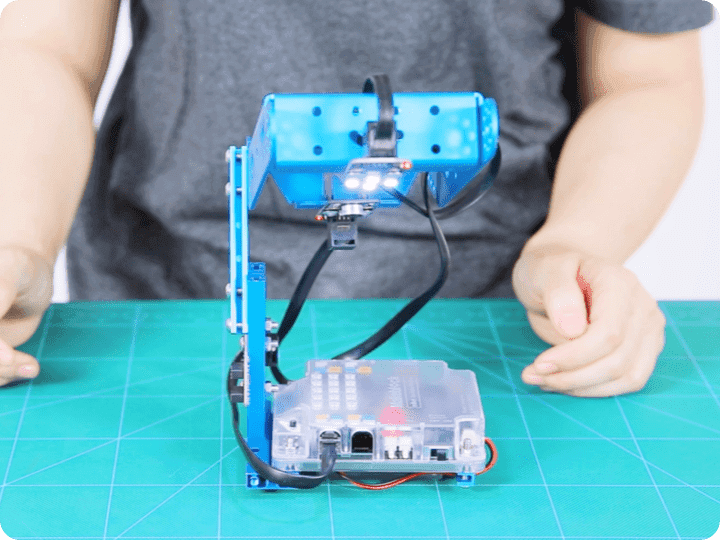


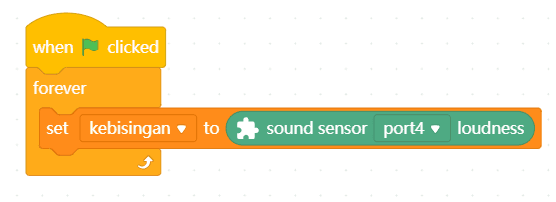
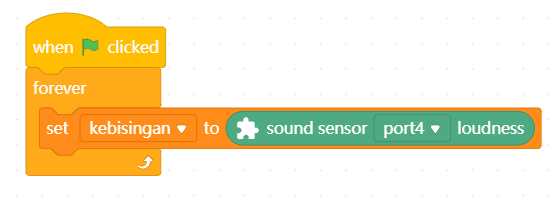
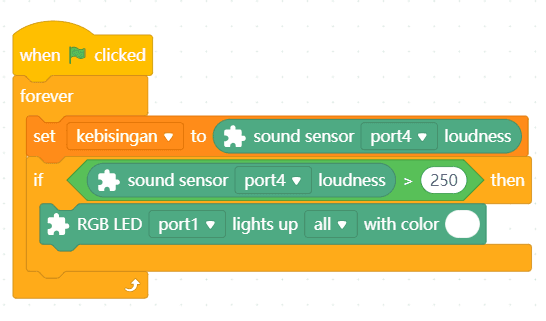



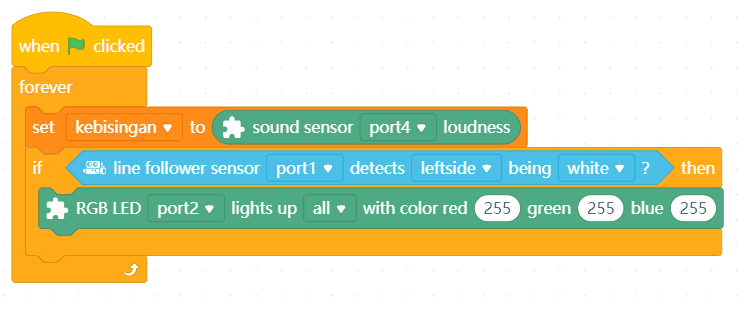
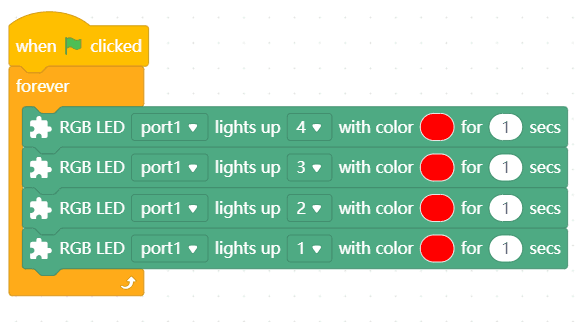



 STEAM 8 - Scorpion RobotChapter 8: The Worlds of North and South Geography Geography refers to the seasons, climate, soil, and physical features of a region (mountains, rivers, etc.) The differences in geography b/t the N and S is one of the major reasons slavery b/c entrenched in the S while it died out in the N. Geography of the North The N has diverse geography and experiences four distinct seasons including long, harsh winters. The Great Plains region has some of the best farmland in the country. New England has rocky, hilly wilderness, not well suited for farming. It has hundreds of bays and harbors along its coastline. States farther S had rich soil and coastal access through rivers. The N also experienced mass deforestation b/c of the need for lumber and to make room for farms. Geography of the South Climate: the S had mild winters, and a long, hot, humid growing season. It has fertile lowlands, marshes and swamps. It's ideal for growing tobacco, sugar, rice, indigo, and cotton (cash crops). B/c of the geography of the S, their whole way of life was based on agriculture and geography is one of the major reasons why slavery took off in the S. Economies Economy basically refers to the way people make and spend money. The Northern economy was far more diversified than the Southern. Economy of the North The North experienced the Industrial Revolution—the shift from handmade goods to machine-made goods. This resulted in new jobs, increased production, and improved efficiency in agriculture. IOW, you can make things faster, easier, and cheaper. More ppl get more stuff. Factories were almost always located next to rivers. The Reaper The Indust. Rev. changed northern agriculture with Cyrus McCormick’s reaper. It could cut 28xs more grain than a single man. The Sewing Machine Elias Howe's sewing machine; At 250 stitches a minute, Howe's lockstitch mechanism out-stitched the output of five hand seamstresses with a reputation for speed, completing in one hour what took the sewers 14.5 hours. The Textile Mill Francis Cabot Lowell's textile mill: essentially the first factory in the US, Lowell set the model for all future factories. Interchangeable Parts Eli Whitney's interchangeable parts; considered the "dawning of a new age" of machinery. This concept was applied to pretty much all manufacturing. Economy of the South The South's economy was based on AGRICULTURE. Most southerners were agrarians. Most had small farms, some owned plantations. Slavery beginning to decline in late 1700s; prices went down (tobacco, indigo) and cotton was difficult. King Cotton Cotton was South’s most important crop. Earned more money than all other exports combined. The S would go on to supply 75% of the world's cotton demand. Cotton Gin Eli Whitney invented the cotton gin in 1794 and forever changed the US. The gin made cotton incredibly profitable. We start to see the effects of the cotton gin around 1820. Slavery and Cotton Southerners put all their money into slaves and land, and almost none into building factories. With the spread of cotton, demand for slaves increased. 1790 to 1850, number of slaves rose 600%. Transportation Again, the N was far more inventive in their approach to transportation than the S. Transportation in the North National Road National Road stretched from the East (the Potomac), over the Appalachians, to the West (Illinois), over 620 miles. Steamboat In 1807, Robert Fulton invented the steamboat. It traveled 150 miles UP the Hudson River at a speed of 5 mph. Erie Canal Built b/t 1817 and 1825, the canal spanned 363 miles and connected Lake Erie to the Hudson River. This connected farms in the W to cities in the E and the Atlantic Ocean. Clipper Ship Clippers were narrow w massive sails that were built for speed. They cut the time it took to cross the Atlantic in half. Locomotive The fastest and cheapest way to move goods was by steam-powered trains. The first RR was the B&O which was built in 1827. Transportation in the South Most people and goods in the South traveled by rivers in steamboats. The South had trains, but less than half the amount of railroad track than the North had. Society (The People) The people who made up the N and S could not have been more different. The S was primarily agrarian while the N was b/c urbanized. The S was holding on to the past, while the N was embracing change. Society in the South Society was organized into 3 distinct classes of people: rich plantation owners at the top; then white farmers and workers; slaves on the bottom. This rigid social class system was the result of a slave-based agricultural system. Power Structure Only 1 in 4 whites owned a slave. Plantation owners, who owned more than 20 slaves, dominated politics and the economy. Society in the North 7 of 10 Northerners still lived on farms by the 1840s (6 of 10 by 1860), but urbanization was growing fast in the N. The N relied on wage labor as opposed to slave labor, so most blacks in the N were free. N blacks were not treated equally and the N was about as racist as the S. Immigration Compared to the S, the N population was exploding, in large part bc of immigration. Between 1845 and 1860, 4 million immigrants came to the North. Most were German and Irish. Irish--a potato famine; German--a failed revolution. Ethnic neighborhoods developed as a result.1. What is the primary reason to follow manufacturer instructions when using kitchen equipment? Safety 2. What is the key element to ensure when cleaning equipment before use? Hygiene 3. What is the most common cooking method for pasta? Boiling 4. What cooking method uses high heat and fat to brown food? Frying 5. Which cooking method uses steam for a gentler cooking process? Steaming 6. What must be checked before using any kitchen equipment? Condition 7. What is used to prevent food from sticking during baking? Grease 8. What cooking method is typically used for making soups and stocks? Simmering 9. Which item is used to protect hands from burns in the kitchen? Gloves 10. What method involves cooking food slowly in a liquid just below boiling point? Poaching 1. What type of bread is commonly used for cheesy toast? Sourdough 2. What appliance is often used to melt cheese on toast? Grill 3. What type of cheese is most popular for cheesy toast? Cheddar 4. What kitchen tool spreads butter on bread? Knife 5. What seasoning adds a spicy kick to cheesy toast? Pepper 6. What ingredient is spread on bread before adding cheese? Butter 7. What texture should the cheese have after cooking? Melted 8. What color does cheese turn when perfectly toasted? Golden 9. What utensil is used to safely remove hot toast from the grill? Tongs 10. What common herb can be sprinkled on top for garnish? ParsleyWHAT IS SCIENCE? - is a way in which answers related to NATURAL events are proposed. - a way in which people can learn and UNDERSTAND events in the NATURAL WORLD - based on OBSERVABLE EVENTS - a study of the NATURAL WORLD - a method of DISCOVERY and UNDERSTANDING by using a PROBLEM-SOLVING process called the?? - A systematic body of knowledge based on observation and experimentation. FOUR COMMON CHARACTERISTICS OF SCIENCE: 1. It focuses on the NATURAL WORLD. 2. Goes through experiment. 3. Relies on evidence. 4. Passes through the scientific community. WHAT IS TECHNOLOGY? Brian Arthur (2009) defined technology as: 1. a means to fulfill a human purpose 2. assemblage of practices and components 3. a collection of devices and engineering practices available to a culture. SOCIETY ST (Science Technology) would not exist without society. WHAT IS STS? Science and Technology and Society (STS) is the study of how society, politics and culture affect scientific research and technological innovation and how these, in turn affects society, politics and culture. EVENTS IN THE HISTORY OF SCIENCE AND TECHNOLOGY THAT TRANSFORMED THE SOCIETY (IN THE WORLD) ANCIENT PERIOD 3500 BC. - 500 AD EUROPE - use of fire by Homo Erectus CA 750,000 - Stone Headed Spears CA 45,000 - Wooden bow and arrow CA 20,000 - The Minoans build palaces in Crete CA 2,000 THE AMERICAS - The Folsom people living on eastern side of the Rocky Mountain developed sophisticated tools CA 8,000. - Pottery is made in South America CA 6,000 - Olmec sculpture carves figurines and giant human heads. CA 1200 ASIA AND OCEANA - Earliest known clay pots are made in Japan CA 11,000. - Bronze is first made in Thailand CA 4000 - A lunar calendar is developed in China CA 2950 - Chinese doctors begin using acupuncture CA 2500 - The Hindu calendar of 360 days was introduced in India CA 1000 AFRICA AND MIDDLE EAST - Homo erectus uses stone tools CA 1000000 - CA 15000 in Africa, bone harpoons are used for fishing. - Clay tokens are used for record keeping in Mesopotamia CA 7500 - Mesopotamian mathematicians discover the Pythagorean Theorem MEDIEVAL PERIOD CA 500 -1500 - Dark ages because few written records and evidences remained - Scholastic tradition was established by Charlemagne - Vertical windmills, spectacles, mechanical clock, water mills, gothic style were invented - Johannes Gutenberg invented the printing press RENAISSANCE PERIOD 14TH – 17TH CENTURY - Rebirth of revival - Printing with movable type allowed Bible, secular books made in large amount - Nicolas Copernicus presented a heliocentric theory - Galileo Galilei invented telescope INDUSTRIAL REVOLUTION 18TH CENTURY - Skilled workers were set aside because of the machines - Iron production, steam engine and textile flourished - Scottish James Watt improved steam engine Robert Fulton (steam boat) - The following were invented: Light bulb, telephone, first steam powered locomotive 19TH CENTURY - Age of machine and tools - Herman Helmholtz (law of conservation of energy) - James Clark Maxwell (light as electro-magnetic wave) - Henry Becquerel (radioactivity) - Marie and Pierre Curie (radium) - Hans Christian Oersted (electric current near the magnet) - Michael Faraday (magnet produces electricity) - Atomic Theory proposed by John Dalton - Electron discovered by JJ. Thomson - Telegraph developed by Samuel Morse 20TH CENTURY - Communication, transportation, military research were developed - Personal computer was created - Intel developed microprocessor - Apple was introduced by Steve Jobs and Steve Wozniak - Internet was created (ARPANET) - Henry Ford's mass production of cars - Artificial Intelligence was invented SCIENCE, TECHNOLOGY AND SOCIETY (PHILIPPINE HISTORY) Stone Age - Archeological findings show that modern man from Asian mainland first came over land on across narrow channels to live in Batangas and Palawan about 48,000 B.C. - Subsequently they formed settlement in Sulu, Davao, Zamboanga, Samar, Negros, Batangas, Laguna, Rizal, Bulacan and Cagayan. Inventions - They made simple tools and weapons of stone flakes and later developed method of sawing and polishing stones around 40,000 B.C. - By around 3,000 B.C. they were producing adzes ornaments of seashells and pottery. Pottery flourished for the next 2,000 years until they imported Chinese porcelain. Soon they learned to produce copper, bronze, iron, and gold metal tools and ornaments. Iron Age - The Iron Age lasted from the third century B.C. to 11th century A.D. During this period Filipinos were engaged in extraction smelting and refining of iron from ores, until the importation of cast iron from Sarawak and later from China. INVENTIONS AND DISCOVERIES - They learn to weave cotton, make glass ornaments, and cultivate lowland rice and dike fields of terraced fields utilizing spring water in mountain regions. - They also learned to build boats for trading purposes. - Spanish chronicles noted refined plank built warships called caracoa suited for interisland trade raids 10TH CENTURY A.D. - Filipinos from the Butuan were trading with Champa (Vietnam) and those from Ma-I (Mindoro) with China as noted in Chinese records containing several references to the Philippines. These archaeological findings indicated that regular trade relations between the Philippines, China and Vietnam had been well established from the 10th century to the 15th century A.D. TRADING - The People of Ma-I and San-Hsu (Palawan) traded bee wax, cotton, pearls, coconut heart mats, tortoise shell and medicinal betel nuts, panie cloth for porcelain, leads fishnets sinker, colored glass beads, iron pots, iron needles and tin. SOME PRESPANISH FILIPINO SCIENCE AND TECHNOLOGY - Curative values of plants extract use as medicine - Alphabet (Alibata) - Counting Methods - Weights - Measuring system (isang gatang) - Calendar based on the periods of moon - Banaue Rice Terraces SPANISH REGIME Religion the Catholic Church - The latter part of the 16th Century Development of schools: - Colegio de San Ildefonso-Cebu-1595 - Colegio de San Ignacio-Manila-1595 - Colegio De Nuestra Senora del Rosario-Manila 1597 - Colegio De San Jose-Manila-1601 Colegio De San Ildefonso De Cebu - In 1863 the colonial authorities issued a royal degree to reform the existing educational system. In 1871 the school of medicine and pharmacy were opened to UST, after 15 years it had granted the degree Of Licenciado En Medicina to 62 graduates. Medicine - Development of hospitals San Juan Lazaro hospital the oldest in the far east was founded in 1578. Roads and Bridges Among other Spanish contributions: - Arithmetic - Algebra - Geometry - Trigonometry - Physics - Hydrography - Meteorology - Navigation - Pilotage American Period and Post Commonwealth Era - BUREAU OF GOVERNMENT LABORATORIES (1901) - BUREAU OF SCIENCE (1905) - INSTITUTE OF SCIENCE (1946) RA 2067 OTHERWISE KNOWN AS THE “SCIENCE ACT OF 1958”. - This was enacted to integrate, coordinate, and intensify scientific and technological research and development and to foster invention including allocation of funds and other purposes. NATIONAL RESEARCH COUNCIL WAS ESTABLISHED ON DECEMBER 8, 1933. - Its Mandate (Nrcp) Promotes And Supports Fundamental Or Basic Research For The Continuing Total Improvement Of The Research Capability Of Individual Scientists Or Group Of Scientists; Provides Advice On Problems And Issues Of National Interest; Promotes Scientific And Technological Culture To All Sectors Of Society; And Fosters Linkages With Local And International Scientific Organizations For Enhanced Cooperation In The Development And Sharing Of Information NATIONAL RESEARCH COUNCIL WAS ESTABLISHED IN DECEMBER 8, 1933. - Its Mandate (NRCP) promotes and supports fundamental or basic research for the continuing total improvement of the research capability of individual scientists or group of scientists; provides advice on problems and issues of national interest; promotes scientific and technological culture to all sectors of society; and fosters linkages with local and international scientific organizations for enhanced cooperation in the development and sharing of information. It was during the American Period when Science was inclined towards: - Agriculture - Food Processing - Forestry - Medicine - Pharmacy - NursingCertainly, let's expand on each section in detail so you can learn more from the provided text: # Summary This text aims to explain various aspects related to technology, particularly focusing on a concept known as "Tech Disruption." It explores how technology affects different sectors, outlines the conditions for tech disruption, discusses the industrial revolutions, introduces the laws of disruption, and mentions factors influencing technology choices. ## Concept of Technology **Technology** encompasses a range of elements within organizations. It includes **expertise, equipment, and procedures** used to convert inputs, such as resources or raw materials, into outputs, which can be products or services. This involves various aspects, such as **product design, production techniques, quality assurance measures, human resource development, and management systems**. In essence, technology represents the tools and knowledge used to create and deliver goods or services effectively. ## What is Tech Disruption **Tech Disruption** refers to a phenomenon where smaller companies with limited resources successfully challenge well-established incumbent businesses. This disruption is primarily driven by **technology**, which acts as the catalyst, enabler, or even the sole reason behind the change. The significance of this concept lies in the fact that entrepreneurs must make careful and thoughtful decisions when it comes to adopting and investing in technology. **Why it's Important?** These decisions are crucial because they involve significant investments and will have a substantial impact on a company's ability to create, innovate, and operate its services in a sustainable and cost-effective manner. ## Four Main Impact **Tech Disruption** has four main impacts on businesses and industries: 1. **Shifting Customer Expectations**: As technology evolves, customer expectations change. Companies must adapt to meet these evolving demands to remain competitive. 2. **Enhanced Products Through Data**: Data-driven insights improve the productivity and efficiency of assets, leading to better products and services. 3. **New Partnerships and Collaboration**: Tech disruption encourages companies to form new partnerships and collaborations, recognizing the importance of working together to stay relevant. 4. **Transformation of Operating Models**: Traditional operating models are being transformed into digital models, where technology plays a central role in how businesses operate and deliver value. ## The 11 Macro Sources of Distribution The **11 Macro Sources of Distribution** represent various factors that influence the distribution of resources and opportunities in society. These factors include: 1. **Wealth Distribution**: How wealth is distributed among individuals and entities. 2. **Education**: The availability and quality of education opportunities. 3. **Infrastructure**: The state of infrastructure, such as transportation and communication networks. 4. **Government**: Government policies and regulations that impact resource distribution. 5. **Geopolitics**: Geopolitical factors, such as international relations and conflicts. 6. **Economy**: Economic conditions and trends, including markets and financial systems. 7. **Public Health**: The state of healthcare and public health systems. 8. **Demographics**: Characteristics of the population, such as age and gender. 9. **Environment**: Environmental factors and sustainability concerns. 10. **Media and Telecommunications**: The role of media and communication technologies. 11. **Technology**: Technological advancements and their impact on society. ## When Does Tech Disruption Happen? **Tech Disruption** occurs when specific conditions are met: ### Technology Is Mature Enough - **Technology Accessibility**: Technology must be accessible to a wide range of people and organizations. - **Critical Mass**: It should have reached a critical mass where it can create significant impact. - **Affordability**: Technology must be affordable for businesses to adopt. ### Sector Is Ready For Change - **Tech Infrastructure**: The sector should have the necessary technological infrastructure in place. - **Policy Framework**: A conducive policy framework is essential to support and regulate the use of technology. - **Lack of Disruption**: If the sector is stagnant or facing issues, it becomes ripe for tech disruption. ### Sector + Technology + Timing + Product - **Mature Technology with an Unready Sector**: If technology is mature but the sector is not ready, it can lead to building the wrong product based on incorrect assumptions. - **Unmatured Technology with a Ready Sector**: Conversely, if technology is not matured but the sector is ready, it may take longer to develop the product. ## Ready for Industri 5.0? This section briefly outlines the five industrial revolutions: 1. **Industri 1.0 (1784)**: Marked by mass production assembly lines using electrical power. 2. **Industri 2.0 (1870)**: Introduced mechanization, steam, and water power. 3. **Industri 3.0 (1969)**: Characterized by automated production, computers, IT systems, and robotics. 4. **Industri 4.0 (Present)**: Involves smart factories, autonomous systems, IoT (Internet of Things), and machine learning. 5. **Industri 5.0 (Future)**: Envisions mass customization and cyber-physical cognitive systems. ## Three Laws of Disruption These laws explain the nature of disruption: 1. **Disruption Comes to All**: Disruption is a universal phenomenon; it affects all industries and businesses sooner or later. 2. **Product-Market Fit**: Disruption occurs due to changes in Product-Market Fit, which means aligning a product with its target market effectively. 3. **Methods to Change Product-Market Fit**: To address disruption, a company can change the product, the target market, or influence people's preferences regarding the product. ## The 40% Rule This rule provides a framework for evaluating the fit between a product and its market: - **Value Proposition**: The product should solve customers' problems effectively. - **Channels**: The product should be able to reach customers cost-effectively. - **Monetization**: Customers should be willing to pay for the product. ## PMF Framework: 5 Steps to Product/Market Fit The **PMF (Product/Market Fit) Framework** consists of five steps: 1. **Business Modeling**: Developing a business model that aligns with the market. 2. **Market Validation**: Confirming that there is demand for the product in the market. 3. **Customer Interviews**: Gaining insights from potential customers. 4. **Product Development and Customer Acquisition**: Creating the product and acquiring customers. 5. **Product Analytics**: Using data to determine if the product has achieved Product/Market Fit. ## Factors Determining the Choice of Technology Several factors influence the choice of technology: 1. **Government Policy**: Government regulations and policies can encourage or restrict the adoption of specific technologies. 2. **Available Resources**: The resources, both financial and human, impact the adoption of technology. 3. **Technological Capability**: The organization's technological capabilities influence the choice of technology. 4. **Existing Technological Level**: The current technological state of the industry or organization plays a role. 5. **Institutional Arrangement**: Organizational structures and arrangements affect technology choices. ## Conclusion In conclusion, the text emphasizes the critical role of technology in driving change and disruption in various industries. It highlights the need for informed decision-making when it comes to technology investments, as well as the conditions necessary for tech disruption to occur. Understanding the historical context of industrial revolutions, the laws of disruption, and the factors influencing technology choices is essential in today's fast-paced and tech-driven business environment. Embracing technology disruption is crucial for transforming business models and adapting to evolving market dynamics.Stem 8- reviewStem Quiz 8 (6C) ReviewStem List 8