Loading...

STORYBOARD: CAMERA SHOTS & ANGLES
Quiz by Kyra Andrea Perez
Customize this quiz to suit your class
Instantly translate to 100+ languages
Tag the questions with any skills you have. Your dashboard will track each student's mastery of each skill.
Give this quiz to my class
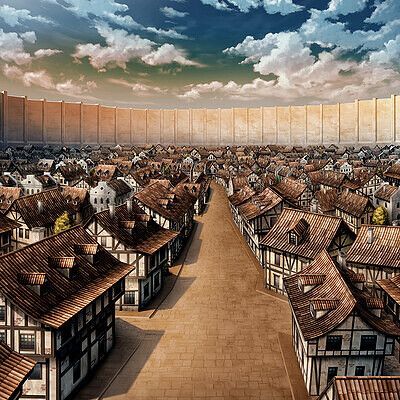
Identify the shot

full shot
medium shot
establishing shot
Identify the shot
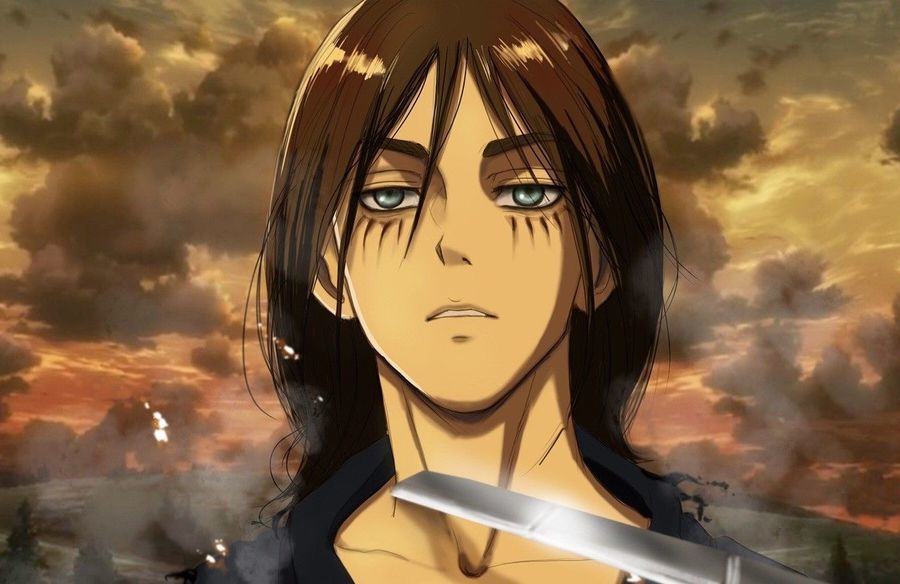
Medium Close up
Extreme close up
Close up
Identify the shot

Identify the shot

Identify the camera shot

Identify the shot
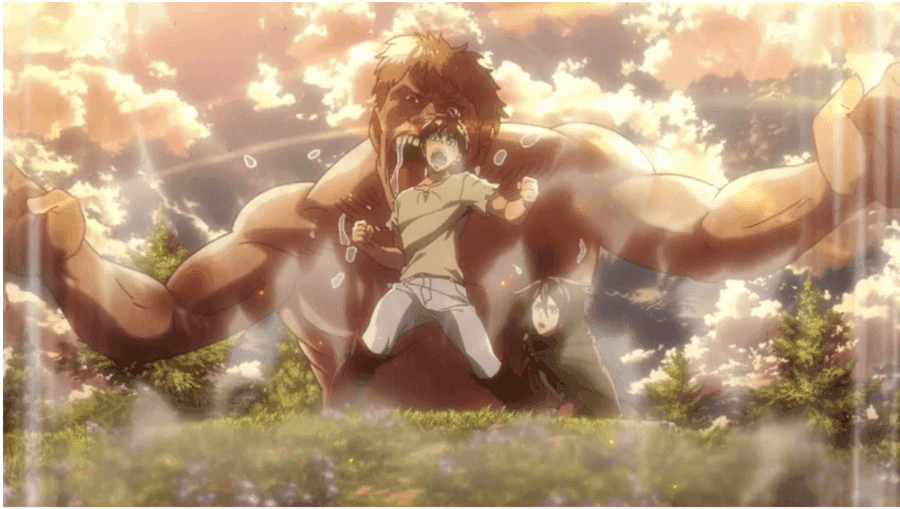
Identify the camera shot
Identify the camera angle

Identify the angle

Identify the Angle
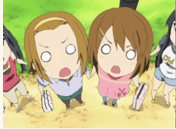
Identify the camera angle
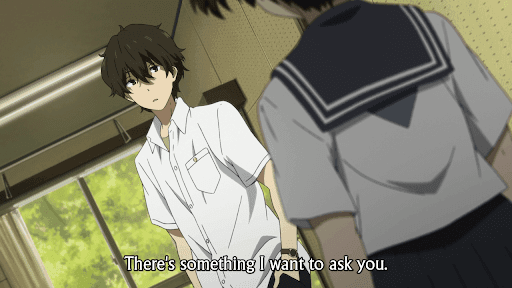
Identify the camera shot

Identify the camera movement
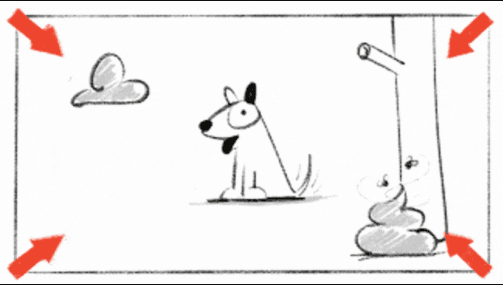
Identify the camera movement

Identify the camera movement
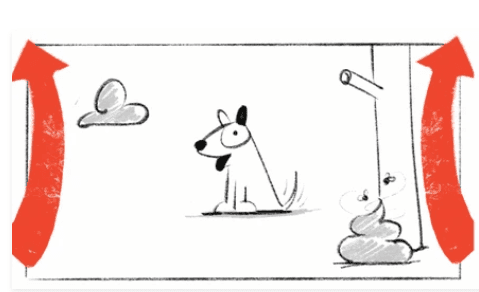
Identify the camera angle
Identify the camera movement
Storyboard
Storyboard Review
Storyboard Practice Test 1
How to make a storyboard in Canva
Grade 8 quiz on Storyboard
MIT805- Standard 2 : Create 2D animation ( Activity - storyboard )
Es: Curriculum Approach: ALE does not have a new curriculum but focuses on reworking YAG (Year at a Glance) and aligning student guides with TEKS (Texas Essential Knowledge and Skills). ALE teachers for General Ed should follow the scope and sequence, modifying as needed. Teaching Goals: ALE teachers often use "WH" goals (Who, What, Where) when engaging students in reading or discussing a topic. Reinforcement of Concepts: Emphasis on consistently reinforcing prepositional words, sequencing, and main idea. Sequencing can be done in whole group settings with more steps using a storyboard. Independent sequencing tasks should involve 2-3 events. Vocabulary Instruction: Vocabulary words for mentor texts should be presented as text with a picture/photo. Introduce vocabulary before reading, limiting it to 5-6 words per text. Chunking and discussion are essential. Teaching Strategies: Advocates for the use of an Eduprotocol throughout the entire year. Suggests choosing mentor texts with choral reading, preferably short ones. Library Usage: Recommends that all middle and high school students go to the library, rather than having the librarian come to the classroom. ALE should visit the library at least once a month. Communication and Adaptation: Encourages reaching out to teachers to understand current topics or concepts, fostering generalization for ALE students. Recommends purchasing alternative seating for students who require stimulation. Advises assigning seats as a best practice for ALE.
Here is a transcript of a video about Narrative Writing. Generate 25 questions. Intro to Narrative Writing What is Narrative Writing? You today, I want to introduce you to the basics of narrative writing. Narrative writing is writing that tells a story. It can be real or imagined, that is, nonfiction or fiction. It has a beginning, middle, and end. That is, it includes the basic elements of a plot exposition, rising action, conflict, climax, falling action, and resolution. And it's full of interesting details. The author's purpose in writing a narrative is to entertain the reader. There are three main types of narrative writing. The first is a personal narrative when a writer shares a true story from his or her own life. We could also say this type of narrative is autobiographical. The second type of narrative is biographical when a writer shares a true story from another person's life. The third type of narrative is fictional. When a writer tells an invented story, short stories, and novels are fictional narratives. The Process of Writing a Narrative While we could add to this list, there are five important parts of a narrative that I especially want you to remember as you write your own narrative. These parts of a narrative include setting, characters, plot, point of view, and dialogue. The first part of a narrative is the setting , where, and when the narrative takes place. The setting affects both the plot and characters in your narrative, so it's important to spend some time brainstorming where, when, and in what conditions your story takes place. The second part of a narrative is the characters , the people, animals or creatures involved in a story. Remember that your story must have a protagonist, the character facing the problem, and an antagonist the character or force causing the problem. Take some time while planning your narrative to focus on your characters beyond the characters names and roles they play in the story. Think about whether you'd like them to be flat with very few character traits or round with many character traits. Also think about which characters in your story will remain static or unchanged, and which characters will be dynamic, undergoing an important change in your narrative. The third part of a narrative is the plot , the sequence of events in a narrative. Take some time to think carefully through your story's plot. How will it begin and how will it end? What conflicts will your characters encounter? What is the climax or turning point of your story? How will the problems be solved? Creating a storyboard or labeling a plot diagram are both good tools for planning your story's plot. The fourth part of a narrative is the point of view , which is the perspective from which a narrative is told. You can choose to write your narrative in first person, writing a personal narrative from your own point of view, or you can choose a character in a fictional narrative to tell your story. Another option is to write your narrative in the third person point of view, telling the story from the perspective of an unseen narrator that is not a character in the story. Finally, the fifth part of a narrative is dialogue. The words the characters speak in your story dialogue can establish the setting, show characterization, foreshadow events, or advance the action in a narrative. Dialogue brings your narrative to life. It's important to review how to punctuate dialogue, following grammatical rules for using quotation marks, commas, and other N marks such as periods and question marks. As you begin writing your narrative, I'll help you break down each step of the process. But hopefully this introduction gives you a basic understanding of what narrative writing is, and hopefully it sparks some ideas for you to begin planning your own narrative.