Loading...


String Instruments
Quiz by Sara Anderson
Customize this quiz to suit your class
Instantly translate to 100+ languages
Tag the questions with any skills you have. Your dashboard will track each student's mastery of each skill.
Give this quiz to my class

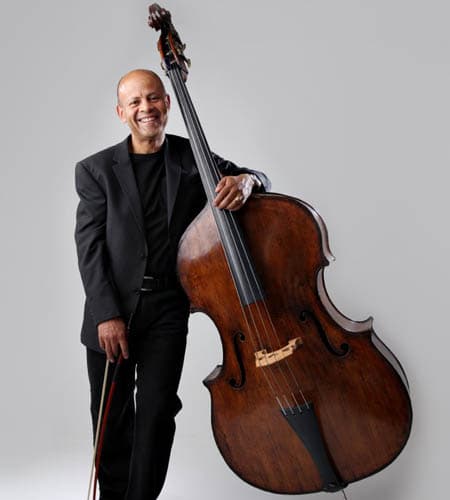

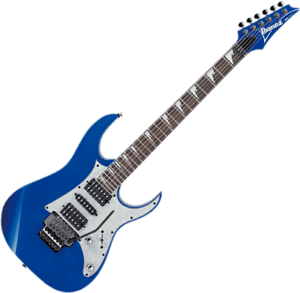


 Create a quiz with these questions: Tempo – Questions What Italian word means "slow"? What tempo marking means “lively” or “fast”? What tempo marking means “walking pace”? What word is used for “very fast” tempo? What do we call a gradual change in tempo? What term means to return to the original tempo? 🔊 Dynamics – Questions What symbol tells you to play loudly? What dynamic marking means “very soft”? What is it called when music suddenly becomes soft? What dynamic term means to gradually get louder? What do mp and mf stand for? What two markings show extreme contrast in dynamics? 📝 Note Values – Questions What note gets one beat in 4/4 time? What kind of note gets half a beat? Two of what type of note equal a whole note? What note has a stem, is filled in, and has one flag? What kind of dot adds half the value of the note it follows? What combination of notes equals a dotted quarter note? 📏 Time Signatures – Questions What time signature has 2 beats per measure? What time signature is used for waltzes? What time signature is used in marches? What does the top number in a time signature tell us? In 4/4 time, how many beats are in 3 quarter notes and 1 eighth note? What time signature is called “compound duple” and used in Irish jigs? 📻 Current Music Info – Questions Which artist had the highest-grossing tour by 2025? What is the most-used music streaming service in 2025? What music genre continues to top the Billboard charts in 2025? Which artist released a surprise double album in 2024? What tech company released a hit AI-generated song? Who is the youngest artist to win Album of the Year twice? 🎺 Instruments & Timbre – Questions What instrument family includes the violin and cello? What family do the flute and clarinet belong to? What instrument has black and white keys and is both string and percussion? Timbre describes what aspect of a sound? What word describes how instruments are combined in an arrangement? What double reed instrument often plays the tuning note in an orchestra?To understand melody in music, think about some music you’re familiar with. If you were asked to hum it, what would that sound like? The part of the music that you’d hum is the melody. It’s the main thread of sound that your brain tracks and holds onto when you’re listening to music. In vocal music, the melody is sung by the lead singer. Other vocalists can provide harmony and instruments can add accompaniment, but the melody is the star of the show.What are the characteristics of melody in music? How do you describe a melody in music? A melody needs to have two things. The first is a sequence of notes, or pitches, which range from high to low. The second is rhythm, which is the timing and duration of each note. These two simple elements can create an incredible variety of combinations. Even though a melody only consists of one note at a time, it can convey so much energy and emotion. Melodies can be fast and sparkly, like “The Flight of the Bumblebee.” They can be slow and majestic, like “Finlandia.” They might be sweeping and graceful, like a Strauss waltz. Or they can be fun and exciting, like your favorite pop tunes that you love to sing along with. Melodies often tell you a lot about where a piece of music comes from. It’s easy to recognize and identify melodies from different folk traditions such as the Japanese folk song “Sakura” or the Irish tune “Star of the County Down.” Learn how to play your favorite melodies on piano, and more! Sign up now. What is melody in music? Here are some examples. Here is the famous melody for the song “Lean on Me” written out on a staff. Notice the way that the notes move up, down, and then repeat. What is melody in music? Example of Lean On Me notes on treble staff. A melody all by itself is great, but music can be even more fun when there’s an accompaniment. Here are a few bars of “Lean on Me” with the accompaniment written out. As you listen to this song, notice how the accompaniment has a very similar rhythm and movement to the melody. Then there’s that one note in the bass line that comes along every measure with its own rhythm, which adds some extra energy and movement to the song. What makes a good melody? When you create a melody, there are four types of movement you can use: Repeat (same note) Step (up or down) Skip (up or down) Leap (up or down) Stepping and repeating are the most common types of melodic motion, and this makes a melody easier to sing. Most “hummable” tunes use steps and repeats almost exclusively. This kind of melody is called conjunct. Beethoven’s “Ode to Joy,” one of the most famous melodies of all time.Skips and leaps are generally more sparing in melodies, but when thoughtfully placed they can have a powerful emotional impact. Tunes with a lot of leaps are called disjunct. Listen to Sarah Brightman sing All I Ask of You from The Phantom of the Opera starting at 0:39. This is a very disjunct melody, and challenging to sing. Great melodies also incorporate patterns that blend unity, repetition, and contrast. Our ears love patterns, but they also love novelty and growth. A good melody incorporates all of these elements. For example, listen to John William’s “Princess Leia Theme.” Can you hear the repeated pattern in the melody that gradually moves higher as the theme progresses? Now listen to the way it changes and develops into something that fits with what came before but sounds new at the same time. This is some great melodic writing! Can melody exist without rhythm? There is no way for a melody to exist without rhythm. Even if your melody only has one note, that note has a duration, and that’s the rhythm. If your melody has two notes, how long those notes last and how much time passes between hearing them is also a rhythm. A melody in music can often be recognized even when it’s performed with different rhythms. This frequently happens in live performances of pop, rock, and jazz, in which singers typically improvise slight rhythmic differences with each performance. No two renditions are exactly the same, and this constant reinterpretation keeps the music fresh. How to make a melody for a song on piano Creating your own melodies on the piano is easy and fun! There are so many ways you can discover a melody all your own. Here are a few ideas. Get some inspiration from the world around you. What can you hear right now? A clock ticking? A bird song? A car passing by your house? See if you can find some notes on the piano that imitate the sounds you hear. Think of a feeling you’d like to put into a melody. What are some ways you could make a string of notes sound happy, sad, angry, or maybe just thoughtful. Choose a line from a poem you like, or write your own. Read it out loud and put some feeling into it. Did your voice rise and fall in pitch as you were reading? Now go to the piano, start on any note you like, and try to imitate what happened when you read. Go up when your voice naturally went up, go down when your voice naturally went down. How did that sound? Now you have the perfect melody to go with those words. Too many keys on the piano? The truth is, most melodies use only a limited number of different notes. Try creating a melody using only the black keys. These form what’s called a pentatonic scale. It’s used in a lot of folk music traditions around the world and can be a great place to start if you want to create your own melodies. Remember, when you create your melody, keep it simple. Use repeated notes and steps, but add a few skips to keep things interesting. One tip about leaps: when you do put in a big leap, try doubling back and filling in the empty space you leaped over. This keeps the melody self-contained and easier to sing. Also, see if you can use the same patterns of notes and rhythms to give the melody unity, but also change those patterns to give it variety. There is no right or wrong way to create your own music. Keep trying combinations of notes and rhythms until you find something that you like. How many bars and notes are in a melody? Many types of music tend to have a prescribed number of bars, or measures. This will vary widely between different genres, and creates an overall sense of musical structure. If you’re writing a pop song, a verse will usually have between eight and sixteen bars. The prechorus that follows often has just four bars, and this “foreshortening” creates a sense of acceleration, driving the listener toward the chorus. The number of notes can also vary widely. A melody in music needs at least two notes, and a long and complex one can have hundreds or even thousands of notes. What is a countermelody in music? How many melodies should a song have? A counter melody is a melodic line that interacts with the primary melody as an independent but supportive voice. A great example of this is the song “We Don’t Talk about Bruno.” Each character sings their own melody during the piece, but these melodies all combine at the end as countermelodies. This produces a musical texture known as counterpoint. The same thing happens in “One Day More” from Les Miserables. The different melodies are first sung separately, but end up being combined in a splendid, complex texture that leads the music to its thrilling conclusion. The difference between a countermelody and regular harmony is that harmony usually supports the rhythms of the melody. A countermelody will move more independently, with different rhythms from those of the melody, and will often sound “melodic” when sung or played all by itself. A melodic song should have one main melody. This is the part that the lead voice sings. It’s usually in the spotlight, and will be the most memorable part of the music. Anything else is either harmony, countermelody, or accompaniment. Does all music have to have a melody? A piece of music doesn’t have to have a melody. There are many different kinds of music without melody. For example, a lot of music played on percussion instruments won’t have a melody. Listen to this example of Tahitian drumming. This is some great music, exciting and fun to listen to, but you’d have a hard time humming it. It’s music, but it doesn’t have a melody. Rap music is another style of music where there doesn’t have to be a melody. In rap, words are chanted rather than sung. The performer will raise and lower the pitch of their voice for emphasis, but it’s the rhythm of the words that creates most of the music. Music can even lack any melody, at least in some sections. Listen to the opening chords of “Duel of the Fates.” This choral passage is all about harmony, with little rhythmic variance or sense of melody. But it makes an effective contrast with the next section, which is bustling with rapid instrumental melodies. In some pieces, there are multiple melodic lines but there is no one main melody. When music is made up of equally important countermelodies, it creates a contrapuntal texture. Baroque composer J.S. Bach was one of the greatest masters of this style, such as in his Little Fugue in G minor. It starts with a single melodic line, the subject, but then a countermelody is added, and then more and more until several melodic lines are playing together. It’s fun to listen to, but once all the countermelodies are playing together it becomes hard to decide which part to hum along with! You’ll also hear a lot of counterpoint in jazz music, in which the different instruments are all playing together and improvising their own melodies that combine to create a rich, thick musical texture. Experience the wonder of melody in music! Whether you’re humming your favorite tune, or creating a new song all your own, melody is a memorable, shareable part of music. Enrich your music experience by being aware of, listening for, and enjoying the melodies all around you.Note Names - All Instruments - All StringsAll Kinds of Musical Instruments There are four main groups of instruments. There are many kinds of instruments in each group. These instruments use strings to make sounds. Use a bow or your fingers to play them. These instruments use air from your mouth to make sounds. Blow into them to play them. These instruments use moving air and lips to make sounds. Make your lips buzz to play them. These instruments use sticks or hands to make sounds. Hit them to play them. You can play instruments to make musicWhat Is Rhythm in Music? Rhythm is the pattern of sound, silence, and emphasis in a song. In music theory, rhythm refers to the recurrence of notes and rests (silences) in time. When a series of notes and rests repeats, it forms a rhythmic pattern. In addition to indicating when notes are played, musical rhythm also stipulates how long they are played and with what intensity. This creates different note durations and different types of accents.Why Is Rhythm Important in Music? Rhythm functions as the propulsive engine of a piece of music, and it gives a composition structure. Most musical ensembles contain a rhythm section responsible for providing the rhythmic backbone for the entire group. Drums, percussion, bass, guitar, piano, and synthesizer may all be considered rhythm instruments, depending on the context. However, all members of a music group bear responsibility for their own rhythmic performances and play the musical beats and rhythmic patterns indicated by the piece's composer.7 Elements of Rhythm in Music Several core elements comprise the fundamentals of musical rhythm. 1. Time signature: A musical time signature indicates the number of beats per measure. It also indicates how long these beats last. In a time signature with a 4 on the bottom (such as 2/4, 3/4, 4/4, 5/4, etc.), a beat corresponds with a quarter note. So in a 4/4 time (also known as "common time"), each beat is the length of a quarter note, and every four beats form a full measure. In 5/4 time, every five beats form a full measure. In a time signature with an 8 on the bottom (such as 3/8, 6/8, or 9/8), a beat corresponds with an eighth note. 2. Meter: Standard Western music theory divides time signatures into three types of musical meter: duple meter (where beats appear in groups of two), triple meter (where beats appear in groups of three), and quadruple meter (where beats appear in groups of four). Meter is not tied to note values; for instance, a triple meter could involve three half notes, three quarter notes, three eighth notes, three sixteenth notes, or three notes of any duration. Musicians and composers regularly mix duple and triple meter in their work; Igor Stravinsky's "The Rite of Spring" is a textbook example of such a technique. 3. Tempo: Tempo is the speed at which a piece of music is played. There are three primary ways that tempo is communicated to players: beats per minute, Italian terminology, and modern language. Beats per minute (or BPM) indicates the number of beats in one minute. Certain Italian words like largo, andante, allegro, and presto convey tempo change by describing the speed of the music. Finally, some composers indicate tempo with casual English words such as “fast,” “slow,” “lazy,” “relaxed,” and “moderate.” 4. Strong beats and weak beats: Rhythm combines strong beats and weak beats. Strong beats include the first beat of each measure (the downbeat), as well as other heavily accented beats. Both popular music and classical music combine strong beats and weak beats to create memorable rhythmic patterns. 5. Syncopation: Syncopated rhythms are those that do not align with the downbeats of individual measures. A syncopated beat will put its emphasis on traditional weak beats, such as the second eighth note in a measure of 4/4. Complex rhythms tend to include syncopation. While these rhythms may be more difficult for a beginning musician to pick up, they tend to sound more striking than non-syncopated rhythmic patterns. 6. Accents: Accents refer to special emphases on certain beats. To understand accents, think of a piece of poetry. A poetic meter, such as iambic pentameter, may dictate a specific mixture of stressed syllables and unstressed syllables. Musical accents are no different. Different rhythms may share a time signature and tempo, but they stand out from one another by accenting different notes and beats. 7. Polyrhythms: To achieve a particularly ambitious sense of rhythm, an ensemble may employ polyrhythm, which layers one type of rhythm on top of another. For instance, a salsa percussion ensemble may feature congas and bongos playing 4/4 time, while the timbales concurrently play a pattern in 3/8. This creates a dense rhythmic stew and, when properly executed, it can yield incredibly danceable rhythm patterns. Polyrhythms originated in African drumming, and they’ve spread to all sorts of genres worldwide, from Afro-Caribbean to Indian to progressive rock, jazz, and contemporary classical.• Agriculture is growing of crops and keeping of animals. • People who practice agriculture are called farmers. • Agriculture is very important to the family. Benefits to the family • It provides food. • It provides money. • Agriculture gives us medicine. • It provides jobs. • Agriculture gives us transport and power. • It helps most families become self sufficient. • Farm tools are instruments used on farms to make work easier. • They are usually handheld and are used frequently when practicing agricultural activities. • Farm tools are light in weight, easy to handle and are suited to the strength of the farmer Name of tool Picture Use Watering can For fine watering of seed beds bucket Carrying manure, fertilizer,seed and ripe crops Name of tool Picture Use Sickle Cutting grass and harvesting of cereals like rice and wheat Slasher Cutting down tall grass and weeds USES OF FARM TOOLS Name of tool Picture Use Garden trowel Transplanting seedlings and making planting holes Hand fork Shallow cultivation of soil Aerating the soil USES OF FARM TOOLS Name of tool Picture Use Shovel Loading and offloading soil or manure into a wheelbarrow, scotch cart or truck Spade Digging and turning over of moist soil USES OF FARM TOOLS Name of tool Picture Use Garden fork Loosening and turn soil Garden line Marking straight ridges and garden beds USES OF FARM TOOLS Name of tool Picture Use wheelbarrow Moving items around the farm Items such as soil, mulch, animal feed. Etc Knapsack sprayer Spraying pesticides and herbicides Spraying fertilizers on crops. • An inventory is a record of the things that you have. • This is a list of tools issued out and tools received back and from whom Inventory of farm tools Inventory record sheets Created by Date Name of tool Sheet Tool numbenumber Description r Location Quantity Spade 1/15 Black,wooden handle Store room 2 SAFETY IN AGRICULTURE • Agricultural activities can be dangerous. • Hazards involved results in injury, disability and death of people and animals. • The hazards are usually caused by physical injury and chemical poisoning. Common hazards in Agriculture 1. physical injury These include: • Injury caused by accidents during use of farm tools, equipment and machinery. • Misuse and improper storage of farm tools and equipment. • Being kicked by animals. • Drowning in farm pond, pool or dam. Common hazards in Agriculture 2 . Chemical poisoning These include: • Spraying without protective clothing. • Eating or smoking when spraying chemicals. • Dumping toxic chemical left overs on land and in water. • Eating agriculture produces without prior permission from adults. • Pesticides, herbicides and fertilizers pollute water sources and kill animals. Chemical poisoning Ways of preventing common agricultural hazards 1. Wear protective clothing such as gloves, gumboots, respirator, hat and overalls. 2. Do not eat, drink or smoke when spraying. 3. Dispose off all chemical remains safely. 4. Bury or burn empty chemical containers and chemical left overs. 5. Wash thoroughly with running water and soap after using chemicals. 6. Do not spray during windy days. 7. Handle tools the right way. 8. Fence farm ponds and dams. Ways of preventing common agricultural hazards Climate and Landuse Seasons of Zimbabwe Seasons of Zimbabwe Definition of terms • A season is a time of the year with almost the same weather patterns. • Weather is the state of the atmosphere at a particular time at a particular place. • it is the daily condition of air around us. • Seasons are determined by rainfall and temperature. Seasons of Zimbabwe • There are four seasons in Zimbabwe , which are: 1.The rain season 2.Post rain season 3.Cool dry season 4.Hot dry season Seasons of Zimbabwe 1.The rain season ( summer) • It is also called the hot- wet season. • The season begins in mid November to mid March. • The period is rainy and hot. • Dams and rivers fill up. Seasons of Zimbabwe 2 . The post rain season ( autumn ) • It starts mid March – May • The days are bright and sunny. • The leaves change from green to red, orange, yellow or brown before falling. • In addition, there is less sunlight because the days are shorter. • It is the harvesting period of most crops. Seasons of Zimbabwe 3. The cold dry season ( winter ) • It begins mid May – mid August • The mornings, evenings and nights are very cold. • Has short days and long nights. Seasons of Zimbabwe 4 . The hot season (spring ) • It begins mid August – mid November. • The days are very hot with cool nights. • A season for trees to develop new shoots. Summer Activities Agricultural activities done during the rain season includes: • Ploughing and planting of summer crops for example maize, cotton. • Weeding • Pest and disease control • Applying fertilizers. • Weekly dipping of animals because ticks, lice and mites would be many. • Harvesting of summer crops • Preparing fireguards. A fireguard is a fire break. • Beginning of the planting of wheat, barley and oats. Winter Activities • Planting of winter crops such as wheat, barley and oats. • Harvesting and selling of summer crops continues. • Constructing frost barriers for frost sensitive crops such as tomatoes. • Vaccinating animals against blackleg. • Supplementary feeding of grazing animals. • Dosing of animals to kill internal parasites. Spring Activities • Shelling and threshing of grain crops. • Dry planting of summer crops. • Carrying manure to fields. • Ploughing and harrowing. • Making planting holes Soil Components •Soil is made up of 4 components: 1)Mineral matter 2)Organic matter 3)Soil water 4)Soil air When it was his turn to speak, Adam Malik, Presidium Minister for Political Affairs and Minister for Foreign Affairs of Indonesia, recalled that about a year before, in Bangkok, at the conclusion of the peace talks between Indonesia and Malaysia, he had explored the idea of an organization such as ASEAN with his Malaysian and Thai counterparts. One of the “angry young men” in his country’s struggle for independence two decades earlier, Adam Malik was then 50 years old and one of a Presidium of five led by then General Soeharto that was steering Indonesia from the verge of economic and political chaos. He was the Presidium’s point man in Indonesia’s efforts to mend fences with its neighbors in the wake of an unfortunate policy of confrontation. During the past year, he said, the Ministers had all worked together toward the realization of the ASEAN idea, “making haste slowly, in order to build a new association for regional cooperation.” Adam Malik went on to describe Indonesia’s vision of a Southeast Asia developing into “a region which can stand on its own feet, strong enough to defend itself against any negative influence from outside the region.” Such a vision, he stressed, was not wishful thinking, if the countries of the region effectively cooperated with each other, considering their combined natural resources and manpower. He referred to differences of outlook among the member countries, but those differences, he said, would be overcome through a maximum of goodwill and understanding, faith and realism. Hard work, patience and perseverance, he added, would also be necessary. The countries of Southeast Asia should also be willing to take responsibility for whatever happens to them, according to Tun Abdul Razak, the Deputy Prime Minister of Malaysia, who spoke next. In his speech, he conjured a vision of an ASEAN that would include all the countries of Southeast Asia. Tun Abdul Razak was then concurrently his country’s Minister of Defence and Minister of National Development. It was a time when national survival was the overriding thrust of Malaysia’s relations with other nations and so as Minister of Defence, he was in charge of his country’s foreign affairs. He stressed that the countries of the region should recognize that unless they assumed their common responsibility to shape their own destiny and to prevent external intervention and interference, Southeast Asia would remain fraught with danger and tension. And unless they took decisive and collective action to prevent the eruption of intra-regional conflicts, the nations of Southeast Asia would remain susceptible to manipulation, one against another. “We the nations and peoples of Southeast Asia,” Tun Abdul Razak said, “must get together and form by ourselves a new perspective and a new framework for our region. It is important that individually and jointly we should create a deep awareness that we cannot survive for long as independent but isolated peoples unless we also think and act together and unless we prove by deeds that we belong to a family of Southeast Asian nations bound together by ties of friendship and goodwill and imbued with our own ideals and aspirations and determined to shape our own destiny”. He added that, “with the establishment of ASEAN, we have taken a firm and a bold step on that road”. For his part, S. Rajaratnam, a former Minister of Culture of multi-cultural Singapore who, at that time, served as its first Foreign Minister, noted that two decades of nationalist fervor had not fulfilled the expectations of the people of Southeast Asia for better living standards. If ASEAN would succeed, he said, then its members would have to marry national thinking with regional thinking. “We must now think at two levels,” Rajaratnam said. “We must think not only of our national interests but posit them against regional interests: that is a new way of thinking about our problems. And these are two different things and sometimes they can conflict. Secondly, we must also accept the fact, if we are really serious about it, that regional existence means painful adjustments to those practices and thinking in our respective countries. We must make these painful and difficult adjustments. If we are not going to do that, then regionalism remains a utopia.” S. Rajaratnam expressed the fear, however, that ASEAN would be misunderstood. “We are not against anything”, he said, “not against anybody”. And here he used a term that would have an ominous ring even today: balkanization. In Southeast Asia, as in Europe and any part of the world, he said, outside powers had a vested interest in the balkanization of the region. “We want to ensure,” he said, “a stable Southeast Asia, not a balkanized Southeast Asia. And those countries who are interested, genuinely interested, in the stability of Southeast Asia, the prosperity of Southeast Asia, and better economic and social conditions, will welcome small countries getting together to pool their collective resources and their collective wisdom to contribute to the peace of the world.” The goal of ASEAN, then, is to create, not to destroy. This, the Foreign Minister of Thailand, Thanat Khoman, stressed when it was his turn to speak. At a time when the Vietnam conflict was raging and American forces seemed forever entrenched in Indochina, he had foreseen their eventual withdrawal from the area and had accordingly applied himself to adjusting Thailand’s foreign policy to a reality that would only become apparent more than half a decade later. He must have had that in mind when, on that occasion, he said that the countries of Southeast Asia had no choice but to adjust to the exigencies of the time, to move toward closer cooperation and even integration. Elaborating on ASEAN objectives, he spoke of “building a new society that will be responsive to the needs of our time and efficiently equipped to bring about, for the enjoyment and the material as well as spiritual advancement of our peoples, conditions of stability and progress. Particularly what millions of men and women in our part of the world want is to erase the old and obsolete concept of domination and subjection of the past and replace it with the new spirit of give and take, of equality and partnership. More than anything else, they want to be master of their own house and to enjoy the inherent right to decide their own destiny …” While the nations of Southeast Asia prevent attempts to deprive them of their freedom and sovereignty, he said, they must first free themselves from the material impediments of ignorance, disease and hunger. Each of these nations cannot accomplish that alone, but by joining together and cooperating with those who have the same aspirations, these objectives become easier to attain. Then Thanat Khoman concluded: “What we have decided today is only a small beginning of what we hope will be a long and continuous sequence of accomplishments of which we ourselves, those who will join us later and the generations to come, can be proud. Let it be for Southeast Asia, a potentially rich region, rich in history, in spiritual as well as material resources and indeed for the whole ancient continent of Asia, the light of happiness and well-being that will shine over the uncounted millions of our struggling peoples.” The Foreign Minister of Thailand closed the inaugural session of the Association of Southeast Asian Nations by presenting each of his colleagues with a memento. Inscribed on the memento presented to the Foreign Minister of Indonesia, was the citation, “In recognition of services rendered by His Excellency Adam Malik to the ASEAN organization, the name of which was suggested by him.” And that was how ASEAN was conceived, given a name, and born. It had been barely 14 months since Thanat Khoman brought up the ASEAN idea in his conversations with his Malaysian and Indonesian colleagues. In about three more weeks, Indonesia would fully restore diplomatic relations with Malaysia, and soon after that with Singapore. That was by no means the end to intra-ASEAN disputes, for soon the Philippines and Malaysia would have a falling out on the issue of sovereignty over Sabah. Many disputes between ASEAN countries persist to this day. But all Member Countries are deeply committed to resolving their differences through peaceful means and in the spirit of mutual accommodation. Every dispute would have its proper season but it would not be allowed to get in the way of the task at hand. And at that time, the essential task was to lay the framework of regional dialogue and cooperation. The two-page Bangkok Declaration not only contains the rationale for the establishment of ASEAN and its specific objectives. It represents the organization’s modus operandi of building on small steps, voluntary, and informal arrangements towards more binding and institutionalized agreements. All the founding member states and the newer members have stood fast to the spirit of the Bangkok Declaration. Over the years, ASEAN has progressively entered into several formal and legally-binding instruments, such as the 1976 Treaty of Amity and Cooperation in Southeast Asia and the 1995 Treaty on the Southeast Asia Nuclear Weapon-Free Zone. Against the backdrop of conflict in the then Indochina, the Founding Fathers had the foresight of building a community of and for all Southeast Asian states. Thus the Bangkok Declaration promulgated that “the Association is open for participation to all States in the Southeast Asian region subscribing to the aforementioned aims, principles and purposes.” ASEAN’s inclusive outlook has paved the way for community-building not only in Southeast Asia, but also in the broader Asia Pacific region where several other inter-governmental organizations now co-exist. The original ASEAN logo presented five brown sheaves of rice stalks, one for each founding member. Beneath the sheaves is the legend “ASEAN” in blue. These are set on a field of yellow encircled by a blue border. Brown stands for strength and stability, yellow for prosperity and blue for the spirit of cordiality in which ASEAN affairs are conducted. When ASEAN celebrated its 30th Anniversary in 1997, the sheaves on the logo had increased to ten – representing all ten countries of Southeast Asia and reflecting the colors of the flags of all of them. In a very real sense, ASEAN and Southeast Asia would then be one and the same, just as the Founding Fathers had envisioned. This article is based on the first chapter of ASEAN at 30, a publication of the Association of Southeast Asian Nations in commemoration of its 30th Anniversary on 8 August 1997, written by Jamil Maidan Flores and Jun Abad.Broken windows are covered. Floorboards are patched and doors screwed back on. The road that was ruined by German tanks is shovelled and raked smooth. Boot-shaped bruises turn yellow then fade and disappear. Flowers grow and spread across the ugly German footprints stomped into garden beds. The village looks pretty once more. School stops for the summer and everyone is put to work on the kolkhoz, the village farm. Women and big boys begin harvesting the barley crops in the outer fields. The biggest girls milk the cows, morning and night, and keep the barns clean. Old Nikolay mends ploughs, horse harnesses, pitchforks and scythes in his workshop. Anna Pushinka teaches Yelena and her friends how to get the honey from the beehives that are scattered through the orchards. I am in charge of collecting eggs. My friends Olga and Nina help. Olga and Nina are five, a year younger than me. They are twins and look exactly alike, except Nina’s nose is a little bit crooked from when she fell out of bed and squashed it sideways on the floor. The hens, ducks and geese wander free in the summer, so collecting eggs is like a treasure hunt and takes hours. Catching the hens for their daily hugs takes even longer, but I think it’s important because hugs make everyone happy and happy hens lay bigger eggs. Olga says I’m the best hen-hugger in all of Russia. Nina says I’ll be the best cow-hugger, too, when my arms grow longer. But good hugs have nothing to do with the size of your arms. It’s all to do with the size of your heart. When we are done with the hens, Olga, Nina and I can spend the rest of the day doing whatever we like. We climb the apricot trees, chase squirrels, lie in the meadow marvelling at how hot Ushanka’s black fur becomes in the sunshine, make daisy chains and race little boats of bark in the stream. I teach Olga and Nina the alphabet and we use charcoal to write our letters and our names all over the village – on doors and walls and the freshly cut ends of firewood. In between, I practise my knots. In case the German princemonsters return. I slip into Old Nikolay’s workshop and tie knots in the harnesses hanging on the walls. I wander into gardens where the washing is hung out to dry and tie knots in the laces on pants and smocks. I creep up behind Anna Pushinka and tie knots in her apron strings. I find baling twine in the hay shed and tie my own ankles together. I do such a good job of these last knots that I can’t get them undone. I have to jump all the way to Olga and Nina’s house and ask them to cut me free with their mama’s knife. At the end of each day, Ushanka and I run out into the distant barley fields to meet Mama. This is my favourite part of the day, because Mama always shouts, ‘Little Rabbit!’ and smothers my head with kisses. And as we walk home, we sing. Everyone – women, big boys and me. I love to sing. Almost as much as I love to be kissed by Mama. Sometimes one of the boys, Mikhail, has his balalaika with him. He takes the instrument out from beneath the sheaves of barley piled high on the wagon and plays music. We sing about forests and orchards and people who find their true love. As we walk home, arm in arm, my heart fills with happiness and my belly swells with pride that I am allowed to sing along with the big boys. And I can almost forget about the German prince-monsters and their lies about Russia and their big ugly boots. Almost. But today, when Mikhail reaches for his balalaika, I see other things hiding beneath the barley sheaves. Three of the mamas rush forward and cover them up, but it’s too late. I know they are there. I’ve already seen them. Rifles. Lots of rifles. Mikhail hugs his balalaika to his chest and blushes. ‘So play!’ cries Mama, her voice oddly loud and high. ‘Let’s play Sasha’s favourite song, “The Little Birch Tree”.’ So Mikhail plays and everyone sings about the lovely birch tree with its curly leaves and the branches that will be turned into silver flutes. They sing too quickly, too loudly, and as they sing and walk, they cast nervous sideways glances at me. ‘It’s alright,’ I say, when the song comes to an end. ‘I didn’t see the rifles.’ Mama nods and smiles, and I know it was the right thing to say. But I did see the rifles. And I think about Yelena wanting to get lots of guns and dynamite for the Partisans so they can shoot the Germans and blow them into thousands of tiny pieces, and Mama looking as though she agreed, and I know this is what the mamas and the big boys are doing. As well as harvesting, they are helping the Partisans. Three days later, I wake before dawn and I am all alone. Yelena is always here beside me when I wake. But not this morning. I climb down from our bed above the stove. Mama is filling a cloth sack with bread. She ties it closed with a piece of string and hands it to Yelena. ‘Stay out of sight,’ says Mama. ‘And don’t return until after dark.’ ‘Where’s she going?’ I ask. ‘Nowhere,’ snaps Mama. ‘Then why does she need all that bread?’ I ask. ‘There’s nothing left for us.’ Mama baked four loaves last night and she has stuffed them all into the sack. Yelena opens her mouth, but before she can speak, Mama shoves her out the door and sends her on the way to nowhere. Mama turns and stares at me, her blue, blue cornflower eyes wide with worry. ‘I know,’ I say, flopping down on the bench. ‘I didn’t see any bread.’ Mama sits beside me and takes my hand. ‘And . . .?’ she prods, obviously waiting for more. I puzzle for a while, then say, ‘And I don’t have a sister called Yelena.’ Mama laughs, softly and with a little bit of sadness around the edges. ‘Sweet Little Rabbit! You do have a sister called Yelena.’ ‘I do?’ I ask, now confused. ‘I haven’t seen the rifles or the bread, but I have seen Yelena?’ ‘Yes.’ Mama smiles and the magic makes me smile, too. And I am glad that Yelena is real because I love her very much. ‘Yelena is real,’ Mama explains, ‘but she does not carry sacks of bread into the forest for the Partisans.’ ‘Of course not!’ I shout, slapping my forehead. ‘Because there is no bread!’ Mama laughs loudly now, with not a hint of sadness. She hugs me, pressing me against her warm, loving heart, covering my head with kisses. ‘Clever Little Rabbit,’ she murmurs, and then, in barely a whisper, ‘Your papa would be so proud.’ When I wake the next morning, Yelena is sleeping beside me, her mouth open, her braided hair unravelling. Mama is serving kasha to a strange woman seated at our table. I crawl down from above the stove and slide along the bench beside her. I stare at her pants, her tunic, the rope she is using as a belt and her big boots. She’s dressed like a man! And there’s a rifle leaning against the wall near the door. ‘Hello,’ I say. ‘I’m Sasha.’ The woman doesn’t reply. She just shovels down her kasha. I line my four wooden bears along the table in front of her bowl and say, ‘These are my bears: Big Bear, Medium Bear, Little Bear and Even Littler Bear.’ ‘Hello, Sasha. Hello, bears.’ She smiles but she doesn’t tell me her name. ‘Why are you dressed like a man?’ I ask, tugging at the sleeve of her tunic. ‘Because men’s clothes make it easier to run and climb and crawl and shoot,’ she says. ‘You’re a Partisan!’ I gasp. ‘But she’s not real,’ says Mama, placing a bowl of kasha before me. ‘Is the kasha real?’ I ask. Mama laughs. ‘Yes, Little Rabbit.’ I’m glad the food is real, because I’m hungry. But I’m disappointed that the woman is not real. I was going to ask if I could use her rope-belt to tie her ankles together. For practice. But if she’s not real, then the rope and her ankles aren’t either. The woman finishes her kasha, hangs her rifle over her shoulder, kisses Mama on the cheek then slips out the door. I run to the window to watch her leave, but by the time I get there, she’s gone. Vanished. ‘Because she’s not real,’ I whisper. A week later, Mama and I are working in the garden. We sing as we weed between the flowers and pluck caterpillars from the vegetables. Anna Pushinka is picking strawberries in her garden and wanders over. ‘Taste these,’ she says, holding out the basket. Mama reaches in and takes out a fat strawberry and a tiny piece of folded paper. The strawberry goes into her mouth, the paper into her pocket. ‘What’s on the paper?’ I ask. ‘Paper?’ Anna Pushinka replies with a wave of her hand. ‘Goodness, Sasha! Who has money for paper? These are lean times. We must choose between paper for writing and noodles for our soup. And I always choose noodles.’ She chuckles and I know the paper is yet another thing that is not real. That night, Mama slips the paper to Yelena, but she drops it on the floor. I pick it up for her, and I see that there are tiny words and numbers written all over it. I wish I could read better. I’m desperate to know what it says. Or rather, what it doesn’t say, because it’s not real. Later, when Mama has tucked us into our bed above the stove and Ushanka has wrapped herself around the top of my head, I ask Yelena, ‘What’s on the paper?’ ‘What paper?’ says Yelena. ‘The paper that isn’t real,’ I reply. Yelena stares at me, nibbling her lip, then whispers, ‘A message for the Partisans. Stuff about where the Germans have their headquarters and when their trains are travelling and where they store their ammunition.’ ‘Why?’ ‘So the Partisans can blow them up.’ Yelena grabs my arm. ‘But don’t tell anyone. It’s a secret.’ ‘What’s a secret?’ I ask. ‘The message.’ ‘What message?’ I say, my eyes wide. Yelena laughs. ‘Good boy, Sasha.’ My belly swells with pride. I know how to play this game. ‘How are your knots coming along?’ asks Yelena. ‘Good! Yesterday, I crept into the dairy and tied knots in the apron strings of all the girls who were milking and only one of them noticed. Today, I tied Olga’s ankles together with Mama’s embroidery thread and just now, while you were taking a bath, I tied the sleeves of your blouse together in an enormous knot.’ Yelena rolls her eyes, then says, ‘I’ll see if I can find you some rope for practising.’ ‘Practising what?’ I ask. ‘Your knots,’ she says. ‘What knots?’ Yelena, my big sister who is twelve and always serious t