Loading...


Systems of Government and Foreign Policy
Quiz by Joel Jacobi
Customize this quiz to suit your class
Instantly translate to 100+ languages
Tag the questions with any skills you have. Your dashboard will track each student's mastery of each skill.
Give this quiz to my class









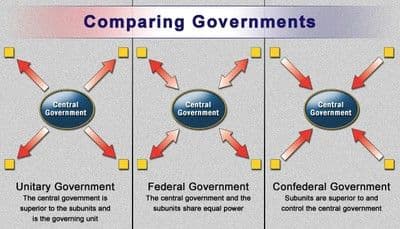









 Introduction to Decolonization and Nationalism Lesson Vocabulary colony (n) an area over which a foreign nation or state extends or maintains control. colonize (v) to take control of(a people or area, especially as an extension of state power. control (v) to exercise restraining or directing influence over. decolonize (v) to free or give up control of a colonized people or area. empire (n) a major political unit having a territory of great extent or a number of territories or peoples under a single sovereign authority. Ex. Roman Empire, Ottoman Empire human rights (n) rights (such as freedom from unlawful imprisonment, torture, and execution) regarded as belonging fundamentally to all people. imperialism (n) the policy, practice, or advocacy of extending the power and dominion of a nation, especially by direct territorial acquisitions or by gaining indirect control over the political or economic life of other areas. independence (n) a state of being free from direct control by others. majority (n) being over 50% of a population OR the group with the greater amount of power in a political entity. minority (n) being less than 50% of a population OR the group with less power than the majority in a political entity. nation (n) a politically organized group of people with shared characteristics, such as language, culture, or geographic origins. nationalism (n) a movement that seeks to unify or promote the interests of a nation or national group. nonviolence (n) a movement that completely abstains or avoids violence as a means of political protest. oppress (v) to crush or burden by abuse of power or authority. political movement (n) a group of people who seek to organize people to change government, policy, or social values. protest (n) an organized public demonstration of disapproval. reform (n) removal or correction of errors or of an abuse or a wrong. state (n): an organization that has a system in which a politically organized group of people have primary control over a definite territory. Definitions mostly used: Merriam-WebsterManagement and Globalization Global Management Why companies go global How companies for global Global Business environments Global Business Types of global business Pros and cons of global businesses Ethnic Challenges for global business Culture and Global Diversity Cultural intelligence Silent language of culture Tight and loose cultures Values and national cultures Global Management Learning Are management theories universal? Intercultural competencies Global learning goals Key concepts of the challenges of globalisation: Global economy Resources, markets and competition are worldwide in scope Internationalisation The process of increasing involvement in international operations Globalization/Deglobalization Glob- the growing interdependence among elements in the global economy The worldwide interdependence of resource flows, product markets and business competition World 3.0 Different views: World flat vs. round Distance is a metaphor that represents the degree of dissimilarities between countries Balancing cooperation in the global Global Management Global management - managing things in different countries Managing business and organizations with interests in more than one country What do we expect from global Managers Knowing how to adapt Knowing the language Global Manager Is culturally aware and informed on international affairs International Business Conducting for-profit transactions of goods and services across national boundaries International Motive Why do firms internatioalize their activities Cheaper labour Labour tax Natural resources Enrolments to do business Clientele Exclusive materials Personal benefits: Taxes Reasons why businesses go global Customers Suppluers Capital During (1993) - 4 motive 1. Market seeking 2. Efficiency Seeking 3. Resource seeking 4. Strategic Asset Seeking Cuervo Cazurra, Narula and un (2015) - 4 motive s Internationalization Motives A company may also explore the opportunities in different markets in order to take advantage and in some cases extend the product life cycle What is a Market Entry Strategy Involves the sale of goods or services to foreign markets but do not require expensive investments Franchising Exporting and importing Involve the sale of goods or services to foreign markets but do Types of market entry strategies Global sourcing Exporting Importing Licensing agreement Franchising Types of Foreign Direct Investment (FDI) strategies: Joint venture Strategic alliance Owned Subsidiary (sometimes called WOS) How to go abroad What conditions will affect the decisions of firms on how to internationalize their activities? During (1978)- Eclectic paradigm OLI model OLI- Ownership, Location and Internalization Advantages Ownership advantages Resources owned by the organization that can be transferred across locations include trademarks, production techniques and processes, managerial skills and other resources not available to the competitors Location Advantages Represent the implications of choosing to produce or to perform activities in a specific location (country or region) Internalization Advantages: The ability to internalize or to incorporate activities that add value to its business Evolution of Concepts- New Elements Although economic factors are certainly important to explain the formation, growth and expansion of firms within and across national borders, they are not sufficient to explain the additional complexity when a firm decides to expand its activities across national borders Economic factors Investigate the economic elements that affect the internationalization of firms Behavioural Elements Explaining the additional challenges (and perhaps opportunities) a firm faces in foreign host countries when compared to indigenous (local) firms Behavioural theories Johanson and Wiedersheim-Paul (1975) and Johanson and Vahlne (1977) Included the psychic Distance concept (beckerman,1956) to explain the internationalization behaviour of firms The Uppsala internationalization model Psychic distance is: the sum of factors preventing the flow of infomatio from and to the market Psychic Distance is a broad concept that includes several elements such as: language, culture, political systems, level of education, level of industrial development Firms behave in a “Risk Averse” manner It means that when the perceived risk goes down, the firm increase its commitment to the foreign market \ The Haier Group Data Strategy Big DATA and Small DATA The use of small data to satisfy individual customers’ needs, however, the book mentions a huge cultural shock at the plant in Camden, south caroline Ex: top down, hard hat colors and hierarchy Culutral Differnces can have a huge impact on the internationalization of firms Kogut and Singh (1988)- Cultural Distance Index First statsical study on the implication of ciltiral distance to the selection of entry mode When investigating in culturally distant countries, foreign firms can choose to partner with foreign firms in order to gain local knowledge and share the risk associated to the investment (higher commitment = higher risk) How Companies Go Global Global sourcing The process of purchasing materials or services around teh world for local use Exporting Selling locally made products in foreign markets Importing Buying foreign made products and selling them domestically Exports correspond to what percentage of Candain GDP What countries are the major trending partners of Canada Management and Globalization How Companies Go Global Licensing Agreement One firm pays a fee for rights to make or sell another company’s products What are the potential risks associated to licesning The case of new balance in China Franchising A fee is paid for the rights to use another firms name, branding and methods Insourcing Insourcing: refers to local job creation that results from foreign direct investment Types of insourcing Joint ventures: operate in a foreign country through co-ownership by foreign and local partners Strategic alliances: A partnership in which foreign and domestic firms share resources and knowledge for mutual gains Foreign subsidiaries: local operation completely owned by a foreign firm Criteria for choosing a joint venture partner: Familiarity with your firm’s major business String local workforce Values its customers Future expansion possibilities Strong local market for partner’s own products Good Profit potential Sound financial standing Global business environments Legal and poliical systems Trade agreements and trade barriers Regional economic alliances Legal and political systems Differing laws and practices regards Business ownership Negotiation and implementation of contracts Foreign currency exchange Protection of intellectual property rights Counterfeit merchandise Political risk Potential loss in value of foreign investment due to instability and political changes in the host country Political risk analysis (expertise/experience) Forecast political disruptions that threaten the value of a foreign investment Changes in the rules of the game Brexit US Trade Wars-mexico-China Other examples Bolivia, Venezuela, China De-globalization The process of weakening interdependence among nations Trade Agreements and trade Barriers World trade organization Most favourd nation status Tariffs Nontariss barriers (quotes, restrictions, etc.) Protectionism Regional Economic Alliances USMCA (replacment for the NAFTA-North American Free trade Agreement) EU- European Union APEC- Aisa Pacific Economic Copperation ASEAN - Association of Southeast Asian Nationas SADC - Southern Africa Development Community MERCOSUR- Chapter 5- Global Management and Cultural Diversity (part 2) Review Types of global business Global corporation MNE (multinational enterprise) or MNC (multinational corporation) with extensive business operations in more than one foreign country Transnational corporation A global corporation that operates worldwide on borderless basis Some host country complaints about MNCs Host Country companits about MNCs: Excessive profits Interference with local government Domination of local economy Interference with local government Hiring the best local talent Limited technology transfer Disrespect for local customers Examples - War in Ukraine Disruption in global -value chains and increased pressure and interference of MNCs with local government Fertilizer imports in Brazil (one of the major producers of agricultural commodities) We must consider the triple bottom line and the impact in society, the environment and the economy $2.5 billion invest in potash mine in Brazill What about Globalization gap Large multinationals adn industrilizednaitons gaining disporoportinonally form globalization Globalization gap: Large multinational and industrialized nations gaining disproportionally from Globalization Some MNC complaints about host countries MNC Complaints about host countries: Profiit limitations Laws and regulations Overpirce resources Exploitative rules Foreign exchange restriction Failure to uphold contracts Mutual benefits for host countries and multinational companies Mutual benefits for host country and global corporation of MNC: Shared growth opportunities Shared income opportunities Shared learning opportunities Share development opportunities Develop projects together What are some of the ethical challenges for global business Ethincal challenges for global business Child labour Employmnet of children for worl otherwise done by adults Sweatshops Employment of workers at very low wages for long hours in poor working conditions Ex: Nike bad labour prices Unsafe working conditions Corruption Illegal practices that further one’s business interests Corrupiotn of froeign public officials Act makes it illegal for Candain firms and their representatives to engage in corrupt practices overseas Bribes to foreign officials Excessive commissions Non-monetary gifts Sweatshops Conflict materials What is culture Culture : The shared set of beliefs, values, and patterns of behvaiourr common to a group of people Food preferences Values and traditions Language and beliefs Religion Art music Life style Hofstede defines culture as: “The collectiv programing of teh mind distinguishing the members of one group or category of people from others” What is culture shock Culture Shock: Confusion and discoumfert a person experiences in an unfaamiliar culture Stages to adjusting to a new culture Confusion Small vitorires The honeymoon Irritation and anger Reality Cultural Intelligence The ability to adapt and adjust to new cultures What is Ethnocentrism Tendency to consider one’s own culture as superior others Slinet languages of culture Contect Low context High context Space Proxemics Ex: personal space Time Monochronic Polychronic High and low contexts cultures Edward T.Hall (1959) Def: Part of a discourse that surround a word or passage and can throw on its meaning Low context cultures Emphizes communication via spoken or written words Countries like United States, Canada and Germany High context cultures Rely on nonverbal and situational cues as well as on spoken or written works Thailand Malaysia Time Monochronic cultures People tend to do one thing at a time Canda Polychronic cultures Time is used to accomplish many different things at once Egypt Space Proxemics Study of how people use space to communicate In North American people value “personal space’ Many Latin and Asian cultures expect much less personal space Tight and Loose Cultures Cultural tightness-looseness Tight = Strength of norms that govern social behvaviour Japan, Korea, Malaysia Loose = tolerance for any deviation from norms Australia, Brazil, Hungary Values and national cultures (Hofstede) Power distance Uncertainty avoidance Individalism-collectivism Masculinity-femininty Time Orientation Indulgence vs. Restraint Comparative management How management pratices systematically differ among countries and /or cultures Intercultural competencies Skills and personal characteristics that help us be successful in cross cultural situations Global Managers (know how to adapt) Need to successfully apply management functions across interantional boundaries Global Learning goals Not universal Engage critical thinking Look everywhere for new management ideas Always consider culture Agriculture Agriculture is the main source of livelihood in every country in the region except Brunei and Singapore. Agricultural employment, however, has been declining. More than two-thirds of the workforces of Cambodia and Laos practice agriculture. As the economies of the ASEAN countries have been restructured toward growth in industry and services, there has been a corresponding decline in the proportion of the gross domestic product (GDP) derived from agriculture, most significantly in Indonesia, Malaysia, and Thailand. Agricultural output in Southeast Asia has increased significantly since 1970. There are wide variations in this growth across the region, with the greatest gains in Malaysia and Thailand and little or no increase in Cambodia, Laos, and Vietnam. Hunger and malnutrition are problems in pockets of even the most developed countries, but they have been especially serious in Cambodia because of crop failures and internal strife. The condition of the rural population everywhere is clearly related to limited access to land, the landless experiencing greater poverty and poorer health. Landlessness is perhaps most serious in the Philippines. The dominant form of agriculture in the region is wet-rice cultivation. Where conditions permit, two crops typically are planted each year. Other food crops such as corn (maize), cassava, and pulses (legumes) frequently are grown in drier areas where there is too little water for a second planting of rice. Rice production requires a reliable water supply. Thailand and the Philippines rely heavily on rain-fed systems, while Indonesia utilizes irrigation to a large extent. Irrigation or some other form of water control is especially critical in the cultivation of the high-yielding varieties (HYVs) of rice that have been introduced since the 1960s. The spread of the so-called Green Revolution—in which HYVs and chemical fertilizers and pesticides are utilized—has brought mixed results. There is little doubt that production has increased because of the higher yields of these hybrid strains and because their more rapid maturation increases the possibility of multiple annual crops. Frequently, however, poorer farmers are not able to take advantage of these strains, because of the high cost of their use. The goal of rice self-sufficiency has been difficult to achieve for most countries. A large variety of cash crops are grown for the local and export markets, both on large commercial estates and by individual growers or smallholders. Tree crops are the most important in terms of value, although the area devoted to them is limited largely to equatorial areas. Rubber and palm oil are significant in Malaysia, Indonesia, and southern Thailand, while coconuts and sugar are important in the Philippines. Other major export crops are cacao, coffee, and spices, while crops grown largely for local and regional consumption include chilies, sweet potatoes, peanuts (groundnuts), and tobacco. The cultivation of opium poppies is important in parts of Myanmar and Thailand. The emphasis on rubber and palm oil production is in response to a considerable (though fluctuating) worldwide demand for these commodities and because of a nearly continuous harvest period that provides year-round employment. Foreign corporations once dominated production, but, as the region’s countries gained independence, much of the production was nationalized. Government ownership continues to predominate, with increasing private ownership. Fishing contributes only a token amount to the GDP of Southeast Asian countries, but it is an important livelihood in certain areas and supplies a significant portion of the local diet. Marine output has gradually expanded with new technologies. The maritime nations of Thailand, Indonesia, Malaysia, and the Philippines all have globally important fishing industries. Shrimp catches are especially in demand in the world economy. Aquaculture has become increasingly important in the region, such species as shrimp, carp, and grouper being raised in excavated ponds.Key Word Definition
Aid Assistance in the form of grants or loans at below market rates. For example, the UK provided aid to Nepal after the 2015 earthquake to help with reconstruction efforts.
Barriers to Trade Government constraints on the flow of international goods and services, such as tariffs and quotas. For example, the European Union imposes tariffs on certain agricultural products to protect its farmers.
BRICS An acronym for an association of five major emerging nations: Brazil, Russia, India, China, and South Africa. For example, BRICS nations often meet to discuss economic cooperation and development strategies.
Demographic Aging The rise in the median age of a population. For example, Japan is experiencing demographic aging, with a significant increase in the elderly population.
Economic Core Region The most highly developed region(s) in a country. For example, London is considered an economic core region in the UK due to its high level of development and economic activity.
GNP (Gross National Product) GDP plus overseas earnings, also known as GNI (Gross National Income). For example, the GNP of the United States includes the value of goods and services produced domestically and the income earned by its citizens abroad.
HIC (Higher Income Country) A country with a high level of income and development. For example, Germany is classified as a higher income country due to its high GDP per capita and advanced infrastructure.
NEE (Newly Emerging Economy) A country that is experiencing rapid economic growth and industrialisation. For example, China is an example of a newly emerging economy, having rapidly industrialised and grown economically over the past few decades.
LIC (Lower Income Country) A country with a low level of income and development. For example, Malawi is considered a lower income country, with a low GDP per capita and limited access to healthcare and education.
GDHI (Gross Disposable Household Income) The amount of money that households have available for spending and saving after taxes and social contributions. For example, in the UK, the GDHI varies significantly between regions, with London having one of the highest levels.
Gini Coefficient A measure of income inequality within a population, ranging from 0 (perfect equality) to 100 (perfect inequality). For example, South Africa has a high Gini coefficient, indicating significant income inequality within the country.
Trade Unions Organisations that promote trade between member countries, such as the East African Community (EAC). For example, the East African Community (EAC) works to promote economic integration and trade among its member states.
Fair Trade A movement aimed at helping producers in developing countries achieve better trading conditions and promote sustainability. For example, Fairtrade coffee ensures that farmers receive a fair price for their product and work under safe conditions.
FDI (Foreign Direct Investment) Investment made by a company or individual in one country in business interests in another country. For example, Toyota's investment in manufacturing plants in the UK is an example of foreign direct investment.
Debt Relief The partial or total remission of debts, especially those owed by developing countries to external creditors. For example, the Heavily Indebted Poor Countries (HIPC) initiative provides debt relief to eligible countries to help them achieve sustainable development.
International Aid Voluntary transfer of resources from one country to another, often in the form of financial assistance, goods, or services. For example, the UK provides international aid to various countries through its Department for International Development (DFID).
Top-Down Development Large-scale development projects led by national governments or international organisations. For example, the construction of the Three Gorges Dam in China is an example of a top-down development project.
Bottom-Up Development Small-scale development projects led by local communities or NGOs, focusing on the needs of the poorest and most vulnerable. For example, WaterAid's installation of hand pumps in rural villages in Africa is an example of a bottom-up development project.
Urbanisation The increase in the proportion of people living in urban areas compared to rural areas. For example, rapid urbanisation in India has led to the growth of megacities like Mumbai and Delhi.
Geopolitics The study of the effects of geography (human and physical) on international politics and relations. For example, the geopolitics of the Arctic region involves disputes over territorial claims and access to natural resources.
Quality of Life The general well-being of individuals and societies, outlining negative and positive features of life. For example, Scandinavian countries are often ranked high in quality of life due to their strong social welfare systems and high levels of happiness.
Poverty Cycle A set of factors or events by which poverty, once started, is likely to continue unless there is outside intervention. For example, lack of education and healthcare can trap families in a poverty cycle, making it difficult for future generations to improve their living standards.
Sustainable Development Economic development that is conducted without depletion of natural resources. For example, the use of renewable energy sources like wind and solar power is a key aspect of sustainable development.
Humanitarian Aid Material or logistical assistance provided for humanitarian purposes, typically in response to crises including natural disasters and man-made disaster. For example, humanitarian aid was provided to Haiti after the devastating earthquake in 2010 to help with immediate relief efforts.
Economic Growth An increase in the production of goods and services in an economy over a period of time. For example, China's economic growth over the past few decades has lifted millions of people out of poverty.
Social Indicators Measures that describe the well-being of individuals or communities, such as health, education, and income. For example, life expectancy and literacy rates are common social indicators used to assess development.
Environmental Sustainability Responsible interaction with the environment to avoid depletion or degradation of natural resources and allow for long-term environmental quality. For example, practices like recycling and conservation of natural habitats contribute to environmental sustainability.
Infrastructure The basic physical and organisational structures and facilities needed for the operation of a society or enterprise. For example, good infrastructure, such as roads, bridges, and schools, is essential for economic development.
Globalisation The process by which businesses or other organisations develop international influence or start operating on an international scale. For example, the globalisation of technology companies like Apple and Google has led to their products being available worldwide.
Microfinance Financial services provided to low-income individuals or groups who are typically excluded from traditional banking. For example, microfinance institutions like Grameen Bank provide small loans to entrepreneurs in developing countries to help them start or expand their businesses.
Forms and Systems of GovernmentTEKS Cluster: Government and Economic Systems 6.9 Government. The student understands the concepts of limited and unlimited governments. 6.10(A) identify and give examples of governments with rule by one, few, or many 6.9(A) describe and compare examples of limited and unlimited governments such as constitutional (limited) and totalitarian (unlimited) 6.9(B) identify reasons for limiting the power of government 6.11(B) explain how opportunities for citizens to participate in and influence the political process vary among various contemporary societies1. Settlements Importance of Rivers Fertile Land: The soil near rivers was great for farming, thanks to regular flooding that added nutrients. Trade and Travel: Rivers made moving things and people easy, which helped trade and communication. Protection: Rivers could act as natural barriers, making it harder for enemies to attack. Food: Rivers were full of fish and other food, adding to what people could eat. Energy: People used the river's flow to power machines, for example, grinding grain. Cleanliness: Rivers were used to wash away waste, keeping settlements cleaner. Culture: Rivers often had spiritual importance, and ceremonies and stories revolved around them. Common Geographic Features of Ancient Civilizations Mesopotamia: the Tigris and Euphrates Rivers in central Iraq Indus River Valley: the river runs in the northwestern part of India Nile River Valley: the major river of Egypt Yellow River Valley: a major river flowing through the southern part of China Rivers provided water, food, transportation, and shaped the way of life and development of these ancient civilizations. Impact of Mountains on Settlements Mountains served as barriers to early settlement due to the lack of technology to cross them. The Himalayan Mountains isolated much of India and China during their early development. Impact of Deserts on Migration Deserts posed significant challenges to people who wanted to migrate due to their harsh and unforgiving conditions. Notable deserts include the Empty Quarter in Saudi Arabia and the Sahara Desert in Africa. Changes in Migration and Cultural Blending Advancements in transportation technology post-Industrial Revolution increased cultural blending. Transportation advancements enabled global migration. Before, cultures were isolated, focusing on beliefs and local adaptations. The Industrial Revolution transformed migration and cultural blending. 2. How Humans Modify and Adapt to Their Environment Ways Humans Modify Their Environment Mining: Removing the earth's surface for precious metals. Irrigation: Diverting water for farming. Transportation: Moving goods with trains, cars, airplanes, and boats. Mining Strip mining removes large layers of the earth. Can impact the environment by removing plants and polluting water sources. Irrigation Diverting water for farming and urban development. Transportation Moving goods using trains, cars, airplanes, and boats. Human Adaptation to the Environment Adjusting to environmental conditions by changing behavior. Examples: Wearing specific clothing, using specific building materials. Human Modification of the Environment Changing the earth to meet human needs by physically altering the environment. Examples: Dams, canals, roads, bridges. Impact of Weather and Geological Events on Humans Events like earthquakes, hurricanes, and cold weather affect human settlements. Examples: Building earthquake-resistant buildings, creating levees, using ice for tourism. 3. Understanding Culture Introduction to Culture Culture refers to the way of life of a group of people who live in a particular place. It includes traditions, beliefs, values, and the way they do things. Cultural Characteristics Religious traditions Language Family values Laws Cultural characteristics make each culture unique. Cultural Representations Art Architecture Music Literature Cultural representations express a culture's creativity and show their beliefs and history to the world. Government and Culture Types of government reflect cultural beliefs and traditions. Examples: democratic republic, communist state. The way a country is governed tells a lot about its culture. Economic Systems and Cultures Economic systems reflect cultural values. Examples: bartering, modern economies (e.g., United States, China). How people earn and spend money also reflects their culture. Spread of Cultural Ideas Trade: Spreading ideas through interactions during trade. Travel: Visitors bringing new ideas. War: Conquering armies imposing beliefs. Cultural ideas spread through trade, travel, and war. Multicultural Societies Blending of multiple cultural and ethnic groups. Common in advanced societies with immigration. Multicultural societies create something new by bringing together different cultures. Cultural Adaptation Cultures can change and adapt by taking new ideas and blending them with their own traditions. Example: 'Tex-Mex' food, which blends Mexican and Texan traditions.Chapter 7 - Review Data and Decision Making *Glow bus due at midnight, name and student number: answer questions using content in class People have created wonderful things for centuries, and management Management can be traced as far back as 500 bc when the ancient Sumerians used written records to improve government and business activities Why is it important to lean from the past Not to repeat our mistakes Classical management approaches Scientific management Administrative Principles Bureaucratic organisation Behavioural Management Approaches Follett’s Organizations as communities The Hawthorne studies Maslow’s theory of human needs Mcgregor’s Theory x and Theory Y Argyris Personality and organisation Modern Management foundations Organises as systems Contingency thinking Quality management Quantitative and analysis and tools Evidence-based management Contributions Frederick Taylor - Father of Scientific management He noticed that workers often did their jobs with wasted motions and without a constant approach. His resulted in inefficiency and low performance He believed the problem could be fixed if workers were taught to do their jobs in the best ways and ten were helped and guided by supervisors Four guiding principles of scientific management Rules of motion, standardized work and proper working conditions Select workers with the right abilities Train workers and give them incentives Support workers by planning and smoothing the way as they do their work Frank and Lillian Gilbreth Pioneered use of motitono studies as a management tool In one famous case, the gilbreaths cut down the number of motions used by bricklayers adn tripled their productivity Contributions from scientific management Make results-based compensation a performance incentive Carefully design jobs with efficient work methods Carefully select workers with the ability to perform the job Trian workers to execute activities to the best of their abilities Train supervisors to support workers so they can perform jobs to the best of their abilities Classical Management Adiminstative principle (Henro Fayol) 1919, after a career in French industry, Henri F published “adminisration Industrielle et Generale” (General and industrial management) in which we out like his views on the management of organiztion and workers Rules and duties in management Foresight - to complete a plan of action for the future Organization - To provide and mobilize resources to implement the plan Common- to lead, select and evaluate workers to get the best work toward the plan Coordination- to fit diverse efforts together and ensure information is shared and problems solved Control- to make sure things happen according to plan and to take necessary corrective action Classical management Bureacratic organiztion (Max Weber) Max weber (Bureaucrativ organization) - late 19th century German political economist who had a major impact in the fields of management and sociology Bureaucratic Organization An ideal, intentionally rational adn very efficient form of organization Based on the principles of logic, order and legitimate authority Characteristics of BO Clear division of labour Clear hierarchy of authority Formal rules and procedure Impersonality Careers based on merit What are some disadvantages of bureaucracy Takes a long time for problems to become solved bec there are procedures and there is a chain of people in command Having the power Rules have to follow Excessive paperwork or “red tape” Slowness in handling problems Rigidity in the face of shifting needs Resistance to change Employee apathy Behavioural Management Approaches (focus on understanding the elements that affect human behaviour in organisations) Follett’s Organizations as communites Mary park follett contributed to the transition from classical thinking inot behavioural management Groups and human cooperation Groups allow individuales too combine their talents for a greater good Organizations are cooperating “communites” of managers adn workers Managers job is to help people copperate and achive an integration of goals and intrests Forward-looking managment insight: Making every emploee an owner creates a sense of collective responsibility Prescursor of employrr ownership, profit sharing and gain sharing Buniess problems invovle a varity of inter realted factors Prescursor of systems thinking Private profits realtive to public good Precursor of managerial ethics and social respinsibility Hawthorne studies Took place at western electric chicago plan, a tran led by Harvards Elton Mayo set out to learn how econmic incentives and workplace conditions affected workers output Maing objective Intial study examined how ecomoin incentives adn physical conditions affected worker output (productivity) No consistent relationship found During experientmetn they had 2 groups The expertiant groups (impoved wokring ocnditions ) The control group ( no changes to original working conidtions) No consitant relationship found, perfomance in both groups increased even after removing incentives Social setting and human relations Concluded New “social setting” led workers to do good job Good “Human relations” = higher productivity The contect - The Great Depression (1929-1940) Employee attitudes and groups processes Osme thinsf satisifed some workers but not others People resticited output to adhere to groups norms (Avoid layoffs) Lessons from he hawthrone stufirs Social and human concerns are keys to prductivity Hawthrone effect - People who are singled out for special attention perform as expected Maslow’s Theory of human needs Human needs The work of psychologist Abraham Maslow in the area if human “needs,” also has had a major impact in the behavioual apporach to management Maslow’s hierarchy of human needs Self actualization needs Higherst level: need foe self fulfillment to grow and use abilites to fullest and most creative extent Esteem needs Needs fro esteem in eyes of others need for respect, prestige, recognition; need for self esteem, personal sense of competence, mastery Social needs Need for love, affection, sense of belongingness in ones relationship either other people Safett needs Need for security, protection and stability in teh events of day to day life Physiological needs Most basic of all human needs: need for biological maintence; food, water and phydical well being Principles Defict principle: A satidifed need is not a motivator of behaviour Progress principles: A need becomes a motivator once the preceding lower-level need is satisfied Both principles cease to operate at self actulilzation level McGregor’s Theories Thepry x assumes that workers; Dislike work Lack ambition Are irresponsible Resist change Prefer to be led Theoyry y assumes that workers are Willing to work Willing to accept responsibility Capable of self control Capable of self direction Imaginative and creative According to McGregor, Managers create: Self fulfilling prophecies Implications of Theory x and y Theory x managers: Create situations where workers become dependent, passive and reluctant Theory y managers create situations where workers respond with initiative and high performance Central to notions of empowerment and self management Argyris’s theory of adult personality Classical management principles and practices inhibit worker maturation and are inconsistent with the mature adult personality Management practices should accommodate the mature personality: Increasing task responsibility Increasing task variety Using participative decision making Modern Management Foundation Quantitative analysis and Tools Analytics: the use of large data bases and mathematics to solve problems and make informed decision using systematic analysis Organization as systems System Collection of interrelated parts that function together to achieve a common purpose Subsystem A smaller component of a larger system Open systems Organisations that interact with their environment Contingency thinking Tires to maths managerial responses with problem (situation) No “one best way” to manage The “appropriate way to to manage depends on the situations Quality management Qality anc competitive advantafe are linked Total quality managment (TQM) Comprehensive approach to contiou impovment on teh entire organization ISO certification Gloval quality management standards Refine and upgrade quality to meet ISO requirments Evidednce Based Managment Making management decision on “hard facts” about what really works
Introduction to Decolonization and Nationalism Lesson Vocabulary colony (n) an area over which a foreign nation or state extends or maintains control. colonize (v) to take control of(a people or area, especially as an extension of state power. control (v) to exercise restraining or directing influence over. decolonize (v) to free or give up control of a colonized people or area. empire (n) a major political unit having a territory of great extent or a number of territories or peoples under a single sovereign authority. Ex. Roman Empire, Ottoman Empire human rights (n) rights (such as freedom from unlawful imprisonment, torture, and execution) regarded as belonging fundamentally to all people. imperialism (n) the policy, practice, or advocacy of extending the power and dominion of a nation, especially by direct territorial acquisitions or by gaining indirect control over the political or economic life of other areas. independence (n) a state of being free from direct control by others. majority (n) being over 50% of a population OR the group with the greater amount of power in a political entity. minority (n) being less than 50% of a population OR the group with less power than the majority in a political entity. nation (n) a politically organized group of people with shared characteristics, such as language, culture, or geographic origins. nationalism (n) a movement that seeks to unify or promote the interests of a nation or national group. nonviolence (n) a movement that completely abstains or avoids violence as a means of political protest. oppress (v) to crush or burden by abuse of power or authority. political movement (n) a group of people who seek to organize people to change government, policy, or social values. protest (n) an organized public demonstration of disapproval. reform (n) removal or correction of errors or of an abuse or a wrong. state (n): an organization that has a system in which a politically organized group of people have primary control over a definite territory. Definitions mostly used: Merriam-WebsterManagement and Globalization Global Management Why companies go global How companies for global Global Business environments Global Business Types of global business Pros and cons of global businesses Ethnic Challenges for global business Culture and Global Diversity Cultural intelligence Silent language of culture Tight and loose cultures Values and national cultures Global Management Learning Are management theories universal? Intercultural competencies Global learning goals Key concepts of the challenges of globalisation: Global economy Resources, markets and competition are worldwide in scope Internationalisation The process of increasing involvement in international operations Globalization/Deglobalization Glob- the growing interdependence among elements in the global economy The worldwide interdependence of resource flows, product markets and business competition World 3.0 Different views: World flat vs. round Distance is a metaphor that represents the degree of dissimilarities between countries Balancing cooperation in the global Global Management Global management - managing things in different countries Managing business and organizations with interests in more than one country What do we expect from global Managers Knowing how to adapt Knowing the language Global Manager Is culturally aware and informed on international affairs International Business Conducting for-profit transactions of goods and services across national boundaries International Motive Why do firms internatioalize their activities Cheaper labour Labour tax Natural resources Enrolments to do business Clientele Exclusive materials Personal benefits: Taxes Reasons why businesses go global Customers Suppluers Capital During (1993) - 4 motive 1. Market seeking 2. Efficiency Seeking 3. Resource seeking 4. Strategic Asset Seeking Cuervo Cazurra, Narula and un (2015) - 4 motive s Internationalization Motives A company may also explore the opportunities in different markets in order to take advantage and in some cases extend the product life cycle What is a Market Entry Strategy Involves the sale of goods or services to foreign markets but do not require expensive investments Franchising Exporting and importing Involve the sale of goods or services to foreign markets but do Types of market entry strategies Global sourcing Exporting Importing Licensing agreement Franchising Types of Foreign Direct Investment (FDI) strategies: Joint venture Strategic alliance Owned Subsidiary (sometimes called WOS) How to go abroad What conditions will affect the decisions of firms on how to internationalize their activities? During (1978)- Eclectic paradigm OLI model OLI- Ownership, Location and Internalization Advantages Ownership advantages Resources owned by the organization that can be transferred across locations include trademarks, production techniques and processes, managerial skills and other resources not available to the competitors Location Advantages Represent the implications of choosing to produce or to perform activities in a specific location (country or region) Internalization Advantages: The ability to internalize or to incorporate activities that add value to its business Evolution of Concepts- New Elements Although economic factors are certainly important to explain the formation, growth and expansion of firms within and across national borders, they are not sufficient to explain the additional complexity when a firm decides to expand its activities across national borders Economic factors Investigate the economic elements that affect the internationalization of firms Behavioural Elements Explaining the additional challenges (and perhaps opportunities) a firm faces in foreign host countries when compared to indigenous (local) firms Behavioural theories Johanson and Wiedersheim-Paul (1975) and Johanson and Vahlne (1977) Included the psychic Distance concept (beckerman,1956) to explain the internationalization behaviour of firms The Uppsala internationalization model Psychic distance is: the sum of factors preventing the flow of infomatio from and to the market Psychic Distance is a broad concept that includes several elements such as: language, culture, political systems, level of education, level of industrial development Firms behave in a “Risk Averse” manner It means that when the perceived risk goes down, the firm increase its commitment to the foreign market \ The Haier Group Data Strategy Big DATA and Small DATA The use of small data to satisfy individual customers’ needs, however, the book mentions a huge cultural shock at the plant in Camden, south caroline Ex: top down, hard hat colors and hierarchy Culutral Differnces can have a huge impact on the internationalization of firms Kogut and Singh (1988)- Cultural Distance Index First statsical study on the implication of ciltiral distance to the selection of entry mode When investigating in culturally distant countries, foreign firms can choose to partner with foreign firms in order to gain local knowledge and share the risk associated to the investment (higher commitment = higher risk) How Companies Go Global Global sourcing The process of purchasing materials or services around teh world for local use Exporting Selling locally made products in foreign markets Importing Buying foreign made products and selling them domestically Exports correspond to what percentage of Candain GDP What countries are the major trending partners of Canada Management and Globalization How Companies Go Global Licensing Agreement One firm pays a fee for rights to make or sell another company’s products What are the potential risks associated to licesning The case of new balance in China Franchising A fee is paid for the rights to use another firms name, branding and methods Insourcing Insourcing: refers to local job creation that results from foreign direct investment Types of insourcing Joint ventures: operate in a foreign country through co-ownership by foreign and local partners Strategic alliances: A partnership in which foreign and domestic firms share resources and knowledge for mutual gains Foreign subsidiaries: local operation completely owned by a foreign firm Criteria for choosing a joint venture partner: Familiarity with your firm’s major business String local workforce Values its customers Future expansion possibilities Strong local market for partner’s own products Good Profit potential Sound financial standing Global business environments Legal and poliical systems Trade agreements and trade barriers Regional economic alliances Legal and political systems Differing laws and practices regards Business ownership Negotiation and implementation of contracts Foreign currency exchange Protection of intellectual property rights Counterfeit merchandise Political risk Potential loss in value of foreign investment due to instability and political changes in the host country Political risk analysis (expertise/experience) Forecast political disruptions that threaten the value of a foreign investment Changes in the rules of the game Brexit US Trade Wars-mexico-China Other examples Bolivia, Venezuela, China De-globalization The process of weakening interdependence among nations Trade Agreements and trade Barriers World trade organization Most favourd nation status Tariffs Nontariss barriers (quotes, restrictions, etc.) Protectionism Regional Economic Alliances USMCA (replacment for the NAFTA-North American Free trade Agreement) EU- European Union APEC- Aisa Pacific Economic Copperation ASEAN - Association of Southeast Asian Nationas SADC - Southern Africa Development Community MERCOSUR- Chapter 5- Global Management and Cultural Diversity (part 2) Review Types of global business Global corporation MNE (multinational enterprise) or MNC (multinational corporation) with extensive business operations in more than one foreign country Transnational corporation A global corporation that operates worldwide on borderless basis Some host country complaints about MNCs Host Country companits about MNCs: Excessive profits Interference with local government Domination of local economy Interference with local government Hiring the best local talent Limited technology transfer Disrespect for local customers Examples - War in Ukraine Disruption in global -value chains and increased pressure and interference of MNCs with local government Fertilizer imports in Brazil (one of the major producers of agricultural commodities) We must consider the triple bottom line and the impact in society, the environment and the economy $2.5 billion invest in potash mine in Brazill What about Globalization gap Large multinationals adn industrilizednaitons gaining disporoportinonally form globalization Globalization gap: Large multinational and industrialized nations gaining disproportionally from Globalization Some MNC complaints about host countries MNC Complaints about host countries: Profiit limitations Laws and regulations Overpirce resources Exploitative rules Foreign exchange restriction Failure to uphold contracts Mutual benefits for host countries and multinational companies Mutual benefits for host country and global corporation of MNC: Shared growth opportunities Shared income opportunities Shared learning opportunities Share development opportunities Develop projects together What are some of the ethical challenges for global business Ethincal challenges for global business Child labour Employmnet of children for worl otherwise done by adults Sweatshops Employment of workers at very low wages for long hours in poor working conditions Ex: Nike bad labour prices Unsafe working conditions Corruption Illegal practices that further one’s business interests Corrupiotn of froeign public officials Act makes it illegal for Candain firms and their representatives to engage in corrupt practices overseas Bribes to foreign officials Excessive commissions Non-monetary gifts Sweatshops Conflict materials What is culture Culture : The shared set of beliefs, values, and patterns of behvaiourr common to a group of people Food preferences Values and traditions Language and beliefs Religion Art music Life style Hofstede defines culture as: “The collectiv programing of teh mind distinguishing the members of one group or category of people from others” What is culture shock Culture Shock: Confusion and discoumfert a person experiences in an unfaamiliar culture Stages to adjusting to a new culture Confusion Small vitorires The honeymoon Irritation and anger Reality Cultural Intelligence The ability to adapt and adjust to new cultures What is Ethnocentrism Tendency to consider one’s own culture as superior others Slinet languages of culture Contect Low context High context Space Proxemics Ex: personal space Time Monochronic Polychronic High and low contexts cultures Edward T.Hall (1959) Def: Part of a discourse that surround a word or passage and can throw on its meaning Low context cultures Emphizes communication via spoken or written words Countries like United States, Canada and Germany High context cultures Rely on nonverbal and situational cues as well as on spoken or written works Thailand Malaysia Time Monochronic cultures People tend to do one thing at a time Canda Polychronic cultures Time is used to accomplish many different things at once Egypt Space Proxemics Study of how people use space to communicate In North American people value “personal space’ Many Latin and Asian cultures expect much less personal space Tight and Loose Cultures Cultural tightness-looseness Tight = Strength of norms that govern social behvaviour Japan, Korea, Malaysia Loose = tolerance for any deviation from norms Australia, Brazil, Hungary Values and national cultures (Hofstede) Power distance Uncertainty avoidance Individalism-collectivism Masculinity-femininty Time Orientation Indulgence vs. Restraint Comparative management How management pratices systematically differ among countries and /or cultures Intercultural competencies Skills and personal characteristics that help us be successful in cross cultural situations Global Managers (know how to adapt) Need to successfully apply management functions across interantional boundaries Global Learning goals Not universal Engage critical thinking Look everywhere for new management ideas Always consider culture Agriculture Agriculture is the main source of livelihood in every country in the region except Brunei and Singapore. Agricultural employment, however, has been declining. More than two-thirds of the workforces of Cambodia and Laos practice agriculture. As the economies of the ASEAN countries have been restructured toward growth in industry and services, there has been a corresponding decline in the proportion of the gross domestic product (GDP) derived from agriculture, most significantly in Indonesia, Malaysia, and Thailand. Agricultural output in Southeast Asia has increased significantly since 1970. There are wide variations in this growth across the region, with the greatest gains in Malaysia and Thailand and little or no increase in Cambodia, Laos, and Vietnam. Hunger and malnutrition are problems in pockets of even the most developed countries, but they have been especially serious in Cambodia because of crop failures and internal strife. The condition of the rural population everywhere is clearly related to limited access to land, the landless experiencing greater poverty and poorer health. Landlessness is perhaps most serious in the Philippines. The dominant form of agriculture in the region is wet-rice cultivation. Where conditions permit, two crops typically are planted each year. Other food crops such as corn (maize), cassava, and pulses (legumes) frequently are grown in drier areas where there is too little water for a second planting of rice. Rice production requires a reliable water supply. Thailand and the Philippines rely heavily on rain-fed systems, while Indonesia utilizes irrigation to a large extent. Irrigation or some other form of water control is especially critical in the cultivation of the high-yielding varieties (HYVs) of rice that have been introduced since the 1960s. The spread of the so-called Green Revolution—in which HYVs and chemical fertilizers and pesticides are utilized—has brought mixed results. There is little doubt that production has increased because of the higher yields of these hybrid strains and because their more rapid maturation increases the possibility of multiple annual crops. Frequently, however, poorer farmers are not able to take advantage of these strains, because of the high cost of their use. The goal of rice self-sufficiency has been difficult to achieve for most countries. A large variety of cash crops are grown for the local and export markets, both on large commercial estates and by individual growers or smallholders. Tree crops are the most important in terms of value, although the area devoted to them is limited largely to equatorial areas. Rubber and palm oil are significant in Malaysia, Indonesia, and southern Thailand, while coconuts and sugar are important in the Philippines. Other major export crops are cacao, coffee, and spices, while crops grown largely for local and regional consumption include chilies, sweet potatoes, peanuts (groundnuts), and tobacco. The cultivation of opium poppies is important in parts of Myanmar and Thailand. The emphasis on rubber and palm oil production is in response to a considerable (though fluctuating) worldwide demand for these commodities and because of a nearly continuous harvest period that provides year-round employment. Foreign corporations once dominated production, but, as the region’s countries gained independence, much of the production was nationalized. Government ownership continues to predominate, with increasing private ownership. Fishing contributes only a token amount to the GDP of Southeast Asian countries, but it is an important livelihood in certain areas and supplies a significant portion of the local diet. Marine output has gradually expanded with new technologies. The maritime nations of Thailand, Indonesia, Malaysia, and the Philippines all have globally important fishing industries. Shrimp catches are especially in demand in the world economy. Aquaculture has become increasingly important in the region, such species as shrimp, carp, and grouper being raised in excavated ponds.Key Word Definition
Aid Assistance in the form of grants or loans at below market rates. For example, the UK provided aid to Nepal after the 2015 earthquake to help with reconstruction efforts.
Barriers to Trade Government constraints on the flow of international goods and services, such as tariffs and quotas. For example, the European Union imposes tariffs on certain agricultural products to protect its farmers.
BRICS An acronym for an association of five major emerging nations: Brazil, Russia, India, China, and South Africa. For example, BRICS nations often meet to discuss economic cooperation and development strategies.
Demographic Aging The rise in the median age of a population. For example, Japan is experiencing demographic aging, with a significant increase in the elderly population.
Economic Core Region The most highly developed region(s) in a country. For example, London is considered an economic core region in the UK due to its high level of development and economic activity.
GNP (Gross National Product) GDP plus overseas earnings, also known as GNI (Gross National Income). For example, the GNP of the United States includes the value of goods and services produced domestically and the income earned by its citizens abroad.
HIC (Higher Income Country) A country with a high level of income and development. For example, Germany is classified as a higher income country due to its high GDP per capita and advanced infrastructure.
NEE (Newly Emerging Economy) A country that is experiencing rapid economic growth and industrialisation. For example, China is an example of a newly emerging economy, having rapidly industrialised and grown economically over the past few decades.
LIC (Lower Income Country) A country with a low level of income and development. For example, Malawi is considered a lower income country, with a low GDP per capita and limited access to healthcare and education.
GDHI (Gross Disposable Household Income) The amount of money that households have available for spending and saving after taxes and social contributions. For example, in the UK, the GDHI varies significantly between regions, with London having one of the highest levels.
Gini Coefficient A measure of income inequality within a population, ranging from 0 (perfect equality) to 100 (perfect inequality). For example, South Africa has a high Gini coefficient, indicating significant income inequality within the country.
Trade Unions Organisations that promote trade between member countries, such as the East African Community (EAC). For example, the East African Community (EAC) works to promote economic integration and trade among its member states.
Fair Trade A movement aimed at helping producers in developing countries achieve better trading conditions and promote sustainability. For example, Fairtrade coffee ensures that farmers receive a fair price for their product and work under safe conditions.
FDI (Foreign Direct Investment) Investment made by a company or individual in one country in business interests in another country. For example, Toyota's investment in manufacturing plants in the UK is an example of foreign direct investment.
Debt Relief The partial or total remission of debts, especially those owed by developing countries to external creditors. For example, the Heavily Indebted Poor Countries (HIPC) initiative provides debt relief to eligible countries to help them achieve sustainable development.
International Aid Voluntary transfer of resources from one country to another, often in the form of financial assistance, goods, or services. For example, the UK provides international aid to various countries through its Department for International Development (DFID).
Top-Down Development Large-scale development projects led by national governments or international organisations. For example, the construction of the Three Gorges Dam in China is an example of a top-down development project.
Bottom-Up Development Small-scale development projects led by local communities or NGOs, focusing on the needs of the poorest and most vulnerable. For example, WaterAid's installation of hand pumps in rural villages in Africa is an example of a bottom-up development project.
Urbanisation The increase in the proportion of people living in urban areas compared to rural areas. For example, rapid urbanisation in India has led to the growth of megacities like Mumbai and Delhi.
Geopolitics The study of the effects of geography (human and physical) on international politics and relations. For example, the geopolitics of the Arctic region involves disputes over territorial claims and access to natural resources.
Quality of Life The general well-being of individuals and societies, outlining negative and positive features of life. For example, Scandinavian countries are often ranked high in quality of life due to their strong social welfare systems and high levels of happiness.
Poverty Cycle A set of factors or events by which poverty, once started, is likely to continue unless there is outside intervention. For example, lack of education and healthcare can trap families in a poverty cycle, making it difficult for future generations to improve their living standards.
Sustainable Development Economic development that is conducted without depletion of natural resources. For example, the use of renewable energy sources like wind and solar power is a key aspect of sustainable development.
Humanitarian Aid Material or logistical assistance provided for humanitarian purposes, typically in response to crises including natural disasters and man-made disaster. For example, humanitarian aid was provided to Haiti after the devastating earthquake in 2010 to help with immediate relief efforts.
Economic Growth An increase in the production of goods and services in an economy over a period of time. For example, China's economic growth over the past few decades has lifted millions of people out of poverty.
Social Indicators Measures that describe the well-being of individuals or communities, such as health, education, and income. For example, life expectancy and literacy rates are common social indicators used to assess development.
Environmental Sustainability Responsible interaction with the environment to avoid depletion or degradation of natural resources and allow for long-term environmental quality. For example, practices like recycling and conservation of natural habitats contribute to environmental sustainability.
Infrastructure The basic physical and organisational structures and facilities needed for the operation of a society or enterprise. For example, good infrastructure, such as roads, bridges, and schools, is essential for economic development.
Globalisation The process by which businesses or other organisations develop international influence or start operating on an international scale. For example, the globalisation of technology companies like Apple and Google has led to their products being available worldwide.
Microfinance Financial services provided to low-income individuals or groups who are typically excluded from traditional banking. For example, microfinance institutions like Grameen Bank provide small loans to entrepreneurs in developing countries to help them start or expand their businesses.
Forms and Systems of GovernmentTEKS Cluster: Government and Economic Systems 6.9 Government. The student understands the concepts of limited and unlimited governments. 6.10(A) identify and give examples of governments with rule by one, few, or many 6.9(A) describe and compare examples of limited and unlimited governments such as constitutional (limited) and totalitarian (unlimited) 6.9(B) identify reasons for limiting the power of government 6.11(B) explain how opportunities for citizens to participate in and influence the political process vary among various contemporary societies1. Settlements Importance of Rivers Fertile Land: The soil near rivers was great for farming, thanks to regular flooding that added nutrients. Trade and Travel: Rivers made moving things and people easy, which helped trade and communication. Protection: Rivers could act as natural barriers, making it harder for enemies to attack. Food: Rivers were full of fish and other food, adding to what people could eat. Energy: People used the river's flow to power machines, for example, grinding grain. Cleanliness: Rivers were used to wash away waste, keeping settlements cleaner. Culture: Rivers often had spiritual importance, and ceremonies and stories revolved around them. Common Geographic Features of Ancient Civilizations Mesopotamia: the Tigris and Euphrates Rivers in central Iraq Indus River Valley: the river runs in the northwestern part of India Nile River Valley: the major river of Egypt Yellow River Valley: a major river flowing through the southern part of China Rivers provided water, food, transportation, and shaped the way of life and development of these ancient civilizations. Impact of Mountains on Settlements Mountains served as barriers to early settlement due to the lack of technology to cross them. The Himalayan Mountains isolated much of India and China during their early development. Impact of Deserts on Migration Deserts posed significant challenges to people who wanted to migrate due to their harsh and unforgiving conditions. Notable deserts include the Empty Quarter in Saudi Arabia and the Sahara Desert in Africa. Changes in Migration and Cultural Blending Advancements in transportation technology post-Industrial Revolution increased cultural blending. Transportation advancements enabled global migration. Before, cultures were isolated, focusing on beliefs and local adaptations. The Industrial Revolution transformed migration and cultural blending. 2. How Humans Modify and Adapt to Their Environment Ways Humans Modify Their Environment Mining: Removing the earth's surface for precious metals. Irrigation: Diverting water for farming. Transportation: Moving goods with trains, cars, airplanes, and boats. Mining Strip mining removes large layers of the earth. Can impact the environment by removing plants and polluting water sources. Irrigation Diverting water for farming and urban development. Transportation Moving goods using trains, cars, airplanes, and boats. Human Adaptation to the Environment Adjusting to environmental conditions by changing behavior. Examples: Wearing specific clothing, using specific building materials. Human Modification of the Environment Changing the earth to meet human needs by physically altering the environment. Examples: Dams, canals, roads, bridges. Impact of Weather and Geological Events on Humans Events like earthquakes, hurricanes, and cold weather affect human settlements. Examples: Building earthquake-resistant buildings, creating levees, using ice for tourism. 3. Understanding Culture Introduction to Culture Culture refers to the way of life of a group of people who live in a particular place. It includes traditions, beliefs, values, and the way they do things. Cultural Characteristics Religious traditions Language Family values Laws Cultural characteristics make each culture unique. Cultural Representations Art Architecture Music Literature Cultural representations express a culture's creativity and show their beliefs and history to the world. Government and Culture Types of government reflect cultural beliefs and traditions. Examples: democratic republic, communist state. The way a country is governed tells a lot about its culture. Economic Systems and Cultures Economic systems reflect cultural values. Examples: bartering, modern economies (e.g., United States, China). How people earn and spend money also reflects their culture. Spread of Cultural Ideas Trade: Spreading ideas through interactions during trade. Travel: Visitors bringing new ideas. War: Conquering armies imposing beliefs. Cultural ideas spread through trade, travel, and war. Multicultural Societies Blending of multiple cultural and ethnic groups. Common in advanced societies with immigration. Multicultural societies create something new by bringing together different cultures. Cultural Adaptation Cultures can change and adapt by taking new ideas and blending them with their own traditions. Example: 'Tex-Mex' food, which blends Mexican and Texan traditions.Chapter 7 - Review Data and Decision Making *Glow bus due at midnight, name and student number: answer questions using content in class People have created wonderful things for centuries, and management Management can be traced as far back as 500 bc when the ancient Sumerians used written records to improve government and business activities Why is it important to lean from the past Not to repeat our mistakes Classical management approaches Scientific management Administrative Principles Bureaucratic organisation Behavioural Management Approaches Follett’s Organizations as communities The Hawthorne studies Maslow’s theory of human needs Mcgregor’s Theory x and Theory Y Argyris Personality and organisation Modern Management foundations Organises as systems Contingency thinking Quality management Quantitative and analysis and tools Evidence-based management Contributions Frederick Taylor - Father of Scientific management He noticed that workers often did their jobs with wasted motions and without a constant approach. His resulted in inefficiency and low performance He believed the problem could be fixed if workers were taught to do their jobs in the best ways and ten were helped and guided by supervisors Four guiding principles of scientific management Rules of motion, standardized work and proper working conditions Select workers with the right abilities Train workers and give them incentives Support workers by planning and smoothing the way as they do their work Frank and Lillian Gilbreth Pioneered use of motitono studies as a management tool In one famous case, the gilbreaths cut down the number of motions used by bricklayers adn tripled their productivity Contributions from scientific management Make results-based compensation a performance incentive Carefully design jobs with efficient work methods Carefully select workers with the ability to perform the job Trian workers to execute activities to the best of their abilities Train supervisors to support workers so they can perform jobs to the best of their abilities Classical Management Adiminstative principle (Henro Fayol) 1919, after a career in French industry, Henri F published “adminisration Industrielle et Generale” (General and industrial management) in which we out like his views on the management of organiztion and workers Rules and duties in management Foresight - to complete a plan of action for the future Organization - To provide and mobilize resources to implement the plan Common- to lead, select and evaluate workers to get the best work toward the plan Coordination- to fit diverse efforts together and ensure information is shared and problems solved Control- to make sure things happen according to plan and to take necessary corrective action Classical management Bureacratic organiztion (Max Weber) Max weber (Bureaucrativ organization) - late 19th century German political economist who had a major impact in the fields of management and sociology Bureaucratic Organization An ideal, intentionally rational adn very efficient form of organization Based on the principles of logic, order and legitimate authority Characteristics of BO Clear division of labour Clear hierarchy of authority Formal rules and procedure Impersonality Careers based on merit What are some disadvantages of bureaucracy Takes a long time for problems to become solved bec there are procedures and there is a chain of people in command Having the power Rules have to follow Excessive paperwork or “red tape” Slowness in handling problems Rigidity in the face of shifting needs Resistance to change Employee apathy Behavioural Management Approaches (focus on understanding the elements that affect human behaviour in organisations) Follett’s Organizations as communites Mary park follett contributed to the transition from classical thinking inot behavioural management Groups and human cooperation Groups allow individuales too combine their talents for a greater good Organizations are cooperating “communites” of managers adn workers Managers job is to help people copperate and achive an integration of goals and intrests Forward-looking managment insight: Making every emploee an owner creates a sense of collective responsibility Prescursor of employrr ownership, profit sharing and gain sharing Buniess problems invovle a varity of inter realted factors Prescursor of systems thinking Private profits realtive to public good Precursor of managerial ethics and social respinsibility Hawthorne studies Took place at western electric chicago plan, a tran led by Harvards Elton Mayo set out to learn how econmic incentives and workplace conditions affected workers output Maing objective Intial study examined how ecomoin incentives adn physical conditions affected worker output (productivity) No consistent relationship found During experientmetn they had 2 groups The expertiant groups (impoved wokring ocnditions ) The control group ( no changes to original working conidtions) No consitant relationship found, perfomance in both groups increased even after removing incentives Social setting and human relations Concluded New “social setting” led workers to do good job Good “Human relations” = higher productivity The contect - The Great Depression (1929-1940) Employee attitudes and groups processes Osme thinsf satisifed some workers but not others People resticited output to adhere to groups norms (Avoid layoffs) Lessons from he hawthrone stufirs Social and human concerns are keys to prductivity Hawthrone effect - People who are singled out for special attention perform as expected Maslow’s Theory of human needs Human needs The work of psychologist Abraham Maslow in the area if human “needs,” also has had a major impact in the behavioual apporach to management Maslow’s hierarchy of human needs Self actualization needs Higherst level: need foe self fulfillment to grow and use abilites to fullest and most creative extent Esteem needs Needs fro esteem in eyes of others need for respect, prestige, recognition; need for self esteem, personal sense of competence, mastery Social needs Need for love, affection, sense of belongingness in ones relationship either other people Safett needs Need for security, protection and stability in teh events of day to day life Physiological needs Most basic of all human needs: need for biological maintence; food, water and phydical well being Principles Defict principle: A satidifed need is not a motivator of behaviour Progress principles: A need becomes a motivator once the preceding lower-level need is satisfied Both principles cease to operate at self actulilzation level McGregor’s Theories Thepry x assumes that workers; Dislike work Lack ambition Are irresponsible Resist change Prefer to be led Theoyry y assumes that workers are Willing to work Willing to accept responsibility Capable of self control Capable of self direction Imaginative and creative According to McGregor, Managers create: Self fulfilling prophecies Implications of Theory x and y Theory x managers: Create situations where workers become dependent, passive and reluctant Theory y managers create situations where workers respond with initiative and high performance Central to notions of empowerment and self management Argyris’s theory of adult personality Classical management principles and practices inhibit worker maturation and are inconsistent with the mature adult personality Management practices should accommodate the mature personality: Increasing task responsibility Increasing task variety Using participative decision making Modern Management Foundation Quantitative analysis and Tools Analytics: the use of large data bases and mathematics to solve problems and make informed decision using systematic analysis Organization as systems System Collection of interrelated parts that function together to achieve a common purpose Subsystem A smaller component of a larger system Open systems Organisations that interact with their environment Contingency thinking Tires to maths managerial responses with problem (situation) No “one best way” to manage The “appropriate way to to manage depends on the situations Quality management Qality anc competitive advantafe are linked Total quality managment (TQM) Comprehensive approach to contiou impovment on teh entire organization ISO certification Gloval quality management standards Refine and upgrade quality to meet ISO requirments Evidednce Based Managment Making management decision on “hard facts” about what really works