Loading...


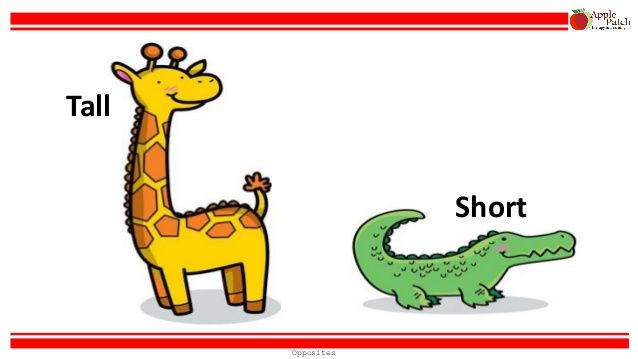
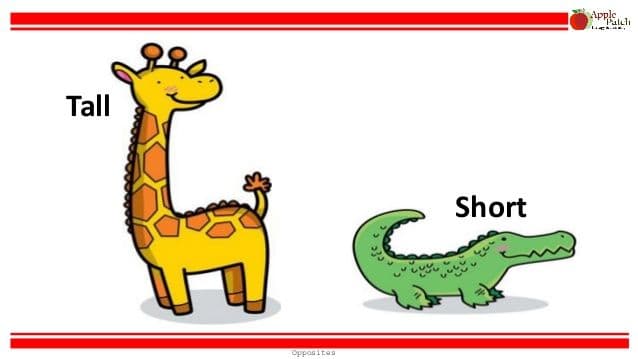
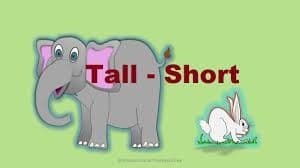
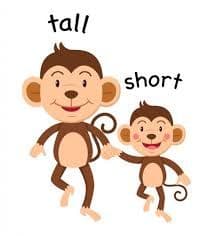
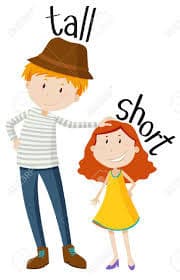
Tall and Short
Quiz by Bijal Khamar
Customize this quiz to suit your class
Instantly translate to 100+ languages
Tag the questions with any skills you have. Your dashboard will track each student's mastery of each skill.
Give this quiz to my class
• Agriculture is growing of crops and keeping of animals. • People who practice agriculture are called farmers. • Agriculture is very important to the family. Benefits to the family • It provides food. • It provides money. • Agriculture gives us medicine. • It provides jobs. • Agriculture gives us transport and power. • It helps most families become self sufficient. • Farm tools are instruments used on farms to make work easier. • They are usually handheld and are used frequently when practicing agricultural activities. • Farm tools are light in weight, easy to handle and are suited to the strength of the farmer Name of tool Picture Use Watering can For fine watering of seed beds bucket Carrying manure, fertilizer,seed and ripe crops Name of tool Picture Use Sickle Cutting grass and harvesting of cereals like rice and wheat Slasher Cutting down tall grass and weeds USES OF FARM TOOLS Name of tool Picture Use Garden trowel Transplanting seedlings and making planting holes Hand fork Shallow cultivation of soil Aerating the soil USES OF FARM TOOLS Name of tool Picture Use Shovel Loading and offloading soil or manure into a wheelbarrow, scotch cart or truck Spade Digging and turning over of moist soil USES OF FARM TOOLS Name of tool Picture Use Garden fork Loosening and turn soil Garden line Marking straight ridges and garden beds USES OF FARM TOOLS Name of tool Picture Use wheelbarrow Moving items around the farm Items such as soil, mulch, animal feed. Etc Knapsack sprayer Spraying pesticides and herbicides Spraying fertilizers on crops. • An inventory is a record of the things that you have. • This is a list of tools issued out and tools received back and from whom Inventory of farm tools Inventory record sheets Created by Date Name of tool Sheet Tool numbenumber Description r Location Quantity Spade 1/15 Black,wooden handle Store room 2 SAFETY IN AGRICULTURE • Agricultural activities can be dangerous. • Hazards involved results in injury, disability and death of people and animals. • The hazards are usually caused by physical injury and chemical poisoning. Common hazards in Agriculture 1. physical injury These include: • Injury caused by accidents during use of farm tools, equipment and machinery. • Misuse and improper storage of farm tools and equipment. • Being kicked by animals. • Drowning in farm pond, pool or dam. Common hazards in Agriculture 2 . Chemical poisoning These include: • Spraying without protective clothing. • Eating or smoking when spraying chemicals. • Dumping toxic chemical left overs on land and in water. • Eating agriculture produces without prior permission from adults. • Pesticides, herbicides and fertilizers pollute water sources and kill animals. Chemical poisoning Ways of preventing common agricultural hazards 1. Wear protective clothing such as gloves, gumboots, respirator, hat and overalls. 2. Do not eat, drink or smoke when spraying. 3. Dispose off all chemical remains safely. 4. Bury or burn empty chemical containers and chemical left overs. 5. Wash thoroughly with running water and soap after using chemicals. 6. Do not spray during windy days. 7. Handle tools the right way. 8. Fence farm ponds and dams. Ways of preventing common agricultural hazards Climate and Landuse Seasons of Zimbabwe Seasons of Zimbabwe Definition of terms • A season is a time of the year with almost the same weather patterns. • Weather is the state of the atmosphere at a particular time at a particular place. • it is the daily condition of air around us. • Seasons are determined by rainfall and temperature. Seasons of Zimbabwe • There are four seasons in Zimbabwe , which are: 1.The rain season 2.Post rain season 3.Cool dry season 4.Hot dry season Seasons of Zimbabwe 1.The rain season ( summer) • It is also called the hot- wet season. • The season begins in mid November to mid March. • The period is rainy and hot. • Dams and rivers fill up. Seasons of Zimbabwe 2 . The post rain season ( autumn ) • It starts mid March – May • The days are bright and sunny. • The leaves change from green to red, orange, yellow or brown before falling. • In addition, there is less sunlight because the days are shorter. • It is the harvesting period of most crops. Seasons of Zimbabwe 3. The cold dry season ( winter ) • It begins mid May – mid August • The mornings, evenings and nights are very cold. • Has short days and long nights. Seasons of Zimbabwe 4 . The hot season (spring ) • It begins mid August – mid November. • The days are very hot with cool nights. • A season for trees to develop new shoots. Summer Activities Agricultural activities done during the rain season includes: • Ploughing and planting of summer crops for example maize, cotton. • Weeding • Pest and disease control • Applying fertilizers. • Weekly dipping of animals because ticks, lice and mites would be many. • Harvesting of summer crops • Preparing fireguards. A fireguard is a fire break. • Beginning of the planting of wheat, barley and oats. Winter Activities • Planting of winter crops such as wheat, barley and oats. • Harvesting and selling of summer crops continues. • Constructing frost barriers for frost sensitive crops such as tomatoes. • Vaccinating animals against blackleg. • Supplementary feeding of grazing animals. • Dosing of animals to kill internal parasites. Spring Activities • Shelling and threshing of grain crops. • Dry planting of summer crops. • Carrying manure to fields. • Ploughing and harrowing. • Making planting holes Soil Components •Soil is made up of 4 components: 1)Mineral matter 2)Organic matter 3)Soil water 4)Soil air Animals, Animals There are many kinds of animals. The elk is in the deer family. Male elk have large antlers. Elk are excellent swimmers and can run very fast. Giraffes are very tall with long necks. Giraffes have spots all over their bodies and short horns on their heads. Giraffes live in savannas and open woodlands. Elephants are the largest land animals alive today. Elephants have long trunks and ivory tusks. They live in grasslands and forests. Snow leopards live on cold mountains. They have thick fur to stay warm. They hunt wild goats, sheep, and other animals. This camel has a long winter coat. When it is well fed, its humps stand up. The humps fall to one side if the camel has not eaten. Camels live in both hot and cold deserts. The fox is in the dog family. It lives in a burrow. Foxes eat small animals, insects, fruits, and eggs. Unlike dogs, foxes like to hunt alone. The zebra is in the horse family. Zebras have white and black stripes and live in grasslands. Their manes stand straight up on their necks. The great gray kangaroo carries its babies in its pouch. It uses its strong back legs to hop. Kangaroos eat grass and other plants. The hippopotamus spends most of its time in water. It has almost no hair and eats grass and water plants. Its eyes and nostrils stick out so that it can see and breathe when underwater. Polar bears live in cold places. They have thick fur. They eat seals, walruses, small mammals, birds, and fish. There are many kinds of animals.What is Electric Force? Electric force is just one of many types of forces in the world of physics. Forces are how and why things move, and can be explained by Newton's Laws of Motion. On the smallest scale, electric force is the resulting interaction between two charged particles. These charges can be either positive or negative. Larger objects can be charged by having an abundance of either of these particles, and therefore can create an electric force on a larger scale. Electric force is the reason why hair will sometimes stand up on its own and is also why we have electricity, allowing us to live in the modern world with lights and technology. Even out in nature electric force is present, as electric force causes lightning to strike. Electric force is fundamental to our everyday way of living. Reviewing Newton's Laws of Motion Newton's Laws of motion are the basic principles or ground rules that are applied all across physics. They describe how objects move and can be used to describe the interaction of charges. They are the following: An object in motion will stay in motion unless an external force is applied The force exerted on an object is equal to the mass times the acceleration of the object. ( ) Every force has an equal and opposite force Newton's laws explain how and why charged particles move. Since there is a force involved (e.g. electric force), particles will move around, which is explained by the first law. The second law describes how acceleration of charges can be calculated once the electric force is known. The third law explains how attractive and repulsive forces between charged objects are equal and opposite. Electric Force Examples and Types of Charge As previously mentioned, there are only two types of charges; positive and negative. Two like charges will repel (or move away from) each other, and two opposite charges will attract (or move towards) each other. In other words, two positive or two negative charges will repel, while a positive and a negative charge will attract. Opposite charges will attract while like charges will repel. Attraction versus Repelling Forces Notice how the forces acting upon each other are equal and opposite, as Newton's third law states. Both charges are exerting forces onto each other. Charges in Atoms An atom is made up of three types of particles; protons, neutrons, and electrons. Protons have a positive charge, neutrons have no charge, and electrons have a negative charge. There are no positive or negative charges smaller than protons and electrons. Objects on a larger scale result in an overall positive or negative charged due to an uneven distribution of protons to electrons. An atom consisting of more protons than electrons would be considered positive, and an atom with more electrons than protons would be considered negative. Protons are held close to the nucleus and are tightly bound to an atom, so it's difficult for protons to escape an atom. Electrons, on the other hand, are much further away from the nucleus of an atom. This makes it much easier for them to be removed from an atom. Electrons can leave or join atoms, making them positive or negative depending on the amount of protons. Similarly, for the bigger picture, overall materials and objects with more electrons than protons would be considered negative, and vice versa. Electric Force Examples Hair standing up: When hair is brushed, the hairbrush can strip electrons from hair strands, resulting in the hair being positively charged. This addition of electrons to the hairbrush in turn makes the hairbrush negatively charged. Since the hair is now positively charged, and like forces repel, hair strands will move away from each other, resulting in the hair standing up. Current electricity: All of our everyday technology is powered through current electricity, which is the consistent flow of electrons through conductive materials. This flow is caused by the electric force, as the electrons flow from a negative source to a positive source. Lightning: During a storm, it is common for an abundance of electrons to build up on the bottom of a cloud, making that part of the cloud negatively charged. Positive charges in the ground start to gather on the surface or even on tall objects such as trees as they are attracted towards the negatively charged undersides of clouds. Lightning strikes as a result of these charges becoming extremely built up. Lightning is caused by electric force Lightning Electric Force Equation: Coulomb's Law The magnitude of the electric force, or the amount of force in which objects repel or attract, depends on the distance between the two charged objects and the amount of charge each object carries. The electric force is stronger the closer together the two charges are, and weaker as the two charges move apart. Electric force is also stronger with more charge, and weaker with less charge. This effect on electric force is predictable, and is known as Coulomb's Law. It can be calculated using a mathematical equation, and the resulting magnitude of electric force is measured in Newtons. Coulomb's Law Electric force can be calculated using the following equation known as Coulomb's Law: In this equation, F is the electric force measured in newtons, K is a constant known as the electrostatic constant, and are charges one and two measured in coulombs, and is the radial distance in meters between the two charges. Since the distance is squared and on the denominator, the electric force drops off exponentially as charges move away from each other. This means that the Electric force is inversely proportional to distance. As charges move away from each other, the electric force between them gets smaller and smaller, until the force is negligible. The amount of charges are in the numerator of this equation, making the magnitude of the force larger with more charge. This means that the force is directly proportional to the amount of charge. When the charges are smaller, the amount of force will be smaller. When there is a lot of charge, the force will be much greater. When calculating the electric force using Coulomb's law, the resulting answer only gives the magnitude of the force and not the direction. In order to know the direction, you must know the types of charges. Once again, like forces repel, and unlike forces attract. It helps to draw a visual representation, or a free-body diagram, of the charges and forces acting upon them in order to understand the resulting force direction. Electric Field versus Electric Force An electric field is a direct result of an electric force. Its pure definition is electric force per unit charge, and can be thought of as a mapping of the force vectors. An electric field is present anytime there is an electric force. Therefore, when there are two or more charged particles, there is a surrounding electric field. The direction of the electric field is the direction a positive charge would flow if it were placed within the field. The electric field moves out from a positive charge and goes into a negative charge. Particles with unlike charges move towards each other, and their corresponding electric field lines move out from the positive charge and into the negative charge. The strength of the force at any given point can be seen through the spacing of the electric field lines. The electric force is strongest where the electric field lines are closest together, and weaker as these lines move apart. Like Coulomb's law expresses, electric field lines show how the electric force is strongest with a minimum distance between the two charges. Unlike charges will result in a repelling force, and the resulting electric field is a visual representation of this effect. Electric fields of two positive charges have the electric field moving out away from both of them. As with two negative charges, the field lines move in towards each negative. Lesson Summary An electric force is created when there are two or more charged particles or objects. These charges can be either positive or negative. Like charges will attract (move towards each other) while unlike charges will repel (move away from each other). As Newton's third law suggests, the forces acting upon each other are both equal and opposite. Electrons and protons within an atom are the two smallest types of charges there are. Electrons carry a negative charge while protons carry a positive charge. Electrons can be easily removed or added to atoms, making the overall charge positive or negative. Objects with more electrons than protons are negatively charged. Electric force is strengthened with increased charge and a shorter distance between the charges. This effect is known as Coulomb's law and can be calculated with the Coulomb's law equation. The magnitude of the force is measured in Newtons, and the direction can be determined by knowing whether the charges are attracting or repelling each other. An electric field is present wherever there is an electric force. The direction of this electric field is the direction a positive charge would flow if it where to be dropped in the field, which is from the positive to the negative.Comparative and superlative adjectives quiz with the words tall, short, fat, thin, thick, big, smallThen he found Cookie. Cookie had floppy ears, not pointed. And Cookie had straight fur, not curly. But Cookie was short. "Because he's a puppy," Tony said. "He'll grow." And did he ever! He grew out of his puppy cage. He grew out of his dog cage. He grew out of seven collars in a row. And when he finally stopped growing … He weighed one hundred and eighty pounds, he stood three feet tall, and he drooled. "I'm glad you're not short," Tony said. And Cookie licked him, then sat on him. Tornadoes Introduction. What can lift roofs from buildings and sweep houses into the air? Tornadoes can! Tornadoes come in many sizes. Some tornadoes are only a few feet (1 meter) across. Others are more than a mile (1.6 km) wide. Some tornadoes touch down for a short time. Others travel for hundreds of miles. How Tornadoes Form. Why do tornadoes happen? Scientists are not sure. Tornadoes come from giant thunderstorms called supercells. A supercell happens when warm, moist air rises to mix with cold, dry air. The mixing of cold and warm air causes the air to spin. The spinning wind turns into a cloud in a funnel shape. As the cloud turns, the wind becomes stronger. When the funnel cloud touches the ground, it is a tornado. Measuring Tornadoes. Scientists have a way to measure the strength of tornadoes. They look at the harm caused by a tornado. They use the amount of harm to estimate the wind speed. They use a special scale called the EF Scale. The EF Scale measures the strength of the tornado. Where Tornadoes Form. Tornadoes may be hard to measure, but scientists have a good idea where they'll strike. It's true that a tornado can hit anywhere in the world at any time. Most tornadoes happen in the central part of the United States. This area is called Tornado Alley. More than one thousand tornadoes strike Tornado Alley each year. Tornado Safety. There is no way to be sure that a tornado will strike. The National Weather Service (NWS) tries to help people stay safe during tornadoes. If they put out a tornado watch, a tornado might strike. If they put out a tornado warning, a tornado has been spotted. If there is a tornado warning. it's important to get to a safe place. Go indoors. The safest place is a basement. If you can't get to a basement, go into а closet or bathroom. The spinning air in a tornado makes things fly around. This can be dangerous. It's always important to protect your head. You should get close to the ground. Go under a desk or table. You can even lie down in a bathtub. It is not safe to stay in a mobile home in a tornado. If you are in a tall building, go to the stairs. If you are in a car, wear your seatbelt and lean forward. If you are outside, lie down on the ground. Conclusion. Tornadoes are amazing and scary examples of the power of nature. People still have many questions about tornadoes. What causes a tornado? What is it really like inside a tornado? Maybe we will find out one day.Yaama I'm Jack Evans and you're watching BTN. Here's what's coming up. We uncover the story behind this famous photo, learn about First Nations seasons and find out the history of Book Week. What is Statehood? Reporter: Tatenda Chibika INTRO: But first, the Prime Minister Anthony Albanese has announced that Australia will join other countries in recognising Palestine as an independent state. So, what does that mean? Tatenda found out. Anthony Albanese, Prime Minister: Australia will recognise the state of Palestine. Australia will recognise the right of the Palestinian people to a state of their own. We will work with the international community to make this right a reality. Tatenda Chibika, Reporter: That's the moment our Prime Minister said Australia would recognise Palestine as an independent state at the upcoming United Nations General assembly next month. It's something other countries, including France and Canada, have said they'll be doing too. So, what does that mean exactly? To be considered an independent state under international law a place needs to have its own land or territories with defined borders, it needs to have people who permanently live there, have a working government and it has to be able to talk and make deals with other countries. Once a place meets all those rules, it can ask to be recognised by other independent states and countries. But a big step in becoming an independent state is being fully recognised by the United Nations. To do that you first need to get approval from at least nine members of the UN's Security Council. That's a group of countries responsible for maintaining international peace and security. But even then, that tick of approval can still be blocked by one of the Security Council's five permanent members Russia, China, the UK, the US and France. If the Security Council approves, the decision then goes to the UN's General Assembly where at least two thirds of the UN's 193 members have to agree to make it official. Yeah, it's a pretty complex process which is why we've only seen a handful of countries recognised by the UN in recent years like South Sudan and Montenegro. Others like Kosovo are only 'partially' recognised which means they have some recognition but not enough to become a full member state at the UN. Right now, Palestine is recognised by more than 140 countries — that's more than two thirds of the UN General Assembly. So, why hasn't it become a UN member state yet? Well, it came pretty close last year when 12 members of the Security Council voted in favour of it. VANESSA FRAZIER, AMBASSADOR OF MALTA, APRIL 2024 UNSC PRESIDENT: I shall now put the draft resolution to the vote. But the US, a close ally to Israel, used its special powers to block Palestine from becoming a member state. VANESSA FRAZIER: Those against? At the time, the U.S said Palestine and Israel needed to come to an agreement on their own first. Throughout the years, there have been attempts to figure out a way for both Palestine and Israel to exist peacefully alongside each other but that hasn't happened yet. And now Israel has said that recognising Palestine as an independent state would be rewarding Hamas the group in charge of Gaza which was responsible for the terror attacks on October 7th, 2023. But the Palestinian Authority which governs parts of the West Bank says Hamas won't have a role in any future state of Palestine which will exist peacefully alongside Israel. Australia, like the US, had previously said that it wanted Israel and Palestine to figure out things by themselves first but because of how the war has been going the Australian government is worried that if it continues to wait, there might not be a Palestinian state to recognise. ANTHONY ALBANESE, PRIME MINISTER: There has been too many lives lost, both Israeli's and Palestinians and the world is saying we need a solution to this conflict, we need to end the cycle of violence and the way to do that is to have a two-state solution. News Quiz Russia's President Vladimir Putin stepped foot on American Soil for the first time in a decade to meet with US President Donald Trump. What state did they meet in? Alabama, Alaska or Arizona?It's Alaska. The two leaders met to discuss a way to end the war in Ukraine but weren't able to make any final agreements. DONALD TRUMP, US PRESIDENT: There were many, many points that we agreed on. Most of them, I would say, a couple of big ones, that we haven't quite got there, but we've made some headway. There's no deal until there's a deal. A lot of people criticised the two world leaders for not including Ukraine's president Volodymyr Zelenskyy in the meeting. But that didn't seem to worry Mr Trump who said the meeting was a success and Mr Putin even invited the US President to meet up again in Russia. DONALD TRUMP: We'll see you again very soon. Thank you very much, Vladimir. VLADIMIR PUTIN, RUSSIAN PRESIDENT: Next time in Moscow. DONALD TRUMP: Oh, that's an interesting one. No, no, no. I'll get a little heat on that one. Last week thousands of people marked the 80th anniversary of VJ Day. What does VJ Day commemorate? The victory of Allied forces in Europe, the surrender of Japan and the end of World War II or the dropping of the first atomic bomb? VJ Day or Victory over Japan day commemorates the surrender of Japan and the end of World War II on the 15th of August 1945. Around the world, and here in Australia, people marked the anniversary with ceremonies remembering those who fought in the war. REPORTER: Who will you be remembering today? VETERAN: Oh, a lot of fellows that I knew that never made it home. Scientists in the UK have created toothpaste that includes which of these ingredients? Hair, eye lashes or fingernails? Yeah, they're all a bit random and gross but the answer is hair. According to scientists from King's College in London, hair could be the key to good oral health because it contains a protein called Keratin which they say when mixed with saliva forms a crystal-like protective coating similar to enamel. And Swifties rejoice because Taylor Swift has announced her 12th Studio album. It's called life of a show what? Is it show pony, show girl or show bag? It's Life of a Showgirl and it'll be released October 3rd. Vincent Lingiari Reporter: Joseph Baronio INTRO: Now to this very famous photograph. It was taken 50 years ago and depicts a really significant moment in Australian history. Joe found out about the story behind it. On the 16th of August 1975, this famous photo was taken. It shows the former Prime Minister Gough Whitlam pouring sand into the hand of Aboriginal leader Vincent Lingiari. A simple gesture that symbolised handing the land at Wave Hill in the Northern Territory back to the Gurindji people. But the journey to get there was far from simple. It started back in the 1960s. At the time, Wave Hill was the biggest cattle station in the world, controlled by British landowner Lord Vestey. The Gurindji people, who had lived on the land for generations, worked for Vestey, but they weren't paid fairly, and conditions were tough. NEWS REPORTER: The station's 100 aboriginal stockmen, with their 100 dependents, are camped in the dry bed of the Victoria River with little shade from 90-degree heat, dust and flies. Eventually, Gurindji leader Vincent Lingiari said it was time to act. VINCENT LINGIARI: I said, "What was it before Lord Vestey born and I was born?" It was blackfella country. So, on August 23rd, 1966, Mr Lingiari and his fellow Aboriginal workers went on strike. It became known as the Wave Hill Walk Off. They moved their camp away from the Wave Hill station to a sacred site called Daguragu on Wattie Creek. They wanted to set up their own cattle station, and said they wouldn't move until their land was returned to them. For years, petitions and negotiations went on between the Gurindji people, the NT Administration, and the Australian Government in Canberra. CLAPPERS: 31. 32. 33. DAVID QUINN, ABSCOL: Well, it's basic justice that their land is recognised. PROTESTORS: Equal rights! As the news spread across the country, thousands of Aussies joined the campaign, including the leader of the Labor Party, Gough Whitlam, who made this promise during his 1972 election campaign. GOUGH WHITLAM: We will legislate to give Aborigines land rights. Not just because their case is beyond argument, but because all of us as Australians are diminished, while the Aborigines are denied their rightful place in this nation. Later that year, Gough Whitlam became Prime Minister. (Song From Little Things Big Things Grow, Song by Kev Carmody and Paul Kelly, 1993) From little things big things grow,from little things big things grow… But it wasn't until 1975, 9 years after the Wave Hill Walk Off started, that he followed through with his promise. Eight years went by, eight long years of waiting'Til one day a tall stranger appeared in the landAnd he came with lawyers and he came with great ceremony GOUGH WHITLAM: I solemnly hand to you these deeds as proof in Australian law that these lands belong to the Gurindji people. And through Vincent's fingers poured a handful of sandFrom little things big things grow 50 years on, and The Wave Hill Walk Off is seen as a pivotal moment in Australia's history. It led to significant legal and social changes for First Nations people, which is something many agree is worth celebrating. First Nations Seasons Reporter: Saskia Mortarotti INTRO: Recently, Melbourne's Lord Mayor suggested ditching the four-season calendar that most of us are familiar with and adopting a six-season Wurundjeri calendar instead saying it gives a better description of what the weather's actually like there. Sas found out more about the different seasonal calendars used by First Nations people. SASKIA MORTAROTTI, REPORTER: Right now, in most of the country, it's pretty cold. COLD GIRL: Think of somewhere warm. What? It's 32 degrees in Darwin in the middle of winter? But ah, yeah. There are some places where it's, well, quite warm. Which makes you wonder whether the weather actually matches the seasons. You see, Australia is pretty big, and we have lots of different weather patterns. Which is something First Nations people have tracked for thousands of years with their own seasonal calendars. KARL WINDA TELFER, CULTURAL CREATIVE KANYANYAPILLA: Why have we got four seasons when you know that don't make any sense here. It doesn't relate to the country here. This is Karl Telfer. He's an artist and storyteller who produced the Kuri Kurru exhibition at the Museum of Discovery in Adelaide that explores the 6 different seasons of the Kaurna Meyunna. SASKIA MORTAROTTI: So, how do you know when you're in one of those six seasons? KARL WINDA TELFER: Well, there are stars that rise. So, you know, there are certain stars, like in Parnatti, for example. There's a star called Parna, and we know what that star is. So, that talks to us about, okay, the time now is going to be cold on the ground. First Nations calendars like the Kaurna one don't just tell us what's happening with the weather; they're also used to track when certain plants and animals are around. KARL WINDA TELFER: It teaches you about what plants you can, you know, what you can eat what you can't and all that what is ready certain times a year and fruit everything, bird shows you the right time to eat the fruit, perfect time, if you try and go get them the next week they're gone. Karl says we can also use these calendars to see how the environment has changed over time. KARL WINDA TELFER: Kudlilla is the season we're in now and Kudlilla that talks about like the rain but we're not having enough rain these days, well, these times. And this is due to climate and the climate changing. There are many different First Nations seasonal calendars around the country. Like Ngan'gi calendar from the Northern Territory which has 13 seasons that follow the life cycle of the native spear grass. Or the Wurundjeri Calendar in Victoria which has 6 seasons. And recently, Melbourne's Lord Mayor, Nicholas Reece, said Melbourne, or Naarm, would be better off adopting the Wurundjeri calendar because it's more in tune to what's happening with the weather. Something many, including Karl, think we should be doing right across the country. KARL WINDA TELFER: I'm talking about the English four seasons. So, this is totally different systems that we're talking about and weather patterns and currents and all sorts of different things, because it's the sea country too. So, my question is, well, why do we have that? If that doesn't work, you know? Quiz How many seasons are there in the Tiwi Island Calendar? 1, 2 or 3? It's 3, although they also have 13 minor seasons. Book Week Reporter: Wren Gillett INTRO: This week, kids across Australia have been dressing up as their favourite characters to celebrate Book Week. Wren finds out why Book Week began 80 years ago and why it's still important today for getting young Aussies into reading. STUDENT: I read an hour every night, maybe even two hours some nights. STUDENT: My favourite book series are the Harry Potter series and the Keeper of the Lost City series. STUDENT: Probably Bad Guys and Weirdo. STUDENT: I like the Amulet, I've been reading that. STUDENT: I love reading Dork Diaries and Exploding Endings. Whether it's Fantasy, mystery, history — whatever you're into. Book week is a time to celebrate, well, books. STUDENT: Me and my friends are dressing up as Inside Out. STUDENT: I was thinking SpongeBob. STUDENT: I'm dressing up as Winnie the Pooh and it's just a fun way to express what kind of books you like. And guess what, book week has actually been a thing for many, many years. WREN GILLETT, REPORTER: Once upon a time, in a land not so far away, literacy lovers noticed a problem. The year was 1945. The second World War had just ended, and kids were mainly reading books from overseas, in particular the UK. Because, at the time, there weren't many Aussie authors writing books for children. WREN GILLETT: So, a group of passionate teachers, librarians, booksellers, publishers, and book-loving volunteers, decided to create what we now know as The Children's Book Council of Australia. Familiar logo, right? Together, they launched book week, all in an effort to get Aussie kids' reading more. And it seemed to work. The 1960s saw a boom in Australian children's books being published. REPORTER: How many books do you read a week? STUDENT: Well, it really depends on the week. If there's exams, I might read only one or two. But if there's no exams and if I've got plenty of time, I might read up to five or six. WREN GILLETT: But today, it's a slightly different story. Studies show that less than one in five eight to 18-year-olds are reading in their free time, and that only one in three actually enjoy reading for fun. WREN GILLETT: Why do you reckon we're seeing this trend? STUDENT: People are getting sucked into screens and they're like spending hours just scrolling through TikTok and stuff, and they're getting so attached to it that they don't feel the need to pick up books and read them. Yeah, there's a lot of different things competing for our attention these days, but many think books are still worth our time. PETER HELLIER, AUSSIE COMEDIAN AND AUTHOR: Books are the exact opposite of boring. And if you think they're boring, I'm sorry, but you're wrong. This is Peter Hellier, he's a pretty famous Aussie comedian, actor, and the author behind these books. And he's just released another one called Detective Galileo, about a trail horse who dreams of solving crimes. PETER HELLIER: He joins the police force and quickly finds out that the horses don't actually solve the crimes, it's the police officers who solve the crime. So he promptly gets thrown out of the force and begins his own detective agency, which I'm reliably told is the only detective agency in the world run by a horse. Peter actually started writing books when he was a kid. PETER HELLIER: I started writing when I was six, seven, eight years old. In fact, I started my own publishing company called Better Books. And I would write these books, and then I would get a parent or one of my parents or teachers to type them up. And I would read them in front of the class. And, you see, each has the logo, the Better Books logo, there it is — the famous Better Books logo. WREN GILLETT: You weren't mucking around. PETER HELLIER: There all on all of them. There we go. There we go. Many, Including Peter, say there's plenty to get from a good book. They help us learn new words and phrases, get a better understanding of the world around us, and strengthen our imaginations. PETER HELLIER: Books can take you absolutely anywhere. They can take you to countries that you never dreamed about going. Countries that exist, countries that don't exist. Reading just makes the world a much bigger place. It's why for the past 80 years, schools around the country have been taking part in book week. STUDENT: Reading is a place where you can have your own world just to yourself. STUDENT: It's like watching a movie inside your head, but you can choose how it goes. STUDENT: Picking up a book is a good idea, maybe you should start with something that you're interested with and then you can start exploring from there. Quiz What is the title of the book that took out this year's Book of the year Award for younger readers? It's Laughter is the Best Endingby Maryam Master. Some other winners included I'm not really here by Gary Loneborough which took out book of the year for older readers and best picture book went to The Truck Cat, by Deborah Frenkel. Sport Australia's men's national basketball team — the Boomers — have won their third Asia Cup in a row, with an epically narrow victory over China. COMMENTATOR: It is Australia who are celebrating! China started strong, leading 25-17 at quarter time. But Aussie Xavier Cooks led a fierce comeback, shooting 30 points and collecting nine rebounds, earning him the title of MVP. And there seriously couldn't have been a tighter finish. Just as the final buzzer went off, China missed a shot that would have won them the game, leaving Australia with a 90-89 victory. COMMENTATOR: An unbelievable finish. The 2025 AFLW season kicked off last week, and so did a new trick. Yeah, 19-year-old Ash Centra from Collingwood, pulled out this move in the warm-up before their season-opener to Carlton, and since then, a lot of people have been trying to do it, with some success, kind of? FOOTY PLAYER: No, I'm not doing it on camera. But despite the epic warmup, Carlton did end up beating Collingwood by 24 points. Now, the moves from these athletes in China weren't quite so graceful but give 'em a break, okay, they're robots. For the first time ever, humanoid robots from all over the world, competed in their very own games, which featured, soccer, boxing, running, and ahh, lots of falling over. Lots. Luckily though, they did bring their own cheer squad. Young Rapper Reporter: Rylie INTRO: Finally, we're going to meet another winner of this year's Heywire competition — which asks young people in regional areas to share their stories. Rylie's going to tell us how music helped to transform his life. Check it out. Mum and I were homeless. We lived at a caravan park, in motels and tents around Warrnambool. It wasn't pretty. I'm First Nations, and I remember feeling like, my own country is failing me right now. So, we camped right along here. I remember pitching a tent right here and this was actually around the same time I started to get into music which was a good way for me to have something to look forward to. I was raised by the SoundCloud era, listening to a lot of trap music. When I was in school, I'd rap along to songs by Juice World, then I started to make my own. My first track was recorded on my phone. It was bad but a lot of fun to make. Some kids in my school heard it and shamed me. That put me off music for the next couple of years, until a friend of mine bought a microphone and encouraged me to give it another go. There was something about that mic and the energy of the crew around me that gave me confidence. It lit a fire in me. Over time, I was able to focus my flow. My songs are about escapism, living the life, being a success. I rap about stuff that takes me to a better place in my head. I'm manifesting my future. My stage name is Hundo Milli, it's short for hundreds of millions. Money's not really the end goal; it's more about having the freedom to dream big. Mum taught me to never stop believing. Even when times were tough, she kept pushing for us to get housing and eventually we did. We're some of the lucky ones. Today, I'm in a Melbourne studio recording my next single. I remember living in my tent dreaming about this very moment and now I'm here, doing what I love. Ain't nothing going to stop me. Closer Well, that's all we've got for you today, but we'll be back before you know it. In the meantime, you can head to our website, there's plenty to see and do. You can also catch Newsbreak every weeknight and there's BTN High for all you highschoolers out there. Have an awesome week and I'll see you next time. Bye.ANIMAL SKELETONS The bones in your body make up your skeleton. You have 206 bones. Bones give your body shape and support. They keep the soft parts inside you safe. Bones come in many shapes and sizes. Your arms and legs are long bones. Your pelvis and shoulder blades are flat bones. The bones in your wrists, hands, ankles, and feet are small. This is what your skeleton looks like. Look at the many kinds of bones in your body. Other animals have skeletons, too. Each animal's skeleton is different. Some are short, some are tall, some are light, and some are strong. Look at this skeleton. How is it different from your skeleton? Do you know what it is? CLUE: This animal flies. It's an eagle. Its bones are hollow and light. Wing feathers attach to the wing bones. Look at this skeleton. How is it different from your skeleton? Do you know what it is? CLUE: This animal hops. It's a frog. It has long back legs for hopping. 10 Its back legs are longer than its body. Look at this skeleton. How is it different from your skeleton? Do you know what it is? CLUE: This animal swims. It's a blue whale. It has no leg bones. Its arms are flippers. Whales are supported by the water. If a whale lived on land, its skeleton would have to be much stronger. Look at this skeleton. How is it different from your skeleton? Do you know what it is? CLUE: This animal runs well. It's a horse. It has long legs for running. A horse has a large rib cage to keep its large lungs safe. It needs large lungs to take in lots of air when it runs. Look at this skeleton. How is it different from your skeleton? Do you know what it is? CLUE: This animal slithers. It's a snake. It has no arms or legs. Its skeleton is one long backbone with ribs. Look at these skulls, or head bones. These are the skulls of the animals in this book. Look at how their shapes and parts are different. Each animal's skeleton is perfect for the way it lives. It has the right kind of skeleton for the support it needs. It has the right kind of skeleton for the way it moves. And so do you.