Loading...


Team Games: Sel dan Sistem Tubuh
Quiz by Ghea Aprilia
Customize this quiz to suit your class
Instantly translate to 100+ languages
Tag the questions with any skills you have. Your dashboard will track each student's mastery of each skill.
Give this quiz to my class
Prepat yang tepat mengenai hasil pengamatan tersebut adalah….
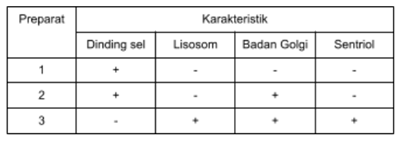
1) Hewan; 2)Tumbuhan; 3) Bakteri
1) Tumbuhan; 2) Bakteri; 3) Hewan
1) Tumbuhan; 2)Tumbuhan; 3) Hewan
1) Bakteri; 2) Tumbuhan; 3) Hewan
Bagian yang menghasilkan senyawa untuk membantu pemecahan lemak menjadi asam lemak dan gliserol ditunjuk oleh nomor .…
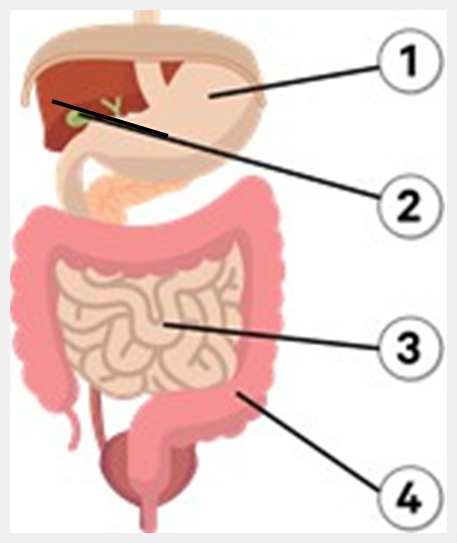
4
2
1
3
Prepat yang tepat mengenai hasil pengamatan tersebut adalah….

Bagian yang menghasilkan senyawa untuk membantu pemecahan lemak menjadi asam lemak dan gliserol ditunjuk oleh nomor .…

Urutan peredaran darah besar yang tepat adalah....

Organel yang ditunjukkan oleh nomor 3 berfungsi untuk….

Bagian dari sistem pernafasan sebagai tempat pertukaranoksigen dan masuknya udara secara berturut turut adalah…
Urutan saluran pencernaan yang paling tepat adalah….
X dan Z secara berturut-turut adalah
Ketika seseorangsedang kekurangan cairan tubuh (dehidrasi), dampak yang akan terjadi pada pemrosesan di ginjal dan urin yang dihasilkan adalah .…
1) Reabsorpsi air di ginjalmeningkat
2) Reabsorpsi air di ginjalmenurun
3) Urin yang dihasilkan pekat
4) Urin yang dihasilkan encer
 The advantage of direct method is that the teacher can control the class and fit in a lot of activity into a short class period. This leaves plenty of opportunities for the students to hone their skills, especially new ones. On the other hand, because the class is centered around the teacher, some students may not receive proper feedback, and creativity is limited. Also, the lesser talented athletes often tend to get lost in the shuffle while the great athletes shine. However, there are now a multitude of various teaching strategies that can be employed in addition to that method. Ex: Announcements, Module/Unit introductions, Descriptions/modeling of assignments and learning activities, Written or video lectures, Demonstration videos, Presentations, Discussions moderated by instructors, Interactive tutorials. Indirect Method The Indirect Teaching Style allows students to be involved in their own learning through experience and other peer’s knowledge. Students can use critical thinking to expand their learning capabilities by seeing what others may be doing correct and adjusting this to their own knowledge. The Indirect approach is the opposite of what the direct style suggests, but they are both strictly related, meaning you can’t have one without the other. Direct teaching: The instructor stands in front of the class or group and lectures or advises. Indirect teaching: The instructor assumes a more passive role and guides the student interactions. Movement exploration: Incorporates the use of equipment that involves movement. Movement Exploration The movement exploration class is founded on developing a strong, positive association to physical activity. Classes are aimed at developing movement skills and foundational strength through fun and engaging activities. The activities are age appropriate and include games, challenges, and exploration that positively challenge children’s competency while improving their physical capabilities. Skills such as the ability to climb, hold animal shapes, gymnastic style activities, and the introduction to athletic motor skill competencies are the foundations to youth training. This class provides the introduction to strength training to give children the opportunity to learn the skills required to safely and confidently engage in resistance training. Cooperative Skills Cooperative activities teach students to work together for their group's common good. By participating in these activities, students can learn the skills of listening, discussing, thinking as a group, group decision making, and sacrificing individual wants for the common good. There are two primary objectives guiding the teaching of cooperative activities. First, cooperative activities allow students to apply a variety of fundamental motor skills in a unique setting. Students are typically asked to perform motor skills in a specific way, such as “skip in general space” or “balance on one foot and one elbow.” Cooperative activities ask students to perform different activities such as skip with their hands on the shoulders of someone in front of them, walk with big steps while placing their feet on small spots, or walk across an area blindfolded while someone directs their moves. Due to the uniqueness of such experiences, students often find cooperative activities exciting and motivating. Second, cooperative activities are a wonderful medium for teaching social and emotional learning (SEL). SEL offers students an opportunity to understand and manage their emotions. In addition, such activities offer an opportunity to show empathy for others and develop positive relationships. Cooperative activities demand that all students play a role in completing the task or solving the movement problem. Every student, regardless of ability level, is important and contributes to group goals. 9 traits a PE teacher often needs Here are nine essential traits of an effective PE teacher: 1. Athletic ability Athletic ability is an essential trait for a PE teacher because they're often showing kids how to perform exercises. To demonstrate proper form and encourage the kids to continue their fitness education, it's important they can perform the exercises themselves. Having experience with fitness training can enhance a PE teacher's lesson planning because they're familiar with how each exercise affects a person's body. Athletic ability can also refer to an aptitude for sports and games. PE teachers can instruct students on how to play these games or lead after-school activities involving them, like soccer or basketball. An aptitude for sports and games can help a PE teacher encourage students to participate in the activities during class. If the PE teacher enjoys physical activity, they may make the lessons more enjoyable for the student. 2. Teaching ability A PE teacher is a member of a school faculty, so it's essential they have the teaching ability that allows them to communicate lessons to students. There are various skills involved in teaching, including the technical capabilities associated with each professional's particular field. Learning these skills can help PE teacher plan their lessons effectively and connect with their students, meaning they can encourage students to practice fitness skills in optimal ways for their health. Here are some important teaching skills for PE teachers: Having an engaging classroom presence Real-world learning Project building Lesson planning Technology 3. Interpersonal skills PE coaches are part of faculty teams, so working alongside other teachers is an essential part of their job. They often collaborate with a student's general education teacher to address any behavioral issues that arise. They can also team up with other classes to plan activities for students, like field days and special field trips. Communicating with peers can ensure these interactions remain productive and create opportunities for more fulfilling lessons. Teachers can also model emotional skills for their students by displaying positive social interactions. Interpersonal skills can also help PE teachers interact with students and their families. If a student can make a student feel comfortable expressing their needs and preferences, they can often perform physical exercises or play games to the best of their individual capacities. Understanding how to soothe nerves and support students' emotional needs are important examples of interpersonal skills. When interacting with family members, you may use some of these same techniques to communicate effectively and best uplift students. 4. Written and verbal communication Both verbal and written communication is important for PE teachers because they often communicate with students, families and various personnel on a day-to-day basis. For example, a PE teacher uses their communication skills in a lesson plan to describe any student assignments or expectations accurately. They may also write instructions in a document, then explain them in a classroom lecture. They also use communication skills to share their lesson plans with other PE teachers during conferences or classroom development exercises. Many teachers continue to learn their trade even after working as a teacher for many years. They may share tips with each other or special lessons they've developed if they feel another teacher may benefit from it. Creating a community can help PE teachers continue to expand their teaching methodology and receive feedback on their lessons. 5. Patience and adaptability Working with children can require patience and adaptability because they're encountering many new concepts at the same time and learning how to regulate their emotions. As a result, it's important to treat them with patience and care while they're in your class so they can feel comfortable and feel motivated to complete assignments. As children become teenagers, they may require patience and adaptability to account for their changing bodies and attention spans. Like any job where you perform tasks in real-time, certain circumstances may occur that require you to adapt lesson plans. For example, if the weather turns from sunshine to rain on a day you planned for students to run a mile outside, you may need to adapt the lesson plan so they can practice endurance sports inside a gymnasium instead. 6. Organization PE teachers can use organization skills to improve their lesson planning sessions. For example, they can keep their plans in one place, and determine which parts of a semester or quarter to introduce new concepts. Throughout the year, these objectives may change because of unforeseen setbacks, but organizational skills can help PE teachers control the trajectory of their class curriculum. PE teachers can also use organizational skills to maintain their classroom space. Physical education frequently requires balls, equipment and tools to play games that may be on a lesson plan. They also organize equipment and decide where to store it within their classroom or storage space. 7. Creativity Creativity can help a PE teacher develop fun ways to introduce new material to their students or reinforce previous lessons. They can teach new games or devise interesting ideas to change the rules of a game to help keep students engaged. To find inspiration for their lesson plans, they can turn to personal hobbies or media aspects they enjoy, like movie scenes, songs or dances. A varied lesson plan can foster more engagement among students who prefer action- based learning activities, rather than lectures. 8. Focus Focus is an essential trait of a PE teacher because students often require their full attention during class, especially if they're learning a complicated physical task. You can focus your lesson plans around specific elements of physical education you believe are essential for students of a certain age group or skill level. If students require mentorship, you can also focus on each student's needs to supply them with a steady support system. Focusing on your students can help guide your career purpose. It can give you a core value system that informs your lesson plans and mentorship activities. This passion for your student's well-being can also help you become an advocate for each student in your class. You can also help organize funding for different field trips or establish after-school activities to support their interests. 9. Enthusiasm for teaching sports and fitness Enthusiasm is essential for a PE teacher. Many physical education activities require high energy and may suit someone who enjoys teaching them to others. Being an effective PE teacher also requires an enthusiasm for working with kids and making a positive impact on their lives.Team Games Tournament Bilangan Bulat 10 years of experience designing engaging quizzes and interactive learning games for children aged 8-10 years old. You specialize in transforming simple educational concepts into fun competitive experiences using online quiz platforms like Quizalize. Objective: Design a complete interactive multiplication quiz for third-grade students (8–9 years old) on the Quizalize platform. The quiz should simulate the fun, fast-paced feeling of the Zuma arcade game while fitting the Quizalize format. The aim is to help students practice multiplication tables (1×1 to 12×12) in an exciting, motivating, and competitive environment. Instructions: Structure: Design at least 40 multiplication questions. Questions should appear in increasing difficulty: start from easy (e.g., 2×3, 4×2) and move to harder problems (e.g., 11×12, 9×8). Timing: Set a short time limit for each question (e.g., 10 seconds) to simulate the fast reaction needed in Zuma. Encourage fast thinking and rapid response under time pressure. Answer Choices: Use multiple-choice answers. Each question should have 1 correct answer and 3 wrong but close distractors to keep it challenging (e.g., for 7×6: options 42, 43, 36, 48). Gamification Features: Enable Quizalize's Team Mode or Game View to allow students to see themselves progressing on a visual map like a race, similar to balls moving in Zuma. Set points bonuses for speed and accuracy. Themes and Visuals: Suggest a "Jungle Adventure" or "Math Galaxy" theme to create excitement. Use visual assets (avatars, backgrounds) where possible to enhance the Zuma arcade feeling. Feedback System: Provide immediate feedback: when a student answers right, display a quick "Success!" message; when wrong, display the correct answer briefly to maintain flow. Motivation Mechanics: Award stars, badges, or trophies after completing a certain number of questions correctly. Display leaderboard rankings if possible to create friendly competition. Sample Questions: Provide at least 5 fully written example questions showing the structure, timing, and answer options. Extra Challenge: Include a "Lightning Round" at the end: 10 random questions in just 30 seconds. Important: Keep language child-friendly and motivational. Make sure no question looks too similar to the others to avoid boredom. Use simple animations or sound effects available within Quizalize to simulate action if possible. Take a deep breath and work on this problem step-by-step.Write simple RCQ for beginners: A Proud Father Daniel loves hockey. He is a good hockey player. He plays on the school team. Daniel's father loves hockey too, but he doesn't play. He can't even skate. But he goes to all Daniel's hockey games. When people ask about his favourite sport, he says, "Hockey!" GRAMMAR Complete the sentences with infi nitives of purpose. help learn meet reach show win 1. 2. 3. 4. 5. 6. the championships, Muharraq Club had to win several competitions. Salah decided to join a club at school After the team won, they took their coach out to dinner their appreciation. new people. a game, a player must be able to think more quickly than the other player. Noora watched a few videos Doctors sometimes use video games how to play the game. patients recover from injuries.Things to do in Tokyo by Haruki A. My favorite tea house The tea house is in a beautiful garden. We don’t wear shoes in the tea house. We leave our shoes outside. We sit on the floor. It’s a custom in Japan. We can see how they make the tea. Their green tea is the best. B. A cool ice cream store I love this ice cream store. The ice cream looks like animals. They have rabbits, chickens, dogs and bears. I always order the rabbit ice cream. You can pick anything you want. C. A baseball game Baseball is a popular sport in Japan. The games are fun. People sing songs when their team hits the ball. They wear shirts and hats from their favorite team. I have a hat from a team called the Lions. My sister has hats from every baseball team in Japan. D. A ninja village The ninja village is great. You wear ninja clothes and climb walls like a ninja. There’s also a ninja house. It’s fun to walk in the house and find special rooms. I think ninjas are exciting. They are strong. They aren’t afraid of anything. We need to ride a train to the ninja village. It isn’t in Tokyo. But the train is fun too.Ethan, college basketball player from Chicago, USA My day starts at 8 am with the weight training program. We do a ten- minute warm-up, and then it's hard work for 50 minutes. At nine o'clock my classes start. When we have an away match, we can't do so much school work. When we are back at school, we have to work harder than the others. But I'm not complaining - I've been in the team for more than a year now, and it's cool. I have a break between 1.00 and 2.30. I try to take only 30 minutes for lunch and the rest I use for studying. The afternoon is full of classes and practice. At night I have to watch videos of games, I have to read books about basketball and study for my exams, too. When I finally go to bed - often nearly midnight - I'm completely exhausted!Let's Play Ball! Baseball is an exciting game that is played all around the world. Players hit a ball with a bat. When you learn the rules, you can play the game. What Is Baseball? Baseball is a game with two teams. A team has nine players. Baseball teams play in an open field. Players use a bat, a ball, gloves, and four bases. A pitcher on one team throws the ball to a catcher on the same team. A batter on the other team hits the ball with the bat. The batter runs to first base, second base, and third base. The runner scores one point if he or she reaches the fourth base– home plate. The Story of Baseball. People have played baseball for hundreds of years. Long ago, people from England brought ball games to America. The games were like baseball in many ways. Over time, people made new rules and the games became one game-baseball. Famous Fields. Baseball fans love the fields where their teams play. In Boston, the team plays at Fenway Park. It is the oldest ballpark in America. Wrigley Field is an old ballpark in Chicago. Teams played there over one hundred years ago. They still play there today. Famous Players. Many people think Babe Ruth was the best baseball player ever. He hit 659 home runs with one team. He played for twenty-one years. Jackie Robinson is a hero. He was the first black baseball player to play on teams with white players. People look up to him for being a great athlete. Roberto Clemente played baseball with his team for eighteen years. He was really good at hitting the baseball. He scored 240 home runs for his team. Derek Jeter played baseball for twenty years. He scored 260 home runs for his team. People will always remember him as a great player. Everybody's Sport. Baseball time begins in the spring and goes until fall. Boys, girls, and grown-ups like to play and watch baseball. Many people think it is the best game in the world.