TEKS Biology High School - B.4.B: Cellular Processes
Quiz by TEKS Biology High School
High School - Biology
Science (2010) (Archived)
Texas Essential Knowledge and Skills (TEKS)
Feel free to use or edit a copy
includes Teacher and Student dashboards
Track each student's skills and progress in your Mastery dashboards
With a free account, teachers can
- edit the questions
- save a copy for later
- start a class game
- automatically assign follow-up activities based on students’ scores
- assign as homework
- share a link with colleagues
- print as a bubble sheet


18 questions
Show answers
- Q1Which molecule synthesized by plants is a major source of energy for cellular processes in both plants and animals?Nucleic acidChlorophyllWaxGlucose30sB.4.B: Cellular Processes
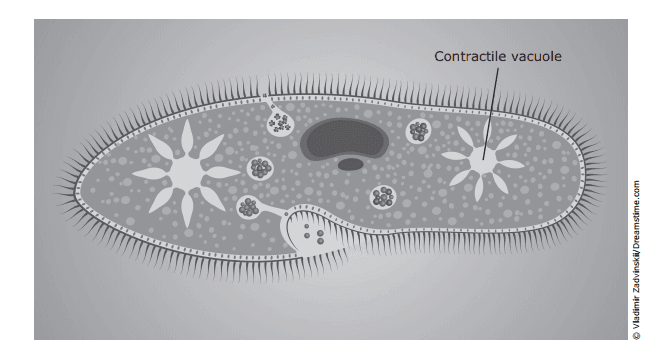
- Q2The picture shows a contractile vacuole of a unicellular freshwater organism. The contractile vacuole regulates the flow of water into and out of the cell in an aquatic environment. What conditions cause the contractile vacuole to fill with water?The temperature of water in the vacuole is lower than the temperature of its environmentThe concentration of water inside the cell is the same as the concentration outside the cellThe concentration of water is greater outside the cell than inside the cellThe temperature of water in the vacuole is higher than the temperature of its environment30sB.4.B: Cellular Processes
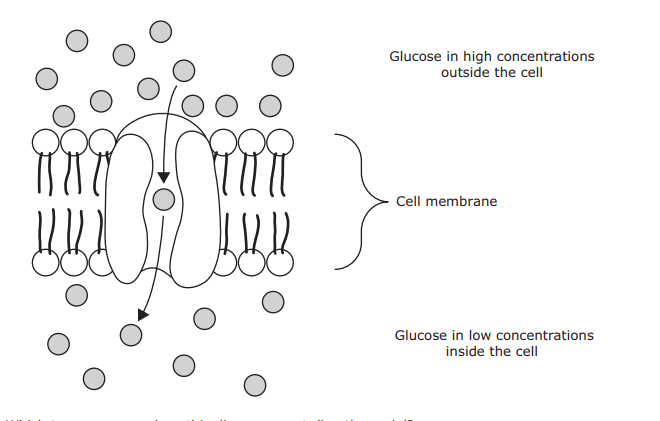
- Q3This diagram shows cellular activity across a cell membrane. Which two processes does this diagram most directly model?Homeostasis and transport of moleculesTransport of molecules and energy conversionsEnergy conversions and synthesis of new moleculesSynthesis of new molecules and homeostasis30sB.4.B: Cellular Processes
- Q4Cells can generate as many as 36 to 38 molecules of adenosine triphosphate (ATP) from the metabolism of one molecule of glucose. Which cellular process results in this amount of ATP production?Aerobic cellular respirationPhotosynthesisAnaerobic cellular respirationProtein synthesis30sB.4.B: Cellular Processes
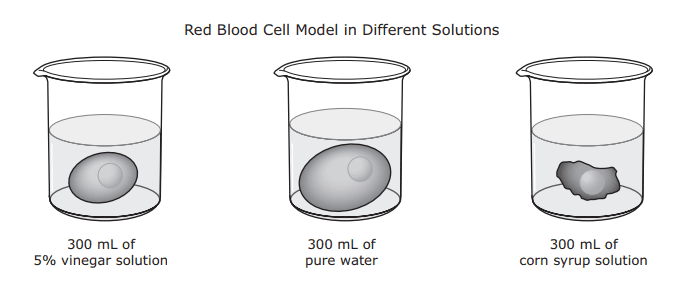
- Q5Some students used vinegar to dissolve away the shells of three eggs and used these eggs as models of human red blood cells. The students observed the changes in the eggs when they were placed in different solutions. Which statement best describes the role of the cell membrane in this model?The cell membrane removes solutes from the environmentThe cell membrane allows water to enter and leave the cellThe cell membrane is an impermeable barrier that prevents water from entering the cellThe cell membrane allows solutes to enter the cell, which causes the cell to shrink30sB.4.B: Cellular Processes
- Q6Which group of organelles is directly responsible for the production of new molecules within a cell?The endoplasmic reticulum, plastids, and vacuolesGolgi apparatuses, lysosomes, and the plasma membraneThe nucleolus, vacuoles, and ribosomesRibosomes, the endoplasmic reticulum, and Golgi apparatuses30sB.4.B: Cellular Processes
- Q7The cellular process known as the sodium-potassium pump was discovered in the 1950s by Jens Christian Skou, a Danish scientist. This process is a form of active transport that moves three sodium ions to the outside of a cell for every two potassium ions that it moves into the cell. Which of these best explains why energy is needed for active transport?Ions are negatively chargedIons are trapped inside the plasma membraneIons are attached to large proteinsIons are moved against the concentration gradient30sB.4.B: Cellular Processes
- Q8Which of these statements best explains the process of energy conversion that takes place in the mitochondria?Oxygen molecules release energy in the form of heat during combustion reactionsEnergy is required for carbon dioxide molecules to form six-carbon sugar moleculesWater molecules and radiant energy are necessary for anaerobic respiration to take placeThe energy in the bonds of glucose molecules is transferred to the phosphate bonds in ATP30sB.4.B: Cellular Processes
- Q9Which cellular process takes place in the ribosomes that are bound to the endoplasmic reticulum?The synthesis of new proteinsThe conversion of radiant energy to glucoseThe replication of nucleic acidsThe breakdown of waste material30sB.4.B: Cellular Processes
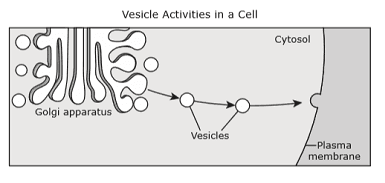
- Q10The diagram illustrates the activity of vesicles during a cellular process. Which statement best explains the function of the vesicles?Transporting packaged molecules from the Golgi apparatus to be released out of the cellExtracting portions of the Golgi apparatus to be regenerated for growth within the cellExchanging genetic information between the Golgi apparatuses of separate cellsDelivering packaged materials to the Golgi apparatus for protein synthesis60sB.4.B: Cellular Processes
- Q11When mammals get an infection, their internal body temperature often rises 2 to 3 degrees Celsius. The body gets the energy it needs to react to an infection by -decreasing the rate of glucose movement into the cellincreasing the rate of cellular divisionincreasing the rate of cellular respiration in mitochondriadecreasing the rate at which carbon dioxide is removed from the cell60sB.4.B: Cellular Processes
- Q12Turgor pressure is the pressure exerted on a plant cell wall by water. When wilted plants are placed in water, they demonstrate increased turgor pressure and become straighter. What is occurring at the cellular level when plants display increased turgor pressure?Water moves by osmosis out of plant cells.Water moves by osmosis into plant cells.Salt moves by diffusion out of plant cells.Salt moves by diffusion into plant cells.60s
- Q13How does the cell membrane help maintain homeostasis for the cell?By storing food as future energy for the cellBy making proteins to provide the cell with energyBy providing a circular structure for all cellsBy regulating the transport in and out of the cell60s
- Q14Which process temporarily disrupts homeostasis because it increases an already high concentration of chemicals in the cell?Active transport through membrane proteinsActive transport through exocytosisPassive transport through membrane proteinsPassive transport through osmosis60s
- Q15Which of the following describes a form of active transport?Membrane proteins provide a pathway for larger particles to move across the cell membrane and bring the cell and environment closer to equilibrium.Oxygen transfers into red blood cells through small gaps in the cell membrane from oxygen-rich environment surround the cells.Water moves across the cell membrane from the side with high osmotic pressure towards the side with low osmotic pressure.Large molecules are brought into the cell by wrapping the cell membrane around the molecules to form a vacuole.60s