Investigate how evidence of chemical reactions indicates that new substances with different properties are formed and how that relates to the law of conservation of mass.
Track each student's skills and progress in your Mastery dashboards
Give this quiz to my class
Q 1/6
Score 0
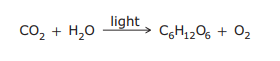
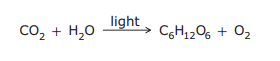
A teacher asks a student to write the chemical equation for photosynthesis. The student’s response is shown below. The equation is not balanced correctly. Which of these is a balanced equation for photosynthesis?
60
#texas/42f49aba-ff70-48a8-84e8-a30523320ff9/C.png
#texas/42f49aba-ff70-48a8-84e8-a30523320ff9/D.png
#texas/42f49aba-ff70-48a8-84e8-a30523320ff9/A.png
#texas/42f49aba-ff70-48a8-84e8-a30523320ff9/B.png
Q 2/6
Score 0
60
6 questions
Q.
A teacher asks a student to write the chemical equation for photosynthesis. The student’s response is shown below. The equation is not balanced correctly. Which of these is a balanced equation for photosynthesis?
1
60 sec
8.5e
Q.
2
60 sec
8.5e
Q.
3
60 sec
8.5e
Q.
Which BEST explains why the total mass of the product(s) would be less than the total weight of the reactant(s) after a chemical reaction?
4
60 sec
8.5e
Q.
If a chemical reaction such as photosynthesis begins with 6 atoms of carbon (C), how many atoms of carbon (C) should be in the products?
5
60 sec
8.5e
Q.
How does a balanced chemical equation satisfy the Law of Conservation of Mass?