TEKS HS Biology - BIOL.4A Prokaryotic and Eukaryotic Cells
Quiz by Biology - Texas Education Agency
High School
Biology(2017)(ARCHIVED)
Texas Essential Knowledge and Skills (TEKS)
Feel free to use or edit a copy
includes Teacher and Student dashboards
Measures 1 skill from
Measures 1 skill from
Track each student's skills and progress in your Mastery dashboards
With a free account, teachers can
- edit the questions
- save a copy for later
- start a class game
- automatically assign follow-up activities based on students’ scores
- assign as homework
- share a link with colleagues
- print as a bubble sheet


4 questions
Show answers
- Q1Both euglena and cyanobacteria are photosynthetic unicellular organisms found in pond water. The feature that distinguishes euglena from cyanobacteria is the -presence of ribosomespresence of a nuclear membraneability to maintain homeostasisability to reproduce60sBIOL.4a
- Q2Some students used information they gathered from lab investigations to prepare a table. They entered the table in their lab notebooks. Which of these correctly identifies the two cells described in the table?Both Cell 1 and Cell 2 are prokaryoticCell 1 is prokaryotic, and Cell 2 is eukaryoticCell 1 is eukaryotic, and Cell 2 is prokaryoticBoth Cell 1 and Cell 2 are eukaryotic60sBIOL.4a
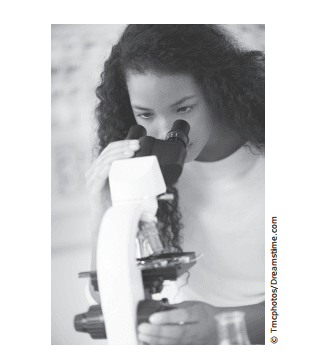
- Q3The picture shows a student using a microscope to study a prepared slide of a single-celled organism. A single-celled organism can be classified as a prokaryote based on the absence of -a nucleusribosomeschromosomesa cell membrane60sBIOL.4a
- Q4A student groups different types of cells as shown. Which table headings should the student use for the two groups?60sBIOL.4a