Loading...

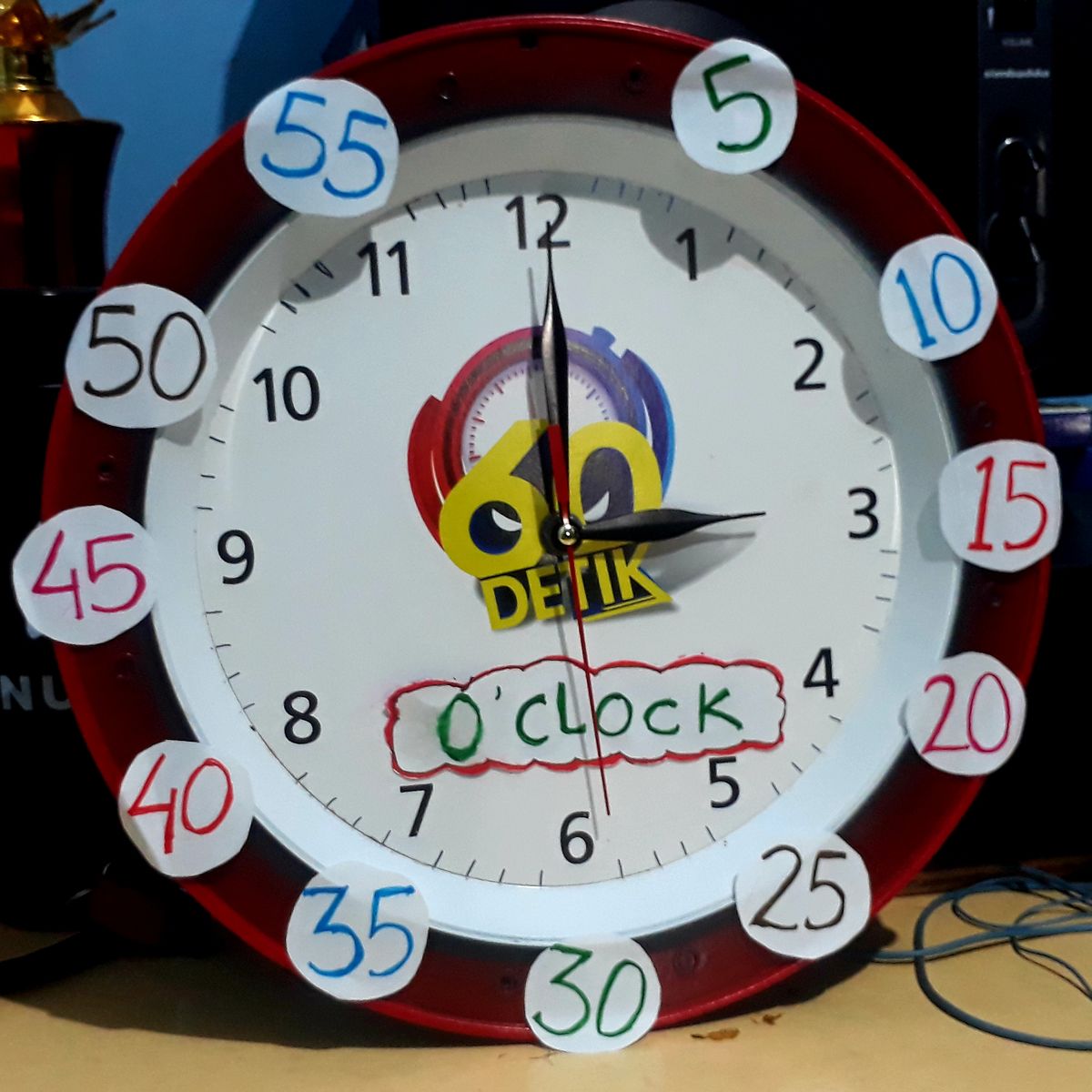
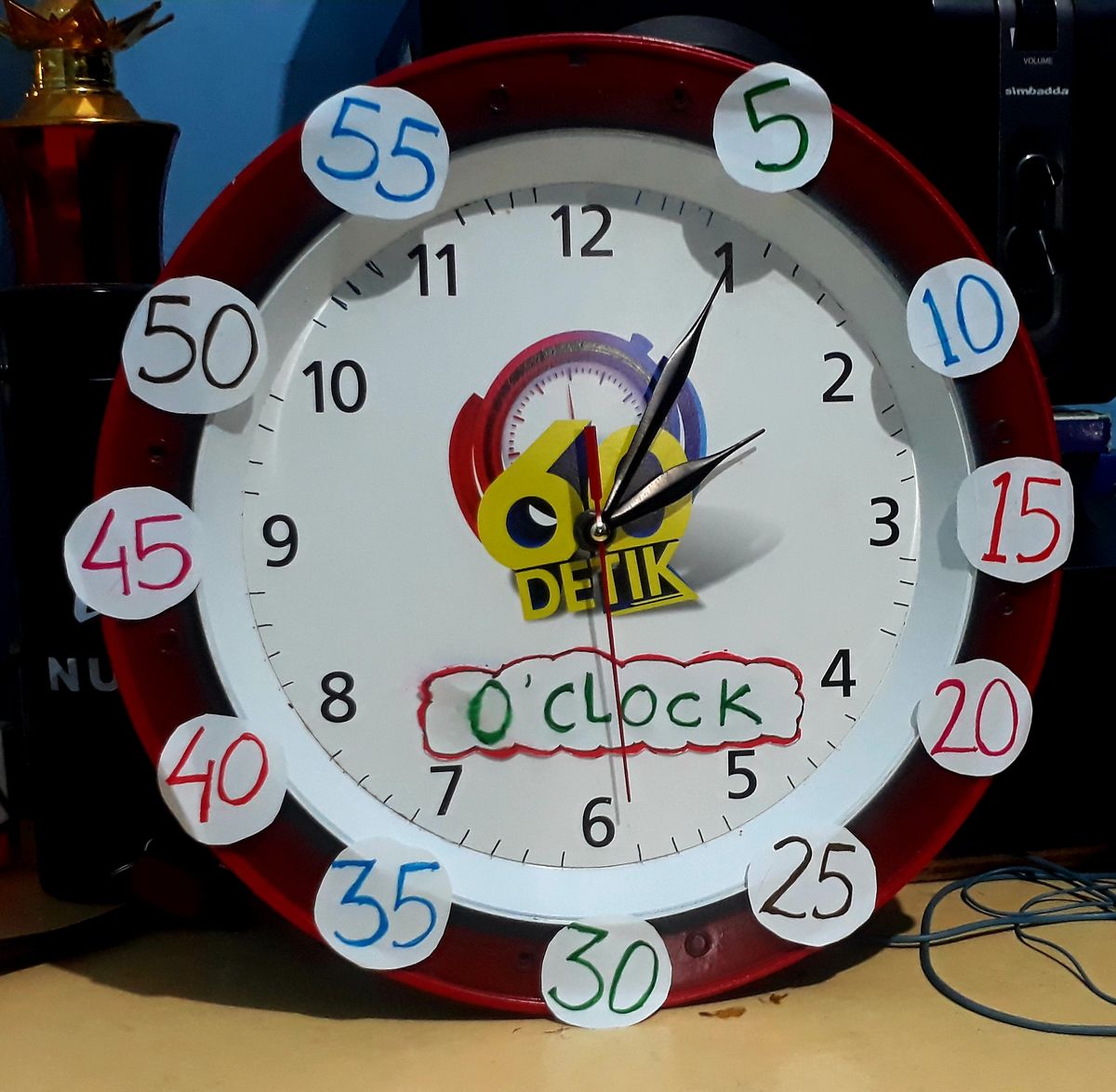
Telling time using hour and minute
Quiz by Ani Setiya
Customize this quiz to suit your class
Instantly translate to 100+ languages
Tag the questions with any skills you have. Your dashboard will track each student's mastery of each skill.
Give this quiz to my class

 Using time linkers while telling stories: while, as soon as, meanwhile, by the time that, during, until.Alright, Isti — here’s a longer and more detailed English version of the Isaac Newton text, still written at a level that’s accessible for Grade 4 students, but rich enough in information to meet PISA literacy expectations and EF A2-level vocabulary. I’ve kept sentences short, clear, and with explanations for new concepts so it’s easier for young learners to follow, while still including both famous facts and lesser-known stories. ⸻ Isaac Newton: The Man Who Changed the Way We See the World A Boy from a Small Village Isaac Newton was born on January 4, 1643, in Woolsthorpe, a small village in England. His life was not easy. His father died before he was born. When he was just a few months old, his mother remarried and left him to live with his grandmother. Isaac missed his parents, but he kept himself busy by making things and exploring the world around him. As a child, Isaac liked to build models and machines. He made a small windmill that could turn with the wind. He built a water clock that told the time by dripping water into a container. He even made a sundial — a clock that tells the time by using the shadow of the sun. 💡 Did you know? The sundial marks that Isaac carved as a boy can still be seen today on the wall of his old house. ⸻ School and Curiosity When Newton first went to school, he was not the top student. At first, he did not pay much attention in class. But one day, another boy teased him for not being smart. Newton decided to study hard to prove him wrong. Soon, he became the best in his class. Isaac loved asking questions. He wanted to know how and why things happened. He enjoyed watching the stars at night and thinking about how the world worked. ⸻ The Falling Apple and Gravity One of the most famous stories about Newton is the falling apple. One afternoon, Isaac sat in his mother’s garden and saw an apple drop from a tree. This made him think: “Why does the apple fall straight down? Why doesn’t it fly up into the sky?” From this question, Newton began to think about gravity — an invisible force that pulls objects toward each other. Gravity is what keeps our feet on the ground. It’s also what keeps the Moon moving around the Earth and the planets moving around the Sun. 💡 Fun fact: The apple did not hit Newton’s head. That’s just a story people made up later to make the tale more exciting. ⸻ Newton’s Three Laws of Motion Newton studied movement and wrote three important rules: 1. Objects stay still or keep moving unless something makes them change. • Example: A ball will not roll unless you push it. 2. The bigger the push, the bigger the movement. • Example: If you kick a ball harder, it will go faster and farther. 3. Every action has an equal and opposite reaction. • Example: When you jump off a boat, the boat moves backward as you move forward. These three laws are still used today to understand how cars, rockets, and even roller coasters work. ⸻ Discoveries in Light and Color Newton also studied light. He found that white light is not just one color — it is made of many colors. He used a glass prism to split sunlight into a rainbow. This helped scientists understand how colors work. ⸻ Inventions and New Ideas Newton made a special telescope that used mirrors instead of lenses. This type of telescope made images of planets and stars much clearer. It is still called the Newtonian telescope today. He also worked in mathematics and helped create a new type of math called calculus, which is used to study changes and movement. ⸻ Strange Experiments Newton was so curious that he sometimes tested ideas on himself. Once, he put a thin needle, called a bodkin, beside his eye to see how it would change his vision. It was very dangerous, but luckily he did not go blind. 💡 Did you know? Newton also studied alchemy — an old kind of science where people tried to turn metal into gold. He never succeeded, but it showed how wide his interests were. ⸻ Later Life and Work At the age of 27, Newton became a professor at Cambridge University. He later worked for the Royal Mint, making sure coins were made safely and stopping people from making fake money. He was very strict, and some criminals were sent to prison because of his work. Newton never married. He spent most of his life reading, writing, and doing experiments. ⸻ The End of His Life Isaac Newton died in 1727 at the age of 84. He was buried in Westminster Abbey, a famous place in London where great people of Britain are honored. His work changed the world forever. Even today, scientists, engineers, and students still use Newton’s laws and ideas. 💬 Newton once said: “If I have seen further, it is by standing on the shoulders of giants.” This means we can make new discoveries by learning from the work of others who came before us. give 10 questions to each passage with PISA literacy standard for kid 10 years, 1. Nikola Tesla: The Man Who Dreamed of Lightning Born: July 10, 1856 Died: January 7, 1943 When Nikola Tesla was a boy in Croatia, he saw a flash of lightning and asked his mother, “Can we catch the light?” That question never left him. As he grew older, Tesla became a brilliant inventor, especially fascinated by electricity. He believed in a future where energy could be sent wirelessly through the air—like music through the radio! Tesla invented the alternating current (AC) system, which became the foundation of modern electricity. At the time, Thomas Edison promoted direct current (DC), and the two men had a fierce competition. Many laughed at Tesla's bold ideas, but he never gave up. He dreamed of wireless communication, flying machines, and even free energy for everyone. Though he died alone and poor, today the world honors his vision. Think About It: Why do you think people didn’t believe Tesla at first? What can we learn from Tesla’s courage to dream big? 2. Charles Darwin: The Man Who Studied the World’s Weirdest Creatures Born: February 12, 1809 Died: April 19, 1882 When young Charles Darwin got on a ship called HMS Beagle, he didn’t know he would change science forever. He sailed around the world for five years, collecting plants, animals, and fossils. On the Galápagos Islands, he noticed something curious: finches had different beaks depending on their island. Why? Darwin’s observations led him to write the theory of evolution by natural selection. It explained how animals adapt and survive. But his ideas shocked many people because they seemed to challenge religious beliefs. Despite the controversy, Darwin continued his work. His book On the Origin of Species changed how we see life on Earth. Think About It: Should scientists share their ideas even if they go against what others believe? How did traveling help Darwin make new discoveries? 3. Marie Curie: The Woman Who Glowed in the Dark Born: November 7, 1867 Died: July 4, 1934 Marie Curie was born in Poland at a time when girls were not allowed to study science. But that didn’t stop her. She moved to France, worked day and night, and discovered radioactivity, a powerful energy hidden inside atoms. She and her husband, Pierre Curie, found two new elements: polonium and radium. She became the first woman to win a Nobel Prize, and the only person to win in two different sciences: physics and chemistry. Even when Pierre died in an accident, Marie continued their work. Her discoveries helped doctors treat cancer—but working with radioactive materials also harmed her health. She died from radiation exposure, but her legacy lives on. Think About It: What challenges did Marie Curie face as a woman in science? Why is it important to balance discovery with safety? 4. Galileo Galilei: The Star Watcher Who Defied the Church Born: February 15, 1564 Died: January 8, 1642 Galileo loved looking at the stars. He built one of the first powerful telescopes and made stunning discoveries: mountains on the Moon, moons around Jupiter, and that the Earth orbits the Sun—not the other way around. This idea, called heliocentrism, went against the teachings of the Church. He was put on trial and forced to say he was wrong. But he wasn’t. He spent his last years under house arrest, quietly writing. Today, Galileo is called the father of modern science for daring to question what others blindly believed. Think About It: Why do you think Galileo was punished for telling the truth? Should science always follow evidence, even if it goes against powerful beliefs? 5. Isaac Newton: The Man Who Asked “Why?” When an Apple Fell Born: January 4, 1643 Died: March 31, 1727 One day, an apple fell from a tree, and Isaac Newton began to wonder: Why did it fall down, not sideways or up? This simple question led to his theory of gravity. Newton also invented calculus, described the laws of motion, and changed physics forever. But Newton wasn’t just a genius—he was curious, quiet, and often worked alone. He believed everything in nature followed rules, and it was our job to discover them. Thanks to him, we understand how planets move, how rockets launch, and why you fall when you trip. Think About It: How did Newton’s curiosity lead to great discoveries? Do you think working alone helped or hurt Newton? 6. Ada Lovelace: The First Computer Programmer Before Computers Existed Born: December 10, 1815 Died: November 27, 1852 Ada Lovelace was the daughter of the famous poet Lord Byron, but she didn’t love poetry—she loved numbers! At a time when girls were expected to sew, Ada studied mathematics. She met Charles Babbage, who designed an early computer called the Analytical Engine. Ada imagined the machine could do more than just math—it could create music, art, and even write! She wrote what is now considered the first computer program, long before real computers were built. Think About It: How did Ada imagine something that didn’t exist yet? Why do we call her a pioneer in technology? 7. Albert Einstein: The Man Who Brought Time and Space Together Born: March 14, 1879 Died: April 18, 1955 Albert Einstein wasn’t always a good student. In fact, his teachers thought he was slow. But Einstein thought deeply. He asked big questions like, “What if you could ride a beam of light?” His theories of relativity changed how we see space, time, and gravity. He also warned the world about the dangers of nuclear weapons, even though his ideas helped create them. Einstein believed science should help people, not harm them. With his messy hair, kind smile, and brilliant mind, he remains a symbol of genius. Think About It: Can someone be bad in school but still be brilliant? Should scientists be responsible for how their inventions are used? 8. Pythagoras: The Musician Who Loved Math Born: Around 570 BC Died: Around 495 BC Long ago in ancient Greece, Pythagoras believed the universe followed numbers. He discovered the Pythagorean Theorem, a rule about triangles that helps us build houses, design computers, and navigate space. He also believed that music had math inside it—that certain notes made perfect harmony because of mathematical ratios. Pythagoras started a secret school and taught his students to search for truth through numbers, shapes, and sound. Think About It: Why do you think Pythagoras saw math in everything? How does music relate to math? 9. Rosalind Franklin: The Woman Behind the DNA Discovery Born: July 25, 1920 Died: April 16, 1958 Rosalind Franklin loved looking closely at things. She used a special machine called X-ray crystallography to photograph molecules. One of her greatest photos, called Photo 51, showed the shape of DNA, the molecule that carries life’s instructions. But her work was taken without credit. Two men, Watson and Crick, used her photo to build their famous model of DNA and won the Nobel Prize. Rosalind died young and never knew how important her work became. Think About It: Why is it important to give credit in science? What can we learn from Rosalind’s quiet strength? 10. Carl Linnaeus: The Man Who Gave Names to Everything Born: May 23, 1707 Died: January 10, 1778 Have you ever wondered why a tiger is called Panthera tigris? That’s thanks to Carl Linnaeus, a Swedish scientist who created a way to name and organize every living thing. His system is still used today in biology. Linnaeus loved nature and spent his life collecting plants, animals, and even rocks. He believed that by organizing life, we could better understand it. Thanks to him, we now have a global “dictionary of nature.” Think About It: Why is it important to name and organize living things? How does order help us understand the world?Create multiple choice questions using the following information: In November, Mrs. Baker has Holling read The Tempest. Despite his preconceptions, Holling is captivated by all the "good stuff" in the play, especially the cussing, which he decides to learn by heart. He figures that Mrs. Baker could not have read the play herself; if she had, she certainly would not have let him have it. Holling is amazed when he discovers that his teacher not only has read the play, but she knows the bad parts as well. Mrs. Baker gives Holling a one-hundred-and-fifty question test on The Tempest, and assigns him to read the play again, telling him "there is a lot more to (it) than a list of colorful curses." The deadline set by Holling's classmates for him to bring them cream puffs arrives, but although Holling's father's company has won the Baker's Sporting Emporium contract, he refuses to extend an advance on his son's allowance. Desperate, Holling goes to Goldman's Best Bakery, offering to work for the money he lacks to buy the cream puffs. Coincidentally, Mr. Goldman, who is active in Long Island's Shakespeare Company, needs a boy to perform in their upcoming Extravaganza, and because of his work with Mrs. Baker, Holling fits the bill. Mr. Goldman gives Holling the required number of cream puffs in exchange, but sadly, while the students are at recess, Caliban and Sycorax, the escaped rats who inhabit the classroom walls and ceiling, come out and decimate the treats. Somehow, the disaster is blamed on Holling; he must clean up the mess, and his classmates decree that he still owes them cream puffs. The next Wednesday, Holling brings five cream puffs to school, which is all he can afford. In addition to facing his classmates' ire, he has to deal with the fact that, in the Shakespeare Company Holiday Extravaganza, he must play the part of Ariel, who is a fairy, and wear yellow tights with white feathers on an unmentionable part of his anatomy; "not a good thing for a boy from Camillo Junior High." To Holling's surprise, just when things are at their darkest, Mrs. Baker comes through for him, bringing cream puffs for the students on his behalf. That afternoon, Mrs. Baker and Holling discuss The Tempest, and whether or not Caliban, the "monster," deserves a happy ending. Holling argues that, as the antagonist, he does not, but Mrs. Baker muses whether Shakespeare might have shown, even in a monster, the capacity of humankind to use defeat to grow. Mrs. Bigio stumbles into the classroom at this point, emitting sounds of indescribable sadness; she has just learned that her husband has been killed in a futile reconnaissance mission in Vietnam. Two nights after his funeral, the Catholic Relief Agency, which houses Vietnamese refugees, including Holling's classmate Mai Thi, is the target of a hate crime. Holling reflects that Shakespeare, with his happy endings for nearly everyone in The Tempest, is wrong. He says, "sometimes, there isn't a Prospero to make everything fine...and...the quality of mercy is strained." In December, Camillo Junior High is awash in "signs of the season." Mrs. Baker, however, does not share the holiday spirit, but Holling is too absorbed with his problems with the Shakespeare Holiday Extravaganza to wonder why. As always, Holling seeks help from his family, but to no avail; his mother comments insipidly that his embarrassing costume is cute, his father tells him to wear it to please Mr. Goldman, who might one day need an architect, and his sister warns him that if news of his role gets to the high school, no one better find out they are related. The only thing that prevents December from being a total disaster is Mrs. Baker's announcement that Mickey Mantle will be signing autographs at the Baker Sporting Emporium. Unfortunately, Mrs. Baker also tells the class about Holling and the Shakespeare Extravaganza, and encourages the students to attend both events. Holling's classmates are intensely curious about his role as Ariel, whom he euphemistically describes as "a warrior." Mr. Goldman tells Mrs. Baker that Holling needs "some practice on interpretation", and she practices with him, playing the part of Prospero. Mrs. Baker is a terrific reader, and when she and Holling rehearse the part where Prospero releases Ariel from bondage, Holling is inspired, realizing what it means to be free "to create his own happy ending." On the night of the performance, Mrs. Baker, Mrs. Bigio, Danny Hupfer and his parents, Meryl Lee, and Mai Thi are in the audience to support Holling, unlike his own parents, who do not want to miss the Bing Crosby Christmas Special on television. Holling executes his part with such passion that his classmates are moved to tears, and do not even notice what he is wearing. When the show is over, Holling, finding the dressing room locked, rushes outside, still in costume, where his father is supposed to be waiting to take him to Baker's Sporting Emporium to see Mickey Mantle. Typically, his father is not there, and Holling, frantic, flags down a bus and begs the driver to take him to the Emporium. The driver takes pity on him and complies, getting him to the Emporium just in time, but when Holling approaches Mickey Mantle for an autograph, the famous player looks derisively at his costume and snaps rudely, "I don't sign baseballs for kids in yellow tights." Danny Hupfer witnesses this snub, and loyally returns his own autographed baseball to Mickey Mantle, saying, "I guess I don't need this after all." Holling and Danny leave together in silence, smarting because "when gods die, they die hard." During the days remaining until holiday break, Mrs. Bigio is especially cantankerous; her cafeteria cooking is unappetizing at best, and her comments to the students are impatient and unkind. Holling, remembering Mrs. Bigio's sadness when she received the news of her husband's death, does not complain, but he is bewildered at the sheer desolation he witnesses when Mrs. Bigio bitterly tells Mai Thi that she "shouldn't even be here...a queen in a refugee home while American boys are sitting in swamps on Christmas Day." After school on the last day before break, Mrs. Baker gives Holling, Danny Hupfer, and Doug Swieteck each a new baseball and mitt, and sends them to the gym, where, to their delight, they meet Joe Pepitone and Horace Clark in their Yankee uniforms, and receive tickets to Opening Day at the Stadium. Mrs. Baker's family knows what happened with Mickey Mantle, and wants to make it up to the boys. The next day, President Johnson declares a Christmas ceasefire in Vietnam, and the holiday season begins in earnest.SPANISH STUDENTS 10/22/25 In the sentence 'The author chose to juxtapose the wealthy neighborhood with the impoverished area to highlight social inequality,' what does 'juxtapose' most likely mean based on context clues? * 1 point to separate completely to describe in detail to criticize harshly to place side by side for comparison When reading 'This paradox confused everyone: the more he tried to save time, the less time he seemed to have,' what can you infer about a paradox? * 1 point a mathematical equation a simple solution a type of poem a contradictory statement that reveals truth The passage states: 'The author's use of symbolism was evident when the broken mirror represented the character's shattered dreams.' Based on this context, symbolism involves: * 1 point using objects to represent deeper meanings creating rhyming patterns writing in chronological order using literal descriptions only In the text 'Please elaborate on your answer by providing specific examples and detailed explanations,' the word 'elaborate' suggests the need to: * 1 point use simpler words change the topic add more detail make it shorter The critic wrote: 'The actor's performance captured every nuance of emotion, from subtle sadness to barely contained rage.' What does 'nuance' refer to in this context? * 1 point subtle variations in meaning simple emotions loud expressions obvious differences When the text says 'The implication of her silence was clear to everyone in the room, though she never spoke a word,' what does 'implication' mean? * 1 point a command given a direct statement a question asked a conclusion drawn indirectly The scientist stated: 'Based on our limited observations, our hypothesis suggests that plants grow faster with classical music.' What is a hypothesis? * 1 point a type of experiment a proven fact a final conclusion a possible explanation needing more evidence In 'Three witnesses were able to corroborate the defendant's alibi, strengthening his case significantly,' the word 'corroborate' most likely means: * 1 point to question or doubt to confirm or support to change the story to ignore completely The passage reads: 'The student needed to justify her controversial thesis with solid evidence and logical reasoning.' What does 'justify' mean here? * 1 point to make it longer to make excuses for to avoid explaining to prove something is reasonable When the text states 'The researcher was able to synthesize information from five different studies to create a comprehensive theory,' what does 'synthesize' involve? * 1 point copying one source exactly combining multiple sources to create something new rejecting all previous research focusing on only one idea When a reader encounters 'The symbolism in the novel was complex, with the recurring image of doors representing new opportunities throughout the story,' they should: * 1 point memorize all symbols skip symbolic passages look for deeper representational meanings focus only on the literal meaning If a teacher says 'Your essay needs more elaboration - expand on your main points with examples and analysis,' what critical thinking skill is being requested? * 1 point developing ideas with supporting details summarizing briefly using fewer examples changing the topic entirely In the passage 'The dark clouds gathering on the horizon seemed to foreshadow the troubles that would soon befall the village,' what literary technique is being demonstrated? * 1 point The author is using environmental details to hint at future plot developments The author is focusing on realistic weather descriptions The author is using weather to predict actual meteorological events The author is describing a coincidental weather pattern When analyzing 'Sarah knew the antagonist in her favorite novel wasn't just evil—he represented the fear of change that many people experience,' what deeper understanding about antagonists is revealed? * 1 point Antagonists are always completely evil characters Antagonists can represent abstract concepts or human struggles Antagonists must be human characters Antagonists only exist to create action scenes In the sentence 'The protagonist's journey wasn't just about reaching the destination—it was about discovering who she truly was,' what does this suggest about effective protagonists? * 1 point Protagonists must always succeed in their missions Protagonists should remain unchanged throughout the story Protagonists undergo both external and internal development Protagonists should focus only on external goals When the text states 'The word 'home' carried different connotations for each character—warmth and safety for some, confinement and obligation for others,' what critical reading skill is being highlighted? * 1 point Memorizing dictionary definitions Understanding that words have only one correct meaning Identifying grammatical structures Recognizing that word meanings can vary based on personal experience In 'While the denotation of 'snake' is simply a reptile, the author's use of it to describe the character suggests something far more sinister,' what analytical skill is required? * 1 point Understanding reptile biology Memorizing animal classifications Distinguishing between literal and figurative meanings Identifying sentence structure When examining 'The author's tone shifted from hopeful in the opening chapters to increasingly cynical as the story progressed,' what does this reveal about sophisticated writing? * 1 point Tone is unimportant in storytelling Tone changes reflect the author's developing attitude toward the subject Only the ending tone matters Authors should maintain the same tone throughout In analyzing 'The theme of the novel wasn't stated directly but emerged through the characters' repeated struggles with moral choices,' what does this demonstrate about themes? * 1 point Themes develop through patterns in the narrative Themes are only found in the conclusion Themes should always be explicitly stated Themes must be simple moral lessons When the passage reads 'From the character's nervous glances and hesitant speech, readers can infer that she's hiding something important,' what critical thinking process is being described? * 1 point Following explicit plot statements Memorizing character descriptions Making random guesses about character motivations Using textual evidence to draw logical conclusions In 'The ending was deliberately ambiguous, allowing readers to decide whether the character's actions were heroic or selfish,' what does this suggest about sophisticated literature? * 1 point Good stories always have clear, definitive endings Unclear endings indicate poor writing Ambiguity can enhance reader engagement and interpretation Authors should avoid confusing readers When analyzing 'The controversial decision to ban the book sparked debates about censorship versus protecting young readers,' what critical thinking skill is most important? * 1 point Choosing one side immediately Examining multiple perspectives before forming an opinion Avoiding difficult topics entirely Following popular opinion In 'Each character's perspective on the same event revealed how personal experiences shape our understanding of truth,' what deeper concept is being explored? * 1 point All perspectives are equally valid Perspective is unimportant in understanding events There is only one correct way to view any situation Personal background influences how we interpret events When the text states 'The community proved resilient, rebuilding not just their homes but their hope after the disaster,' what does this reveal about the concept of resilience? * 1 point Resilience encompasses both practical and emotional recovery Resilience is an innate trait that cannot be developed Resilience means avoiding all difficulties Resilience only involves physical recovery In analyzing 'The author's portrayal of the character's empathy—her ability to understand her enemy's pain even while fighting him—added complexity to the conflict,' what does this suggest about empathy? * 1 point Empathy means agreeing with everyone Empathy makes people weak in conflicts Empathy should be avoided in difficult situations Empathy can coexist with opposition and create moral complexity When examining 'The character's integrity was tested when telling the truth would hurt people she loved,' what does this reveal about integrity? * 1 point Integrity means always following rules regardless of consequences Integrity means never causing any harm to others Integrity is only important in public situations Integrity involves making difficult moral choices even when costly In 'The student learned to advocate for her ideas by presenting evidence rather than just stating opinions,' what critical skill is being developed? * 1 point Supporting positions with logical reasoning and evidence Avoiding controversial topics entirely Learning to argue loudly and persistently Always agreeing with authority figures If you rewrote a scene from 'The Birchbark House' from Omakayas's grandmother's first-person perspective instead of Omakayas's, how would this most likely change the reader's understanding? * 1 point Nothing would change since they're both female characters The language would become more formal and difficult The story would become less interesting because adults are boring Readers would gain wisdom from experience but lose the innocence of childhood discovery In a plot diagram, the rising action serves which critical purpose beyond simply building toward the climax? * 1 point To provide background information about the setting To confuse readers so the ending is surprising To develop character relationships and establish stakes that make the climax meaningful To make the story longer and more detailed When analyzing the falling action in 'The Birchbark House,' which element would be most important to consider when writing an alternate version? * 1 point Whether the consequences of the climax align with the new direction you want the story to take Making sure it's shorter than the rising action Including a moral lesson for readers How quickly the conflicts get resolved In the exposition of a story, conflict serves which essential function that many readers don't realize? * 1 point To immediately grab attention with action scenes To provide comic relief before serious events To show off the author's writing skills To establish what the characters characterization/personality, which determines what they' must learn to overcome as they face more problemsHere is a transcript of a video about Narrative Writing. Generate 25 questions. Intro to Narrative Writing What is Narrative Writing? You today, I want to introduce you to the basics of narrative writing. Narrative writing is writing that tells a story. It can be real or imagined, that is, nonfiction or fiction. It has a beginning, middle, and end. That is, it includes the basic elements of a plot exposition, rising action, conflict, climax, falling action, and resolution. And it's full of interesting details. The author's purpose in writing a narrative is to entertain the reader. There are three main types of narrative writing. The first is a personal narrative when a writer shares a true story from his or her own life. We could also say this type of narrative is autobiographical. The second type of narrative is biographical when a writer shares a true story from another person's life. The third type of narrative is fictional. When a writer tells an invented story, short stories, and novels are fictional narratives. The Process of Writing a Narrative While we could add to this list, there are five important parts of a narrative that I especially want you to remember as you write your own narrative. These parts of a narrative include setting, characters, plot, point of view, and dialogue. The first part of a narrative is the setting , where, and when the narrative takes place. The setting affects both the plot and characters in your narrative, so it's important to spend some time brainstorming where, when, and in what conditions your story takes place. The second part of a narrative is the characters , the people, animals or creatures involved in a story. Remember that your story must have a protagonist, the character facing the problem, and an antagonist the character or force causing the problem. Take some time while planning your narrative to focus on your characters beyond the characters names and roles they play in the story. Think about whether you'd like them to be flat with very few character traits or round with many character traits. Also think about which characters in your story will remain static or unchanged, and which characters will be dynamic, undergoing an important change in your narrative. The third part of a narrative is the plot , the sequence of events in a narrative. Take some time to think carefully through your story's plot. How will it begin and how will it end? What conflicts will your characters encounter? What is the climax or turning point of your story? How will the problems be solved? Creating a storyboard or labeling a plot diagram are both good tools for planning your story's plot. The fourth part of a narrative is the point of view , which is the perspective from which a narrative is told. You can choose to write your narrative in first person, writing a personal narrative from your own point of view, or you can choose a character in a fictional narrative to tell your story. Another option is to write your narrative in the third person point of view, telling the story from the perspective of an unseen narrator that is not a character in the story. Finally, the fifth part of a narrative is dialogue. The words the characters speak in your story dialogue can establish the setting, show characterization, foreshadow events, or advance the action in a narrative. Dialogue brings your narrative to life. It's important to review how to punctuate dialogue, following grammatical rules for using quotation marks, commas, and other N marks such as periods and question marks. As you begin writing your narrative, I'll help you break down each step of the process. But hopefully this introduction gives you a basic understanding of what narrative writing is, and hopefully it sparks some ideas for you to begin planning your own narrative.“There’s No Such Thing as Sound Science” by By Christie Aschwanden was a lead science writer for FiveThirtyEight. FiveThirtyEight, Science, Dec. 6, 2017 Science is being turned against itself. For decades, its twin ideals of transparency and rigor have been weaponized by those who disagree with results produced by the scientific method. Under the Trump administration, that fight has ramped up again. In a move ostensibly meant to reduce conflicts of interest, Environmental Protection Agency Administrator Scott Pruitt has removed a number of scientists from advisory panels and replaced some of them with representatives from industries that the agency regulates. Like many in the Trump administration, Pruitt has also cast doubt on the reliability of climate science. For instance, in an interview with CNBC, Pruitt said that “measuring with precision human activity on the climate is something very challenging to do.” Similarly, Trump’s pick to head NASA, an agency that oversees a large portion the nation’s climate research, has insisted that research into human influence on climate lacks certainty, and he falsely claimed that “global temperatures stopped rising 10 years ago.” Kathleen Hartnett White, Trump’s nominee to head the White House Council on Environmental Quality, said in a Senate hearing last month that she thinks we “need to have more precise explanations of the human role and the natural role” in climate change. The same entreaties crop up again and again: We need to root out conflicts. We need more precise evidence. What makes these arguments so powerful is that they sound quite similar to the points raised by proponents of a very different call for change that’s coming from within science. This other movement strives to produce more robust, reproducible findings. Despite having dissimilar goals, the two forces espouse principles that look surprisingly alike: Science needs to be transparent. Results and methods should be openly shared so that outside researchers can independently reproduce and validate them. The methods used to collect and analyze data should be rigorous and clear, and conclusions must be supported by evidence. These are the arguments underlying an “open science” reform movement that was created, in part, as a response to a “reproducibility crisis” that has struck some fields of science.1 But they’re also used as talking points by politicians who are working to make it more difficult for the EPA and other federal agencies to use science in their regulatory decision-making, under the guise of basing policy on “sound science.” Science’s virtues are being wielded against it. What distinguishes the two calls for transparency is intent: Whereas the “open science” movement aims to make science more reliable, reproducible and robust, proponents of “sound science” have historically worked to amplify uncertainty, create doubt and undermine scientific discoveries that threaten their interests. “Our criticisms are founded in a confidence in science,” said Steven Goodman, co-director of the Meta-Research Innovation Center at Stanford and a proponent of open science. “That’s a fundamental difference — we’re critiquing science to make it better. Others are critiquing it to devalue the approach itself.” Calls to base public policy on “sound science” seem unassailable if you don’t know the term’s history. The phrase was adopted by the tobacco industry in the 1990s to counteract mounting evidence linking secondhand smoke to cancer. A 1992 Environmental Protection Agency report identified secondhand smoke as a human carcinogen, and Philip Morris responded by launching an initiative to promote what it called “sound science.” In an internal memo, Philip Morris vice president of corporate affairs Ellen Merlo wrote that the program was designed to “discredit the EPA report,” “prevent states and cities, as well as businesses from passing smoking bans” and “proactively” pass legislation to help their cause. The sound science tactic exploits a fundamental feature of the scientific process: Science does not produce absolute certainty. Contrary to how it’s sometimes represented to the public, science is not a magic wand that turns everything it touches to truth. Instead, it’s a process of uncertainty reduction, much like a game of 20 Questions. Any given study can rarely answer more than one question at a time, and each study usually raises a bunch of new questions in the process of answering old ones. “Science is a process rather than an answer,” said psychologist Alison Ledgerwood of the University of California, Davis. Every answer is provisional and subject to change in the face of new evidence. It’s not entirely correct to say that “this study proves this fact,” Ledgerwood said. “We should be talking instead about how science increases or decreases our confidence in something.” The tobacco industry’s brilliant tactic was to turn this baked-in uncertainty against the scientific enterprise itself. While insisting that they merely wanted to ensure that public policy was based on sound science, tobacco companies defined the term in a way that ensured that no science could ever be sound enough. The only sound science was certain science, which is an impossible standard to achieve. “Doubt is our product,” wrote one employee of the Brown & Williamson tobacco company in a 1969 internal memo. The note went on to say that doubt “is the best means of competing with the ‘body of fact’” and “establishing a controversy.” These strategies for undermining inconvenient science were so effective that they’ve served as a sort of playbook for industry interests ever since, said Stanford University science historian Robert Proctor. The sound science push is no longer just Philip Morris sowing doubt about the links between cigarettes and cancer. It’s also a 1998 action plan by the American Petroleum Institute, Chevron and Exxon Mobil to “install uncertainty” about the link between greenhouse gas emissions and climate change. It’s industry-funded groups’ late-1990s effort to question the science the EPA was using to set fine-particle-pollution air-quality standards that the industry didn’t want. And then there was the more recent effort by Dow Chemical to insist on more scientific certainty before banning a pesticide that the EPA’s scientists had deemed risky to children. Now comes a move by the Trump administration’s EPA to repeal a 2015 rule on wetlands protection by disregarding particular studies. (To name just a few examples.) Doubt merchants aren’t pushing for knowledge, they’re practicing what Proctor has dubbed “agnogenesis” — the intentional manufacture of ignorance. This ignorance isn’t simply the absence of knowing something; it’s a lack of comprehension deliberately created by agents who don’t want you to know, Proctor said.2 In the hands of doubt-makers, transparency becomes a rhetorical move. “It’s really difficult as a scientist or policy maker to make a stand against transparency and openness, because well, who would be against it?” said Karen Levy, researcher on information science at Cornell University. But at the same time, “you can couch everything in the language of transparency and it becomes a powerful weapon.” For instance, when the EPA was preparing to set new limits on particulate pollution in the 1990s, industry groups pushed back against the research and demanded access to primary data (including records that researchers had promised participants would remain confidential) and a reanalysis of the evidence. Their calls succeeded and a new analysis was performed. The reanalysis essentially confirmed the original conclusions, but the process of conducting it delayed the implementation of regulations and cost researchers time and money. Delay is a time-tested strategy. “Gridlock is the greatest friend a global warming skeptic has,” said Marc Morano, a prominent critic of global warming research and the executive director of ClimateDepot.com, in the documentary “Merchants of Doubt” (based on the book by the same name). Morano’s site is a project of the Committee for a Constructive Tomorrow, which has received funding from the oil and gas industry. “We’re the negative force. We’re just trying to stop stuff.” Some of these ploys are getting a fresh boost from Congress. The Data Quality Act (also known as the Information Quality Act) was reportedly written by an industry lobbyist and quietly passed as part of an appropriations bill in 2000. The rule mandates that federal agencies ensure the “quality, objectivity, utility, and integrity of information” that they disseminate, though it does little to define what these terms mean. The law also provides a mechanism for citizens and groups to challenge information that they deem inaccurate, including science that they disagree with. “It was passed in this very quiet way with no explicit debate about it — that should tell you a lot about the real goals,” Levy said. But what’s most telling about the Data Quality Act is how it’s been used, Levy said. A 2004 Washington Post analysis found that in the 20 months following its implementation, the act was repeatedly used by industry groups to push back against proposed regulations and bog down the decision-making process. Instead of deploying transparency as a fundamental principle that applies to all science, these interests have used transparency as a weapon to attack very particular findings that they would like to eradicate. Now Congress is considering another way to legislate how science is used. The Honest Act, a bill sponsored by Rep. Lamar Smith of Texas,3 is another example of what Levy calls a “Trojan horse” law that uses the language of transparency as a cover to achieve other political goals. Smith’s legislation would severely limit the kind of evidence the EPA could use for decision-making. Only studies whose raw data and computer codes were publicly available would be allowed for consideration. That might sound perfectly reasonable, and in many cases it is, Goodman said. But sometimes there are good reasons why researchers can’t conform to these rules, like when the data contains confidential or sensitive medical information.4 Critics, which include more than a dozen scientific organizations, argue that, in practice, the rules would prevent many studies from being considered in EPA reviews.5 It might seem like an easy task to sort good science from bad, but in reality it’s not so simple. “There’s a misplaced idea that we can definitively distinguish the good from the not-good science, but it’s all a matter of degree,” said Brian Nosek, executive director of the Center for Open Science. “There is no perfect study.” Requiring regulators to wait until they have (nonexistent) perfect evidence is essentially “a way of saying, ‘We don’t want to use evidence for our decision-making,’” Nosek said. Most scientific controversies aren’t about science at all, and once the sides are drawn, more data is unlikely to bring opponents into agreement. Michael Carolan, who researches the sociology of technology and scientific knowledge at Colorado State University, wrote in a 2008 paper about why objective knowledge is not enough to resolve environmental controversies. “While these controversies may appear on the surface to rest on disputed questions of fact, beneath often reside differing positions of value; values that can give shape to differing understandings of what ‘the facts’ are.” What’s needed in these cases isn’t more or better science, but mechanisms to bring those hidden values to the forefront of the discussion so that they can be debated transparently. “As long as we continue down this unabashedly naive road about what science is, and what it is capable of doing, we will continue to fail to reach any sort of meaningful consensus on these matters,” Carolan writes. The dispute over tobacco was never about the science of cigarettes’ link to cancer. It was about whether companies have the right to sell dangerous products and, if so, what obligations they have to the consumers who purchased them. Similarly, the debate over climate change isn’t about whether our planet is heating, but about how much responsibility each country and person bears for stopping it. While researching her book “Merchants of Doubt,” science historian Naomi Oreskes found that some of the same people who were defending the tobacco industry as scientific experts were also receiving industry money to deny the role of human activity in global warming. What these issues had in common, she realized, was that they all involved the need for government action. “None of this is about the science. All of this is a political debate about the role of government,” she said in the documentary. These controversies are really about values, not scientific facts, and acknowledging that would allow us to have more truthful and productive debates. What would that look like in practice? Instead of cherry-picking evidence to support a particular view (and insisting that the science points to a desired action), the various sides could lay out the values they are using to assess the evidence. For instance, in Europe, many decisions are guided by the precautionary principle — a system that values caution in the face of uncertainty and says that when the risks are unclear, it should be up to industries to show that their products and processes are not harmful, rather than requiring the government to prove that they are harmful before they can be regulated. By contrast, U.S. agencies tend to wait for strong evidence of harm before issuing regulations. Both approaches have critics, but the difference between them comes down to priorities: Is it better to exercise caution at the risk of burdening companies and perhaps the economy, or is it more important to avoid potential economic downsides even if it means that sometimes a harmful product or industrial process goes unregulated? In other words, under what circumstances do we agree to act on a risk? How certain do we need to be that the risk is real, and how many people would need to be at risk, and how costly is it to reduce that risk? Those are moral questions, not scientific ones, and openly discussing and identifying these kinds of judgment calls would lead to a more honest debate. Science matters, and we need to do it as rigorously as possible. But science can’t tell us how risky is too risky to allow products like cigarettes or potentially harmful pesticides to be sold — those are value judgements that only humans can make.Title (Slide 0): "Digging Deeper: The Truth About Tillage" Subtitle: How turning the soil affects plants, microbes, and the planet Slide 1: What Is Tillage? Tilling the soil means digging, turning, and loosening it using tools or machines. It's a common farming practice to prepare the land before planting. Slide 2: Why Do Farmers Till? Tillage is usually done before planting to: • Soften and aerate the soil • Mix in nutrients • Remove weeds • Bury crop residues for decomposition and fertility Slide 3: Tools Used for Tillage Farmers use tools like: • Ploughs: Cut deep into the soil • Harrows: Break up clumps and smooth the surface Slide 4: Ploughs vs. Harrows • Ploughs: Used first, go deep, lift and flip soil • Harrows: Used after ploughs, work on the surface to break clumps and level the soil Slide 5: Types of Tillage Systems From most to least soil disturbance: • Conventional Tillage: Deep ploughing • Minimum Tillage: Light disturbance • Conservation Tillage: Only disturb seed zone, keep residues on top • Zero Tillage (No-Till): Plant directly into undisturbed soil Slide 6: Problem 1 – Soil Erosion Tillage removes protective cover, exposing soil to wind and rain. Result: topsoil—the most fertile layer—is easily washed or blown away. Slide 7: Problem 2 – Disruption of Soil Life Soil is a living ecosystem! • Worms, fungi, and bacteria help aerate soil and release nutrients • Tillage destroys their habitat, reducing fertility and soil health Slide 8: Problem 3 – Loss of Soil Structure Healthy soil has pores for air, water, and roots. Tillage breaks the sponge-like structure, and soil compacts over time—like flattening it into a pancake. Hard soil = poor plant growth. Slide 9: Problem 4 – Decreased Organic Matter Microbes "eat" organic matter through aerobic respiration (using O₂ and releasing CO₂). Tillage adds oxygen, microbes speed up, and burn through the soil’s “pantry” of organic matter—leaving it empty and poor. Slide 10: Problem 5 – Greenhouse Gas Emissions Faster decomposition = more CO₂ released. Tillage boosts microbial activity, which increases carbon dioxide emissions—contributing to climate change. ✅ Conclusion (Slide 11): 🌱 Tillage: A Double-Edged Tool Tillage can help prepare the soil and control weeds—but it comes at a cost. Over time, repeated tilling can strip away organic matter, destroy soil life, and release greenhouse gases. It's like spending all your savings for quick results—and being left with nothing for the future. The smarter path? Use reduced or no-till methods that protect soil health, keep carbon in the ground, and support long-term farming success.Telling Time