Loading...


Term 4- Week 2 Homework- Measurement
Quiz by Jana Karountzos
Customize this quiz to suit your class
Instantly translate to 100+ languages
Tag the questions with any skills you have. Your dashboard will track each student's mastery of each skill.
Give this quiz to my class
What is the difference between AREA and PERIMETER?
Area is ?
How big a shape is
How many squares fill the inside of a 3D shape
How many squares fill the inside of a 2D shape
How long the outside of a shape is
What is the difference between AREA and PERIMETER?
Area is ?
What is the AREA of this irregular shape?

What is the PERIMETER of this shape?
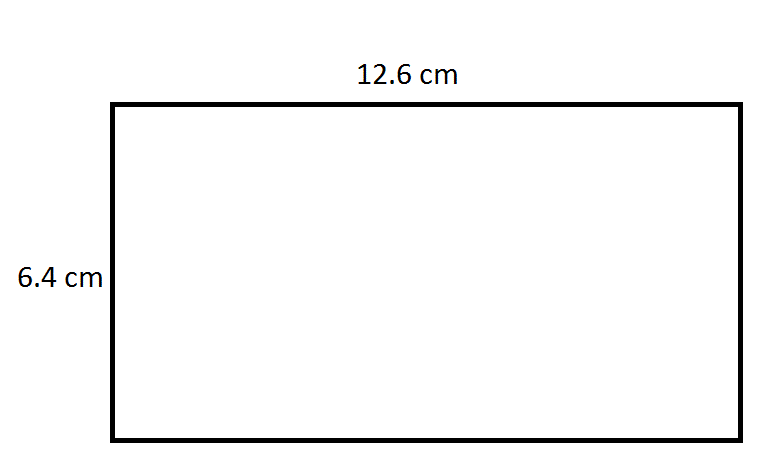
Read the scale
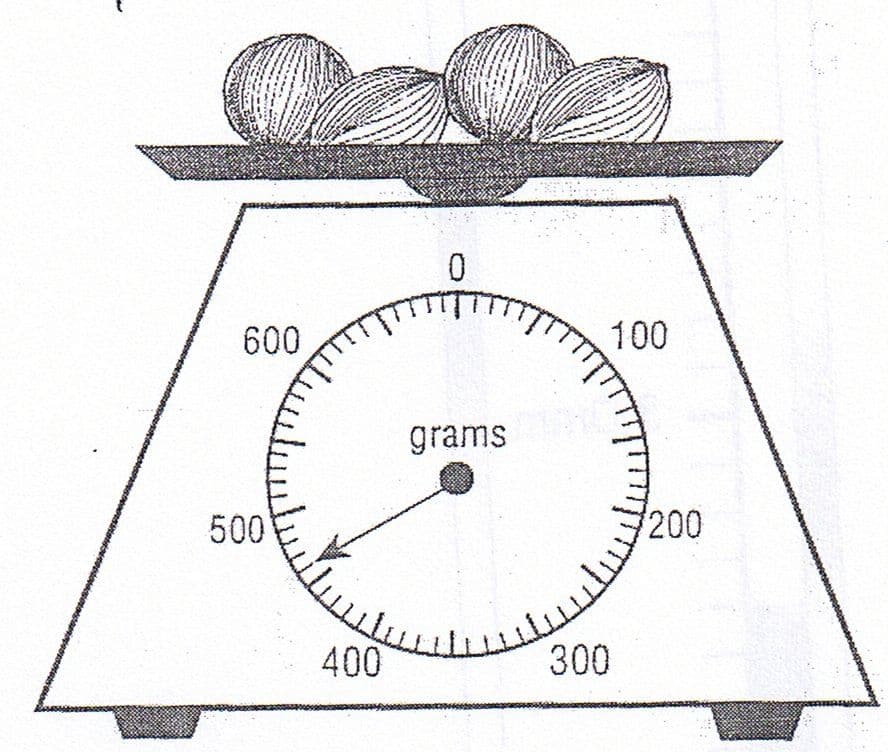
What is the temperature shown on this thermometer?

What is the PERIMETER of this irregular shape?
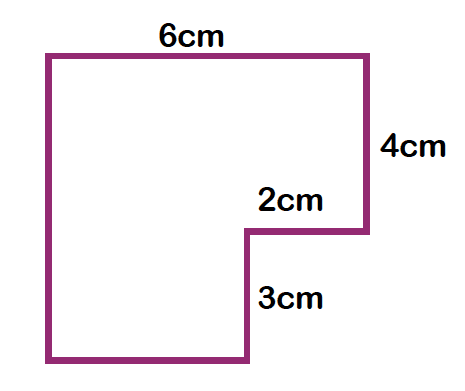
What is the AREA of this irregular shape?

What is the AREA of the Driveway?

12m = _________ cm ?

1500milligrams = ________ grams?
Anna decided to sew a big flag for Fiji Day. She needed to know the space required for her material. It was 6m wide and 2m long. What is the area of the material needed for her flag?
Peter woke up at 7.05am. He reminded himself that he has rugby practice at 4.20pm. How long until Peter's rugby practice?
Regina was asked by her Mum to go to the shop to buy a loaf of bread and some butter. The bread was $2.15, and the butter was $5.35. If her Mum gave her $10, how much change would she receive back?
What is 9.35am + 4hours and 7 minutes (time)
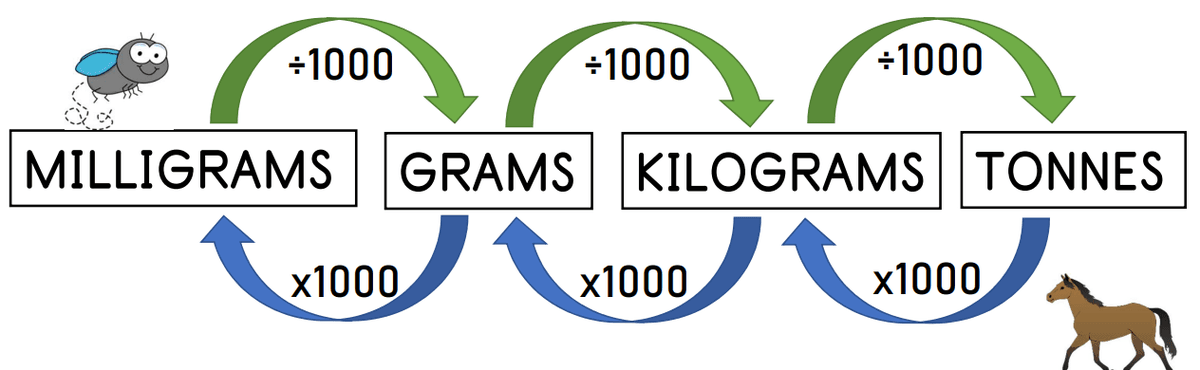
Link the following based on Measurement vocabulary
What is the formula for measuring AREA?
Term 4- Week 2 HomeworkSpelling Week 4 Term 2STS 11.1 Term 2 Week 4 Spelling QuizO1: Describe the evolution of the marketing concept. LO2: Define the term consumer behaviour. LO3: Discuss the factors influencing consumer behaviour. LO4: Discuss consumer behaviour as a field of study. PM: Chapter 1 Theme 2: Consumer Behaviour and Marketing Academic Week: 1-4 LO5: Critically examine consumer behaviour and the marketing mix. LO6: Analyse consumer behaviour within society. LO7: Analyse the consumer behaviour dynamic. LO8: Analyse online consumer behaviour. LO9: Define consumer value. LO10: Discuss the consumer value framework and its components. LO11: Analyse the marketing strategy in relation to consumer value. LO12: Discuss consumer lifetime value. Related Outcomes: MO001 PM: Chapter 1 Theme 3: Consumer misbehaviour PM: Chapter 13 LO13: Define the concept of consumer misbehaviour. LO14: Discuss the various causes of consumer misbehaviour. LO15: Analyse the different forms of consumer misbehaviour. LO16: Discuss the impact of consumer misbehaviour. LO17: Define other-customer failure. LO18: Discuss the various methods of managing consumer misbehaviour. Why and How Managers Plan Importance of planning The planing process Benefits of planning Planning and time management Types of PLans used by managers Long term and short term plans Strageic and tactical plans Operational plans Planning Tools and Techiqunes Forecasting Contrigency planning Scenario planning Benchmaking Use of staff planners Implementing Plans to Achive Results Goal setting Goal management Goal alignment Participation and involvement Planning Def: The process of setting objectives and determining how best to accomplish them Planning at Eaton Corporation “Making the hard decision before events force them upon you, an anticipating the future needs of the market before the demand asset itself Objectives and goals Identifity the specific results or desired outcomes that one intends to achieve Plan Def: A statement of action steps to be taken in order to accomplish the objectives (goals) Steps in the planning process: Define your objectives Determine where you stand vis-a-vis objectives Develpo premises reagrdsing future conditions Analyze alternatives and make a plan Implement the plan and evaluate results What are the benefits of planning Improves focus and flexibility Imporves action orteitation Imporves coordination and control Imporves time management Time Managment Personal time management tips Do say “no” to request that distract you form what you should be doing Dont get bogged down inn details that can be addressed later Do screen telephone calls, emails and meeting request Dont let drop in visitors, text messaging use up your time Do prioritize your important and urgent work Dont become calendar bound by letting other control your schedule Do follow priorities; do most important and urgent work first Some 77% of mangers in one survey said that digital age has increased th number of decisions they have to make 43% said there was less time available to make these decisions Types of plans used by Managers What is teh time horizon Long term vs Short term Long term Look three or more years into teh future Short term plans Typically cover one year or less However: the increasing environmental complexity and dynamism of recent years has severely tested the concept of “long-term” planning Plans are subject to frequent revisions Most executives would likely agree that these complexities adn uncertainties challenge how er actually go about planning and how far ahead we can really plan At the very least we can conclude that there is a lot less permanency to long term plans today and that tey are subject to frequent revision Managment reaeracher Eillot Jaques believes tha people vary in their capability to think with different time horizons Types of Plans used by Managers (3 of 5) Strategic plans Set broad, comprehensive and linger term action directions for teh entire organization or major division Vision Clarifies purpose of the organization and what it hopes to be on the future Typical plans Specify how the organizations resources are used to implement strategy Tactical plans in business often take the form of functional plans Functional plans Incidate how different component within the organiztion will help accompnlish the overall strategy Production plans Finacial plans Facilites Plans Logisitc plans Marketing plans Human Resource Plans Operation plans Describe short-term activities to implement strategic plans Policies: Are standing plans that communicate guidelines for decisions Ex: Policies on office romances: The media is quick to report when a top executive or public figures runs into trouble over an office affair. Are there ant policies on office romances? Employer polices on office raltioshiis vary. One survey find teh following: 24% prohibit relationships among employees in the same department 13% prohibit relationships among employees who have the smae supervisor 80% prohibit relationships between supervisors and subordinates 5% have no restrictions on office romances Procedures: Are rules that describe actions to be taken in specific situations Budgets: are single use plans that commit resources to projects or activities Zero based budgets: allocate resources as if each budget were brand new There is no guarantee that any past funding will be renwer. All propsales, old and new, must compete for available funds at teh start of each new budget cycle Forcasting Attempts to predict the future Qualitaive forecasting uses expert opinions Quantitative forecasting uses mathematical models and statiscal aanylsis of historical data dna surveys Contingency planning Identify alternative course of action to take when things go wrong Anticipate changing conditions Contain trigger points to indicate when to activate plan (or a specific course of action) Scenario planning A long term version of contingency planning Identifying alternative future scenarios Plans made for each future scenario Increases organizations flexibility and preparation for future shocks Benchmarking Use of external and internal comparisons to better evaluate current performance Adopting best practices: things people adn organization do that lead to superior performance Staff Planners Experts who assist in all steps of the planning process They help bring focus and expertise to a wide variety of planning tasks Important: Communication between staff planers landline managers is essential for teh success of teh planning process Goal Setting - Always set SMART goal The solution: Goal Aligment Between Team Leader and Team Member Jonintly plan: Set objectives, set standards, choose actions Individually acy: Perform tasks (member), provide support (leader) Jointly control: Review results, discuss implications, renew cycle x4 Collective effort and commitment Participatroy planning Includes in all planning steps that people who will be affected by the plans adn askedd to help implement them Unloacks motivational potential of goal setting Management by objective (MBO) promotes participation Participation increases understanding and acceptance of plan and commitment to success Participatory planning - Number of people involved in teh decision making process Amazon is intensely focused on what it does. It believes in creating tight single-threaded teams, also known as “2 pizza team.” Data and Decision Making What are some of the important competencies managers must have today? Delegate Marketing and technology Manager must have Technological competency Ability to understand new technologies and to use them to their best advantage Information competency Ability to locate, gather, organize and display information for decision-making and problem solving Analytical competency Ability to evaluate and analyze information to make actual decisions and solve real problems What is the difference between Data and Information Data Raw facts and observation Information Data made useful and meaningful for decision-making Important concepts Big data Exists in huge quantities and is difficult to process without sophisticated mathematical and analytical techniques Data production today Bernard Marr is an internationally best-selling author. He helps organizations improve their business performance, use data more intelligently Data mining The process of analyzing data to produce useful information for decision-makers Management Analytics The systematic evaluation and analysis of data to make informed decision Information drives management Bad Data Refers to information that can be erroneous, misleading, and without general formatting The challenge: Can er use the data that is available in the “Big Data” Needs to be valid Can not trust everything out there Being ethical Look at the trends Data is structured and unstructured Data BIg Data = Structured + Unstructured Information Drive Management decision making What are the characteristics of useful information Easy to access If its credible Accurate Characteristics of useful information: Timely High quality Complete Relevant Understandable What about bad data It's not credible Miss information If it is not structured/ organized Bias based on opinions Confusing If its updated Bad data Refers to information that can be erroneous miss What are some examples of Management information system Business intelligence -BI Information systems to extract and report data in organized ways that are useful to decision-makers Executive dashboards Visually update and display key performance metrics (or Key Performance Indicators -KPIs) and information on a real-time basis Information needs in organization External Environment Information exchanges with the external environment Gather intelligence information Provide public information Information needs within the organizations (internal Enviroement) Information exchange within the organization Facilitate decision making Facilitate problem-solving Managers as information processors Continually gather, share and receive information Now as much electronic as it is face-to-face Always on, always connected How many people telecommute at least once a week 70% of people globally work remotely at least once a week, Work at home after covid 19 our forecast Our best estimate it that 25-30% of the workforce will be working form home multiple days a week by the end of 2021 As of 2023, 12.7% of full time employees work from home, while 28.2% work a hybrid model Managers as problem solvers Problem-solving The process of identifying a discrepancy between actual and desired performance and taking action to resolve it Ishikawa Fishbone diagram To identify the cause of problems Decision A choice among possible alternative courses of action Performance threat Something is wrong or has the potential to go wrong Performance opportunity The situation offers the chance for a better future if the right steps are taken Problem-solving approaches or style - from textbook Problem avoiders Inactive in information gathering and solving problems Problem seekers Proactive in anticipation of problems and opportunities and taking appropriate action to gain an advantage Problem solvers Reactive in gathering information and solving problem Managers - can approach problems in a systematic or intuitive manner Systematic thinking approaches problem in rational, step-by-step and analytical fashion Intuitive thinking approaches problems in a flexible and spontaneous fashion Multidimensional thinking- applies both intuitive and systematic thinking Managers face structured and unstructured problems Structure problems Are ones that are familiar, straight forward, and clear with respect to information needs Program decisions apply solutions that are readily available from past experiences to solve structured problems Know how to solve them Familiar Know what we are dealing with Unstructured problems Are ones that are full of ambiguities and information deficiencies Nonprogrammed decisions apply a specific solution to meet the demands of a unique problem Commonly faced by higher-level management Crisis decision making A crisis involves an unexpected problem that can lead to disaster if not resolved quickly and appropriately Ruled for crisis management Figure out what is going on Remember that speed matters Remember that slow counts, too Respect the danger of the unfamiliar Value the skeptic Be ready to “fight fire with fire” Managers make decisions with various amounts of information Certain environment Offers complete information on possible action alternatives and their consequences Risk environment Lacks complete information but offers probabilities of the likely outcomes for possible action alternatives Uncertain environment Lacks so much information that it is difficult to assign probabilities to the likely outcomes of alternative Ex: Certain and uncertain environments: The worldwide Governance Indicators for over 200 countries, comparing distinct environments (Canada-Brazil) Step 1-Identify and define the problem Focuses on information gathering information processing and deliberation Decision objectives should be established What are some common mistakes in definding problems? Common mistakes in defining problems Defining the problem too broadly or too narrowly Focusing on symptoms instead of causes Choosing the wrong problem to deal with Step 2- Generate and Evaluate Alternative Courses of Action Potential solutions are formulated and more information is gathered, data are analyzed, the advantages and disadvantages of alternative solutions are identified Common mistakes: Abandoning the search for alternatives too quickly Step 3- Decide on a preferred course of Action Two different approaches Behavioural model leads to satisficing decisions Classical model les to optimising decisions Behavioural Model Rationality is bounded because: There are limits our thinks capacity Available information (incomplete) Time constraints Step 4-Implement the decision Involves taking action to make sure the solution decided upon becomes a reality Managers need to have the willingness and ability to implement action plans Problems: Lack of participation error should be avoided Step 5 - Evaluate Results Involves comparing actual and desired results The positive and negative consequences of the chosen course of action should be examined If actual results fall short desire results, the manager returns to earlier steps in the decision-making process At all steps, check ethical reasoning Ask these spotlight questions Utility Does teh decision satisfy all constituents or stakeholders Rights Does the description respect the rights and duties of everyone? Justice Is the decision consistent with the canons of justice Caring Is the decision consistent with my responsibilities to care? Issues in decision-making How do errors happen? Heuristics: are strategies for simplifying decision-making Availability Bias: Bases a decision on recent information or events Representativeness bias: Bases a decision on similarity to other situations Anchoring and Adjustment Bias: Bases a decision on incremental adjustment from a prior decision point Framing error: Tring to solve a problem in the context perceived, positive or negative Confirmation Error: Focusing on information that confirms a decision already made Escalating commitment: Continuing a course of action even though it is not working Creative Decision making Creativity is the generation of a novel idea or unique approach that solves a problem or crafts an opportunity Big C: Creativity occurs when extraordinary things are done by exceptional people Little C: Creativity occurs when average people come up with unique ways to deal with daily events and situations The three types of situational creativity drivers Chapter review What are objectives and goals? The specific results or desired outcomes What are the 5 characteristics of great (SMART) goals? Forecasting - Attempts Qualitative forecasting uses options Quantitative forecasting uses mathematical models and statistical analysis of historical data and surveys Scenarios-Oracle’s crystal ball combines qualitative and quantitative methodsHi, I'm John Green, this is Crash Course U.S. History, and today, we're going to talk about slavery, which is not funny. 0:06 Yeah, so we put a lei on the eagle to try and cheer you up, but let's face it, this is going to be depressing. 0:10 With slavery, every time you think, like, "Aw, it couldn't have been that bad," it turns out to have been much worse. 0:14 Mr. Green, Mr. Green! But what about – 0:15 Yeah, Me from the Past, I'm going to stop you right there, because you're going to embarrass yourself. Slavery was hugely important to America. 0:20 I mean, it led to a civil war and it also lasted what, at least in U.S. history, counts as a long-ass time, from 1619 to 1865. 0:29 And yes, I know there's a 1200-year-old church in your neighborhood in Denmark, but we're not talking about Denmark! 0:35 But slavery is most important because we still struggle with its legacy. 0:38 So, yes, today's episode will probably not be funny, but it will be important. 0:42 [Theme Music] North & South economic ties 0:51 So the slave-based economy in the South is sometimes characterized as having been separate from the Market Revolution, but that's not really the case. 0:57 Without southern cotton, the North wouldn't have been able to industrialize, at least not as quickly, because cotton textiles were one of the first industrially products. 1:04 And the most important commodity in world trade by the nineteenth century, and 3/4 of the world's cotton came from the American South. 1:11 And speaking of cotton, why has no one mentioned to me that my collar has been half popped this entire episode, like I'm trying to recreate the Flying Nun's hat. 1:18 And although there were increasingly fewer slaves in the North as northern states outlawed slavery, cotton shipments overseas made northern merchants rich. 1:26 Northern bankers financed the purchase of land for plantations. 1:29 Northern insurance companies insured slaves who were, after all, considered property, and very valuable property. 1:35 And in addition to turning cotton into cloth for sale overseas, northern manufacturers sold cloth back to the South, where it was used to clothe the very slaves who had cultivated it. 1:45 But certainly the most prominent effects of the slave-based economy were seen in the South. Slave-based agriculture in the South 1:49 The profitability of slaved-based agriculture, especially King Cotton, meant that the South would remain largely agricultural and rural. 1:56 Slave states were home to a few cities, like St. Louis and Baltimore, but with the exception of New Orleans, 2:00 almost all southern urbanization took place in the upper South, further away from the large cotton plantations. 2:06 And slave-based agriculture was so profitable that it siphoned money away from other economic endeavors. 2:11 Like, there was very little industry in the South. 2:13 It produced only 10% of the nation's manufactured goods. 2:16 And, as most of the capital was being plowed into the purchase of slaves, there was very little room for technological innovation, like, for instance, railroads. 2:23 This lack of industry and railroads would eventually make the South suck at the Civil War, thankfully. 2:27 In short, slavery dominated the South, shaping it both economically and culturally, and slavery wasn't a minor aspect of American society. Popular attitudes concerning slavery 2:35 By 1860, there were four million slaves in the U.S., and in the South, they made up one third of the total population. 2:42 Although in the popular imagination, most plantations were these sprawling affairs with hundreds of slaves, 2:47 in reality, the majority of slaveholders owned five or fewer slaves. 2:51 And, of course, most white people in the South owned no slaves at all, though, if they could afford to, they would sometimes rent slaves to help with their work. 2:57 These were the so-called yeoman farmers who lived self-sufficiently, raised their own food, and purchased very little in the Market Economy. 3:04 They worked the poorest land and, as a result, were mostly pretty poor themselves. 3:08 But even they largely supported slavery, partly, perhaps, for aspirational reasons, and partly because the racism inherent to the system gave even the poorest whites legal and social status. 3:18 And southern intellectuals worked hard to encourage these ideas of white solidarity and to make the case for slavery. 3:23 Many of the founders, a bunch of whom you'll remember, held slaves, saw slavery as a necessary evil. 3:29 Jefferson once wrote, quote, "As it is, we have the wolf by the ear, and we can neither hold him, nor safely let him go. 3:37 Justice is on one scale, and self-preservation in the other." 3:41 The belief that justice and self-preservation couldn't sit on the same side of the scale was really opposed to the American idea, 3:47 and, in the end, it would make the Civil War inevitable. 3:50 But as slavery became more entrenched in these ideas of liberty and political equality were embraced by more people, 3:55 some southerners began to make the case that slavery wasn't just a necessary evil. 3:59 They argued, for instance, that slaves benefited from slavery. 4:03 Because, you know, because their masters fed them and clothed them and took care of them in their old age. 4:07 You still hear this argument today, astonishingly. 4:09 In fact, you'll probably see asshats in the comments saying that in the comments. 4:12 I will remind you, it's not cursing if you are referring to an actual ass. 4:15 This paternalism allowed masters to see themselves as benevolent and to contrast their family-oriented slavery with the cold, mercenary Capitalism of the free-labor North. 4:26 So yeah, in the face of rising criticism of slavery, some southerners began to argue that the institution was actually good for the social order. 4:33 One of the best-known proponents of this view was John C. Calhoun, who, in 1837, said this in a speech on the Senate floor: 4:40 "I hold that, in the present state of civilization, 4:43 where two races of different origin and distinguished by color and other physical differences as well as intellectual, are brought together, 4:51 the relation now existing in the slave-holding states between the two is, instead of an evil, a good. A positive good." 4:59 Now, of course, John C. Calhoun was a fringe politician, and nobody took his views particularly seriously. 5:04 Stan: Well, he was Secretary of State from 1844 to 1845. 5:07 John: Well, I mean, who really cares about the Secretary of State, Stan? 5:10 Danica: Eh, he was also Secretary of War from 1817 to 1825. 5:13 John: All right, but we don't even have a Secretary of War anymore, so... 5:16 Meredith: And he was Vice President from 1825 to 1832. 5:19 John: Oh my god, were we insane?! 5:21 We were, of course, but we justified the insanity with Biblical passages and with the examples of the Greeks and Romans, 5:28 and with outright racism, arguing that black people were inherently inferior to whites. 5:33 And that not to keep them in slavery would upset the natural order of things. 5:37 A worldview popularized millennia ago by my nemesis, Aristotle. God, I hate Aristotle. 5:42 You know what defenders of Aristotle always say? 5:44 "He was the first person to identify dolphins." 5:47 Well, ok, dolphin identifier. 5:50 Yes, that is what he should be remembered for, but he's a terrible philosopher! Lives & experiences of enslaved people 5:53 Here's the truth about slavery: 5:55 It was coerced labor that relied upon intimidation and brutality and dehumanization. 6:00 And this wasn't just a cultural system, it was a legal one. 6:03 I mean, Louisiana law proclaimed that a slave "owes his master... a respect without bounds, and an absolute obedience." 6:09 The signal feature of slaves' lives was work. 6:12 I mean, conditions and tasks varied, but all slaves labored, usually from sunup to sundown, and almost always without any pay. 6:20 Most slaves worked in agriculture on plantations, and conditions were different, depending on which crops are grown. 6:25 Like, slaves on the rice plantations of South Carolina had terrible working conditions, 6:29 but they labored under the task system, which meant that once they had completed their allotted daily work, they would have time to do other things. 6:36 But lest you imagine this is like how we have work and leisure time, bear in mind that they were owned and treated as property. 6:42 On cotton plantations, most slaves worked in gangs, usually under the control of an overseer, or another slave who was called a "driver." 6:49 This was back-breaking work done in the southern sun and humidity, and so it's not surprising that whippings – or the threat of them – were often necessary to get slaves to work. 6:58 It's easy enough to talk about the brutality of slave discipline, but it can be difficult to internalize it. 7:03 Like, you look at these pictures, but because you've seen them over and over again, they don't have the power they once might have. 7:09 The pictures can tell a story about cruelty, but they don't necessarily communicate how arbitrary it all was. 7:14 As, for example, in this story, told by a woman who was a slave as a young girl: 7:18 "[The] overseer... went to my father one morning and said, "Bob, I'm gonna whip you this morning." 7:22 Daddy said, "I ain't done nothing," and he said, "I know it, I'm going to whip you to keep you from doing nothing," 7:28 and he hit him with that cowhide – you know it would cut the blood out of you with every lick if they hit you hard." 7:33 That brutality – the whippings, the brandings, the rape – was real, and it was intentional, because, in order for slavery to function, slaves had to be dehumanized. 7:43 This enabled slaveholders to rationalize what they were doing, and it was hoped to reduce slaves to the animal property that is implied by the term "chattel slavery." 7:51 So the idea was that slaveholders wouldn't think of their slaves as human, and slaves wouldn't think of themselves as human. 7:57 But it didn't work. Let's go to the Thought Bubble. 7:59 Slaves' resistance to their dehumanization took many forms, but the primary way was by forming families. Family, love, & religion of enslaved people 8:05 Family was a refuge for slaves and a source of dignity that masters recognized and sought to stifle. 8:10 A paternalistic slave owner named Bennet H. Barrow wrote in his rules for the Highland Plantation: 8:15 "No rule that I have stated is of more importance than that relating to Negroes marrying outside of the plantation... It creates a feeling of independence." 8:23 Most slaves did marry, usually for life, and, when possible, slaves grew up in two-parent households. 8:28 Single-parent households were common, though, as a result of one parent being sold. 8:32 In the upper South, where the economy was shifting from tobacco to different, less labor-intensive cash crops, the sale of slaves was common. 8:40 Perhaps one-third of slave marriages in states like Virginia were broken up by sale. 8:45 Religion was also an important part of life in slavery. 8:47 While masters wanted their slaves to learn the parts of the Bible that talked about being happy in bondage, 8:52 slave worship tended to focus on the stories of Exodus, where Moses brought the slaves out of bondage, 8:57 or Biblical heroes, who overcame great odds, like Daniel and David. 9:01 And, although most slaves were forbidden to learn to read and write, many did anyway. And some became preachers. 9:07 Slave preachers were often very charismatic leaders, and they roused the suspicion of slave owners, and not without reason. 9:13 Two of the most important slave uprisings in the South were led by preachers. 9:16 Thanks, Thought Bubble. 9:17 Oh, it's time for the Mystery Document? Mystery Document 9:19 We're doing two set pieces in a row? All right. [buzzing noise] [music] 9:24 The rules here are simple. 9:26 I wanted to re-shoot that, but Stan said no. 9:29 I guess the author of the Mystery Document. 9:30 If I am wrong, I get shocked with the shock pen. 9:33 "Since I have been in the Queen's dominions I have been well contented, yes well contented for sure, man is as God intended he should be. 9:40 That is, all are born free and equal. 9:43 This is a wholesome law, not like the southern laws which puts man made in the image of God on level with brutes. 9:49 O, what will become of the people, and where will they stand in the day of judgment. 9:53 Would that the 5th verse of the 3rd chapter of Malachi were written as with a bar of iron, 9:59 and the point of a diamond upon every oppressor's heart that they might repent of this evil, and let the oppressed go free..." 10:06 All right, it's definitely a preacher, because only preachers have read Malachi. 10:10 Probably African American, probably not someone from the South. 10:13 I'm going to guess that it is Richard Allen, the founder of the African Methodist Episcopal Church? 10:18 [buzzing noise] DAAAH, DANG IT! 10:19 It's Joseph Taper, and Stan just pointed out to me that I should have known it was Joseph Taper because it starts out, 10:24 "Since I have been in the Queen's dominions..." 10:27 He was in Canada. He escaped slavery to Canada. The Queen's dominions! 10:31 All right, Canadians, I blame you for this, although, thank you for abolishing slavery decades before we did. 10:36 [electric sounds] AHHH! How people resisted & escaped slavery 10:37 So, the Mystery Document shows one of the primary ways that slaves resisted their oppression: by running away. 10:42 Although some slaves like Joseph Taper escaped for good by running away to northern free states, 10:47 or even to Canada, where they wouldn't have to worry about fugitive slave laws, even more slaves ran away temporarily, hiding out in the woods or the swamps, and eventually returning. 10:55 No one knows exactly how many slaves escaped to freedom, but the best estimate is that a thousand or so a year made the journey northward. 11:01 Most fugitive slaves were young men, but the most famous runaway has been hanging out behind me all day long: Harriet Tubman. 11:07 Harriet Tubman escaped to Philadelphia at the age of 29, and over the course of her life, she made about 20 trips back to Maryland to help friends and relatives make the journey north on the Underground Railroad. 11:17 But a more dramatic form of resistance to slavery was actual, armed rebellion, which was attempted. 11:22 Now, individuals sometimes took matters into their own hands and beat or even killed their white overseers or masters. 11:27 Like Bob, the guy who received the arbitrary beating, responded to it by killing his overseer with a hoe. 11:33 But that said, large-scale slave uprisings were relatively rare. 11:36 The four most famous ones all took place in a 35-year period at the beginning of the 19th century. Slave rebellions 11:41 Gabriel's Rebellion in 1800 – which we've talked about before – was discovered before he was able to carry out his plot. 11:45 Then, in 1811, a group of slaves upriver from New Orleans seized cane, knives, and guns, and marched on the city before militia stopped them. 11:52 And in 1822, Denmark Vesey, a former slave who had purchased his freedom, may have organized a plot to destroy Charleston, South Carolina. 11:59 I say "may have" because the evidence against him is disputed and comes from a trial that was not fair. 12:05 But regardless, the end result of that trial was that he was executed, as were 34 slaves. Nat Turner's Rebellion 12:09 But the most successful slave rebellion, at least in the sense that they actually killed some people, was Nat Turner's in August 1831. 12:15 Turner was a preacher, and with a group of about 80 slaves, he marched from farm to farm in South Hampton County, Virginia, 12:21 killing the inhabitants, most of whom were women and children, because the men were attending a religious revival meeting in North Carolina. 12:27 Turner and 17 other rebels were captured and executed, but not before they struck terror into the hearts of whites all across the American South. 12:34 Virginia's response was to make slavery worse, passing even harsher laws that forbade slaves from preaching, and prohibited teaching them to read. 12:42 Other slave states followed Virginia's lead and, by the 1830s, slavery had grown, if anything, more harsh. 12:47 So, this shows that large-scaled armed resistance was – Django Unchained aside – not just suicidal, but also a threat to loved ones and, really, to all slaves. How enslaved people resisted their oppression & why it matters 12:55 But, it is hugely important to emphasize that slaves did resist their oppression. 12:59 Sometimes this meant taking up arms, but usually it meant more subtle forms of resistance, 13:03 like intentional work slowdowns or sabotaging equipment, or pretending not to understand instructions. 13:08 And, most importantly, in the face of systematic legal and cultural degradation, they re-affirmed their humanity through family and through faith. 13:16 Why is this so important? 13:17 Because too often in America, we still talk about slaves as if they failed to rise up, 13:21 when, in fact, rising up would not have made life better for them or for their families. 13:26 The truth is, sometimes carving out an identity as a human being in a social order that is constantly seeking to dehumanize you, is the most powerful form of resistance. 13:34 Refusing to become the chattel that their masters believed them to be is what made slavery untenable and the Civil War inevitable, so make no mistake, slaves fought back. 13:45 And in the end, they won. I'll see you next week. Credits 13:48 Crash Course is produced and directed by Stan Muller. 13:50 The script supervisor is Meredith Danko. 13:52 Our associate producer is Danica Johnson. 13:54 The show is written by my high school history teacher Raoul Meyer and myself. 13:57 And our graphics team is Thought Cafe. 13:58 Every week, there's a new caption to the Libertage, but today's episode was so sad that we couldn't fit a Libertage in... 14:04 UNTIL NOW! [Libertage Rock Music] 14:08 Suggest Libertage caption in comments, where you can also ask questions about today's video that will be answered by our team of historians. 14:13 Thanks for watching Crash Course, and as we say in my home town, don't forget to be abolitionist.Term 4- Week 3 HomeworkYear 3 Term 4 Week 9