Loading...


Territorial Expansion
Quiz by John Frieser
Customize this quiz to suit your class
Instantly translate to 100+ languages
Tag the questions with any skills you have. Your dashboard will track each student's mastery of each skill.
Give this quiz to my class
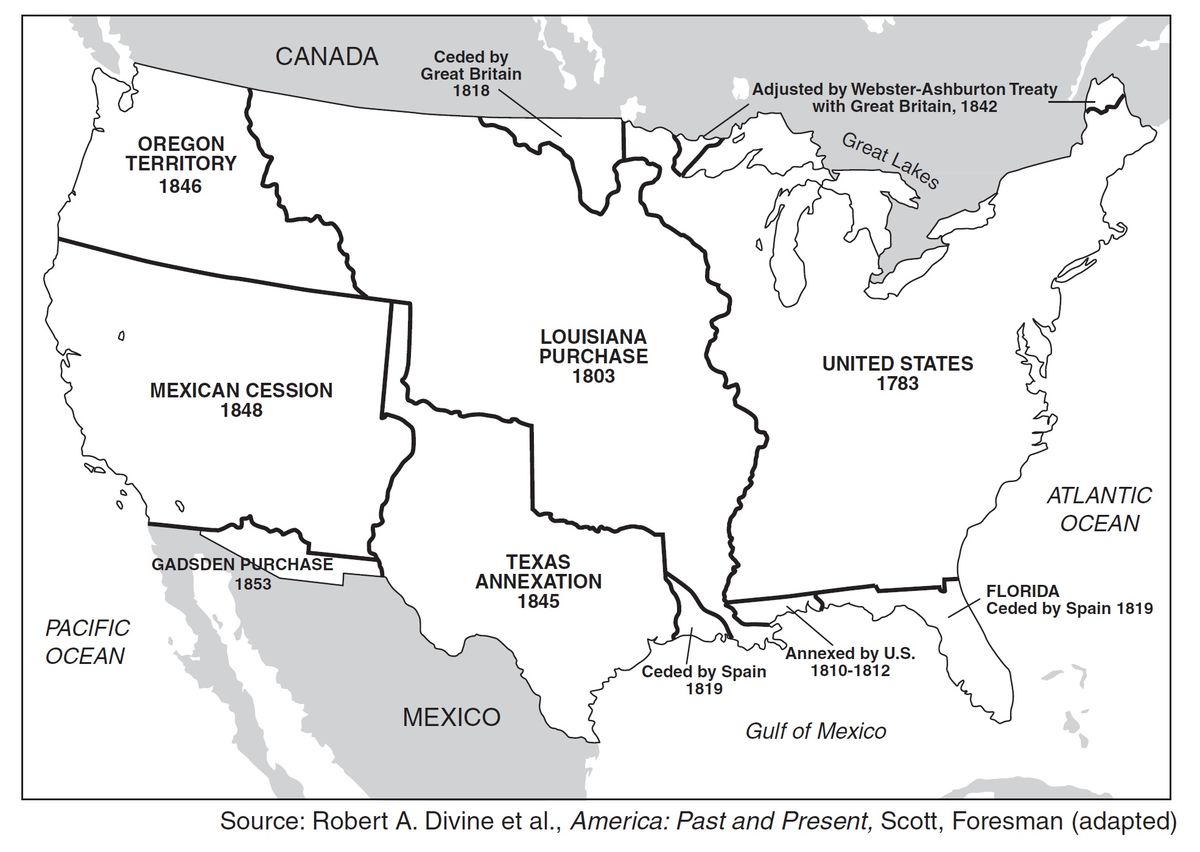
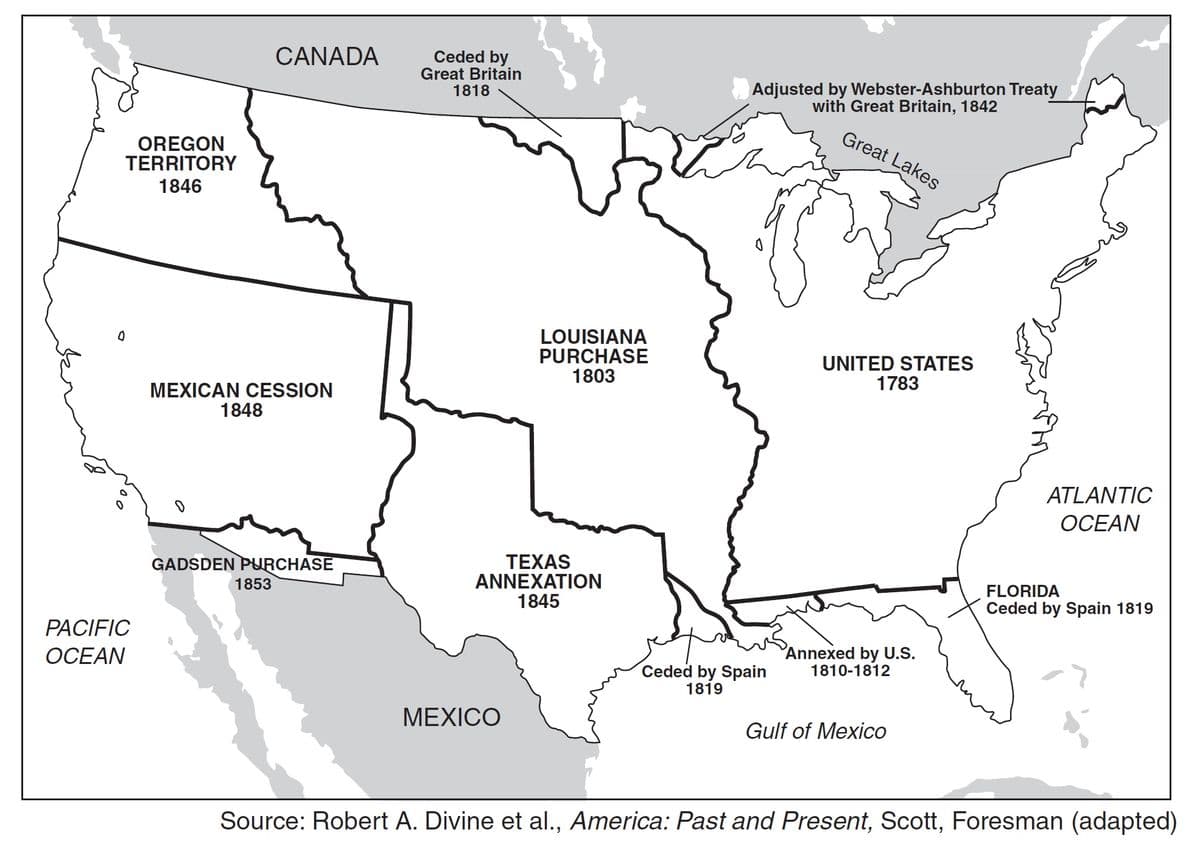 Territorial Expansion Quiz Most-Missed QuestionsTerritorial Expansion ReviewEarly society and accomplishments Origins Knowledge of the early prehistory of Southeast Asia has undergone exceptionally rapid change as a result of archaeological discoveries made since the 1960s, although the interpretation of these findings has remained the subject of extensive debate. Nevertheless, it seems clear that the region has been inhabited from the earliest times. Hominid fossil remains date from approximately 1,500,000 years ago and those of Homo sapiens from approximately 40,000 years ago. Furthermore, until about 7000 bce the seas were some 150 feet (50 metres) lower than they are now, and the area west of Makassar Strait consisted of a web of watered plains that sometimes is called Sundaland. These land connections perhaps account for the coherence of early human development observed in the Hoabinhian culture, which lasted from about 13,000 to 5000 or 4000 bce. The stone tools used by hunting and gathering societies across Southeast Asia during this period show a remarkable degree of similarity in design and development. When the sea level rose to approximately its present level about 6000 bce, conditions were created for a more variegated environment and, therefore, for more extensive differentiation in human development. While migration from outside the region may have taken place, it did not do so in a massive or clearly punctuated fashion; local evolutionary processes and the circulation of peoples were far more powerful forces in shaping the region’s cultural landscape. Technological developments and population expansion Perhaps because of a particular combination of geophysical and climatic factors, early Southeast Asia did not develop uniformly in the direction of increasingly complex societies. Not only have significant hunting and gathering populations continued to exist into the 21st century, but the familiar cultural sequences triggered by such events as the discovery of agriculture or metallurgy do not seem to apply. This is not to say that the technological capabilities of early Southeast Asian peoples were negligible, for sophisticated metalworking (bronze) and agriculture (rice) were being practiced by the end of the 3rd millennium bce in northeastern Thailand and northern Vietnam, and sailing vessels of advanced design and sophisticated navigational skills were spread over a wider area by the same time or earlier. Significantly, these technologies do not appear to have been borrowed from elsewhere but were indigenous and distinctive in character. Austronesian languages Austronesian languagesMajor divisions of the Austronesian languages. These technological changes may partially account for two crucial developments in Southeast Asia’s later prehistory. The first is the extraordinary seaborne expansion of speakers of Proto-Austronesian languages and their descendants, speakers of Austronesian (or Malayo-Polynesian) languages, which occurred over a period of 5,000 years or more and came to encompass a vast area and to stretch nearly half the circumference of Earth at the Equator. This outward movement of people and culture was evolutionary rather than revolutionary, the result of societal preference for small groups and a tendency of groups to hive off once a certain population size had been reached. It began as early as 4000 bce, when Taiwan was populated from the Asian mainland, and subsequently it continued southward through the northern Philippines (3rd millennium bce), central Indonesia (2nd millennium bce), and western and eastern Indonesia (2nd and 1st millennia bce). From approximately 1000 bce on the expansion continued both eastward into the Pacific, where that immense region was populated in a process continuing to about 1000 ce as voyagers reached the Hawaiian Islands and New Zealand, and westward, where Malay peoples reached and settled the island of Madagascar sometime between 500 and 700 ce, bringing with them (among other things) bananas, which are native to Southeast Asia. Thus, for a considerable period of time, the Southeast Asian region contributed to world cultural history, rather than merely accepting outside influences, as frequently has been suggested. The second development, which began possibly as early as 1000 bce, centred on the production of fine bronze and the fashioning of bronze-and-iron objects, particularly as they have been found at the site in northern Vietnam known as Dong Son. The earliest objects consisted of socketed plowshares and axes, shaft-hole sickles, spearheads, and such small items as fishhooks and personal ornaments. By about 500 bce the Dong Son culture had begun producing the bronze drums for which it is known. The drums are large objects (some weigh more than 150 pounds [70 kg]), and they were produced by the difficult lost-wax casting process and decorated with fine geometric shapes and depictions of animals and humans. This metal industry was not derived from similar industries in China or India. Rather, the Dong Son period offers one of the most powerful—though not necessarily the only or earliest—examples of Southeast Asian societies transforming themselves into more densely populated, hierarchical, and centralized communities. Since typical drums, either originals or local renditions, have been found throughout Southeast Asia and since they are associated with a rich trade in exotics and other goods, the Dong Son culture also suggests that the region as a whole consisted not of isolated, primitive niches of human settlement but of a variety of societies and cultures tied together by broad and long-extant trading patterns. Although none of these societies possessed writing, some displayed considerable sophistication and technological skill, and, although none appears to have constituted a territorial centralized state, new and more complex polities were forming.Crea un quiz basandoti sul seguente testo: La Repubblica Popolare Cinese (中華人民共和國T, 中华人民共和国S, Zhōnghuá Rénmín GònghéguóP ascolta la pronuncia in mandarino standardⓘ), detta anche solo Cina (中國T, 中国S, ZhōngguóP; lett. "Paese di mezzo"),[7] è uno Stato dell'Asia orientale. La Repubblica Popolare Cinese è stata in passato indicata come Cina popolare, al fine di distinguerla dalla Repubblica di Cina, comunemente chiamata Taiwan (o Formosa), indicata invece come Cina nazionalista. Entrambe le entità reclamano il controllo sul territorio complessivo cinese. La Repubblica Popolare Cinese con 1 miliardo e 400 milioni di abitanti nel 2023 è lo stato più popoloso del mondo insieme all'India.[4] La Cina è una repubblica popolare in cui il potere è esercitato dal Partito Comunista Cinese (中国共产党 oppure 中共). Il governo ha sede nella capitale Pechino (北京首都) ed esercita la propria sovranità su ventidue province (省), cinque regioni autonome (自治区), quattro municipalità direttamente controllate (直辖市) (Pechino 北京, Tientsin 天津, Shanghai 上海 e Chongqing 重庆) e due regioni amministrative speciali 特别行政区 (Hong Kong 香港 e Macao 澳门) parzialmente autonome. La Cina rivendica la propria sovranità anche su Taiwan, che a propria volta rivendica la propria sovranità sulla Cina continentale. L'isola è rimasta dal 1949 sotto il controllo del governo della Repubblica di Cina (中華民國 o Taiwan), che precedentemente governava anche la Cina continentale, ed è rivendicata dalla Repubblica Popolare Cinese come provincia di Taiwan. La complessa condizione politica di Taiwan è una delle conseguenze della guerra civile cinese, che ha preceduto la fondazione della Repubblica Popolare Cinese. Con la sua superficie di circa 9 572 900 km², la Cina è il quarto stato più grande del mondo per superficie. Il paesaggio della Cina è vasto e diversificato: va dalle steppe della foresta e i deserti dei Gobi e del Taklamakan nell'arido nord alle foreste subtropicali e umide del sud. L'Himalaya, il Karakorum, il Pamir e il Tian Shan sono le catene montuose che separano la Cina meridionale dall'Asia centrale. Il Fiume Azzurro (长江) e il Fiume Giallo (黄河), rispettivamente il terzo e il sesto più lunghi del mondo, scorrono dall'altopiano del Tibet verso la costa orientale, densamente popolata. La costa della Cina lungo l'oceano Pacifico è lunga circa 14 500 chilometri ed è delimitata dal mare di Bohai, dal mar Giallo, dal mar Cinese Orientale e dal mar Cinese Meridionale. L'antica civiltà cinese, una delle più antiche al mondo, si sviluppò inizialmente nelle pianure comprese tra il Fiume Giallo e il Fiume Azzurro. A partire dall'età del bronzo, verso la fine del II millennio a.C., si ha evidenza di strutture feudali, in cui i nobili si raccoglievano intorno a monarchie ereditarie. Vi sono testimonianze di una casata regnante nella prima metà del I millennio a.C., nota come dinastia Zhou (周朝), il cui declino condusse alla nascita di un discreto numero di regni indipendenti in competizione per il predominio sulla regione (periodo delle Primavere e Autunni, 春秋), con stagioni di conflitto che si fecero particolarmente accese nel periodo che va dall'VIII al III secolo a.C. Nel 221 a.C. lo Stato di Qin sconfisse e conquistò i territori di tutti gli altri Stati combattenti, dando vita al primo impero della storia cinese sotto la guida del primo imperatore cinese Qín Shǐ Huángdì della dinastia Qin (秦朝). Da quel momento il titolo di imperatore della Cina divenne il sinonimo della raggiunta supremazia. La dinastia Qin non durò a lungo, infatti i popoli precedentemente conquistati vennero poco dopo riuniti sotto l'egida della dinastia Han (汉朝, III secolo a.C. - III secolo d.C.). I quattro secoli in cui regnarono i sovrani della dinastia Han sono considerati cruciali per la definizione e l'affermazione della identità culturale cinese, tanto da divenire il termine con cui i cinesi definirono se stessi (con il termine appunto di etnia o popolo han, 汉族). Da allora, la storia cinese ha visto l'alternarsi di periodi di divisione e fasi di unificazione, con conseguenti periodi di frammentazione, contrazione o espansione territoriale, sotto l'egida di diverse dinastie, talora di etnia straniera, come avvenuto nel caso dei mongoli o dei mancesi. L'ultima dinastia fu quella dei Qing, il cui regno si concluse nel 1911 con la fondazione della Repubblica di Cina (中华民国). Dopo la sconfitta dell'Impero giapponese (大日本皇国) durante la seconda guerra mondiale, il Paese fu scosso dalla guerra civile, che vedeva contrapposte le forze nazionaliste del Kuomintang (国民党), il partito che allora deteneva il governo del paese, e le forze facenti capo al Partito Comunista Cinese. Nel 1949 la guerra si concluse con la sconfitta del Kuomintang e la conseguente fuga del governo nazionalista sull'isola di Formosa, nella cui capitale Taipei (台北) ha tuttora sede l'attuale Repubblica di Cina, altresì nota come Taiwan. In seguito alla vittoria conseguita sul continente, il 1º ottobre del 1949 a Pechino le forze comuniste guidate da Mao Zedong proclamarono ufficialmente la nascita della Repubblica Popolare Cinese. Dopo l'introduzione di riforme economiche nel 1978, l'economia cinese è diventata quella dalla crescita più rapida al mondo. A partire dal 2013, è la seconda economia più grande al mondo sia come PIL totale nominale sia per parità di potere d'acquisto; per quanto riguarda solamente il PIL nominale, invece, la Cina ha sorpassato il Giappone, sino ad allora seconda potenza mondiale dal 1987, nel 2010. Nel 2022 il prodotto interno lordo cinese è sui ventimila miliardi di dollari.[8] Essa è anche il più grande esportatore e importatore di merci al mondo. La Cina è ufficialmente uno Stato munito di armi nucleari e ha il più grande esercito permanente del mondo, con il secondo più grande bilancio della difesa. È, inoltre, membro dell'ONU dal 1971, quando ha preso il posto della Repubblica di Cina tra i seggi dei membri permanenti del Consiglio di sicurezza delle Nazioni Unite, e quindi gode del potere di veto. La Cina è anche membro di numerose organizzazioni multilaterali,[9] tra cui l'OMC, l'APEC, il BRICS, l'Organizzazione di Shanghai per la cooperazione, il BCIM[10] e il G20. La Cina, unanimemente riconosciuta come grande potenza dal consesso internazionale, è una potenziale superpotenza secondo un certo numero di accademici e analisti che si occupano di questioni militari, politiche ed economiche. Dissidenti politici e gruppi per i diritti umani hanno denunciato la dittatura del governo cinese per diffuse violazioni dei diritti umani, tra cui repressione politica, repressione delle minoranze religiose ed etniche, censura, sorveglianza di massa e la violenza utilizzata nel reprimere il dissenso, come quella esibita durante le proteste di piazza Tienanmen del 1989.Isolationism, Expansionism, Imperialism, Provisional government, Spehres of influence, yellow journalism, armistice, territories, isthmus, anarchyIntroduction to Decolonization and Nationalism Lesson Vocabulary colony (n) an area over which a foreign nation or state extends or maintains control. colonize (v) to take control of(a people or area, especially as an extension of state power. control (v) to exercise restraining or directing influence over. decolonize (v) to free or give up control of a colonized people or area. empire (n) a major political unit having a territory of great extent or a number of territories or peoples under a single sovereign authority. Ex. Roman Empire, Ottoman Empire human rights (n) rights (such as freedom from unlawful imprisonment, torture, and execution) regarded as belonging fundamentally to all people. imperialism (n) the policy, practice, or advocacy of extending the power and dominion of a nation, especially by direct territorial acquisitions or by gaining indirect control over the political or economic life of other areas. independence (n) a state of being free from direct control by others. majority (n) being over 50% of a population OR the group with the greater amount of power in a political entity. minority (n) being less than 50% of a population OR the group with less power than the majority in a political entity. nation (n) a politically organized group of people with shared characteristics, such as language, culture, or geographic origins. nationalism (n) a movement that seeks to unify or promote the interests of a nation or national group. nonviolence (n) a movement that completely abstains or avoids violence as a means of political protest. oppress (v) to crush or burden by abuse of power or authority. political movement (n) a group of people who seek to organize people to change government, policy, or social values. protest (n) an organized public demonstration of disapproval. reform (n) removal or correction of errors or of an abuse or a wrong. state (n): an organization that has a system in which a politically organized group of people have primary control over a definite territory. Definitions mostly used: Merriam-WebsterEconomy of Southeast Asia Even prior to the penetration of European interests, Southeast Asia was a critical part of the world trading system. A wide range of commodities originated in the region, but especially important were such spices as pepper, ginger, cloves, and nutmeg. The spice trade initially was developed by Indian and Arab merchants, but it also brought Europeans to the region. First the Portuguese, then the Dutch, and finally the British and French became involved in this enterprise in various countries. The penetration of European commercial interests gradually evolved into annexation of territories, as traders lobbied for an extension of control to protect and expand their activities. As a result, the Dutch moved into Indonesia, the British into Malaya, and the French into Indochina. Europe’s interest and activity in the region was further enhanced by the opening of the Suez Canal, the development of telegraphic communications, the adoption of steam shipping, and the prospects for trade with China. In the case of Malaya, the gradual diffusion of British administration provided systems of law and order and of taxation and allowed for the gradual development of infrastructure, principally reliable transport systems. This environment attracted Chinese immigrants, and the growth of the tin mining industry soon followed. Later rubber plantations were established, which brought about still further immigration. Similar developments took place in Burma (Myanmar), Vietnam, and Indonesia. In Siam (Thailand) during the second half of the 19th century, a rapid expansion of Western enterprise occurred, though not by colonization. Both British and American firms began trading in the region. The impact of the Western activity was essentially to remove trade from what had been a Chinese monopoly and to emphasize the export of a single commodity, rice. Established indigenous textile and sugar-processing industries were replaced by imports, and the economy slowly became dependent on rice exports. The Philippines gradually developed a plantation farming system under Spanish and later American influence, although rice, sugar, and tobacco continued to be produced by small-scale growers and processed by Chinese enterprises until the mid-19th century. The incorporation of Southeast Asia into the world economy had a major impact on the distribution of the region’s economic development, and it created more uneven patterns of population growth and economic activity. It also brought about a stronger sense of class distinction and resulted in a larger discrepancy between the wealthy and poor. The worldwide economic depression of the 1930s severely affected the commercialized areas most dependent on the world economy. Unemployment rose, and the period produced the seeds of political change and activism that culminated in the independence of most of the region’s countries after World War II. Since the 1950s the economic development strategies of virtually all the capitalist Southeast Asian states have emphasized urban industrialization, while agricultural development generally has been viewed as subsidiary to industrial growth. These strategies have met with mixed success. Indeed, the trading pattern of the region by and large has continued to be one of producing and exporting raw materials and importing manufactured goods. Only Singapore has reached an advanced level of industrialization, in the process becoming one of the world’s great centers of industry and commerce. There is great disparity in development rates within the region, especially between the member and nonmember countries of the Association of Southeast Asian Nations (ASEAN). Those belonging to this grouping—Brunei, Indonesia, Malaysia, the Philippines, Singapore, and Thailand—generally have experienced significant economic development since the mid-1960s; the exception has been the Philippines, the economy of which has grown at a much slower rate. Development has been extremely slow or nonexistent in the non-ASEAN countries of Cambodia, Laos, Myanmar, and Vietnam, and these are among the poorest nations in the world.By the late 1800s, the Spanish were losing control of Cuba. Concerned about insurrection in the countryside, they moved rural Cubans to “reconcentration” camps where the Spanish claimed they would be better able to protect them. U.S. Consul-General Fitzhugh Lee forwarded the following account of the conditions of the camps to the U.S. Assistant Secretary of State on November 27, 1897. Lee said the author of the note was “a man of integrity and character.” “[W]e will relate to you what we saw with our own eyes: “Four hundred and sixty women and children thrown on the ground, heaped pellet-mell as animals, some in a dying condition, others sick and others dead. . . . “There is still alive the only living witness, a young girl of 18 years, whom we found seemingly lifeless on the ground; on her right-hand side was the body of a young mother, cold and rigid, but with her young child still alive clinging to her dead body; on her left-hand side was also the corpse of a dead woman holding her son in a dead embrace. . . . “The circumstances are the following: complete accumulation of bodies dead and alive, so that it was impossible to take one step without walking over them; the greatest want of cleanliness, want of light, air, and water; the food lacking in quality and quantity what was necessary to sustain life. . . . From all this we deduct that the number of deaths among the reconcentrados has amounted to 77 per cent.” Source: Unsigned note that was included in a telegram sent by Fitzhugh Lee, U.S. Consul-General in Cuba, to the U.S. Assistant Secretary of State November 27, 1897. consul-general: a government official living in a foreign country charged with overseeing the protection of U.S. citizens and promoting trade pell-mell: state of disorder accumulation: pile want: lack reconcentrados: the reconcentration camp prisoners; The following is an excerpt from Albert J. Beveridge’s speech, delivered September 16, 1898. Beveridge gave this speech while he was campaigning to become a senator for Indiana. The speech helped him win the election and made him one of the leading advocates of American expansion. “Fellow citizens, it is a noble land that God has given us; a land that can feed and clothe the world;. . . . It is a mighty people that he has planted on this soil . . . It is a glorious history our God has bestowed upon his chosen people; . . .a history of soldiers who carried the flag across the blazing deserts and through the ranks of hostile mountains, even to the gates of sunset. . . . “The Opposition tells us that we ought not to govern a people without their consent. I answer: The rule of liberty that all just government derives its authority from the consent of the governed, applies only to those who are capable of self-government. I answer, We govern the Indians without their consent, we govern our territories without their consent, we govern our children without their consent. “They ask us how we will govern these new possessions. I answer: If England can govern foreign lands, so can America. If Germany can govern foreign lands, so can America. . . . “What does all this mean for every one of us? It means opportunity for all the glorious young manhood of the republic, the most virile, ambitious, impatient, militant manhood the world has ever seen. It means that the resources and the commerce of these immensely rich dominions will be increased. . . . “In Cuba, alone, there are 15,000,000 acres of forest unacquainted with the axe. There are exhaustless mines of iron. . . . There are millions of acres yet unexplored. . . . It means new employment and better wages for every laboring man in the Union. . . .