Tag the questions with any skills you have. Your dashboard will track each student's mastery of each skill.
Give this quiz to my class
Q 1/78
Score 0
Be able to define/describe the theatre spaces, including a diagram of the stage and seating.
20
Missed that day.
What?
Huh?
OK
Q 2/78
Score 0
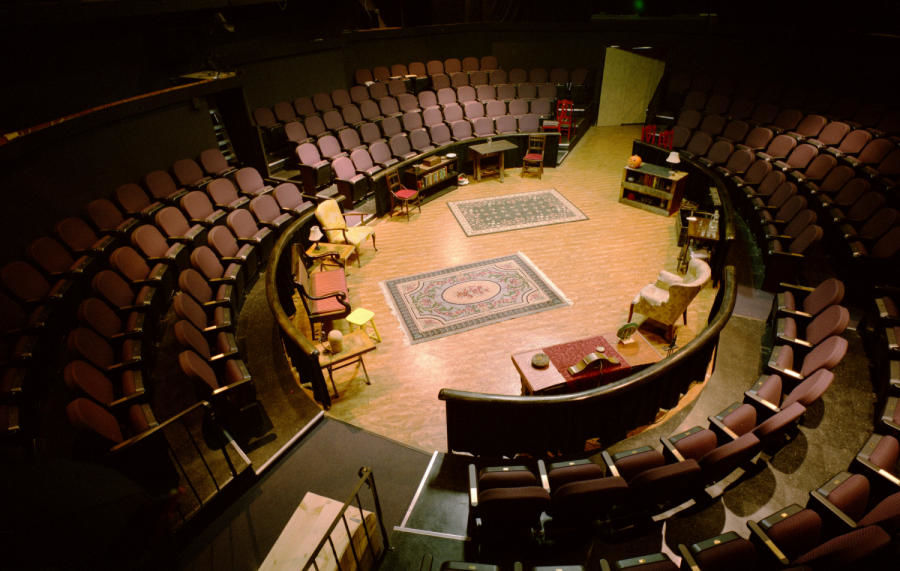
What kind of theatre space is this?
20
Users enter free text
78 questions
Q.
Be able to define/describe the theatre spaces, including a diagram of the stage and seating.
1
20 sec
Q.
What kind of theatre space is this?
2
20 sec
Q.
What kind of theatre space is this?
3
20 sec
Q.
What kind of theatre space is this?
4
20 sec
Q.
What kind of theatre space is this?
5
20 sec
Q.
What kind of theatre space is this?
6
20 sec
Q.
Which theatre space often makes the biggest use of a fly system?
7
20 sec
Q.
Which theatre space often uses stage directions based on a clock or compass points?
8
20 sec
Q.
The musical Lost in Space performed in an open air park is an example of
9
20 sec
Q.
A a play about the prison system performed in an abandoned prison cell is an example of
10
20 sec
Q.
Which theatre space has to have short scenery making use of furniture and the visual of the floor space?
11
20 sec
Q.
Which theatre space often has a shallow upstage space
12
20 sec
Q.
Which theatre space has all of its entrances and exits through the audience area?
13
20 sec
Q.
Be able to define/describe the items listed under theatre terminology
14
20 sec
Q.
Tall, narrow curtains that hang down on the sides to mask the actors backstage are called
15
20 sec
Q.
A short, wide curtain that masks the lights or overhead elements is called
16
20 sec
Q.
A series of perpendicular pipes used for hanging lights and/or scenery,
easily seen overhead in Roberts is called
17
20 sec
Q.
An entrance through the stage floor is called
18
20 sec
Q.
A rope or cable system used bring scenery in and out of the playing space
by storing it overhead is called
19
20 sec
Q.
Space behind the set used to get from one side of the stage to the other is called
20
20 sec
Q.
Where are Orchestra seats most likely located?
21
20 sec
Q.
Where are Mezzanine seats most likely to be?
22
20 sec
Q.
Where are the box booms?
23
20 sec
Q.
The vomitoria is a space in the green room for actors who are sick
24
20 sec
Q.
A steel tube attached to cables used for raising and lowering scenery and lights is a
25
20 sec
Q.
What is the space between the legs where actors or scenery can be hidden?
26
20 sec
Q.
What is a recessed box on the deck with jacks for audio, lighting, or power?
27
20 sec
Q.
Be able to name 8 safety rules for working in the shop/theatre.
28
20 sec
Q.
Any respirator is suitable to use when using spray paint
29
20 sec
Q.
Spray paints should only be used outdoors or in a spray booth
30
20 sec
Q.
You do not need to wear safety goggles if you have shatter resistant eyeglasses.
31
20 sec
Q.
Gloves are specialized based on the material being handled.
32
20 sec
Q.
You can use headphones in place of earplugs if they are noise canceling.
33
20 sec
Q.
If someone is using a power tool, the way to get their attention is to gently tap them on the shoulder.
34
20 sec
Q.
A face shield gives more protection than safety glasses for flying debris.
35
20 sec
Q.
Swinging your hips side to side is a effective way to check the safety of your clothing.
36
20 sec
Q.
Be able to name 4 members of the Creative Team and 2 members each of the Scenic, Lighting, and Costume production teams, not including designers and assistant designers.
37
20 sec
Q.
Be able to define/describe the various production positions based on production area and job description/responsibilities.
38
20 sec
Q.
The charge artist is the head scenic painter
39
20 sec
Q.
Who is the person in charge of securing the funding for a production?
40
20 sec
Q.
Person in charge of scheduling and tracking budgets of scenery, costumes, lighting, props, etc.
41
20 sec
Q.
Who is the person who figures out how to make patterns for costume construction based on the designer's renderings?
42
20 sec
Q.
The person in charge of costume assembly is the First Hand, so called because they are the first person to handle the pattern pieces once they are cut out.
43
20 sec
Q.
Who is the person in charge of realizing the Lighting Designer's work and manages the hang and focus and lighting technical prep?
44
20 sec
Q.
Who is in charge of taking care of the acting company, including securing housing, flights, transit, doctor visits, etc.?
45
20 sec
Q.
Extra credit of you know the names of the people at Elon who fill the various production positions.
46
20 sec
Q.
Be able to describe the 3 kinds of theatre company models.
47
20 sec
Q.
The Broadway model is usually non-profit.
48
20 sec
Q.
Regional theatres usually have full time/seasonal staff, augmented by directors, designers, and actors hired on a show by show basis.
49
20 sec
Q.
In the Tour model, a company brings its own technical team which is completely responsible for loading in and running the show.
50
20 sec
Q.
In the Broadway model, there is a mix of union and non-union employees.
51
20 sec
Q.
A Road House is a venue that brings in touring shows and events as well as a Patrick Swayze move from the 80's.
52
20 sec
Q.
In the Broadway model, an Artistic Director and Board of Directors come up with a season of related shows as a way to make a profit.
53
20 sec
Q.
The tour model applies to concerts, circus, rodeo, ice shows, and corporate events as well as theatre.
54
20 sec
Q.
Regional Theatres usually have to rent time in a separate performance space.
55
20 sec
Q.
Which fabric is NOT a common theatre fabric
56
20 sec
Q.
This is a guillotine or lift curtain.
57
20 sec
Q.
What kind of curtain is this?
58
20 sec
Q.
Be able to diagram the parts of a drop.
59
20 sec
Q.
Be able to diagram the parts of a drop
60
20 sec
Q.
Be able to define/describe the different kinds of drops.
61
20 sec
Q.
A theatre fabric that has a special weave that is opaque when lit from the front but transparent when lit from behind is called netting.
62
20 sec
Q.
A seamless drop is better for back light and less expensive
63
20 sec
Q.
Seamed drops can work very well is they are lit only from the front.
64
20 sec
Q.
A drop that raises and lowers by rolling up onto a pipe is called a kabuki drop.
65
20 sec
Q.
These kinds of drops are used with netting and are good for creating forest scenes.
66
20 sec
Q.
A cyclorama is a drop at the back with small lights to create the look of a starry night.
67
20 sec
Q.
Be able to describe the kinds of designer drawings based on purpose, who uses them, and what the view is of.
68
20 sec
Q.
A white card model is a 3 dimensional rough draft of the set without decoration, while the finished model is a painted and textured 3D representation of the set.
69
20 sec
Q.
The ground plan is a view of the theatre as if it was sliced in half down the centerline.
70
20 sec
Q.
The rear elevation shows how 2 dimensional scenery (such as flats) will be constructed.
71
20 sec
Q.
It's important to show the director the lighting plot.
72
20 sec
Q.
More complex scenery may need an orthographic drawing, which shows the object from the front, top, side, and other angles if necessary.
73
20 sec
Q.
A scenic rendering is a rough drawing of the set used to discuss ideas.
74
20 sec
Q.
Which is a properly drawn centerline?
75
20 sec
Q.
Assuming scale is correct, this is an accurate drawing of this window.