Loading...


The 6 basic animal groups
Quiz by Jillian Scherer
Customize this quiz to suit your class
Instantly translate to 100+ languages
Tag the questions with any skills you have. Your dashboard will track each student's mastery of each skill.
Give this quiz to my class
What Type of animal is this?
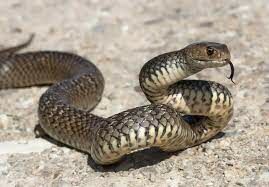
Mammal
amphibian
fish
Reptile
This animal is an invertebrate
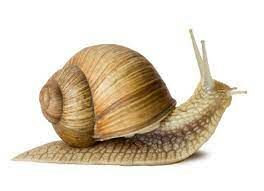
What Type of animal is this?
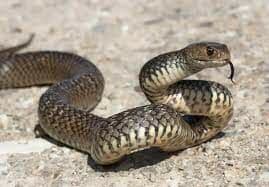
This animal is an invertebrate
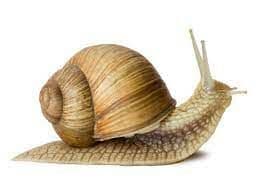
Which of these animals are a mammal?
What type of animal is this?

This is an amphibian

 Nutrition Notes Nutrition- study of how your body uses food Process by which body uses nutrients How you look and feel Resist diseases and illness How you perform physically and mentally Nutrients: substances in food your body needs to grow, repair and supply energy to your body cells 6 Classes of Nutrients 1.Carbohydrates: 1 gram= 4 calories 2. Protein: 1 gram- 4 calories 3. Fats: 1 gram= 9 calories 4.Water 5. Vitamins 6. Minerals Calorie: measurement of energy in food Metabolism: Rate at which body burns energy(calories) Hunger: physical drive to eat Appetite: pshycological desire for food What influences your food choices: Foods you like Health Reasons Family and Culture Time & Money Advertising Emotions Friends Social Media: Modeling Nutrients Carbohydrates: your body’s main source of energy sugars/starches in food 45%-65% of diet #1 source of energy Simple: sugars converted to glucose= energy (fruits, dairy, honey, some manufactured foods) Complex: sugars linked together (starches) (grains, bread, pasta, beans, vegetables) Fiber: tough, indigestible carbohydrates Cleans our digestive system Prevents some types of cancer Prevents heart disease (fruits, vegetables, whole grains,nuts) 2. Protein: growth and repair of body tissues Made up of chemicals called “amino acids” Basic building material of all body cells (muscles, bones, skin, internal organs) Secondary source of energy protein(hemoglobin) attaches to oxygen in blood Functions as hormones regulating body functions 10-15% of diet *Body uses 20 Amino Acids found in food ( body produces 11 and 9 must come from diet) Essential amino acids: 9 amino acids body doesn't produce Complete Amino Acids: foods that contain all 9 essential amino acids ( animal products) Incomplete Amino Acids: food products that do not contain all 9 essential amino acids. Fats 15-25% of diet Secondary source of energy Blood clotting Controlling inflammation Maintains healthy skin/hair absorb /transport fat soluble vitamins Regulates body temperature Types of Fat Unsaturated: “good” fat Liquid at room temperature Can help fight heart disease (veg oil, nuts) Saturated: “bad” fat Solid at room temp Clogs arteries Causes strokes, heart attack, diabetes (animal products, meat, dairy) Cholesterol: waxy like fat substance found in meat products HDL: good type of cholesterol Body creates(liver) Creates cell wall, hormones, and vit D LDL: bad cholesterol- found in foods (clogs arteries) 4. Trans Fat: “one of the worst type of fats” Formed by a process called “hydrogenation”: adding Hydrogen molecules to unsaturated fats to make it more solid and resistant to chemical change. Vitamins A vitamin is a chemical compound that is needed in small amounts for the human body to work correctly. Vitamins are classified as either fat soluble (vitamins A, D, E and K) or water soluble (vitamins B and C). This difference between the two groups is very important. It determines how each vitamin acts within the body. The fat soluble vitamins are soluble in lipids (fats). Fat soluble vitamins can be stored in our body Water soluble vitamins must be taken every day Human body produces some amounts of Vitamin D & KOwls, such as the young snowy owls on the previous page, have for centuries been symbols of both wisdom and mystery. To many cultures their piercing eyes have conveyed a look of intelligence. Their silent flight through darkened landscapes in search of prey has projected an air of power or wonder. For this chapter and this book, owls are an engaging example of a living organism from the world of biology—the study of life. BIOLOGY AND YOU Living in a small town, in the country, or at the edge of the suburbs, one may be lucky enough to hear an owl's hooting. This experience can lead to questions about where the bird lives, what it hunts, and how it finds its prey on dark, moonless nights. Biology, or the study of life, offers an organized and scientific framework for posing and answering such questions about the natural world. Biologists study questions about how living things work, how they interact with the environment, and how they change over time. Biologists study many different kinds of living things ranging from tiny organisms, such as bacteria, to very large organisms, such as elephants. Each day, biologists investigate subjects that affect you and the way you live. For example, biologists determine which foods are healthy. As shown in Figure 1-1, everyone is affected by this impor- tant topic. Biologists also study how much a person should exer- cise and how one can avoid getting sick. Biologists also study what CHARACTERISTICS OF LIFE The world is filled with familiar objects, such as tables, rocks, plants, pets, and automobiles. Which of these objects are living or were once living? What are the criteria for assigning something to the living world or the nonliving world? Biologists have established that living things share seven characteristics of life. These characteristics are organization and the presence of one or more cells, response to a stimulus (plural, stimuli), homeostasis, metabolism, growth and development, reproduction, and change through time. Organization and Cells Organization is the high degree of order within an organism’s internal and external parts and in its interactions with the living world. For example, compare an owl to a rock. The rock has a spe- cific shape, but that shape is usually irregular. Furthermore, differ- ent rocks, even rocks of the same type, are likely to have different shapes and sizes. In contrast, the owl is an amazingly organized individual, as shown in Figure 1-2. Owls of the same species have the same body parts arranged in nearly the same way and interact with the environment in the same way. Copyright © by Holt, Rinehart and Winston. All rights reserved. ORGANISM (Barn Owl) ORGAN (Owl’s Ear) TISSUE (Nervous Tissue Within the Ear) CELL (Nerve Cell) your air, land, and fAll living organisms, whether made up of one cell or many cells, have some degree of organization. A cell is the smallest unit that can perform all life’s processes. Some organisms, such as bacteria, are made up of one cell and are called unicellular (YOON-uh-SEL-yoo-luhr) organisms. Other organisms, such as humans or trees, are made up of multiple cells and are called multicellular (MUHL-ti-SEL-yoo-luhr) organisms. Complex multicellular organisms have the level of orga- nization shown in Figure 1-2. In the highest level, the organism is made up of organ systems, or groups of specialized parts that carry out a certain function in the organism. For example, an owl’s ner- vous system is made up of a brain, sense organs, nerve cells, and other parts that sense and respond to the owl’s surroundings. Organ systems are made up of organs. Organs are structures that carry out specialized jobs within an organ system. An owl’s ear is an organ that allows the owl to hear. All organs are made up of tissues. Tissues are groups of cells that have similar abilities and that allow the organ to function. For example, nervous tissue in the ear allows the ear to detect sound. Tissues are made up of cells. A cell must be covered by a membrane, contain all genetic information necessary for replication, and be able to carry out all cell functions. Within each cell are organelles. Organelles are tiny structures that carry out functions necessary for the cell to stay alive. Organelles contain biological molecules, the chemical compounds that provide physical structure and that bring about movement, energy use, and other cellular functions. All biological molecules are made up of atoms. Atoms are the simplest particle of an ele- ment that retains all the properties of a certain element. Response to Stimuli Another characteristic of life is that an organism can respond to a stimulus—a physical or chemical change in the internal or external environment. For example, an owl dilates its pupils to keep the level of light entering the eye constant. Organisms must be able to respond and react to changes in their environment to stay alive. ORGANELLE (Mitochondrion) BIOLOGICAL MOLECULE (Phospholipid) ATOM (Oxygen) cell from the Latin, cella meaning “small room,” or “hut” Word Roots and Origins www.scilinks.org Topic: Characteristics of Life Keyword: HM60257 mb06se_bios01.qxd 5/18/07 10:37 AM Page 7 8 CHAPTER 1 Homeostasis All living things, from single cells to entire organisms, have mecha- nisms that allow them to maintain stable internal conditions. Without these mechanisms, organisms can die. For example, a cell’s water content is closely controlled by the taking in or releas- ing of water. A cell that takes in too much water will rupture and die. A cell that doesn’t get enough water will also shrivel and die. Homeostasis (HOH-mee-OH-STAY-sis) is the maintenance of a stable level of internal conditions even though environmental conditions are constantly changing. Organisms have regulatory systems that maintain internal conditions, such as temperature, water content, and uptake of nutrients by the cell. In fact, multi- cellular organisms usually have more than one way of maintain- ing important aspects of their internal environment. For example, an owl’s temperature is maintained at about 40°C (104°F). To keep a constant temperature, an owl’s cells burn fuel to produce body heat. In addition, an owl’s feathers can fluff up in cold weather. In this way, they trap an insulating layer of air next to the bird’s body to maintain its body temperature. Metabolism Living organisms use energy to power all the life processes, such as repair, movement, and growth. This energy use depends on metabolism (muh-TAB-uh-LIZ-uhm). Metabolism is the sum of all the chemical reactions that take in and transform energy and materials from the environment. For example, plants, algae, and some bacteria use the sun’s energy to generate sugar molecules during a process called photosynthesis. Some organisms depend on obtaining food energy from other organisms. For instance, an owl’s metabolism allows the owl to extract and modify the chemi- cals trapped in its nightly prey and use them as energy to fuel activities and growth. Growth and Development All living things grow and increase in size. Some nonliving things, such as crystals or icicles, grow by accumulating more of the same material of which they are made. In contrast, the growth of living things results from the division and enlargement of cells. Cell division is the formation of two new cells from an existing cell, as shown in Figure 1-3. In unicellular organisms, the primary change that occurs following cell division is cell enlargement. In multi- cellular life, however, organisms mature through cell division, cell enlargement, and development. Development is the process by which an organism becomes a mature adult. Development involves cell division and cell differen- tiation, or specialization. As a result of development, an adult organism is composed of many cells specialized for different func- tions, such as carrying oxygen in the blood or hearing. In fact, the human body is composed of trillions of specialized cells, all of which originated from a single cell, the fertilized egg. This unicellular organism, Escherichia coli, inhabits the human intestines. E. coli reproduces by means of cell division, during which the original cell splits into two identical offspring cells. FIGURE 1-3 Observing Homeostasis Materials 500 mL beakers (3), wax pen, tap water, thermometer, ice, hot water, goldfish, small dip net, watch or clock with a second hand Procedure 1. Use a wax pen to label three 500 mL beakers as follows: 27°C (80°F), 20°C (68°F), 10°C (50°F). Put 250 mL of tap water in each beaker. Use hot water or ice to adjust the tem- perature of the water in each beaker to match the temperature on the label. 2. Put the goldfish in the beaker of 27°C water. Record the number of times the gills move in 1 minute. 3. Move the goldfish to the beaker of 20°C water. Repeat observations. Move the goldfish to the beaker of 10°C. Repeat observations. Analysis What happens to the rate at which gills move when the temp- erature changes? Why? How do gills help fish maintain homeostasis? Quick Lab mb06se_bios01.qxd 5/18/07 10:37 AM Page 8 THE SCIENCE OF LIFE 9 Reproduction All organisms produce new organisms like themselves in a process called reproduction. Reproduction, unlike other characteristics, is not essential to the survival of an individual organism. However, because no organism lives forever, reproduction is essential for the continuation of a species. Glass frogs, as shown in Figure 1-4, lay many eggs in their lifetime. However, only a few of the frogs’ off- spring reach adulthood and successfully reproduce. During reproduction, organisms transmit hereditary informa- tion to their offspring. Hereditary information is encoded in a large molecule called deoxyribonucleic acid, or DNA. A short segment of DNA that contains the instructions for a single trait of an organism is called a gene. DNA is like a large library. It contains all the books—genes—that the cell will ever need for making all the struc- tures and chemicals necessary for life. Hereditary information is transferred to offspring during two kinds of reproduction. In sexual reproduction, hereditary information recombines from two organisms of the same species. The resulting offspring are similar but not identical to their parents. For example, a male frog’s sperm can fertilize a female’s egg and form a single fer- tilized egg cell. The fertilized egg then develops into a new frog. In asexual reproduction, hereditary information from different organisms is not combined; thus the original organism and the new organism are genetically the same. A bacterium, for example, reproduces asexually when it splits into two identical cells. Change Through Time Although individual organisms experience many changes during their lifetime, their basic genetic characteristics do not change. However, populations of living organisms evolve or change through time. The ability of populations of organisms to change over time is important for survival in a changing world. This factor is also impor- tant in explaining the diversity of life-forms we see on Earth today. 1. How does biology affect a person’s daily life? 2. How does biology affect society? 3. Name the characteristics shared by living things. 4. Summarize the hierarchy of organization found in complex multicellular organisms. 5. What are the different functions of homeostasis and metabolism in living organisms? 6. How does the growth among living and nonliv- ing things differ? 7. Why is reproduction an important characteristic of life? CRITICAL THINKING 8. Applying Information Crystals of salt grow and are highly organized. Why don’t biologists con- sider them to be alive? 9. Analyzing Models When a scientist designs a space probe to detect life on a distant planet, what kinds of things should it measure? 10. Making Comparisons Both cells and organisms share the characteristics of life. How are cells and organismsood supply will be like in the near future.EVOLUTION OF LIFE Individual organisms change during their lifetime, but their basic genetic characteristics do not change. However, populations of liv- ing organisms do change through time, or evolve. Evolution, or descent with modification, is the process in which the inherited characteristics within populations change over generations, such that genetically distinct populations and new species can develop. Evolution as a theme in biology helps us understand how the various branches of the “tree of life” came into existence and have changed over time. It also explains how organisms alive today are related to those that lived in the past. Finally, it helps us understand the mechanisms that underlie the way organisms look and behave. Natural Selection The ability of populations of organisms to change over time is important for survival in a changing world. According to the theory of evolution by natural selection, organisms that have certain favorable traits are better able to survive and reproduce success- fully than organisms that lack these traits. One product of natural selection is the adaptation of organisms to their environment. Adaptations are traits that improve an indi- vidual’s ability to survive and reproduce. For example, rabbits with white fur and short ears in a snowy place, such as the one in Figure 1-7a, may avoid predators and frostbitten ears more often than those with dark fur and long ears. Thus, the next generation of rabbits will have a greater percentage of animals carrying the genes for white fur and short ears. In contrast, the brown, long- eared rabbit, as shown in Figure 1-7b, would survive and reproduce more successfully in a hot desert environment. The survival and reproductive success of organisms with favor- able traits cause a change in populations of organisms over gener- ations. This descent with modification is an important factor in explaining the diversity of organisms we see on Earth today. 1. Name three unifying themes found in biology. 2. How is the unity and diversity in the living world represented? 3. Identify the three domains and the kingdoms found in each domain. 4. How are organisms interdependent? 5. Describe why evolution is important in explain- ing the diversity of life. 6. Distinguish between evolution and natural selection. CRITICAL THINKING 7. Applying Information Assign the various top- pings you put on pizza to the appropriate domains and kingdoms of life. 8. Analyzing Graphics According to the “tree” in Figure 1-5, which of these pairs are more closely related: Archaea:Bacteria or Archaea:Eukarya? 9. Making Hypotheses Fossil evidence shows that bats descended from shrewlike organisms that could not fly. Write a hypothesis for how natural selection might have led to flying bats. SECTION 2 REVIEW (a) This short-eared arctic hare, Lepus arcticus, is hidden from predators and protected from frostbite in a snowy environment. (b) The mottled brown coats of desert rabbits blend in with the dirt and dry grasses, and their long ears help them radiate excess heat and thus avoid overheating. FIGURE 1-7 (a) (b) Copyright © by Holt, Rinehart and Winston. All rights reserved. THE SCIENCE OF LIFE 13 TH E STUDY OF BIOLOGY Curiosity leads us to ask questions about life. Science provides a way of answering such questions about the natural world. Science is a systematic method that involves forming and testing hypotheses. More importantly, science relies on evidence, not beliefs, for drawing conclusions. SCIENCE AS A PROCESS Science is characterized by an organized approach, called the scientific method, to learn how the natural world works. The methods of science are based on two important principles. The first principle is that events in the natural world have natural causes. For example, the ancient Greeks believed that lightning and thunder occurred because a supernatural god Zeus hurled thunderbolts from the heavens. By contrast, a scientist considers lightning and thunder to result from electric charges in the atmos- phere. When trying to solve a puzzle from nature, all scientists, such as the one in Figure 1-8, accept that there is a natural cause to solve that puzzle. A second principle of science is uniformity. Uniformity is the idea that the fundamental laws of nature operate the same way at all places and at all times. For example, scientists assume that the law of gravity works the same way on Mars as it does on Earth. Steps of the Scientific Method Although there is no single method for doing science, scientific studies involve a series of common steps. 1. The process of science begins with an observation. An observation is the act of perceiving a natural occurrence that causes someone to pose a question. 2. One tries to answer the question by forming hypotheses (singular, hypothesis). A hypothesis is a proposed explanation for the way a particular aspect of the natural world functions. 3. A prediction is a statement that forecasts what would happen in a test situation if the hypothesis were true. A prediction is recorded for each hypothesis. 4. An experiment is used to test a hypothesis and its predictions. 5. Once the experiment has been concluded, the data are analyzed and used to draw conclusions. 6. After the data have been analyzed, the data and conclusions are communicated to scientific peers and to the public. This way oth- ers can verify, reject, or modify the researcher’s conclusions. SECTION 3 OBJECTIVES ● Outline the main steps in the scientific method. ● Summarize how observations are used to form hypotheses. ● List the elements of a controlled experiment. ● Describe how scientists use data to draw conclusions. ● Compare a scientific hypothesis and a scientific theory. ● State how communication in science helps prevent dishonesty and bias. VOCABULARY scientific method observation hypothesis prediction experiment control group experimental group independent variable dependent variable theory peer review All researchers, such as the one releasing an owl above, use the scientific method to answer the questions they have about nature. FIGURE 1-8 Copyright © by Holt, Rinehart and Winston. All rights reserved. 14 CHAPTER 1 OBSERVING AND ASKING QUESTIONS The scientific method generally begins with an unexplained observa- tion about nature. For example, people have noticed for thousands of years that owls can catch prey in near total darkness. As shown in steps and of Figure 1-9, an observation may then raise ques- tions. The owl observation raises the question: How does an owl detect prey in the dark? FORMING A HYPOTHESIS After stating a question, a biologist lists possible answers to a sci- entific question—hypotheses. Good hypotheses answer a question and are testable in the natural world. For example, as shown in step Figure 1-9, there are several possible hypotheses for the question of how owls hunt at night: (a) owls hunt by keen vision in the dark; (b) owls hunt by superb hearing; or (c) owls hunt by detecting the prey’s body heat. Predicting To test a hypothesis, scientists make a prediction that logically fol- lows from the hypothesis. A prediction is what is expected to hap- pen if each hypothesis were true. For example, if hypothesis (a) is true, (owls hunt by keen night vision) then one can predict that the owl will pounce only on the mouse in either a light or a dark room. If hypothesis (b) is true (owls hunt by hearing), then one can pre- dict that in a lighted room, the owl will pounce closer to the mouse’s head. But, in a dark room, the owl should pounce closer to a rustling leaf attached to the mouse. Finally, if hypothesis (c) is true (owls hunt by sensing body heat), then an owl would strike only the prey no matter the room conditions, because owls hunt by detecting the prey’s body heat. 3 1 2 Copyright © by Holt, Rinehart and Winston. All rights reserved. A scientific study includes observations, questions, hypotheses, predictions, experiments, data analysis, and conclu- sions. A biologist can use the scientific method to set up an experiment to learn how an owl captures prey at night. FIGURE 1-9 1 OBSERVATION Owls capture prey on dark nights. 2 QUESTION How do owls detect prey on dark nights? 3 HYPOTHESES a) Owls hunt in the dark by vision. b) Owls hunt in the dark by hearing. c) Owls hunt in the dark by sensing body heat. THE SCIENCE OF LIFE 15 Notice that these predictions make it difficult to distinguish be- tween the vision and body heat hypotheses. The reason is that both hypotheses predict that the owl could grab the mouse in a dark room. Also, these three hypotheses do not eliminate all other factors that could influence how the owl finds its prey. However, testing predictions can allow one to begin rejecting hypotheses and thus to get closer to determining the answer(s) to a question. DESIGNING AN EXPERIMENT Biologists often test hypotheses by setting up an experiment. Step in Figure 1-9 outlines an experiment to test the hypotheses about how an owl hunts at night. First, experimenters set up a room with an owl perch high on one side and a small trap door on the other side for releasing mice. Then, they tied a leaf to each mouse’s tail with a string and released each mouse into the room. Next, each mouse ran silently across the room, but the leaf trailed behind, making a rustling noise. During half of the trials, the lights were on. During the other half, the room was dark. Technicians videotaped all the action in the chamber with an infrared light, which owls cannot see. The researchers then viewed the videos and measured the position of the owl’s strike relative to each mouse’s head. Performing the Experiment Many scientists use a controlled experiment to test their hypotheses. A controlled experiment compares an experimental group and a control group and only has one variable. The control group pro- vides a normal standard against which the biologist can compare results of the experimental group. The experimental group is iden- tical to the control group except for one factor, the independent variable. The experimenter manipulates the independent variable, sometimes called the manipulated variable. 4 4 EXPERIMENT 5 DATA COLLECTION AND ANALYSIS Measure and compare the distance from the owl’s strike to the mouse and to the leaf in light and dark. 6 CONCLUSION Data supported the hearing hypothesis: Owls hunt in the dark by hearing. prey Test predictions of the three hypotheses. Control: In the light Experimental: In the dark 1 2 3 4 5 6 7 8 9 10 11 Predicting Results Materials 2 Petri dishes with agar, cellophane tape, wax pen Procedure 1. Open one of the Petri dishes, and streak your finger across the surface of the agar. 2. Replace the lid, and seal it with the tape. Label this Petri dish with your name and a number 1. 3. Seal the second Petri dish with- out removing the lid. Label this Petri dish with your name and the number 2. 4. Write a prediction about what will happen in each dish. Store your dishes as your teacher directs. Record your observations. Follow your teacher’s directions for disposal of your dishes. Analysis Was your prediction accurate? What evidence can you cite to support your prediction? If you did not obtain the results you predicted, would you change your testing method or your prediction? Explain. Evaluate the importance of obtaining a result that does not support your prediction. Quick Lab mb06se_bios03.qxd 5/18/07 10:40 AM Page 15 16 CHAPTER 1 The independent variable in the owl experiment is the presence or absence of light. In the owl experiment, the control group hunts in the light, and the experimental group hunts in the dark. In addi- tion to varying the independent variable, a scientist observes or measures another factor called the dependent variable, or respond- ing variable, because it is affected by the independent variable. In the owl experiment, the dependent variable is distance from the owl’s strike to the mouse’s head. Testing the Experiment Some controlled experiments are conducted “blind.” In other words, the biologist who scores the results is unaware of whether a given subject is part of the experimental or control group. This factor helps eliminate experimenter bias. Experiments should also be repeated, because living systems are variable. Moreover, scien- tists must collect enough data to find meaningful results. COLLECTING AND ANALYZING DATA Most experiments measure a variable—the dependent variable. This measurement provides quantitative data, data measured in numbers. For example, in the experiment above, scientists mea- sured the distance of an owl’s strike from the prey’s head in cen- timeters, as shown in step of Figure 1-9. An event’s duration in milliseconds is also an example of quantitative data. Biologists usually score the results of an experiment by using one of their senses. They might see or hear the results of an experiment. Scientists also extend their senses with a micro- scope for tiny objects or a microphone for soft sounds. In the owl experiment, biologists extended their vision with infrared cameras. Analyzing and Comparing Data After collecting data from a field study or an experiment and then organizing it, biologists then analyze the data. In analyzing data, the goal is to determine whether the data are reliable, and whether they support or fail to support the predictions of the hypothesis. To do so, scientists may use statistics to help determine relation- ships between the variables involved. They can then compare their data with other data that were obtained in other similar studies. It is also important at this time to determine possible sources of error in the experiment just per- formed. Scientists usually display their data in tables or graphs when analyzing it. For the owl study, biologists could have made a bar graph such as the one in Figure 1-10, which shows the average distance from the owl’s strike relative to the mouse’s head or the leaf in the light and in the dark. 5 5 0 10 15 20 25 In the light In the dark Average distance from strike (cm) Distance Between Owl Strike and a Mouse or From a Leaf Attached to Mouse 30 Mouse Leaf Mouse Leaf The data below are hypothetical results that might occur from the described owl experiment.The independent variable is the darkness of the room, and the dependent variable is how far the owl struck from the mouse’s head.The data show that the owl strikes more accurately at the mouse in the light but strikes more accurately at the leaf in the dark. FIGURE 1-10 Copyright © by Holt, Rinehart and Winston. All rights reserved. THE SCIENCE OF LIFE 17 DRAWING CONCLUSIONS Biologists analyze their tables, graphs, and charts to draw conclu- sions about whether or not a hypothesis is supported, as shown in step of Figure 1-9. The hypothetical owl data show that in the light, owls struck with greater accuracy at the mouse than at the leaf, but in the dark, owls struck with greater accuracy at the leaf than the mouse. Thus, the findings support the hearing hypothe- sis, but not the vision hypothesis. An experiment can only disprove, not prove, a hypothesis. For example, one cannot conclude from the results that the hearing hypothesis is proven to be true. Perhaps the owl uses an unknown smell to strike at the mouse. One can only reject the vision hypothe- sis because it did not predict the results of the experiment correctly. Acceptance of a hypothesis is always tentative in science. The scientific community revises its understanding of phenomena, based on new data. Having ruled out one hypothesis, a biologist will devise more tests to try to rule out any remaining hypotheses. Making Inferences Scientists often draw inferences from data gathered during a field study or experiment. An inference (IN-fuhr-uhns) is a conclusion made on the basis of facts and previous knowledge rather than on direct observations. Unlike a hypothesis, an inference is not directly testable. In the owl study, it is inferred that the owl detects prey from a distance rather than by direct touch. Applying Results and Building Models As shown in Figure 1-11, scientists often apply their findings to solve practical problems. They also build models to represent or describe things. For example in 1953, James Watson and Francis Crick used cardboard balls and wire bars to build physical models of atoms in an attempt to understand the structure of DNA. Mathematical models are sets of equations that describe how dif- ferent measurable items interact in a system. The experimenter can adjust variables to better model the real-world data. CONSTRUCTING A THEORY When a set of related hypotheses is confirmed to be true many times, and it can explain a great amount of data, scientists often reclassify it as a theory. Some examples include the quantum the- ory, the cell theory, or the theory of evolution. People commonly use the word “theory” in a different way than scientists use the word. People may say “It’s just a theory” suggesting that an idea is untested, but scientists view a theory as a highly tested, generally accepted principle that explains a vast number of observations and experimental data. 6 Copyright © by Holt, Rinehart and Winston. All rights reserved. Biologists often apply their knowledge of the natural world to practical problems. Studies on the owl’s keen ability to locate sounds in space despite background noise are helping biotechnologists and bioengineers develop better solutions for people with impaired hearing, such as the people shown in this picture. FIGURE 1-11 18 CHAPTER 1 COMMUNICATING IDEAS An essential aspect of scientific research is scientists working together. Scientists often work together in research teams or sim- ply share research results with other scientists. This is done by publishing findings in scientific journals or presenting them at sci- entific meetings, as shown in Figure 1-12. Sharing information allows others working independently to verify findings or to con- tinue work on established results. For example, Roger Payne pub- lished the results of his owl experiments in a journal in 1971. Then, other biologists could repeat it for verification or use it to study the mechanisms introduced by the paper. With the growing impor- tance of science in solving societal issues, it is becoming increas- ingly vital for scientists to be able to communicate with the public at large. Publishing a Paper Scientists submit research papers to scientific journals for publica- tion. A typical research paper has four sections. First, the Introduction poses the problem and hypotheses to be investigated. Next, the Materials and Methods describe how researchers proceeded with the experiment. Third, the Results state the findings the experiment presented, and finally, the Discussion gives the significance of the experiment and future directions the scientists will take. Job Description Forensic biolo- gists are scientists who study biological materials to investigate potential crimes and other legal issues against humans and animals. Forensic scientists have knowledge in areas of biology, such as DNA and blood pattern analysis, and work in private sector and public laboratories. Focus On a Forensic Biologist As a law enforcement forensic specialist for the Texas Parks and Wildlife Department, Beverly Villarreal assists the game warden in investigations of fish and wildlife violations, such as illegal hunting and fishing. Villarreal analyzes blood and tissue samples to identify species of animals such as fish, birds, and reptiles. Her work helps game wardens as they enforce state laws regarding hunting and fishing. Most people think of forensic scientists as the glamorous crime investigators on TV, but according to Villarreal real forensic scientists “spend a great deal of time at a lab bench running analysis after analysis.” Many of the methods used in animal forensics, such as DNA sequenc- ing, are also used in human forensics. Education and Skills • High school—three years of science courses and four years of math courses. • College—bachelor of science in biol- ogy, including course work in zoology and genetics, plus experience in per- forming DNA analyses. • Skills—patience, attention to detail, and ability to use fine tools. Careers in BIOLOGY Forensic Biologist For more about careers, visit go.hrw.com and type in the keyword HM6 Careers. www.scilinks.org Topic: Scientific Investigations Keyword: HM61358 mb06se_bios03.qxd 5/18/07 10:40 AM Page 18 THE SCIENCE OF LIFE 19 1. What two principles make the scientific method a unique process? 2. Define the roles of observations and hypotheses in science. 3. Summarize the parts of a controlled experiment. 4. Summarize how we make conclusions about the results of an experiment. 5. Why is the phrase, “it’s just a theory” misleading? 6. Give another example of a conflict of interest. CRITICAL THINKING 7. Making Hypotheses On a nocturnal owl’s skull, one ear points up, and the other ear points down. Suggest a hypothesis for this observation. 8. Designing Experiments Design an experiment to establish if owls hunt by keen sight or hunt by heat seeking. 9. Calculating Information What was the average distance between the owl’s strike and the mouse if the recorded differences in this experiment were 25, 22, 19, 19, and 15? SECTION 3 REVIEW After scientists submit their papers to a scientific journal, the editors of that journal will send the paper out for peer review. In a peer review, scientists who are experts in the field anonymously read and critique that research paper. They determine if a paper pro- vides enough information so that the experiment can be duplicated and if the author used good experimental controls and reached an accurate conclusion. They also check if the paper is written clearly enough for broad understanding. Careful analysis of each other’s research by fellow scientists is essential to making scientific progress and preventing scientific dishonesty. HONESTY AND BIAS The scientific community depends on both honesty and good sci- ence. While designing new studies, experimenters must be very careful to prevent previous ideas and biases from tainting both the experimental process and the conclusions. Scientists have to keep in mind that they are always trying to disprove their favorite ideas. Scientists repeat experiments to verify previous findings. This allows for science to have a method for self-correction and it also keeps researchers honest and credible to their peers in the field. Conflict of Interest For most scientists, maintaining a good reputation for collecting and presenting valid data is more important than temporary prestige or income. So, scientists try to avoid any potential conflicts of interest. For example, a scientist who owns a biotechnology company and manufactures a drug would not be the best researcher to critically test that drug’s safety and effectiveness. To avoid this potential con- flict of interest, the scientist allows an unaffected party, such as a research group, to test the drug’s effectiveness. The threat of a potential scandal based on misleading data or conclusions is a pow- erful force in science that helps keep scientists honest and fair. Scientists present their experiments in various forms. The scientists above are presenting their work in the form of a poster at a scientific meeting. FIGURE 1-12 Copyright © by Holt, Rinehart and Winston. All rights reserved. The Internet can provide a wealth of scientific information for a report, but the information may not always be credible or accurate. You can use the methods above to check the accuracy and credibility of your sources. SCIENCE TECHNOLOGY SOCIETY SCIENCE ON THE INTERNET: A New Information Age I n the past, students research- ing a science topic would typ- ically begin their research by visiting a library to use printed reference materials, such as encyclopedias. Today, most stu- dents research topics by using a computer and searching for information on the Internet. The Internet can provide students with a wealth of infor- mation. But which Web sites have accurate information, and which Web sites do not? Checking Web Addresses Students should use the Web address, or URL, to establish the Web site’s credibility. Usually, the domain name can suggest who has published the Web site. Web sites can be pub- lished by governmental agen- cies (ends in “dot gov” or .gov), by educational institutions (ends in “dot edu” or .edu), by organizations (ends in “dot org” or .org), or by commercial businesses (ends in “dot com” or .com). Government Web sites are usually reliable. Examples of credible governmental Web sites are the National Institutes of Health (NIH) and the Food and Drug Administration (FDA). University and medical school sites are also reliable sources of information. Many organiza- tions that research and teach the public about specific diseases and conditions can also provide reliable information. Examples of such organizations are the American Cancer Society and the American Heart Association. Evaluating Web Sites The credibility of the author of the Web site should also be checked. Make sure the author is not trying to sell anything and is established in his or her field. For example, a health Web site’s author should be a med- ical professional. It is also important to check the date that the information was posted on the Web to ensure that the information is current. Also, the Web site should provide ref- erences from valid sources, such as scientific journals or govern- ment publications. Finally, the student should always double-check informa- tion between several reliable Web sites. If two or three reliable sites provide the same informa- tion, the student can feel confi- dent in using that information. Web Sites for Students The Internet Connect boxes in this textbook have all been reviewed by professionals at the National Science Teachers Association (NSTA). Students can trust that these sites are reliable sources for science- or health-related topics. REVIEW 1. Which types of Web addresses are the most reliable? 2. List four important features to evaluate when using a Web site for research. 3. Supporting Reasoned Opinions Why do you think a Web site that is advertising a product may not offer accurate information? REVIEW 20 www.scilinks.org Topic: Using the Internet Keyword: HM61589 mb06se_biosts.qxd 5/18/07 10:42 AM Page 20 TOOLS AND TECHNIQUES With proper equipment and good methods, biologists can see, manipulate, and understand the natural world in new ways. Microscopes are one of many useful tools used to unlock nature’s biological secrets. MICROSCOPES AS TOOLS Tools are objects used to improve the performance of a task. Microscopes are tools that extend human vision by making enlarged images of objects. Biologists use microscopes to study organisms, cells, cell parts, and molecules. Microscopes reveal details that otherwise might be difficult or impossible to see. Light Microscopes To see small organisms and cells, biologists typically use a light microscope, such as the one shown in Figure 1-13. A compound light microscope is a microscope that shines light through a spec- imen and has two lenses to magnify an image. To use this micro- scope, one first mounts the specimen to be viewed on a glass slide. The specimen must be thin enough for light to pass through it. For tiny pond organisms, such as the single-celled paramecium, light passing through the organism is not a problem. For thick objects, such as plant stems, biologists must cut thin slices for viewing. There are four major parts of a compound light microscope. For further description of the parts of a micro- scope, see the Appendix. 1. Eyepiece The eyepiece (ocular (AHK-yoo-luhr) lens) magnifies the image, usually 10 times. 2. Objective Lens Light passes through the specimen and then through the objective lens, which is located directly above the specimen. The objective lens enlarges the image of the specimen. Scientists sometimes use stains to make the image easier to see. 3. Stage The stage is a platform that supports a slide holding the specimen. The slide is placed over the opening in the stage of the microscope. 4. Light Source The light source is a light bulb that provides light for viewing the image. It can be either light reflected with a mirror or an incandescent light from a small lamp. SECTION 4 OBJECTIVES ● List the function of each of the major parts of a compound light microscope. ● Compare two kinds of electron microscopes. ● Describe the importance of having the SI system of measurement. ● State some examples of good laboratory practice. VOCABULARY compound light microscope eyepiece (ocular lens) objective lens stage light source magnification nosepiece resolution scanning electron microscope transmission electron microscope metric system base unit Compound light microscopes open the human eye to an interesting world including tiny pond organisms, healthy and diseased cells, and the functioning of cell parts. FIGURE 1-13 Objective lens Eyepiece (ocular lens) Stage Light THE SCIENCE OF LIFE 21 Copyright © by Holt, Rinehart and Winston. All rights reserved. 22 CHAPTER 1 Magnification and Resolution Microscopes vary in powers of magnification and resolution. Magnification is the increase of an object’s apparent size. Revolving the nosepiece, the structure that holds the set of objective lens, rotates these lenses into place above the specimen. In a typical com- pound light microscope, the most powerful objective lens produces an image up to 100 times (100) the specimen’s actual size. The degree of enlargement is called the power of magnification of the lens. The standard ocular lens magnifies a specimen 10 times (10). To compute the power of magnification of a microscope, the power of magnification of the strongest objective lens (in this case, 100) is multiplied by the power of magnification of the ocular lens (10). The result is a total power of magnification of 1000. Resolution (REZ-uh-LOO-shuhn) is the power to show details clearly in an image. The physical properties of light limit the ability of light microscopes to resolve images, as shown in Figure 1-14a. At pow- ers of magnification beyond about 2,000, the image of the speci- men becomes fuzzy. For this reason, scientists use other microscopes to view very small cellsCARBOHYDRATES Carbohydrates are organic compounds composed of carbon, hydrogen, and oxygen in a ratio of about one carbon atom to two hydrogen atoms to one oxygen atom. The number of carbon atoms in a carbohydrate varies. Some carbohydrates serve as a source of energy. Other carbohydrates are used as structural materials. Carbohydrates can exist as monosaccharides, disaccharides, or polysaccharides. Monosaccharides A monomer of a carbohydrate is called a monosaccharide (MAHN-oh-SAK-uh-RIED). A monosaccharide—or simple sugar— contains carbon, hydrogen, and oxygen in a ratio of 1:2:1. The gen- eral formula for a monosaccharide is written as (CH2O)n, where n is any whole number from 3 to 8. For example, a six-carbon mono- saccharide, (CH2O)6, would have the formula C6H12O6. The most common monosaccharides are glucose, fructose, and galactose, as shown in Figure 3-6. Glucose is a main source of energy for cells. Fructose is found in fruits and is the sweetest of the monosaccharides. Galactose is found in milk. Notice in Figure 3-6 that glucose, fructose, and galactose have the same molecular formula, C6H12O6, but differing structures. The different structures determine the slightly different properties of the three compounds. Compounds like these sugars, with a single chemical formula but different structural forms, are called isomers (IE-soh-muhrz). SECTION 2 OBJECTIVES ● Distinguish between monosaccharides, disaccharides, and polysaccharides. ● Explain the relationship between amino acids and protein structure. ● Describe the induced fit model of enzyme action. ● Compare the structure and function of each of the different types of lipids. ● Compare the nucleic acids DNA and RNA. VOCABULARY carbohydrate monosaccharide disaccharide polysaccharide protein amino acid peptide bond polypeptide enzyme substrate active site lipid fatty acid phospholipid wax steroid nucleic acid deoxyribonucleic acid (DNA) ribonucleic acid (RNA) nucleotide C HO H C H OH C OH H C CH2OH H C H OH O Glucose C OH C O H OH C OH H CH2OH C H CH2OH Fructose C H HO C OH H C OH H C CH2OH H C H OH O Galactose Glucose, fructose, and galactose have the same chemical formula, but their structural differences result in different properties among the three compounds. FIGURE 3-6 Copyright © by Holt, Rinehart and Winston. All rights reserved. 56 CHAPTER 3 Disaccharides and Polysaccharides In living things, two monosaccharides can combine in a condensa- tion reaction to form a double sugar, or disaccharide (die-SAK-e-RIED). For example in Figure 3-4, the monosaccharides fructose and glu- cose can combine to form the disaccharide sucrose. A polysaccharide is a complex molecule composed of three or more monosaccharides. Animals store glucose in the form of the polysaccharide glycogen. Glycogen consists of hundreds of glucose molecules strung together in a highly branched chain. Much of the glucose that comes from food is ultimately stored in your liver and muscles as glycogen and is ready to be used for quick energy. Plants store glucose molecules in the form of the polysaccha- ride starch. Starch molecules have two basic forms—highly branched chains that are similar to glycogen and long, coiled, unbranched chains. Plants also make a large polysaccharide called cellulose. Cellulose, which gives strength and rigidity to plant cells, makes up about 50 percent of wood. In a single cellu- lose molecule, thousands of glucose monomers are linked in long, straight chains. These chains tend to form hydrogen bonds with each other. The resulting structure is strong and can be broken down by hydrolysis only under certain conditions. PROTEINS Proteins are organic compounds composed mainly of carbon, hydrogen, oxygen, and nitrogen. Like most of the other biological macromolecules, proteins are formed from the linkage of monomers called amino acids. Hair and horns, as shown in Figure 3-7a, are made mostly of proteins, as are skin, muscles and many biological catalysts (enzymes). Amino Acids There are 20 different amino acids, and all share a basic structure. As Figure 3-7b shows, each amino acid contains a central carbon atom covalently bonded to four other atoms or functional groups. A single hydrogen atom, highlighted in blue in the illustration, bonds at one site. A carboxyl group, —COOH, highlighted in green, bonds at a second site. An amino group, —NH2, highlighted in yel- low, bonds at a third site. A side chain called the R group, high- lighted in red, bonds at the fourth site. The main difference among the different amino acids is in their R groups. The R group can be complex or it can be simple, such as the CH3 group shown in the amino acid alanine in Figure 3-7b. The differences among the amino acid R groups gives different proteins very different shapes. The different shapes allow pro- teins to carry out many different activities in living things. Amino acids are commonly shown in a simplified way such as balls, as shown in Figure 3-7c. (a) Many structures, such as hair and horns are made of proteins. (b) Proteins are made up of amino acids. Amino acids differ only in the type of R group (shown in red) they carry. Polar R groups can dissolve in water, but nonpolar R groups cannot. (c) Amino acids have complex structures, so, in this and other textbooks, they are often simplified into balls. FIGURE 3-7 (b) Alanine (an amino acid) (c) Simplified version of amino acid CH3 H N OH C C H O H (a) Copyright © by Holt, Rinehart and Winston. All rights reserved. BIOCHEMISTRY 57 H H N C C OH H O H CH3 H2O Glycine Alanine H N OH C C H O H H H N C C H O H CH3 N OH C C H O H (a) (b) (a) The peptide bond (shaded blue) that binds amino acids together to form a polypeptide results from a condensation reaction that produces water. (b) Poly- peptides are commonly shown as a string of balls in this textbook and elsewhere. Each ball represents an amino acid. FIGURE 3-8 Substrate Products Enzyme 1 2 3 In the induced fit model of enzyme action, the enzyme can attach only to a substrate (reactant) with a specific shape. The enzyme then changes and reduces the activation energy of the reaction so reactants can become products. The enzyme is unchanged and is available to be used again. 3 2 1 FIGURE 3-9 Dipeptides and Polypeptides Figure 3-8a shows how two amino acids bond to form a dipeptide (die-PEP-TIED). In this condensation reaction, the two amino acids form a covalent bond, called a peptide bond (shaded in blue in Figure 3-8a) and release a water molecule. Amino acids often form very long chains called polypeptides (PAHL-i-PEP-TIEDZ). Proteins are composed of one or more polypep- tides. Some proteins are very large molecules, containing hun- dreds of amino acids. Often, these long proteins are bent and folded upon themselves as a result of interactions—such as hydrogen bonding—between individual amino acids. Protein shape can also be influenced by conditions such as temperature and the type of solvent in which a protein is dissolved. For exam- ple, cooking an egg changes the shape of proteins in the egg white. The firm, opaque result is very different from the initial clear, runny material. Enzymes Enzymes—RNA or protein molecules that act as biological catalysts—are essential for the functioning of any cell. Many enzymes are proteins. Figure 3-9 shows an induced fit model of enzyme action. Enzyme reactions depend on a physical fit between the enzyme molecule and its specific substrate, the reactant being catalyzed. Notice that the enzyme has folds, or an active site, with a shape that allows the substrate to fit into the active site. An enzyme acts only on a specific substrate because only that substrate fits into its active site. The linkage of the enzyme and substrate causes a slight change in the enzyme’s shape. The change in the enzyme’s shape weakens some chemical bonds in the substrate, which is one way that enzymes reduce activation energy, the energy needed to start the reaction. After the reaction, the enzyme releases the products. Like any catalyst, the enzyme itself is unchanged, so it can be used many times. An enzyme may not work if its environment is changed. For example, change in temperature or pH can cause a change in the shape of the enzyme or the substrate. If such a change happens, the reaction that the enzyme would have catalyzed cannot occur.Yaama I'm Jack Evans and you're watching BTN. Here's what's coming up. We uncover the story behind this famous photo, learn about First Nations seasons and find out the history of Book Week. What is Statehood? Reporter: Tatenda Chibika INTRO: But first, the Prime Minister Anthony Albanese has announced that Australia will join other countries in recognising Palestine as an independent state. So, what does that mean? Tatenda found out. Anthony Albanese, Prime Minister: Australia will recognise the state of Palestine. Australia will recognise the right of the Palestinian people to a state of their own. We will work with the international community to make this right a reality. Tatenda Chibika, Reporter: That's the moment our Prime Minister said Australia would recognise Palestine as an independent state at the upcoming United Nations General assembly next month. It's something other countries, including France and Canada, have said they'll be doing too. So, what does that mean exactly? To be considered an independent state under international law a place needs to have its own land or territories with defined borders, it needs to have people who permanently live there, have a working government and it has to be able to talk and make deals with other countries. Once a place meets all those rules, it can ask to be recognised by other independent states and countries. But a big step in becoming an independent state is being fully recognised by the United Nations. To do that you first need to get approval from at least nine members of the UN's Security Council. That's a group of countries responsible for maintaining international peace and security. But even then, that tick of approval can still be blocked by one of the Security Council's five permanent members Russia, China, the UK, the US and France. If the Security Council approves, the decision then goes to the UN's General Assembly where at least two thirds of the UN's 193 members have to agree to make it official. Yeah, it's a pretty complex process which is why we've only seen a handful of countries recognised by the UN in recent years like South Sudan and Montenegro. Others like Kosovo are only 'partially' recognised which means they have some recognition but not enough to become a full member state at the UN. Right now, Palestine is recognised by more than 140 countries — that's more than two thirds of the UN General Assembly. So, why hasn't it become a UN member state yet? Well, it came pretty close last year when 12 members of the Security Council voted in favour of it. VANESSA FRAZIER, AMBASSADOR OF MALTA, APRIL 2024 UNSC PRESIDENT: I shall now put the draft resolution to the vote. But the US, a close ally to Israel, used its special powers to block Palestine from becoming a member state. VANESSA FRAZIER: Those against? At the time, the U.S said Palestine and Israel needed to come to an agreement on their own first. Throughout the years, there have been attempts to figure out a way for both Palestine and Israel to exist peacefully alongside each other but that hasn't happened yet. And now Israel has said that recognising Palestine as an independent state would be rewarding Hamas the group in charge of Gaza which was responsible for the terror attacks on October 7th, 2023. But the Palestinian Authority which governs parts of the West Bank says Hamas won't have a role in any future state of Palestine which will exist peacefully alongside Israel. Australia, like the US, had previously said that it wanted Israel and Palestine to figure out things by themselves first but because of how the war has been going the Australian government is worried that if it continues to wait, there might not be a Palestinian state to recognise. ANTHONY ALBANESE, PRIME MINISTER: There has been too many lives lost, both Israeli's and Palestinians and the world is saying we need a solution to this conflict, we need to end the cycle of violence and the way to do that is to have a two-state solution. News Quiz Russia's President Vladimir Putin stepped foot on American Soil for the first time in a decade to meet with US President Donald Trump. What state did they meet in? Alabama, Alaska or Arizona?It's Alaska. The two leaders met to discuss a way to end the war in Ukraine but weren't able to make any final agreements. DONALD TRUMP, US PRESIDENT: There were many, many points that we agreed on. Most of them, I would say, a couple of big ones, that we haven't quite got there, but we've made some headway. There's no deal until there's a deal. A lot of people criticised the two world leaders for not including Ukraine's president Volodymyr Zelenskyy in the meeting. But that didn't seem to worry Mr Trump who said the meeting was a success and Mr Putin even invited the US President to meet up again in Russia. DONALD TRUMP: We'll see you again very soon. Thank you very much, Vladimir. VLADIMIR PUTIN, RUSSIAN PRESIDENT: Next time in Moscow. DONALD TRUMP: Oh, that's an interesting one. No, no, no. I'll get a little heat on that one. Last week thousands of people marked the 80th anniversary of VJ Day. What does VJ Day commemorate? The victory of Allied forces in Europe, the surrender of Japan and the end of World War II or the dropping of the first atomic bomb? VJ Day or Victory over Japan day commemorates the surrender of Japan and the end of World War II on the 15th of August 1945. Around the world, and here in Australia, people marked the anniversary with ceremonies remembering those who fought in the war. REPORTER: Who will you be remembering today? VETERAN: Oh, a lot of fellows that I knew that never made it home. Scientists in the UK have created toothpaste that includes which of these ingredients? Hair, eye lashes or fingernails? Yeah, they're all a bit random and gross but the answer is hair. According to scientists from King's College in London, hair could be the key to good oral health because it contains a protein called Keratin which they say when mixed with saliva forms a crystal-like protective coating similar to enamel. And Swifties rejoice because Taylor Swift has announced her 12th Studio album. It's called life of a show what? Is it show pony, show girl or show bag? It's Life of a Showgirl and it'll be released October 3rd. Vincent Lingiari Reporter: Joseph Baronio INTRO: Now to this very famous photograph. It was taken 50 years ago and depicts a really significant moment in Australian history. Joe found out about the story behind it. On the 16th of August 1975, this famous photo was taken. It shows the former Prime Minister Gough Whitlam pouring sand into the hand of Aboriginal leader Vincent Lingiari. A simple gesture that symbolised handing the land at Wave Hill in the Northern Territory back to the Gurindji people. But the journey to get there was far from simple. It started back in the 1960s. At the time, Wave Hill was the biggest cattle station in the world, controlled by British landowner Lord Vestey. The Gurindji people, who had lived on the land for generations, worked for Vestey, but they weren't paid fairly, and conditions were tough. NEWS REPORTER: The station's 100 aboriginal stockmen, with their 100 dependents, are camped in the dry bed of the Victoria River with little shade from 90-degree heat, dust and flies. Eventually, Gurindji leader Vincent Lingiari said it was time to act. VINCENT LINGIARI: I said, "What was it before Lord Vestey born and I was born?" It was blackfella country. So, on August 23rd, 1966, Mr Lingiari and his fellow Aboriginal workers went on strike. It became known as the Wave Hill Walk Off. They moved their camp away from the Wave Hill station to a sacred site called Daguragu on Wattie Creek. They wanted to set up their own cattle station, and said they wouldn't move until their land was returned to them. For years, petitions and negotiations went on between the Gurindji people, the NT Administration, and the Australian Government in Canberra. CLAPPERS: 31. 32. 33. DAVID QUINN, ABSCOL: Well, it's basic justice that their land is recognised. PROTESTORS: Equal rights! As the news spread across the country, thousands of Aussies joined the campaign, including the leader of the Labor Party, Gough Whitlam, who made this promise during his 1972 election campaign. GOUGH WHITLAM: We will legislate to give Aborigines land rights. Not just because their case is beyond argument, but because all of us as Australians are diminished, while the Aborigines are denied their rightful place in this nation. Later that year, Gough Whitlam became Prime Minister. (Song From Little Things Big Things Grow, Song by Kev Carmody and Paul Kelly, 1993) From little things big things grow,from little things big things grow… But it wasn't until 1975, 9 years after the Wave Hill Walk Off started, that he followed through with his promise. Eight years went by, eight long years of waiting'Til one day a tall stranger appeared in the landAnd he came with lawyers and he came with great ceremony GOUGH WHITLAM: I solemnly hand to you these deeds as proof in Australian law that these lands belong to the Gurindji people. And through Vincent's fingers poured a handful of sandFrom little things big things grow 50 years on, and The Wave Hill Walk Off is seen as a pivotal moment in Australia's history. It led to significant legal and social changes for First Nations people, which is something many agree is worth celebrating. First Nations Seasons Reporter: Saskia Mortarotti INTRO: Recently, Melbourne's Lord Mayor suggested ditching the four-season calendar that most of us are familiar with and adopting a six-season Wurundjeri calendar instead saying it gives a better description of what the weather's actually like there. Sas found out more about the different seasonal calendars used by First Nations people. SASKIA MORTAROTTI, REPORTER: Right now, in most of the country, it's pretty cold. COLD GIRL: Think of somewhere warm. What? It's 32 degrees in Darwin in the middle of winter? But ah, yeah. There are some places where it's, well, quite warm. Which makes you wonder whether the weather actually matches the seasons. You see, Australia is pretty big, and we have lots of different weather patterns. Which is something First Nations people have tracked for thousands of years with their own seasonal calendars. KARL WINDA TELFER, CULTURAL CREATIVE KANYANYAPILLA: Why have we got four seasons when you know that don't make any sense here. It doesn't relate to the country here. This is Karl Telfer. He's an artist and storyteller who produced the Kuri Kurru exhibition at the Museum of Discovery in Adelaide that explores the 6 different seasons of the Kaurna Meyunna. SASKIA MORTAROTTI: So, how do you know when you're in one of those six seasons? KARL WINDA TELFER: Well, there are stars that rise. So, you know, there are certain stars, like in Parnatti, for example. There's a star called Parna, and we know what that star is. So, that talks to us about, okay, the time now is going to be cold on the ground. First Nations calendars like the Kaurna one don't just tell us what's happening with the weather; they're also used to track when certain plants and animals are around. KARL WINDA TELFER: It teaches you about what plants you can, you know, what you can eat what you can't and all that what is ready certain times a year and fruit everything, bird shows you the right time to eat the fruit, perfect time, if you try and go get them the next week they're gone. Karl says we can also use these calendars to see how the environment has changed over time. KARL WINDA TELFER: Kudlilla is the season we're in now and Kudlilla that talks about like the rain but we're not having enough rain these days, well, these times. And this is due to climate and the climate changing. There are many different First Nations seasonal calendars around the country. Like Ngan'gi calendar from the Northern Territory which has 13 seasons that follow the life cycle of the native spear grass. Or the Wurundjeri Calendar in Victoria which has 6 seasons. And recently, Melbourne's Lord Mayor, Nicholas Reece, said Melbourne, or Naarm, would be better off adopting the Wurundjeri calendar because it's more in tune to what's happening with the weather. Something many, including Karl, think we should be doing right across the country. KARL WINDA TELFER: I'm talking about the English four seasons. So, this is totally different systems that we're talking about and weather patterns and currents and all sorts of different things, because it's the sea country too. So, my question is, well, why do we have that? If that doesn't work, you know? Quiz How many seasons are there in the Tiwi Island Calendar? 1, 2 or 3? It's 3, although they also have 13 minor seasons. Book Week Reporter: Wren Gillett INTRO: This week, kids across Australia have been dressing up as their favourite characters to celebrate Book Week. Wren finds out why Book Week began 80 years ago and why it's still important today for getting young Aussies into reading. STUDENT: I read an hour every night, maybe even two hours some nights. STUDENT: My favourite book series are the Harry Potter series and the Keeper of the Lost City series. STUDENT: Probably Bad Guys and Weirdo. STUDENT: I like the Amulet, I've been reading that. STUDENT: I love reading Dork Diaries and Exploding Endings. Whether it's Fantasy, mystery, history — whatever you're into. Book week is a time to celebrate, well, books. STUDENT: Me and my friends are dressing up as Inside Out. STUDENT: I was thinking SpongeBob. STUDENT: I'm dressing up as Winnie the Pooh and it's just a fun way to express what kind of books you like. And guess what, book week has actually been a thing for many, many years. WREN GILLETT, REPORTER: Once upon a time, in a land not so far away, literacy lovers noticed a problem. The year was 1945. The second World War had just ended, and kids were mainly reading books from overseas, in particular the UK. Because, at the time, there weren't many Aussie authors writing books for children. WREN GILLETT: So, a group of passionate teachers, librarians, booksellers, publishers, and book-loving volunteers, decided to create what we now know as The Children's Book Council of Australia. Familiar logo, right? Together, they launched book week, all in an effort to get Aussie kids' reading more. And it seemed to work. The 1960s saw a boom in Australian children's books being published. REPORTER: How many books do you read a week? STUDENT: Well, it really depends on the week. If there's exams, I might read only one or two. But if there's no exams and if I've got plenty of time, I might read up to five or six. WREN GILLETT: But today, it's a slightly different story. Studies show that less than one in five eight to 18-year-olds are reading in their free time, and that only one in three actually enjoy reading for fun. WREN GILLETT: Why do you reckon we're seeing this trend? STUDENT: People are getting sucked into screens and they're like spending hours just scrolling through TikTok and stuff, and they're getting so attached to it that they don't feel the need to pick up books and read them. Yeah, there's a lot of different things competing for our attention these days, but many think books are still worth our time. PETER HELLIER, AUSSIE COMEDIAN AND AUTHOR: Books are the exact opposite of boring. And if you think they're boring, I'm sorry, but you're wrong. This is Peter Hellier, he's a pretty famous Aussie comedian, actor, and the author behind these books. And he's just released another one called Detective Galileo, about a trail horse who dreams of solving crimes. PETER HELLIER: He joins the police force and quickly finds out that the horses don't actually solve the crimes, it's the police officers who solve the crime. So he promptly gets thrown out of the force and begins his own detective agency, which I'm reliably told is the only detective agency in the world run by a horse. Peter actually started writing books when he was a kid. PETER HELLIER: I started writing when I was six, seven, eight years old. In fact, I started my own publishing company called Better Books. And I would write these books, and then I would get a parent or one of my parents or teachers to type them up. And I would read them in front of the class. And, you see, each has the logo, the Better Books logo, there it is — the famous Better Books logo. WREN GILLETT: You weren't mucking around. PETER HELLIER: There all on all of them. There we go. There we go. Many, Including Peter, say there's plenty to get from a good book. They help us learn new words and phrases, get a better understanding of the world around us, and strengthen our imaginations. PETER HELLIER: Books can take you absolutely anywhere. They can take you to countries that you never dreamed about going. Countries that exist, countries that don't exist. Reading just makes the world a much bigger place. It's why for the past 80 years, schools around the country have been taking part in book week. STUDENT: Reading is a place where you can have your own world just to yourself. STUDENT: It's like watching a movie inside your head, but you can choose how it goes. STUDENT: Picking up a book is a good idea, maybe you should start with something that you're interested with and then you can start exploring from there. Quiz What is the title of the book that took out this year's Book of the year Award for younger readers? It's Laughter is the Best Endingby Maryam Master. Some other winners included I'm not really here by Gary Loneborough which took out book of the year for older readers and best picture book went to The Truck Cat, by Deborah Frenkel. Sport Australia's men's national basketball team — the Boomers — have won their third Asia Cup in a row, with an epically narrow victory over China. COMMENTATOR: It is Australia who are celebrating! China started strong, leading 25-17 at quarter time. But Aussie Xavier Cooks led a fierce comeback, shooting 30 points and collecting nine rebounds, earning him the title of MVP. And there seriously couldn't have been a tighter finish. Just as the final buzzer went off, China missed a shot that would have won them the game, leaving Australia with a 90-89 victory. COMMENTATOR: An unbelievable finish. The 2025 AFLW season kicked off last week, and so did a new trick. Yeah, 19-year-old Ash Centra from Collingwood, pulled out this move in the warm-up before their season-opener to Carlton, and since then, a lot of people have been trying to do it, with some success, kind of? FOOTY PLAYER: No, I'm not doing it on camera. But despite the epic warmup, Carlton did end up beating Collingwood by 24 points. Now, the moves from these athletes in China weren't quite so graceful but give 'em a break, okay, they're robots. For the first time ever, humanoid robots from all over the world, competed in their very own games, which featured, soccer, boxing, running, and ahh, lots of falling over. Lots. Luckily though, they did bring their own cheer squad. Young Rapper Reporter: Rylie INTRO: Finally, we're going to meet another winner of this year's Heywire competition — which asks young people in regional areas to share their stories. Rylie's going to tell us how music helped to transform his life. Check it out. Mum and I were homeless. We lived at a caravan park, in motels and tents around Warrnambool. It wasn't pretty. I'm First Nations, and I remember feeling like, my own country is failing me right now. So, we camped right along here. I remember pitching a tent right here and this was actually around the same time I started to get into music which was a good way for me to have something to look forward to. I was raised by the SoundCloud era, listening to a lot of trap music. When I was in school, I'd rap along to songs by Juice World, then I started to make my own. My first track was recorded on my phone. It was bad but a lot of fun to make. Some kids in my school heard it and shamed me. That put me off music for the next couple of years, until a friend of mine bought a microphone and encouraged me to give it another go. There was something about that mic and the energy of the crew around me that gave me confidence. It lit a fire in me. Over time, I was able to focus my flow. My songs are about escapism, living the life, being a success. I rap about stuff that takes me to a better place in my head. I'm manifesting my future. My stage name is Hundo Milli, it's short for hundreds of millions. Money's not really the end goal; it's more about having the freedom to dream big. Mum taught me to never stop believing. Even when times were tough, she kept pushing for us to get housing and eventually we did. We're some of the lucky ones. Today, I'm in a Melbourne studio recording my next single. I remember living in my tent dreaming about this very moment and now I'm here, doing what I love. Ain't nothing going to stop me. Closer Well, that's all we've got for you today, but we'll be back before you know it. In the meantime, you can head to our website, there's plenty to see and do. You can also catch Newsbreak every weeknight and there's BTN High for all you highschoolers out there. Have an awesome week and I'll see you next time. Bye. The advantage of direct method is that the teacher can control the class and fit in a lot of activity into a short class period. This leaves plenty of opportunities for the students to hone their skills, especially new ones. On the other hand, because the class is centered around the teacher, some students may not receive proper feedback, and creativity is limited. Also, the lesser talented athletes often tend to get lost in the shuffle while the great athletes shine. However, there are now a multitude of various teaching strategies that can be employed in addition to that method. Ex: Announcements, Module/Unit introductions, Descriptions/modeling of assignments and learning activities, Written or video lectures, Demonstration videos, Presentations, Discussions moderated by instructors, Interactive tutorials. Indirect Method The Indirect Teaching Style allows students to be involved in their own learning through experience and other peer’s knowledge. Students can use critical thinking to expand their learning capabilities by seeing what others may be doing correct and adjusting this to their own knowledge. The Indirect approach is the opposite of what the direct style suggests, but they are both strictly related, meaning you can’t have one without the other. Direct teaching: The instructor stands in front of the class or group and lectures or advises. Indirect teaching: The instructor assumes a more passive role and guides the student interactions. Movement exploration: Incorporates the use of equipment that involves movement. Movement Exploration The movement exploration class is founded on developing a strong, positive association to physical activity. Classes are aimed at developing movement skills and foundational strength through fun and engaging activities. The activities are age appropriate and include games, challenges, and exploration that positively challenge children’s competency while improving their physical capabilities. Skills such as the ability to climb, hold animal shapes, gymnastic style activities, and the introduction to athletic motor skill competencies are the foundations to youth training. This class provides the introduction to strength training to give children the opportunity to learn the skills required to safely and confidently engage in resistance training. Cooperative Skills Cooperative activities teach students to work together for their group's common good. By participating in these activities, students can learn the skills of listening, discussing, thinking as a group, group decision making, and sacrificing individual wants for the common good. There are two primary objectives guiding the teaching of cooperative activities. First, cooperative activities allow students to apply a variety of fundamental motor skills in a unique setting. Students are typically asked to perform motor skills in a specific way, such as “skip in general space” or “balance on one foot and one elbow.” Cooperative activities ask students to perform different activities such as skip with their hands on the shoulders of someone in front of them, walk with big steps while placing their feet on small spots, or walk across an area blindfolded while someone directs their moves. Due to the uniqueness of such experiences, students often find cooperative activities exciting and motivating. Second, cooperative activities are a wonderful medium for teaching social and emotional learning (SEL). SEL offers students an opportunity to understand and manage their emotions. In addition, such activities offer an opportunity to show empathy for others and develop positive relationships. Cooperative activities demand that all students play a role in completing the task or solving the movement problem. Every student, regardless of ability level, is important and contributes to group goals. 9 traits a PE teacher often needs Here are nine essential traits of an effective PE teacher: 1. Athletic ability Athletic ability is an essential trait for a PE teacher because they're often showing kids how to perform exercises. To demonstrate proper form and encourage the kids to continue their fitness education, it's important they can perform the exercises themselves. Having experience with fitness training can enhance a PE teacher's lesson planning because they're familiar with how each exercise affects a person's body. Athletic ability can also refer to an aptitude for sports and games. PE teachers can instruct students on how to play these games or lead after-school activities involving them, like soccer or basketball. An aptitude for sports and games can help a PE teacher encourage students to participate in the activities during class. If the PE teacher enjoys physical activity, they may make the lessons more enjoyable for the student. 2. Teaching ability A PE teacher is a member of a school faculty, so it's essential they have the teaching ability that allows them to communicate lessons to students. There are various skills involved in teaching, including the technical capabilities associated with each professional's particular field. Learning these skills can help PE teacher plan their lessons effectively and connect with their students, meaning they can encourage students to practice fitness skills in optimal ways for their health. Here are some important teaching skills for PE teachers: Having an engaging classroom presence Real-world learning Project building Lesson planning Technology 3. Interpersonal skills PE coaches are part of faculty teams, so working alongside other teachers is an essential part of their job. They often collaborate with a student's general education teacher to address any behavioral issues that arise. They can also team up with other classes to plan activities for students, like field days and special field trips. Communicating with peers can ensure these interactions remain productive and create opportunities for more fulfilling lessons. Teachers can also model emotional skills for their students by displaying positive social interactions. Interpersonal skills can also help PE teachers interact with students and their families. If a student can make a student feel comfortable expressing their needs and preferences, they can often perform physical exercises or play games to the best of their individual capacities. Understanding how to soothe nerves and support students' emotional needs are important examples of interpersonal skills. When interacting with family members, you may use some of these same techniques to communicate effectively and best uplift students. 4. Written and verbal communication Both verbal and written communication is important for PE teachers because they often communicate with students, families and various personnel on a day-to-day basis. For example, a PE teacher uses their communication skills in a lesson plan to describe any student assignments or expectations accurately. They may also write instructions in a document, then explain them in a classroom lecture. They also use communication skills to share their lesson plans with other PE teachers during conferences or classroom development exercises. Many teachers continue to learn their trade even after working as a teacher for many years. They may share tips with each other or special lessons they've developed if they feel another teacher may benefit from it. Creating a community can help PE teachers continue to expand their teaching methodology and receive feedback on their lessons. 5. Patience and adaptability Working with children can require patience and adaptability because they're encountering many new concepts at the same time and learning how to regulate their emotions. As a result, it's important to treat them with patience and care while they're in your class so they can feel comfortable and feel motivated to complete assignments. As children become teenagers, they may require patience and adaptability to account for their changing bodies and attention spans. Like any job where you perform tasks in real-time, certain circumstances may occur that require you to adapt lesson plans. For example, if the weather turns from sunshine to rain on a day you planned for students to run a mile outside, you may need to adapt the lesson plan so they can practice endurance sports inside a gymnasium instead. 6. Organization PE teachers can use organization skills to improve their lesson planning sessions. For example, they can keep their plans in one place, and determine which parts of a semester or quarter to introduce new concepts. Throughout the year, these objectives may change because of unforeseen setbacks, but organizational skills can help PE teachers control the trajectory of their class curriculum. PE teachers can also use organizational skills to maintain their classroom space. Physical education frequently requires balls, equipment and tools to play games that may be on a lesson plan. They also organize equipment and decide where to store it within their classroom or storage space. 7. Creativity Creativity can help a PE teacher develop fun ways to introduce new material to their students or reinforce previous lessons. They can teach new games or devise interesting ideas to change the rules of a game to help keep students engaged. To find inspiration for their lesson plans, they can turn to personal hobbies or media aspects they enjoy, like movie scenes, songs or dances. A varied lesson plan can foster more engagement among students who prefer action- based learning activities, rather than lectures. 8. Focus Focus is an essential trait of a PE teacher because students often require their full attention during class, especially if they're learning a complicated physical task. You can focus your lesson plans around specific elements of physical education you believe are essential for students of a certain age group or skill level. If students require mentorship, you can also focus on each student's needs to supply them with a steady support system. Focusing on your students can help guide your career purpose. It can give you a core value system that informs your lesson plans and mentorship activities. This passion for your student's well-being can also help you become an advocate for each student in your class. You can also help organize funding for different field trips or establish after-school activities to support their interests. 9. Enthusiasm for teaching sports and fitness Enthusiasm is essential for a PE teacher. Many physical education activities require high energy and may suit someone who enjoys teaching them to others. Being an effective PE teacher also requires an enthusiasm for working with kids and making a positive impact on their lives.It is a basic unit of life in the smallest structure capable of basic life processes such as taking and nutrients expelling waste and reproducing is sometimes called the building block of life. a. Organ c. Cell b. DNA d. Nucleus 2. It surrounds the cell that separates the material outside the cell from the material inside the cell that maintains the integrity of cell and controls passage of materials into and out of the cell. a. Cell Membrane c. Vacuoles b. Cell Wall d. Endoplasmic Reticulum 3. He was a Greek Philosopher, a student of Plato and teacher of Alexader the Great, also considered as the father of biology. a. Theophrastus c. Aristotle b. Matthias Schleiden d. Theodore Schwann 4. It is the functional role of a species in a community that is its occupation or how it earns its living. a. Ecosystem c. Niche b. Work d. Occupation 5. Indicates the total amount of energy present in each trophic level that shows the loss of energy from one trophic level to the next. a. Energy pyramid c. Food Pyramid b. Taxonomy d. Biomass 6. German physiologist who contributes that animal is made up of lot of cells the discovery of the organic nature of yeast and invention of the term metabolism. a. Rudolf Virchow c. Aristotle b. Matthias Schleiden d. Theodore Schwann 7. The first person who use the term cells for the tiny structures found in organisms and observe a piece of cork by the use of microscope which he himself had made. a. Rudolf Virchow c. Robert Hooke b. Matthias Schleiden d. Theodore Schwann 8. It refers to the theory about the origin of life which life originated spontaneously from non-living things. a. Marine Theory c. Divine Creation Theory b. Evolutionary Theory d. Abiogenesis Theory 9. Life originated from outer planets in a form of a resistance poor propelled by radiation pressure reach earth and started the first form of life. a. Marine Theory c. Divine Creation Theory b. Cosmozoic Theory d. Abiogenesis Theory 10. He conducted an experiment with nutrient both and curved neck flask to finally disprove spontaneous generation. a. Louis Pasteur c. Lazzaro Spallanzani b. Francesco Redi d. John Needham1.Linguistics is the science that studies language. 2.Linguist:Someone who studies linguistics. 3.The Subfields of Linguistics Phonetics deals with the sounds of language. Phonology deals with how the sounds are organized. Morphology deals with how sounds are put together to form words. Syntax deals with how sentences are formed. Semantics deals with the meaning of words, sentences, and texts. Pragmatics deals with how sentences and texts are used in the world (i.e., in context) Text Linguistics deals with units larger than sentences, such as paragraphs and texts. 4.Prescriptive: This approach consists basically of stating what is considered right and wrong in language. 5.Descriptive: This approach, on the other hand, consists of describing the facts. Descriptive linguistics is dedicated to describing the rules of the language, and the language is seen as essentially rule governed. 6.Language is rule-governed, creative, universal, innate, and learned, all at the same time. 7.Linguists understand language as a system of arbitrary vocal signs. 8.Linguistic signs: involve sequences of sounds which represent concrete objects and events as well as abstractions.Signs may be related to the things they represent in a number of ways. 9.Iconic: which resemble the things they represent (as do, for example, photographs, diagrams, star charts, or chemical models). 10.Indexical: which point to or have a necessary connection with the things they represent (as do, for example, smoke to fire, a weathercock to the direction of the wind, a symptom to an illness, a smile to happiness, or a frown to anger). 11.Describe the characteristics of human language: Creative: (The structural elements of human language can be combined to produce new utterances, which neither the speaker nor his hearers may ever have made or heard before.) Rule-governed: (Language is made of rules.) Universal: (There are some aspects that are present in all languages of the world.) Innate:(all humans possess an innate capacity for language, activated in infancy by minimal environmental stimuli. Chomsky) Uniquely human: (Language is what sets us apart from other species. It is what makes us human.) Learned:(Children acquire language from their natural setting.) 12.Differentiate between iconic, indexical and symbolic signs. A. iconic, which resemble the things they represent (as do, for example, photographs, diagrams, star charts, or chemical models) B. indexical, which point to or have a necessary connection with the things they represent (as do, for example, smoke to fire, a weathercock to the direction of the wind, a symptom to an illness, a smile to happiness, or a frown to anger). c. symbolic, which are only conventionally related to the thing they represent (as do, for example, a flag to a nation, a rose to love, a wedding ring to marriage). 12. Distinguish between different senses of the grammar word. The prescriptivist´s grammar (Grammar is a set of rules that label the different utterances as either right or wrong.) The descriptivist´s grammar (Grammar is a set of rules that govern the langauge spoken by people. ) The linguist´s grammar (Grammar is the subconscious knowledge of the set of rules that enables speakers to use the language) The speaker´s grammar (Grammar is the intrinsic linguistic knowledge within a native speaker) 13.Describe common fallacies about language and grammar: ►One type of grammar is simpler than another. ►Changes in grammar involve deterioration in a language ►Grammars should be logical and analogical (that is, regular) ►People must be taught the grammatical rules of their language. ►Only some languages have grammar. ►Grammars differ from each other in unpredictable ways. 14.Generality: All Languages Have a Grammar 15. Equality: All Grammars Are Equal 16.Changeability: Grammars Change Over Time 17. Universality: Grammars Are Alike in Basic Ways 18.Tacitness: Grammatical Knowledge Is Subconscious 19.Linguistics is defined as the study of language systems. It is the scientific study of language. 20.Historical approach:It is the study of language change. 21.Linguistic Competence: is the unconscious knowledge speakers of a language have about the system that enables them to create and understand novel utterances. 22.Performance: is the use of it. Performance is “the actual use of language in concrete situations.” 23.I-Language (internal language): which is the intrinsic linguistic knowledge within a native speaker. 24.E-Language (external language): which is the observable language—the output from a speaker. 25.Parole ('speech') refers to the concrete instances of the use of langue, including texts which provide the ordinary research material for linguistics. 26.Langue: 27.Language: is a system of communication that is non-stereotyped and non-finite; it is unlimited in its scope. 28.Grammar: to refer to a subconscious linguistic system of a particular type. Grammar makes possible the production and comprehension of a potentially unlimited number of utterances. 29.Communication and animals: Selecting a mode of communication (speech,writing, gesture). Delivering the symbols through a medium, a physical basis for communication, light, air, or ink. Decoding of the symbols to obtain the information. 30.SIGNS: Communication relies on using something to stand for something else. Words are an obvious example of this: You do not have to have a car, a sandwich, or your cousin present in order to talk about them—the words car, sandwich, and cousin stand for them instead. This same phenomenon is found in animal communication as well. 31.The signifier: A signifier is that part of a sign that stimulates at least one sense organ of the receiver of a message.A signifier can also be a picture, a photograph, a sign language gesture, or one of the many other words for tree in different languages. 32.The signified: The signified component of the sign refers to both the real world object it represents and its conceptual content. The first of these is the real world content of the sign, its extension or referent within a system of signs such as English, avian communication, or sign language. 33.Iconic signs or icons: always bear some resemblance to their referent. A photograph is an iconic sign; so too is a stylized silhouette of a female or a male on a restroom door. 34.Some iconic tokens: a. open-mouth threat by a Japanese macaque; b. park recreation signs; c. onomatopoeic words in English. 35.An indexical sign, or index, fulfils its function by pointing out its referent, typically by being a partial or representative sample of it. Indexes are not arbitrary, since their presence has in some sense been caused by their referent. For this reason it is sometimes said that there is a causal link between an indexical sign and its referent.The track of an animal, for example, points to the existence of the animal by representing a part of it. The presence of smoke is an index of fire. 36.Symbolic signs: bear an arbitrary relationship to their referents and in this way are distinct from both icons and indexes. Human language is highly symbolic in that the vast majority of its signs bear no inherent resemblance or causal connection to their referents, as the following words show. 37.Mixed signs Signs: are not always exclusively of one type or another. Symptomatic signs, for example, may have iconic properties, as when a dog opens its mouth in a threat to bite. Symbolic signs such as traffic lights are symptomatic in that they reflect the internal state of the mechanism that causes them to change color. 38.Signals: All signs can act as signals when they trigger a specific action on the part of the receiver, as do traffic lights, words in human language such as the race starter's "Go!", or the warning calls of birds. 39.SIGN STRUCTURE: No matter what their type, signs show different kinds of structure. A basic distinction is made between graded and discrete sign structure. 40.Graded signs convey their meaning by changes in degree. A good example of a gradation in communication is voice volume. The more you want to be heard, the louder you speak along an increasing scale of loudness. There are no steps or jumps from one level to the next that can be associated with a specific change in meaning. 41.Discrete signs are distinguished from each other by categorical (stepwise) differences. There is no gradual transition from one sign to the next. The words of human language are good examples of discrete signs. 42.A VIEW OF ANIMAL COMMUNICATION ►Largely iconic ►Largely symptomatic ►Little arbitrary ►Not deliberate ►Not conscious ►Not symbolic ►Stimulus boundCells of different organisms and even cells within the same organism are very diverse in terms of shape, size, and internal organization. One theme that occurs again and again throughout biology is that form follows function. In other words, a cell’s function influences its physical features. Cell Shape The diversity in cell shapes reflects the different functions of cells. Compare the cell shapes shown in Figure 4-4. The long extensions that reach out in various directions from the nerve cell shown in Figure 4-4a allow the cell to send and receive nerve impulses. The flat, platelike shape of skin cells in Figure 4-4b suits their function of covering and protecting the surface of the body. As shown below, a cell’s shape can be simple or complex depending on the function of the cell. Each cell has a shape that has evolved to allow the cell to perform its function effectively. SECTION 2 OBJECTIVES ● Explain the relationship between cell shape and cell function. ● Identify the factor that limits cell size. ● Describe the three basic parts of a cell. ● Compare prokaryotic cells and eukaryotic cells. ● Analyze the relationship among cells, tissues, organs, organ systems, and organisms. VOCABULARY plasma membrane cytoplasm cytosol nucleus prokaryote eukaryote organelle tissue organ organ system Cells have various shapes. (a) Nerve cells have long extensions. (b) Skin cells are flat and platelike. (c) Egg cells are spherical. (d) Some bacteria are rod shaped. (e) Some plant cells are rectangular. FIGURE 4-4 (a) Nerve cell (b) Skin cells (c) Egg cell (d) Bacterial cells (e) Plant cells Copyright © by Holt, Rinehart and Winston. All rights reserved. 1. All cubes have volume and surface area. The total surface area is equal to the sum of the areas of each of the six sides (area = length X width). 2. If you split the first cube into eight smaller cubes, you get 48 sides. The volume remains constant, but the total surface area doubles. 3. If you split each of the eight cubes into eight smaller cubes, you have 64 cubes that together contain the same volume as the first cube. The total surface area, however, has doubled again. CELL STRUCTURE AND FUNCTION 73 Cell Size Cells differ not only in their shape but also in their size. A few types of cells are large enough to be seen by the unaided human eye. For example, the nerve cells that extend from a giraffe’s spinal cord to its foot can be 2 m (about 6 1/2 ft) long. A human egg cell is about the size of the period at the end of this sentence. Most cells, how- ever, are only 10 to 50 μm in diameter, or about 1/500 the size of the period at the end of this sentence. The size of a cell is limited by the relationship of the cell’s outer surface area to its volume, or its surface area–to-volume ratio. As a cell grows, its volume increases much faster than its surface area does, as shown in Figure 4-5. This trend is important because the materials needed by a cell (such as nutrients and oxygen) and the wastes produced by a cell (such as carbon dioxide) must pass into and out of the cell through its surface. If a cell were to become very large, the volume would increase much more than the surface area. Therefore, the surface area would not allow materials to enter or leave the cell quickly enough to meet the cell’s needs. As a result, most cells are microscopic in size. Comparing Surface Cells Materials microscope, prepared slides of plant (dicot) stem and ani- mal (human) skin, pencil, paper Procedure Examine slides by using medium magnification (100). Observe and draw the sur- face cells of the plant stem and the animal skin. Analysis How do the surface cells of each organism differ from the cells beneath the surface cells? What is the function of the surface cells? Explain how surface cells are suited to their function based on their shape. Quick Lab Small cells can exchange substances more readily than large cells because small objects have a higher surface area–to-volume ratio. FIGURE 4-5 mb06se_csfs02.qxd 5/18/07 10:54 AM Page 73 74 CHAPTER 4 BASIC PARTS OF A CELL Despite the diversity among cells, three basic features are common to all cell types. All cells have an outer boundary, an interior sub- stance, and a control region. Plasma Membrane The cell’s outer boundary, called the plasma membrane (or the cell membrane), covers a cell’s surface and acts as a barrier between the inside and the outside of a cell. All materials enter or exit through the plasma membrane. The surface of a plasma mem- brane is shown in Figure 4-6a. Cytoplasm The region of the cell that is within the plasma membrane and that includes the fluid, the cytoskeleton, and all of the organelles except the nucleus is called the cytoplasm. The part of the cytoplasm that includes molecules and small particles, such as ribosomes, but not membrane-bound organelles is the cytosol. About 20 percent of the cytosol is made up of protein. Control Center Cells carry coded information in the form of DNA for regulating their functions and reproducing themselves. The DNA in some types of cells floats freely inside the cell. Other cells have a mem- brane-bound organelle that contains a cell’s DNA. This membrane- bound structure is called the nucleus. Most of the functions of a eukaryotic cell are controlled by the cell’s nucleus. The nucleus is often the most prominent structure within a eukaryotic cell. It maintains its shape with the help of a protein skeleton called the nuclear matrix. The nucleus of a typical animal cell is shown in