Loading...


The Blooms Garden Quiz
Quiz by 07_Ni Putu Purna Ayu Irayanti
Customize this quiz to suit your class
Instantly translate to 100+ languages
Tag the questions with any skills you have. Your dashboard will track each student's mastery of each skill.
Give this quiz to my class
Gambar di atas merupakan taman apa?
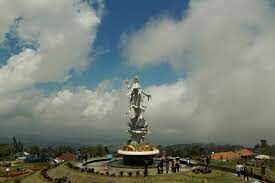
Taman Belanda
Taman Barong
Taman Oval
Taman Dewi Danu
Fasilitas apa yang tidak ada di The Blooms Garden
Kolam renang
Play Ground
Trekking
Tempat sampah
Gambar di atas merupakan taman apa?
Fasilitas apa yang tidak ada di The Blooms Garden
Tanggal berapa mulai di bukanya The Blooms Garden
Dimana lokasi The Blooms Garden?
Siapa manajer The Blooms Garden
The Blooms Garden merupakan destinasi wisata berupa?
The Blooms GardenAshes that made the tree bloomGalveston, Oil Booms and the Reform EraGrow Tomatoes in Six Steps Do you like tomatoes? I think they’re tasty!They are fun and easy to grow, too! Step 1: Plant the Seeds. Fill a small pot with soil. Use a pencil to poke a hole halfway down the soil. Drop two seeds in the hole.Fill the hole with soil. Step 2: Water the Seeds. Water the seeds, but not too much. Step 3: See the Seedling. Each day, make sure that the soil is a little wet.In about a week, you’ll see a seedling poke out of the soil! Move the pot to a warm, sunny place. Step 4: Time to Transplant. Soon the seedling will be a little higher. It’s time to plant the seedling outside. Dig a deep hole, and put the seedling inside. Step 5: Water the Seedling. Put water in the hole. Fill the hole with soil. Pat the soil. Step 6: Stake the Plant. As your tomato plant grows, tie the plant to a stake. Flowers will bloom on the plant before the tomatoes will grow. Pick the Tomatoes! When is it time to taste your tomatoes? When they turn red! I like to make fresh tomato salad. How do you like to eat tomatoes?Create questions using Bloom's taxonomy testing students knowledge about the content taught about this standard: 5-LS1-1 Ask testable questions about the process by which plants use air, water, and energy from sunlight to produce sugars and plant materials needed for growth and reproduction. Year 8 History• The role of expanding trade between Europe and Asia during the Black Death, including the origin and spread of the disease. Bottom of Bloom taxonomyCreate questions using Bloom's taxonomy of identify, explain, create testing students content knowledge about the following standard: 5-LS1-1 Ask testable questions about the process by which plants use air, water, and energy from sunlight to produce sugars and plant materials needed for growth and reproduction. In a single domesticated grain seed, one might see the bud of great civilizations. The birth of agriculture was a turning point in humans' social development, as stable food supplies enabled people to transcend the constraints of food gained by hunting and gathering. After that, people were able to settle down and experience population booms. As one of the major areas around the globe where agriculture originated, China has contributed to the world's domesticated rice, millet, buckwheat and soybeans. Archaeological studies have unveiled that the planting of rice originated around 10,000 years ago in the lower reaches of the Yangtze River, leading to the eventual replacement there of hunting and gathering practices dating back 5,000 to 6,000 years. "It marked the formation of a rice-based agricultural society in the area," said Zhao Zhijun, an archaeologist at the Chinese Academy of Social Sciences. Archaeological studies of the origins of rice-based agriculture are an important part of a national project tracing the origins of Chinese civilization itself. President Xi Jinping has greatly valued the project. At a group study session of the Political Bureau of the Communist Party of China Central Committee on May 27, 2022, Xi, who is also general secretary of the CPC Central Committee, emphasized the significance of the project and the role that archaeological studies play in better understanding Chinese civilization. The project to trace the origins of Chinese civilization, in addition to finding signs of human activity more than 1 million years ago, has also proved that China's history includes 10,000 years of culture and more than 5,000 years of civilization. The project has provided clear knowledge of the origins and formation of Chinese civilization, the history of its development, the process of the formation and development of its pluralistic and integrated pattern, and the characteristics of the civilization and why it was formed in such a way, he added. This was not the first time that Xi emphasized the importance of the origin-tracing project. Since the 18th National Congress of the CPC in 2012, Xi has toured more than 100 historical and cultural locations and issued many instructions related to archaeology and the origin-tracing project. During the 23rd group study session of the Political Bureau of the CPC Central Committee in 2020, Xi called for giving more attention to archaeological research and letting historical facts speak for themselves. "This will provide strong support for our efforts to carry forward the best of traditional Chinese culture and increase our cultural confidence," said Xi. The origin-tracing project has been carried out since 2002. Its ongoing fifth phase, which started in 2020, involves the participation of more than 500 researchers from 29 institutes across the country. It primarily centers on several ancient capital sites, including the Liangzhu site in Hangzhou, Zhejiang province, the Taosi site in Xiangfen county, Shanxi province, the Shimao site in Shenmu, Shaanxi province, and the Erlitou site in Luoyang, Henan province, from 3,500 to 5,500 years ago, as well as other settlements mainly along the basins of the Yellow, Yangtze and Liaohe rivers. The project has also expanded to a wider geographic and chronological framework to decode how Chinese civilization emerged and how its diverse elements formed a unity. Excavation of the Liangzhu site, which is over 5,000 years old and is one of the major sites covered in the origin-tracing project, has yielded an inner city covering 3 million square meters and an outer city of 6.3 million sq m, making it the world's largest capital at the time. It also had a giant water control system, which contributed to the formation of a rice-based agricultural society. By calculating the earthwork volume, archaeologists found that building the entire ancient city, the water control system and Mojiaoshan — a 10-meter-tall man-made terrace in the center of the city — required 10,000 people working daily for seven-and-a-half years. The discoveries show that Liangzhu had a kingship able to organize people for large-scale public construction, and its social differentiation, emergence of the city concept and existence of a kingship prove that it became a civilized society, said Wang Wei, a veteran archaeologist at the Chinese Academy of Social Sciences. Significant topic Wang said that tracing the origins of a civilization is a significant topic in the research of human history. Over the years, the Chinese project has provided China's answer to how to define civilizations. In 2022, Xi commended the efforts and stressed that the project has made creative contributions to the research on tracing the origins of the world's civilizations. Wang said: "International academia has proposed three indispensable elements for a civilized society based on features of Mesopotamian and Egyptian civilizations: written characters, metallurgy and the city concept. But we can find that some of the three elements were absent in many ancient civilizations. For example, the Mayan civilization had no metallurgy, while the Incan civilization didn't have written characters." Western scholars believe that Chinese civilization began with the Yinxu Ruins in Anyang, Henan province, a capital of the late Shang Dynasty (c.16th century-11th century BC), based on the discovery of inscribed oracle bones from that time. However, Chinese archaeologists don't agree. With continued archaeological research, international academia now believes that places around the world can propose criteria for civilization based on their own ancient social development. China's archaeological studies have shaped the nation's criteria in defining a civilization: the development of productivity, an increase in population, the appearance of cities, social differentiation and the emergence of kingship and state. "These criteria are suitable for identifying other civilizations as well," said Wang. "Civilizations have in common the appearance of kingship and state. They are only different in the ways of imposing kingship and the forms of state." In China, kingship and state "were shown by exquisite jade and bronze ritual artifacts, grand palaces and magnificent mausoleums imitating aboveground palaces", he added. "In Mesopotamia and ancient Egypt, they were demonstrated through superb stone temples, pyramids and large-scale tombs." Multidisciplinary subject President Xi said in 2020 that archaeologists should work closely with researchers from other fields to make an interpretive analysis of material remains. Zhang Chi, a professor of archaeology at Peking University, said that since material remains are often the research focus of archaeological studies, these should not only be observed with the eyes, but also studied using scientific and technological tools. Therefore, from the perspective of research methods, archaeology is by nature a multidisciplinary subject, Zhang added.