Loading...


The cat and the dog
Quiz by MaribelC
Customize this quiz to suit your class
Instantly translate to 100+ languages
Tag the questions with any skills you have. Your dashboard will track each student's mastery of each skill.
Give this quiz to my class
Choose the correct answer:

To run
Choose the correct answer:

To bark
Choose the correct answer:

Choose the correct answer:

Choose the correct answer:

Choose the correct answer:

Choose the correct answer:

Choose the correct answer:

Choose the correct answer:
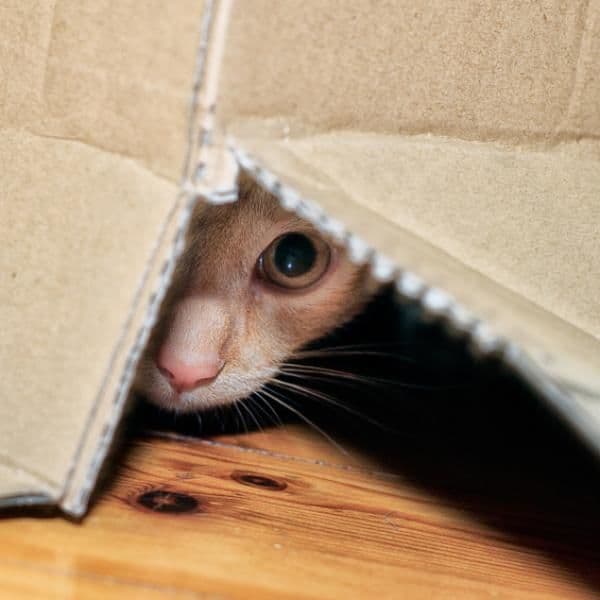
Choose the correct answer:
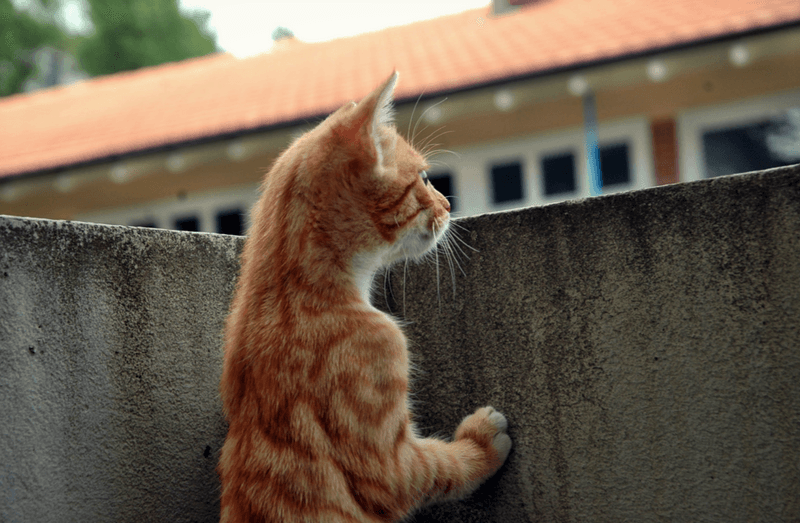
Choose the correct answer:
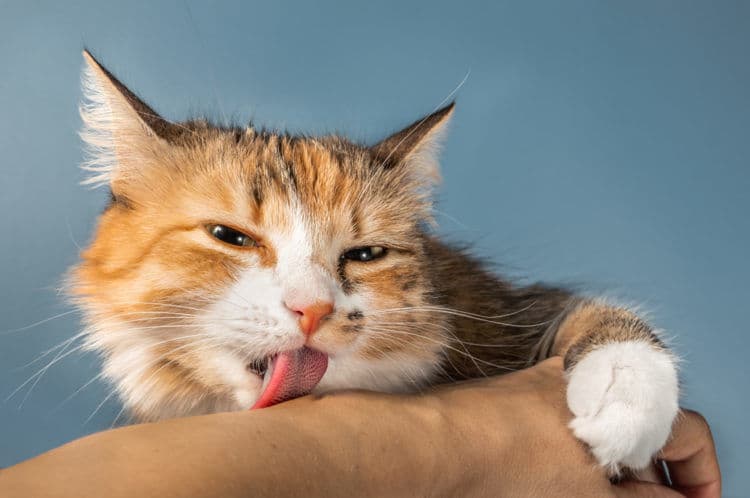 Here is a cat. The cat is small. It is white. The cat likes to play. The cat runs fast. Here is a dog. The dog is big. It is brown. The dog is friendly. The dog barks. Cats and dogs are animals. Animals are all over the world. They can be big or small.She went by the name of Belisa Crepusculario, not because she had been baptized with that name or given it by her mother, but because she herself had searched until she found the poetry of "beauty" and "twilight" and cloaked herself in it. She made her living selling words. She journeyed through the country from the high cold mountains to the burning coasts, stopping at fairs and in markets where she set up four poles covered by a canvas awning under which she took refuge from the sun and rain to minister to her customers. She did not have to peddle her merchandise because from having wandered far and near, everyone knew who she was. Some people waited for her from one year to the next, and when she appeared in the village with her bundle beneath her arm, they would form a line in front of her stall. Her prices were fair. For five centavos she delivered verses from memory, for seven she improved the quality of dreams, for nine she wrote love letters, for twelve she invented insults for irreconcilable enemies. She also sold stories, not fantasies but long, true stories she recited at one telling, never skipping a word. This is how she carried news from one town to another. People paid her to add a line or two: our son was born, so-and-so died, our children got married, the crops burned in the field. Wherever she went a small crowd gathered around to listen as she began to speak, and that was how they learned about each others' doings, about distant relatives, about what was going on in the civil war. To anyone who paid her fifty centavos in trade, she gave the gift of a secret word to drive away melancholy. It was not the same word for everyone, naturally, because that would have been collective dece it. Each person received his or her own word, with the assurance that no one else would use it that way in this universe or the Beyond. Belisa Crepusculario had been born into a family so poor they did not even have names to give their children. She came into the world and grew up in an inhospitable land where some years the rains became avalanches of water that bore everything away before them and others when not a drop fell from the sky and the sun swelled to fill the horizon and the world became a desert. Until she was twelve, Belisa had no occupation or virtue other than having withstood hunger and the exhaustion of centuries. During one interminable drought, it fell to her to bury four younger brothers and sisters, when she realized that her turn was next, she decided to set out across the 2 plains in the direction of the sea, in hopes that she might trick death along the way. The land was eroded, split with deep cracks, strewn with rocks, fossils of trees and thorny bushes, and skeletons of animals bleached by the sun. From time to time she ran into families who, like her, were heading south, following the mirage of water. Some had begun the march carrying their belongings on their back or in small carts, but they could barely move their own bones, and after a while they had to abandon their possessions. They dragged themselves along painfully, their skin turned to lizard hide and their eyes burned by the reverberating glare. Belisa greeted them with a wave as she passed, but she did not stop, because she had no strength to waste in acts of compassion. Many people fell by the wayside, but she was so stubborn that she survived to cross through that hell and at long last reach the first trickles of water, fine, almost invisible threads that fed spindly vegetation and farther down widened into small streams and marshes. Belisa Crepusculario saved her life and in the process accidentally discovered writing. In a village near the coast, the wind blew a page of newspaper at her feet. She picked up the brittle yellow paper and stood a long while looking at it, unable to determine its purpose, until curiosity overcame her shyness. She walked over to a man who was washing his horse in the muddy pool where she had quenched her thirst. "What is this?" she asked. "The sports page of the newspaper," the man replied, concealing his surprise at her ignorance. The answer astounded the girl, but she did not want to seem rude, so she merely inquired about the significance of the fly tracks scattered across the page. "Those are words, child. Here it says that Fulgencio Barba knocked out El Negro Tiznao in the third round." That was the day Belisa Crepusculario found out that words make their way in the world without a master, and that anyone with a little cleverness can appropriate them and do business with them. She made a quick assessment of her situation and concluded that aside from becoming a prostitute or working as a servant in the kitchens of the rich there were few occupations she was qualified for. It seemed to her that selling words would be an honorable alternative. From that moment on, she worked at that profession, and was never tempted by any other. At the beginning, she offered her merchandise unaware that words could be written outside of newspapers. When she learned otherwise, she calculated the infinite possibilities of her trade and with her savings paid a priest twenty pesos to teach her to read and write, with her three 3 remaining coins she bought a dictionary. She poured over it from A to Z and then threw it into the sea, because it was not her intention to defraud her customers with packaged words. One August morning several years later, Belisa Crepusculario was sitting in her tent in the middle of a plaza, surrounded by the uproar of market day, selling legal arguments to an old man who had been trying for sixteen years to get his pension. Suddenly she heard yelling and thudding hoofbeats. She looked up from her writing and saw, first, a cloud of dust, and then a band of horsemen come galloping into the plaza. They were the Colonel's men, sent under orders of El Mulato, a giant known throughout the land for the speed of his knife and his loyalty to his chief. Both the Colonel and El Mulato had spent their lives fighting in the civil war, and their names were ineradicably linked to devastation and calamity. The rebels swept into town like a stampeding herd, wrapped in noise, bathed in sweat, and leaving a hurricane of fear in their trail. Chickens took wing, dogs ran for their lives, women and children scurried out of sight, until the only living soul left in the market was Belisa Crepusculario. She had never seen El Mulato and was surprised to see him walking toward her. "I'm looking for you," he shouted, pointing his coiled whip at her, even before the words were out, two men rushed her -- knocking over her canopy and shattering her inkwell -- bound her hand and foot, and threw her like a sea bag across the rump of El Mulato's mount. Then they thundered off toward the hills. Hours later, just as Belisa Crepusculario was near death, her heart ground to sand by the pounding of the horse, they stopped, and four strong hands set her down. She tried to stand on her feet and hold her head high, but her strength failed her and she slumped to the ground, sinking into a confused dream. She awakened several hours later to the murmur of night in the camp, but before she had time to sort out the sounds, she opened her eyes and found herself staring into the impatient glare of El Mulato, kneeling beside her. "Well, woman, at last you've come to," he said. To speed her to her senses, he tipped his canteen and offered her a sip of liquor laced with gunpowder. She demanded to know the reason for such rough treatment, and El Mulato explained that the Colonel needed her services. He allowed her to splash water on her face, and then led her to the far end of the camp where the most feared man in all the land was lazing in a hammock strung between two trees. She could not see his face, because he lay in the deceptive shadow of the leaves and the indelible shadow of all his years as a bandit, but she imagined from the way his 4 gigantic aide addressed him with such humility that he must have a very menacing expression. She was surprised by the Colonel's voice, as soft and well-modulated as a professor's. "Are you the woman who sells words?" he asked. "At your service," she stammered, peering into the dark and trying to see him better. The Colonel stood up, and turned straight toward her. She saw dark skin and the eyes of a ferocious puma, and she knew immediately that she was standing before the loneliest man in the world. "I want to be President," he announced. The Colonel was weary of riding across that godforsaken land, waging useless wars and suffering defeats that no subterfuge could transform into victories. For years he had been sleeping in the open air, bitten by mosquitoes, eating iguanas and snake soup, but those minor inconveniences were not why he wanted to change his destiny. What truly troubled him was the terror he saw in people's eyes. He longed to ride into a town beneath a triumphal arch with bright flags and flowers everywhere, he wanted to be cheered, and be given newly laid eggs and freshly baked bread. Men fled at the sight of him, children trembled, and women miscarried from fright, he had had enough, and so he had decided to become President. El Mulato had suggested that they ride to the capital, gallop up to the Palace, and take over the government, the way they had taken so many other things without anyone's permission. The Colonel, however, did not want to be just another tyrant, there had been enough of those before him and, besides, if he did that, he would never win people's hearts. It was his aspiration to win the popular vote in the December elections. "To do that, I have to talk like a candidate. Can you sell me the words for a speech?" the Colonel asked Belisa Crepusculario. She had accepted many assignments, but none like this. She did not dare refuse, fearing that El Mulato would shoot her between the eyes, or worse still, that the Colonel would burst into tears. There was more to it than that, however, she felt the urge to help him because she felt a throbbing warmth beneath her skin, a powerful desire to touch that man, to fondle him, to clasp him in her arms. All night and a good part of the following day, Belisa Crepusculario searched her repertory for words adequate for a presidential speech, closely watched by El Mulato, who could not take his eyes from her firm wanderer's legs and virginal breasts. She discarded harsh, cold words, words 5 that were too flowery, words worn from abuse, words that offered improbable promises, untruthful and confusing words, until all she had left were words sure to touch the minds of men and women's intuition. Calling upon the knowledge she had purchased from the priest for twenty pesos, she wrote the speech on a sheet of paper and then signaled El Mulato to untie the rope that bound her ankles to a tree. He led her once more to the Colonel, and again she felt the throbbing anxiety that had seized her when she first saw him. She handed him the paper and waited while he looked at it, holding it gingerly between thumbs and fingertips. "What the shit does this say," he asked finally. "Don't you know how to read?" "War's what I know," he replied. She read the speech aloud. She read it three times, so her client could engrave it on his memory. When she finished, she saw the emotion in the faces of the soldiers who had gathered round to listen, and saw that the Colonel's eyes glittered with enthusiasm, convinced that with those words the presidential chair would be his. "If after they've heard it three times, the boys are still standing there with their mouths hanging open, it must mean the thing's damn good, Colonel" was El Mulato's approval. "All right, woman. How much do I owe you?" the leader asked. "One peso, Colonel." "That's not much," he said, opening the pouch he wore at his belt, heavy with proceeds from the last foray. "The peso entitles you to a bonus. I'm going to give you two secret words," said Belisa Crepusculario. "What for?" She explained that for every fifty centavos a client paid, she gave him the gift of a word for his exclusive use. The Colonel shrugged. He had no interest at all in her offer, but he did not want to be impolite to someone who had served him so well. She walked slowly to the leather stool where he was sitting, and bent down to give him her gift. The man smelled the scent of a mountain cat issuing from the woman, a fiery heat radiating from her hips, he heard the terrible whisper of her hair, and a breath of sweetmint murmured into his ear the two secret words that were his alone. "They are yours, Colonel," she said as she stepped back. "You may use them as much as you 6 please." El Mulato accompanied Belisa to the roadside, his eyes as entreating as a stray dog's, but when he reached out to touch her, he was stopped by an avalanche of words he had never heard before; believing them to be an irrevocable curse, the flame of his desire was extinguished. During the months of September, October, and November the Colonel delivered his speech so many times that had it not been crafted from glowing and durable words it would have turned to ash as he spoke. He travelled up and down and across the country, riding into cities with a triumphal air, stopping in even the most forgotten villages where only the dump heap betrayed a human presence, to convince his fellow citizens to vote for him. While he spoke from a platform erected in the middle of the plaza, El Mulato and his men handed out sweets and painted his name on all the walls in gold frost. No one paid the least attention to those advertising ploys; they were dazzled by the clarity of the Colonel's proposals and the poetic lucidity of his arguments, infected by his powerful wish to right the wrongs of history, happy for the first time in their lives. When the Candidate had finished his speech, his soldiers would fire their pistols into the air and set off firecrackers, and when finally they rode off, they left behind a wake of hope that lingered for days on the air, like the splendid memory of a comet's tail. Soon the Colonel was the favorite. No one had ever witnessed such a phenomenon: a man who surfaced from the civil war, covered with scars and speaking like a professor, a man whose fame spread to every corner of the land and captured the nation's heart. The press focused their attention on him. Newspapermen came from far away to interview him and repeat his phrases, and the number of his followers and enemies continued to grow. "We're doing great, Colonel," said El Mulato, after twelve successful weeks of campaigning. But the Candidate did not hear. He was repeating his secret words, as he did more and more obsessively. He said them when he was mellow with nostalgia; he murmured them in his sleep; he carried them with him on horseback; he thought them before delivering his famous speech; and he caught himself savoring them in his leisure time. And every time he thought of those two words, he thought of Belisa Crepusculario, and his senses were inflamed with the memory of her feral scent, her fiery heat, the whisper of her hair, and her sweetmint breath in his ear, until he began to go around like a sleepwalker, and his men realized that he might die before he ever sat in the presidential chair. "What's got hold of you, Colonel," El Mulato asked so often that finally one day his chief broke 7 down and told him the source of his befuddlement: those two words that were buried like two daggers in his gut. "Tell me what they are and maybe they'll lose their magic," his faithful aide suggested. "I can't tell them, they're for me alone," the Colonel replied. Saddened by watching his chief decline like a man with a death sentence on his head, El Mulato slung his rifle over his shoulder and set out to find Belisa Crepusculario. He followed her trail through all that vast country, until he found her in a village in the far south, sitting under her tent reciting her rosary of news. He planted himself, spraddle-legged, before her, weapon in hand. "You! You're coming with me," he ordered. She had been waiting. She picked up her inkwell, folded the canvas of her small stall, arranged her shawl around her shoulders, and without a word took her place behind El Mulato's saddle. They did not exchange so much as a word in all the trip; El Mulato's desire for her had turned into rage, and only his fear of her tongue prevented his cutting her to shreds with his whip. Nor was he inclined to tell her that the Colonel was in a fog, and that a spell whispered into his ear had done what years of battle had not been able to do. Three days later they arrived at the encampment, and immediately, in view of all the troops, El Mulato led his prisoner before the Candidate. "I brought this witch here so you can give her back her words, Colonel," El Mulato said, pointing the barrel of his rifle at the woman's head. "And then she can give you back your manhood." The Colonel and Belisa Crepusculario stared at each other, measuring one another from a distance. The men knew then that their leader would never undo the witchcraft of those accursed words, because the whole world could see the voracious-puma eyes soften as the woman walked to him and took his hand in hers. Copyright © 1989 by Isabel Allende From The Stories of Eva Luna, Translated by Margaret Sayers PedenBonk's New Bike Bonk has dreams about the bike he wants. It is red with cool handlebars and spokes. Bonk sees the bike on TV. He sees it in the newspaper, too. He opens his monster bank. He has only five pennies. "I have to earn enough money for my new bike," says Bonk. "I will start a dog walking business," he says. He goes door to door asking people if he can walk their dogs. "Can we help walk dogs, too?" asks Jupe. "I'll do it by myself," Bonk says. "I'm saving my money for a new bike." Soon, Bonk's phone begins to ring. People knock on his door. They all want Bonk to walk their dogs! "This will be a fun and easy way to earn money," Bonk says. On Saturday, Bonk picks up each dog. There are big dogs, little dogs. fancy dogs, and plain dogs. The dogs are barking, jumping, and running around. Bonk gets all their leashes together and begins to walk. One dog tangles up his leash. Another dog rolls in the mud. Another dog chases a cat! "This is not fun!" Bonk says. "It is not easy either!" Lurk, Uzzle, and Jupe ride their scooters past Bonk. "Do you want some help now. Bonk?" Jupe asks. Bonk gives each of the monsters a dog to walk. When they are finished walking. the dog owners pay the monsters. "I'm sorry I said you couldn't help with the dog walking," says Bonk. "I couldn't have done it without you." Jupe, Lurk, and Uzzle talk. They give their money to Bonk. "This is for your new bike," says Jupe. "But you earned this money, too," says Bonk. "We want something other than money," says Lurk. "Anything you want," Bonk says. "When you get your new bike, we want to take turns riding it!" says Jupe. "It's a deal!" says Bonk.Timmy, what are you doing? I am doing my homework. Can you help me with it? Yes, I can help you. What is the seventh animal? The seventh animal is a dog. What color is the eighth animal? The eighth animal is green. Oh great! What is the ninth animal? The ninth animal is a cat. Do you know the tenth animal? Is it a panda? No, it’s a bird. What are the eleventh and twelfth animals? The eleventh animal is a bear and the twelfth animal is a panda. Wow, thanks, Mom!The Little Red Hen One day, a little red hen wanted some yummy bread. First, she had to plant lots of tiny wheat seeds. “Will you help me plant wheat seeds?” she asked her animal friends. “No way,” said the sleepy cat, busy dog, and chewing cow. “Then I’ll do it myself,” said the little red hen. And she did. Next, she had to harvest all the tall wheat. “Will you help me harvest the wheat?” she asked her animal friends. “No way,” said the sleepy cat, busy dog, and chewing cow. “Then I’ll do it myself,” said the little red hen. And she did. Then, she had to grind the wheat into flour. “Will you help me grind the wheat into flour?” she asked her animal friends. “No way,” said the sleepy cat, busy dog, and chewing cow. “Then I’ll do it myself,” said the little red hen. And she did. Finally, she baked the yummy bread. The yummy smell went all over the farm. “I’d like a piece!” said the sleepy cat, busy dog, and chewing cow. “No way. You didn’t help. I’ll eat it myself,” said the little red hen. And she did.Select all the numbers that can be used as a common denominator to rewrite the fractions __ 2 6 and __ 1 2 . A 3 D 12 B 6 E 16 C 8 2 Aaron ran __ 5 8 mile to his friend’s house. Then he ran another __ 1 4 mile to the park. 1 1 8 1 8 1 8 1 8 1 8 1 8 1 8 1 8 1 8 1 8 1 8 1 8 1 4 Which equation shows how many miles Aaron ran? A __ 5 8 – __ 1 4 = __ 2 8 C __ 5 8 + __ 1 4 = __ 7 8 B __ 5 8 – __ 1 4 = __ 3 8 D __ 5 8 + __ 1 4 = __ 8 8 3 Select all the expressions that can be used to find the sum of __ 6 8 and ___9 12. A ___ 36 48 + ___ 36 48 D ___ 18 20 + ___ 17 20 B ___ 24 36 + ___ 27 36 E ___ 18 24 + ___ 18 24 C ___ 14 16 + ___ 13 16 4 Write a pair of equivalent fractions for __ 3 4 and __ 2 5 using a common denominator of 20. __ 3 4 = __ 2 5 = 5 Katie spent __ 4 5 hour painting and __ 1 2 hour drawing. ? 1 1 2 1 5 1 5 1 5 1 5 How much more time in hours did she spend painting than drawing? 6 Dave is planting a garden. He plants cucumbers in ___2 12 of his garden and tomatoes in __ 2 3 of his garden. What fraction of his garden does Dave plant with cucumbers and tomatoes? 7 Of the students in Maria’s class, __ 2 5 have dogs and __ 1 3 have cats. No students have both a dog and a cat. What fraction represents how many more students in Maria’s class have dogs? 52 © Houghton Mifflin Harcourt Publishing Company Module 6 • Form A Name Module Test DO NOT EDIT--Changes must be made through "File info" CorrectionKey=NL-C 9 Mr. Gonzales used __ 3 4 quart of broth and __ 1 2 quart of milk to make soup. How many quarts of liquid did he use? Part A Complete the fraction model to represent the problem. 1 1 2 1 4 1 4 1 4 Part B Write an equation to show how many quarts of liquid Mr. Gonzales used to make soup. 10 A bowl of cereal contains __ 2 3 cup of oats and __ 2 8 cup of raisins. Write a numerical expression using equivalent fractions with a common denominator of 24 to model how many more cups of oats than raisins there are in the bowl. 11 Jessica read __ 1 6 of her book on Thursday, __ 2 9 of her book on Friday, and __ 1 2 of her book on Saturday. Part A Write a numerical expression using equivalent fractions to model how much of her book she has read so far. Part B What fraction of her book has Jessica read?Dia for María Ratona was a cat named Mouse. She was small and gray, and had a tiny squeaky meow. She liked to sit in a hole in the shed wall. Ratona lived for a long time. Eight months ago, she died. I'm not sad anymore, but I think about her often. One day, Mamá was setting up Tía Teresa's ofrenda, a special altar, for Day of the Dead. Teresa passed away when I was a baby. "Mamá, can we celebrate pets?" I asked. "This is mostly for family, though I suppose Ratona was part of ours," Mamá said. "We can celebrate her the day before," I suggested. Later, Mamá and I went to the market in Puebla. We got paper banners, sugar skulls, and marigolds. On October 31, my friends came over. Adriana brought her dog, Sal. or Salt. She had a photo of Sal's sister, Pimienta, or Pepper, who died last summer. Gloria had a picture of Raúl the rooster, a pet she had lost. We set up the banners, marigolds. and photos where Ratona used to sit. "Once, Pimienta stole a pound of cheese from our cooler. She got into the trash and ate it later! I have cheese for Pimienta," Adriana said. "My mother makes pumpkin seeds for my great-grandfather's ofrenda. Raúl jumped up and ate them! My mother was so mad. I brought some for Raúl," Gloria said. "If someone had ice cream, Ratona went Squeak! Squeak! until you let her lick the bowl. I have ice cream for Ratona," I said. I gave Adriana and Gloria sugar skulls before they left. I thought about funny little Ratona. On the last day of celebrations, my family walked to the graveyard. Everyone from the area came. There were fireworks and even a band. Tía Teresa's gravestone was piled with flowers, sweet bread, and candles. Mamá smiled to herself. "One day, María, your Tía Teresa heard a tiny squeak coming from the grass. It was a little gray kitten. Teresa named her Ratona," Mamá said. She continued, "When Teresa died, I took Ratona. You loved her right away. You reminded me of Teresa." Everyone was laughing and dancing. I was too young to remember Tía Teresa, but we had both loved Ratona. That made me happy. Mamá took my hand. "I think it's time to dance!" she said.Create a basic test with the vocabulary Dick,donkey,steam,root,petals,snake,cow,dog,cat,rabbit,flower,cran,shark,whale,soil,crocodile,shrimp and algo formal and informal expresiones like sorry, apologize, tell,inform,check,revise,así,reply, hello,assit