Loading...

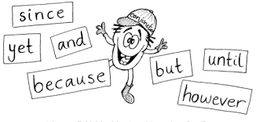
The classification of conjunctions
Quiz by veronica
Customize this quiz to suit your class
Instantly translate to 100+ languages
Tag the questions with any skills you have. Your dashboard will track each student's mastery of each skill.
Give this quiz to my class
The conjunction is...
a part of speech which denotes the connections between objects and phenomena. It connects parts of sentence, clauses, and sentences.
a part of speech which expresses various emotions without naming them
a part of speech which denotes the relations between objects and phenomena. It shows the relation between a noun or a pronoun and other words.
Choose the right types of conjunctions according to their morphological structure.
Simple, derivative, compound, composite
Simple, derivative, composite
Simple, derivative, compound, collective
Simple, derivative, compound
The conjunction is...
Choose the right types of conjunctions according to their morphological structure.
According to its morphological structure, THAT is...
According to its morphological structure, EVEN THOUGH is...
According to its morphological structure, BECAUSE is...
Which of these conjunctions are coordinating?
What does FANBOYS stand for?
In this sentence, the subordinating conjunction is used: "The fireworks went off, and we headed for the bar".
"I must do my homework, but I want to play video games". BUT is...
"I found it on the bench where we had been sitting". WHERE is...
"There was moreover time to spare, for Fleur was to meet him at the Gallery at four o'clock, and it was yet half past two". FOR is...
In which sentence the subordinating conjunction is used?
These all are coordinating conjunctions: if, so, as, though
"I only wanted to make you speak". ONLY - is a coordinating conjunction.
Which abbreviation can help you memorize coordinating conjunctions?
 Make a test, with answers best on the following: Conduct an investigation to provide evidence that living things are made of cells; either one cell or many different numbers and types of cells. Supporting Content LS1.A: Structure and Function • All living things are made up of cells, which is the smallest unit that can be said to be alive. An organism may consist of one single cell (unicellular) or many different numbers and types of cells (multicellular). (MS-LS-1.1) Further Explanation: Emphasis is on developing evidence that living things are made of cells, distinguishing between living and non-living things, and understanding that living things may be made of one cell or many and varied cells. In multicellular organisms, the body is a system of multiple interacting subsystems. These subsystems are groups of cells that work together to form tissues and organs that are specialized for particular body functions. (MS-LS-1.3) Further Explanation: Emphasis is on the conceptual understanding that cells form tissues and tissues form organs specialized for particular body functions. Examples could include the interaction of subsystems within a system and the normal functioning of those systems. Organisms reproduce, either sexually or asexually, and transfer their genetic information to their offspring. (MS-LS-1.4) • Living things share certain characteristics. (These include response to environment, reproduction, energy use, growth and development, life cycles, made of cells, etc.) (MS-LS1.4) Further Explanation: Examples should include both biotic and abiotic items, and should be defended using accepted characteristics of life. Plants, algae (including phytoplankton), and many microorganisms use the energy from light to make sugars (food) from carbon dioxide from the atmosphere and water through the process of photosynthesis, which also releases oxygen. These sugars can be used immediately or stored for growth or later use. (MS-LS-1.5) Further Explanation: Emphasis is on tracing movement of matter and flow of energy. Supporting Content LS1.C: Organization for Matter and Energy Flow in Organisms • Within individual organisms, food moves through a series of chemical reactions (cellular respiration) in which it is broken down and rearranged to form new molecules, to support growth, or to release energy. (MS-LS-1.6) Further Explanation: Emphasis is on describing that molecules are broken apart and put back together and that in this process, energy is released and on understanding that the elements in the products are the same as the elements in the reactants. Organisms, and populations of organisms, are dependent on their environmental interactions both with other living things and with nonliving factors. (MS-LS-2.1) • In any ecosystem, organisms and populations with similar requirements for food, water, oxygen, or other resources may compete with each other for limited resources, access to which consequently constrains their growth and reproduction. (MS-LS-2.1) • Growth of organisms and population increases are limited by access to resources. (MS-LS-2.1) Further Explanation: Emphasis is on cause and effect relationships between resources and growth of individual organisms and the numbers of organisms in ecosystems during periods of abundant and scarce resources. Similarly, predatory interactions may reduce the number of organisms or eliminate whole populations of organisms. Mutually beneficial interactions, in contrast, may become so interdependent that each organism requires the other for survival. Although the species involved in these competitive, predatory, and mutually beneficial interactions vary across ecosystems, the patterns of interactions of organisms with their environments, both living and nonliving, are shared. (MS-LS-2.2) Further Explanation: Emphasis is on predicting consistent patterns of interactions in different ecosystems in terms of the relationships among and between organisms and abiotic components of ecosystems. Examples of types of interactions could include competitive, predatory, and mutually beneficial. Food webs are models that demonstrate how matter and energy is transferred between producers, consumers, and decomposers as the three groups interact within an ecosystem. Transfers of matter into and out of the physical environment occur at every level. Decomposers recycle nutrients from dead plant or animal matter back to the soil in terrestrial environments or to the water in aquatic environments. The atoms that make up the organisms in an ecosystem are cycled repeatedly between the living and nonliving parts of the ecosystem. (MS-LS-2.3) Further Explanation: Emphasis is on describing the conservation of matter and flow of energy into and out of various ecosystems, and on defining the boundaries of the system. Ecosystems are dynamic in nature; their characteristics can vary over time. Disruptions to any physical or biological component of an ecosystem can lead to shifts in all its populations. (MSLS-2.5) Further Explanation: Emphasis is on recognizing patterns in data and making warranted inferences about changes in populations, and on evaluating empirical evidence supporting arguments about changes to ecosystems. Biodiversity describes the variety of species found in Earth’s terrestrial and oceanic ecosystems. The completeness or integrity of an ecosystem’s biodiversity is often used as a measure of its health. (MS-LS-2.6) Supporting Content LS4.D: Biodiversity • Changes in biodiversity can influence humans’ resources, such as food, energy, and medicines, as well as ecosystem services that humans rely on—for example, water purification and recycling. (MS-LS-2.6) Supporting Content ETS1.B: Developing Possible Solutions • There are systematic processes for evaluating solutions with respect to how well they meet the criteria and constraints of a problem. (MS-LS-2.6) Further Explanation: Examples of ecosystem services could include water purification, nutrient recycling, and prevention of soil erosion. Examples of design solution constraints could include scientific, economic, and social considerations. Genes are located in the chromosomes of cells, with each chromosome pair containing two variants of each of many distinct genes. Each distinct gene chiefly controls the production of specific proteins, which in turn affects the traits of the individual. Structural changes to genes (mutations) can result in changes to proteins, which can affect the structures and functions of the organism and thereby change traits. (MS-LS-3.1) Supporting Content LS3.B: Variation of Traits • In addition to variations that arise from sexual reproduction, genetic information can be altered because of mutations. Though rare, mutations may result in significant changes to the structure and function of proteins. Changes can be beneficial, harmful, or neutral to the organism. (MS-LS-3.1) Further Explanation: Emphasis is on conceptual understanding that changes in genetic material may result in making different proteins. Organisms reproduce, either sexually or asexually, and transfer their genetic information to their offspring. (MS-LS-3.2) Supporting Content LS3.A: Inheritance of Traits • Variations of inherited traits between parent and offspring arise from genetic differences that result from the subset of chromosomes (and therefore genes) inherited. (MS-LS-3.2) Supporting Content LS3.B: Variation of Traits • In sexually reproducing organisms, each parent contributes half of the genes acquired (at random) by the offspring. Individuals have two of each chromosome and hence two alleles of each gene, one acquired from each parent. These versions may be identical or may differ from each other. (MS-LS-3.2) Further Explanation: Emphasis is on using models such as simple Punnett squares and pedigrees, diagrams, and simulations to describe the cause and effect relationship of gene transmission from parent(s) to offspring and resulting genetic variation. The collection of fossils and their placement in chronological order is known as the fossil record and documents the change of many life forms throughout the history of the Earth. Anatomical similarities and differences between various organisms living today and between living and once living organisms in the fossil record enable the classification of living things. (MS-LS-4.1, MS-LS-4.2) Further Explanation: Emphasis is on finding patterns of changes in the level of complexity of anatomical structures in organisms and the chronological order of fossil appearance in the rock layers. The collection of fossils and their placement in chronological order is known as the fossil record and documents the change of many life forms throughout the history of the Earth. Anatomical similarities and differences between various organisms living today and between living and once living organisms in the fossil record enable the classification of living things. (MS-LS-4.1, MS-LS-4.2) Further Explanation: Emphasis is on explanations of the relationships among organisms in terms of similarity or differences of the gross appearance of anatomical structures. Scientific genus and species level names indicate a degree of relationship. (MS-LS-4.3) Further Explanation: Emphasis is on inferring general patterns of relatedness among structures of different organisms by comparing diagrams, pictures, specimens, or fossils. Natural selection leads to the predominance of certain traits in a population, and the suppression of others. (MS-LS-4.4) Further Explanation: Emphasis is on using concepts of natural selection, including overproduction of offspring, passage of time, variation in a population, selection of favorable traits, and heritability of traits. In artificial selection, humans have the capacity to influence certain characteristics of organisms by selective breeding. One can choose desired parental traits determined by genes, which are then passed to offspring. (MS-LS-4.5) Further Explanation: Emphasis is on identifying and communicating information from reliable sources about the influence of humans on genetic outcomes in artificial selection (such as genetic modification, animal husbandry, gene therapy), and on the influence these technologies have on society as well as the technologies leading to these scientific discoveries. Adaptation by natural selection acting over generations is one important process by which species change over time in response to changes in environmental conditions. Traits that support successful survival and reproduction in the new environment become more common; those that do not become less common. Thus, the distribution of traits in a population changes. (MS-LS-4.6) Further Explanation: Emphasis is on using mathematical models, probability statements, and proportional reasoning to support explanations of trends in changes to populations over time. Examples could include Peppered Moth population changes before and after the industrial revolution. PLANT PROPAGATION Plant propagation is the process of creating new plants. There are two types of propagation: sexual and asexual. Sexual reproduction is the union of the pollen and egg, drawing from the genes of two parents to create a new, third individual. Sexual propagation involves the floral parts of a plant. Asexual propagation involves taking a part of one parent plant and causing it to regenerate itself into a new plant. The resulting new plant is genetically identical to its parent. Asexual propagation involves the vegetative parts of a plant: stems, roots, or leaves. (Sorensen, 2019) ANGIOSPERMS: MONOCOTYLEDON & DICOTYLEDON The angiosperms or flowering plants are divided into two groups: monocots and dicots. Monocots have one seed leaf while dicots have two. Monocots have leaves with parallel veins while netted veins for dicots. SEED BEARING PLANTS ANGIOSPERMS & GYMNOSPERMS Seed-bearing plants could be angiosperm or flowering or gymnosperm which are non-flowering plants. The angiosperms are plants that have flowers and produce seeds enclosed within a carpel. The angiosperms are a large group and include herbaceous plants, shrubs, grasses, and most trees. Their seeds may contain one seed leaf or monocotyledon and when there are two they are dicotyledons. The gymnosperms on the other hand are seed-producing plants known as "naked seeds" like cycads, conifers, and pines. The learning materials provided below will give you comprehensive information on the difference between angiosperms and gymnosperms. SEED BEARING PLANTS The other classification of plants is what we call seed-bearing plants or vascular plants. These plants reproduce through their seeds. Most fruits and vegetables that you love to eat are seed-bearing plants. Looking at the diagram below, seed-bearing plants could be gymnosperms or non-flowering plants and angiosperms or flowering plants. The angiosperms are classified too according to the number of seed leaves: monocotyledon and dicotyledon.Electron configuration and classification of the elements Classification of meat according to the name of animal, meat and agesCLASSIFICATION OF SALADS ACCORDING TO THEIR FUNCTIONS IN THE MEALGrade 10 - CHEMISTRY - The Periodic Classification & Periodic Properties of ElementsClassification of farm tools according to their use •Tools make work easier. •Farmers use different tools for different purposes. •The four main categories to classify tools according to their use are: ✓Digging tools ✓Cutting tools ✓Watering tools ✓Spraying toolsClassification of plants • Plants can be classified as cultivated and wild plants. • Both cultivated and wild plants are very useful to people, animals and the environment. 1. Cultivated plants: • Cultivated plants are plants grown by people for selling. • They can be grown in the field, vegetable garden, home garden and orchard. Classification of plants 2. Wild plants Wild plants are plants that grow on their own outside the garden, orchard or field. They have many uses such as: • Food for people and animals • Shelter • Source of fuel in form of firewood. • Examples include, grasses, msasa, yellow wood, mahogany, mopane Plant Nutrition • The presence of plant nutrients in the soil make them grow well. • The three major plant nutrients are nitrogen, phosphorus and potassium. Sources of plant nutrients • The source for plant nutrients are grouped into organic and inorganic sources. Organic sources of plant nutrients • These are found in nature. • They are natural materials such, decayed plant and animal matter which include: • Animal manure from cattle, sheep, goats, poultry and pigs. • Green manure • Legume crops like beans, peas and groundnuts. • Humus • These material sources may also be called natural fertilizers. Inorganic sources of plant nutrients • These are sources of plant nutrients made by people in industries. They include: • Compound fertilizers like compound A, B, C and D. • These have two or more nutrients. • Straight fertilizers like ammonium nitrate, single super phosphate and urea. • A straight fertilizer supplies a single or more nutrient to the crop. A straight fertilizer A Compound fertilizer Sources of N,P,K • Ammonium nitrate and Urea- contain nitrogen Double super Phosphate, Single super phosphate-contain phosphorus • Muriate of Potash contains Potassium 2 . Compound fertilisers -have two or three of the three major plant nutrients (N.P.K). N-nitrogen P-phosphorus K-potassium Examples Compound D Wednesday 17 May 2023 Revision exercise (Plant nutrition) 1 .Name the 3 plant nutrients needed by plants. 2. What are the 2 groups of plant nutrients sources? 3. Give 3 examples of organic sources of plant nutrients. 4. What is a straight fertilizer? 5. Compound fertilizer supplies ……………or ………………. Nutrients. Vegetable crops • A vegetable is any part of a plant that is eaten by humans as food part of a meal. • Vegetables are grouped and named according to the part that is eaten. • These are leaf, root, fruit, flower, bulb, tuber and legume vegetables. Leaf vegetables Types of veg Legume etable cropsvegetables Fruit vegetables Root, bulb and tuber Flower vegetables Cabbage Peas Tomato Root: carrots Cauliflower Rape Green beans Pepper Parsnip broccoli Spinach Melons Beetroot Tsunga Cucumber Bulb: onion Lettuce Squash Garlic kale Egg plant Leek chillies Tuber: Irish potato Wednesday 31 May 2023 Vegetable crops 1. What is a vegetable? 2. Which one is not a vegetable from the list below? a. Covo B. cabbage C. wheat D. tomato 3. Choose a vegetable which is not a fruit vegetable. a. tomato B. pepper C. kale D. egg plant 4. From which pair of vegetables do we eat the flower? A. cauliflower and garlic B. broccoli and cauliflower C. broccoli and rape D. cauliflower and pepper 5. Give one example of a vegetable belonging to each of the following groups. a. root b. legume c. bulb 6. Name any 5 groups of vegetable classification according to the parts eaten. Growing leaf vegetables • Although there are many types of vegetables, the leaf, fruit and bulb vegetables are widely grown. • Leaf vegetables form the greater part of vegetable crops. • Leaf vegetables belong to a family called brassica. • Brassicas include cabbages, lettuce, spinach, covo and many others. • Each brassica family has got its own varieties called cultivar. • They usually grow under the same climatic conditions and are affected by the same pests and diseases. • The selection of a variety depends on the following : The intended use of the vegetable, for example, salad, stew or snacks. Days taken to mature. Disease resistant Season of the year Seedbed preparation • Brassica vegetables are usually raised in seedbeds. • The seedbeds are prepared by: • Marking the position of the bed 1 meter in width by any length using a tape measure, hammer and pegs. • Digging a seedbed to a depth of 25 to 30cm using a hoe. • Breaking lumps of soil using a garden rake. Soil requirements • Brassicas need: • Well drained soils. • Fertile soil for good growth • Slightly acidic soils (pH 5.5-6) Climatic requirements • Brassicas need cool to warm temperatures. • Very low temperatures cause cabbages to flower which is called bolting. • Brassicas can be grown throughout the year. Seedbed preparation • Brassica seedlings are usually raised in seedbeds. • A seedbed is prepared by: Marking the position of the bed 1 metre in width by any length using a tape measure, hammer and pegs. Digging a seedbed to depth of 25 to 30 cm using a hoe. Breaking lumps of soil using a garden rake. This is done in order to have a fine tilth and improve soil to seed contact. Making ridges that a 15cm high. Apply 3 to 5kg/m² of well decomposed manure. 60 to 100g/m² of compound fertilizer can be added into the soil. Management of vegetable crops • After transplanting the seedlings, the seedlings need to be looked after. (a)Controlling weeds: all vegetables must be kept weed free. • This is done either by hand pulling weeds or shallow cultivation using a hand fork. (b) Pest control: common pests that affect the brassicas are aphids and diamond black moth larva. • Aphids are small green insects that suck the juice from the leaves leaving them with curls. • They are controlled by spraying malathion using the instructions on the label. (c) Disease control: bacterial diseases are common in brassicas. • Common diseases are black rot and soft rot, especially in cabbages. • These are controlled by: Crop rotation Early planting Planting resistant cultivars (d) Top dressing: brassicas are top dressed using Ammonium Nitrate at a rate of 2.5g per plant. • Top dressing is usually done 3 or 4 weeks after germination. FIELD CROPS • Field crops are crops that are grown on a large piece of land. • Example of field crops: Maize Cotton Groundnuts Roundnuts Wheat Sunflower Tobacco Sugar cane Tea Coffee Soya beans sorghum Classification of field • Field crops can be classified according to use such crops cereal, fibre, sugar and oil. 1. Cereal crops: • A cereal is a grass grown for its edible seeds. • They are also known as grain crops. • The major cereal crops are maize, wheat, rice, barley, sorghum and millet. 2 . fiber crops : • these are crops which are grown for their fiber and are used in making textiles, ropes and rugs. • Important fiber crops are cotton, flax and sisal 3. Oil seed crops: • These crops are grown for the purpose of extracting oil from their seed. • The main oil seed crops are groundnuts, sunflower, soyabean and cotton seed. 4 . Sugar crops : • Sugar crops include sugarcane,