Loading...


The Demographic Transition Model
Quiz by Matthew Corke
Customize this quiz to suit your class
Instantly translate to 100+ languages
Tag the questions with any skills you have. Your dashboard will track each student's mastery of each skill.
Give this quiz to my class
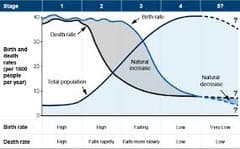
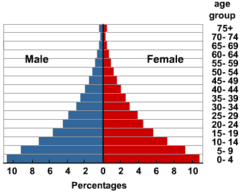
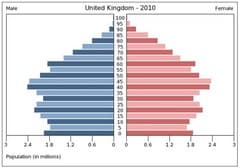 Studying population involves examining various aspects of the demographic composition, dynamics, and characteristics of a group of individuals within a specific geographic area. Here are key areas to explore when studying population: Demography: Population Size: Analyze the total number of individuals in a given area or community. Population Distribution: Examine how the population is spread across different regions or areas. Population Density: Explore the concentration of people in a particular area relative to the size of that area. Population Growth and Decline: Birth Rate: Study the number of live births per 1,000 people in a given year. Death Rate: Examine the number of deaths per 1,000 people in a given year. Migration: Explore patterns of people moving into and out of a specific area. Age Structure: Age Distribution: Analyze the distribution of individuals across different age groups in a population. Dependency Ratio: Examine the ratio of dependent individuals (young and elderly) to the working-age population. Gender Composition: Sex Ratio: Study the ratio of males to females in a population. Population Pyramids: Use population pyramids to visualize the age and gender structure of a population. Fertility and Family Planning: Total Fertility Rate (TFR): Explore the average number of children a woman is expected to have during her reproductive years. Contraceptive Use: Analyze the prevalence of contraceptive methods in a population. Mortality and Health: Life Expectancy: Examine the average number of years a person can expect to live. Infant and Child Mortality: Study the number of deaths among infants and children under the age of five. Urbanization: Urban vs. Rural Population: Analyze the distribution of people in urban and rural areas. Rate of Urbanization: Explore the speed at which people are moving from rural to urban areas. Education: Literacy Rates: Examine the percentage of the population that can read and write. Educational Attainment: Study the level of education achieved by individuals within the population. Socioeconomic Factors: Income Distribution: Explore the distribution of income among the population. Employment Rates: Analyze the percentage of the working-age population that is employed. Cultural and Ethnic Composition: Ethnic Diversity: Examine the presence of various ethnic groups within the population. Healthcare and Quality of Life: Access to Healthcare: Study the availability and accessibility of healthcare services. Quality of Life Indicators: Explore factors such as housing, sanitation, and overall living conditions. Population Policies and Government Interventions: Study the impact of government policies on population dynamics, including family planning programs and immigration policies. Environmental Impact: Explore the relationship between population growth and its impact on the environment, including resource consumption and pollution. Global Population Trends: Examine global population trends and their implications, including aging populations and population growth in developing countries. Studying population involves a multidisciplinary approach that incorporates elements from demography, sociology, geography, economics, and public health. Researchers and policymakers use this information to make informed decisions about resource allocation, development planning, and social policies.Https://app.quizalize.com/view/quiz/studying-population-involves-examining-various-aspects-of-the-demographic-composition-dynamics-and-characteristics-of-a-group-of-individuals-within-a-specific-geographic-area-here-are-key-areas-to-explore-when-studying-population-demography-population-size-analyze-the-total-number-of-individuals-in-a-given-area-or-community-population-distribution-examine-how-the-population-is-spread-across-different-regions-or-areas-population-density-explore-the-concentration-of-people-in-a-particular-area-rel-86e54014-c2a1-48fd-a436-b7221a0bce18Demographic trends The annual rate of natural increase in Southeast Asia averages slightly higher than the annual world rate. Considerable variation exists, however, among the region’s countries. The Philippines, Laos, Malaysia, Vietnam, and Brunei are characterized by higher growth; Singapore, Thailand, and Indonesia, on the other hand, have considerably lower rates, primarily because of the implementation of effective family-planning programs in these countries. In general, the pace of fertility decline is accelerating, although it is being offset by declining infant mortality and increasing life expectancy. Infant mortality for the region approximates the world average. In the more developed nations—especially Singapore, Malaysia, and Thailand—health care programs for infants and children have helped bring about mortality rates well below world averages, while the scarcity of these programs in such countries as Cambodia and Laos has contributed to continued high rates. Life expectancy in the region is somewhat below the world average, with Cambodia having the lowest average and Singapore the highest. Population change also is directly related to internal and external migration. As noted above, rural-to-urban migration continues to be a major aspect of change in nearly all Southeast Asian nations. In certain countries, considerable evidence exists for movements between rural areas (e.g., Thailand) and mobility between urban areas (Indonesia). Internal migration in the Philippines is dominated by movements to Manila and to the frontier areas in the south. Perhaps most significant, given the increasing mobility of the population and access to transport services, is the growth of nonpermanent population movements. Seasonal and other forms of circular migration for limited periods of time are conspicuous, especially in Malaysia, Indonesia, and Thailand. The growth in transport access also has created greater commuting ranges for individuals who in the past often had to leave their homes and fields for extended periods to take up work. Refugee movements have been conspicuous in the region, particularly since the mid-1970s. The Vietnamese out-migration to Malaysia, Thailand, and Indonesia, as well as to Hong Kong, is noteworthy. Cambodian and Laotian peoples also have experienced displacement. In addition, there have been numerous instances of religious minorities fleeing persecution, such as the departure of Muslim Burmans in the early 1990s.Key Word Definition
Aid Assistance in the form of grants or loans at below market rates. For example, the UK provided aid to Nepal after the 2015 earthquake to help with reconstruction efforts.
Barriers to Trade Government constraints on the flow of international goods and services, such as tariffs and quotas. For example, the European Union imposes tariffs on certain agricultural products to protect its farmers.
BRICS An acronym for an association of five major emerging nations: Brazil, Russia, India, China, and South Africa. For example, BRICS nations often meet to discuss economic cooperation and development strategies.
Demographic Aging The rise in the median age of a population. For example, Japan is experiencing demographic aging, with a significant increase in the elderly population.
Economic Core Region The most highly developed region(s) in a country. For example, London is considered an economic core region in the UK due to its high level of development and economic activity.
GNP (Gross National Product) GDP plus overseas earnings, also known as GNI (Gross National Income). For example, the GNP of the United States includes the value of goods and services produced domestically and the income earned by its citizens abroad.
HIC (Higher Income Country) A country with a high level of income and development. For example, Germany is classified as a higher income country due to its high GDP per capita and advanced infrastructure.
NEE (Newly Emerging Economy) A country that is experiencing rapid economic growth and industrialisation. For example, China is an example of a newly emerging economy, having rapidly industrialised and grown economically over the past few decades.
LIC (Lower Income Country) A country with a low level of income and development. For example, Malawi is considered a lower income country, with a low GDP per capita and limited access to healthcare and education.
GDHI (Gross Disposable Household Income) The amount of money that households have available for spending and saving after taxes and social contributions. For example, in the UK, the GDHI varies significantly between regions, with London having one of the highest levels.
Gini Coefficient A measure of income inequality within a population, ranging from 0 (perfect equality) to 100 (perfect inequality). For example, South Africa has a high Gini coefficient, indicating significant income inequality within the country.
Trade Unions Organisations that promote trade between member countries, such as the East African Community (EAC). For example, the East African Community (EAC) works to promote economic integration and trade among its member states.
Fair Trade A movement aimed at helping producers in developing countries achieve better trading conditions and promote sustainability. For example, Fairtrade coffee ensures that farmers receive a fair price for their product and work under safe conditions.
FDI (Foreign Direct Investment) Investment made by a company or individual in one country in business interests in another country. For example, Toyota's investment in manufacturing plants in the UK is an example of foreign direct investment.
Debt Relief The partial or total remission of debts, especially those owed by developing countries to external creditors. For example, the Heavily Indebted Poor Countries (HIPC) initiative provides debt relief to eligible countries to help them achieve sustainable development.
International Aid Voluntary transfer of resources from one country to another, often in the form of financial assistance, goods, or services. For example, the UK provides international aid to various countries through its Department for International Development (DFID).
Top-Down Development Large-scale development projects led by national governments or international organisations. For example, the construction of the Three Gorges Dam in China is an example of a top-down development project.
Bottom-Up Development Small-scale development projects led by local communities or NGOs, focusing on the needs of the poorest and most vulnerable. For example, WaterAid's installation of hand pumps in rural villages in Africa is an example of a bottom-up development project.
Urbanisation The increase in the proportion of people living in urban areas compared to rural areas. For example, rapid urbanisation in India has led to the growth of megacities like Mumbai and Delhi.
Geopolitics The study of the effects of geography (human and physical) on international politics and relations. For example, the geopolitics of the Arctic region involves disputes over territorial claims and access to natural resources.
Quality of Life The general well-being of individuals and societies, outlining negative and positive features of life. For example, Scandinavian countries are often ranked high in quality of life due to their strong social welfare systems and high levels of happiness.
Poverty Cycle A set of factors or events by which poverty, once started, is likely to continue unless there is outside intervention. For example, lack of education and healthcare can trap families in a poverty cycle, making it difficult for future generations to improve their living standards.
Sustainable Development Economic development that is conducted without depletion of natural resources. For example, the use of renewable energy sources like wind and solar power is a key aspect of sustainable development.
Humanitarian Aid Material or logistical assistance provided for humanitarian purposes, typically in response to crises including natural disasters and man-made disaster. For example, humanitarian aid was provided to Haiti after the devastating earthquake in 2010 to help with immediate relief efforts.
Economic Growth An increase in the production of goods and services in an economy over a period of time. For example, China's economic growth over the past few decades has lifted millions of people out of poverty.
Social Indicators Measures that describe the well-being of individuals or communities, such as health, education, and income. For example, life expectancy and literacy rates are common social indicators used to assess development.
Environmental Sustainability Responsible interaction with the environment to avoid depletion or degradation of natural resources and allow for long-term environmental quality. For example, practices like recycling and conservation of natural habitats contribute to environmental sustainability.
Infrastructure The basic physical and organisational structures and facilities needed for the operation of a society or enterprise. For example, good infrastructure, such as roads, bridges, and schools, is essential for economic development.
Globalisation The process by which businesses or other organisations develop international influence or start operating on an international scale. For example, the globalisation of technology companies like Apple and Google has led to their products being available worldwide.
Microfinance Financial services provided to low-income individuals or groups who are typically excluded from traditional banking. For example, microfinance institutions like Grameen Bank provide small loans to entrepreneurs in developing countries to help them start or expand their businesses.
Population growth is steadily slowing down. The 2020 Census of Population and Housing (CPH) recorded about 109 million Filipinos, almost nine (9) million more compared to the population recorded in 2015. The population increased at a rate of 1.6 from 2015- 2020 which is slower than the 1.7 annual growth rate between 2010–2015. Generally, as shown in Figure 1, the population growth rate has slowed down since the 1970’s. While this is considered a positive gain, the Philippines, however, is ranked 13th as the most populous around the world (UNDESA). It is also the second most populous country among members of the Association of Southeast Asian Nations (ASEAN). Moreover, it is observed that socioeconomic and regional disparities exist even if the population growth has dwindled. Figure 2. Trends in the total fertility rate, 1973 to 2022 Source: PSA, Various NDHS Filipino women have fewer children compared to past generations. The 2022 National Demographic and Health Survey showed a rapid decline in fertility, reaching replacement level total fertility rate (TFR) of 1.9 from 2.7 in 2017. The TFR has been on a decline since the 1980s, albeit, at a slower pace than what was experienced by most neighboring countries in East and Southeast Asia (Costello and Casterline, n.d.). These trends nevertheless have resulted in a change in age structure of the population. The proportion of children under five years old has declined, although there will still be many school- aged children in the next 15 years. The working age population (15-64) is expected to increase along with the older population 65 and over. In 2010, the proportion of 65 years old and over reached 4.3%. This increased to 5.4% in 2020. The increase in the number of the working age population is the outcome of a long period of population growth. A demographic bonus or dividend is expected to occur once population growth starts to slow down. The maximum utilization of these human resources provides a potential for higher productivity and contributes to economic growth.Analysis is a method of organizing, sorting, and scrutinizing data in such a way that a research question can be answered or meaningful inferences can be drawn. 4 2. Bibliography is a list of all the sources used in the process of researching. 3. Concept refers to a mental idea of a phenomenon. These are words or terms that symbolize some aspects of reality. e. g. love, pain. 4. Conclusion provides a summary of the research. 5. Data is an information that can be words or numbers. 6. Data Gathering Tools refer to the devices/ instruments used to collect data such as questionnaire or computer- assisted interviewing system. 7. Data Presentation involves the use of a variety of different graphical techniques. 8. Descriptive study is a research design that describes “what is”( e.g. a survey). 9. In-Text Citation is the brief form of the reference included in the body of one’s work. 10. Limitations are restrictions in a study that may decrease the credibility and generalizability of the research findings. 11. Literature review is a critical summary or research on a topic of interest, generally prepared to put a research problem in context or to identify gaps and weaknesses in prior studies so as to justify a new investigation. 12. Plagiarism is the unethical practice of using words or ideas of another author/researcher without proper acknowledgement. 13. Quantitative Research is the process of collecting and analyzing numerical data. 14. Questionnaire is a set of questions used to gather information in a survey. 15. Research Topic is a subject or issue that a researcher is interested in when conducting a research. 16. Respondents are those persons who have been invited to participate in a particular study and have actually taken part in the study. 17. Research Question is the question around which a researcher centers his/ her research. 18. Sample is a part or subset of population selected to participate in the research study. 19. Socio Demographic Profile includes age, sex, education, migration, background and ethnicity, religious affiliation, marital status, household, employment, and income. 20.Variables are attributes or characteristics that can have more than one value, such as height or weight. These are qualities or quantities, properties or characteristics of people, things, or situations that change or varyA1 Psychological definition of health and ill health, addiction and stress Definitions and characteristics of health and ill health, addiction and stress. Health and ill health: biomedical, biopsychosocial, health as a continuum. Behavioural and physiological addiction: o Griffiths’ six components of addiction: physical and psychological dependence (salience), tolerance, withdrawal, relapse, conflict, mood alteration o stress: definition of a stressor, psychological stress, stress and perceived ability to cope. A2 Psychological approaches to health Biological influences – of genetic predisposition, the roles of neurotransmitter imbalances. Behaviourist approaches – the role of cues, positive reinforcement and negative reinforcement to explain healthy and unhealthy behaviours; using operant conditioning to encourage and incentivise behaviour. Social learning approach – effects of parental and peer role models on healthy and unhealthy behaviours; role models in health education. • Cognitive approach – decisions to engage in behaviours to provide relief from stress, anxiety, boredom or to mitigate impacts of other health problems, resolving cognitive dissonance for behaviour change, professional biases in diagnoses and treatments. A3 Theories of stress, behavioural addiction and physiological addiction Theories: key concepts of psychological theories of stress, behavioural addiction and physiological addiction, to include: Health belief model concepts of perceived seriousness, susceptibility, cost-benefit analysis, how demographic variables such as age, gender, culture and external/internal cues affect behaviour Locus of control: internal and external locus of control, the role of attributions in determining health behaviour Create MCQs from this text "For as long as we can remember, innovation has been a top priority—and a top frustration—for leaders. In a recent McKinsey poll, 84% of global executives reported that innovation was extremely important to their growth strategies, but a staggering 94% were dissatisfied with their organizations’ innovation performance. Most people would agree that the vast majority of innovations fall far short of ambitions. On paper, this makes no sense. Never have businesses known more about their customers. Thanks to the big data revolution, companies now can collect an enormous variety and volume of customer information, at unprecedented speed, and perform sophisticated analyses of it. Many firms have established structured, disciplined innovation processes and brought in highly skilled talent to run them. Most firms carefully calculate and mitigate innovations’ risks. From the outside, it looks as if companies have mastered a precise, scientific process. But for most of them, innovation is still painfully hit-or-miss. What has gone so wrong? The fundamental problem is, most of the masses of customer data companies create is structured to show correlations: This customer looks like that one, or 68% of customers say they prefer version A to version B. While it’s exciting to find patterns in the numbers, they don’t mean that one thing actually caused another. And though it’s no surprise that correlation isn’t causality, we suspect that most managers have grown comfortable basing decisions on correlations. Why is this misguided? Consider the case of one of this article’s coauthors, Clayton Christensen. He’s 64 years old. He’s six feet eight inches tall. His shoe size is 16. He and his wife have sent all their children off to college. He drives a Honda minivan to work. He has a lot of characteristics, but none of them has caused him to go out and buy the New York Times. His reasons for buying the paper are much more specific. He might buy it because he needs something to read on a plane or because he’s a basketball fan and it’s March Madness time. Marketers who collect demographic or psychographic information about him—and look for correlations with other buyer segments—are not going to capture those reasons. After decades of watching great companies fail, we’ve come to the conclusion that the focus on correlation—and on knowing more and more about customers—is taking firms in the wrong direction. What they really need to home in on is the progress that the customer is trying to make in a given circumstance—what the customer hopes to accomplish. This is what we’ve come to call the job to be done. We all have many jobs to be done in our lives. Some are little (pass the time while waiting in line); some are big (find a more fulfilling career). Some surface unpredictably (dress for an out-of-town business meeting after the airline lost my suitcase); some regularly (pack a healthful lunch for my daughter to take to school). When we buy a product, we essentially “hire” it to help us do a job. If it does the job well, the next time we’re confronted with the same job, we tend to hire that product again. And if it does a crummy job, we “fire” it and look for an alternative. (We’re using the word “product” here as shorthand for any solution that companies can sell; of course, the full set of “candidates” we consider hiring can often go well beyond just offerings from companies.)"
Studying population involves examining various aspects of the demographic composition, dynamics, and characteristics of a group of individuals within a specific geographic area. Here are key areas to explore when studying population: Demography: Population Size: Analyze the total number of individuals in a given area or community. Population Distribution: Examine how the population is spread across different regions or areas. Population Density: Explore the concentration of people in a particular area relative to the size of that area. Population Growth and Decline: Birth Rate: Study the number of live births per 1,000 people in a given year. Death Rate: Examine the number of deaths per 1,000 people in a given year. Migration: Explore patterns of people moving into and out of a specific area. Age Structure: Age Distribution: Analyze the distribution of individuals across different age groups in a population. Dependency Ratio: Examine the ratio of dependent individuals (young and elderly) to the working-age population. Gender Composition: Sex Ratio: Study the ratio of males to females in a population. Population Pyramids: Use population pyramids to visualize the age and gender structure of a population. Fertility and Family Planning: Total Fertility Rate (TFR): Explore the average number of children a woman is expected to have during her reproductive years. Contraceptive Use: Analyze the prevalence of contraceptive methods in a population. Mortality and Health: Life Expectancy: Examine the average number of years a person can expect to live. Infant and Child Mortality: Study the number of deaths among infants and children under the age of five. Urbanization: Urban vs. Rural Population: Analyze the distribution of people in urban and rural areas. Rate of Urbanization: Explore the speed at which people are moving from rural to urban areas. Education: Literacy Rates: Examine the percentage of the population that can read and write. Educational Attainment: Study the level of education achieved by individuals within the population. Socioeconomic Factors: Income Distribution: Explore the distribution of income among the population. Employment Rates: Analyze the percentage of the working-age population that is employed. Cultural and Ethnic Composition: Ethnic Diversity: Examine the presence of various ethnic groups within the population. Healthcare and Quality of Life: Access to Healthcare: Study the availability and accessibility of healthcare services. Quality of Life Indicators: Explore factors such as housing, sanitation, and overall living conditions. Population Policies and Government Interventions: Study the impact of government policies on population dynamics, including family planning programs and immigration policies. Environmental Impact: Explore the relationship between population growth and its impact on the environment, including resource consumption and pollution. Global Population Trends: Examine global population trends and their implications, including aging populations and population growth in developing countries. Studying population involves a multidisciplinary approach that incorporates elements from demography, sociology, geography, economics, and public health. Researchers and policymakers use this information to make informed decisions about resource allocation, development planning, and social policies.Https://app.quizalize.com/view/quiz/studying-population-involves-examining-various-aspects-of-the-demographic-composition-dynamics-and-characteristics-of-a-group-of-individuals-within-a-specific-geographic-area-here-are-key-areas-to-explore-when-studying-population-demography-population-size-analyze-the-total-number-of-individuals-in-a-given-area-or-community-population-distribution-examine-how-the-population-is-spread-across-different-regions-or-areas-population-density-explore-the-concentration-of-people-in-a-particular-area-rel-86e54014-c2a1-48fd-a436-b7221a0bce18Demographic trends The annual rate of natural increase in Southeast Asia averages slightly higher than the annual world rate. Considerable variation exists, however, among the region’s countries. The Philippines, Laos, Malaysia, Vietnam, and Brunei are characterized by higher growth; Singapore, Thailand, and Indonesia, on the other hand, have considerably lower rates, primarily because of the implementation of effective family-planning programs in these countries. In general, the pace of fertility decline is accelerating, although it is being offset by declining infant mortality and increasing life expectancy. Infant mortality for the region approximates the world average. In the more developed nations—especially Singapore, Malaysia, and Thailand—health care programs for infants and children have helped bring about mortality rates well below world averages, while the scarcity of these programs in such countries as Cambodia and Laos has contributed to continued high rates. Life expectancy in the region is somewhat below the world average, with Cambodia having the lowest average and Singapore the highest. Population change also is directly related to internal and external migration. As noted above, rural-to-urban migration continues to be a major aspect of change in nearly all Southeast Asian nations. In certain countries, considerable evidence exists for movements between rural areas (e.g., Thailand) and mobility between urban areas (Indonesia). Internal migration in the Philippines is dominated by movements to Manila and to the frontier areas in the south. Perhaps most significant, given the increasing mobility of the population and access to transport services, is the growth of nonpermanent population movements. Seasonal and other forms of circular migration for limited periods of time are conspicuous, especially in Malaysia, Indonesia, and Thailand. The growth in transport access also has created greater commuting ranges for individuals who in the past often had to leave their homes and fields for extended periods to take up work. Refugee movements have been conspicuous in the region, particularly since the mid-1970s. The Vietnamese out-migration to Malaysia, Thailand, and Indonesia, as well as to Hong Kong, is noteworthy. Cambodian and Laotian peoples also have experienced displacement. In addition, there have been numerous instances of religious minorities fleeing persecution, such as the departure of Muslim Burmans in the early 1990s.Key Word Definition
Aid Assistance in the form of grants or loans at below market rates. For example, the UK provided aid to Nepal after the 2015 earthquake to help with reconstruction efforts.
Barriers to Trade Government constraints on the flow of international goods and services, such as tariffs and quotas. For example, the European Union imposes tariffs on certain agricultural products to protect its farmers.
BRICS An acronym for an association of five major emerging nations: Brazil, Russia, India, China, and South Africa. For example, BRICS nations often meet to discuss economic cooperation and development strategies.
Demographic Aging The rise in the median age of a population. For example, Japan is experiencing demographic aging, with a significant increase in the elderly population.
Economic Core Region The most highly developed region(s) in a country. For example, London is considered an economic core region in the UK due to its high level of development and economic activity.
GNP (Gross National Product) GDP plus overseas earnings, also known as GNI (Gross National Income). For example, the GNP of the United States includes the value of goods and services produced domestically and the income earned by its citizens abroad.
HIC (Higher Income Country) A country with a high level of income and development. For example, Germany is classified as a higher income country due to its high GDP per capita and advanced infrastructure.
NEE (Newly Emerging Economy) A country that is experiencing rapid economic growth and industrialisation. For example, China is an example of a newly emerging economy, having rapidly industrialised and grown economically over the past few decades.
LIC (Lower Income Country) A country with a low level of income and development. For example, Malawi is considered a lower income country, with a low GDP per capita and limited access to healthcare and education.
GDHI (Gross Disposable Household Income) The amount of money that households have available for spending and saving after taxes and social contributions. For example, in the UK, the GDHI varies significantly between regions, with London having one of the highest levels.
Gini Coefficient A measure of income inequality within a population, ranging from 0 (perfect equality) to 100 (perfect inequality). For example, South Africa has a high Gini coefficient, indicating significant income inequality within the country.
Trade Unions Organisations that promote trade between member countries, such as the East African Community (EAC). For example, the East African Community (EAC) works to promote economic integration and trade among its member states.
Fair Trade A movement aimed at helping producers in developing countries achieve better trading conditions and promote sustainability. For example, Fairtrade coffee ensures that farmers receive a fair price for their product and work under safe conditions.
FDI (Foreign Direct Investment) Investment made by a company or individual in one country in business interests in another country. For example, Toyota's investment in manufacturing plants in the UK is an example of foreign direct investment.
Debt Relief The partial or total remission of debts, especially those owed by developing countries to external creditors. For example, the Heavily Indebted Poor Countries (HIPC) initiative provides debt relief to eligible countries to help them achieve sustainable development.
International Aid Voluntary transfer of resources from one country to another, often in the form of financial assistance, goods, or services. For example, the UK provides international aid to various countries through its Department for International Development (DFID).
Top-Down Development Large-scale development projects led by national governments or international organisations. For example, the construction of the Three Gorges Dam in China is an example of a top-down development project.
Bottom-Up Development Small-scale development projects led by local communities or NGOs, focusing on the needs of the poorest and most vulnerable. For example, WaterAid's installation of hand pumps in rural villages in Africa is an example of a bottom-up development project.
Urbanisation The increase in the proportion of people living in urban areas compared to rural areas. For example, rapid urbanisation in India has led to the growth of megacities like Mumbai and Delhi.
Geopolitics The study of the effects of geography (human and physical) on international politics and relations. For example, the geopolitics of the Arctic region involves disputes over territorial claims and access to natural resources.
Quality of Life The general well-being of individuals and societies, outlining negative and positive features of life. For example, Scandinavian countries are often ranked high in quality of life due to their strong social welfare systems and high levels of happiness.
Poverty Cycle A set of factors or events by which poverty, once started, is likely to continue unless there is outside intervention. For example, lack of education and healthcare can trap families in a poverty cycle, making it difficult for future generations to improve their living standards.
Sustainable Development Economic development that is conducted without depletion of natural resources. For example, the use of renewable energy sources like wind and solar power is a key aspect of sustainable development.
Humanitarian Aid Material or logistical assistance provided for humanitarian purposes, typically in response to crises including natural disasters and man-made disaster. For example, humanitarian aid was provided to Haiti after the devastating earthquake in 2010 to help with immediate relief efforts.
Economic Growth An increase in the production of goods and services in an economy over a period of time. For example, China's economic growth over the past few decades has lifted millions of people out of poverty.
Social Indicators Measures that describe the well-being of individuals or communities, such as health, education, and income. For example, life expectancy and literacy rates are common social indicators used to assess development.
Environmental Sustainability Responsible interaction with the environment to avoid depletion or degradation of natural resources and allow for long-term environmental quality. For example, practices like recycling and conservation of natural habitats contribute to environmental sustainability.
Infrastructure The basic physical and organisational structures and facilities needed for the operation of a society or enterprise. For example, good infrastructure, such as roads, bridges, and schools, is essential for economic development.
Globalisation The process by which businesses or other organisations develop international influence or start operating on an international scale. For example, the globalisation of technology companies like Apple and Google has led to their products being available worldwide.
Microfinance Financial services provided to low-income individuals or groups who are typically excluded from traditional banking. For example, microfinance institutions like Grameen Bank provide small loans to entrepreneurs in developing countries to help them start or expand their businesses.
Population growth is steadily slowing down. The 2020 Census of Population and Housing (CPH) recorded about 109 million Filipinos, almost nine (9) million more compared to the population recorded in 2015. The population increased at a rate of 1.6 from 2015- 2020 which is slower than the 1.7 annual growth rate between 2010–2015. Generally, as shown in Figure 1, the population growth rate has slowed down since the 1970’s. While this is considered a positive gain, the Philippines, however, is ranked 13th as the most populous around the world (UNDESA). It is also the second most populous country among members of the Association of Southeast Asian Nations (ASEAN). Moreover, it is observed that socioeconomic and regional disparities exist even if the population growth has dwindled. Figure 2. Trends in the total fertility rate, 1973 to 2022 Source: PSA, Various NDHS Filipino women have fewer children compared to past generations. The 2022 National Demographic and Health Survey showed a rapid decline in fertility, reaching replacement level total fertility rate (TFR) of 1.9 from 2.7 in 2017. The TFR has been on a decline since the 1980s, albeit, at a slower pace than what was experienced by most neighboring countries in East and Southeast Asia (Costello and Casterline, n.d.). These trends nevertheless have resulted in a change in age structure of the population. The proportion of children under five years old has declined, although there will still be many school- aged children in the next 15 years. The working age population (15-64) is expected to increase along with the older population 65 and over. In 2010, the proportion of 65 years old and over reached 4.3%. This increased to 5.4% in 2020. The increase in the number of the working age population is the outcome of a long period of population growth. A demographic bonus or dividend is expected to occur once population growth starts to slow down. The maximum utilization of these human resources provides a potential for higher productivity and contributes to economic growth.Analysis is a method of organizing, sorting, and scrutinizing data in such a way that a research question can be answered or meaningful inferences can be drawn. 4 2. Bibliography is a list of all the sources used in the process of researching. 3. Concept refers to a mental idea of a phenomenon. These are words or terms that symbolize some aspects of reality. e. g. love, pain. 4. Conclusion provides a summary of the research. 5. Data is an information that can be words or numbers. 6. Data Gathering Tools refer to the devices/ instruments used to collect data such as questionnaire or computer- assisted interviewing system. 7. Data Presentation involves the use of a variety of different graphical techniques. 8. Descriptive study is a research design that describes “what is”( e.g. a survey). 9. In-Text Citation is the brief form of the reference included in the body of one’s work. 10. Limitations are restrictions in a study that may decrease the credibility and generalizability of the research findings. 11. Literature review is a critical summary or research on a topic of interest, generally prepared to put a research problem in context or to identify gaps and weaknesses in prior studies so as to justify a new investigation. 12. Plagiarism is the unethical practice of using words or ideas of another author/researcher without proper acknowledgement. 13. Quantitative Research is the process of collecting and analyzing numerical data. 14. Questionnaire is a set of questions used to gather information in a survey. 15. Research Topic is a subject or issue that a researcher is interested in when conducting a research. 16. Respondents are those persons who have been invited to participate in a particular study and have actually taken part in the study. 17. Research Question is the question around which a researcher centers his/ her research. 18. Sample is a part or subset of population selected to participate in the research study. 19. Socio Demographic Profile includes age, sex, education, migration, background and ethnicity, religious affiliation, marital status, household, employment, and income. 20.Variables are attributes or characteristics that can have more than one value, such as height or weight. These are qualities or quantities, properties or characteristics of people, things, or situations that change or varyA1 Psychological definition of health and ill health, addiction and stress Definitions and characteristics of health and ill health, addiction and stress. Health and ill health: biomedical, biopsychosocial, health as a continuum. Behavioural and physiological addiction: o Griffiths’ six components of addiction: physical and psychological dependence (salience), tolerance, withdrawal, relapse, conflict, mood alteration o stress: definition of a stressor, psychological stress, stress and perceived ability to cope. A2 Psychological approaches to health Biological influences – of genetic predisposition, the roles of neurotransmitter imbalances. Behaviourist approaches – the role of cues, positive reinforcement and negative reinforcement to explain healthy and unhealthy behaviours; using operant conditioning to encourage and incentivise behaviour. Social learning approach – effects of parental and peer role models on healthy and unhealthy behaviours; role models in health education. • Cognitive approach – decisions to engage in behaviours to provide relief from stress, anxiety, boredom or to mitigate impacts of other health problems, resolving cognitive dissonance for behaviour change, professional biases in diagnoses and treatments. A3 Theories of stress, behavioural addiction and physiological addiction Theories: key concepts of psychological theories of stress, behavioural addiction and physiological addiction, to include: Health belief model concepts of perceived seriousness, susceptibility, cost-benefit analysis, how demographic variables such as age, gender, culture and external/internal cues affect behaviour Locus of control: internal and external locus of control, the role of attributions in determining health behaviour Create MCQs from this text "For as long as we can remember, innovation has been a top priority—and a top frustration—for leaders. In a recent McKinsey poll, 84% of global executives reported that innovation was extremely important to their growth strategies, but a staggering 94% were dissatisfied with their organizations’ innovation performance. Most people would agree that the vast majority of innovations fall far short of ambitions. On paper, this makes no sense. Never have businesses known more about their customers. Thanks to the big data revolution, companies now can collect an enormous variety and volume of customer information, at unprecedented speed, and perform sophisticated analyses of it. Many firms have established structured, disciplined innovation processes and brought in highly skilled talent to run them. Most firms carefully calculate and mitigate innovations’ risks. From the outside, it looks as if companies have mastered a precise, scientific process. But for most of them, innovation is still painfully hit-or-miss. What has gone so wrong? The fundamental problem is, most of the masses of customer data companies create is structured to show correlations: This customer looks like that one, or 68% of customers say they prefer version A to version B. While it’s exciting to find patterns in the numbers, they don’t mean that one thing actually caused another. And though it’s no surprise that correlation isn’t causality, we suspect that most managers have grown comfortable basing decisions on correlations. Why is this misguided? Consider the case of one of this article’s coauthors, Clayton Christensen. He’s 64 years old. He’s six feet eight inches tall. His shoe size is 16. He and his wife have sent all their children off to college. He drives a Honda minivan to work. He has a lot of characteristics, but none of them has caused him to go out and buy the New York Times. His reasons for buying the paper are much more specific. He might buy it because he needs something to read on a plane or because he’s a basketball fan and it’s March Madness time. Marketers who collect demographic or psychographic information about him—and look for correlations with other buyer segments—are not going to capture those reasons. After decades of watching great companies fail, we’ve come to the conclusion that the focus on correlation—and on knowing more and more about customers—is taking firms in the wrong direction. What they really need to home in on is the progress that the customer is trying to make in a given circumstance—what the customer hopes to accomplish. This is what we’ve come to call the job to be done. We all have many jobs to be done in our lives. Some are little (pass the time while waiting in line); some are big (find a more fulfilling career). Some surface unpredictably (dress for an out-of-town business meeting after the airline lost my suitcase); some regularly (pack a healthful lunch for my daughter to take to school). When we buy a product, we essentially “hire” it to help us do a job. If it does the job well, the next time we’re confronted with the same job, we tend to hire that product again. And if it does a crummy job, we “fire” it and look for an alternative. (We’re using the word “product” here as shorthand for any solution that companies can sell; of course, the full set of “candidates” we consider hiring can often go well beyond just offerings from companies.)"