Loading...

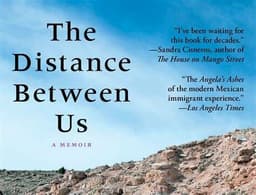
The Distance Between Us
Quiz by Cinco Delgado
Tag the questions with any skills you have. Your dashboard will track each student's mastery of each skill.
What was Reyna Grande's motivation for writing?
Reyna Grande grew up in poverty in Iguala for the first eight years of her life. Her parents went to the United States to pursue greater financial opportunities, leaving her and her siblings in the care of an abusive grandmother. When she was eight years old, her father brought her and her siblings Mago and Carlos to live with him in Los Angeles, subjecting them to a harrowing and illegal border crossing. In Los Angeles, Reyna and her siblings adjusted to life in America, all the while fearing their controlling, alcoholic father’s punishments for the slightest transgression. Reyna found creative writing as an outlet both for self-expression and as a means of proving to her father that she was taking advantage of the precious opportunity of a life in America. Reyna went on to attain degrees from Pasadena City College, UC Santa Cruz, and Antioch College. The author of two novels and two memoirs, Grande is the winner of an American Book Award and an International Book Award, and she currently teaches creative writing at UCLA and several writing conferences around the country.
What is the reason behind Reyna Grande's move to the United States, as mentioned in the passage?
Reyna Grande grew up in poverty in Iguala for the first eight years of her life. Her parents went to the United States to pursue greater financial opportunities, leaving her and her siblings in the care of an abusive grandmother. When she was eight years old, her father brought her and her siblings Mago and Carlos to live with him in Los Angeles, subjecting them to a harrowing and illegal border crossing. In Los Angeles, Reyna and her siblings adjusted to life in America, all the while fearing their controlling, alcoholic father’s punishments for the slightest transgression. Reyna found creative writing as an outlet both for self-expression and as a means of proving to her father that she was taking advantage of the precious opportunity of a life in America. Reyna went on to attain degrees from Pasadena City College, UC Santa Cruz, and Antioch College. The author of two novels and two memoirs, Grande is the winner of an American Book Award and an International Book Award, and she currently teaches creative writing at UCLA and several writing conferences around the country.
What was the impact of the Immigration Reform and Control Act on Reyna's family and other immigrants who entered the United States illegally?
The Distance Between Us follows Reyna from 1980, when she was four, through 1999, when she graduated from UC Santa Cruz. Mexico's financial crisis and border politics hinder Reyna's family from lawfully entering the US, compounding their poverty, disease, and abuse. After illegally crossing the border with their father, Reyna and her siblings take years to get their green cards, while their mother and father struggle as well. They eventually benefit from the Immigration Reform and Control Act of 1986, which legalized undocumented immigrants who entered the US before January 1, 1982, but also required employers to know and attest to their employees' immigration status and made it illegal to know. The measure gave amnesty to many immigrants but increased racial profiling and worker discrimination nationwide. Reyna and her siblings—as well as their parents and grandparents—were nurtured in crippling, deadly poverty, which drives many immigrants to "El Otro Lado." Racism and prejudice continue to make border reform a hard issue.
What were the major struggles that Reyna Grande faced during her childhood as described in the passage?
The Distance Between Us follows Reyna from 1980, when she was four, through 1999, when she graduated from UC Santa Cruz. Mexico's financial crisis and border politics hinder Reyna's family from lawfully entering the US, compounding their poverty, disease, and abuse. After illegally crossing the border with their father, Reyna and her siblings take years to get their green cards, while their mother and father struggle as well. They eventually benefit from the Immigration Reform and Control Act of 1986, which legalized undocumented immigrants who entered the US before January 1, 1982, but also required employers to know and attest to their employees' immigration status and made it illegal to know. The measure gave amnesty to many immigrants but increased racial profiling and worker discrimination nationwide. Reyna and her siblings—as well as their parents and grandparents—were nurtured in crippling, deadly poverty, which drives many immigrants to "El Otro Lado." Racism and prejudice continue to make border reform a hard issue.
Which of the following would most likely be the topic of a memoir?
A memoir is a literary genre that presents a personal account or narrative of significant experiences or events in the author's life. It usually includes details of the author's personal life, such as emotions, thoughts, and reflections on the events they are describing, as well as external information on their experiences. Memoirs can cover a wide range of topics such as relationships, family, travel, career, or other significant experiences that have had a profound impact on the author's life. Often, memoirs are written by people who are not public figures but have lived through extraordinary experiences or have a unique perspective to share with their readers. Memoirs can be emotional, reflective, and introspective, providing readers with a powerful insight into a person’s life and the lessons they have learned.
Which of the following completes the analogy “a memoir is to a picture as a biography is to”?
Which of the following is the best analogy for the relationship between contemporary literature and traditional literature?
Contemporary literature is a term used to describe literary works that are written in the present time or the recent past, usually since World War II. It encompasses a wide range of genres, including poetry, fiction, drama, and creative non-fiction, and is characterized by its diversity, innovation, and experimentation.
Which of the following is the best analogy for the role of contemporary literature in promoting diversity and inclusivity in the literary world?
Contemporary literature also reflects the diversity of the modern world, with writers from all parts of the globe contributing to the literary conversation. Many contemporary writers come from marginalized communities and offer new insights into the experiences of those who have been traditionally excluded from mainstream literature.
Which of the following is the best analogy for the first-person point of view?
The first-person point of view is a narrative perspective in which the story is told from the perspective of a narrator who is a character in the story. In this point of view, the narrator refers to themselves using first-person pronouns like "I," "me," and "my."
Which of the following is the best analogy for the limitations of the first-person narration?
First-person narration allows the reader to see the story through the eyes of the narrator, experiencing events and emotions in a more intimate and personal way. It can create a sense of immediacy and authenticity, as the narrator is able to convey their thoughts and feelings directly to the reader.
However, it also limits the reader's perspective to that of the narrator, as they can only see and understand what the narrator experiences and knows. This can create a sense of subjectivity, as the reader is only getting one character's perspective on the events of the story.
