Tag the questions with any skills you have. Your dashboard will track each student's mastery of each skill.
Give this quiz to my class
Q 1/29
Score 0
the shape of the illuminated (sunlit) portion of the Moon as seen by an observer on Earth.
30
moon phases
Q 2/29
Score 0
the movement of one object around a center or another object
30
revolution
29 questions
Q.
the shape of the illuminated (sunlit) portion of the Moon as seen by an observer on Earth.
1
30 sec
Q.
the movement of one object around a center or another object
2
30 sec
Q.
the curved path of a celestial object or spacecraft around a star, planet, or moon, especially a periodic elliptical revolution.
3
30 sec
Q.
an imaginary line about which a body rotates.
4
30 sec
Q.
to cause to lean, incline, slope, or slant.
5
30 sec
Q.
light rays that hit the Earth at an angle
6
30 sec
Q.
he time required for a body within the solar system, such as a planet, the Moon, or an artificial Earth satellite, to return to the same or approximately the same position relative to the Sun as seen by an observer on the Earth
7
30 sec
Q.
rays of light that strike the Earth at a perpendicular or 90 degree angle
8
30 sec
Q.
a region with particular prevailing weather conditions.
9
30 sec
Q.
The Earth spins at a slight angle or t___ on its orbital path. (tilt, turn)
10
30 sec
Q.
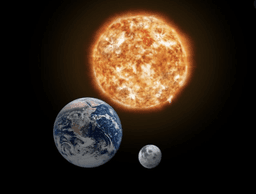
See image
11
30 sec
Q.
The spinning motion of a planet on its axis
12
30 sec
Q.
two days of the year when the amount of day and night are of equal length all over the world: Autumnal (Fall) Equinox and Vernal (Spring) Equinox.
13
30 sec
Q.
when the edge of the sun remains visible as a bright ring around the moon
14
30 sec
Q.
the illuminated surface of the Moon as seen from Earth is increasing in size, right side is illuminated
15
30 sec
Q.
moon phase during which more than half of the side facing the Earth is illuminated.
16
30 sec
Q.
Moon phase in which less than half of the Moon appears to be illuminated.
17
30 sec
Q.
the fully shaded inner region of a shadow cast by an opaque object, especially the area on the earth or moon experiencing the total phase of an eclipse.
18
30 sec
Q.
either of the two times in the year, the summer solstice and the winter solstice, when the sun reaches its highest or lowest point in the sky at noon, marked by the longest and shortest days.
19
30 sec
Q.
the blocking of a portion of light from one object in space by another object in space
20
30 sec
Q.
The complete blocking of light from one object in space by another object in space, as seen by a particular position
21
30 sec
Q.
A partial shadow that appears where light from part of the source is blocked and light from another part of the source is not blocked.
22
30 sec
Q.
(of the moon) pertaining to the period during which the visible surface of the moon decreases, left side is illuminated
23
30 sec
Q.
emitting or reflecting light, glowing; illuminating
24
30 sec
Q.
the tide with the least difference between consecutive low and high tides, occurs during the quarter moons
25
30 sec
Q.
The tide with the greatest difference between consecutive low and high tides, occurs during the full and new moons
26
30 sec
Q.
an impact region caused by a meteor striking the surface of a planet or moon
27
30 sec
Q.
The revolution of the Moon around Earth that produces the changing phases of the Moon. One complete lunar cycle takes about 29.5 days.
28
30 sec
Q.
the dark regions of cooled lava on Earth's Moon that serve as evidence that the Moon used to be volcanic in its past;