Loading...

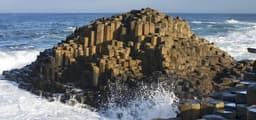
The Giant's Causeway
Quiz by עירית מרחב
Customize this quiz to suit your class
Instantly translate to 100+ languages
Tag the questions with any skills you have. Your dashboard will track each student's mastery of each skill.
Give this quiz to my class

 The Story of Ramayana by Maharshi Valmiki Long ago, Dasharatha, the wise king of Ayodhya of Sarayu, India had three wives. Though the King had three wives, he didn’t have any children with them. The Chief priest Vasishta advised the king to make fire sacrifice to obtain a blessing from the gods. After the gods were pleased, one of them appeared out of the flame and handed him a pot full of nectar. The god told the king to share the nectar with his three queens namely Kausalya, Kaikeye, and Sumitra. While the nectar had been shared, the three queens gave birth to sons: Kausalya had Rama; Kaikeye had Bharatha; and Sumitra had twins Lakshmana and Shatrughna. A sage took the boys out to train them in archery. In a neighboring city, the ruler's daughter was named Sita. When it was time for Sita to choose her bridegroom, at a ceremony called a Swayamvara, the princes were asked to string a giant bow. No one else could even lift the bow, but as Rama bent it, he did not only string it but also broke it into two. Sita indicated that she chose Rama as her husband by putting a garland around his neck. The disappointed suitors were watching. 6 CO_Q3_English8_Module 4 King Dasharatha, Rama's father, decided it was time to give his throne to his eldest son Rama and retired to the forest to seek moksha. Everyone seems pleased. This plan fulfilled the rules of dharma because an eldest son should rule and, if a son can take over one's responsibilities, one's last years may be spent in a search for moksha. In addition, everyone loved Rama. However, Rama's stepmother, the king's second wife, was not pleased. She wanted her son, Bharata, to rule. Because of an oath Dasharatha had made to her years before, she got the king to agree to banish Rama for fourteen years and to crown Bharata even though the king, on bended knee, begged her not to demand such things. Broken-hearted, the devastated king could not face Rama with the news that Kaikeyi must tell him. Rama, always obedient, was as content to go into banishment in the forest as to be crowned king. Sita convinced Rama that she would always be at his side and his brother Lakshmana also begged to accompany them. Rama, Sita, and Lakshmana set out to the forest. Bharata, whose mother's evil plot had won him the throne, was very upset when he found out what had happened. Not for a moment he did consider breaking the rules of dharma and becoming king in Rama's place. He went to Rama's forest retreat and begged Rama to return and rule, but Rama refused. "We must obey father," Rama says. Bharata then took Rama's sandals saying, "I will put these on the throne, and every day I shall place the fruits of my work at the feet of my Lord." Embracing Rama, he took the sandals and returned to Ayodhya. Years passed and Rama, Sita, and Lakshmana were very happy in the forest. Rama and Lakshmana destroyed the rakshasas (evil creatures) who disturbed the sages in their meditations. One day a rakshasa princess named Shurpanakha tried to seduce Rama, and Lakshmana wounded her and drove her away. She returned to her brother Ravana, the ten-headed ruler of Lanka (Sri Lanka, formerly Ceylon), and told her brother, who is always attracted to beautiful women, about lovely Sita. Ravana devised a plan to abduct Sita. He sent a magical golden deer which Sita desired Rama to hunt. A long time had passed, but Rama didn’t return. Thus, Lakshmana went off to find his brother. Before leaving Sita, Lakshmana drew a protective circle around Sita and warned her that she would be safe if she would stay within the circle. As they went off, Ravana, who could change his shape, appeared as a holy man begging alms. The moment Sita stepped outside the circle to give him food, Ravana grabbed her and carried her off to his kingdom in Lanka. Rama was broken-hearted when he returned to the empty hut and could not find Sita. A band of monkeys led by Hanuman offered to help him find Sita. Ravana carried Sita to his palace in Lanka, but he could not force her to be his wife. So, he put her in a grove and alternately sweet-talked her and threatened her in an attempt to get her to agree to marry him. Sita would not even look at him but thought only of her beloved Rama. Hanuman, the general of the monkey band could fly since his father was the wind, and he flew to Lanka and found Sita in the grove, comforted her, and told her Rama would come soon and save her. 7 CO_Q3_English8_Module 4 Ravana's men captured Hanuman, and Ravana ordered them to wrap Hanuman's tail in cloth and to set it on fire. With his tail burning, Hanuman hopped from house-top to house-top, setting Lanka a fire. He then flew back to Rama to tell him where Sita was. Rama, Lakshmana, and the monkey army built a causeway from the tip of India crossing over to Lanka. A mighty battle took place. Rama killed several of Ravana's brothers and then Rama confronted ten-headed Ravana. Rama finally killed Ravana and freed Sita. After Sita gained her freedom from Ravana, she proved her purity through the trial by fire. Then, they returned to Ayodhya and Rama became the king. As Rama became the king, he ruled Ayodhya with Ramrajya - an ideal time when everyone does his or her duties and responsibilitiesEnder's Game study guide: Symbols from the Giant's Drink game Lesson 2: Plate Tectonics There are a few handfuls of major plates and dozens of smaller, or minor, plates. Six of the majors are named for the continents embedded within them, such as the North American, African, and Antarctic plates. Though smaller in size, the minors are no less important when it comes to shaping the Earth. The tiny Juan de Fuca plate is largely responsible for the volcanoes that dot the Pacific Northwest of the United States. The plates make up Earth's outer shell, called the lithosphere. (This includes the crust and uppermost part of the mantle.) Churning currents in the molten rocks below propel them along like a jumble of conveyor belts in disrepair. Most geologic activity stems from the interplay where the plates meet or divide. The movement of the plates creates three types of tectonic boundaries: convergent, where plates move into one another; divergent, where plates move apart; and transform, where plates move sideways in relation to each other. They move at a rate of one to two inches (three to five centimeters) per year. Convergent BoundariesWhere plates serving landmasses collide, the crust crumples and buckles into mountain ranges. India and Asia crashed about 55 million years ago, slowly giving rise to the Himalaya, the highest mountain system on Earth. As the mash-up continues, the mountains get higher. Mount Everest, the highest point on Earth, may be a tiny bit taller tomorrow than it is today. These convergent boundaries also occur where a plate of ocean dives, in a process called subduction, under a landmass. As the overlying plate lifts up, it also forms mountain ranges. In addition, the diving plate melts and is often spewed out in volcanic eruptions such as those that formed some of the mountains in the Andes of South America. At ocean-ocean convergences, one plate usually dives beneath the other, forming deep trenches like the Mariana Trench in the North Pacific Ocean, the deepest point on Earth. These types of collisions can also lead to underwater volcanoes that eventually build up into island arcs like Japan. Divergent Boundaries At divergent boundaries in the oceans, magma from deep in the Earth's mantle rises toward the surface and pushes apart two or more plates. Mountains and volcanoes rise along the seam. The process renews the ocean floor and widens the giant basins. A single mid-ocean ridge system connects the world's oceans, making the ridge the longest mountain range in the world. On land, giant troughs such as the Great Rift Valley in Africa form where plates are tugged apart. If the plates there continue to diverge, millions of years from now eastern Africa will split from the continent to form a new landmass. A mid-ocean ridge would then mark the boundary between the plates. Transform Boundaries The San Andreas Fault in California is an example of a transform boundary, where two plates grind past each other along what are called strike-slip faults. These boundaries don't produce spectacular features like mountains or oceans, but the halting motion often triggers large earthquakes, such as the 1906 one that devastated San Francisco.Weathering describes the breaking down or dissolving of rocks and minerals on the surface of the Earth. Water, ice, acids, salts, plants, animals, and changes in temperature are all agents of weathering. Once a rock has been broken down, a process called erosion transports the bits of rock and mineral away. No rock on Earth is hard enough to resist the forces of weathering and erosion. Together, these processes carved landmarks such as the Grand Canyon, in the U.S. state of Arizona. This massive canyon is 446 kilometers (277 miles) long, as much as 29 kilometers (18 miles) wide, and 1,600 meters (1 mile) deep. Weathering and erosion constantly change the rocky landscape of Earth. Weathering wears away exposed surfaces over time. The length of exposure often contributes to how vulnerable a rock is to weathering. Rocks, such as lavas, that are quickly buried beneath other rocks are less vulnerable to weathering and erosion than rocks that are exposed to agents such as wind and water, As it smoothes rough, sharp rock surfaces, weathering is often the first step in the production of soils. Tiny bits of weathered minerals mix with plants, animal remains, fungi, bacteria, and other organisms. A single type of weathered rock often produces infertile soil, while weathered materials from a collection of rocks is richer in mineral diversity and contributes to more fertile soil. Soils types associated with a mixture of weathered rock include glacial till, loess, and alluvial sediments. Weathering is often divided into the processes of mechanical weathering and chemical weathering. Biological weathering, in whichliving or once-living organisms contribute to weathering, can be a part of both processes. Mechanical Weathering Mechanical weathering, also called physical weathering and disaggregation, causes rocks to crumble. Water, in either liquid or solid form, is often a key agent of mechanical weathering. For instance, liquid water can seep into cracks and crevices in rock. If temperatures drop low enough, the water will freeze. When water freezes, it expands. The ice then works as a wedge. It slowly widens the cracks and splits the rock. When ice melts, liquid water performs the act of erosion by carrying away the tiny rock fragments lost in the split. This specific process (the freeze-thaw cycle) is called frost weathering or cryofracturing. Figure 4.3 Frost Wedging Temperature changes can also contribute to mechanical weathering in a process called thermal stress. Changes in temperature cause rock to expand (with heat) and contract (with cold). As this happens over and over again. the structure of the rock weakens. Over time, it crumbles. Rocky desert landscapes are particularly vulnerable to thermal stress. The outer layer of desert rocks undergo repeated stress as the temperature changes from day Eventually, Lo outer night. layersflake off in thin sheets, a process called exfoliation. Exfoliation contributes to the formation of bornhardts, one of the most dramatic features in landscapes formed by weathering and erosion. Bornhardts are tall, domed, isolated rocks often found areas. in tropical Sugarloaf Mountain, an iconic landmark in Rio de Janeiro, Brazil, is bornhardt. a Salt also works to weather rock in a process called haloclasty. Saltwater sometimes gets into the cracks and pores of rock. If the saltwater evaporates, salt crystals are left behind. As the crystals grow, they put pressure on the rock, slowly breaking it apart. Plants and animals can be agents of mechanical weathering. The seed of a tree may sprout in soil that has collected in a cracked rock. As the roots grow, they widen the cracks, eventually breaking the rock into pieces. Over time, trees can break apart even large rocks. Even small plants, such as mosses, can enlarge tiny cracks as they grow. Animals that tunnel underground, such as moles and prairie dogs, also work to break apart rock and soil. Other animals dig and trample rock aboveground, causing rock to slowly crumble. Chemical Weathering Chemical weathering changes the molecular structure of rocks and soil.For instance, carbon dioxide from the air or soil sometimes combines with water in a process called carbonation. This produces a weak acid, called carbonic acid, that can dissolve rock. Carbonic acid is especially effective at dissolving limestone. When carbonic acid seeps through limestone underground, it can open up huge cracks or hollow out vast networks of caves. Carlsbad Caverns National Park, in the U.S. state of New Mexico, includes more than 119 limestone caves created by weathering and erosion. The largest is called the Big Room.. With an area of about 33,210 square meters (357,469 square feet), the Big Room is the size of six football fields. Another type of chemical weathering works on rocks that contain iron. These rocks turn to rust in a process called oxidation. Rust is a compound created by the interaction of oxygen and iron in the presence of water. As rust expands, it weakens rock and helps break it apart. Another familiar form of chemical weathering is hydrolysis. In the process of hydrolysis, a new solution (a mixture of two or more substances) is formed as chemicals in rock interact with water. In many rocks, for example, sodium minerals interact with water to form a saltwater solution. Hydration and hydrolysis contribute to flared slopes, another dramatic example of a landscape formed by weathering and erosion. Flared slopes are sometimes nicknamed "wave rocks." Their c-shape is largely concave rock formations a result of subsurface weathering, in which hydration and hydrolysis wear away rocks beneath the landscape's surfaceWeathering and People Weathering is a natural process, but human activities can speed it up. For example, certain kinds of air pollution increase the rate of weathering Burning coal, natural and petroleum releases chemicals such as nitrogen oxide and gas, sulfur dioxide into the atmosphere. When these chemicals combine with sunlight and moisture, they change into acids. They then fall back to Earth as acid rain. Acid rain rapidly weathers limestone, marble, and other kinds of stone. The effects of acid rain can often be seen on gravestones, making names and other inscriptions impossible to read. Acid rain has also damaged many historic buildings and monuments. For example, at 71 meters (233 feet) tall, the Leshan Giant Buddha at Mount Emei, China is the world's largest statue of the Buddha. It was carved 1,300 years ago and sat unharmed for centuries. An innovative drainage system mitigates the natural process of erosion But in recent years, acid rain has turned the statue's nose black and made some of its hair crumble and fall.Weathering and People Weathering is a natural process, but human activities can speed it up. For example, certain kinds of air pollution increase the rate of weathering Burning coal, natural and petroleum releases chemicals such as nitrogen oxide and gas, sulfur dioxide into the atmosphere. When these chemicals combine with sunlight and moisture, they change into acids. They then fall back to Earth as acid rain. Acid rain rapidly weathers limestone, marble, and other kinds of stone. The effects of acid rain can often be seen on gravestones, making names and other inscriptions impossible to read. Acid rain has also damaged many historic buildings and monuments. For example, at 71 meters (233 feet) tall, the Leshan Giant Buddha at Mount Emei, China is the world's largest statue of the Buddha. It was carved 1,300 years ago and sat unharmed for centuries. An innovative drainage system mitigates the natural process of erosion But in recent years, acid rain has turned the statue's nose black and made some of its hair crumble and fall.Translator: Joseph Geni Reviewer: Morton Bast Before March, 2011, I was a photographic retoucher based in New York City. We're pale, gray creatures. We hide in dark, windowless rooms, and generally avoid sunlight. We make skinny models skinnier, perfect skin more perfect, and the impossible possible, and we get criticized in the press all the time, but some of us are actually talented artists with years of experience and a real appreciation for images and photography. On March 11, 2011, I watched from home, as the rest of the world did, as the tragic events unfolded in Japan. Soon after, an organization I volunteer with, All Hands Volunteers, were on the ground, within days, working as part of the response efforts. I, along with hundreds of other volunteers, knew we couldn't just sit at home, so I decided to join them for three weeks. On May the 13th, I made my way to the town of Ōfunato. It's a small fishing town in Iwate Prefecture, about 50,000 people, one of the first that was hit by the wave. The waters here have been recorded at reaching over 24 meters in height, and traveled over two miles inland. As you can imagine, the town had been devastated. We pulled debris from canals and ditches. We cleaned schools. We de-mudded and gutted homes ready for renovation and rehabilitation. We cleared tons and tons of stinking, rotting fish carcasses from the local fish processing plant. We got dirty, and we loved it. For weeks, all the volunteers and locals alike had been finding similar things. They'd been finding photos and photo albums and cameras and SD cards. And everyone was doing the same. They were collecting them up, and handing them in to various places around the different towns for safekeeping. Now, it wasn't until this point that I realized that these photos were such a huge part of the personal loss these people had felt. As they had run from the wave, and for their lives, absolutely everything they had, everything had to be left behind. At the end of my first week there, I found myself helping out in an evacuation center in the town. I was helping clean the onsen, the communal onsen, the huge giant bathtubs. This happened to also be a place in the town where the evacuation center was collecting the photos. This is where people were handing them in, and I was honored that day that they actually trusted me to help them start hand-cleaning them. Now, it was emotional and it was inspiring, and I've always heard about thinking outside the box, but it wasn't until I had actually gotten outside of my box that something happened. As I looked through the photos, there were some were over a hundred years old, some still in the envelope from the processing lab, I couldn't help but think as a retoucher that I could fix that tear and mend that scratch, and I knew hundreds of people who could do the same. So that evening, I just reached out on Facebook and asked a few of them, and by morning the response had been so overwhelming and so positive, I knew we had to give it a go. So we started retouching photos. This was the very first. Not terribly damaged, but where the water had caused that discoloration on the girl's face had to be repaired with such accuracy and delicacy. Otherwise, that little girl isn't going to look like that little girl anymore, and surely that's as tragic as having the photo damaged. (Applause) Over time, more photos came in, thankfully, and more retouchers were needed, and so I reached out again on Facebook and LinkedIn, and within five days, 80 people wanted to help from 12 different countries. Within two weeks, I had 150 people wanting to join in. Within Japan, by July, we'd branched out to the neighboring town of Rikuzentakata, further north to a town called Yamada. Once a week, we would set up our scanning equipment in the temporary photo libraries that had been set up, where people were reclaiming their photos. The older ladies sometimes hadn't seen a scanner before, but within 10 minutes of them finding their lost photo, they could give it to us, have it scanned, uploaded to a cloud server, it would be downloaded by a gaijin, a stranger, somewhere on the other side of the globe, and it'd start being fixed. The time it took, however, to get it back is a completely different story, and it depended obviously on the damage involved. It could take an hour. It could take weeks. It could take months. The kimono in this shot pretty much had to be hand-drawn, or pieced together, picking out the remaining parts of color and detail that the water hadn't damaged. It was very time-consuming. Now, all these photos had been damaged by water, submerged in salt water, covered in bacteria, in sewage, sometimes even in oil, all of which over time is going to continue to damage them, so hand-cleaning them was a huge part of the project. We couldn't retouch the photo unless it was cleaned, dry and reclaimed. Now, we were lucky with our hand-cleaning. We had an amazing local woman who guided us. It's very easy to do more damage to those damaged photos. As my team leader Wynne once said, it's like doing a tattoo on someone. You don't get a chance to mess it up. The lady who brought us these photos was lucky, as far as the photos go. She had started hand-cleaning them herself and stopped when she realized she was doing more damage. She also had duplicates. Areas like her husband and her face, which otherwise would have been completely impossible to fix, we could just put them together in one good photo, and remake the whole photo. When she collected the photos from us, she shared a bit of her story with us. Her photos were found by her husband's colleagues at a local fire department in the debris a long way from where the home had once stood, and they'd recognized him. The day of the tsunami, he'd actually been in charge of making sure the tsunami gates were closed. He had to go towards the water as the sirens sounded. Her two little boys, not so little anymore, but her two boys were both at school, separate schools. One of them got caught up in the water. It took her a week to find them all again and find out that they had all survived. The day I gave her the photos also happened to be her youngest son's 14th birthday. For her, despite all of this, those photos were the perfect gift back to him, something he could look at again, something he remembered from before that wasn't still scarred from that day in March when absolutely everything else in his life had changed or been destroyed. After six months in Japan, 1,100 volunteers had passed through All Hands, hundreds of whom had helped us hand-clean over 135,000 photographs, the large majority — (Applause) — a large majority of which did actually find their home again, importantly. Over five hundred volunteers around the globe helped us get 90 families hundreds of photographs back, fully restored and retouched. During this time, we hadn't really spent more than about a thousand dollars in equipment and materials, most of which was printer inks. We take photos constantly. A photo is a reminder of someone or something, a place, a relationship, a loved one. They're our memory-keepers and our histories, the last thing we would grab and the first thing you'd go back to look for. That's all this project was about, about restoring those little bits of humanity, giving someone that connection back. When a photo like this can be returned to someone like this, it makes a huge difference in the lives of the person receiving it. The project's also made a big difference in the lives of the retouchers. For some of them, it's given them a connection to something bigger, giving something back, using their talents on something other than skinny models and perfect skin. I would like to conclude by reading an email I got from one of them, Cindy, the day I finally got back from Japan after six months. "As I worked, I couldn't help but think about the individuals and the stories represented in the images. One in particular, a photo of women of all ages, from grandmother to little girl, gathered around a baby, struck a chord, because a similar photo from my family, my grandmother and mother, myself, and newborn daughter, hangs on our wall. Across the globe, throughout the ages, our basic needs are just the same, aren't they?" Thank you. (Applause) (Applause)Emma: Look at that giant elephant! It’s the biggest thing I’ve ever seen! Tom: Yes! That giant animal is a mammal. Emma: Is it alive? Tom: Yes! It’s moving and eating. It’s really alive. Emma: Elephants have no fur, right? Tom: Right. But lions do. Lions have thick fur. Emma: What other animals have fur? Tom: Cats, dogs, and monkeys have fur too. Emma: Birds are different. They are covered with feathers. Tom: Yes, birds are not covered in fur like mammals. Emma: Look at the monkey! It’s using its hand to groom its baby. Tom: Monkeys groom each other to stay clean. Emma: That baby monkey is cute! It’s the mother’s offspring, right? Tom: Yes! A baby is called an offspring. Emma: When I grow up, I will be an adult who helps animals. Tom: Me too! I want to be a zoo adult who feeds and grooms animals. Emma: Monkeys are funny. I like mammals the most. Tom: Me too. They are smart and fun to watch.Hello Chuxing, one of China’s top bike-sharing platforms backed by ecommerce giant Alibaba Group Holding, has applied to go public on the Nasdaq stock exchange. Launched in 2016, Hello Chuxing gained traction quickly as the first bikesharing operator to focus its business within China’s smaller cities and towns. It managed to survive China’s bike-sharing bubble between 2017 and 2018 when Ofo went into bankruptcy and Mobike was acquired by Meituan. The “survivor” had more than 10 million bicycles operating in over 400 Chinese cities as of December 2020. Hello Chuxing is developing its new business aggressively. In 2019, it took on sector leader Didi Chuxing with a new business Hello Dache that provides car-sharing and carpooling services. It has also been following industry giant Meituan into the life services field with new “intra-city logistics” and “bulk buying” services. The service, Hello Dache, features instant communication that enables passengers to keep in touch with drivers online once ride requests have been accepted. It also features a one-click button to call the police as part of efforts to boost safety. It is now looking into travel, with the aim of being a travel-based platform that provides daily life services, a person familiar with the matter said. “The market was too lavish when capital players and consumers were optimistic about the sector,” founder Yang Lei said back in 2019. “Firms would burn through cash subsidies to keep up with rivals and maintain a rapid pace of expansion. Hello Chuxing, however, has been careful to watch every penny and use money wisely while planning for the future,” he said.