Loading...

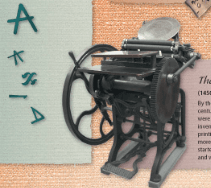
The history of writing quiz (past simple passive)
Quiz by Nelcy Carreño
Customize this quiz to suit your class
Instantly translate to 100+ languages
Tag the questions with any skills you have. Your dashboard will track each student's mastery of each skill.
Give this quiz to my class
 Yaama I'm Jack Evans and you're watching BTN. Here's what's coming up. We uncover the story behind this famous photo, learn about First Nations seasons and find out the history of Book Week. What is Statehood? Reporter: Tatenda Chibika INTRO: But first, the Prime Minister Anthony Albanese has announced that Australia will join other countries in recognising Palestine as an independent state. So, what does that mean? Tatenda found out. Anthony Albanese, Prime Minister: Australia will recognise the state of Palestine. Australia will recognise the right of the Palestinian people to a state of their own. We will work with the international community to make this right a reality. Tatenda Chibika, Reporter: That's the moment our Prime Minister said Australia would recognise Palestine as an independent state at the upcoming United Nations General assembly next month. It's something other countries, including France and Canada, have said they'll be doing too. So, what does that mean exactly? To be considered an independent state under international law a place needs to have its own land or territories with defined borders, it needs to have people who permanently live there, have a working government and it has to be able to talk and make deals with other countries. Once a place meets all those rules, it can ask to be recognised by other independent states and countries. But a big step in becoming an independent state is being fully recognised by the United Nations. To do that you first need to get approval from at least nine members of the UN's Security Council. That's a group of countries responsible for maintaining international peace and security. But even then, that tick of approval can still be blocked by one of the Security Council's five permanent members Russia, China, the UK, the US and France. If the Security Council approves, the decision then goes to the UN's General Assembly where at least two thirds of the UN's 193 members have to agree to make it official. Yeah, it's a pretty complex process which is why we've only seen a handful of countries recognised by the UN in recent years like South Sudan and Montenegro. Others like Kosovo are only 'partially' recognised which means they have some recognition but not enough to become a full member state at the UN. Right now, Palestine is recognised by more than 140 countries — that's more than two thirds of the UN General Assembly. So, why hasn't it become a UN member state yet? Well, it came pretty close last year when 12 members of the Security Council voted in favour of it. VANESSA FRAZIER, AMBASSADOR OF MALTA, APRIL 2024 UNSC PRESIDENT: I shall now put the draft resolution to the vote. But the US, a close ally to Israel, used its special powers to block Palestine from becoming a member state. VANESSA FRAZIER: Those against? At the time, the U.S said Palestine and Israel needed to come to an agreement on their own first. Throughout the years, there have been attempts to figure out a way for both Palestine and Israel to exist peacefully alongside each other but that hasn't happened yet. And now Israel has said that recognising Palestine as an independent state would be rewarding Hamas the group in charge of Gaza which was responsible for the terror attacks on October 7th, 2023. But the Palestinian Authority which governs parts of the West Bank says Hamas won't have a role in any future state of Palestine which will exist peacefully alongside Israel. Australia, like the US, had previously said that it wanted Israel and Palestine to figure out things by themselves first but because of how the war has been going the Australian government is worried that if it continues to wait, there might not be a Palestinian state to recognise. ANTHONY ALBANESE, PRIME MINISTER: There has been too many lives lost, both Israeli's and Palestinians and the world is saying we need a solution to this conflict, we need to end the cycle of violence and the way to do that is to have a two-state solution. News Quiz Russia's President Vladimir Putin stepped foot on American Soil for the first time in a decade to meet with US President Donald Trump. What state did they meet in? Alabama, Alaska or Arizona?It's Alaska. The two leaders met to discuss a way to end the war in Ukraine but weren't able to make any final agreements. DONALD TRUMP, US PRESIDENT: There were many, many points that we agreed on. Most of them, I would say, a couple of big ones, that we haven't quite got there, but we've made some headway. There's no deal until there's a deal. A lot of people criticised the two world leaders for not including Ukraine's president Volodymyr Zelenskyy in the meeting. But that didn't seem to worry Mr Trump who said the meeting was a success and Mr Putin even invited the US President to meet up again in Russia. DONALD TRUMP: We'll see you again very soon. Thank you very much, Vladimir. VLADIMIR PUTIN, RUSSIAN PRESIDENT: Next time in Moscow. DONALD TRUMP: Oh, that's an interesting one. No, no, no. I'll get a little heat on that one. Last week thousands of people marked the 80th anniversary of VJ Day. What does VJ Day commemorate? The victory of Allied forces in Europe, the surrender of Japan and the end of World War II or the dropping of the first atomic bomb? VJ Day or Victory over Japan day commemorates the surrender of Japan and the end of World War II on the 15th of August 1945. Around the world, and here in Australia, people marked the anniversary with ceremonies remembering those who fought in the war. REPORTER: Who will you be remembering today? VETERAN: Oh, a lot of fellows that I knew that never made it home. Scientists in the UK have created toothpaste that includes which of these ingredients? Hair, eye lashes or fingernails? Yeah, they're all a bit random and gross but the answer is hair. According to scientists from King's College in London, hair could be the key to good oral health because it contains a protein called Keratin which they say when mixed with saliva forms a crystal-like protective coating similar to enamel. And Swifties rejoice because Taylor Swift has announced her 12th Studio album. It's called life of a show what? Is it show pony, show girl or show bag? It's Life of a Showgirl and it'll be released October 3rd. Vincent Lingiari Reporter: Joseph Baronio INTRO: Now to this very famous photograph. It was taken 50 years ago and depicts a really significant moment in Australian history. Joe found out about the story behind it. On the 16th of August 1975, this famous photo was taken. It shows the former Prime Minister Gough Whitlam pouring sand into the hand of Aboriginal leader Vincent Lingiari. A simple gesture that symbolised handing the land at Wave Hill in the Northern Territory back to the Gurindji people. But the journey to get there was far from simple. It started back in the 1960s. At the time, Wave Hill was the biggest cattle station in the world, controlled by British landowner Lord Vestey. The Gurindji people, who had lived on the land for generations, worked for Vestey, but they weren't paid fairly, and conditions were tough. NEWS REPORTER: The station's 100 aboriginal stockmen, with their 100 dependents, are camped in the dry bed of the Victoria River with little shade from 90-degree heat, dust and flies. Eventually, Gurindji leader Vincent Lingiari said it was time to act. VINCENT LINGIARI: I said, "What was it before Lord Vestey born and I was born?" It was blackfella country. So, on August 23rd, 1966, Mr Lingiari and his fellow Aboriginal workers went on strike. It became known as the Wave Hill Walk Off. They moved their camp away from the Wave Hill station to a sacred site called Daguragu on Wattie Creek. They wanted to set up their own cattle station, and said they wouldn't move until their land was returned to them. For years, petitions and negotiations went on between the Gurindji people, the NT Administration, and the Australian Government in Canberra. CLAPPERS: 31. 32. 33. DAVID QUINN, ABSCOL: Well, it's basic justice that their land is recognised. PROTESTORS: Equal rights! As the news spread across the country, thousands of Aussies joined the campaign, including the leader of the Labor Party, Gough Whitlam, who made this promise during his 1972 election campaign. GOUGH WHITLAM: We will legislate to give Aborigines land rights. Not just because their case is beyond argument, but because all of us as Australians are diminished, while the Aborigines are denied their rightful place in this nation. Later that year, Gough Whitlam became Prime Minister. (Song From Little Things Big Things Grow, Song by Kev Carmody and Paul Kelly, 1993) From little things big things grow,from little things big things grow… But it wasn't until 1975, 9 years after the Wave Hill Walk Off started, that he followed through with his promise. Eight years went by, eight long years of waiting'Til one day a tall stranger appeared in the landAnd he came with lawyers and he came with great ceremony GOUGH WHITLAM: I solemnly hand to you these deeds as proof in Australian law that these lands belong to the Gurindji people. And through Vincent's fingers poured a handful of sandFrom little things big things grow 50 years on, and The Wave Hill Walk Off is seen as a pivotal moment in Australia's history. It led to significant legal and social changes for First Nations people, which is something many agree is worth celebrating. First Nations Seasons Reporter: Saskia Mortarotti INTRO: Recently, Melbourne's Lord Mayor suggested ditching the four-season calendar that most of us are familiar with and adopting a six-season Wurundjeri calendar instead saying it gives a better description of what the weather's actually like there. Sas found out more about the different seasonal calendars used by First Nations people. SASKIA MORTAROTTI, REPORTER: Right now, in most of the country, it's pretty cold. COLD GIRL: Think of somewhere warm. What? It's 32 degrees in Darwin in the middle of winter? But ah, yeah. There are some places where it's, well, quite warm. Which makes you wonder whether the weather actually matches the seasons. You see, Australia is pretty big, and we have lots of different weather patterns. Which is something First Nations people have tracked for thousands of years with their own seasonal calendars. KARL WINDA TELFER, CULTURAL CREATIVE KANYANYAPILLA: Why have we got four seasons when you know that don't make any sense here. It doesn't relate to the country here. This is Karl Telfer. He's an artist and storyteller who produced the Kuri Kurru exhibition at the Museum of Discovery in Adelaide that explores the 6 different seasons of the Kaurna Meyunna. SASKIA MORTAROTTI: So, how do you know when you're in one of those six seasons? KARL WINDA TELFER: Well, there are stars that rise. So, you know, there are certain stars, like in Parnatti, for example. There's a star called Parna, and we know what that star is. So, that talks to us about, okay, the time now is going to be cold on the ground. First Nations calendars like the Kaurna one don't just tell us what's happening with the weather; they're also used to track when certain plants and animals are around. KARL WINDA TELFER: It teaches you about what plants you can, you know, what you can eat what you can't and all that what is ready certain times a year and fruit everything, bird shows you the right time to eat the fruit, perfect time, if you try and go get them the next week they're gone. Karl says we can also use these calendars to see how the environment has changed over time. KARL WINDA TELFER: Kudlilla is the season we're in now and Kudlilla that talks about like the rain but we're not having enough rain these days, well, these times. And this is due to climate and the climate changing. There are many different First Nations seasonal calendars around the country. Like Ngan'gi calendar from the Northern Territory which has 13 seasons that follow the life cycle of the native spear grass. Or the Wurundjeri Calendar in Victoria which has 6 seasons. And recently, Melbourne's Lord Mayor, Nicholas Reece, said Melbourne, or Naarm, would be better off adopting the Wurundjeri calendar because it's more in tune to what's happening with the weather. Something many, including Karl, think we should be doing right across the country. KARL WINDA TELFER: I'm talking about the English four seasons. So, this is totally different systems that we're talking about and weather patterns and currents and all sorts of different things, because it's the sea country too. So, my question is, well, why do we have that? If that doesn't work, you know? Quiz How many seasons are there in the Tiwi Island Calendar? 1, 2 or 3? It's 3, although they also have 13 minor seasons. Book Week Reporter: Wren Gillett INTRO: This week, kids across Australia have been dressing up as their favourite characters to celebrate Book Week. Wren finds out why Book Week began 80 years ago and why it's still important today for getting young Aussies into reading. STUDENT: I read an hour every night, maybe even two hours some nights. STUDENT: My favourite book series are the Harry Potter series and the Keeper of the Lost City series. STUDENT: Probably Bad Guys and Weirdo. STUDENT: I like the Amulet, I've been reading that. STUDENT: I love reading Dork Diaries and Exploding Endings. Whether it's Fantasy, mystery, history — whatever you're into. Book week is a time to celebrate, well, books. STUDENT: Me and my friends are dressing up as Inside Out. STUDENT: I was thinking SpongeBob. STUDENT: I'm dressing up as Winnie the Pooh and it's just a fun way to express what kind of books you like. And guess what, book week has actually been a thing for many, many years. WREN GILLETT, REPORTER: Once upon a time, in a land not so far away, literacy lovers noticed a problem. The year was 1945. The second World War had just ended, and kids were mainly reading books from overseas, in particular the UK. Because, at the time, there weren't many Aussie authors writing books for children. WREN GILLETT: So, a group of passionate teachers, librarians, booksellers, publishers, and book-loving volunteers, decided to create what we now know as The Children's Book Council of Australia. Familiar logo, right? Together, they launched book week, all in an effort to get Aussie kids' reading more. And it seemed to work. The 1960s saw a boom in Australian children's books being published. REPORTER: How many books do you read a week? STUDENT: Well, it really depends on the week. If there's exams, I might read only one or two. But if there's no exams and if I've got plenty of time, I might read up to five or six. WREN GILLETT: But today, it's a slightly different story. Studies show that less than one in five eight to 18-year-olds are reading in their free time, and that only one in three actually enjoy reading for fun. WREN GILLETT: Why do you reckon we're seeing this trend? STUDENT: People are getting sucked into screens and they're like spending hours just scrolling through TikTok and stuff, and they're getting so attached to it that they don't feel the need to pick up books and read them. Yeah, there's a lot of different things competing for our attention these days, but many think books are still worth our time. PETER HELLIER, AUSSIE COMEDIAN AND AUTHOR: Books are the exact opposite of boring. And if you think they're boring, I'm sorry, but you're wrong. This is Peter Hellier, he's a pretty famous Aussie comedian, actor, and the author behind these books. And he's just released another one called Detective Galileo, about a trail horse who dreams of solving crimes. PETER HELLIER: He joins the police force and quickly finds out that the horses don't actually solve the crimes, it's the police officers who solve the crime. So he promptly gets thrown out of the force and begins his own detective agency, which I'm reliably told is the only detective agency in the world run by a horse. Peter actually started writing books when he was a kid. PETER HELLIER: I started writing when I was six, seven, eight years old. In fact, I started my own publishing company called Better Books. And I would write these books, and then I would get a parent or one of my parents or teachers to type them up. And I would read them in front of the class. And, you see, each has the logo, the Better Books logo, there it is — the famous Better Books logo. WREN GILLETT: You weren't mucking around. PETER HELLIER: There all on all of them. There we go. There we go. Many, Including Peter, say there's plenty to get from a good book. They help us learn new words and phrases, get a better understanding of the world around us, and strengthen our imaginations. PETER HELLIER: Books can take you absolutely anywhere. They can take you to countries that you never dreamed about going. Countries that exist, countries that don't exist. Reading just makes the world a much bigger place. It's why for the past 80 years, schools around the country have been taking part in book week. STUDENT: Reading is a place where you can have your own world just to yourself. STUDENT: It's like watching a movie inside your head, but you can choose how it goes. STUDENT: Picking up a book is a good idea, maybe you should start with something that you're interested with and then you can start exploring from there. Quiz What is the title of the book that took out this year's Book of the year Award for younger readers? It's Laughter is the Best Endingby Maryam Master. Some other winners included I'm not really here by Gary Loneborough which took out book of the year for older readers and best picture book went to The Truck Cat, by Deborah Frenkel. Sport Australia's men's national basketball team — the Boomers — have won their third Asia Cup in a row, with an epically narrow victory over China. COMMENTATOR: It is Australia who are celebrating! China started strong, leading 25-17 at quarter time. But Aussie Xavier Cooks led a fierce comeback, shooting 30 points and collecting nine rebounds, earning him the title of MVP. And there seriously couldn't have been a tighter finish. Just as the final buzzer went off, China missed a shot that would have won them the game, leaving Australia with a 90-89 victory. COMMENTATOR: An unbelievable finish. The 2025 AFLW season kicked off last week, and so did a new trick. Yeah, 19-year-old Ash Centra from Collingwood, pulled out this move in the warm-up before their season-opener to Carlton, and since then, a lot of people have been trying to do it, with some success, kind of? FOOTY PLAYER: No, I'm not doing it on camera. But despite the epic warmup, Carlton did end up beating Collingwood by 24 points. Now, the moves from these athletes in China weren't quite so graceful but give 'em a break, okay, they're robots. For the first time ever, humanoid robots from all over the world, competed in their very own games, which featured, soccer, boxing, running, and ahh, lots of falling over. Lots. Luckily though, they did bring their own cheer squad. Young Rapper Reporter: Rylie INTRO: Finally, we're going to meet another winner of this year's Heywire competition — which asks young people in regional areas to share their stories. Rylie's going to tell us how music helped to transform his life. Check it out. Mum and I were homeless. We lived at a caravan park, in motels and tents around Warrnambool. It wasn't pretty. I'm First Nations, and I remember feeling like, my own country is failing me right now. So, we camped right along here. I remember pitching a tent right here and this was actually around the same time I started to get into music which was a good way for me to have something to look forward to. I was raised by the SoundCloud era, listening to a lot of trap music. When I was in school, I'd rap along to songs by Juice World, then I started to make my own. My first track was recorded on my phone. It was bad but a lot of fun to make. Some kids in my school heard it and shamed me. That put me off music for the next couple of years, until a friend of mine bought a microphone and encouraged me to give it another go. There was something about that mic and the energy of the crew around me that gave me confidence. It lit a fire in me. Over time, I was able to focus my flow. My songs are about escapism, living the life, being a success. I rap about stuff that takes me to a better place in my head. I'm manifesting my future. My stage name is Hundo Milli, it's short for hundreds of millions. Money's not really the end goal; it's more about having the freedom to dream big. Mum taught me to never stop believing. Even when times were tough, she kept pushing for us to get housing and eventually we did. We're some of the lucky ones. Today, I'm in a Melbourne studio recording my next single. I remember living in my tent dreaming about this very moment and now I'm here, doing what I love. Ain't nothing going to stop me. Closer Well, that's all we've got for you today, but we'll be back before you know it. In the meantime, you can head to our website, there's plenty to see and do. You can also catch Newsbreak every weeknight and there's BTN High for all you highschoolers out there. Have an awesome week and I'll see you next time. Bye.Commas Directions: Correct the sentences by adding commas where needed. 1. After the sound of the bell we realized it was a false alarm. 2. Mr. Yoshino the head of the department resigned yesterday. 3. The gentleman with the black umbrella who is an ambassador to the United States said hello to us as we were entering the hotel. 4. Even though we won the game the players unfortunately did not play their best. 5. Heather walked quickly up to the door and knocked hoping that someone would answer. Author’s Purpose 6. An author writes a story about a boy who saves his town from a flood by using his quick thinking. The author includes exciting descriptions of the boy's bravery. What is the author’s most likely purpose for writing this story? A. To inform readers about the dangers of floods B. To entertain readers with a heroic tale C. To explain how to prevent floods D. To persuade readers to prepare for emergencies 7. Which of the following is an example of an author writing to persuade? A. A science textbook chapter explaining the water cycle B. A commercial encouraging people to adopt shelter pets C. A short story about a girl who finds a magical necklace D. A recipe for making chocolate chip cookies 8. Read the following sentence: "Studies show that students who read for 20 minutes a day score higher on tests. Reading is one of the best habits you can develop for success in school and life." What is the author’s purpose in this passage? A. To entertain readers with a fun story B. To persuade readers to read more often C. To inform readers about how books are written D. To explain how to find books to read 9. An author writes a how-to guide titled 10 Easy Steps to Plant a Garden. What is the author’s primary purpose? A. To persuade readers to grow their own vegetables B. To inform readers how to plant a garden C. To entertain readers with funny garden tips 10. Read the excerpt: "Long ago, in a village surrounded by mountains, the people discovered a secret about their water well. Every full moon, the well water turned to gold for just one night. But no one knew why. This mystery brought travelers from far and wide, hoping to uncover the truth." What is the author’s purpose in this excerpt? A. To persuade readers to visit the village B. To inform readers about a historical event C. To entertain readers with a mysterious tale D. To explain the science behind the water Main Idea When I stepped out into the bright sunlight from the darkness of the movie house, I had only two things on my mind: Paul Newman and a ride home. I was wishing I looked like Paul Newman--- he looks tough and I don't--- but I guess my own looks aren't so bad. I have light-brown, almost-red hair and greenish-gray eyes. I wish they were more gray because I hate most guys that have green eyes, but I have to be content with what I have. My hair is longer than a lot of boys wear theirs, squared off in back and long at the front and sides, but I am a greaser and most of my neighborhood rarely bothers to get a haircut. Besides, I look better with long hair. 11. What is the main idea? The narrator likes movies. The narrator wishes he was Paul Newman. The narrator is content with his appearance. The narrator looks better with long hair. 12. The narrator believes. . . looks are important. he should get a haircut. green eyes are bad. that he has red hair. Once there were four girls who shared a pair of pants. The girls were all different sizes and shapes, and yet the pants fit each of them. You may think this is a suburban myth. But I know it's true, because I am one of them, one of the sisters of the Traveling Pants. We discovered their magic last summer, purely by accident. The four of us were splitting up for the first time in our lives. Carmen had gotten them from a secondhand place without even bothering to try them on. She was going to throw them away, but by chance, Tibby spotted them. First Tibby tried them; then me, Lena; then Bridget; then Carmen. By the time Carmen pulled them on, we knew something extraordinary was happening. If the same pants fit and I mean really fit the four of us, they aren't ordinary. They don't belong completely to the world of things you can see and touch. My sister, Effie, claims I don't believe in magic, and maybe I didn't then. But after the first summer of the Traveling Pants, I do. 13. What is the main idea? Four friends were connected through a special pair of pants. A pair of pants called the Traveling Pants. Carmen finding a pair of pants from a second-hand shop. The girls believing in magic. 14. The narrator included that the pants fit all of them to emphasize how the girls become friends. the girls are different sizes. why the pants are special. where the pants came from. If you are interested in stories with happy endings, you would be better off reading some other book. In this book, not only is there no happy ending, there is no happy beginning and very few happy things in the middle. This is because not very many happy things happened in the lives of the three Baudelaire youngsters. Violet, Klaus, and Sunny Baudelaire were intelligent children, and they were charming, and resourceful, and had pleasant facial features, but they were extremely unlucky, and most everything that happened to them was rife with misfortune, misery, and despair. I'm sorry to tell you this, but that is how the story goes. 15. What is the main idea? description about the story to come. A warning about the story and its sad content. A declaration about the Baudelaire family. A beginning for the end of the story. 16. The narrator believes the reader does not like sad stories. likes stories with happy endings. can’t enjoy the story. will find the story unhappy. 17. Read the following sentence: Of course you can exaggerate your story, but what you say must be based on truth. Which word means the same as exaggerate? repeat reveal overstate increase 18. What is the meaning of the word inaugurated, used in the following sentence: Less than two months after Abraham Lincoln was inaugurated President in 1861, he encountered one of the most difficult tasks ever experienced by a United States leader: civil war. elected by a vote brought into office identified by name viewed as an authority 19. What does the phrase “practice your presentation so much that you could do it in your sleep” suggest in the following sentence: The best advice is to practice your presentation so much that you could do it in your sleep. get plenty of sleep the night before giving a presentation give their presentations in front of a small audience first take advice from their teachers on how to write a presentation memorize their presentations before they give them 20. Read the following sentence: The Phoenix Mars Lander is a NASA spacecraft that landed on the Red Planet in May 2009 to study the history of water and potential for life on the planet. What is another word for potential? existence situation possibility qualification 1. What is the main purpose of including theme and main idea questions in a text? a) To test your reading comprehension skills b) To understand the overall message or lesson of the text c) To practice identifying specific details in the text d) To improve your vocabulary and word knowledge 2. What is the purpose of finding the theme in a text? a) To summarize the main idea of the text in a few words b) To identify the specific details and examples in the text c) To understand the order of events in the text d) To analyze the author's writing style and techniques 3. Which of the following represents the theme of a text? a) A long sentence that describes the setting of the story b) A single word or short phrase that captures the main idea of the text c) A list of characters and their traits d) A detailed description of the plot and conflict in the story 4. How does identifying the main idea of a paragraph help you understand the text? a) It allows you to make connections between different parts of the text b) It helps you identify the author's purpose for writing the text c) It enables you to predict what will happen next in the story d) It helps you remember the specific details and examples in the paragraph 5. Which of the following best describes the main idea of a paragraph? a) The specific details and examples that support the theme of the text b) The order of events and actions in the paragraph c) The overall message or lesson conveyed by the paragraph d) The vocabulary words and their definitions in the paragraph 6. In a short paragraph about dogs, what could be a possible theme? a) Running and playing in the park b) Different breeds of dogs and their characteristics c) The loyalty and companionship dogs provide d) How to train a dog to do tricks 7. What might be the main idea of a paragraph about the importance of recycling? a) Recycling reduces pollution and conserves natural resources b) The process of recycling and how it works c) The different types of materials that can be recycled d) The history of recycling and its impact on society 8. Which of the following could be the theme of a paragraph about the benefits of reading? a) The importance of reading for academic success b) How to choose the right book to read c) The different genres of literature and their characteristics d) The role of libraries in promoting reading 9. If a paragraph discusses the life cycle of a butterfly, what would be the most likely main idea? a) The different colors and patterns of butterfly wings b) The stages of a butterfly's life from egg to adult c) The habitats and environments where butterflies live d) The types of plants that attract butterflies for feeding 10. What is the purpose of including vocabulary words and their meanings in context in a text? a) To test your knowledge of different words and their definitions b) To understand the specific details and examples in the text c) To improve your reading comprehension skills d) To practice using new words in your own writingShe went by the name of Belisa Crepusculario, not because she had been baptized with that name or given it by her mother, but because she herself had searched until she found the poetry of "beauty" and "twilight" and cloaked herself in it. She made her living selling words. She journeyed through the country from the high cold mountains to the burning coasts, stopping at fairs and in markets where she set up four poles covered by a canvas awning under which she took refuge from the sun and rain to minister to her customers. She did not have to peddle her merchandise because from having wandered far and near, everyone knew who she was. Some people waited for her from one year to the next, and when she appeared in the village with her bundle beneath her arm, they would form a line in front of her stall. Her prices were fair. For five centavos she delivered verses from memory, for seven she improved the quality of dreams, for nine she wrote love letters, for twelve she invented insults for irreconcilable enemies. She also sold stories, not fantasies but long, true stories she recited at one telling, never skipping a word. This is how she carried news from one town to another. People paid her to add a line or two: our son was born, so-and-so died, our children got married, the crops burned in the field. Wherever she went a small crowd gathered around to listen as she began to speak, and that was how they learned about each others' doings, about distant relatives, about what was going on in the civil war. To anyone who paid her fifty centavos in trade, she gave the gift of a secret word to drive away melancholy. It was not the same word for everyone, naturally, because that would have been collective dece it. Each person received his or her own word, with the assurance that no one else would use it that way in this universe or the Beyond. Belisa Crepusculario had been born into a family so poor they did not even have names to give their children. She came into the world and grew up in an inhospitable land where some years the rains became avalanches of water that bore everything away before them and others when not a drop fell from the sky and the sun swelled to fill the horizon and the world became a desert. Until she was twelve, Belisa had no occupation or virtue other than having withstood hunger and the exhaustion of centuries. During one interminable drought, it fell to her to bury four younger brothers and sisters, when she realized that her turn was next, she decided to set out across the 2 plains in the direction of the sea, in hopes that she might trick death along the way. The land was eroded, split with deep cracks, strewn with rocks, fossils of trees and thorny bushes, and skeletons of animals bleached by the sun. From time to time she ran into families who, like her, were heading south, following the mirage of water. Some had begun the march carrying their belongings on their back or in small carts, but they could barely move their own bones, and after a while they had to abandon their possessions. They dragged themselves along painfully, their skin turned to lizard hide and their eyes burned by the reverberating glare. Belisa greeted them with a wave as she passed, but she did not stop, because she had no strength to waste in acts of compassion. Many people fell by the wayside, but she was so stubborn that she survived to cross through that hell and at long last reach the first trickles of water, fine, almost invisible threads that fed spindly vegetation and farther down widened into small streams and marshes. Belisa Crepusculario saved her life and in the process accidentally discovered writing. In a village near the coast, the wind blew a page of newspaper at her feet. She picked up the brittle yellow paper and stood a long while looking at it, unable to determine its purpose, until curiosity overcame her shyness. She walked over to a man who was washing his horse in the muddy pool where she had quenched her thirst. "What is this?" she asked. "The sports page of the newspaper," the man replied, concealing his surprise at her ignorance. The answer astounded the girl, but she did not want to seem rude, so she merely inquired about the significance of the fly tracks scattered across the page. "Those are words, child. Here it says that Fulgencio Barba knocked out El Negro Tiznao in the third round." That was the day Belisa Crepusculario found out that words make their way in the world without a master, and that anyone with a little cleverness can appropriate them and do business with them. She made a quick assessment of her situation and concluded that aside from becoming a prostitute or working as a servant in the kitchens of the rich there were few occupations she was qualified for. It seemed to her that selling words would be an honorable alternative. From that moment on, she worked at that profession, and was never tempted by any other. At the beginning, she offered her merchandise unaware that words could be written outside of newspapers. When she learned otherwise, she calculated the infinite possibilities of her trade and with her savings paid a priest twenty pesos to teach her to read and write, with her three 3 remaining coins she bought a dictionary. She poured over it from A to Z and then threw it into the sea, because it was not her intention to defraud her customers with packaged words. One August morning several years later, Belisa Crepusculario was sitting in her tent in the middle of a plaza, surrounded by the uproar of market day, selling legal arguments to an old man who had been trying for sixteen years to get his pension. Suddenly she heard yelling and thudding hoofbeats. She looked up from her writing and saw, first, a cloud of dust, and then a band of horsemen come galloping into the plaza. They were the Colonel's men, sent under orders of El Mulato, a giant known throughout the land for the speed of his knife and his loyalty to his chief. Both the Colonel and El Mulato had spent their lives fighting in the civil war, and their names were ineradicably linked to devastation and calamity. The rebels swept into town like a stampeding herd, wrapped in noise, bathed in sweat, and leaving a hurricane of fear in their trail. Chickens took wing, dogs ran for their lives, women and children scurried out of sight, until the only living soul left in the market was Belisa Crepusculario. She had never seen El Mulato and was surprised to see him walking toward her. "I'm looking for you," he shouted, pointing his coiled whip at her, even before the words were out, two men rushed her -- knocking over her canopy and shattering her inkwell -- bound her hand and foot, and threw her like a sea bag across the rump of El Mulato's mount. Then they thundered off toward the hills. Hours later, just as Belisa Crepusculario was near death, her heart ground to sand by the pounding of the horse, they stopped, and four strong hands set her down. She tried to stand on her feet and hold her head high, but her strength failed her and she slumped to the ground, sinking into a confused dream. She awakened several hours later to the murmur of night in the camp, but before she had time to sort out the sounds, she opened her eyes and found herself staring into the impatient glare of El Mulato, kneeling beside her. "Well, woman, at last you've come to," he said. To speed her to her senses, he tipped his canteen and offered her a sip of liquor laced with gunpowder. She demanded to know the reason for such rough treatment, and El Mulato explained that the Colonel needed her services. He allowed her to splash water on her face, and then led her to the far end of the camp where the most feared man in all the land was lazing in a hammock strung between two trees. She could not see his face, because he lay in the deceptive shadow of the leaves and the indelible shadow of all his years as a bandit, but she imagined from the way his 4 gigantic aide addressed him with such humility that he must have a very menacing expression. She was surprised by the Colonel's voice, as soft and well-modulated as a professor's. "Are you the woman who sells words?" he asked. "At your service," she stammered, peering into the dark and trying to see him better. The Colonel stood up, and turned straight toward her. She saw dark skin and the eyes of a ferocious puma, and she knew immediately that she was standing before the loneliest man in the world. "I want to be President," he announced. The Colonel was weary of riding across that godforsaken land, waging useless wars and suffering defeats that no subterfuge could transform into victories. For years he had been sleeping in the open air, bitten by mosquitoes, eating iguanas and snake soup, but those minor inconveniences were not why he wanted to change his destiny. What truly troubled him was the terror he saw in people's eyes. He longed to ride into a town beneath a triumphal arch with bright flags and flowers everywhere, he wanted to be cheered, and be given newly laid eggs and freshly baked bread. Men fled at the sight of him, children trembled, and women miscarried from fright, he had had enough, and so he had decided to become President. El Mulato had suggested that they ride to the capital, gallop up to the Palace, and take over the government, the way they had taken so many other things without anyone's permission. The Colonel, however, did not want to be just another tyrant, there had been enough of those before him and, besides, if he did that, he would never win people's hearts. It was his aspiration to win the popular vote in the December elections. "To do that, I have to talk like a candidate. Can you sell me the words for a speech?" the Colonel asked Belisa Crepusculario. She had accepted many assignments, but none like this. She did not dare refuse, fearing that El Mulato would shoot her between the eyes, or worse still, that the Colonel would burst into tears. There was more to it than that, however, she felt the urge to help him because she felt a throbbing warmth beneath her skin, a powerful desire to touch that man, to fondle him, to clasp him in her arms. All night and a good part of the following day, Belisa Crepusculario searched her repertory for words adequate for a presidential speech, closely watched by El Mulato, who could not take his eyes from her firm wanderer's legs and virginal breasts. She discarded harsh, cold words, words 5 that were too flowery, words worn from abuse, words that offered improbable promises, untruthful and confusing words, until all she had left were words sure to touch the minds of men and women's intuition. Calling upon the knowledge she had purchased from the priest for twenty pesos, she wrote the speech on a sheet of paper and then signaled El Mulato to untie the rope that bound her ankles to a tree. He led her once more to the Colonel, and again she felt the throbbing anxiety that had seized her when she first saw him. She handed him the paper and waited while he looked at it, holding it gingerly between thumbs and fingertips. "What the shit does this say," he asked finally. "Don't you know how to read?" "War's what I know," he replied. She read the speech aloud. She read it three times, so her client could engrave it on his memory. When she finished, she saw the emotion in the faces of the soldiers who had gathered round to listen, and saw that the Colonel's eyes glittered with enthusiasm, convinced that with those words the presidential chair would be his. "If after they've heard it three times, the boys are still standing there with their mouths hanging open, it must mean the thing's damn good, Colonel" was El Mulato's approval. "All right, woman. How much do I owe you?" the leader asked. "One peso, Colonel." "That's not much," he said, opening the pouch he wore at his belt, heavy with proceeds from the last foray. "The peso entitles you to a bonus. I'm going to give you two secret words," said Belisa Crepusculario. "What for?" She explained that for every fifty centavos a client paid, she gave him the gift of a word for his exclusive use. The Colonel shrugged. He had no interest at all in her offer, but he did not want to be impolite to someone who had served him so well. She walked slowly to the leather stool where he was sitting, and bent down to give him her gift. The man smelled the scent of a mountain cat issuing from the woman, a fiery heat radiating from her hips, he heard the terrible whisper of her hair, and a breath of sweetmint murmured into his ear the two secret words that were his alone. "They are yours, Colonel," she said as she stepped back. "You may use them as much as you 6 please." El Mulato accompanied Belisa to the roadside, his eyes as entreating as a stray dog's, but when he reached out to touch her, he was stopped by an avalanche of words he had never heard before; believing them to be an irrevocable curse, the flame of his desire was extinguished. During the months of September, October, and November the Colonel delivered his speech so many times that had it not been crafted from glowing and durable words it would have turned to ash as he spoke. He travelled up and down and across the country, riding into cities with a triumphal air, stopping in even the most forgotten villages where only the dump heap betrayed a human presence, to convince his fellow citizens to vote for him. While he spoke from a platform erected in the middle of the plaza, El Mulato and his men handed out sweets and painted his name on all the walls in gold frost. No one paid the least attention to those advertising ploys; they were dazzled by the clarity of the Colonel's proposals and the poetic lucidity of his arguments, infected by his powerful wish to right the wrongs of history, happy for the first time in their lives. When the Candidate had finished his speech, his soldiers would fire their pistols into the air and set off firecrackers, and when finally they rode off, they left behind a wake of hope that lingered for days on the air, like the splendid memory of a comet's tail. Soon the Colonel was the favorite. No one had ever witnessed such a phenomenon: a man who surfaced from the civil war, covered with scars and speaking like a professor, a man whose fame spread to every corner of the land and captured the nation's heart. The press focused their attention on him. Newspapermen came from far away to interview him and repeat his phrases, and the number of his followers and enemies continued to grow. "We're doing great, Colonel," said El Mulato, after twelve successful weeks of campaigning. But the Candidate did not hear. He was repeating his secret words, as he did more and more obsessively. He said them when he was mellow with nostalgia; he murmured them in his sleep; he carried them with him on horseback; he thought them before delivering his famous speech; and he caught himself savoring them in his leisure time. And every time he thought of those two words, he thought of Belisa Crepusculario, and his senses were inflamed with the memory of her feral scent, her fiery heat, the whisper of her hair, and her sweetmint breath in his ear, until he began to go around like a sleepwalker, and his men realized that he might die before he ever sat in the presidential chair. "What's got hold of you, Colonel," El Mulato asked so often that finally one day his chief broke 7 down and told him the source of his befuddlement: those two words that were buried like two daggers in his gut. "Tell me what they are and maybe they'll lose their magic," his faithful aide suggested. "I can't tell them, they're for me alone," the Colonel replied. Saddened by watching his chief decline like a man with a death sentence on his head, El Mulato slung his rifle over his shoulder and set out to find Belisa Crepusculario. He followed her trail through all that vast country, until he found her in a village in the far south, sitting under her tent reciting her rosary of news. He planted himself, spraddle-legged, before her, weapon in hand. "You! You're coming with me," he ordered. She had been waiting. She picked up her inkwell, folded the canvas of her small stall, arranged her shawl around her shoulders, and without a word took her place behind El Mulato's saddle. They did not exchange so much as a word in all the trip; El Mulato's desire for her had turned into rage, and only his fear of her tongue prevented his cutting her to shreds with his whip. Nor was he inclined to tell her that the Colonel was in a fog, and that a spell whispered into his ear had done what years of battle had not been able to do. Three days later they arrived at the encampment, and immediately, in view of all the troops, El Mulato led his prisoner before the Candidate. "I brought this witch here so you can give her back her words, Colonel," El Mulato said, pointing the barrel of his rifle at the woman's head. "And then she can give you back your manhood." The Colonel and Belisa Crepusculario stared at each other, measuring one another from a distance. The men knew then that their leader would never undo the witchcraft of those accursed words, because the whole world could see the voracious-puma eyes soften as the woman walked to him and took his hand in hers. Copyright © 1989 by Isabel Allende From The Stories of Eva Luna, Translated by Margaret Sayers PedenEarly society and accomplishments Origins Knowledge of the early prehistory of Southeast Asia has undergone exceptionally rapid change as a result of archaeological discoveries made since the 1960s, although the interpretation of these findings has remained the subject of extensive debate. Nevertheless, it seems clear that the region has been inhabited from the earliest times. Hominid fossil remains date from approximately 1,500,000 years ago and those of Homo sapiens from approximately 40,000 years ago. Furthermore, until about 7000 bce the seas were some 150 feet (50 metres) lower than they are now, and the area west of Makassar Strait consisted of a web of watered plains that sometimes is called Sundaland. These land connections perhaps account for the coherence of early human development observed in the Hoabinhian culture, which lasted from about 13,000 to 5000 or 4000 bce. The stone tools used by hunting and gathering societies across Southeast Asia during this period show a remarkable degree of similarity in design and development. When the sea level rose to approximately its present level about 6000 bce, conditions were created for a more variegated environment and, therefore, for more extensive differentiation in human development. While migration from outside the region may have taken place, it did not do so in a massive or clearly punctuated fashion; local evolutionary processes and the circulation of peoples were far more powerful forces in shaping the region’s cultural landscape. Technological developments and population expansion Perhaps because of a particular combination of geophysical and climatic factors, early Southeast Asia did not develop uniformly in the direction of increasingly complex societies. Not only have significant hunting and gathering populations continued to exist into the 21st century, but the familiar cultural sequences triggered by such events as the discovery of agriculture or metallurgy do not seem to apply. This is not to say that the technological capabilities of early Southeast Asian peoples were negligible, for sophisticated metalworking (bronze) and agriculture (rice) were being practiced by the end of the 3rd millennium bce in northeastern Thailand and northern Vietnam, and sailing vessels of advanced design and sophisticated navigational skills were spread over a wider area by the same time or earlier. Significantly, these technologies do not appear to have been borrowed from elsewhere but were indigenous and distinctive in character. Austronesian languages Austronesian languagesMajor divisions of the Austronesian languages. These technological changes may partially account for two crucial developments in Southeast Asia’s later prehistory. The first is the extraordinary seaborne expansion of speakers of Proto-Austronesian languages and their descendants, speakers of Austronesian (or Malayo-Polynesian) languages, which occurred over a period of 5,000 years or more and came to encompass a vast area and to stretch nearly half the circumference of Earth at the Equator. This outward movement of people and culture was evolutionary rather than revolutionary, the result of societal preference for small groups and a tendency of groups to hive off once a certain population size had been reached. It began as early as 4000 bce, when Taiwan was populated from the Asian mainland, and subsequently it continued southward through the northern Philippines (3rd millennium bce), central Indonesia (2nd millennium bce), and western and eastern Indonesia (2nd and 1st millennia bce). From approximately 1000 bce on the expansion continued both eastward into the Pacific, where that immense region was populated in a process continuing to about 1000 ce as voyagers reached the Hawaiian Islands and New Zealand, and westward, where Malay peoples reached and settled the island of Madagascar sometime between 500 and 700 ce, bringing with them (among other things) bananas, which are native to Southeast Asia. Thus, for a considerable period of time, the Southeast Asian region contributed to world cultural history, rather than merely accepting outside influences, as frequently has been suggested. The second development, which began possibly as early as 1000 bce, centred on the production of fine bronze and the fashioning of bronze-and-iron objects, particularly as they have been found at the site in northern Vietnam known as Dong Son. The earliest objects consisted of socketed plowshares and axes, shaft-hole sickles, spearheads, and such small items as fishhooks and personal ornaments. By about 500 bce the Dong Son culture had begun producing the bronze drums for which it is known. The drums are large objects (some weigh more than 150 pounds [70 kg]), and they were produced by the difficult lost-wax casting process and decorated with fine geometric shapes and depictions of animals and humans. This metal industry was not derived from similar industries in China or India. Rather, the Dong Son period offers one of the most powerful—though not necessarily the only or earliest—examples of Southeast Asian societies transforming themselves into more densely populated, hierarchical, and centralized communities. Since typical drums, either originals or local renditions, have been found throughout Southeast Asia and since they are associated with a rich trade in exotics and other goods, the Dong Son culture also suggests that the region as a whole consisted not of isolated, primitive niches of human settlement but of a variety of societies and cultures tied together by broad and long-extant trading patterns. Although none of these societies possessed writing, some displayed considerable sophistication and technological skill, and, although none appears to have constituted a territorial centralized state, new and more complex polities were forming.Can you make a multiple choice of test questions regarding this information given which is Curriculum from Different Points of View There are many definitions of curriculum. Because of this, the concept of curriculum is sometimes characterized as fragmentary, elusive and confusing. However, the numerous definitions indicate dynamism that connotes diverse interpretations of what curriculum is all about. The definitions are influenced by models of thought, pedagogies, political as well as cultural experiences. Let us study some of these definitions. 1. Traditional Points of View of Curriculum In early years of the 20th century, the traditional concepts held of the “curriculum is that it is a body of subjects or subject matter prepaid by the teachers for the student’s to learn”. It was synonymous to the “course of study” and “syllabus” Robert M. Hutchins views curriculum as “permanent studies” where the rules of grammar, reading, rhetoric and logic and mathematics for basic education are emphasized. Basic education should emphasize the 3 Rs and college education should be grounded on liberal education. On the other, Arthur Bestor as an essentialist, believes that the mission of the school should be intellectual training, hence curriculum should focus on the fundamental intellectual disciplines of grammar, literature and writing. It should also include mathematics, science, history and foreign language. The definition leads us to the view of Joseph Schwab that discipline is the sole source of curriculum. Thus in our education system, curriculum is divided into chunks of knowledge we call subject areas in basic education such as English, Mathematics, Science, Social Studies and others. In college, discipline may include humanities, sciences, language and many more. To Phoenix, curriculum should consist entirely of knowledge which comes from various disciplines. Academic discipline became the view of what curriculum is after the cold war and the race to space. Joseph Schwab, a leading curriculum theorist coined the term discipline as a ruling doctrine for curriculum development. Curriculum should consist only of knowledge which comes from disciplines which is the sole source. Thus curriculum can be viewed as a field of study. It is made up of its foundations (philosophical, historical, psychological and social foundations); domains of knowledge as well as its research theories and principles. Curriculum is taken as scholarly and theoretical. It is concerned with broad historical, philosophical and social issues and academics. Most of the traditional ideas view curriculum as written documents or a plan of action in accomplishing goals. 2. Progressive Points of View of Curriculum On the other hand, to a progressivist, a listing of school subjects, syllabi, course of study, and a list of courses or specific discipline do not make a curriculum. These can only be called curriculum if the written materials are actualized by the learner. Broadly speaking, curriculum is defined as the total learning experiences of the individual. This definition is anchored on John Dewey’s definition of experience and education. He believed that reflective thinking is a means that unifies curricular elements. Thought is not derived from action but tested by application. Caswell and Campbell viewed curriculum as “all experiences children have under the guidance of teachers”. This definition is shared by Smith, Stanley and Shores when they defined “curriculum as a sequence of potential experiences set up in the schools for the purpose of disciplining children and youth in group ways of thinking and acting”. Marsh and Willis on the other hand view curriculum as all the “experiences in the classroom which are planned and enacted by the teacher, and also learned by the students”. Points of View on Curriculum Development From the various definitions and concepts presented, it is clear that curriculum is a dynamic process. Development connotes changes which are systematic. A change for the better means any alteration, modification or improvement of existing condition. To produce positive changes, development should be purposeful, planned and progressive. This is how curriculum evolves. Let us look at the two models of curriculum development and concepts of Ralph Tyler and Hilda Taba. Ralph Tyler Model: Four Basic Principles. This is also popularly known as Tyler’s Rationale. He posited four fundamental questions or principles in examining any curriculum in schools. These four fundamental principles are as follows: 1. What educational purposes should the school seek to attain? 2. What educational experiences can be provided that are likely to attain these purposes? 3. How can these educational experiences be effectively organized? 4. How can we determine whether these purposes are being attained or not? In summary, Tyler’s Model show that in curriculum development, the following considerations should be made: (1) Purpose of the school, (2) Educational experiences related to the purposes, (3) Organization of the experiences, and (4) Evaluation of the experiences. On the other hand, Hilda Taba improved on Tyler’s Rationale by making a linear model. She believed that teachers who teach or implement the curriculum should participate in developing it. Her advocacy was commonly called the grassroots approach. She presented seven major steps to her model where teachers could have a major input. These steps are as follows: 1. Diagnosis of learner’s needs and expectations of the larger society. 2. Formulation of learning objectives. 3. Selection of learning content. 4. Organization of learning content. 5. Selection of learning experiences. 6. Organization of learning activities. 7. Determination of what to evaluate and the means of doing it. Thus as you look into curriculum models, the three interacting processes in curriculum development are planning, implementing and evaluating. Types of Curriculum Operating in Schools From the various concepts given, Allan Glatthorn(2000) describes seven types of curriculum operating in the schools. These are (1) Recommended curriculum- proposed by scholars and professional organizations. (2) Written Curriculum- appears in school, district, division or country documents. (3) Taught Curriculum- what teacher’s implement or deliver in the classrooms and schools. (4) Supported Curriculum- resources-textbooks, computers, audio- visual materials which support and help in the implementation of the curriculum. (5) Assessed Curriculum- that which is tested and evaluated. (6) Learned Curriculum- which the students actually learn and what is measured and (7) Hidden Curriculum- the unintended curriculum. 1. Recommended Curriculum- Most of the school curricula are recommended. The curriculum may come from a national agency like the Department of Education, Commission on Higher Education (CHED), Department of Science and Technology (DOST) or any professional organization who has stake in education. For example the Philippine Association for Teacher Education (PAFTE) or the Biology Teacher Association (BIOTA) may recommend a curriculum to be implemented in the elementary or secondary education. 2. Written Curriculum- This includes documents, course of study or syllabi handed down to the schools, districts, division, departments or colleges for implementation. Most of the written curricula are made by curriculum experts with participation of teachers. These were pilot-tested or tried out in sample schools or population. Example of this is the Basic Education Curriculum (BEC). Another example is the written lesson plan of each classroom teacher made up of objectives and planned activities of the teacher. 3. Taught Curriculum- The different planned activities which are put into action in the classroom compose the taught curriculum. These are varied activities that are implemented in order to arrive at the objectives or purposes of the written curriculum. These are used by the learners with the guidance of teachers. Taught curriculum varies according to the learning styles of students and the teaching styles of teachers. 4. Supported Curriculum- In order to have a successful teaching, other than the teacher, there must be materials which should support or help in the implementation of a written curriculum. These refer to the support curriculum that includes material resources such as textbooks, computers, audio-visual materials, laboratory equipment, playgrounds, zoos and other facilities. Support curriculum should enable each learner to achieve real and lifelong learning. 5. Assessed Curriculum- This refers to a tested or evaluated curriculum. At the duration and end of the teaching episodes, series of evaluations are being done by the teachers to determine the extent of teaching or to tell if the students are progressing. This refers to the assessed curriculum. Assessment tools like pencil-and-paper tests, authentic instruments like portfolio are being utilized. 6. Learned Curriculum- This refers the learning outcomes achieved by the students. Learning outcomes are indicated by the results of the tests and changes in behavior which can either be cognitive, affective or psychomotor. 7. Hidden Curriculum- This is the unintended curriculum which is not deliberately planned but may modify behavior or influenced learning outcomes. There are lots of hidden curricula that transpire in the schools. Peer influence, school environment, physical condition, teacher-learner interaction, mood of the teachers and many other factors made up the hidden curriculum.Japan Where Is It? Japan is made up of a group of islands in the Pacific Ocean. It is just off the east coast of Asia. Japan has four main islands and thousands of smaller islands. The entire country is smaller than the state of California. Tokyo (TOH-kee-yoh) is the capital city of Japan. It is on the largest island, called Honshu (HON-shoo). Tokyo has many tall skyscrapers. More than thirty-two million people live there. People. More than 127 million people live in Japan. The country's main language is Japanese. More people live in cities and towns than in the country. City life in Japan is very busy. Most cities have little space, and people are crowded together. Most people in Japan eat rice. Japan grows much of the rice it uses. The Japanese also catch many fish and sell them across the world. Land. Most of Japan is covered with mountains. The country has more than seventy volcanoes. The most famous one is Mount Fuji (FOO-jee). It has not erupted in many years. Earthquakes are also common. The land near the coast is the only flat land in Japan. Japan's biggest cities are on the coasts. The country has many rivers and lakes. History. Japan is thousands of years old. Ancient Japanese and Chinese people traded things and ideas. Some experts think that Japan learned to grow rice from China. Japanese writing even borrows from Chinese writing. In the past, Japan was an empire. It was ruled by emperors. Later, powerful military leaders called shoguns (SHOH-guns) took control away from the emperors. Samurai (SA-muh-rye) warriors also had power. The samurai were known as brave and skilled fighters. Celebrations. The Japanese New Year is an important holiday in Japan. It starts a week before the first day of January. People send cards for the New Year's holiday. They also clean their homes, and children often get gifts. Food. Rice is an important food in Japan. It is eaten at most meals. Noodles are also served with some meals. Another important food is fish. Japanese people sometimes eat raw fish called sushi (SOO-shee). Conclusion. Japan is a small island country, yet it has many people. It has tall mountains and volcanoes. It also has crowded cities with skyscrapers. Japan is a mix of many things-old and new, large and small.A. Arundhati Roy B. Jhumpa Lahiri C. Salman Rushdie D. Anita Desai ________________________________________ 2. The Lowland was published in: A. 2001 B. 2013 C. 2010 D. 2005 ________________________________________ 3. Which earlier work earned Lahiri the Pulitzer Prize? A. The Namesake B. Unaccustomed Earth C. Interpreter of Maladies D. The Lowland ________________________________________ 4. The novel is primarily about: A. Technology and modernity B. Immigration, family, and political violence C. Business rivalry D. Mythology and folklore ________________________________________ 5. The two central brothers in the novel are: A. Rahul and Anil B. Subhash and Udayan C. Gogol and Ashoke D. Amit and Nikhil ________________________________________ 6. Where did the brothers grow up? A. Mumbai B. Dhaka C. Calcutta D. Delhi ________________________________________ 7. Udayan becomes involved in: A. Peace activism B. Cinema C. Naxalite movement D. Business ________________________________________ 8. Subhash moves to: A. London B. Rhode Island C. Toronto D. Chicago ________________________________________ 9. Udayan is killed in: A. Jail B. A riot C. The lowland near his house D. A car accident ________________________________________ 10. Why does Subhash marry Gauri? A. Love B. To protect her and her unborn child C. Financial benefit D. Family pressure ________________________________________ 11. Gauri eventually: A. Becomes a politician B. Starts a business C. Leaves her family D. Returns to India ________________________________________ 12. Subhash raises Bela: A. With Gauri B. Alone C. With help from his parents D. In India ________________________________________ 13. Bela grows up believing: A. Udayan is her father B. Subhash is her father C. She has no father D. Her father died in war ________________________________________ 14. The setting of political unrest is linked to: A. Partition B. Naxalbari uprising C. Independence movement D. Civil War ________________________________________ 15. The narrative style uses: A. Magical realism B. Non-linear structure C. Poetry D. Second-person narration ________________________________________ 16. Gauri’s character represents: A. Traditional motherhood B. Obedient wife C. Intellectual autonomy and emotional detachment D. Political activism ________________________________________ 17. Bela’s character signifies: A. Rebellion against education B. Second-generation identity struggle C. Complete assimilation D. Materialistic living ________________________________________ 18. Memory in the novel functions as: A. A simple recollection B. A haunting presence affecting identity C. A forgotten history D. A symbolic decoration ________________________________________ 19. The lowland itself symbolizes: A. Wealth B. Stability C. Transitional, unstable space D. Escape ________________________________________ 20. Lahiri’s prose style can be described as: A. Flowery and ornate B. Minimalistic and restrained C. Dramatic and verbose D. Highly poetic ________________________________________ 21. Water imagery reflects: A. Joy and happiness B. Power and victory C. Memory and emotional fluidity D. Evil ________________________________________ 22. Which theory applies strongly to this novel? A. Structuralism B. Postcolonial hybridity C. Absurdism D. Modernism ________________________________________ 23. Postcolonial hybridity is linked to: A. Complete assimilation B. Identity in-between cultures C. Traditional values D. Language fluency alone ________________________________________ 24. Which character best reflects second-generation identity conflict? A. Gauri B. Bela C. Subhash D. Udayan ________________________________________ 25. What does Subhash struggle with most? A. Career failure B. Language C. Guilt and secrecy D. Wealth ________________________________________ 26. Udayan’s ideology centers on: A. Business growth B. Armed communist revolution C. Religious reform D. Education ________________________________________ 27. The novel shows how political violence leads to: A. Personal healing B. Economic prosperity C. Emotional trauma across generations D. Cultural unity ________________________________________ 28. Betrayal appears as: A. Only political B. Only emotional C. Both political and familial D. A background idea ________________________________________ 29. The genre of the text best fits: A. Fantasy B. Realistic political family saga C. Science fiction D. Thriller ________________________________________ 30. The narrative constantly shifts between: A. Dream and reality B. India and America C. Past and future India D. Fiction and nonfiction ________________________________________ 31. Homi Bhabha’s "third space" represents: A. Physical land B. A zone of cultural in-betweenness C. A literal building D. A heavenlike vision ________________________________________ 32. Gauri symbolizes: A. Traditional widowhood B. Female agency vs social expectation C. Blind loyalty D. Economic dependence ________________________________________ 33. Bela unknowingly inherits: A. Udayan’s ideology B. Gauri’s academic passion only C. Subhash’s calmness D. Grandparents’ wealth ________________________________________ 34. Lahiri uses silence to: A. Avoid details B. Deepen psychological complexity C. Reduce story relevance D. Simplify events ________________________________________ 35. A major structural device is: A. Letters B. Non-linear flashbacks C. Mythic storytelling D. Metafiction ________________________________________ 36. Which text offers a migrant theme comparison? A. The God of Small Things B. The White Tiger C. The Namesake D. Train to Pakistan ________________________________________ 38. The Naxalite movement first emerged in: A. Mumbai B. Naxalbari village C. Delhi D. Kerala ________________________________________ 39. Which theme repeats strongly? A. Celebration of success B. Silence and secrets C. Fantasy D. Heroism ________________________________________ 40. What does Bela do as an adult? A. Becomes a doctor B. Engages in environmental activism C. Joins corporate life D. Moves into politics ________________________________________ 41. The immigrant experience in the novel is portrayed as: A. Full belonging B. Alienation and partial belonging C. Achievement D. Liberation ________________________________________ 42. Which idea does Lahiri question through Gauri? A. Heroism B. Maternal expectation C. Religious devotion D. Wealth ________________________________________ 43. Subhash represents: A. Pure rebellion B. Survival and adaptation C. Anti-immigrant sentiment D. Total withdrawal ________________________________________ 44. Lahiri’s writing expects readers to: A. Passively accept the plot B. Read emotional subtext in silences C. Ignore symbols D. Only enjoy the story ________________________________________ 45. The lowland as a metaphor mainly signifies: A. Joy B. Unstable cultural ground C. Triumph D. Isolation from family ________________________________________ 46. Why is The Lowland considered significant? A. Its fantasy themes B. Its deep engagement with politics & identity C. Its humor D. Its romantic style ________________________________________ 47. Which comparative author also writes about diaspora identity? A. Chetan Bhagat B. Amitav Ghosh C. Premchand D. Ruskin Bond ________________________________________ 48. Udayan’s death drives the plot because: A. Family hides it B. It forces new relationships & trauma C. People forget him D. It has no consequence ________________________________________ 49. The narrative ends emphasizing: A. Closure and peace B. Lasting consequences of secrets C. National identity D. Religious conflict ________________________________________ 50. Scholars study this work because it explores: A. Only Indian history B. Trauma, diaspora, gender & politics C. Folk storytelling D. Comedy