Loading...

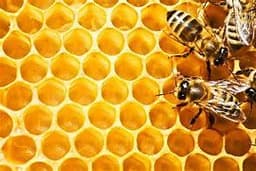
The Honey Bee 1
Quiz by Agnes Valastyan
Customize this quiz to suit your class
Instantly translate to 100+ languages
Tag the questions with any skills you have. Your dashboard will track each student's mastery of each skill.
Give this quiz to my class
 Using active voice of the verbs with this stimulus Bees Collecting Nectar Bees make honey to survive. It is their only essential food. If there are 60,000 bees in a hive about one third of them will be involved in gathering nectar which is then made into honey by the house bees. A small number of bees work as foragers or searchers. They find a source of nectar, then return to the hive to tell the other bees where it is. Foragers let the other bees know where the source of the nectar is by performing a dance which gives information about the direction and the distance the bees will need to fly. During this dance the bee shakes her abdomen from side to side while running in circles in the shape of a figure 8. The dance follows the pattern shown on the following diagram. MAKING HONEY When the bees arrive at the hive carrying nectar, they give this to the house bees. The house bees move the nectar around with their mandibles, exposing it to the warm dry air of the hive. When it is first gathered the nectar contains sugar and minerals mixed with about 80% water. After ten to twenty minutes, when much of the excess water has evaporated, the house bees put the nectar in a cell in the honeycomb where evaporation continues. After three days, the honey in the cells contains about 20% water. At this stage, the bees cover the cells with lids which they make out of beeswax. At any one time the bees in a hive usually gather nectar from the same type of blossom and from the same area. Some of the main sources of nectar are fruit trees, clover and flowering trees. Source: “Hum Sweet Hum”, National Foundation for Educational Research, 1993. GLOSSARY house bee a worker bee which works inside the hive. Mandible mouth-part• There are two groups of animals which are important in agriculture. • The groups are domestic and wild animals. 1. Domestic animals • These are animals which are trained to live with people in their homes. • Some examples includes : Uses of domestic animals • Source of food, for example milk, eggs and meat. • For cultural purposes, for example paying lobola. • Some are used for transport and labour. • Domestic animals can also be a source of income. 2 . Wild animals • These are animals which are found in game reserves and in the forests • They are also called game animals. • Examples of wild animals are: Uses of wild animals • Some of the wild animals give us meat, hides and ivory. • Wild animals attract visitors from other countries, so the country gets money. Wednesday 06 September 2023 Exercise: Domestic animals 1. What is a domestic animal? [2] 2. What is a wild animal? [2] 3. Name any 4 domestic animals that you know. [4] 4. State any 2 uses of domestic animals. [2] 5. Name any 3 wild animals that you know. [3] 6. Give 2 uses of wild ani mals. [2] 7. Wild animals can also be called animals. [1] • Animals, like human beings need good food to help them to grow and reproduce. • The main sources of food for animals include stock feeds, pastures, veld grass, crop remains and cereal grains. • These foods contain the most needed essential nutrients. Nutrient Function carbohydrates Gives energy Fats Give energy and warmth Proteins Helps in growth and repair of body parts Minerals Help in the formation of bones and teeth Vitamins Help develop good sight, improve fertility and help animals fight diseases Water Transports food in the body, cools the body and remove waste from the body. • Livestock are domesticated animals that are kept for food, use or for sale. • Small livestock has many uses. • They are a good source of food. • They also give us manure to use in gardens. • We get clothes and medicine as well from small livestock • Examples of small livestock are rabbits, sheep, goats and all form of poultry Poultry • All animals that are kept by farmers which have wings and feathers and lay eggs are called poultry. • They are a good source of white meat, eggs and manure. • They are also a source of income when we well them and their products. • Poultry includes chicken, guinea fowl, ducks, turkey, pigeons and quail birds. Rabbits • Rabbits have 3 known uses which are: They are kept for meat Kept for pelts. (pelt is animal skin used to make blankets, hats and jackets) They are used at agricultural shows • Rabbits are cheap to buy, easy to keep and feed. • They take about 4 months to mature. • Rabbits are fed using green vegetables and rabbit pellets. Wednesday 20 September 2023 Small livestock 1. Give 3 examples of small livestock. [3] 2. State 3 things that are provided by small livestock. [3] 3. What are the 2 uses of rabbits? [2] 4. Pelts are used to make _________________ [1] 5. State any 4 examples poultry. [4] 6. Rabbits take ___________ months to mature. [1] 7. What is poultry? • Apiculture is the keeping of bees in order for them to produce honey for sale. • Apiculture is very important because: (i) Provides honey - a valuable nutritional food (ii) Provides bees wax - which has many uses in industry Uses of wax For making candles Polish furniture Make crayons Prevent tools from rusting (iii) Honey bees are excellent pollinating agents, thus increasing agricultural yields. BEE COLONY Inhabitants of the bee colony and their roles • A honey bee colony typically consists of three kinds of adult bees: workers, drones and the queen 1. Workers • Workers are the smallest and constitute the majority of bees occupying the colony. • They do not lay eggs. • Workers have specialized structures, such as brood food glands, scent glands, wax glands, and pollen baskets. • these allow them to perform all the labors of the hive. Roles of the worker bees they forage for nectar, pollen, water, and plant sap. They clean and polish the cells. feed the brood. care for the queen. remove debris. handle incoming nectar. build beeswax combs. guard the entrance. 2. Drones • Drones (male bees) are the largest bees in the colony. • They are generally present only during late spring and summer. • The drone’s head is much larger than that of either the queen or worker. • Drones have no stinger, pollen baskets, or wax glands. • Their main function is to mate with the queen. 3 . Queen • Each colony has only one queen. • The queen is the largest of the bees in a bee colony. • The Queen Bee plays a vital role in the hive because she is the only female with fully developed ovaries. • She produces both fertilized and unfertilized eggs. • Queens lay the greatest number of eggs in the spring and early summer. • The queen also produce chemical scents that help regulate the unity of the colony. 1. What is apiculture? [2] 2. Give 3 reasons why apiculture is important in Zimbabwe. [3] 3. Name the 3 inhabitants of the bee colony. [3] 4. Briefly explain the roles of each inhabitant named in number 3. • Apart from using hand tools, farmers also use some farm implements and machinery to carry out their field work. • Machines help farmers do their work more easily and quickly. • The most common implements used by farmers to grow, harvest and transport their produces are: mouldboard plough Cultivator Scotch cart Harrow Planter Maize sheller combine harvesters Boom sprayers Disc harrow Spike toothed harrow KNAPSACK SPRAYER • Farming is a business. • Communal farmers grow crops and keep animal mainly for their own use. • If there is any extra they sell to get money. • Commercial farmers grow crops and keep animals for sale. • Crops and animals produced are called farm produce. • There are places were farmers have to sell their produce. • Farmers can take their produce to local markets. • A market is a place where buying and selling occurs. • Some of the local markets includes: A shopping centre A school A nearest bus stop A local village A school Local Grain Marketing Board depot (GMB) Types of farm produce Beef Fruits Mutton Eggs Vegetables Pork Milk Chicken Cereals/grains beansOrchard / fruit trees Importance of fruit trees • Fruit trees are important for the following uses: They are a source of food, they produce fruits Some are used for making medicines Others provide shade and can also act as wind breakers. Those with beautiful flowers are very decorative. They contain vitamins which means they have nutritional value. Classification of fruit trees • Fruit trees are classified as indigenous and exotic. Indigenous fruit trees • are those that natural grow in a country. • They take longer to grow. • Examples of indigenous fruit trees are: English name Shona Name Snot apple Water berry Red ivory Fig Monkey orange Wild custard apple Mobola fruit Exotic fruit trees • These are trees that were brought from other countries. • They are commercially grown in orchards. • Common exotic fruit trees include: • Exotic fruit trees grow faster than indigenous. Ornamental horticulture • It deals with the growing of decorative plants. • Decorative plants are collectively called ornamental plants. • They include trees, shrubs, flowers and lawn grasses. Importance of ornamental plants They beautify the environment. Flowers often produce a pleasing fragrance. Flowers attract insects like bees that are responsible for pollination. Plants produce oxygen that we need for breathing. • Some are used for making medicines. • Lawn grasses prevent soil erosion. • Plants provide shelter for birds and insects. Classification of ornamental plants • There are four classes of ornamental plants. Trees Shrubs Flowers Lawn Trees: • Ornamental trees are very useful as decorative plants. • This is because most of these trees produce beautiful flowers and some are ever green. • Examples of decorative trees include flamboyant, jacaranda, pines, Cyprus. Shrubs: • A shrub is a woody plant with many branches but smaller than a tree. • Some of them are ornamentals because they produce beautiful flowers. • Others can be cut into decorative shapes. • The golden duranta is good example because it can be cut into nice shapes. • The bougainvillea is another example of a decorative plant because: It can act as a climbing plant. It produces decorative flowers. It can also be cut into any shape using a hedge shear. Flowers: • Flowers have the following functions: They are used for decorations at weddings, hotels and parties. They are used as an expression of love and appreciation such as valentine’s day and get well soon messages. They are useful in bee farming called apiculture as they are a source of nectar used for making honey. Flowers produce a pleasant fragrance used in the production of soaps and scents for perfumes, deodorant and lotions. Lawn: • A lawn is an area of grass that is kept cut short and is usually part of someone's garden or backyard, or part of a park. • Some lawn grasses grown in Zimbabwe are Durban, kikuyu, couch and buffalo lawn. • They prevent soil erosion. • They also provide a comfortable outdoor resting place. Forestry Importance of trees • Trees are important to us and animals. • The Forestry Commission is responsible for taking care of trees in Zimbabwe. • Trees are also important to the environment because: They are a source of fuel in the form of firewood. They are used for making most of the furniture we use. Most medicines come from both exotic and indigenous trees, for example pine trees and gum trees are used for making cough medicines. Trees provide browsing animals like the kudu and giraffe with food. Fruits from both exotic and indigenous fruit trees are a rich source of vitamins Trees give out oxygen which we need for breathing. Trees provide timber that can be used for roofing. • Trees are grouped according to where they come from. • The groups are indigenous and exotic. 1 . Indigenous trees : • These are local trees that have always been grown in their country. Shona name English name Mutohwe Snot apple Mususu Yellow wood Mubvamaropa Blood wood Muuyu Baobab Muonde Fig tree Musasa msasa Characteristics of indigenous trees take longer to mature Do not produce straight poles Grow on their own Hard wood 2 .Exotic trees : • These are trees that have been brought from another country to be grown in Zimbabwe. Characteristics of exotic trees They are brought in a country from another country. Grow very fast. Have soft woods Usually grow straight Usually grown in orchards and plantations Common exotic trees in Zimbabwe are: Gum trees Pine trees Wattle Cyprus Date palm Mango Apple pawpaw Causes of plant damage • plant damage is when cultivated crops are kept from normal growth that leads to reduced yields. • plant damage is caused by both living and non living things. • Some of the common causes of crop damage are: (a)Pests • These are living organisms that cause physical damage to crops. • Examples of pests are weevils, army worm, aphids, cutworms and locusts. (b) Diseases • Plant diseases are caused by living organisms called pathogens. • These pathogens infest the plant and take away nutrients. • Fruit rot and bacteria spot are some of the examples of plant diseases. (c) Weeds • these are plant which grow where they are not wanted. • For example if black jack grows in a groundnut field, it is a weed. • Weeds compete for nutrients with cultivated plants. (d) Very high temperatures • High temperatures may cause crops to wither. • High temperatures may also lead to lightning and fires. • This can burn up crops. ( e) Frost • Frost damages crops in winter. • Tomatoes, potatoes, and beans are easily damaged by frost. (f) Drought • drought is when there is no rainfall in a season where it supposed to be raining. • It is one of the most serious forms of crop damage. • Plants wither and die if there is no rainfall. ( g) Animals • Wild animals like baboons often eat maize crops before they mature. • Birds also are a problem to crops like sorghum. Signs of plant damage • There are various signs that show plant damage. • Some can be corrected but some lead to total loss. • Some signs of plant damage include: Lodged plants Flowers and small fruits blown to the ground Dull leaf color Wilted plants Stunted growthThe Honey Bee 2Broken windows are covered. Floorboards are patched and doors screwed back on. The road that was ruined by German tanks is shovelled and raked smooth. Boot-shaped bruises turn yellow then fade and disappear. Flowers grow and spread across the ugly German footprints stomped into garden beds. The village looks pretty once more. School stops for the summer and everyone is put to work on the kolkhoz, the village farm. Women and big boys begin harvesting the barley crops in the outer fields. The biggest girls milk the cows, morning and night, and keep the barns clean. Old Nikolay mends ploughs, horse harnesses, pitchforks and scythes in his workshop. Anna Pushinka teaches Yelena and her friends how to get the honey from the beehives that are scattered through the orchards. I am in charge of collecting eggs. My friends Olga and Nina help. Olga and Nina are five, a year younger than me. They are twins and look exactly alike, except Nina’s nose is a little bit crooked from when she fell out of bed and squashed it sideways on the floor. The hens, ducks and geese wander free in the summer, so collecting eggs is like a treasure hunt and takes hours. Catching the hens for their daily hugs takes even longer, but I think it’s important because hugs make everyone happy and happy hens lay bigger eggs. Olga says I’m the best hen-hugger in all of Russia. Nina says I’ll be the best cow-hugger, too, when my arms grow longer. But good hugs have nothing to do with the size of your arms. It’s all to do with the size of your heart. When we are done with the hens, Olga, Nina and I can spend the rest of the day doing whatever we like. We climb the apricot trees, chase squirrels, lie in the meadow marvelling at how hot Ushanka’s black fur becomes in the sunshine, make daisy chains and race little boats of bark in the stream. I teach Olga and Nina the alphabet and we use charcoal to write our letters and our names all over the village – on doors and walls and the freshly cut ends of firewood. In between, I practise my knots. In case the German princemonsters return. I slip into Old Nikolay’s workshop and tie knots in the harnesses hanging on the walls. I wander into gardens where the washing is hung out to dry and tie knots in the laces on pants and smocks. I creep up behind Anna Pushinka and tie knots in her apron strings. I find baling twine in the hay shed and tie my own ankles together. I do such a good job of these last knots that I can’t get them undone. I have to jump all the way to Olga and Nina’s house and ask them to cut me free with their mama’s knife. At the end of each day, Ushanka and I run out into the distant barley fields to meet Mama. This is my favourite part of the day, because Mama always shouts, ‘Little Rabbit!’ and smothers my head with kisses. And as we walk home, we sing. Everyone – women, big boys and me. I love to sing. Almost as much as I love to be kissed by Mama. Sometimes one of the boys, Mikhail, has his balalaika with him. He takes the instrument out from beneath the sheaves of barley piled high on the wagon and plays music. We sing about forests and orchards and people who find their true love. As we walk home, arm in arm, my heart fills with happiness and my belly swells with pride that I am allowed to sing along with the big boys. And I can almost forget about the German prince-monsters and their lies about Russia and their big ugly boots. Almost. But today, when Mikhail reaches for his balalaika, I see other things hiding beneath the barley sheaves. Three of the mamas rush forward and cover them up, but it’s too late. I know they are there. I’ve already seen them. Rifles. Lots of rifles. Mikhail hugs his balalaika to his chest and blushes. ‘So play!’ cries Mama, her voice oddly loud and high. ‘Let’s play Sasha’s favourite song, “The Little Birch Tree”.’ So Mikhail plays and everyone sings about the lovely birch tree with its curly leaves and the branches that will be turned into silver flutes. They sing too quickly, too loudly, and as they sing and walk, they cast nervous sideways glances at me. ‘It’s alright,’ I say, when the song comes to an end. ‘I didn’t see the rifles.’ Mama nods and smiles, and I know it was the right thing to say. But I did see the rifles. And I think about Yelena wanting to get lots of guns and dynamite for the Partisans so they can shoot the Germans and blow them into thousands of tiny pieces, and Mama looking as though she agreed, and I know this is what the mamas and the big boys are doing. As well as harvesting, they are helping the Partisans. Three days later, I wake before dawn and I am all alone. Yelena is always here beside me when I wake. But not this morning. I climb down from our bed above the stove. Mama is filling a cloth sack with bread. She ties it closed with a piece of string and hands it to Yelena. ‘Stay out of sight,’ says Mama. ‘And don’t return until after dark.’ ‘Where’s she going?’ I ask. ‘Nowhere,’ snaps Mama. ‘Then why does she need all that bread?’ I ask. ‘There’s nothing left for us.’ Mama baked four loaves last night and she has stuffed them all into the sack. Yelena opens her mouth, but before she can speak, Mama shoves her out the door and sends her on the way to nowhere. Mama turns and stares at me, her blue, blue cornflower eyes wide with worry. ‘I know,’ I say, flopping down on the bench. ‘I didn’t see any bread.’ Mama sits beside me and takes my hand. ‘And . . .?’ she prods, obviously waiting for more. I puzzle for a while, then say, ‘And I don’t have a sister called Yelena.’ Mama laughs, softly and with a little bit of sadness around the edges. ‘Sweet Little Rabbit! You do have a sister called Yelena.’ ‘I do?’ I ask, now confused. ‘I haven’t seen the rifles or the bread, but I have seen Yelena?’ ‘Yes.’ Mama smiles and the magic makes me smile, too. And I am glad that Yelena is real because I love her very much. ‘Yelena is real,’ Mama explains, ‘but she does not carry sacks of bread into the forest for the Partisans.’ ‘Of course not!’ I shout, slapping my forehead. ‘Because there is no bread!’ Mama laughs loudly now, with not a hint of sadness. She hugs me, pressing me against her warm, loving heart, covering my head with kisses. ‘Clever Little Rabbit,’ she murmurs, and then, in barely a whisper, ‘Your papa would be so proud.’ When I wake the next morning, Yelena is sleeping beside me, her mouth open, her braided hair unravelling. Mama is serving kasha to a strange woman seated at our table. I crawl down from above the stove and slide along the bench beside her. I stare at her pants, her tunic, the rope she is using as a belt and her big boots. She’s dressed like a man! And there’s a rifle leaning against the wall near the door. ‘Hello,’ I say. ‘I’m Sasha.’ The woman doesn’t reply. She just shovels down her kasha. I line my four wooden bears along the table in front of her bowl and say, ‘These are my bears: Big Bear, Medium Bear, Little Bear and Even Littler Bear.’ ‘Hello, Sasha. Hello, bears.’ She smiles but she doesn’t tell me her name. ‘Why are you dressed like a man?’ I ask, tugging at the sleeve of her tunic. ‘Because men’s clothes make it easier to run and climb and crawl and shoot,’ she says. ‘You’re a Partisan!’ I gasp. ‘But she’s not real,’ says Mama, placing a bowl of kasha before me. ‘Is the kasha real?’ I ask. Mama laughs. ‘Yes, Little Rabbit.’ I’m glad the food is real, because I’m hungry. But I’m disappointed that the woman is not real. I was going to ask if I could use her rope-belt to tie her ankles together. For practice. But if she’s not real, then the rope and her ankles aren’t either. The woman finishes her kasha, hangs her rifle over her shoulder, kisses Mama on the cheek then slips out the door. I run to the window to watch her leave, but by the time I get there, she’s gone. Vanished. ‘Because she’s not real,’ I whisper. A week later, Mama and I are working in the garden. We sing as we weed between the flowers and pluck caterpillars from the vegetables. Anna Pushinka is picking strawberries in her garden and wanders over. ‘Taste these,’ she says, holding out the basket. Mama reaches in and takes out a fat strawberry and a tiny piece of folded paper. The strawberry goes into her mouth, the paper into her pocket. ‘What’s on the paper?’ I ask. ‘Paper?’ Anna Pushinka replies with a wave of her hand. ‘Goodness, Sasha! Who has money for paper? These are lean times. We must choose between paper for writing and noodles for our soup. And I always choose noodles.’ She chuckles and I know the paper is yet another thing that is not real. That night, Mama slips the paper to Yelena, but she drops it on the floor. I pick it up for her, and I see that there are tiny words and numbers written all over it. I wish I could read better. I’m desperate to know what it says. Or rather, what it doesn’t say, because it’s not real. Later, when Mama has tucked us into our bed above the stove and Ushanka has wrapped herself around the top of my head, I ask Yelena, ‘What’s on the paper?’ ‘What paper?’ says Yelena. ‘The paper that isn’t real,’ I reply. Yelena stares at me, nibbling her lip, then whispers, ‘A message for the Partisans. Stuff about where the Germans have their headquarters and when their trains are travelling and where they store their ammunition.’ ‘Why?’ ‘So the Partisans can blow them up.’ Yelena grabs my arm. ‘But don’t tell anyone. It’s a secret.’ ‘What’s a secret?’ I ask. ‘The message.’ ‘What message?’ I say, my eyes wide. Yelena laughs. ‘Good boy, Sasha.’ My belly swells with pride. I know how to play this game. ‘How are your knots coming along?’ asks Yelena. ‘Good! Yesterday, I crept into the dairy and tied knots in the apron strings of all the girls who were milking and only one of them noticed. Today, I tied Olga’s ankles together with Mama’s embroidery thread and just now, while you were taking a bath, I tied the sleeves of your blouse together in an enormous knot.’ Yelena rolls her eyes, then says, ‘I’ll see if I can find you some rope for practising.’ ‘Practising what?’ I ask. ‘Your knots,’ she says. ‘What knots?’ Yelena, my big sister who is twelve and always serious tWriting the first section of an explanation text about how bees make honeyWriting the second section of an explanation text about how bees make honeyWriting the introduction of an explanation text about how bees make honey