Loading...

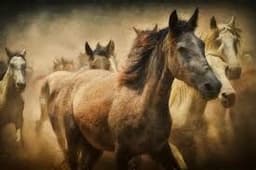
The horses edwin muir
Quiz by thinus strydom
Customize this quiz to suit your class
Instantly translate to 100+ languages
Tag the questions with any skills you have. Your dashboard will track each student's mastery of each skill.
Give this quiz to my class
 'Create a quiz based on this lesson: . Tenali Rama was known for his sense of humour. In fact, King Krishnadevaraya used to enjoy his witty remarks even when they were targeted at him. Here is one such story. Scene 1 One day, an Arab horse trader visited the court of King Krishnadevaraya. He had a fine horse for the king. The (Greek/Chinese/Arab/ British) trader visited the court of King Krishnadevaraya King: All of you know that I am very fond of horses. The horses in my stable are the finest indeed! Send the trader in! I always want some rare breeds of horses from across the world to add to my man collection. Trader: Good day, Your Majesty! I have brought one of the finest horses from ArabiaI request you to see the horse. I am sure you will want him for your royal stable. King: This is indeed a magnificent creature! I wish to buy this fine horse. Trader: Your Majesty, I have two more such horses with me in Arabia and it would be my pleasure to bring them to you. Trader: You are really kind and I am sure you will like ader merchant magnificent splendid/superb King: I am so happy to hear that. I agree to buy the other two horses as well Into Trader: l am grateful for your offer and I promise to return with the other two horses within a week's time. Scene 2 Months passed, but there was no sign of the trader. Worried and anxious, the king decided to take a stroll in the garden. There, he spotted Tenali Rama sitting under a tree and scribbling something on a piece of paper. King: What are you writing on this sheet of paper, Rama? Rama: Here is the paper. You can see for yourself. It is the list of names of people who can be called 'very foolish!. Rama showed the paper to the king. It was a list of names with the king's name at the top. King: My name is always on top of the list. I do know that you respect me. On the top of the list was written— 'List of the Biggest Fools in the World! He became furious. King: How can you call your King, 'a fool?' You will have to explain it to me. Rama: lam really sorry that I had to add you as well in the list of fools. How could your Highness trust an unknown Arab horse trader, give him a huge advance, and expect him to return? ' King: What if he really comes back? Rama: If he returns with his horses after taking so much money from you, then I will put his name as the first one. So, he will be on top of the list of fools. The king realized his mistake. His anger slowly gives way to laughter. King: You are really funny, Rama. I was very unhappy, but with your witty remark, you have defused my anger and anxiety. I love your sense of humour. Rama: Dear King, you are so good to everyone! You fail to understand that you should be good to people, but should never trust strangers. The king agreed and they walked back to the palace.Yaama I'm Jack Evans and you're watching BTN. Here's what's coming up. We uncover the story behind this famous photo, learn about First Nations seasons and find out the history of Book Week. What is Statehood? Reporter: Tatenda Chibika INTRO: But first, the Prime Minister Anthony Albanese has announced that Australia will join other countries in recognising Palestine as an independent state. So, what does that mean? Tatenda found out. Anthony Albanese, Prime Minister: Australia will recognise the state of Palestine. Australia will recognise the right of the Palestinian people to a state of their own. We will work with the international community to make this right a reality. Tatenda Chibika, Reporter: That's the moment our Prime Minister said Australia would recognise Palestine as an independent state at the upcoming United Nations General assembly next month. It's something other countries, including France and Canada, have said they'll be doing too. So, what does that mean exactly? To be considered an independent state under international law a place needs to have its own land or territories with defined borders, it needs to have people who permanently live there, have a working government and it has to be able to talk and make deals with other countries. Once a place meets all those rules, it can ask to be recognised by other independent states and countries. But a big step in becoming an independent state is being fully recognised by the United Nations. To do that you first need to get approval from at least nine members of the UN's Security Council. That's a group of countries responsible for maintaining international peace and security. But even then, that tick of approval can still be blocked by one of the Security Council's five permanent members Russia, China, the UK, the US and France. If the Security Council approves, the decision then goes to the UN's General Assembly where at least two thirds of the UN's 193 members have to agree to make it official. Yeah, it's a pretty complex process which is why we've only seen a handful of countries recognised by the UN in recent years like South Sudan and Montenegro. Others like Kosovo are only 'partially' recognised which means they have some recognition but not enough to become a full member state at the UN. Right now, Palestine is recognised by more than 140 countries — that's more than two thirds of the UN General Assembly. So, why hasn't it become a UN member state yet? Well, it came pretty close last year when 12 members of the Security Council voted in favour of it. VANESSA FRAZIER, AMBASSADOR OF MALTA, APRIL 2024 UNSC PRESIDENT: I shall now put the draft resolution to the vote. But the US, a close ally to Israel, used its special powers to block Palestine from becoming a member state. VANESSA FRAZIER: Those against? At the time, the U.S said Palestine and Israel needed to come to an agreement on their own first. Throughout the years, there have been attempts to figure out a way for both Palestine and Israel to exist peacefully alongside each other but that hasn't happened yet. And now Israel has said that recognising Palestine as an independent state would be rewarding Hamas the group in charge of Gaza which was responsible for the terror attacks on October 7th, 2023. But the Palestinian Authority which governs parts of the West Bank says Hamas won't have a role in any future state of Palestine which will exist peacefully alongside Israel. Australia, like the US, had previously said that it wanted Israel and Palestine to figure out things by themselves first but because of how the war has been going the Australian government is worried that if it continues to wait, there might not be a Palestinian state to recognise. ANTHONY ALBANESE, PRIME MINISTER: There has been too many lives lost, both Israeli's and Palestinians and the world is saying we need a solution to this conflict, we need to end the cycle of violence and the way to do that is to have a two-state solution. News Quiz Russia's President Vladimir Putin stepped foot on American Soil for the first time in a decade to meet with US President Donald Trump. What state did they meet in? Alabama, Alaska or Arizona?It's Alaska. The two leaders met to discuss a way to end the war in Ukraine but weren't able to make any final agreements. DONALD TRUMP, US PRESIDENT: There were many, many points that we agreed on. Most of them, I would say, a couple of big ones, that we haven't quite got there, but we've made some headway. There's no deal until there's a deal. A lot of people criticised the two world leaders for not including Ukraine's president Volodymyr Zelenskyy in the meeting. But that didn't seem to worry Mr Trump who said the meeting was a success and Mr Putin even invited the US President to meet up again in Russia. DONALD TRUMP: We'll see you again very soon. Thank you very much, Vladimir. VLADIMIR PUTIN, RUSSIAN PRESIDENT: Next time in Moscow. DONALD TRUMP: Oh, that's an interesting one. No, no, no. I'll get a little heat on that one. Last week thousands of people marked the 80th anniversary of VJ Day. What does VJ Day commemorate? The victory of Allied forces in Europe, the surrender of Japan and the end of World War II or the dropping of the first atomic bomb? VJ Day or Victory over Japan day commemorates the surrender of Japan and the end of World War II on the 15th of August 1945. Around the world, and here in Australia, people marked the anniversary with ceremonies remembering those who fought in the war. REPORTER: Who will you be remembering today? VETERAN: Oh, a lot of fellows that I knew that never made it home. Scientists in the UK have created toothpaste that includes which of these ingredients? Hair, eye lashes or fingernails? Yeah, they're all a bit random and gross but the answer is hair. According to scientists from King's College in London, hair could be the key to good oral health because it contains a protein called Keratin which they say when mixed with saliva forms a crystal-like protective coating similar to enamel. And Swifties rejoice because Taylor Swift has announced her 12th Studio album. It's called life of a show what? Is it show pony, show girl or show bag? It's Life of a Showgirl and it'll be released October 3rd. Vincent Lingiari Reporter: Joseph Baronio INTRO: Now to this very famous photograph. It was taken 50 years ago and depicts a really significant moment in Australian history. Joe found out about the story behind it. On the 16th of August 1975, this famous photo was taken. It shows the former Prime Minister Gough Whitlam pouring sand into the hand of Aboriginal leader Vincent Lingiari. A simple gesture that symbolised handing the land at Wave Hill in the Northern Territory back to the Gurindji people. But the journey to get there was far from simple. It started back in the 1960s. At the time, Wave Hill was the biggest cattle station in the world, controlled by British landowner Lord Vestey. The Gurindji people, who had lived on the land for generations, worked for Vestey, but they weren't paid fairly, and conditions were tough. NEWS REPORTER: The station's 100 aboriginal stockmen, with their 100 dependents, are camped in the dry bed of the Victoria River with little shade from 90-degree heat, dust and flies. Eventually, Gurindji leader Vincent Lingiari said it was time to act. VINCENT LINGIARI: I said, "What was it before Lord Vestey born and I was born?" It was blackfella country. So, on August 23rd, 1966, Mr Lingiari and his fellow Aboriginal workers went on strike. It became known as the Wave Hill Walk Off. They moved their camp away from the Wave Hill station to a sacred site called Daguragu on Wattie Creek. They wanted to set up their own cattle station, and said they wouldn't move until their land was returned to them. For years, petitions and negotiations went on between the Gurindji people, the NT Administration, and the Australian Government in Canberra. CLAPPERS: 31. 32. 33. DAVID QUINN, ABSCOL: Well, it's basic justice that their land is recognised. PROTESTORS: Equal rights! As the news spread across the country, thousands of Aussies joined the campaign, including the leader of the Labor Party, Gough Whitlam, who made this promise during his 1972 election campaign. GOUGH WHITLAM: We will legislate to give Aborigines land rights. Not just because their case is beyond argument, but because all of us as Australians are diminished, while the Aborigines are denied their rightful place in this nation. Later that year, Gough Whitlam became Prime Minister. (Song From Little Things Big Things Grow, Song by Kev Carmody and Paul Kelly, 1993) From little things big things grow,from little things big things grow… But it wasn't until 1975, 9 years after the Wave Hill Walk Off started, that he followed through with his promise. Eight years went by, eight long years of waiting'Til one day a tall stranger appeared in the landAnd he came with lawyers and he came with great ceremony GOUGH WHITLAM: I solemnly hand to you these deeds as proof in Australian law that these lands belong to the Gurindji people. And through Vincent's fingers poured a handful of sandFrom little things big things grow 50 years on, and The Wave Hill Walk Off is seen as a pivotal moment in Australia's history. It led to significant legal and social changes for First Nations people, which is something many agree is worth celebrating. First Nations Seasons Reporter: Saskia Mortarotti INTRO: Recently, Melbourne's Lord Mayor suggested ditching the four-season calendar that most of us are familiar with and adopting a six-season Wurundjeri calendar instead saying it gives a better description of what the weather's actually like there. Sas found out more about the different seasonal calendars used by First Nations people. SASKIA MORTAROTTI, REPORTER: Right now, in most of the country, it's pretty cold. COLD GIRL: Think of somewhere warm. What? It's 32 degrees in Darwin in the middle of winter? But ah, yeah. There are some places where it's, well, quite warm. Which makes you wonder whether the weather actually matches the seasons. You see, Australia is pretty big, and we have lots of different weather patterns. Which is something First Nations people have tracked for thousands of years with their own seasonal calendars. KARL WINDA TELFER, CULTURAL CREATIVE KANYANYAPILLA: Why have we got four seasons when you know that don't make any sense here. It doesn't relate to the country here. This is Karl Telfer. He's an artist and storyteller who produced the Kuri Kurru exhibition at the Museum of Discovery in Adelaide that explores the 6 different seasons of the Kaurna Meyunna. SASKIA MORTAROTTI: So, how do you know when you're in one of those six seasons? KARL WINDA TELFER: Well, there are stars that rise. So, you know, there are certain stars, like in Parnatti, for example. There's a star called Parna, and we know what that star is. So, that talks to us about, okay, the time now is going to be cold on the ground. First Nations calendars like the Kaurna one don't just tell us what's happening with the weather; they're also used to track when certain plants and animals are around. KARL WINDA TELFER: It teaches you about what plants you can, you know, what you can eat what you can't and all that what is ready certain times a year and fruit everything, bird shows you the right time to eat the fruit, perfect time, if you try and go get them the next week they're gone. Karl says we can also use these calendars to see how the environment has changed over time. KARL WINDA TELFER: Kudlilla is the season we're in now and Kudlilla that talks about like the rain but we're not having enough rain these days, well, these times. And this is due to climate and the climate changing. There are many different First Nations seasonal calendars around the country. Like Ngan'gi calendar from the Northern Territory which has 13 seasons that follow the life cycle of the native spear grass. Or the Wurundjeri Calendar in Victoria which has 6 seasons. And recently, Melbourne's Lord Mayor, Nicholas Reece, said Melbourne, or Naarm, would be better off adopting the Wurundjeri calendar because it's more in tune to what's happening with the weather. Something many, including Karl, think we should be doing right across the country. KARL WINDA TELFER: I'm talking about the English four seasons. So, this is totally different systems that we're talking about and weather patterns and currents and all sorts of different things, because it's the sea country too. So, my question is, well, why do we have that? If that doesn't work, you know? Quiz How many seasons are there in the Tiwi Island Calendar? 1, 2 or 3? It's 3, although they also have 13 minor seasons. Book Week Reporter: Wren Gillett INTRO: This week, kids across Australia have been dressing up as their favourite characters to celebrate Book Week. Wren finds out why Book Week began 80 years ago and why it's still important today for getting young Aussies into reading. STUDENT: I read an hour every night, maybe even two hours some nights. STUDENT: My favourite book series are the Harry Potter series and the Keeper of the Lost City series. STUDENT: Probably Bad Guys and Weirdo. STUDENT: I like the Amulet, I've been reading that. STUDENT: I love reading Dork Diaries and Exploding Endings. Whether it's Fantasy, mystery, history — whatever you're into. Book week is a time to celebrate, well, books. STUDENT: Me and my friends are dressing up as Inside Out. STUDENT: I was thinking SpongeBob. STUDENT: I'm dressing up as Winnie the Pooh and it's just a fun way to express what kind of books you like. And guess what, book week has actually been a thing for many, many years. WREN GILLETT, REPORTER: Once upon a time, in a land not so far away, literacy lovers noticed a problem. The year was 1945. The second World War had just ended, and kids were mainly reading books from overseas, in particular the UK. Because, at the time, there weren't many Aussie authors writing books for children. WREN GILLETT: So, a group of passionate teachers, librarians, booksellers, publishers, and book-loving volunteers, decided to create what we now know as The Children's Book Council of Australia. Familiar logo, right? Together, they launched book week, all in an effort to get Aussie kids' reading more. And it seemed to work. The 1960s saw a boom in Australian children's books being published. REPORTER: How many books do you read a week? STUDENT: Well, it really depends on the week. If there's exams, I might read only one or two. But if there's no exams and if I've got plenty of time, I might read up to five or six. WREN GILLETT: But today, it's a slightly different story. Studies show that less than one in five eight to 18-year-olds are reading in their free time, and that only one in three actually enjoy reading for fun. WREN GILLETT: Why do you reckon we're seeing this trend? STUDENT: People are getting sucked into screens and they're like spending hours just scrolling through TikTok and stuff, and they're getting so attached to it that they don't feel the need to pick up books and read them. Yeah, there's a lot of different things competing for our attention these days, but many think books are still worth our time. PETER HELLIER, AUSSIE COMEDIAN AND AUTHOR: Books are the exact opposite of boring. And if you think they're boring, I'm sorry, but you're wrong. This is Peter Hellier, he's a pretty famous Aussie comedian, actor, and the author behind these books. And he's just released another one called Detective Galileo, about a trail horse who dreams of solving crimes. PETER HELLIER: He joins the police force and quickly finds out that the horses don't actually solve the crimes, it's the police officers who solve the crime. So he promptly gets thrown out of the force and begins his own detective agency, which I'm reliably told is the only detective agency in the world run by a horse. Peter actually started writing books when he was a kid. PETER HELLIER: I started writing when I was six, seven, eight years old. In fact, I started my own publishing company called Better Books. And I would write these books, and then I would get a parent or one of my parents or teachers to type them up. And I would read them in front of the class. And, you see, each has the logo, the Better Books logo, there it is — the famous Better Books logo. WREN GILLETT: You weren't mucking around. PETER HELLIER: There all on all of them. There we go. There we go. Many, Including Peter, say there's plenty to get from a good book. They help us learn new words and phrases, get a better understanding of the world around us, and strengthen our imaginations. PETER HELLIER: Books can take you absolutely anywhere. They can take you to countries that you never dreamed about going. Countries that exist, countries that don't exist. Reading just makes the world a much bigger place. It's why for the past 80 years, schools around the country have been taking part in book week. STUDENT: Reading is a place where you can have your own world just to yourself. STUDENT: It's like watching a movie inside your head, but you can choose how it goes. STUDENT: Picking up a book is a good idea, maybe you should start with something that you're interested with and then you can start exploring from there. Quiz What is the title of the book that took out this year's Book of the year Award for younger readers? It's Laughter is the Best Endingby Maryam Master. Some other winners included I'm not really here by Gary Loneborough which took out book of the year for older readers and best picture book went to The Truck Cat, by Deborah Frenkel. Sport Australia's men's national basketball team — the Boomers — have won their third Asia Cup in a row, with an epically narrow victory over China. COMMENTATOR: It is Australia who are celebrating! China started strong, leading 25-17 at quarter time. But Aussie Xavier Cooks led a fierce comeback, shooting 30 points and collecting nine rebounds, earning him the title of MVP. And there seriously couldn't have been a tighter finish. Just as the final buzzer went off, China missed a shot that would have won them the game, leaving Australia with a 90-89 victory. COMMENTATOR: An unbelievable finish. The 2025 AFLW season kicked off last week, and so did a new trick. Yeah, 19-year-old Ash Centra from Collingwood, pulled out this move in the warm-up before their season-opener to Carlton, and since then, a lot of people have been trying to do it, with some success, kind of? FOOTY PLAYER: No, I'm not doing it on camera. But despite the epic warmup, Carlton did end up beating Collingwood by 24 points. Now, the moves from these athletes in China weren't quite so graceful but give 'em a break, okay, they're robots. For the first time ever, humanoid robots from all over the world, competed in their very own games, which featured, soccer, boxing, running, and ahh, lots of falling over. Lots. Luckily though, they did bring their own cheer squad. Young Rapper Reporter: Rylie INTRO: Finally, we're going to meet another winner of this year's Heywire competition — which asks young people in regional areas to share their stories. Rylie's going to tell us how music helped to transform his life. Check it out. Mum and I were homeless. We lived at a caravan park, in motels and tents around Warrnambool. It wasn't pretty. I'm First Nations, and I remember feeling like, my own country is failing me right now. So, we camped right along here. I remember pitching a tent right here and this was actually around the same time I started to get into music which was a good way for me to have something to look forward to. I was raised by the SoundCloud era, listening to a lot of trap music. When I was in school, I'd rap along to songs by Juice World, then I started to make my own. My first track was recorded on my phone. It was bad but a lot of fun to make. Some kids in my school heard it and shamed me. That put me off music for the next couple of years, until a friend of mine bought a microphone and encouraged me to give it another go. There was something about that mic and the energy of the crew around me that gave me confidence. It lit a fire in me. Over time, I was able to focus my flow. My songs are about escapism, living the life, being a success. I rap about stuff that takes me to a better place in my head. I'm manifesting my future. My stage name is Hundo Milli, it's short for hundreds of millions. Money's not really the end goal; it's more about having the freedom to dream big. Mum taught me to never stop believing. Even when times were tough, she kept pushing for us to get housing and eventually we did. We're some of the lucky ones. Today, I'm in a Melbourne studio recording my next single. I remember living in my tent dreaming about this very moment and now I'm here, doing what I love. Ain't nothing going to stop me. Closer Well, that's all we've got for you today, but we'll be back before you know it. In the meantime, you can head to our website, there's plenty to see and do. You can also catch Newsbreak every weeknight and there's BTN High for all you highschoolers out there. Have an awesome week and I'll see you next time. Bye.Timmy: Wow, there are many animals on the farm. Jimmy: Yes, let us see how many there are. Timmy: How many cows are there on the farm? Jimmy: There are thirteen cows on the farm. Timmy: How many horses are there on the farm? Cindy: There are fourteen horses on the farm. Timmy: How many ducks are there on the farm? Sam: There are fifteen ducks on the farm.A Brief History of Washington’s Crossing of the Delaware River, Christmas Night 1776... In the fall of 1776, General George Washington and his army had suffered a series of defeats at the hands of the British Army. The Continental Army had lost every battle with the British in the New York campaign: Long Island, Manhattan, Brooklyn Heights, Harlem and White Plains and had surrendered Fort Washington and Fort Lee. At Fort Lee, the army barely escaped and was forced to leave behind its store of provisions, ammunition, and many of its weapons. A sense of defeat had settled around Washington as he was forced to retreat across New Jersey in November and finally to Pennsylvania on December 8, 1776. The British, at least, considered the war over. By December 11th, the only reason the British had not taken Philadelphia, the seat of the Continental Congress, was that Washington had ordered every boat in the Delaware River on the New Jersey side to be brought to the Pennsylvania side, thus denying the British army transportation. Washington knew that the British would be capable of resuming an offensive by crossing the Delaware once it iced over. As the harsh winter set in, the morale of the American troops was at an all-time low. The soldiers were forced to deal with a lack of both food and warm clothing, while Washington watched his army shrink because of desertions and expiring enlistments. Now, more than ever, a victory was desperately needed. Washington devised a courageous plan to take the offensive and cross the Delaware River on Christmas night and attack the Hessian garrison at Trenton, New Jersey, nine miles south of his encampment near McConkey's Ferry. The original plan called for three divisions to cross the Delaware under the cover of darkness. Lt. Col. John Cadwalader's division was to cross at Bristol and engage the southern most contingent of British forces — Hessian troops under the command of Colonel von Donop. General James Ewing's division was to cross at Trenton Ferry and take a position south of Assunpink Creek below Trenton and hold the bridge over that stream. Washington's division was to cross at McConkey's Ferry and then divide into two corps under General Nathanael Greene and General John Sullivan. Their point of attack was Trenton and the Hessian troops quartered there under the command of Colonel Johann Gottlieb Rall. The boats to be used for the crossing were gathered earlier in the month in compliance with General Washington's orders, primarily as a defensive measure. Various types of boats had been collected, most notably the large Durham boats used to carry pig iron down the Delaware to the Philadelphia markets. There were a number of problems in moving a large number of men, cannons, and supplies in an age when overland transportation was by foot and animal power. The roads were rutted and winding. There were no bridges over major rivers because the technology did not exist to span great distances. A river like the Delaware was crossed by ferry, sometimes out of service because of ice floes or floods, and certainly not designed to carry masses of men and equipment across quickly. A river could be a formidable natural barrier to an army on the move. Washington had several logistical concerns for the crossing. In addition to the troops were the cannon; each of which required at least two horses to pull it. The heavier twelve pounders, and probably the eight pounders, had four horses. There would have been between four and six ammunitions wagons. Officers of the rank of colonel or higher may have had horses. In sum, Washington had to move 2,400 men, eighteen cannons, at least four ammunition wagons and fifty to seventy-five horses across the Delaware River the night of December 25, 1776. Fully expecting to be supported by Cadwalader's and Ewing's divisions south of Trenton, Washington assembled his own troops near McKonkey's Ferry in preparation for the crossing. By 6:00 pm, 2,400 men had begun crossing the ice-chocked river. There was an abrupt change in the weather, forcing the men to fight their way through sleet and a blinding snowstorm. The river was flooded with sheets of ice moving at eleven or twelve miles per hour. These obstacles proved to be too much for the two supporting divisions led by Generals Cadwalader and Ewing, who did not cross at their assigned points along the river. It was Washington's pure force of will and determination that led to his troops' successful crossing of the river. Increasing Washington's odds were the sailors of Marblehead, Massachusetts. This group of hardened seamen, led by Col. John Glover, were used to the Nor'easters of New England. Sheer determination and muscles conditioned to the demands of rowing under the weather conditions now facing the Continental army enabled the Marbleheaders to row back and forth across the Delaware countless times. During the time of the Revolution, American soldiers marched single file along the margins of the roads. They were only assembled into a battle line (three deep) when they reached the battlefield. The battle plan had Washington's army marching in two divisions... General Greene's and General Sullivan's. They made a night march in two columns on separate roads, a very tricky operation that was prone to failure since the columns needed to arrive at the battlefield at the same time to carry out the surprise attack planned by Washington. The American army carried out the march flawlessly. Against all odds, Washington and his men successfully completed the crossing and marched to Trenton on the morning of December 26th and, in the resulting battle, achieved a resounding victory over the Hessians. By moving ahead with his bold and daring plan, General Washington reignited the cause of freedom and gave new life to the American Revolution.The Boy Who Cried Wolf Long ago a shepherd boy sat on a hilltop watching the village sheep. He was not fond of his job. He didn't like it one bit. He would have liked something wonderful to happen, but nothing remarkable ever did. The shepherd boy watched the clouds move softly by to stay busy. He saw horses, dogs, and dragons in the sky. He made up stories with these things as characters. Then one day he had a better idea! He took a deep breath and cried out, "Wolf! Wolf! The wolf is chasing the sheep!" The villagers ran up the hill to help the boy. When they got there, they saw no harmful wolf. The boy laughed. "Shepherd boy! Don't cry 'wolf!' unless there really is a wolf!" said the villagers. They went back down the hill. That afternoon the boy again cried out, "Wolf! Wolf! The wolf is chasing the sheep!" The villagers ran to help the boy again. They saw no wolf. The villagers were angry. "Don't cry 'wolf!' when there is NO WOLF!" they said. The shepherd boy just smiled. The villagers went quickly down the hill again. That afternoon the boy saw a REAL wolf. He did not want the wolf to grab any of the sheep! The boy thought the wolf would snatch one of them for a delicious, tasty meal. A sheep would be a big feast for a wolf. He quickly jumped to his feet and cried, "WOLF! WOLF!" The villagers thought he was tricking them again, so they did not come. That night the shepherd boy did not return with their sheep. The villagers found the boy weeping real tears. "There really was a wolf here!" he said. "The flock ran away! When I cried out, 'Wolf! Wolf!' no one came. Why didn't you come?" A kind man talked to the boy as they walked slowly back to the village. "In the morning, we'll help you look for the sheep," he said. "You have just learned one of life's important lessons. This is something you need to know. Nobody believes a person who tells lies. It is always better to tell the truth!"At the Rodeo! It's rodeo day! What will happen today? Cowboys ride big bulls. What happens next at the rodeo? Cowgirls ride fast horses. What happens next at the rodeo? Young cowboys ride sheep. What happens next at the rodeo? Young cowgirls ride sheep, too. What happens next at the rodeo? Rodeo clowns act funny. What happens next at the rodeo? Cowboys ride wild broncos. What happens next at the rodeo? Cowgirls race around barrels. What happens next at the rodeo? Cowboys and cowgirls win belt buckles. What happens next at the rodeo? Everyone has fun at the rodeo!When Europeans met American Indians in the late 15th century, the people of two continents exchanged many beneficial customs and goods. Europeans received New World crops such as potatoes and corn. American Indians acquired cloth and horses. However, besides the beneficial exchanges, Europeans and American Indians often traded deadly germs–bacteria and viruses–for which they had no immunity. Smallpox and Indians Image 1: Smallpox epidemics helped Europeans conquer the Aztec and Incan Empires of Mexico and South America. North American Indians quickly concluded that contact with Europeans often resulted in devastating diseases that caused widespread death. This drawing, made in the 1500s in Mexico, shows how the disease was passed from a European to an American Indian through simple contact. Many of the diseases that were common in Europe were entirely new to the peoples of North America. Diseases such as tuberculosis and measles could be fatal, but Europeans had developed resistance to the disease, so many people survived. However, when European diseases infected American Indians with no previous exposure, the people suffered terribly. The most devastating of these diseases was smallpox which is caused by a virus (Variola major). Smallpox, like many other diseases, had a latent period of about one week between the time the person was exposed to the disease and the time when signs of the disease became apparent. During this time, the sick person might begin a journey and carry the germs along with him. Anyone the person met would be exposed to smallpox. Anything the victim touched including clothing, bedding, or unwashed dishes carried living germs of smallpox. Cotton Mather Image 2: Cotton Mather was a Boston minister. When smallpox threatened Boston, he remembered reading about how the Turks inoculated people with dried material from smallpox blisters. The inoculation usually gave the person a mild case of the disease and future immunity. The procedure was highly controversial, but it helped save the lives of 274 people who were inoculated during the Boston smallpox epidemic of 1721. Symptoms of the disease began with fever, chills, and aches. The fever might raise a person’s temperature from the normal 98.6o to a dangerous 106o. After four days of misery, the victim entered the second stage when large pustules (fluid-filled bumps) appeared on the body. The rash made the person feel as if their skin were on fire. After suffering with the rash for nine days, the victim entered a new stage-if he or she had survived this long. The pustules opened and dried up. Each pustule formed a scab that turned into a scar that marked the person’s face for the rest of his or her life. Complications of smallpox for those who survived might include loss of vision or damage to the lungs, heart, or liver. Waterhouse Image 3: Dr. Benjamin Waterhouse of Harvard University brought Jenner’s smallpox preventative to the United States. It was called vaccination and used cowpox as the infective material. This much milder form of pox gave immunity to smallpox with fewer complications. Dr. Waterhouse encouraged President-elect Thomas Jefferson to promote vaccination. Jefferson responded, “Every friend of humanity must look with pleasure on this discovery, by which one evil more is withdrawn from the condition of man.” (T. Jefferson 12/25/1800 to Benjamin Waterhouse, December 25, 1800) Historians have found evidence of smallpox as far back as 1157 B.C. when the Egyptian pharaoh Ramses V apparently died of smallpox. From Egypt, where scientists believe smallpox began, the disease spread to Asia. Europeans began to experience periodic epidemics of smallpox in the14th century when Crusaders returning from the Middle East brought smallpox to Europe. People who survived the disease were immune and could not get smallpox again. This fact explains why epidemics struck periodically and the disease was not a constant threat to European societies. Smallpox Vaccination 1803 Image 4: Dr. Edward Jenner’s new smallpox vaccination (from cowpox) was widely accepted. This medical image was published by a Spanish physician to teach colonial doctors how to apply the vaccine to native Mexicans. The scratches were supposed to go through several stages of development as evidence that the vaccine had given the patient immunity. Vaccination was very effective in preventing smallpox epidemics among those who received the vaccine. In 1520, while Cortés was trying to conquer the Aztecs, smallpox broke out among the Spaniards and was transferred to the Aztecs. By 1527, the disease had migrated through Central America to Peru where it helped Pizarro conquer the Incas. (See Image 1.) In 1633, smallpox infected American Indians living near the English colony of Plymouth, Massachusetts. The disease traveled very quickly to tribes living far inland from the English colonies. In 1721, a smallpox epidemic threatened the English colonists of Boston. (See Image 2.) Cotton Mather, a Boston minister, wanted to inoculate people against the disease. He knew that Turkish healers took material from a dried smallpox scab and injected it into the body of a healthy person by scratching the surface of the skin. The patients developed a mild form of the disease from which they recovered. The procedure was highly controversial in Boston where about 280 Bostonians accepted inoculation. The epidemic infected more than half of the people living in Boston at the time. About 15% of those who got sick died of the disease. Among those who were inoculated, only six (2%) died of smallpox. The practice of inoculation spread to other English colonies, but not to the American Indian tribes living near the colonies. Late in the 18th century, British doctor Edward Jenner recognized that people who milked cows never came down with smallpox. They had already been infected with cowpox, a similar, but much milder disease that gave them immunity to smallpox. In 1796, Jenner inoculated a young man with cowpox virus he had collected from a milkmaid. The young man had a mild infection for less than 24 hours and recovered. Jenner’s efforts resulted in a widespread acceptance of vaccination (vaccine comes from Latin words meaning “taken from a cow”). By 1800, many Americans were receiving smallpox vaccinations. (See Image 3.) President Thomas Jefferson supported and encouraged the vaccination program in major American cities. (See Image 4.) By the middle of the 19th century, smallpox was under control, but broke out from time to time among unvaccinated people. Bismarck, Dakota Territory, experienced a small outbreak of smallpox in 1882. American Indians, however, were still subject to the disease in its most dangerous form.Transportation is the means of moving people, goods and services from one place to another. There are three means of transportation, that is, land, water and air. Land transportation is the means of moving from one place to another on land. The means of transportation used in Nigeria varies from one locality to another. In the riverine areas, the most widely used means of transportation is by canoe or boat. This is because the people live on the water. TYPES OF TRANSPORTATION The following are the main types of transportation: 1. Land transportation 2. Air transportation 3. Water transportation FORMS OF LAND TRANSPORTATION The forms of land transportation include: (i) Roads: This includes the use of cars, trucks, buses, motorcycles, bicycles etc. (ii) Rail: The use of trains. (iii) Trekking on foot. (iv) The use of animals like donkeys, camels, horses etc. They are called beast of burden. PROBLEMS OF LAND TRANSPORTATION The following are the problems of land transportation: 1. Transportation facilities are not sufficient for the number of people using them. 2. Too many accidents on the road. 3. The spare parts are very expensive. 4. High cost of transportation. 5. Potholes on the road, thereby causing a lot of damage to vehicles. 6. Reckless driving on the road by some drivers. SOLUTIONS TO THE PROBLEMS OF ROAD TRANSPORTATION ARE: 1. Drivers should not drink before and while driving. 2. Government should help repair damaged roads. 3. Drivers should avoid reckless driving. 4. Traffic offenders should be punished. 5. The cost of transportation should be reduced. 6. Spare parts should be made available at cheaper prices. 7. Road signs should be placed at major locations. 8. Road users should be educated on the use of the road and road signs.