Tag the questions with any skills you have. Your dashboard will track each student's mastery of each skill.
Give this quiz to my class
Q 1/31
Score 0
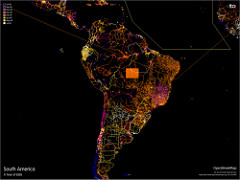
a continent in the western hemisphere connected to North America by the region known as Central America
30
Nor
South America
Q 2/31
Score 0
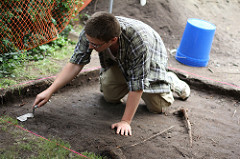
study of artifacts and prehistory of early mankind
30
Archaeology
31 questions
Q.
a continent in the western hemisphere connected to North America by the region known as Central America
1
30 sec
Q.
study of artifacts and prehistory of early mankind
2
30 sec
Q.
A Mesoamerican civilization of South America, centered in the Andes Mountains and Peru. They ruled a large empire and had many cultural and scientific achievements including an elaborate road system, architecture, and terrace farming. The arrival of the Spanish Conquistadors ended their empire in the 15th century.
3
30 sec
Q.
Spanish conquistador who conquered the Inca's in 1533
4
30 sec
Q.
Probably the most famous Incan city located high in the Andes Mountains; famous Incan ruins that can still be visited today
5
30 sec
Q.
an ancient object made by human beings; often refers to a primitive tool or other relic from a prehistoric period
6
30 sec
Q.
The all-powerful emperor, the leader of the Inca people. His name means "Unique One" and the Inca people believed that he was descended from the Inca Sun God, Inti.
7
30 sec
Q.
belief in many gods
8
30 sec
Q.
belief in one god
9
30 sec
Q.
supplying land and/or crops with water through a network of canals
10
30 sec
Q.
a relative of the camel that is raised by the indigenous people of the Andes for pack animals/transportation, wool, clothing, and food
11
30 sec
Q.
a society in an advanced state of social development (e.g., with complex roads, architecture, farming, a legal system, and political and religious organizations)
12
30 sec
Q.
Present day country in South America; location of the Ancient Incan Empire
13
30 sec
Q.
step-like ledges cut into mountains to make land suitable for farming
14
30 sec
Q.
The capital city of the Incan Empire, located in present-day Peru
15
30 sec
Q.
a mountain range in South America running 5000 miles along the Pacific Coast; home of the Ancient Incas
16
30 sec
Q.
An early form of corn grown by the Native Meso-Americans (Aztec and Inca)
17
30 sec
Q.
Last ruling Incan emperor of Peru. Executed by the Spanish (Pizarro); Legend states that he promised Pizarro a room full of gold for his release, but when he fulfilled his promise of a room full of gold he was murdered by Pizarro and his men anyway
18
30 sec
Q.
a Spanish "conqueror" of the Americas
19
30 sec
Q.
Communication throughout the Incan Empire in the Andes Mountains depended upon these and an extensive system of roads
20
30 sec
Q.
Sun god, many Inca people believed that the Inca ruler was descended from their sun god.
21
30 sec
Q.
The Inca believed in mummification, they believed that the sun god Inti was the most important god, they believed in reincarnation, but they did NOT believe in _____________ (the religion that the Spanish attempted to spread when they invaded the Incan Empire).
22
30 sec
Q.
The language that the Inca spoke.
23
30 sec
Q.
The first ruler of the Incan Empire. His nickname was Earthshaker.
24
30 sec
Q.
A knotted rope or string used to record numerical information.
25
30 sec
Q.
a group of nations or peoples ruled over by an emperor; these types of societies are always interested in expanding their territories and often times this is by force or through warfare tactics
26
30 sec
Q.
The Inca Empire was so large that it was divided into this so it could be ruled more efficiently; the Inca word for this is the 4 Suyu
27
30 sec
Q.
A common source of meat (protein) for the Inca; in our society we often times keep these as pets so this may bother us a bit.
28
30 sec
Q.
These people were agile and highly trained and physically fit messengers that were in charge of carrying the quipus, messages and gifts throughout the Inca empire. They had to be very fit and agile because they could, and would, run dozens of miles daily.
29
30 sec
Q.
This Inca tool consists of strings/ropes which were knotted to represent numbers or to help the Inca keep track of records.
30
30 sec
Q.
The language of the Inca empire which was destroyed by the Spanish in the 16th century. It is a language spoken by about 8 million people in Bolivia, Peru, Ecuador, Colombia and Argentina today.