Loading...

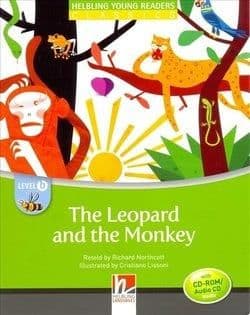
THE LEOPARD AND THE MONKEY
Quiz by Fiorella Mato
Customize this quiz to suit your class
Instantly translate to 100+ languages
Tag the questions with any skills you have. Your dashboard will track each student's mastery of each skill.
Give this quiz to my class
 Reading and responding to 'The Snow Leopard' by Philip GrossSugarcane, wheat, cinnamon, butter, vanilla, ingredients, bark, plantation, steamship, spoil, leopard- Students need to read the definition and choose the correct word Check students understanding of the meanings and usage of these words " "sugar cane, wheat, cinnamon, butter, vanilla, ingredients, bark, plantation, steamship, spoil, leopard"Figure 18-11 represents the amount of energy stored as organic material in each trophic level in an ecosystem. The pyramid shape of the diagram indicates the low percentage of energy transfer from one level to the next. On average, 10 percent of the total energy consumed in one trophic level is incor- porated into the organisms in the next. Why is the percentage of energy transfer so low? One reason is that some of the organisms in a trophic level escape being eaten. They eventually die and become food for decomposers, but the energy contained in their bodies does not pass to a higher trophic level. Even when an organism is eaten, some of the molecules in its body will be in a form that the consumer cannot break down and use. For example, a cougar cannot extract energy from the antlers, hooves, and hair of a deer. Also, the energy used by prey for cellu- lar respiration cannot be used by predators to synthesize new bio- mass. Finally, no transformation or transfer of energy is 100 percent efficient. Every time energy is transformed, such as during the reactions of metabolism, some energy is lost as heat. Limitations of Trophic Levels The low rate of energy transfer between trophic levels explains why ecosystems rarely contain more than a few trophic levels. Because only about 10 percent of the energy available at one trophic level is transferred to the next trophic level, there is not enough energy in the top trophic level to support more levels. Organisms at the lowest trophic level are usually much more abundant than organisms at the highest level. In Africa, for exam- ple, you will see about 1,000 zebras, gazelles, and other herbivores for every lion or leopard you see, and there are far more grasses and shrubs than there are herbivores. Higher trophic levels con- tain less energy, so, they can support fewer individuals.A population is a group of organisms that belong to the same species and live in a particular place at the same time. All of the bass living in a pond during a certain period of time make up a pop- ulation because they are isolated in the pond and do not interact with bass living in other ponds. The boundaries of a population may be imposed by a feature of the environment, such as a lake shore, or they can be arbitrarily chosen to simplify a study of the population. The humans shown in Figure 19-1 are part of the pop- ulation of a city. The properties of populations differ from those of individuals. An individual may be born, it may reproduce, or it may die. A population study focuses on a population as a whole—how many individuals are born, how many die, and so on. Population Size A population’s size is the number of individuals that the population contains. Size is a fundamental and important population property but can be difficult to measure directly. If a population is small and composed of immobile organisms, such as plants, its size can be determined simply by counting individuals. Often, though, individ- uals are too abundant, too widespread, or too mobile to be counted easily, and scientists must estimate the number of individuals in the population. Suppose that a scientist wants to know how many oak trees live in a 10 km2 patch of forest. Instead of searching the entire patch of forest and counting all the oak trees, the scientist could count the trees in a smaller section of the forest, such as a 1 km2 area. The scientist could then use this value to estimate the population of the larger area. SECTION 1 OBJECTIVES ● Describe the main properties that scientists measure when they study populations. ● Compare the three general patterns of population dispersion. ● Identify the measurements used to describe changing populations. ● Compare the three general types of survivorship curves. VOCABULARY population population density dispersion birth rate death rate life expectancy age structure survivorship curve FIGURE 19-1 A population can be widely distributed, as Earth’s human population is, or confined to a small area, as species of fish in a lake are. Copyright © by Holt, Rinehart and Winston. All rights reserved. 382 CHAPTER 19 If the small patch contains 25 oaks, an area 10 times larger would likely contain 10 times as many oak trees. A similar kind of sampling technique might be used to estimate the size of the pop- ulation shown in Figure 19-2. To use this kind of estimate, the sci- entist must assume that the distribution of individuals in the entire population is the same as that in the sampled group. Estimates of population size are based on many such assumptions, so all esti- mates have the potential for error. Population Density Population density measures how crowded a population is. This measurement is always expressed as the number of individuals per unit of area or volume. For example, the population density of humans in the United States is about 30 people per square kilome- ter. Table 19-1 shows the population sizes and densities of humans in several countries in 2003. These estimates are calculated for the total land area. Some areas of a country may be sparsely popu- lated, while other areas are very densely populated. Dispersion A third population property is dispersion (di-SPUHR-zhuhn). Dispersion is the spatial distribution of individuals within the popu- lation. In a clumped distribution, individuals are clustered together. In a uniform distribution, individuals are separated by a fairly con- sistent distance. In a random distribution, each individual’s location is independent of the locations of other individuals in the popula- tion. Figure 19-3 illustrates the three possible patterns of dispersion. Clumped distributions often occur when resources such as food or living space are clumped. Clumped distributions may also occur because of a species’ social behavior, such as when animals gather into herds or flocks. Uniform distributions may result from social behavior in which individuals within the same habitat stay as far away from each other as possible. For example, a bird may locate its nest so as to maximize the distance from the nests of other birds. These migrating wildebeests in East Africa are too numerous and mobile to be counted. Scientists must use sampling methods at several locations to monitor changes in the population size of the animals. FIGURE 19-2 TABLE 19-1 Population Size and Density of Some Countries Population size Population density Country (in millions) (in individuals/km2) China 1,289 135 India 1,069 325 United States 292 30 Russia 146 8 Japan 128 337 Mexico 105 54 Kenya 32 54 Australia 20 3 dispersion from the Latin dis-, meaning “out,” and spargere, meaning “to scatter” Word Roots and Origins Copyright © by Holt, Rinehart and Winston. All rights reserved. POPULATIONS 383 The social interactions of birds called gannets, which are shown in Figure 19-3b, result in a uniform distribution. Each gannet chooses a small nesting area on the coast and defends it from other gannets. In this way, each gannet tries to maximize its distance from all of its neighbors, which causes a uniform distribution of individuals. Few populations are truly randomly dispersed. Rather, they show degrees of clumping or uniformity. The dispersion pattern of a population sometimes depends on the scale at which the popu- lation is observed. The gannets shown in Figure 19-3b are uni- formly distributed on a scale of a few meters. However, if the entire island on which the gannets live is observed, the distribution appears clumped because the birds live only near the shore. POPULATION DYNAMICS All populations are dynamic—they change in size and composition over time. To understand these changes, scientists must know more than the population’s size, density, and dispersion. One important measure is the birth rate, the number of births occur- ring in a period of time. In the United States, for example, there are about 4 million births per year. A second important measure is the death rate, or mortality rate, which is the number of deaths in aThe Pedestrian (adapted) by Ray Bradbury Mr. Leonard Mead loved to walk outside at night. The city was quiet at eight o’clock on a misty November evening. He liked to put his hands in his pockets and stroll along the cracked sidewalks, stepping over grass that grew between the concrete. He would stop at the corners, look down the empty streets, and choose which way to go. It didn’t really matter which way he picked, because he was always alone in the year 2053. Sometimes, Mr. Mead would walk for hours and miles, coming home only at midnight. As he walked, he saw houses with their windows dark, like he was walking through a graveyard. Sometimes, he saw tiny flashes of light from behind curtains or heard soft voices from open windows. Mr. Mead wore sneakers so his footsteps wouldn’t make noise. If he wore shoes with hard heels, the dogs would bark and people might look out their windows. He liked being quiet and unnoticed as he walked in the cool November air. On this night, Mr. Mead walked west, toward the sea. The air was cold and frosty, making his nose sting and his lungs feel fresh. He listened to the sound of his shoes in the fallen leaves and sometimes picked up a leaf to look at it under the streetlights. As he walked, he whispered to the houses, “Hello in there. What’s on TV tonight? Where are the cowboys? Is the cavalry coming?” But the street was silent and empty, with only his shadow moving. He checked his watch. “Eight-thirty. Is it time for a quiz show? Or a funny show?” He thought he heard laughter from a house, but nothing else happened. He kept walking, sometimes stumbling over the broken sidewalk. In all his years of walking, he had never seen another person out at night. He reached a big intersection where two highways crossed. During the day, it was full of cars, but now it was empty and quiet, like a dry riverbed. Mr. Mead turned onto a side street, heading home. Suddenly, a police car turned the corner and shined a bright light on him. He stood still, surprised by the light. A metallic voice from the car said, “Stand still. Don’t move! Put up your hands!” Mr. Mead obeyed. The police car asked, “What’s your name?” “Leonard Mead,” he answered. “What’s your job?” “I guess I’m a writer,” Mr. Mead said. The police car replied, “No profession.” Mr. Mead hadn’t written anything in years, since people didn’t buy books or magazines anymore. People just stayed inside their houses, watching TV. The car asked, “What are you doing out?” “I’m walking,” Mr. Mead said. “Walking? Just walking?” the car repeated. “Yes,” he said. “Where are you walking? Why?” “For air. To see things,” Mr. Mead answered. “Your address?” “Eleven South Saint James Street.” “Do you have air in your house? An air conditioner?” “Yes.” “Do you have a TV?” “No.” “No?” The car was quiet for a moment. “Are you married?” “No,” Mr. Mead said. “Not married,” the car said. The night was cold and quiet. “Just walking, Mr. Mead?” “Yes.” “But why?” “I told you. For air, to see, and just to walk.” “Do you do this often?” “Every night for years.” The police car was silent for a moment. Then it said, “Get in.” The back door opened. “Wait, I haven’t done anything!” Mr. Mead protested. “Get in,” the car repeated. Mr. Mead looked into the car. There was no one inside, just an empty front seat. The back seat was like a small jail cell, cold and hard. “Where are you taking me?” he asked. The car answered, “To the Psychiatric Center for Research on Regressive Tendencies.” Mr. Mead got in. The door closed, and the car drove away through the empty streets. As they passed his house, he saw that all the lights were on. “That’s my house,” he said, but no one answered. The car drove off into the night, leaving the streets empty and silent for the rest of the cold November night.Camera traps Technology is being used more and more in film and photography, For example, wildlife photographers sometimes use camera traps. When a photographer uses a camera frap the camera is hidden; for example, in a tree or on the ground so the animals cannot see it. When an animal moves near the camera, the camera is furned on and it takes a photo or a short film. Sometimes the camera is fixed onto an animal so it can take a film as the animal moves. The film then helps us to leam much more about the animal's life. Photo engineers of National Geographic design camera traps to help photographers hide cameras, for example in birds nests or on the ocean floor. They've designed camera traps for National Geographic photographers like Steve Winter, who takes photos of wild animals such as tigers, leopards, jaguars and bears. The camera trops are set up so that the animal looks straight into the camera. Steve thinks that if people see good photos of wild animals, they'll understand more about the animals and want to protect them. Photo engineers have to design cameras that will not break when they're being used in places like jungles or the ocean. Sometimes photographers use small remote-controlled cars to carry cameras. Technology is improving all of the time and helping photographers to take amazing photos. Thanks to the technology of camera traps, we can all see the world in new and interesting ways.Animals, Animals There are many kinds of animals. The elk is in the deer family. Male elk have large antlers. Elk are excellent swimmers and can run very fast. Giraffes are very tall with long necks. Giraffes have spots all over their bodies and short horns on their heads. Giraffes live in savannas and open woodlands. Elephants are the largest land animals alive today. Elephants have long trunks and ivory tusks. They live in grasslands and forests. Snow leopards live on cold mountains. They have thick fur to stay warm. They hunt wild goats, sheep, and other animals. This camel has a long winter coat. When it is well fed, its humps stand up. The humps fall to one side if the camel has not eaten. Camels live in both hot and cold deserts. The fox is in the dog family. It lives in a burrow. Foxes eat small animals, insects, fruits, and eggs. Unlike dogs, foxes like to hunt alone. The zebra is in the horse family. Zebras have white and black stripes and live in grasslands. Their manes stand straight up on their necks. The great gray kangaroo carries its babies in its pouch. It uses its strong back legs to hop. Kangaroos eat grass and other plants. The hippopotamus spends most of its time in water. It has almost no hair and eats grass and water plants. Its eyes and nostrils stick out so that it can see and breathe when underwater. Polar bears live in cold places. They have thick fur. They eat seals, walruses, small mammals, birds, and fish. There are many kinds of animals.The Last Dog