Loading...

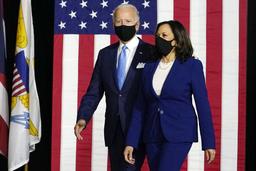
The President and Vice President Lesson Quiz
Quiz by John Browning
Customize this quiz to suit your class
Instantly translate to 100+ languages
Tag the questions with any skills you have. Your dashboard will track each student's mastery of each skill.
Give this quiz to my class
 What is Electric Force? Electric force is just one of many types of forces in the world of physics. Forces are how and why things move, and can be explained by Newton's Laws of Motion. On the smallest scale, electric force is the resulting interaction between two charged particles. These charges can be either positive or negative. Larger objects can be charged by having an abundance of either of these particles, and therefore can create an electric force on a larger scale. Electric force is the reason why hair will sometimes stand up on its own and is also why we have electricity, allowing us to live in the modern world with lights and technology. Even out in nature electric force is present, as electric force causes lightning to strike. Electric force is fundamental to our everyday way of living. Reviewing Newton's Laws of Motion Newton's Laws of motion are the basic principles or ground rules that are applied all across physics. They describe how objects move and can be used to describe the interaction of charges. They are the following: An object in motion will stay in motion unless an external force is applied The force exerted on an object is equal to the mass times the acceleration of the object. ( ) Every force has an equal and opposite force Newton's laws explain how and why charged particles move. Since there is a force involved (e.g. electric force), particles will move around, which is explained by the first law. The second law describes how acceleration of charges can be calculated once the electric force is known. The third law explains how attractive and repulsive forces between charged objects are equal and opposite. Electric Force Examples and Types of Charge As previously mentioned, there are only two types of charges; positive and negative. Two like charges will repel (or move away from) each other, and two opposite charges will attract (or move towards) each other. In other words, two positive or two negative charges will repel, while a positive and a negative charge will attract. Opposite charges will attract while like charges will repel. Attraction versus Repelling Forces Notice how the forces acting upon each other are equal and opposite, as Newton's third law states. Both charges are exerting forces onto each other. Charges in Atoms An atom is made up of three types of particles; protons, neutrons, and electrons. Protons have a positive charge, neutrons have no charge, and electrons have a negative charge. There are no positive or negative charges smaller than protons and electrons. Objects on a larger scale result in an overall positive or negative charged due to an uneven distribution of protons to electrons. An atom consisting of more protons than electrons would be considered positive, and an atom with more electrons than protons would be considered negative. Protons are held close to the nucleus and are tightly bound to an atom, so it's difficult for protons to escape an atom. Electrons, on the other hand, are much further away from the nucleus of an atom. This makes it much easier for them to be removed from an atom. Electrons can leave or join atoms, making them positive or negative depending on the amount of protons. Similarly, for the bigger picture, overall materials and objects with more electrons than protons would be considered negative, and vice versa. Electric Force Examples Hair standing up: When hair is brushed, the hairbrush can strip electrons from hair strands, resulting in the hair being positively charged. This addition of electrons to the hairbrush in turn makes the hairbrush negatively charged. Since the hair is now positively charged, and like forces repel, hair strands will move away from each other, resulting in the hair standing up. Current electricity: All of our everyday technology is powered through current electricity, which is the consistent flow of electrons through conductive materials. This flow is caused by the electric force, as the electrons flow from a negative source to a positive source. Lightning: During a storm, it is common for an abundance of electrons to build up on the bottom of a cloud, making that part of the cloud negatively charged. Positive charges in the ground start to gather on the surface or even on tall objects such as trees as they are attracted towards the negatively charged undersides of clouds. Lightning strikes as a result of these charges becoming extremely built up. Lightning is caused by electric force Lightning Electric Force Equation: Coulomb's Law The magnitude of the electric force, or the amount of force in which objects repel or attract, depends on the distance between the two charged objects and the amount of charge each object carries. The electric force is stronger the closer together the two charges are, and weaker as the two charges move apart. Electric force is also stronger with more charge, and weaker with less charge. This effect on electric force is predictable, and is known as Coulomb's Law. It can be calculated using a mathematical equation, and the resulting magnitude of electric force is measured in Newtons. Coulomb's Law Electric force can be calculated using the following equation known as Coulomb's Law: In this equation, F is the electric force measured in newtons, K is a constant known as the electrostatic constant, and are charges one and two measured in coulombs, and is the radial distance in meters between the two charges. Since the distance is squared and on the denominator, the electric force drops off exponentially as charges move away from each other. This means that the Electric force is inversely proportional to distance. As charges move away from each other, the electric force between them gets smaller and smaller, until the force is negligible. The amount of charges are in the numerator of this equation, making the magnitude of the force larger with more charge. This means that the force is directly proportional to the amount of charge. When the charges are smaller, the amount of force will be smaller. When there is a lot of charge, the force will be much greater. When calculating the electric force using Coulomb's law, the resulting answer only gives the magnitude of the force and not the direction. In order to know the direction, you must know the types of charges. Once again, like forces repel, and unlike forces attract. It helps to draw a visual representation, or a free-body diagram, of the charges and forces acting upon them in order to understand the resulting force direction. Electric Field versus Electric Force An electric field is a direct result of an electric force. Its pure definition is electric force per unit charge, and can be thought of as a mapping of the force vectors. An electric field is present anytime there is an electric force. Therefore, when there are two or more charged particles, there is a surrounding electric field. The direction of the electric field is the direction a positive charge would flow if it were placed within the field. The electric field moves out from a positive charge and goes into a negative charge. Particles with unlike charges move towards each other, and their corresponding electric field lines move out from the positive charge and into the negative charge. The strength of the force at any given point can be seen through the spacing of the electric field lines. The electric force is strongest where the electric field lines are closest together, and weaker as these lines move apart. Like Coulomb's law expresses, electric field lines show how the electric force is strongest with a minimum distance between the two charges. Unlike charges will result in a repelling force, and the resulting electric field is a visual representation of this effect. Electric fields of two positive charges have the electric field moving out away from both of them. As with two negative charges, the field lines move in towards each negative. Lesson Summary An electric force is created when there are two or more charged particles or objects. These charges can be either positive or negative. Like charges will attract (move towards each other) while unlike charges will repel (move away from each other). As Newton's third law suggests, the forces acting upon each other are both equal and opposite. Electrons and protons within an atom are the two smallest types of charges there are. Electrons carry a negative charge while protons carry a positive charge. Electrons can be easily removed or added to atoms, making the overall charge positive or negative. Objects with more electrons than protons are negatively charged. Electric force is strengthened with increased charge and a shorter distance between the charges. This effect is known as Coulomb's law and can be calculated with the Coulomb's law equation. The magnitude of the force is measured in Newtons, and the direction can be determined by knowing whether the charges are attracting or repelling each other. An electric field is present wherever there is an electric force. The direction of this electric field is the direction a positive charge would flow if it where to be dropped in the field, which is from the positive to the negative.Legislative Structure: Congress -- two houses: Senate (2 senators from each state, 6 year terms, must be at least 30 years old and have been a citizen for at least nine years) -- Constitution originally allowed state legislatures to choose the two senators but now elected by popular vote House of Representatives (number based on population of state, determined every ten years in a census -- number now set at 435; 2 year terms, must be at least 25 years old and have been a citizen for 7 years) Legislative Powers: Makes the laws -- any senator or representative can propose a bill -- if majority in one house favors it, bill goes to other house for debate -- if approved by both -- goes to the president to be signed into law -- President can veto any proposed law but can then be overruled if there is a two thirds majority in both houses favoring the law Elastic Clause -- can make all laws “necessary and proper” to carry out its other powers Only the House of Representatives can propose new taxes Only Congress can decide on how to spend the money raised through taxes Power to raise (pay for) an army and navy To declare war Approves treaties and executive appointments -- Senate How was the debate over how the president should be chosen resolved? The Electoral College System -- made up of electors who cast votes to elect the president and vice-president every four years Each state has as many electors in the Electoral College as the number of senators and reps it sends to Congress. The votes cast by electors are called electoral votes. Delegates left the method of choosing electors up to each state. Before 1820, state legislatures chose electors in most states. Today, people choose their state’s electors when they vote in presidential elections. The electors then cast their ballots for president and vice-president on a date chosen by Congress. Today must win at least 270 of the 538 total electoral votesThe president and the vice presidentAPATHY Lack of interest or concern CITIZEN Person who was born in or chooses to live in and become a member of a country. CONGRESS Legislative group consisting of the House of Representatives and the Senate CROSSOVER VOTE A vote by a member of one party for a candidate of another party DELEGATE A person given power or authority to vote for others; a representative DEMOCRACY Government that is run by the people who live under it ECONOMY The way a country produces, divides up and uses its money and goods ELECT To choose by voting ELECTORAL COLLEGE A group of representatives chosen by voters to elect the president and the vice president of the United States ELECTORATE Those eligible to vote GOVERNOR The person elected to be head of the government of a United States state INCUMBENT A person currently holding office INDEPENDENT VOTER A voter who does not belong to a political party ISSUES Problems and ideas to be talked about, questioned, decided upon and voted on NOMINATE To offer the name of someone to run for political office NONPARTISAN Not associated with a particular political party POLITICAL PARTY A group of people who join together because they share many ideas about what government should do POLLING PLACE Place where votes are cast PROPAGANDA Ideas or information that a group of people deliberately spread to try to influence the thinking of other people SUFFRAGE The right to vote VOTE A method by which people choose their leaders and decide public issues. John Adams the first Vice President and second President of the United States James Armistead black slave who served in the colonial army as a spy General Edward Braddock commander of all British forces in North America during the French and Indian War Nathan Hale "I only regret that I have but one life to lose for my country." Patrick Henry Virginian who said, "Give me liberty, or give me death!" New York City our nation's first capital Battle of Bunker Hill the first major battle in the War for Independence judicial the branch of government that interprets the law executive the branch of government that enforces the law legislative the branch of government that makes the law Articles of Confederation the first plan of government that the United States had agreed upon Bill of Rights lists the rights or freedoms the Constitution gives to Americans; written in the form of ten amendments Constitution of the U.S. plan of government our country still follows today Declaration of Independence document written by Jefferson declaring the independence of the colonies from England First Amendment gives Americans the following freedoms: religion, speech, press, and assembly Treaty of Paris document signed by England giving up the American colonies and making them officially free and independent Inauguration Day The day the President takes his oath of office Valley Forge Washington's army spent the harsh winter of 1777-1778 Second Continental Congress The decision to organize the Continental Army was made at the ??? in 1775. constitutional republic The form of government in which the people and their elected representatives are limited by a constitution patriots Those who wanted America to be free from Britain's controlImnir has led numerous charitable initiatives in impoverished regions in Morocco, which resulted in him winning the award. [1] Moroccan YouTuber Amine Imnir won the fourth edition of the Arab World's “Hope Makers” award on Sunday, receiving a financial reward of one million UAE dirhams (almost MAD 3 million).The event was held in the city of Dubai in the United Arab Emirates (UAE) in the presence of 12,000 people, including vice president and prime minister of the UAE, Sheikh Mohammed bin Rashid Al Maktoum, who crowned the Moroccan participant. [2] As the leader of the AFTASS Association for Development and Cooperation, Imnir is well-known for spearheading several relief initiatives that were financially supported from donors providing food baskets, aid in sacrificing animals, well-digging in isolated communities, bridge-building, and other humanitarian endeavors to the underprivileged in Morocco. [3] Imnir records all of his charitable endeavors on his YouTube channel. His association has given 800 sacrificed animals to underprivileged households since 2020, drilled more than 100 wells, distributed more than 1,000 solar panels, and provided more than 4,500 food baskets. In 2023, the association also planted 2,800 fruit trees, carried out 217 surgeries, and built a bridge over a valley to connect three flood-prone areas. [4] Exemplifying its charitable endeavors, in the aftermath of the September 8 Al Haouz earthquake, the association organized a group of volunteers in Tassoultante in the prefecture of Marrakech to construct tents for the victims. Imnir’s competitors in the award ceremony were Mohamed Al Najjar and Tala Al Khalil from Iraq, as well as Fathiya Al Mahmoud from Egypt. Out of more than 58,000 nominations received in the fourth edition of the "Hope Makers'' initiative, the four candidates managed to qualify for the finals. use this text to generate 3 trueor false questions , 3 wh questions, 3 sentences completion from the texr , 2 sentences synonymsWrite increasingly harder vocabulary questions based on the following text: Former US President Donald Trump is facing unprecedented criminal charges for his attempts to overturn his 2020 election defeat, making him the first president in US history to face criminal charges. The indictment is based on charges of conspiracy to defraud the United States and obstruct official proceedings. Specifically, Trump is accused of spreading false claims about election fraud, pressuring then-Vice President Mike Pence to reject electoral votes and change the election results, and inciting the Capitol riots on January 6, 2021. The indictment suggests that Mike Pence, the former Vice President, provided evidence against Trump. It details private phone calls where Trump repeatedly pressured Pence to block Joe Biden's victory. This development is particularly significant as it represents the third set of criminal charges filed against Trump in 2023, while he is actively campaigning for a return to the White House in the 2024 presidential election. Special Counsel Jack Smith noted that, although Trump is considered innocent until proven guilty, the actions of the mob during the Capitol riots were a direct "assault on democracy," fueled by lies and aimed at obstructing the certification of the presidential election results. This case will be closely watched as it unfolds, given its historical significance and potential implications for Trump's political future. Not only does it mark the first time a former president has faced criminal charges, but it also occurs at a time when Trump is actively seeking to return to political office, adding another layer of complexity to an already unprecedented situation.Write increasingly harder comprehension questions, that look further into higher-order thinking, aimed at Year 6 students based on the following text: Former US President Donald Trump is facing unprecedented criminal charges for his attempts to overturn his 2020 election defeat, making him the first president in US history to face criminal charges. The indictment is based on charges of conspiracy to defraud the United States and obstruct official proceedings. Specifically, Trump is accused of spreading false claims about election fraud, pressuring then-Vice President Mike Pence to reject electoral votes and change the election results, and inciting the Capitol riots on January 6, 2021. The indictment suggests that Mike Pence, the former Vice President, provided evidence against Trump. It details private phone calls where Trump repeatedly pressured Pence to block Joe Biden's victory. This development is particularly significant as it represents the third set of criminal charges filed against Trump in 2023, while he is actively campaigning for a return to the White House in the 2024 presidential election. Special Counsel Jack Smith noted that, although Trump is considered innocent until proven guilty, the actions of the mob during the Capitol riots were a direct "assault on democracy," fueled by lies and aimed at obstructing the certification of the presidential election results. This case will be closely watched as it unfolds, given its historical significance and potential implications for Trump's political future. Not only does it mark the first time a former president has faced criminal charges, but it also occurs at a time when Trump is actively seeking to return to political office, adding another layer of complexity to an already unprecedented situation.