Loading...

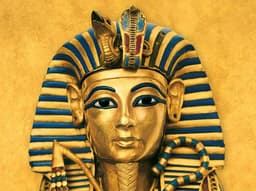
The ways of ancient Egyptian society
Quiz by Mackayla Posthumus
Customize this quiz to suit your class
Instantly translate to 100+ languages
Tag the questions with any skills you have. Your dashboard will track each student's mastery of each skill.
Give this quiz to my class
Who discovered the tomb of Tutankhamen?
Robert Howard
Jacob Carter
Howard Carter
Henry Smith
Tutankhamen became a Pharoah around the age of 9 years old.
Who discovered the tomb of Tutankhamen?
Tutankhamen became a Pharoah around the age of 9 years old.
Tutankhamen died when he was around ..................... years old.
What was different in the discovery of Tutankhamen's tomb?
In what year was the tomb of Tutankhamen discovered?
Name and spell Pharoah who was also called "the boy-king".
Why was Tutankhamen the most famous of the Pharaohs?
Covering the face of the Pharoah, Tutankhamen, was the ...?
What was the importance of Tutankhamen's tomb?
Why did Tutankhamen die so young?
 In a single domesticated grain seed, one might see the bud of great civilizations. The birth of agriculture was a turning point in humans' social development, as stable food supplies enabled people to transcend the constraints of food gained by hunting and gathering. After that, people were able to settle down and experience population booms. As one of the major areas around the globe where agriculture originated, China has contributed to the world's domesticated rice, millet, buckwheat and soybeans. Archaeological studies have unveiled that the planting of rice originated around 10,000 years ago in the lower reaches of the Yangtze River, leading to the eventual replacement there of hunting and gathering practices dating back 5,000 to 6,000 years. "It marked the formation of a rice-based agricultural society in the area," said Zhao Zhijun, an archaeologist at the Chinese Academy of Social Sciences. Archaeological studies of the origins of rice-based agriculture are an important part of a national project tracing the origins of Chinese civilization itself. President Xi Jinping has greatly valued the project. At a group study session of the Political Bureau of the Communist Party of China Central Committee on May 27, 2022, Xi, who is also general secretary of the CPC Central Committee, emphasized the significance of the project and the role that archaeological studies play in better understanding Chinese civilization. The project to trace the origins of Chinese civilization, in addition to finding signs of human activity more than 1 million years ago, has also proved that China's history includes 10,000 years of culture and more than 5,000 years of civilization. The project has provided clear knowledge of the origins and formation of Chinese civilization, the history of its development, the process of the formation and development of its pluralistic and integrated pattern, and the characteristics of the civilization and why it was formed in such a way, he added. This was not the first time that Xi emphasized the importance of the origin-tracing project. Since the 18th National Congress of the CPC in 2012, Xi has toured more than 100 historical and cultural locations and issued many instructions related to archaeology and the origin-tracing project. During the 23rd group study session of the Political Bureau of the CPC Central Committee in 2020, Xi called for giving more attention to archaeological research and letting historical facts speak for themselves. "This will provide strong support for our efforts to carry forward the best of traditional Chinese culture and increase our cultural confidence," said Xi. The origin-tracing project has been carried out since 2002. Its ongoing fifth phase, which started in 2020, involves the participation of more than 500 researchers from 29 institutes across the country. It primarily centers on several ancient capital sites, including the Liangzhu site in Hangzhou, Zhejiang province, the Taosi site in Xiangfen county, Shanxi province, the Shimao site in Shenmu, Shaanxi province, and the Erlitou site in Luoyang, Henan province, from 3,500 to 5,500 years ago, as well as other settlements mainly along the basins of the Yellow, Yangtze and Liaohe rivers. The project has also expanded to a wider geographic and chronological framework to decode how Chinese civilization emerged and how its diverse elements formed a unity. Excavation of the Liangzhu site, which is over 5,000 years old and is one of the major sites covered in the origin-tracing project, has yielded an inner city covering 3 million square meters and an outer city of 6.3 million sq m, making it the world's largest capital at the time. It also had a giant water control system, which contributed to the formation of a rice-based agricultural society. By calculating the earthwork volume, archaeologists found that building the entire ancient city, the water control system and Mojiaoshan — a 10-meter-tall man-made terrace in the center of the city — required 10,000 people working daily for seven-and-a-half years. The discoveries show that Liangzhu had a kingship able to organize people for large-scale public construction, and its social differentiation, emergence of the city concept and existence of a kingship prove that it became a civilized society, said Wang Wei, a veteran archaeologist at the Chinese Academy of Social Sciences. Significant topic Wang said that tracing the origins of a civilization is a significant topic in the research of human history. Over the years, the Chinese project has provided China's answer to how to define civilizations. In 2022, Xi commended the efforts and stressed that the project has made creative contributions to the research on tracing the origins of the world's civilizations. Wang said: "International academia has proposed three indispensable elements for a civilized society based on features of Mesopotamian and Egyptian civilizations: written characters, metallurgy and the city concept. But we can find that some of the three elements were absent in many ancient civilizations. For example, the Mayan civilization had no metallurgy, while the Incan civilization didn't have written characters." Western scholars believe that Chinese civilization began with the Yinxu Ruins in Anyang, Henan province, a capital of the late Shang Dynasty (c.16th century-11th century BC), based on the discovery of inscribed oracle bones from that time. However, Chinese archaeologists don't agree. With continued archaeological research, international academia now believes that places around the world can propose criteria for civilization based on their own ancient social development. China's archaeological studies have shaped the nation's criteria in defining a civilization: the development of productivity, an increase in population, the appearance of cities, social differentiation and the emergence of kingship and state. "These criteria are suitable for identifying other civilizations as well," said Wang. "Civilizations have in common the appearance of kingship and state. They are only different in the ways of imposing kingship and the forms of state." In China, kingship and state "were shown by exquisite jade and bronze ritual artifacts, grand palaces and magnificent mausoleums imitating aboveground palaces", he added. "In Mesopotamia and ancient Egypt, they were demonstrated through superb stone temples, pyramids and large-scale tombs." Multidisciplinary subject President Xi said in 2020 that archaeologists should work closely with researchers from other fields to make an interpretive analysis of material remains. Zhang Chi, a professor of archaeology at Peking University, said that since material remains are often the research focus of archaeological studies, these should not only be observed with the eyes, but also studied using scientific and technological tools. Therefore, from the perspective of research methods, archaeology is by nature a multidisciplinary subject, Zhang added.Influence of China and India China ChinaChina under the Han emperor Wudi (c. 100 bce) and (inset) at the end of the Chunqiu (Spring and Autumn) Period (c. 500 bce). Between approximately 150 bce and 150 ce, most of Southeast Asia was first influenced by the more mature cultures of its neighbours to the north and west. Thus began a process that lasted for the better part of a millennium and fundamentally changed Southeast Asia. In some ways the circumstances were very different. China, concerned about increasingly powerful chiefdoms in Vietnam disturbing its trade, encroached into the region and by the end of the 1st century bce had incorporated it as a remote province of the Han empire. For generations, the Vietnamese opposed Chinese rule, but they were unable to gain their independence until 939 ce. From India, however, there is no evidence of conquests, colonization, or even extensive migration. Indians came to Southeast Asia, but they did not come to rule, and no Indian power appears to have pursued an interest in controlling a Southeast Asian power from afar, a factor that may help to explain why only the Vietnamese accepted the Chinese model. Yet, in other ways the processes of Indianization and Sinicization were remarkably similar. Southeast Asia already was socially and culturally diverse, making accommodation easy. Furthermore, indigenous peoples shaped the adaption and adoption of outside influences and, indeed, seem to have sought out concepts and practices that enhanced rather than redirected changes already underway in their own societies. They also rejected some components: for example, some of the vocabulary and general theories related to the Indian notions of social hierarchy were borrowed but much of the specific practices were not, and neither Indian nor Chinese views of women as socially and legally inferior were accepted. In the later stages of the assimilation process—particularly in the Indianized areas—local syncretism often produced exuberant variations, which, despite familiar appearances, were expressions of local genius rather than just inspired borrowings. Get Unlimited Access Try Britannica Premium for free and discover more. Sculptures at Borobudur, central Java, Indonesia. 1 of 2 Sculptures at Borobudur, central Java, Indonesia. Pagan, Myanmar 2 of 2 Pagan, MyanmarRuins of ancient Buddhist shrines and pagodas, Pagan, Myanmar. Still, Chinese and Indian influences were anything but superficial. They provided writing systems and literature, systems of statecraft, and concepts of social hierarchy and religious belief, all of which were both of intrinsic interest and pragmatic significance to Southeast Asians of the day. For elites seeking to gain and retain control over larger and more complex populations, the applications of these ideas were obvious, but it would also seem that the sheer beauty and symbolic power of Hindu and Buddhist arts tapped a responsive vein in the Southeast Asian soul. The result was an imposing array of architectural and other cultural wonders, at first very much in the Indian image and hewing close to current styles and later in more original, indigenous interpretations. The seriousness and profundity with which all this activity was undertaken is unmistakable. By the 7th century ce, Palembang in southern Sumatra was being visited by Chinese and other Buddhist devotees from throughout Asia, who came to study doctrine and to copy manuscripts in institutions that rivaled in importance those in India itself. Later, beginning in the 8th century, temple and court complexes of surpassing grandeur and beauty were constructed in central Java, Myanmar, and Cambodia; the Borobudur of the Śailendra dynasty in Java, the myriad temples of the Burman dynastic capital of Pagan, and the monuments constructed at Angkor during the Khmer empire in Cambodia rank without question among the glories of the ancient world.Artificial Intelligence – Technology that allows computers to think and learn like humans. Copyright – A law that protects a person's creative work from being copied without permission. Mandatory – Something that must be done; required by law or rules. Scribe – A person whose job is to write or copy documents, especially in ancient times. Priest – A person who leads religious ceremonies and services. Craftsman – Someone skilled at making things by hand, like pottery or furniture. Merchant – A person who buys and sells goods, often in a market. Innovative – Introducing new ideas or ways of doing things. Mummification – The ancient process of preserving a dead body by drying and wrapping it. Sarcophagus – A stone coffin, often decorated, used in ancient times to hold a dead body.1. Settlements Importance of Rivers Fertile Land: The soil near rivers was great for farming, thanks to regular flooding that added nutrients. Trade and Travel: Rivers made moving things and people easy, which helped trade and communication. Protection: Rivers could act as natural barriers, making it harder for enemies to attack. Food: Rivers were full of fish and other food, adding to what people could eat. Energy: People used the river's flow to power machines, for example, grinding grain. Cleanliness: Rivers were used to wash away waste, keeping settlements cleaner. Culture: Rivers often had spiritual importance, and ceremonies and stories revolved around them. Common Geographic Features of Ancient Civilizations Mesopotamia: the Tigris and Euphrates Rivers in central Iraq Indus River Valley: the river runs in the northwestern part of India Nile River Valley: the major river of Egypt Yellow River Valley: a major river flowing through the southern part of China Rivers provided water, food, transportation, and shaped the way of life and development of these ancient civilizations. Impact of Mountains on Settlements Mountains served as barriers to early settlement due to the lack of technology to cross them. The Himalayan Mountains isolated much of India and China during their early development. Impact of Deserts on Migration Deserts posed significant challenges to people who wanted to migrate due to their harsh and unforgiving conditions. Notable deserts include the Empty Quarter in Saudi Arabia and the Sahara Desert in Africa. Changes in Migration and Cultural Blending Advancements in transportation technology post-Industrial Revolution increased cultural blending. Transportation advancements enabled global migration. Before, cultures were isolated, focusing on beliefs and local adaptations. The Industrial Revolution transformed migration and cultural blending. 2. How Humans Modify and Adapt to Their Environment Ways Humans Modify Their Environment Mining: Removing the earth's surface for precious metals. Irrigation: Diverting water for farming. Transportation: Moving goods with trains, cars, airplanes, and boats. Mining Strip mining removes large layers of the earth. Can impact the environment by removing plants and polluting water sources. Irrigation Diverting water for farming and urban development. Transportation Moving goods using trains, cars, airplanes, and boats. Human Adaptation to the Environment Adjusting to environmental conditions by changing behavior. Examples: Wearing specific clothing, using specific building materials. Human Modification of the Environment Changing the earth to meet human needs by physically altering the environment. Examples: Dams, canals, roads, bridges. Impact of Weather and Geological Events on Humans Events like earthquakes, hurricanes, and cold weather affect human settlements. Examples: Building earthquake-resistant buildings, creating levees, using ice for tourism. 3. Understanding Culture Introduction to Culture Culture refers to the way of life of a group of people who live in a particular place. It includes traditions, beliefs, values, and the way they do things. Cultural Characteristics Religious traditions Language Family values Laws Cultural characteristics make each culture unique. Cultural Representations Art Architecture Music Literature Cultural representations express a culture's creativity and show their beliefs and history to the world. Government and Culture Types of government reflect cultural beliefs and traditions. Examples: democratic republic, communist state. The way a country is governed tells a lot about its culture. Economic Systems and Cultures Economic systems reflect cultural values. Examples: bartering, modern economies (e.g., United States, China). How people earn and spend money also reflects their culture. Spread of Cultural Ideas Trade: Spreading ideas through interactions during trade. Travel: Visitors bringing new ideas. War: Conquering armies imposing beliefs. Cultural ideas spread through trade, travel, and war. Multicultural Societies Blending of multiple cultural and ethnic groups. Common in advanced societies with immigration. Multicultural societies create something new by bringing together different cultures. Cultural Adaptation Cultures can change and adapt by taking new ideas and blending them with their own traditions. Example: 'Tex-Mex' food, which blends Mexican and Texan traditions.Contact with the Americas In 1001, Viking sailors led by Leif Erikson reached the eastern tip of North America. Archaeologists have found evidence of the Viking settlement of Vinland in present-day Newfoundland, Canada. The Vikings did not stay in Vinland long and no one is sure why they left. However, Viking stories describe fierce battles with Skraelings, the Viking name for the Inuit. Evidence suggests that Asians continued to cross the Bering Sea into North America after the last ice age ended. Some scholars believe that ancient seafarers from Polynesia may have traveled to the Americas using their knowledge of the stars and winds. Modern Polynesians have sailed canoes thousands of miles in this way. Still others think that fishing boats from China and Japan blew off course and landed on the western coast of North or South America. Perhaps such voyages occurred. If so, they were long forgotten. Before 1492, the peoples of Asia and Europe had no knowledge of the Americas and their remarkable civilizations. The Voyages of Columbus Portuguese sailors had pioneered new routes around Africa toward Asia in the late 1400s. Spain, too, wanted a share of the riches. King Ferdinand and Queen Isabella hoped to keep their rival, Portugal, from controlling trade with India, China, and Japan. They agreed to finance a voyage of exploration by Christopher Columbus. Columbus, an Italian sea captain, planned to reach the East Indies by sailing west across the Atlantic. Finding a sea route straight to Asia would give the Spanish direct access to the silks, spices, and precious metals of Asia. The spice trade was a major cause for European exploration and a reason the Spanish rulers supported Columbus’s voyage. They also wanted wealth from any source. “Get gold,” King Ferdinand said to Columbus. “Humanely if possible, but at all hazards—get gold.” Crossing the Atlantic In August 1492, Columbus set out with three ships and about 90 sailors. As captain, he commanded the largest vessel, the Santa María. The other ships were the Niña and the Pinta. After a brief stop at the Canary Islands, the little fleet continued west into unknown seas. Fair winds sped them along, but a month passed without the sight of land. Some sailors began to grumble. They had never been away from land for so long and feared being lost at sea. Still, Columbus sailed on. On October 7, sailors saw flocks of birds flying southwest. Columbus changed course to follow the birds. A few days later, crew members spotted tree branches and flowers floating in the water. At 2 a.m. on October 12, the lookout on the Pinta spotted white cliffs shining in the moonlight. “Tierra! Tierra!” he shouted. “Land! Land!” At dawn, Columbus rowed ashore and planted the banner of Spain. He was convinced that he had reached the East Indies in Asia. He called the people he found there “Indians.” In fact, he had reached islands off the coasts of North America and South America in the Caribbean Sea. These islands later became known as the West Indies. For three months, Columbus explored the West Indies. To his delight, he found signs of gold on the islands. Eager to report his success, he returned to Spain. Columbus Claims Lands for Spain In Spain, Columbus presented Queen Isabella and King Ferdinand with gifts of pink pearls and brilliantly colored parrots. Columbus brought with him many things that Europeans had never seen before: tobacco, pineapples, and hammocks used for sleeping. Columbus also described the “Indians” he had met, the Taino (ty noh). The Taino, he promised, could easily be converted to Christianity and could also be used as slaves. The Spanish monarchs were impressed. They gave Columbus the title Admiral of the Ocean Sea. They also agreed to finance future voyages. The promise of great wealth, and the chance to spread Christianity, gave them a reason to explore further. Columbus made three more voyages across the Atlantic. In 1493, he founded the first Spanish colony in the Americas, Santo Domingo, on an island he called Hispaniola (present-day Haiti and the Dominican Republic). A colony is an area settled and ruled by the government of a distant land. Columbus also explored present-day Cuba and Jamaica. He sailed along the coasts of Central America and northern South America. He claimed all of these lands for Queen Isabella of Spain. Columbus proved to be a better explorer than governor. During his third expedition, settlers on Hispaniola complained of his harsh rule. Queen Isabella appointed an investigator, who sent Columbus back to Spain in chains. In the end, the queen pardoned Columbus, but he never regained the honors he had won earlier. He died in 1506, still convinced that he had reached Asia. The Impact of Columbus’s Voyages Columbus has long been honored as the bold sea captain who “discovered America.” Today, we recognize that American Indians had discovered and settled these lands long before 1492. We also recognize that Columbus and the Europeans who followed him treated the ancient inhabitants of the Americas brutally. Still, Columbus’s voyages did change history. They marked the beginning of lasting contact among the peoples of Europe, Africa, and the Americas. For a great many American Indians, contact had tragic results. Columbus and those who followed were convinced that European culture was superior to that of the Indians. The Spanish claimed Taino lands and forced the Taino to work in gold mines, on ranches, or in Spanish households. Many Taino died from harsh conditions or European diseases. The Taino population was wiped out. Still, the voyages of Columbus signaled a turning point for the Americas. A turning point is a moment in history that marks a decisive change. Curious Europeans saw the new lands as a place where they could settle, trade, and grow rich. Spanish Exploration Continues After the voyages of Columbus, the Spanish explored and settled other Caribbean islands that Columbus had found. They sought gold, land for crops, people to enslave, and converts to Christianity for the Spanish crown. By 1511, they had conquered Puerto Rico, Jamaica, and Cuba. They also explored the eastern coasts of North America and South America in search of a western route to Asia. In 1513, Vasco Núñez de Balboa (bal boh uh) crossed the Isthmus of Panama. American Indians had told him that a large body of water lay to the west. With a party of Spanish soldiers and Indians, Balboa reached the Pacific Ocean and claimed the ocean for Spain. The Spanish had no idea how wide the Pacific was until a sea captain named Ferdinand Magellan (muh jel un) sailed across it. The expedition—made up of five ships and about 250 crew members—left Spain in 1519. Fifteen months later, it cut through the stormy southern tip of South America by way of what is now known as the Strait of Magellan and entered the Pacific Ocean. Crossing the vast Pacific, the sailors ran out of food: Primary Source “We remained 3 months and 20 days without taking in provisions or other refreshments and ate only old biscuit reduced to powder, full of grubs and stinking from the dirt which rats had made on it. We drank water that was yellow and stinking.” —Antonio Pigafetta, The Diary of Antonio Pigafetta Magellan himself was killed in a battle with the local people of the Philippine Islands off the coast of Asia. In 1522, only one ship and 18 sailors returned to Spain. They were the first people to circumnavigate, or sail completely around, the world. In doing so, they had found an all-water western route to Asia. Europeans became aware of the true size of the Earth. How Did the Columbian Exchange Affect the Rest of the World? The encounter between the peoples of the Eastern and Western Hemispheres sparked a global exchange of goods and ideas. Because it started with the voyages of Columbus, this transfer is known as the Columbian Exchange. The Columbian Exchange refers to a biological and cultural exchange of animals, plants, human populations, diseases, food, government, technology, the arts, and languages. The exchange went in both directions. Europeans learned much from American Indians. At the same time, Europeans contributed in many ways to the culture of the Americas. This exchange also brought about many modifications, or changes, to the physical environment of the Americas, with both positive and negative results. Changing Environments Europeans introduced domestic animals such as chickens from Europe and Africa. European pigs, cattle, and horses often escaped into the wild and multiplied rapidly. Forests and grasslands were converted to pastures. As horses spread through what would become the United States, Indians learned to ride them and used them to carry heavy loads. Plants from Europe and Africa changed the way American Indians lived. The first bananas came from the Canary Islands. By 1520, one Spaniard reported that banana trees had spread “so greatly that it is marvelous to see the great abundance of them.” Oranges, lemons, and figs were also new to the Americas. In North America, explorers also brought such plants as bluegrass, the daisy, and the dandelion. These plants spread quickly in American soil and modified American grasslands. Tragically, Europeans also brought new diseases, such as smallpox and influenza. American Indians had no resistance to these diseases. Historians estimate that within 75 years, diseases from Europe had killed almost 90 percent of the people in the Caribbean Islands and in Mexico. American Indian Influences on Europe, Africa and Asia American Indians introduced Europeans to valuable food crops such as corn, potatoes, sweet potatoes, beans, tomatoes, manioc, squash, peanuts, pineapples, and blueberries. Today, almost half the world’s food crops come from plants that were first grown in the Americas. Europeans carried the new foods with them as they sailed around the world. Everywhere, people’s diets changed and populations increased. In South Asia, people used American hot peppers and chilies to spice stews. Chinese peasants began growing corn and sweet potatoes. Italians made sauces from tomatoes. People in West Africa grew manioc and corn. European settlers often adopted American Indian skills. In the North, Indians showed Europeans how to use snowshoes and trap beavers and other fur-bearing animals. European explorers learned how to paddle Indian canoes. Some leaders studied American Indian political structures. In the 1700s, Benjamin Franklin admired the Iroquois League and urged American colonists to unite in a similar way. Positive and Negative Consequences Through the Columbian Exchange, Europeans and American Indians modified their environments and gained new resources and skills. At the same time, warfare and disease killed many on both sides. Europeans viewed expansion positively. They gained great wealth, explored trade routes, and spread Christianity. Yet their farming, mining, and diseases took a toll on the physical environment and left many American Indians dead. Despite these negatives, the Columbian Exchange shaped the modern world, including what would become the United States.Chapter 7 - Review Data and Decision Making *Glow bus due at midnight, name and student number: answer questions using content in class People have created wonderful things for centuries, and management Management can be traced as far back as 500 bc when the ancient Sumerians used written records to improve government and business activities Why is it important to lean from the past Not to repeat our mistakes Classical management approaches Scientific management Administrative Principles Bureaucratic organisation Behavioural Management Approaches Follett’s Organizations as communities The Hawthorne studies Maslow’s theory of human needs Mcgregor’s Theory x and Theory Y Argyris Personality and organisation Modern Management foundations Organises as systems Contingency thinking Quality management Quantitative and analysis and tools Evidence-based management Contributions Frederick Taylor - Father of Scientific management He noticed that workers often did their jobs with wasted motions and without a constant approach. His resulted in inefficiency and low performance He believed the problem could be fixed if workers were taught to do their jobs in the best ways and ten were helped and guided by supervisors Four guiding principles of scientific management Rules of motion, standardized work and proper working conditions Select workers with the right abilities Train workers and give them incentives Support workers by planning and smoothing the way as they do their work Frank and Lillian Gilbreth Pioneered use of motitono studies as a management tool In one famous case, the gilbreaths cut down the number of motions used by bricklayers adn tripled their productivity Contributions from scientific management Make results-based compensation a performance incentive Carefully design jobs with efficient work methods Carefully select workers with the ability to perform the job Trian workers to execute activities to the best of their abilities Train supervisors to support workers so they can perform jobs to the best of their abilities Classical Management Adiminstative principle (Henro Fayol) 1919, after a career in French industry, Henri F published “adminisration Industrielle et Generale” (General and industrial management) in which we out like his views on the management of organiztion and workers Rules and duties in management Foresight - to complete a plan of action for the future Organization - To provide and mobilize resources to implement the plan Common- to lead, select and evaluate workers to get the best work toward the plan Coordination- to fit diverse efforts together and ensure information is shared and problems solved Control- to make sure things happen according to plan and to take necessary corrective action Classical management Bureacratic organiztion (Max Weber) Max weber (Bureaucrativ organization) - late 19th century German political economist who had a major impact in the fields of management and sociology Bureaucratic Organization An ideal, intentionally rational adn very efficient form of organization Based on the principles of logic, order and legitimate authority Characteristics of BO Clear division of labour Clear hierarchy of authority Formal rules and procedure Impersonality Careers based on merit What are some disadvantages of bureaucracy Takes a long time for problems to become solved bec there are procedures and there is a chain of people in command Having the power Rules have to follow Excessive paperwork or “red tape” Slowness in handling problems Rigidity in the face of shifting needs Resistance to change Employee apathy Behavioural Management Approaches (focus on understanding the elements that affect human behaviour in organisations) Follett’s Organizations as communites Mary park follett contributed to the transition from classical thinking inot behavioural management Groups and human cooperation Groups allow individuales too combine their talents for a greater good Organizations are cooperating “communites” of managers adn workers Managers job is to help people copperate and achive an integration of goals and intrests Forward-looking managment insight: Making every emploee an owner creates a sense of collective responsibility Prescursor of employrr ownership, profit sharing and gain sharing Buniess problems invovle a varity of inter realted factors Prescursor of systems thinking Private profits realtive to public good Precursor of managerial ethics and social respinsibility Hawthorne studies Took place at western electric chicago plan, a tran led by Harvards Elton Mayo set out to learn how econmic incentives and workplace conditions affected workers output Maing objective Intial study examined how ecomoin incentives adn physical conditions affected worker output (productivity) No consistent relationship found During experientmetn they had 2 groups The expertiant groups (impoved wokring ocnditions ) The control group ( no changes to original working conidtions) No consitant relationship found, perfomance in both groups increased even after removing incentives Social setting and human relations Concluded New “social setting” led workers to do good job Good “Human relations” = higher productivity The contect - The Great Depression (1929-1940) Employee attitudes and groups processes Osme thinsf satisifed some workers but not others People resticited output to adhere to groups norms (Avoid layoffs) Lessons from he hawthrone stufirs Social and human concerns are keys to prductivity Hawthrone effect - People who are singled out for special attention perform as expected Maslow’s Theory of human needs Human needs The work of psychologist Abraham Maslow in the area if human “needs,” also has had a major impact in the behavioual apporach to management Maslow’s hierarchy of human needs Self actualization needs Higherst level: need foe self fulfillment to grow and use abilites to fullest and most creative extent Esteem needs Needs fro esteem in eyes of others need for respect, prestige, recognition; need for self esteem, personal sense of competence, mastery Social needs Need for love, affection, sense of belongingness in ones relationship either other people Safett needs Need for security, protection and stability in teh events of day to day life Physiological needs Most basic of all human needs: need for biological maintence; food, water and phydical well being Principles Defict principle: A satidifed need is not a motivator of behaviour Progress principles: A need becomes a motivator once the preceding lower-level need is satisfied Both principles cease to operate at self actulilzation level McGregor’s Theories Thepry x assumes that workers; Dislike work Lack ambition Are irresponsible Resist change Prefer to be led Theoyry y assumes that workers are Willing to work Willing to accept responsibility Capable of self control Capable of self direction Imaginative and creative According to McGregor, Managers create: Self fulfilling prophecies Implications of Theory x and y Theory x managers: Create situations where workers become dependent, passive and reluctant Theory y managers create situations where workers respond with initiative and high performance Central to notions of empowerment and self management Argyris’s theory of adult personality Classical management principles and practices inhibit worker maturation and are inconsistent with the mature adult personality Management practices should accommodate the mature personality: Increasing task responsibility Increasing task variety Using participative decision making Modern Management Foundation Quantitative analysis and Tools Analytics: the use of large data bases and mathematics to solve problems and make informed decision using systematic analysis Organization as systems System Collection of interrelated parts that function together to achieve a common purpose Subsystem A smaller component of a larger system Open systems Organisations that interact with their environment Contingency thinking Tires to maths managerial responses with problem (situation) No “one best way” to manage The “appropriate way to to manage depends on the situations Quality management Qality anc competitive advantafe are linked Total quality managment (TQM) Comprehensive approach to contiou impovment on teh entire organization ISO certification Gloval quality management standards Refine and upgrade quality to meet ISO requirments Evidednce Based Managment Making management decision on “hard facts” about what really works The Revolt of the Northern Earls (1569) Most people in the North remained loyal to the Catholic noble families who controlled the north and their Catholic faith. When Elizabeth came to power, she promoted ‘new men’ (Protestants) from the gentry and the powerful Catholic nobles lost their power and influence. This led them to organise the most serious rebellion of Elizabeth’s reign in 1569. Why did the Northern Earl’s revolt? The Earls had lost their power when Elizabeth became Queen (and wanted it back). They wanted Catholicism restored in England (and felt that ordinary Catholics would support it). Elizabeth was refusing to marry or to name an heir, causing uncertainty about England’s future. Mary Queen of Scots (if freed from prison) could replace Elizabeth and solve all these problems Who were the key players in the Revolt? Earl of Northumberland • A Catholic who had held an important position under Mary I. • He lost a lot of influence under Elizabeth (as she favoured Protestant gentry) • Elizabeth also took the rights to a valuable copper mine found on his lands Earl of Westmorland • From a rich Catholic family in the north Also the Duke of Norfolk’s brother in law Duke of Norfolk • England’s most senior Protestant noble, but he had very close links to old northern Catholic families, & was sympathetic to them & greedy for power. • He hated William Cecil & Robert Dudley, Earl of Leicester (Elizabeth’s favourite) who were Protestant and from the gentry • He planned to marry Mary QS, but later backed down and urged the earls to call off the rebellion. Mary also supported the plan to marry him What role did religion play? (7/10 – but only because it was linked to power) • Most northerners held onto their Catholic beliefs & although Elizabeth didn’t persecute them, they knew that she wanted their religion to gradually die out, so they supported the revolt. • In 1561 Elizabeth hired a strict Protestant as archbishop of Durham to promote Protestantism in the north, but he was unpopular & turned many northerners against the Protestant religion. What role did politics/power play? (9/10 – this was the most important cause of the revolt) • The Northern Earls lost a lot of their power/influence (even jobs/money under Elizabeth) • Northumberland was jealous of new Protestant families being given top jobs in the North • William Cecil & Robert Dudley were not from ancient noble families, but were very close to the Queen, so the northern Earls resented them getting top jobs in her Government • Elizabeth also confiscated large areas of land & the profits from their copper mines • It is possible, that had Elizabeth allowed the Catholic Northern Earls to keep their jobs, money and influence at court, they may have ‘tolerated’ her as a Protestant Queen (greedy/selfish). What role did Mary Queen of Scots and the Succession play? • Elizabeth was refusing to name an heir and it was becoming clear that she would not marry • If Mary Queen of Scots married the Duke of Norfolk, England would have an heir and England would be Catholic again. The country would be stable without people competing for power. • However, some of Elizabeth’s courtiers got worried that it might not work and that it might lead to charges of treason (punishable by death) • So by September 1569, Robert Dudley (Earl of Leicester) decided to tell Elizabeth about the plot. By this time it was much more serious than simply marrying Norfolk to Mary. • Mary QS had secretly asked Spain to send troops to help the rebellion & overthrow Elizabeth Plan for the Revolt of the Northern Earls (1569) • The Earls of Northumberland & Westmorland will raise rebel troops from their lands in the north and take control of Durham. • The rebels will then march south towards London to join with the Duke of Norfolk • 1000s of Spanish troops will land in England to support the rebel forces • The Duke of Norfolk & rebel forces will seize control of Government & overthrow Elizabeth • Mary Queen of Scots is to be freed, ready to marry the Duke of Norfolk Key Events of the Revolt • Once Elizabeth knew of the plot, Norfolk was arrested and sent to the Tower of London • The Northern Earls were worried they would be executed for their involvement and in a desperate attempt to avoid punishment, pushed ahead with the revolt • They raised an army of ordinary Catholics and took control of Durham cathedral • Catholic mass was celebrated across the north for 2 weeks. • They then headed south, to try and free Mary • Mary QSs was moved south to Coventry on the orders of Elizabeth, so she couldn’t escape • The rebellion failed as Spanish troops never arrived • Elizabeth’s friend (Earl of Sussex) had raised an army of 7,000 men to defend her throne. Results: • The rebellion was a serious threat to Elizabeth • She executed 450 rebels in the north • Northumberland was executed in 1572 & his head was put on a spike on the city gate • The Privy Council called for the Duke of Norfolk’s execution too, but Elizabeth released him. • Mary Queen of Scots was kept in prison for the next 14 years. • The failed plot also led the Pope to take action against Elizabeth • In 1570 he excommunicated Elizabeth from the Catholic Church • He also issued a Papal Bull (order) calling on all loyal Catholics to overthrow her hoping it would encourage another rebellion. • In 1571 Elizabeth called parliament to pass an Act making it treason to claim that she was not the rightful Queen and to bring in/print papal bulls in England. The Significance of the Revolt of the Northern Earls • It was the first and most serious rebellion by English Catholics against Elizabeth • Treason laws were made much harsher • It ended the influence of the powerful Catholic Earls in the North • It led to harsher treatment of Catholics, e.g. 1572 Elizabeth sent the Earl of Huntingdon (strict Protestant) to the north to carry out laws against Catholics (and suppress Catholicism). • Although Elizabeth’s brutal revenge on the rebels show how serious a threat it was, most Catholics in the north stayed loyal, but the Pope’s Papal Bull now put their loyalty in doubt There was little support for the revolt among the rest of the Catholic nobility and ordinary people. When faced with a choice between Elizabeth and their religion, most Catholics chose to support the Queen. 1569, was the last time English Catholics tried to remove Elizabeth by force. The future plots against her were always uncovered by Cecil & Walsingham, before they had a chance to get any public support. Despite this, the Northern Revolt & Papal Bull changed Elizabeth’s attitude towards Catholics who were now seen as potential traitors. From 1570, Elizabeth became less tolerant of recusants (people refusing to attend her church) & took increasingly tough measures against Catholics. The Ridolfi, Throckmorton & Babington plots • In the 1870s-80s, there were 3 Catholic plots to assassinate Elizabeth & replace her with Mary. • The plots were supported by France, Spain, the Pope and some Catholic nobles. • They reinforced the form Mary & from Catholics at home and abroad. Also the threat from Spain. The Ridolfi Plot (1571) • Ridolfi was an Italian banker living in England and a spy for the Pope. • He organised a plot to murder Eliz, marry Mary QS to the Duke of Norfolk & make her Queen. • The Pope & King Philip supported the plot & Philip told the Duke of Alba in the Netherlands to prepare 10,000 troops (but to only invade AFTER the English had overthrown Elizabeth). • The plot failed because Sir William Cecil intercepted coded letters & Norfolk was executed. • Mary was kept under closer watch. • Ridolfi was abroad when the plot was discovered and never returned to England. 1574: Catholic Priests and Priest Holes • From 1574 Catholic priests were smuggled into England to keep the religion alive. • They stayed with rich Catholic families, so Catholic families were kept under surveillance. • Catholic homes were raided – to find ‘priest holes’ where Catholic priests were hiding. • Catholic priests who were found could be hung, drawn and quartered (although not all were) • In 1581, Parliament also passed 2 new tougher laws against Catholics: • Recusants would be fined £20 (which would bankrupt most families) • Trying to convert people to Catholicism was now treason (punishable by death) The Throckmorton Plot (1583) • It aimed to assassinate Elizabeth and replace her with Mary. The French Duke of Guise (Mary’s cousin) would invade England with an army, funded by King Philip (Pope also supported it). • An Englishman, Throckmorton carried messages between Mary & Catholic plotters abroad. • Sir Walsingham (Secretary of State) uncovered the plot after his agents found the plans for the plot in Throckmorton’s house. Throckmorton confessed under torture and was executed. Significance: • The plots showed that Mary’s presence in England posed a serious threat • It also showed that France & Spain were a serious threat (& could invade) • Throckmorton’s papers showed a list of Catholic supporters in England, so the threat from English Catholics was also real • 1,000s of Catholics were imprisoned or kept under surveillance/house arrest • In 1585 another Act was passed to make helping Catholic priests punishable by death. • The Bond of Association was signed by the English nobles & gentry & forced them to promise to execute anyone who tried to overthrow the Queen. Weaknesses of the Plots The plots lacked public support & were uncovered by informers & spies before they had the chance to work King Philip was reluctant to destroy his alliance with Elizabeth (France was still a bigger rival) so is support for the plots was half-hearted, he rarely followed through on his promises to help the plotters or send an army The Babington Plot (1586) In 1586, Walsingham used his spy network to PROVE that Mary supported the Babington plot. His evidence persuaded Elizabeth to put Mary on trial & execute her for treason. • This was a plot to murder Elizabeth and put Mary on the throne • France would invade England with 60,000 men and Spain would also send an army • Babington was passing coded letters between Mary & her supporters in England & Europe. • But all of her letters were being intercepted and read by Walsingham. • Walsingham used his spies to follow every stage of the plot & had the letters decoded • One of Mary’s letters approved plans to murder the Queen and free Mary from prison • They also contained the names of 6 Catholics who planned to kill Elizabeth • They were arrested, hung, drawn and quartered for treason. • Mary had been implicated in plots before, but Elizabeth was always reluctant to execute her • But the proof found by Walsingham finally persuaded her to put Mary on trial • In October 1586, Mary was found guilty & was sentenced to death • But Elizabeth still hesitated, and did not sign the death warrant until February 1587. Significance 1) This plot was very significant because by 1585 England was effectively at war with Spain since Elizabeth had sent her army to help the Dutch Protestants fight the Spanish 2) This meant that Elizabeth’ situation was more dangerous than during previous plots. 3) Elizabeth’s government also became more determined to crush Catholicism 4) 1000s of recusants were arrested & 31 priests were executed 5) Mary’s execution removed the Catholic threat at home 6) English Catholics had no one to rally around, & lost hope of overthrowing Elizabeth 7) But Mary’s death increased the threat of a foreign invasion as England was at war with Spain and King Philip had been preparing an attack on England since 1585 8) Mary’s death made Philip even more determined to invade, Mary had left her claim to the English throne to King Philip upon her death Why was Mary Queen of Scots finally executed? 1 • A new Act in 1585 stated that in the event of Elizabeth’s assassination, Mary could be executed as long as she had been proved guilty & Walsingham had provided hard proof. 2 • Another reason was that by 1587, it was clear that Philip was planning to invade England • There were rumours that Spanish ships had landed in Wales & that Mary had escaped. This convinced Elizabeth that Mary had to be executed if she wanted to keep her throne. Walsingham’s Spy Network: • Walsingham (Secretary of State from 1573) had a network of spies all over England & abroad. He had spies in every English town, some were normal people paid to spy on neighbours. • He also had agents and spies in Spain, France, Germany and Italy • He hired mathematicians to crack written codes and people to open/seal letters secretly • He also pressured captured Catholic priests to spy on others for him in return for a pardon. • He used double agents to infiltrate Catholic networks - to help him discover traitors • But he only used torture against Catholic priests caught in England in the most serious cases • But 130 priests and 60 of their supporters were still executed during Elizabeth’s reign. Why did Relations with Spain get worse (1569-1588) • England had tried to stay on good terms with Spain, because Eliz wanted to avoid an expensive war that could lead to her being overthrown (English Catholics could support it) • But by the 1570s, Elizabeth wanted to have an empire of her own. • She also needed to make more money to defend her country and throne (by improving trade) • This religious, political and economic rivalry led to growing tensions between England & Spain Political and Religious Rivalry 1) Land abroad, gave countries wealth/power. By the 1580s, Eliz wanted an empire to rival Spain’s (especially as Spain had supported the Catholic plots against Eliz – even if it was half-hearted) 2) Religion was another cause of conflict. Philip opposed Elizabeth’s religious settlement 1559 3) Luckily for Elizabeth, in the 1550s Spain & France were competing to be the greatest European power and both wanted England as an ally against the other. 4) But from 1567, Spanish ships were sailing to the Netherlands with money for the Alba’s army 5) This alarmed English Protestants and Elizabeth’s Privy Council who put more and more pressure on her to send an army to help the Dutch Protestant rebels (in the Netherlands). Economic (commercial) Rivalry: The New World, privateers and Sir Francis Drake • Under Elizabeth, English merchants wanted to make big profits in the New World (Americas). • However, trading in the New World was difficult because of Spain’s power 1) Spain controlled most of the New World where there were huge profits to be made and anyone who wanted to trade there needed a licence from Spain (which it would not give): 2) But the Americas had valuable crops like tobacco, sugar, and also silver and gold 3) Elizabeth secretly encouraged privateers to trade illegally & raid Spanish ports & ships 4) At first Elizabeth denied responsibility for their actions, which delaye war with Spain Sir Francis Drake: Elizabeth sends Drake to rob Spanish colonies and ships (which infuriates Spain) 1) Spain’s support for the Ridolfi plot (1571) made her more willing to support Drake • In 1572 Eliz hired Drake to sail to the New World & steal £40,000 of Spanish silver • In 1577 she sent Drake back again with a secret mission to rob Spain’s colonies/ships • Drake brought back £400,000 of Spanish treasure & claimed an area of California in Elizabeth’s name (New Albion). He gave a lot of this money to Elizabeth • He boosted England’s finances at a time of growing concern over Spain’s threat • He became famous as the first Englishman to circumnavigate the globe. • Eliz knighted Drake as a reward, which infuriated Philip (as he saw Drake as a pirate) • Drake’s actions & his claim to California made it clear that England did not accept Spain’s domination of the New World. Elizabeth’s Support for the Dutch Rebels led to War with Spain (1585-88) • By the 1580s, tension between England & Spain had reached boiling point • At first, Eliz refused to send her army to help the Dutch rebels, because she wanted to avoid a war with Spain. So she tried to get the Spanish to leave the Netherlands in other INDIRECT ways: 1) By allowing Drake (& other English privateers) to attack and rob Spanish ships and colonies 2) By encouraging others (the French heir/mercenaries) to fight the Spanish in the Netherlands • In the 1570s, Elizabeth promised to marry the heir to the French throne (the Duke of Alencon) so that he would take an army to fight the Spanish in the Netherlands The Spanish Fury (1576) and the Pacification of Ghent (1576) • By 1576, the Spanish Govt in the Netherlands was bankrupt (the war was expensive) • After months without pay, Spain’s soldiers violently robbed Dutch towns in the “Spanish Fury” Spanish troops rebelling and robbing cities in the Netherlands in 1576. This united the Dutch Protestants & Catholics against Spain. They drew up the ‘Pacification of Ghent’ (demanding that): • Spanish troops leave the Netherlands • Spain allows the Dutch to rule themselves • The persecution of Dutch Protestants stops What did Elizabeth do? • Elizabeth sent £100,000 to help the Dutch rebels • In 1577 King Philip’s brother, Don Juan agreed to the rebels demands (but this was a trick) as just 6 months later Philip sent an even bigger army to attack the Dutch. • Elizabeth then hired a mercenary army of 6000 English & Scottish volunteers to help the Dutch. • But her plan backfired because the mercenaries destroyed Dutch Catholic churches, which caused the Catholics to make peace with Spain. • In 1578, her Privy Council urged Eliz to send her official army to help the Dutch, but she refused. The Dutch were disappointed & turned to France for help. The French Duke of Alencon arrived with an army to fight the Spanish, but by 1579 Spain had taken control again. • In 1580 Spain got even stronger after Philip won control of Portugal & its empire. • So Elizabeth gave the Duke of Alencon £70,000 to help him fight the Spanish • In 1582, Alencon took his army the Netherlands but failed to defeat Spain. • Elizabeth’s foreign policy in the Netherlands had failed & she had only managed to annoy Spain 1585: Why did Eliz finally decide to send her army to the Netherlands? (she lost her 2 main allies) • 1584 the Duke of Alencon died (so he could no longer fight the Spanish in the Netherlands) • 1 month later, William of Orange, the leader of the Dutch Protestant rebels was assassinated. • In 1585, Spain signed the Treaty of Joinville with France, agreeing to stamp out Protestantism in France/Europe meaning France & Spain were now allies against Protestantism • Elizabeth now felt she had no choice but to send her official army to the Netherlands • She signed the Treaty of Nonsuch with the Dutch rebels which promised them military help 1585: Robert Dudley’s campaign in the Netherlands was unsuccessful She sent 7,400 man army to the Netherlands led by Dudley. But he accepted the title of ‘Governor General’. Eliz was angry as it suggested that she had deposed King Philip so she told Dudley to resign this position. His army was defeated by the bigger Spanish Army as Eliz had not provided him with enough money to win. In 1587 Dudley resigned and returned to England. At the same time, Eliz had sent Drake to raid Spanish colonies in the New World to disrupt King Philip’s flow of money. Philip was furious and told the Pope he planned to invade England at the end of 1585. Drake singes the King of Spain’s beard 1587 • In 1587 Elizabeth ordered Drake to attack Spain’s most important port Cadiz • He destroyed 30 ships in 3 days – known as the ‘Singeing of the King of Spain’s Beard’ • He also stole lots of wood, meaning the Armada did not have quality barrels for food/water • Drake’s disruption delayed the Armada by a year (& meant that its food rotted in 1588). • This bought England more time to prepare for war. The Spanish Armada (1588) The Plan • By 1588, the Spanish Armada was ready to invade England • It had 130 ships with 8000 sailors & 18,000 soldiers • The Duke of Medina Sidonia would lead the Armada, but he had little experience at sea and didn’t want the job • The Armada would collect Parma’s army from France & sail to England under the protection of the Armada’s warships • Parma would march to London to depose Elizabeth & impose a Catholic government in England. 1) The Armada reached the English Channel The Armada set out in May 1588, but was delayed for a few weeks by bad weather In July the Armada was near England & signal fires were lit to warn Elizabeth English ships set sail to meet the Armada The Armada sailed up the channel in a crescent (half moon) formation, to use the large armed galleons to protect the weaker supply and army ships The English navy carried out a few minor raids, but did not inflict much damage Only 2 Spanish ships were lost (by accident) 2) The English attack the Spanish at Calais (with fire ships) and at Gravelines The Armada sailed up the English channel & anchored at Calais to wait for Parma’s army But Parma’s men didn't reach the coast in time (news had reached them too late) At midnight, the English sent 8 fireships into the Spanish ships causing panic They cut their anchors, broke formation & headed for the open sea (without Parma) The Spanish ships sailed to Gravelines, but bad weather stopped them returning to Calais The English attacked and the battle lasted many hours (5 Spanish ships were sunk) The rest were forced to sail away from France towards Scotland The English ships followed them to make sure they didn’t come back to collect Parma’s army 3) The Armada’s Journey back to Spain around Ireland was a disaster The Spanish called off the attack and returned to Spain around Scotland & Ireland Bad storms sank many ships and wrecked more on the Irish coast Many sailors died from starvation & disease – less than half the men made it back to Spain How did England defeat the Spanish Armada? !) Faster Ships • Years before the battle, England had started building smaller, faster ships (galleons) that could fire canon balls quicker & further than Spanish ships • Spanish ships were huge and slow to change direction. 2) Bad Planning & Communication (Spanish) • Philip’s plan to join with the Duke of Parma’s army in France was risky. • Parma had lots of small ships which took 48 hours to load, man and set sail. • It took too long (a week) for word to reach Parma that Medina was in the English Channel, by which time Medina had set sail to Calais. • Parma was not ready to set sail & the English were already ready to attack (leaving Medina with very little back up when anchored in France). 2) English Tactics were more effective • Spanish ships aimed to come alongside the English ones, jump on board & fight the enemy. But the English ships were faster & kept a safe distance. • They chased the Armada down the Channel, with heavy cannon fire, which forced the Spanish to arrive in France before Parma’s army was ready • As the Armada was waiting, the English sent fireships into the Spanish fleet. • This caused the Armada to panic, cut their anchors & sail away to the north • When the Spanish ships regrouped, the English attacked them in the Battle of Gravelines & the Armada was forced to sail north, chased by faster ships. 5) Bad Weather • Strong winds made it impossible for the Armada to return & pick up Parma’s army and storms wrecked or sunk Spanish ships as they tried to return home along the Scottish-Irish coasts. 2) Spanish Supplies • The Armada was not well supplied with food/weapons. Drake’s attack on Cadiz port in 1587 had destroyed food barrels. Delays in setting sail meant that by the time the English attacked the Armada it had been at sea for 10 weeks and had rotting food. 1000s died from starvation/disease. The consequences of the English victory? • Victory over the Spanish Armada gave Elizabeth a great propaganda victory • A new portrait was made, and a medal was made to commemorate her victory, it said “God blew and they were scattered”. • Elizabeth claimed that God was on the side of Protestantism • This led to a feeling of English pride and encouraged the Dutch rebels to renew their fight against the Spanish • The defeat of the Armada showed the strength of the English navy and gave England the confidence to trade and explore more widely at sea • Although Philip did not give up and continued the war for the rest of Elizabeth’s reign, the defeat had cost Spain dearly, both financially and in terms of its power • The Armada marked the start of a long decline in Spain’s power and fortunes. • English ships were sent on voyages of discovery and set up valuable new trade routes • By the end of Elizabeth’s reign, the navy was also trying to set up a new colony in Virginia • The English victory boosted Elizabeth’s popularity & strengthened the Protestant causehysical features of Southeast Asia The physiography of Southeast Asia has been formed to a large extent by the convergence of three of the Earth’s major crustal units: the Eurasian, Indian-Australian, and Pacific plates. The land has been subjected to a considerable amount of faulting, folding, uplifting, and volcanic activity over geologic time, and much of the region is mountainous. There are marked structural differences between the mainland and insular portions of the region. Mainland Southeast Asia The mainland is characterized by a series of generally north–south-trending mountain ranges separated by a number of major river valleys and their associated deltas. In many ways these ranges resemble ribs in a fan, where the interstices are deep trenches carved by the rivers. Although the mainland as a whole is similar in a structural sense, its various geologic components and the time periods of their orogenic (mountain-building) episodes differ. Much of the region has been affected by the gradual, continuing collision of the Indian subcontinent with the Eurasian Plate over roughly the past 50 million years, an event that—with diminishing intensity from west to east—has been responsible for deforming the land. Nonetheless, mainland Southeast Asia is relatively stable geologically, with no active or recently active volcanoes and, except in the northwest and north, little seismic activity. The ranges fan out southward from the southeastern corner of the Plateau of Tibet, where they are tightly spaced. A major rib of this system extends through the entire western margin of Myanmar (Burma); describing an elongated letter S, it consists of (from north to south) the Pātkai Range, Nāga Hills, Chin Hills, and Arakan Mountains. Farther to the south the same rib emerges from beneath the sea to become the Andaman and Nicobar Islands of India. Another major system extends along a straight north-south axis from eastern Myanmar east of the Salween River through northwestern Thailand to south of the Isthmus of Kra on the Malay Peninsula. It consists of a series of elongated blocks rather than one continuous ridge. The core of these blocks is granite, which has intruded into previously folded and faulted limestone and sandstone. The altitudes of the ranges diminish from above 8,000 feet (2,440 meters) on the Chinese border in the north to below 4,000 feet on the Isthmus of Kra, and the ranges are spread farther apart toward the south. The easternmost major mountain feature on the mainland is the Annamese Cordillera (Chaîne Annamitique) in Laos and Vietnam. In the portion between Laos and Vietnam, the chain forms a nearly straight spine of ranges from northwest to southeast, with a steep face rising from the South China Sea to the east and a more gradual slope to the west. The mountains thin out considerably south of Laos and become asymmetrical in form. The upland zone is characterized by a number of plateau remnants. The rather neat fanlike pattern of the mountain ranges is interrupted occasionally by several old blocks of strata that have been folded, faulted, and deeply dissected. These ancient massifs now form either low platforms or high plateaus. The westernmost of these, the Shan Plateau of eastern Myanmar, measures some 250 miles (400 km) from north to south and 75 miles from east to west and has an average elevation of about 3,000 feet. The largest of these features is the Korat Plateau in eastern Thailand and west-central Laos. This area actually is more of a low platform, which on average is only a few hundred feet above the floodplains of the surrounding rivers. It consists of a string of hills that direct surface drainage eastward to the Mekong River. The hills range in elevation from 500 to 2,000 feet, with the highest altitudes occurring near the southwestern rim. The broad river valleys between the uplands and the even wider deltas at the southernmost points contain most of the mainland’s lowland areas. These regions generally are covered with alluvial sediments that support much of the mainland’s cultivation and, in turn, most of its population centers. The most extensive coastal lowland is the lower Mekong basin, which encompasses most of Cambodia and southern Vietnam. The Cambodian portion is a broad, bowl-shaped area lying just above sea level, with numerous hill outcrops jutting above the landscape; at its center is a large freshwater lake, the Tonle Sap. To the south the river’s vast, flat delta occupies the entire southern tip of Vietnam. Outside the river deltas, the coastal lowlands are little more than narrow strips between the mountains and the sea, except around the southern half of the Malay Peninsula. The Malay Peninsula stretches south for some 900 miles from the head of the Gulf of Thailand (Siam) to Singapore and thus extends the mainland into insular Southeast Asia. The narrowest point, the Isthmus of Kra (about 40 miles wide), also roughly divides the peninsula into two parts: the long linear mountain ranges of the northern part described above give way just south of the isthmus to blocks of short, parallel ranges aligned north-south, so that the southern portion trends to the southeast and becomes much wider. In areas such as the west coast between southern Thailand and northwestern Malaysia, distinctive karst-limestone landscapes have developed. Peaks on the peninsula range from 5,000 to 7,000 feet in elevation.